#1
Book Scrolling
Best Book Lists, Award Aggregation, & Book Data
Best Book Lists, Award Aggregation, & Book Data
“What are the best History books released in 2024?” We looked at 102 of the top History books, aggregating and ranking them so we could


The internationally bestselling author of The Anarchy returns with a sparkling, soaring history of ideas, tracing South Asia's under-recognized role in producing the world as we know it. For a millennium and a half, India was a confident exporter of its diverse civilization, creating around it a vast empire of ideas. Indian art, religions, technology, astronomy, music, dance, literature, mathematics and mythology blazed a trail across the world, along a Golden Road that stretched from the Red Sea to the Pacific. In The Golden Road, William Dalrymple draws from a lifetime of scholarship to highlight India's oft-forgotten position as the heart of ancient Eurasia. For the first time, he gives a name to this spread of Indian ideas that transformed the world. From the largest Hindu temple in the world at Angkor Wat to the Buddhism of China, from the trade that helped fund the Roman Empire to the creation of the numerals we use today (including zero), India transformed the culture and technology of its ancient world – and our world today as we know it.
The ridiculously funny history of Britain for adults from the multimillion-copy bestselling author of the Horrible Histories, perfect for fans of Unruly by David Mitchell. 'If you could take just one history book to a desert island, this would be it. It is laugh out loud funny' Conn Iggulden, bestselling author of the Emperor series --------- Ah, Britain. So special. The greatest nation on earth, some say. And we did it all on our own. Didn’t we...? As it happens Britannia got its name from the Romans, and for the past two centuries we have been ruled by Germans. As Horrible Histories author Terry Deary argues, nations and their leaders are defined by the enemies they make. You might even say those enemies made Britain what it is today... For instance, did you know: · Elizabeth I would count as a minor royal without the Spanish Armada? · Without the Nazis, Churchill would be remembered as an opposition windbag? · And the surprisingly sadistic Boudica would be forgotten if it weren't for the Roman Ninth Legion? After all, every nation sometimes needs a bit of unifying Blitz spirit, right? (although in an ideal world, we wouldn’t have accidentally let Corporal Hitler go in the first place). A History of Britain in Ten Enemies is a witty, whistlestop tour of British history that will have you laughing as you find out what they didn't teach you in school. --------- 'Ram-packed with mind-blowing facts, hilarious characters, and little-known tales' Dan Schreiber, author of The Theory of Everything Else ‘Packed with dinner-party-worthy anecdotes, the kind that will delight history buffs and newcomers alike’ Alice Loxton, The Telegraph 'Playful, cheeky, and very clever, this is a book for anyone who ever wished there was a Horrible Histories for grown-ups' Kate Lister, author of A Curious History of Sex ‘Told with characteristic wit and verve...not just an eye-opener, but a mind-opener’ Tracy Borman, author of The Private Lives of the Tudors Number 1 Sunday Times bestseller May 2025
Al Murray has convincingly exposed a number of aspects that no-one has ever considered before and with highly conclusive results. This is an utterly brilliant work of history: compelling, entertaining, in parts truly shocking, profound, revelatory, full of wisdom and delivering a mass of totally fresh material. The twenty-hour time frame is inspired, and despite focusing on only one day of fighting, this book really is the last word on the Battle of Arnhem.' James Holland, bestselling author of Normandy '44 'Superb. By focusing on a single day, Al Murray's Arnhem reintroduces the element of jeopardy to this famous battle and reminds us that, for the participants, nothing was set in stone. He is a military historian of originality and insight to compare with the best.' Saul David, bestselling author of Sky Warriors ___________ The Battle of Arnhem is one of the best-known stories in British military history: a daring but thwarted attempt to secure a vital bridgehead across the Rhine in order to end the war before Christmas. It is always written about, with the benefit of unerring 20/20 hindsight, as being doomed to fail, but the men who fought there, men of military legend, didn't know that that was to be their fate. By focusing on the events of one day as they happened through the eyes of the British participants and without bringing any knowledge of what would happen tomorrow to bear, Al Murray offers a very different perspective to a familiar narrative. Some things went right and a great many more went wrong, but recounting them in this way allows the reader to understand for the first time how certain decisions were taken in the moment and how opportunities were squandered. Tuesday 19 September 1944 was that terrible day which became known as Black Tuesday. From just after 12:00 hours while plans were being made to seize the initiative and optimism reigned, to the following midnight, when Arnhem was burning and the Allied fortunes looked very different, a mere twenty-four hours changed the course of the war. Al Murray has always been obsessed with Arnhem, and in Arnhem: Black Tuesday, brings all of his knowledge, interpretation and enthusiasm to bear to tell the story of one of history's great heroic failures differently for the first time.
This is a history of humanity like it's never been told before. Historian Alvin Finkel builds on the work of archaeologists, anthropologists and historians to present the very long view of the history of the human species. His focus is not on the leaders whose exploits are recounted in traditional histories, but rather on the experiences of ordinary people, the 99%, whose experiences and activities are often overlooked. In the extensive research of many contemporary scholars, Alvin Finkel notes a common thread which most historians have ignored: the constant efforts of ordinary people throughout history to create and sustain societies based on equality of all individuals. Contrary to traditional historical writing, he finds that the earliest human communities usually treated all individuals as equals. In the histories of societies all around the world, he records how individuals who found ways to gain wealth and power have faced constant, often successful, resistance from the rest. From the first recorded communities in Mesopotamia to the COVID-19 pandemic, this book features the resistances, uprisings, struggles, and solidarities of the majority against those seeking to dominate. The result is a fresh and challenging interpretation of the history of our species, one that casts a new light on the true nature of humans.

NAMED A BEST BOOK OF THE YEAR BY THE NEW YORKER - A landmark, magisterial history of the trial of Japan's leaders as war criminals--the largely overlooked Asian counterpart to Nuremberg "Nothing less than a masterpiece. With epic research and mesmerizing narrative power, Judgment at Tokyo has the makings of an instant classic." --Evan Osnos, National Book Award-winning author of Age of Ambition: Chasing Fortune, Truth, and Faith in the New China In the weeks after Japan finally surrendered to the Allies to end World War II, the world turned to the question of how to move on from years of carnage and destruction. For Harry Truman, Douglas MacArthur, Chiang Kai-shek, and their fellow victors, the question of justice seemed clear: Japan's militaristic leaders needed to be tried and punished for the surprise attack at Pearl Harbor; shocking atrocities against civilians in China, the Philippines, and elsewhere; and rampant abuses of prisoners of war in notorious incidents such as the Bataan death march. For the Allied powers, the trial was an opportunity to render judgment on their vanquished foes, but also to create a legal framework to prosecute war crimes and prohibit the use of aggressive war, building a more peaceful world under international law and American hegemony. For the Japanese leaders on trial, it was their chance to argue that their war had been waged to liberate Asia from Western imperialism and that the court was victors' justice. For more than two years, lawyers for both sides presented their cases before a panel of clashing judges from China, India, the Philippines, and Australia, as well as the United States and European powers. The testimony ran from horrific accounts of brutality and the secret plans to attack Pearl Harbor to the Japanese military's threats to subvert the government if it sued for peace. Yet rather than clarity and unanimity, the trial brought complexity, dissents, and divisions that provoke international discord between China, Japan, and Korea to this day. Those courtroom tensions and contradictions could also be seen playing out across Asia as the trial unfolded in the crucial early years of the Cold War, from China's descent into civil war to Japan's successful postwar democratic elections to India's independence and partition. From the author of the acclaimed The Blood Telegram, which was a Pulitzer Prize finalist, this magnificent history is the product of a decade of research and writing. Judgment at Tokyo is a riveting story of wartime action, dramatic courtroom battles, and the epic formative years that set the stage for the Asian postwar era.
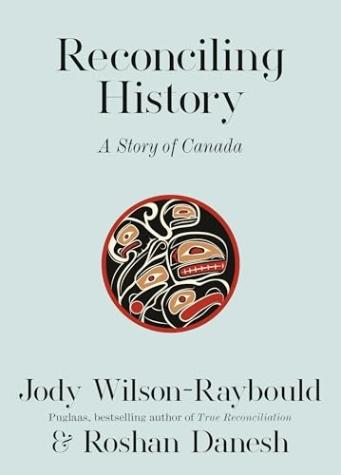
One of Indigo's Top 10 History Books of 2024 and Top 100 Books of 2024 • One of the Toronto Star’s 25 books to read this season From the #1 national bestselling author of 'Indian' in the Cabinet and True Reconciliation, a truly unique history of our land—powerful, devastating, remarkable—as told through the voices of both Indigenous and non-Indigenous peoples. The totem pole forms the foundation for this unique and important oral history of Canada. Its goal is both toweringly ambitious and beautifully direct: To tell the story of this country in a way that prompts readers to look from different angles, to see its dimensions, its curves, and its cuts. To see that history has an arc, just as the totem pole rises, but to realize that it is also in the details along the way that important meanings are to be found. To recognize that the story of the past is always there to be retold and recast, and must be conveyed to generations to come. That in the act of re-telling, meaning is found, and strength is built. When it comes to telling the history of Canada, and in particular the history of the relationship between Indigenous and non-Indigenous peoples, we need to accept that the way in which our history has traditionally been told has not been a common or shared enterprise. In many ways, it has been an exclusive and siloed one. Among the countless peoples and groups that make up this vast country, the voices and experiences of a few have too often dominated those of many others. Reconciling History shares voices that have seldom been heard, and in this ground-breaking book they are telling and re-telling history from their perspectives. Born out of the oral history in True Reconciliation, and complemented throughout with stunning photography and art, Reconciling History takes this approach to telling our collective story to an entirely different level.
An illustrated edition of The 1619 Project, with newly commissioned artwork and archival images, The New York Times Magazine’s award-winning reframing of the American founding and its contemporary echoes, placing slavery and resistance at the center of the American story. Here, in these pages, Black art provides refuge. The marriage of beautiful, haunting and profound words and imagery creates an experience for the reader, a wanting to reflect, to sit in both the discomfort and the joy, to contemplate what a nation owes a people who have contributed so much and yet received so little, and maybe even, to act.—Nikole Hannah-Jones, from the Preface Curated by the editors of The New York Times Magazine, led by Pulitzer Prize–winning journalist Nikole Hannah-Jones, this illustrated edition of The 1619 Project features seven chapters from the original book that lend themselves to beautiful, engaging visuals, deepening the experience of the content. The 1619 Project: A Visual Experience offers the same revolutionary idea as the original book, an argument for a new national origin story that begins in late August of 1619, when a cargo ship of people stolen from Africa arrived on the shores of Point Comfort, Virginia. Only by reckoning with this difficult history and understanding its powerful influence on our present can we prepare ourselves for a more just future. Filled with original art by thirteen Black artists like Carrie Mae Weems, Calida Rawles, Vitus Shell, Xaviera Simmons, on the themes of resistance and freedom, a brand-new photo essay about slave auction sites, vivid photos of Black Americans celebrating their own forms of patriotism, and a collection of archival images of Black families by Black photographers, this gorgeous volume offers readers a dynamic new way of experiencing the impact of The 1619 Project. Complete with many of the powerful essays and vignettes from the original edition, written by some of the most brilliant journalists, scholars, and thinkers of our time, The 1619 Project: A Visual Experience brings to life a fuller, more comprehensive understanding of American history and culture.
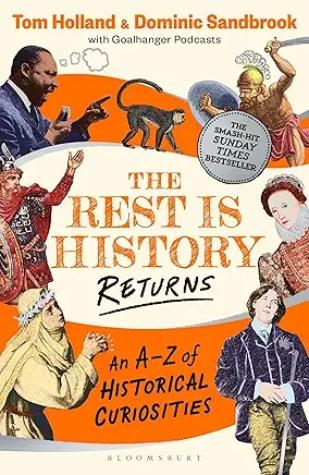
THE INSTANT SUNDAY TIMES BESTSELLER 'The world's most successful history podcast . . . Holland and Sandbrook have pretty much reinvented popular history for the modern age' The Times From the podcast legends who brought you The Rest is History comes The Rest is History Returns! This time Tom Holland and Dominic Sandbrook bring you an alphabetical miscellany, taking on some of history's best and most bizarre moments. Charge forth against the traitors of the American Revolution, journey through Baghdad to discover the origins of the Arabian Nights and head to Sicily to witness the first face-off between Carthage and Rome. Along the way you'll find the answers to questions like: - Who was Jesus's wife? - What would it have been like to live-tweet through the eruption of Vesuvius? - Why did the Romans inspire so much American science fiction? - Which Mitford sister tried to seduce her girlish crush, Adolf Hitler? - Who are history's top 10 monkeys? - Was Henry V's great-grandfather, Edward III, the biggest 'lad' in British history? But that's not all – this book also includes puzzles and a pub quiz. So dust off your tricorne hat, grab your lasso and get ready for a rollicking rollercoaster through the past . . .
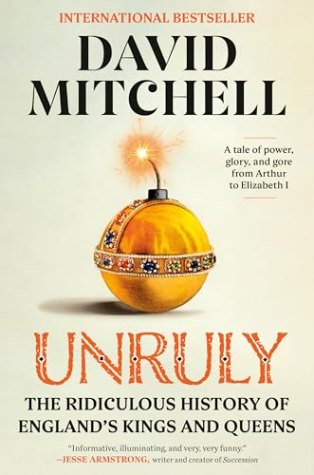
INSTANT #1 SUNDAY TIMES BESTSELLER • A rollicking history of England’s kings and queens from Arthur to Elizabeth I, a tale of power, glory, and excessive beheadings by award-winning British actor and comedian David Mitchell “Clever, amusing, gloriously bizarre and razor sharp. Mitchell [is] a funny man and a skilled historian.”―The Times Think you know the kings and queens of England? Think again. In Unruly, David Mitchell explores how early England’s monarchs, while acting as feared rulers firmly guiding their subjects’ destinies, were in reality a bunch of lucky bastards who were mostly as silly and weird in real life as they appear today in their portraits. Taking us back to King Arthur (spoiler: he didn’t exist), Mitchell tells the founding story of post-Roman England up to the reign of Elizabeth I (spoiler: she dies). It’s a tale of narcissists, inadequate self-control, middle-management insurrection, uncivil wars, and a few Cnuts, as the English evolved from having their crops stolen by the thug with the largest armed gang to bowing and paying taxes to a divinely anointed king. How this happened, who it happened to, and why the hell it matters are all questions that Mitchell answers with brilliance, wit, and the full erudition of a man who once studied history—and won’t let it off the hook for the mess it’s made. A funny book that takes history seriously, Unruly is for anyone who has ever wondered how the British monarchy came to be—and who is to blame.