The Best Books of 2025 – Poetry

Poetry – 2025
#1
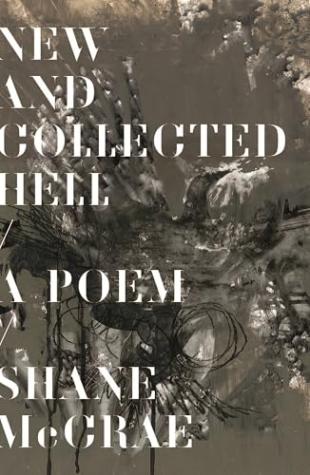
New and Collected Hell: A Poem

New and Collected Hell: A Poem

Shane McCrae, “peer to the peerless” (New York Journal of Books), takes up and turns on its head the mantle of Dante in this contemporary vision of Hell. Of death the muse is death the muse of Hell Is death the muse of Heaven I don’t know O muse of where howcan I hope to go To where I pray I’ll go sing at least tell Shane McCrae, one of the most prophetic and powerful poetic voices of our time, has created a twenty-first-century epic in New and Collected Hell. As David Woo wrote in Poetry, “McCrae’s poems allude to literary precursors like Dante, Milton, and the Bible, but the voice is unabashedly of our time . . . By seeking to heal the rift in his own identity, McCrae has listened intently to the literary echoes emanating from the English language and transmuted them through his own dynamic voice.” Here, he gathers new and previous work as a culmination of his long-standing poetic project: a new and unforgettable journey through Hell. McCrae’s work is indelible, and this collection brings his searing vision to new depths.
#2
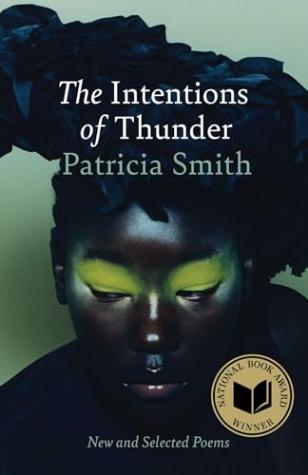
The Intentions of Thunder: New and Selected Poems

The Intentions of Thunder: New and Selected Poems

The Intentions of Thunder gathers, for the first time, the essential work from across Patricia Smith's decorated career. Here, Smith's poems, affixed with her remarkable gift of insight, present a rapturous ode to life. With careful yet vaulting movement, these poems traverse the redeeming landscape of pain, confront the frightening revelations of history, and disclose the joyous possibilities of the future. The result is a profound testament to the necessity of poetry--all the careful witness, embodied experience, and bristling pleasure that it bestows--and of Smith's necessary voice.

#3
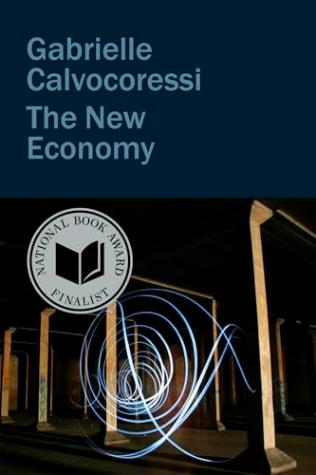
The New Economy

The New Economy

The New Economy memorializes the world's pleasures and perils told through the point of view of an aging, ungendered body. A devotional to the ungendered vessel as it ages, dreams, and survives. A practice of radical collaboration, failure, and renewal. A world of "Miss You" poems opening a portal to all those we've lost and would love to visit for a while. In Gabrielle Calvocoressi's latest collection, The New Economy, poems are haunted by the ghosts of loved ones and childhood memories, by changing landscapes and bodies. Calvocoressi's own figure is examined--investigating the desire to protect the body one is born with and the longing to have been born in another. Cisterns sing with the musicality of a poet who understands both the power of sound and silence--those quiet spaces inviting us to consider the words we cannot hear. "The days I don't kill myself are extraordinary" one poems says. "Why don't we have a name for it?" Lyrical and unafraid, The New Economy invites us to name our fears and sorrows, to write to who or what has left us, to create practices that can hold both the darkness and light of this (in)finite life.
#5
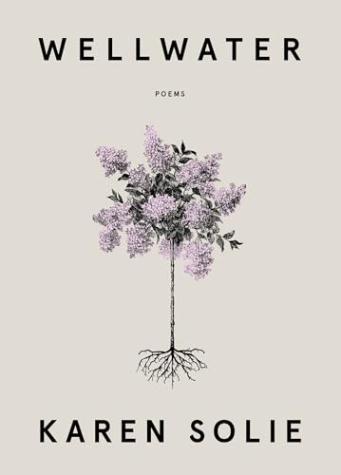
Wellwater

Wellwater

Winner, 2025 Governor General's Literary Award for Poetry Winner, Forward Prize for Best Collection of Poetry Finalist, T.S. Eliot Prize The poems in Wellwater, Karen Solie’s sixth collection, explore the intersection of cultural, economic, and personal ideas of “value,” addressing housing, economic and environmental crisis, and aging and its incumbent losses. In an era of accelerating inequality, places many of us thought of as home have become unaffordable. In “Basement Suite,” the faux-utopian economy of Airbnb suggests people with property “share” it with us and, presumably, we should be grateful. In “Parables of the Rat” the speaker feels affinity with scavengers while also wanting the rats gone. Having grown up in Saskatchewan on a small family farm, Solie sees the economic and environmental crises as inseparable. Climate change has made small farming increasingly untenable, allowing overbearing corporate control of food production. But hope, Solie argues, is as necessary to addressing the crises of our time as bearing witness, in poems that celebrate wonder and persistence in the non-human world. Tamarack forests in Newfoundland that grow inches over hundreds of years, the suddenly thriving pronghorn antelope, or a new, unidentified and ineradicable climbing vine, all hint at renewal, and a way to move forward.

#9
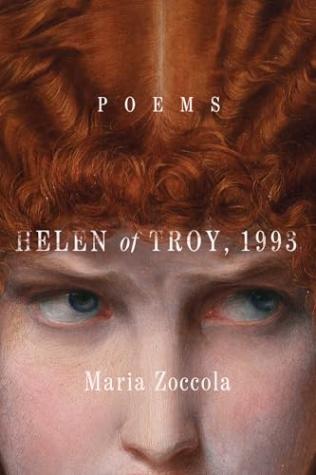
Helen of Troy, 1993: Poems

Helen of Troy, 1993: Poems

Part myth retelling, part character study, this debut poetry collection reimagines the mythic beauty from Homer's "Iliad" as a disgruntled housewife in 1990s Tennessee. Zoccola explores Helen's isolation and rebellion as her expansive personality clashes with the social rigidity of a small town: she marries the wrong man, gives birth to a child she is not ready to parent, and begins an affair that throws her life into chaos, but she never surrenders ownership of her story or her choices.

#12
Scorched Earth

Scorched Earth

"SCORCHED EARTH moves between ruins and radical love-fragility and tenderness in the wake of a divorce transform and expand into virtuosic stanzas, full of ache and sweetness. From ekphrastic poems on Kara Walker, to a standout series on the first Black Bachelorette, Clark's stanzas shift between reverence and irreverence, hold institutional and historical pains alongside sensuality and queer, Black joys"--

#15
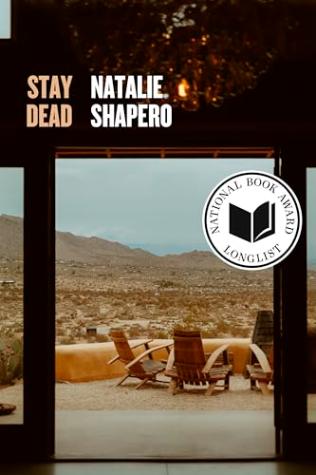
Stay Dead

Stay Dead

In Stay Dead, Shapero's cutting, unflinching voice reveals the unsettling realities of the entertainment industry fueled by capitalist consumerism. Visual mediums--paintings and film--collide with Natalie Shapero's unflinching poems as they explore method acting, abstract expressionism, and space exploration in her fourth poetry collection, Stay Dead. With epigraphs from Claude Monet, several references to abstract expressionist Mark Rothko's work, and commentary on the practice and theory of acting, Shapero explores what it means to be an artist in a neoliberal, late-stage capitalistic world and how creative production is received by a consumerist society. The collection seeks to raise unsettled and unsettling questions, asking who is permitted intense expression and when, and how that expression might be captured, co-opted, and capitalized on by cultural and political institutions. Shapero asks: At what point is expression no longer an earnest extension of the self, but simply a product to consume? Readers are guided into a deep self-awareness of their own place in the entertainment industry. The collection is "A cautionary tale about painting / oneself right out of one's own life." An artist or not, Shapero's cutting, sardonic, humorous voice will place readers into a method acting dream-reality.

#16
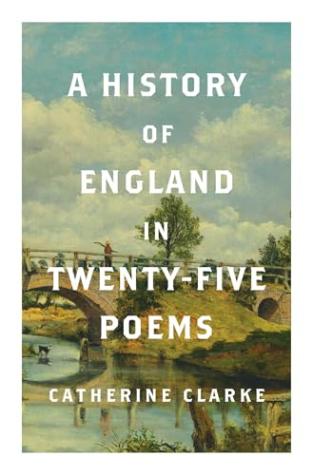
A History of England in 25 Poems

A History of England in 25 Poems

A delightful, thoughtful and original new way to understand England's history 'Catherine Clarke uses an eclectic mix of verse — satirical, scabrous, tragic, lyrical — to tell the English national story... the emotional intimacy of poetry (aided by Clarke’s careful, historically informed analysis) offers valuable insights into great historical events' - Katherine Harvey, The Times 'Catherine Clarke traces centuries of English thought and poetry, from the time of Beowulf to the protests written in the wake of Brexit. She weaves together the personal and the public with stories... an excellent, all-encompassing read' - The Idler This is the history of England told in a new way: glimpsed through twenty-five remarkable poems written down between the eighth century and today, which connect us directly with the nation’s past, and the experiences, emotions and imaginations of those who lived it. These poems open windows onto wildly different worlds – from the public to the intimate, from the witty to the savage, from the playful to the wistful. They take us onto battlefields, inside royal courts, down coal mines and below stairs in great houses. Their creators, witnesses to events from the Great Fire of London to the Miners’ Strike, range from the famous to the forgotten, yet each invites us into an immersive encounter with their own time. A History of England in 25 Poems is a portal to the past; a constant companion, filled with vivid voices and surprising stories alongside familiar landmarks, and language that speaks in new ways on each reading. Catherine Clarke’s knowledge and passion take us inside the words and the moments they capture, with thoughtful insights, humour and new perspectives on how the nation has dreamed itself into existence – and who gets to tell England’s story.

#19
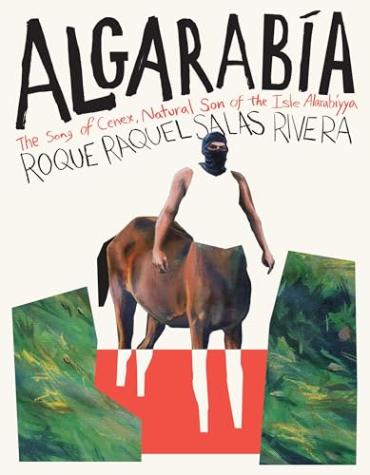
Algarabía

Algarabía

"Algarabía is an epic poem that follows the journey of Cenex, a trans being who retrospectively narrates his life while navigating the stories told on his behalf. An inhabitant of Algarabía, a colony of Earth in a parallel universe, Cenex struggles to find a name, a body, and a stable home. The song of Cenex weaves and clashes texts by cis writers on trans figures with fragments from historical, legal, and other nonliterary texts. Cenex leads us through his childhood hospitalization, his years as an experimental subject, a brief stay in suburbia, twisted meanderings, and not-so-far-off lands accompanied by a merry band of chosen queers. Referencing everything from pop culture to Taino cosmology and philosophy (at times in a single line), this book laughs at its own survival with sharp, unserious rage. The edition is composed of two original texts-one written in the Puerto Rican dialect of Spanish, the other in a reconsideration of English. Algarabía inscribes an origin narrative for trans people in the face of their erasure from both colonial and anti-colonial literary canons"-- Provided by publisher.

#24
Blue Opening

Blue Opening

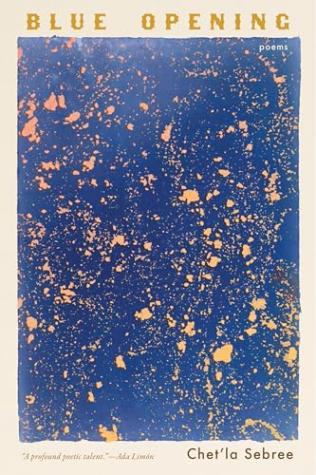
Blue Opening, Chet'la Sebree's brilliant, illuminating poetry collection, grapples with origins--of illness, of language, of the universe--as the speaker contemplates whether she, too, can be a site of origin through motherhood. Navigating chronic health challenges alongside grief and questions about the nature of knowledge and religion, she searches personal history and the cosmos for answers to the unknowable. With startling clarity and vivid tenderness, Blue Opening calls into question not only where to begin, but how to create, across thirty-two poems that press the fluid boundaries of form through sonnets, prose poems, odes, and two unforgettable poetic sequences. As the speaker traverses loss, possibility, and the choice, or often the lack of choice, in the direction of her future, she determines to press forward even as she is "unsure of what shape this language should take / and hulling, from blue rock, faith."

#25
Cold Thief Place

Cold Thief Place

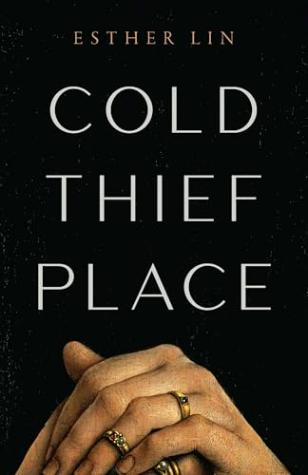
Cold Thief Place speaks of the experiences of an undocumented American, her parents who fled Communist China and found safety in fundamentalist Christianity, and how she tried to understand them and herself by way of confessional poems. This is a family story. It tells of a mother who fled an authoritarian government and turned that authoritarianism on to her children. Of a father who made a new life--three times on three different continents--and his sea voyage in between. Or what a daughter imagines of these events, as much as it's possible to truly know one's parents. The narrator, who is their daughter, grew up in difficult but very different circumstances, too: undocumented in the United States and was pressured into a green card marriage in order to live a "normal life."One of the myths of America is that Americans are newly formed, defiant of authority, and free from old-world traditions. This book speaks to dark side of this myth: of the legacies that my parents wished to escape but instead carried with them: their distrust of government and their desire for an authoritarianism similar to the kind they had fled. Individually, the poems attempt to understand the emotions surrounding these impulses, from the point of view of their daughter, who is herself displaced as an undocumented American--that is, a person who is not permitted to be American, and without a home country to return to.

#33
Groceries

Groceries

The winner of the 2023 Fonograf Editions Open Genre Book Prize contest, as chosen by Srikanth Reddy, Groceries is a book-length poem about what to do about objects. On earth everyone is worried about objects?getting them, naming them, maintaining them, destroying them, getting rid of them. Some people say objects will be the end of life on earth. Other people say objects will save us, if we get the right ones. But as we reckon with these object-mediated futures, we live on an earth full of the stuff itself: fax machines, horseshoes, waves. Groceries is a guide for what to do about these objects?how to speak to them and how to listen for a reply.

#35
History Matters

History Matters

In this posthumous collection of thought-provoking essays—many never published before—Pulitzer Prize–winning historian and bestselling author David McCullough affirms the value of history, how we can be guided by its lessons, and the enduring legacy of American ideals. History Matters brings together selected essays by beloved historian David McCullough, some published here for the first time, written at different points over the course of his long career but all focused on the subject of his lifelong passion: the importance of history in understanding our present and future. Edited by McCullough’s daughter, Dorie McCullough Lawson, and his longtime researcher, Michael Hill, History Matters is a tribute to a master historian and offers fresh insights into McCullough’s enduring interests and writing life. The book also features a foreword by Jon Meacham. McCullough highlights the importance of character in political leaders, with Harry Truman and George Washington serving as exemplars of American values like optimism and determination. He shares his early influences, from the books he cherished in his youth to the people who mentored him. He also pays homage to those who inspired him, such as writer Paul Horgan and painter Thomas Eakins, illustrating the diverse influences on his writing as well as the influence of art. Rich with McCullough’s signature grace, curiosity, and narrative gifts, these essays offer vital lessons in viewing history through the eyes of its participants, a perspective that McCullough believed was crucial to understanding the present as well as the past. History Matters is testament to McCullough’s legacy as one of the great storytellers of this nation’s history and of the lasting promise of American ideals.

#36
I Do Know Some Things

I Do Know Some Things

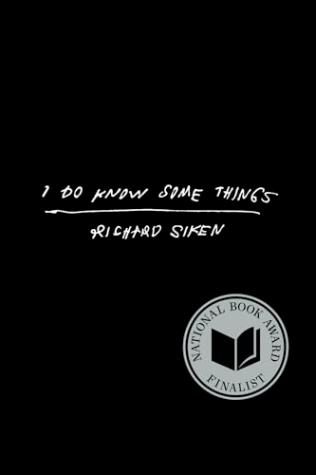
The long-anticipated third collection from the revered Richard Siken delivers his most personal and introspective collection yet. Richard Siken's long-anticipated third collection, I Do Know Some Things, navigates the ruptured landmarks of family trauma: a mother abandons her son, a husband chooses death over his wife. While excavating these losses, personal history unfolds. We witness Siken experience the death of a boyfriend and a stroke that is neglectfully misdiagnosed as a panic attack. Here, we grapple with a body forgetting itself--"the mind that / didn't work, the leg that wouldn't move...". Meditations on language are woven throughout the collection. Nouns won't connect and Siken must speak around a meaning: "dark-struck, slumber-felt, sleep-clogged." To say "black tree" when one means "night."Siken asks us to consider what a body can and cannot relearn. "Part insight, part anecdote," he is meticulous and fearless in his explorations of the stories that build a self. Told in 77 prose poems, I Do Know Some Things teaches us about transformation. We learn to shoulder the dark, to find beauty in "The field [that] had been swept clean of habit."

#37
I Imagine I Been Science Fiction Always

I Imagine I Been Science Fiction Always

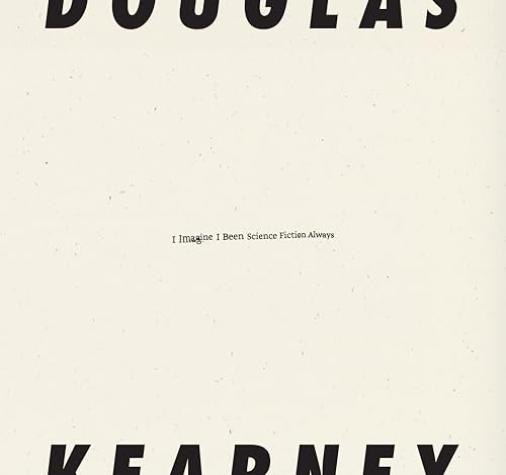
On the heels of Sho (winner, Griffin Poetry Prize) and Optic Subwoof (Pegasus Award in Poetry Criticism), Douglas Kearney's visual poetry masterpiece, I Imagine I Been Science Fiction Always, pushes further into Kearney's long-time practices of performance typography, collaging pre-existing media sources to create singular, multiplicitous texts that defy neat categorization. Through AfroFuturistic exploration of these techniques, Kearney presents a sustained consideration of precarious Black subjectivity, cultural production as self-defense, the transhistoric emancipatory logics of the preposition over, Anarcho-Black temporal disruption, and seriocomic meditations on the material and metaphysical nature of shadow. Engaging a rich history of visual poetics, I Imagine I Been Science Fiction Always almost predicts its endurance as a visionary work of genius.

#40
murmurations

murmurations

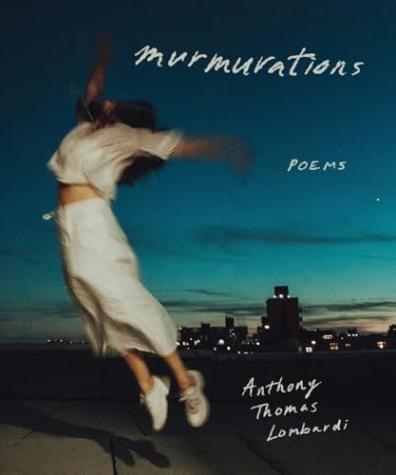
murmurations navigates the fractured intersections between addiction and grief, class and community, where the lyrical lives in the blasphemous and our invocations summon ghosts instead of saints. By seeking the liminal spaces where survival and surrender blur into one, murmurations pursues questions over answers, praises the angels that abandon us, bind metaphor and hallucination into a kind of communion. Through whispers beneath locked doors and lights that crawl through the dimmest hallways, we explore an alternate timeline where the late singer Amy Winehouse did not die but got sober, highlighting the confusion, mystery and messiness of recovery and our time ephemeral together, brief and desperate as prayer. In murmurations, Anthony Thomas Lombardi invites us into an emotional landscape of love and loss, where that which repairs and that which obliterates converge. With haunting imagery and steadfast reflections on desire, memory, and grief, Lombardi braids a stunning tribute to surrender. "(O)nce," he confesses, "i let a feral animal claw my face, a ferocity i refused to disrupt." murmurations is a breathtaking testament to the endurance that comes with reassembling fragments of what we've been given-or left. -Hala Alyan, author of The Moon That Turns You Back

#44
Pink Dust

Pink Dust

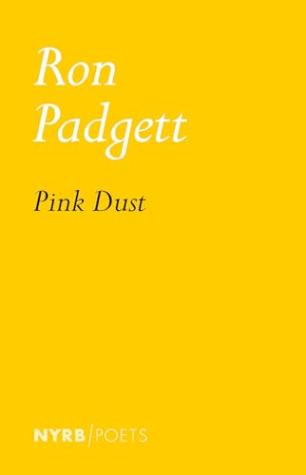
Ron Padgett is one of America's best-known and most acclaimed poets. Admired by John Ashbery, Jim Jarmusch, and Anne Waldman, his poems have moved and delighted generations of readers with their inventiveness, their gentle humor, and above all their ability to elicit wonder. These qualities are as evident as ever in Pink Dust, whose title refers to the residue from all the author's erasers, swept away or blown into the air. Like that dust, this is a book of memories rubbing up against the present. Its poignant reflections on old age shimmer with all the insouciance of youth.

#47
Resting Bitch Face

Resting Bitch Face

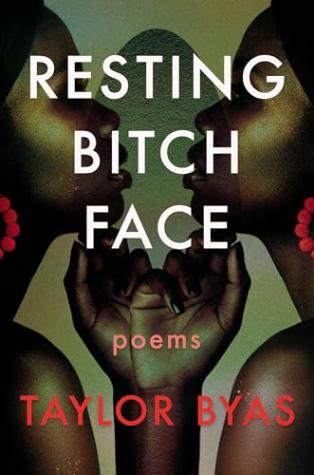
An Audacious Book Club Pick The author of the award-winning national bestseller I Done Clicked My Heels Three Times returns with a poetry collection that transforms the Black female speaker from object, artistic muse, and victim to subject, critic, and master of her story Resting Bitch Face is a book for women, for Black women, for lovers of art and film criticism, and for writers interested in work that finds a middle ground between poetry and prose. Taylor Byas uses some of our most common ways of “watching” throughout history (painting, films, sculpture, and photographs) to explore how these mediums shape Black female subjectivity. From the examination of artwork by Picasso, Gauguin, Sally Mann, and Nan Goldin, Byas displays her mastery of the poetic form by engaging in intimate and inventive writing. Fluctuating between watcher and watched, the speaker of these poems uses mirrors and reflections to flip the script and talk back to histories of art, text, photography, relationships, and men. From Polaroids to gesso primer to sculpture, Byas creates a world in which the artist calls out and the muse responds. For not only does she enter the world of the long-revered classic artist, but she also infuses her poems with such iconic pop culture works as The Joker, WandaVision, and Last Tango in Paris.

#56
Terror Counter

Terror Counter

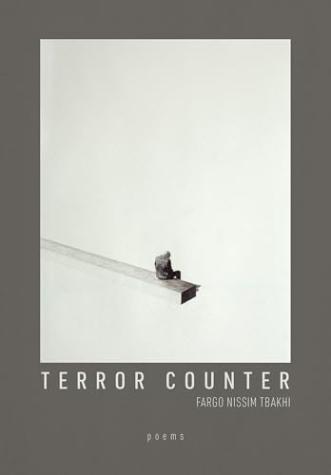
TERROR COUNTER is a debut collection of poems which acts against the many languages--interpersonal, legal, literary, rhetorical--constricting the lives and meanings of Palestinians. It moves through sections of varying experimentalism, from an invented visual form (the Gazan Tunnel) to all-caps queer ecstatic, attempting to carve out a space for the negotiation of an alternative subjecthood. The voices in this collection are driven by despair, futility, utopia, vulnerability and the spirit of a collective liberation; they move in search of a lyrical voice which can inhabit both the paranoid preservationist mode that facilitates Palestinian survival, and the imaginative possibilities that might make possible Palestinian life. TERROR COUNTER asks: where and how might a Palestinian subject escape the public consumption of American letters? And, ultimately, how can we continue to love each other amidst the endless terror of the colonial world?

#58
The Book of Jonah

The Book of Jonah

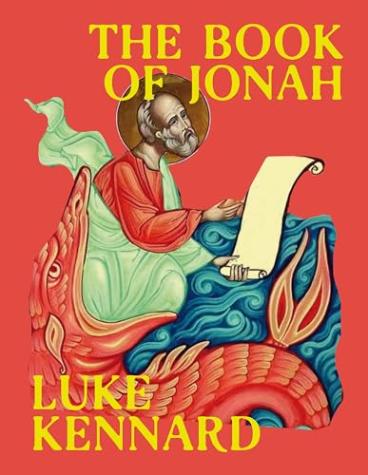
A brilliant and absurdist new poetry collection from the winner of the Forward Prize winner. None of the Old Testament prophets was especially happy or confident in their calling, but Jonah was the only one to attempt to reject it outright, disobey direct instruction and literally run away. A late addition to the canon, taken by some to be a parody or satire of the major prophets, The Book of Jonah occupies a unique and awkward space in scripture, part dream, part joke, part provocation. Luke Kennard's Jonah is more of a business traveler than seer, determined to remain very much of the world, a mercenary for hire by non-governmental organizations, arts development agencies, conflicting institutional agendas. Convinced that he possesses nothing that might change the world for the better in even the most incremental ways, Jonah believes he is saving the world from himself. In The Book of Jonah we are given the spectacle of a reluctant prophet undergoing increasingly absurd course corrections to arrive, finally, at the triumphant scene of his prophecy. Here Jonah deals not so much a lack of meaning as an excess, plagued with doubts as to his place in divine or infernal revelation, bereft of any motivation other than escape, but nonetheless displeased by what he finds on his way--to the point that he might be fulfilling his obligations as a prophet after all. Decimated arts, cynicism, ignorance and apathy. What if, in doing everything he can to avoid his vocation, he's actually doing everything as intended?

#59
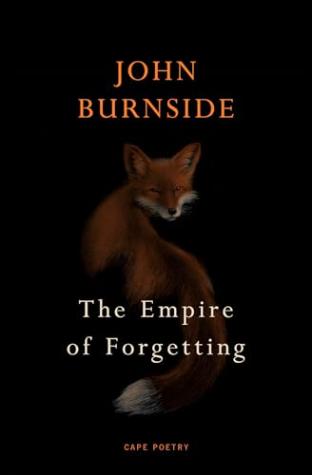
The Empire of Forgetting

The Empire of Forgetting

A powerful exploration of life and death, illness and grace, wonder and beauty, in the posthumous collection from one of our greatest contemporary poets 'It’s impossible not to love the world more when reading Burnside' GUARDIAN 'A master of language' HILARY MANTEL John Burnside’s last collection of new poems gathers around a single theme – mortality – and draws on his faltering health and earlier glances with death, creating a powerfully moving exploration of memory, forgetting and the seven ages. Here, as always, there is a clear-eyed curiosity; a sense of wonder at the beleaguered natural world and its endless mutability – its hidden beauty, often suddenly disclosed – and a deep faith in its old gods. Burnside was always as much a spirit-guide as a poet, and here, in the Empire of Forgetting, we are never far from a fresh alertness to the world, to epiphany – a sudden, spiritual manifestation. There is a sense, too, in these last poems, of a man having found a ‘dwelling place’ – a sense of rest and peace and settlement with the world. A state of grace. 'Among the best writers of his generation, fully voiced and perfectly pitched’ ANDREW O'HAGAN ‘A titan of literature' KATHLEEN JAMIE

#65
The Pelican Child: Stories

The Pelican Child: Stories

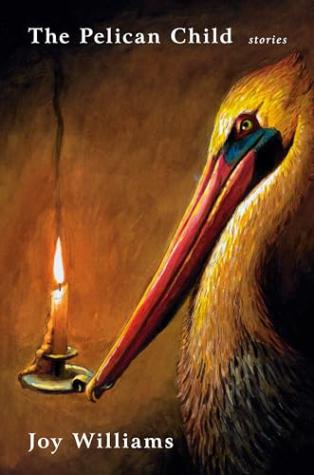
LONGLISTED FOR THE NATIONAL BOOK AWARD • A razor-sharp new collection of stories of visionary childhood misfits and struggling adult dreamers from this legendary writer of “perfectly indescribable fiction . . . To read Williams is to look into the abyss” (The Atlantic). “Night was best, for, as everyone knows, but does not tell, the sobbing of the earth is most audible at night.” “Men are but unconscious machines and they perform their cruelties so effortlessly.” “Caring was a power she’d once possessed but had given up freely.” The sentences of Joy Williams are like no other—the coiled wit, the sense of a confused and ruined landscape, even the slight chortle of hope that lurks between the words—for the scrupulous effort of telling, in these eleven stories, has a ravishing beauty that belies their substance. We meet lost souls like the twin-sister heiresses of a dirty industrial fortune in “After the Haiku Period,” who must commit a violent act in recompense for their family's deeds; in “Nettle,” a newly grown man who still revolves in a dreamscape of his childhood boarding-school innocence; the ghost of George Gurdieff, on an obsessive visit to the Arizona birthplace of the shining Susan Sontag; the “pelican child” who lives with the bony, ill-tempered Baba Yaga in a little hut on chicken legs. All of these characters insist on exploring, often at their peril, an indifferent and caustic world: they struggle against our degradation of the climate, of each other, and of honest human experience (“I try to relate only to what is immediately verifiable,” says one narrator ruefully), possibly in vain. But each brief, haunted triumph of understanding is celebrated by Williams, a writer for our time and all time.

#75
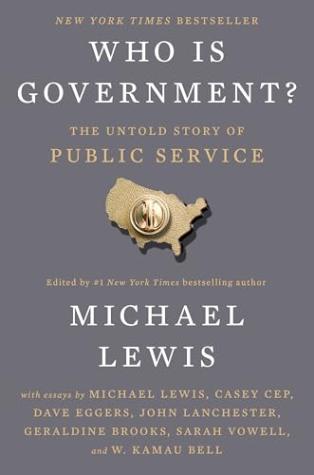
Who Is Government?: The Untold Story of Public Service

Who Is Government?: The Untold Story of Public Service

“Perhaps never before has there been a book better timed or more urgent.” —Washington Post “Michael Lewis has this incredible ability to zoom in on one person's story, and from there reveals something much bigger about our culture. His books leave you seeing the world differently, and his books about federal workers are no exception.” —Katie Couric As seen on CBS Mornings, CNN Anderson Cooper, ABC News Live, MSNBC Morning Joe, and many more Who works for the government and why does their work matter? An urgent and absorbing civics lesson from an all-star team of writers and storytellers. The government is a vast, complex system that Americans pay for, rebel against, rely upon, dismiss, and celebrate. It’s also our shared resource for addressing the biggest problems of society. And it’s made up of people, mostly unrecognized and uncelebrated, doing work that can be deeply consequential and beneficial to everyone. Michael Lewis invited his favorite writers, including Casey Cep, Dave Eggers, John Lanchester, Geraldine Brooks, Sarah Vowell, and W. Kamau Bell, to join him in finding someone doing an interesting job for the government and writing about them. The stories they found are unexpected, riveting, and inspiring, including a former coal miner devoted to making mine roofs less likely to collapse, saving thousands of lives; an IRS agent straight out of a crime thriller; and the manager who made the National Cemetery Administration the best-run organization, public or private, in the entire country. Each essay shines a spotlight on the essential behind-the-scenes work of exemplary federal employees. Whether they’re digitizing archives, chasing down cybercriminals, or discovering new planets, these public servants are committed to their work and universally reluctant to take credit. Expanding on the Washington Post series, the vivid profiles in Who Is Government? blow up the stereotype of the irrelevant bureaucrat. They show how the essential business of government makes our lives possible, and how much it matters.

#76
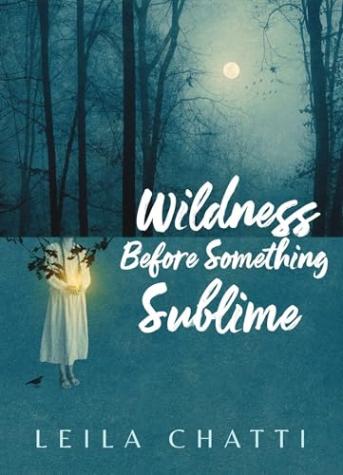
Wildness Before Something Sublime

Wildness Before Something Sublime

In Wildness, Chatti splits in two--the shadow and the self--to explore desire, the body, and the ordinary but devastating grief of a woman. Leila Chatti's Wildness Before Something Sublime confronts a world defined by dualities--love and loss, wonder and despair, the gift of "Sunflowers / by the roadside..." and the pain of losing a pregnancy. "Night Poems" written on the brink of sleep travel the dream world and the subconscious mind to unearth to unfiltered self, to understand identity, desire, and the body. Other poems become acts of divination, calling on God and the Muse, calling on the voices of beloved women poets--Lucille Clifton, Anne Sexton, C. D. Wright--to comb through the dark. Chatti expertly grapples with the pain of what a body can, cannot, or should biologically do. Under the shifting weight of this grief, poems fragment, become: ruptures of language, experimentations, refractions, a kaleidoscopic of recurring sound and image. Snow, light, milk, clouds, silence. Behind every positive image the shadow of its opposite, an echo of emotion. As Chatti bridges the threshold between dream and language, the external and interior, a new world unfolds--a world in which darkness is reclaimed.