#1
Book Scrolling
Best Book Lists, Award Aggregation, & Book Data
Best Book Lists, Award Aggregation, & Book Data
“What are the best Science And Nature books released in 2024?” We looked at 164 of the top Science And Nature books, aggregating and ranking
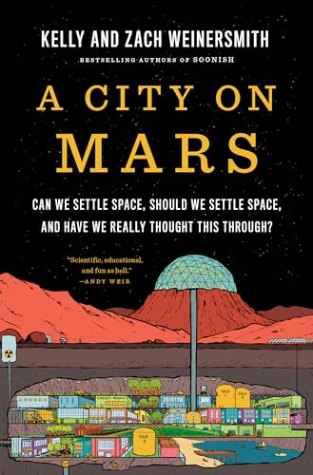
"An exceptional new piece of popular science . . . Forceful, engaging and funny . . . an essential reality check for anyone who has ever looked for home in the night sky . . . hilarious. The breezy prose is studded with charming cartoons... This book will make you happy to live on this planet -- a good thing, because you're not leaving anytime soon." --New York Times Book Review From the bestselling authors of Soonish, a brilliant and hilarious off-world investigation into space settlement Earth is not well. The promise of starting life anew somewhere far, far away--no climate change, no war, no Twitter--beckons, and settling the stars finally seems within our grasp. Or is it? Critically acclaimed, bestselling authors Kelly and Zach Weinersmith set out to write the essential guide to a glorious future of space settlements, but after years of research, they aren't so sure it's a good idea. Space technologies and space business are progressing fast, but we lack the knowledge needed to have space kids, build space farms, and create space nations in a way that doesn't spark conflict back home. In a world hurtling toward human expansion into space, A City on Mars investigates whether the dream of new worlds won't create nightmares, both for settlers and the people they leave behind. In the process, the Weinersmiths answer every question about space you've ever wondered about, and many you've never considered: Can you make babies in space? Should corporations govern space settlements? What about space war? Are we headed for a housing crisis on the Moon's Peaks of Eternal Light--and what happens if you're left in the Craters of Eternal Darkness? Why do astronauts love taco sauce? Speaking of meals, what's the legal status of space cannibalism? With deep expertise, a winning sense of humor, and art from the beloved creator of Saturday Morning Breakfast Cereal, the Weinersmiths investigate perhaps the biggest questions humanity will ever ask itself--whether and how to become multiplanetary. Get in, we're going to Mars.
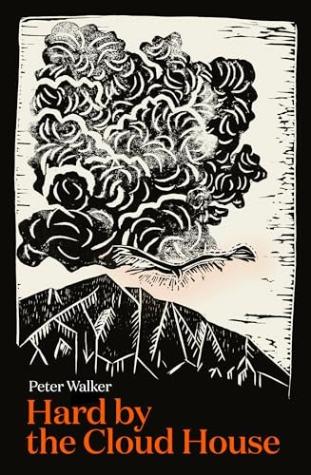
The legend of Te Hokioi, the extinct giant eagle of New Zealand, leads Peter Walker from a Canterbury sheep run to the Rare Books Room of the British Library and to &‘ sacred' Raiatea in Polynesia, as he uncovers the story of the predator which once ruled over the Southern Alps.Was this bird, whose existence was confirmed by scientists only in 2009, the Rukh of Arab legends? Does that mean that medieval Islamic mariners were once blown far into the Pacific, saw the great raptor and made it back home to tell the tale?From the calamitous encounter of South Island Maori with colonisation to the glories of tenth-century Baghdad, Hard by the Cloud House is a heady mix of history, memoir, science and mythology.
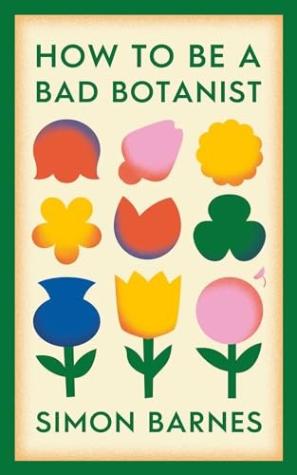
Can you tell a tomato from a grape? A patch of grass from a Christmas tree? Then congratulations - you're a botanist. Self-confessed bad birdwatcher Simon Barnes thought he knew nothing about plants. He didn't have anything against them: trees are interesting because birds perch in them; plants are useful because they create habitats, and all birds live in habitats. But while admiring the tenacity of some yellow horned poppies thriving on a shingle beach - a place where it seemed no plant had a hope of surviving - he was struck by a simple yet profound truth. It all begins with plants. In this charming and inspiring book, Barnes takes us on a fascinating journey, from the simple genius of photosynthesis to the complex and bizarre ways that plants reproduce. We consider plants as varied as cabbages and conifers, familiar wildflowers and enigmatic orchids, nefarious parasites and plants that carry deadly poisons - helping us better appreciate the beauty and diversity of the natural world. Both a primer on botany and an exploration of how plants make our external and interior worlds, How to Be a Bad Botanist opens our eyes to the wonders around us. Plants are everywhere, in every part of your life, and you know more than you think.
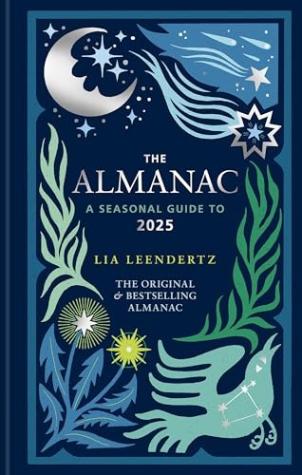
The original and bestselling almanac Reconnect with the seasons in Britain and Ireland with this month-by-month guide to the world around us - including tide tables, sunrises and moon phases; wildlife and folklore; seasonal recipes and more. The Almanac: A Seasonal Guide to 2025 gives you the tools and inspiration you need to celebrate, mark and appreciate each month of the year in your own particular way. Divided into the 12 months, a set of tables each month gives it the feel and weight of a traditional almanac, providing practical information that gives access to the outdoors and the seasons, perfect for expeditions, meteor-spotting nights and beach holidays. And it's the ideal gift! You will find yourself referring to The Almanac all year long, revisiting it again and again, and looking forward to the next edition as the year draws to a close. PRAISE FOR THE ALMANAC: 'Lia Leendertz's classic almanac never fails to delight' - The Herald 'It's a perfect Christmas present' - Allan Jenkins, The Observer 'The perfect companion to the seasons' - India Knight 'Indispensable' - Sir Bob Geldof 'This book is your bible' - The Independent 'I love this gem of a book' - Cerys Matthews
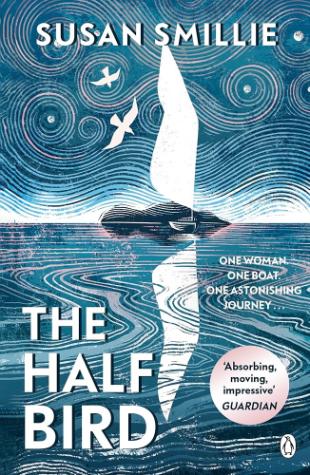
Pre-order now and discover the incredible story of one woman's solo journey across the Bay of Biscay, into the Mediterranean, and the unexpected joy of solitude, self-discovery and resilience __________ 'We have no idea how much resilience there is inside us until we have to draw on it. We learn that we grow through adversity only as we go through it. That we crave happiness like plants leaning toward the light' When Susan quit her job in London and set sail off the south coast of England on her beloved sailboat, Isean, she was unaware this spontaneous departure would lead to a three-year journey spanning several countries across the continent. With only the very basics on board, resourcefulness becomes an unexpected source of joy and contentment. The highs and lows of living in such an extreme way awakens a newfound appreciation for the beauty of her surroundings, for being safe - for just being alive. For all the physical and navigational challenges of her journey, the other side of her story reveals a more important change - an inner journey - that took place along the way. This wasn't merely a challenge, a mid-life adventure or gap-year career break; it was much gentler than that, but much greater too. She was seeking nothing less than an entirely different life, having left the land far behind to call the wild, unbiddable sea home. __________

A new strain of coronavirus emerged sometime in November 2019, and within weeks a cluster of patients began to be admitted to hospitals in Wuhan with severe pneumonia, most of them linked to the Huanan Seafood Wholesale Market. China's seemingly effective containment of the first stage of the epidemic, in glaring contrast with the uncontrolled spread in Europe and the United States, was heralded as a testament to the Chinese Communist Party's unparalleled command over the biomedical sciences, population, and economy. Conversely, much academic and public debate about the origins of the virus focuses on the supposedly "backwards" cultural practice of consuming wild animals and the perceived problem of authoritarianism suppressing information about the outbreak until it was too late. The Origins of COVID-19, by Li Zhang, shifts debate away from narrow cultural, political, or biomedical frameworks, emphasizing that we must understand the origins of emerging diseases with pandemic potential (such as SARS and COVID-19) in the more complex and structural entanglements of state-making, science and technology, and global capitalism. She argues that both narratives, that of China's victory and the racist depictions of its culpability, do not address—and even aggravate—these larger forces that degrade the environment and increase the human-wildlife interface through which novel pathogens spill over into humans and may rapidly expand into global pandemics.