#1
Book Scrolling
Best Book Lists, Award Aggregation, & Book Data
Best Book Lists, Award Aggregation, & Book Data
“What are the best Poetry books released in 2024?” We looked at 77 of the top Poetry books, aggregating and ranking them so we could


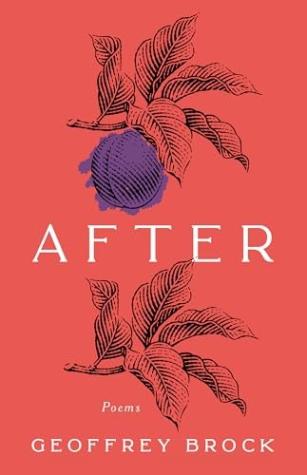
"Among the finest poets of his generation.” —Richard Wilbur, two-time winner of the Pulitzer Prize for Poetry "Like Frost before him, Brock has the power to make earthbound words take flight.” —Boris Dralyuk, author of My Hollywood and Other Poems The title of Geoffrey Brock's third poetry collection, After, works in two ways. Many of the poems were written after, and in response to, the death of Brock's father, who was also a poet. And many are in some way “after”—as in, in the manner of—other poems or works of art. Such texts, often called “versions” or “imitations,” have long been seen as, in Samuel Johnson’s words, “a kind of middle composition between translation and original design.” Brock has been writing and translating poems for forty years, and for most of his career those two activities proceeded along parallel but distinct tracks. In recent years, however, he has been increasingly drawn to that middle space where the tracks converge. For Brock, it's a conversational space, in which he listens to the call of earlier works and offers responses from his own life: by turns bleak and beautiful, poignant and funny, sorrowful and accepting. Poets owe debts to other poets as surely as each of us does to those who raised us, and After is a partial account of such personal and poetic inheritances.
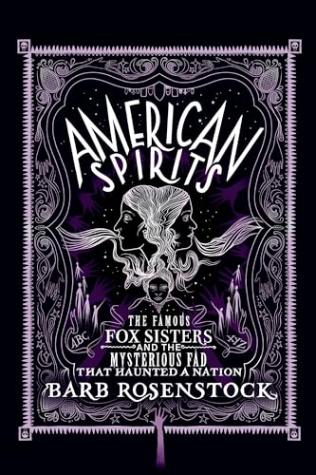
CAN THE DEAD TALK TO THE LIVING? Discover the astonishingly true story of Maggie, Kate, and Leah Fox—the Civil War-era sisters and teen mediums who created the American séance. A real-life ghost story for young adult readers interested in the supernatural, American history, and women’s rights! Rap. Rap. Rap. The eerie sound was first heard in March of 1848 at the home of the Fox family in Hydesville, New York. The family’s two daughters, Kate and Maggie, soon discovered that they could communicate with the spirit that was making these uncanny noises; he told them he had been a traveling peddler who had been murdered. This strange incident, and the ones that followed, generated a media frenzy beyond anything the Fox sisters could have imagined. Kate and Maggie, managed (or perhaps manipulated) by their elder sister Leah, became famous spirit mediums, giving public exhibitions, and advising other celebrities of their day. But were the Fox sisters legitimate? In the years that followed their rise, the Civil War killed roughly 1 in 4 soldiers, increasing the demand for contacting the dead. However, media campaigns against the sisters gathered steam as well... This thrilling and mysterious true story from veteran author Barb Rosenstock (Caldecott Honor winner) will spark teens’ interest in American history, encourage media literacy, and reveal insights into the Civil War era, fake news, and women's rights.
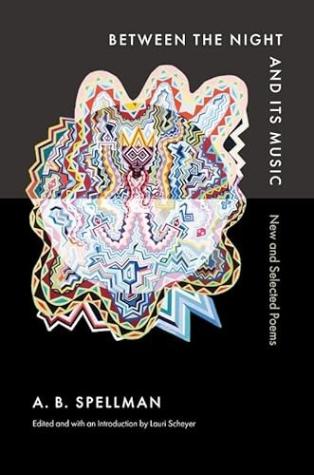
Winner of an American Book Award (2025) A. B. Spellman is an acclaimed American poet, music critic, and arts administrator. He is widely recognized as a leading figure in the Black Arts Movement of the 1960s and 1970s, a cultural and literary movement that emphasized Black identity, pride, and artistic expression. Between the Night and Its Music brings together A. B. Spellman's early work with a collection of powerful new poems. Spellman's literary career took flight in 1965 with his debut poetry collection, The Beautiful Days, which introduced his distinctive voice blending elements of jazz, blues, and African oral traditions. In 1966, Four Lives in the Bebop Business established Spellman as a respected music critic and scholar. It was a groundbreaking work that chronicled the lives and struggles of four influential jazz musicians. Spellman held senior positions at the National Endowment for the Arts for thirty years with lasting impact on arts funding for inner cities and rural and tribal communities. In addition to poems from The Beautiful Days (1965) and Things I Must Have Known (2008), this book contains a trove of new and uncollected poems, confirming Spellman's continued centrality to contemporary American literature. This is an essential volume for readers already familiar with Spellman, and an excellent introduction for new readers. Lauri Scheyer's introduction situates Spellman's work within jazz writing, Black Arts, and American poetry broadly. [sample text] THE TWIST a dancer's world is walls, movement confined: music god's last breath. rhythm: the last beating of his heart. a dancer follows that sound, blind to its source, toward walls with others. she cannot dance alone she thinks of thought as windows, as ice around the dance can you break it? move
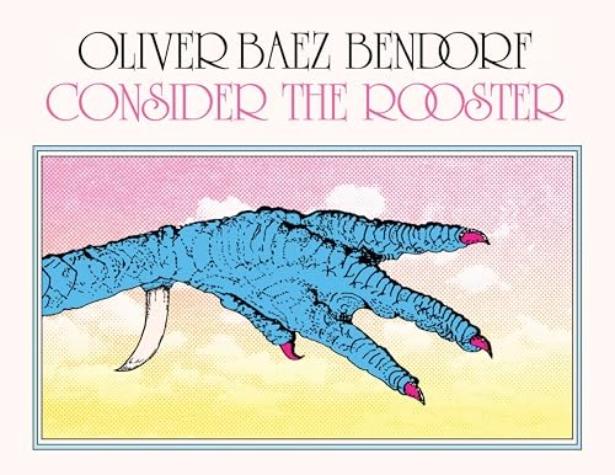
Consider the Rooster serves as an ode to a rooster's crow, a catalyst for awakening, both literally and figuratively. Amidst the Covid-19 Pandemic, the aftermath of George Floyd's murder by police, and the resulting upsurge in reactionary right-wing militia violence, a neighbor in Kalamazoo, Michigan threatens to call the police after discovering the author's pet rooster. The rooster sounds the alarm and our author wakes to revolutionary transformation. An ecological consciousness embedded in these verses invites readers to acknowledge their place in a web of relations. Oliver Baez Bendorf's voice resounds through liminal spaces, at dusk and dawn, across personal meditations and wider cultural awakenings to form a collection overflowing with freedom, rebellion, mischief, and song.
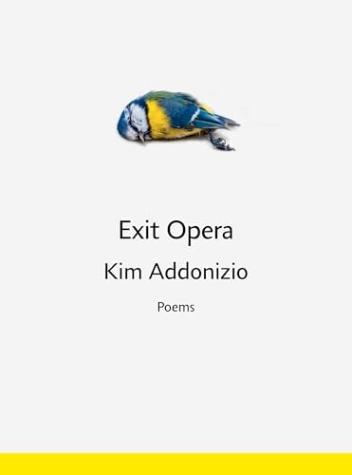
A Library Journal Best Poetry Book of 2024 A new volume by acclaimed poet Kim Addonizio, whose work is known for its streetwise, unflinching explorations of love, lust, and mortality. Set in locations from dive bars to Montparnasse Cemetery, from an ancient Greek temple to a tourist shop in Assisi, Exit Opera explores the ever-vexing issues of time, mortality, love, and loss, and considers the roles of art and human connection. Whatever their nominal subject—jazz, zombies, Buddhism, Siberian tigers—these poems make for a compelling mix of humor and pain, difficulty and solace. In a nod to Keats, one of the many fellow travelers in these poems, Addonizio invites us to “[inscribe] a few verses on whatever water / you can find” and assures readers that they are not alone in navigating the challenges and changes of mortal life. As she writes in “My Opera”: The staging is difficult. Exploding stars are involved, high-redshift galaxies, interior chambers, a little country blues, a little jazz guitar, a jam jar containing a tiny ocean & a tinier rowboat rocking gently in the swells that I am steering toward you in the dark.
Poet and essayist Zefyr Lisowski's prize-winning book GIRL WORK, a book-length meditation on sexual violence and feminized labor, centers hybrid-form and prose poems exploring haunting, labor, sexual trauma, and the assertion of a gender- nonconforming self in our current political moment. Written in injunctions to the self, to past assailants, and to friends, GIRL WORK challenges canonical representations of pain as punitive, redemptive, or separable from the environmental conditions it springs from. Throughout GIRL WORK, a self is restored from the detritus of memory--flashes of sexual violence, pop cultural touchstones like the movie The Ring, the music of Ke$ha, the sudden death of a father, the paintings of Henry Darger, and more. Winner of the 2022 Book Award from Noemi Press.

FINALIST FOR THE 2024 NATIONAL BOOK CRITICS CIRCLE AWARD IN POETRY A taut, tender collection of poems woven with sadness and loss dealing with aging, attachments, and the precarity of life. "Dawn Lundy Martin's poems read like a real-time excavation of what poetry can and can't do," writes Maggie Nelson. In Instructions for The Lovers, her most stripped down, direct work to date, Martin creates a poetic field dense with thought, image, and sound as she reflects on her relationship with her mother, experiences of queer polyamory, lesbian sex, and the racist conditions within the dying American university system. With rigorously embodied vulnerability and virtuosity, Martin constructs moments of pleasure, humor, and sexiness woven with grief--a tender body to live in.
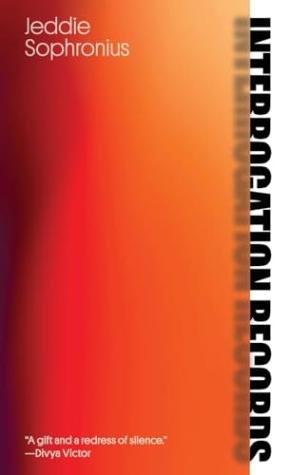
A collection that breaks the silence and collective amnesia around the Indonesian mass killings of 1965.
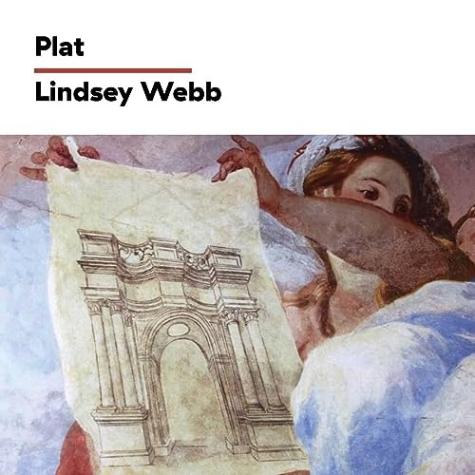
Vivid and haunting elegy facing Mormonism, suicide, and gender in the American West. Lindsey Webb's Plat is a haunted, Western elegy, in which the author grapples with the suicide of her closest friend in context of their Mormon upbringing. Set against Joseph Smith's prophesied but failed heavenly city, the Plat of Zion, Webb questions the impulse to speculate about why a loved one chose to die. Webb's prose poems are unabashedly bizarre, leading the reader through scenes rendered as timelessly as Willa Cather's or Stephen Crane's with the moody language and temperament of Louise Glück or Sharon Olds. Plat is in its own league, brooding over gender, suicide, and memory using the language and iconography of Mormon temples, warped and chopped and made strange. Webb's perspective is heretofore unheard, but she taps into our universal anxieties. She poses personal grief within an ecstasy for language. Although the ecological and built structures feverishly crumble throughout Plat, Webb continues to wonder how dreams for our imagined worlds and selves may persevere.
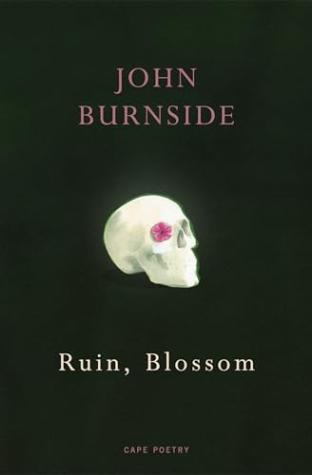
A remarkable new collection from our finest lyric poet 'One of the most gifted poets writing today' TIMES LITERARY SUPPLEMENT 'By far the best British poet alive' SPECTATOR In this powerful, moving new book, John Burnside takes his cue from Schiller, who recognized that, as one thing fades, so another flourishes: everywhere and always, in matters great and small, new life blossoms amongst the ruins. Here, in poems that explore ageing, mortality, environmental destruction and mental illness, Burnside not only mourns what is lost in passing, but also celebrates the new, and sometimes unexpected, forms that emerge from such losses. An elegy for a dead lover ends with a quiet recognition of everyday beauty - first sun streaming through the trees ... a skylark in the near field, flush with song - as the speaker emerges from lockdown after a long illness. Throughout, the poet attends to the quality of grace - numinous, exquisite, fleeting as an angel's wing - and the broken tryst between humankind and its spiritual and animal elements, even with itself: the gaunt deer on the roads/like refugees. He acknowledges the inevitability of the fading towards death, but still finds chimes of light in the darkness - insisting that, here and now, even in decline, the world, when given its due attention, is all Annunciation.
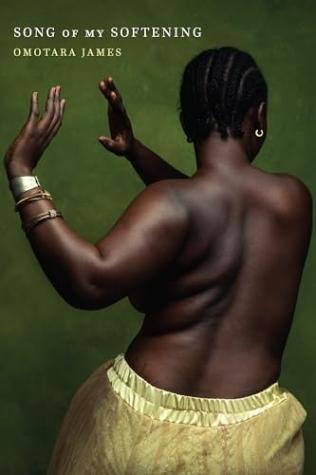
Recommended by Cosmopolitan, USA Today, Shondaland, & Book Riot “It’s not often that fat women feel such thorough representation of themselves not only in poetry but in any media and not only in the beautiful moments but in the sorrowful ones, ranging throughout life. James does a brilliant job of portraying this and all her themes brilliantly; highly recommended.” —Starred review by Library Journal The raw poems inside Song of My Softening study the ever-changing relationship with oneself, while also investigating the relationship that the world and nation has with Black queerness. Poems open wide the questioning of how we express both love and pain, and how we view our bodies in society, offering themselves wholly, with sharpness and compassion.

Idra Novey's first collection in a decade, since Patricia Smith chose Exit, Civilian for the National Poetry Series, brings a lyric intimacy to the extremes of our era. The poems juxtapose sweltering days raising children in a city with moments from a rural childhood roaming free in the woods, providing a bridge between those often polarized realities. Novey's spare, contemporary fables move across the Americas, from a woman housesitting in central Chile, surrounded by encroaching fires, to a man in New York about to give birth to a panda. Other poems return to the Allegheny Highlands of Appalachia, where Novey revisits the roads and creeks of her childhood: "Maybe we knew we only appeared/to be floating, but soon and wholly/we'd go under." Like Lydia Davis and Anne Carson, Novey draws from the well of her work translating myriad authors, from Brazilian writer Clarice Lispector to Iranian poet Garous Abdolmalekian, and from her own award-winning novels. These are deeply lived poems, evoking both a singular life and the shared urgencies of our time, a collection of great inventiveness and wit, conjuring our "bit part in the history of the future." [sample text] The Duck Shit at Clarion Creek We liked to stick it in a BB gun and shoot it. We tattooed with it. We said Hallelujah, the poor man's tanning lotion. Then the frack wells began, something black capping the water and we got high watching a green-backed heron die. We got funny at Clarion, flung each other's underwear into the trees. Why was it we got naked there like nowhere else? Maybe we knew we were getting rusted inside as the trucks we rode into the water. Maybe we only appeared to be floating, but soon and wholly we'd go under, get sucked to the bottom. We'd sink and become creek bed; its deep mud would claim us, hold us hard and close.
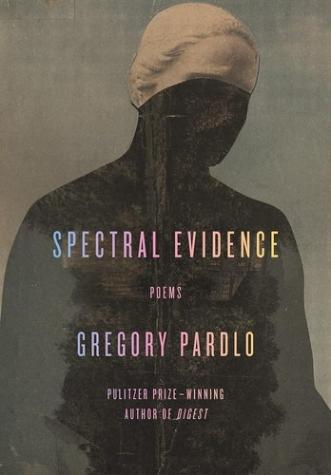
LONGLISTED FOR THE NATIONAL BOOK AWARD FOR POETRY • FINALIST FOR THE KINGSLEY TUFTS POETRY AWARD • A powerful meditation on Blackness, beauty, faith, and the force of law, from the beloved award-winning author of Digest and Air Traffic Elegant, profound, and intoxicating—Spectral Evidence, Gregory Pardlo’s first major collection of poetry after winning the Pulitzer Prize for Digest, moves fluidly among considerations of the pro-wrestler Owen Hart; Tituba, the only Black woman to be accused of witchcraft during the Salem witch trials; MOVE, the movement and militant separatist group famous for its violent stand-offs with the Philadelphia Police Department (“flames rose like orchids . . . / blocks lay open like egg cartons”); and more. At times cerebral and at other times warm, inviting and deeply personal, Spectral Evidence compels us to consider how we think about devotion, beauty and art; about the criminalization and death of Black bodies; about justice—and about how these have been inscribed into our present, our history, and the Western canon: “If I could be / the forensic dreamer / . . . / . . . my art would be a mortician’s / paints.”
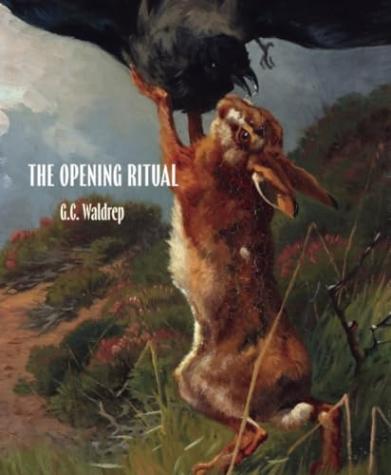
The conclusion of G. C. Waldrep's trilogy exploring chronic illness. In The Opening Ritual, G. C. Waldrep contends with the failure of the body, the irreducible body, in the light of faith. What can or should "healing" mean when it can't ever mean "wholeness" again? And what kind of architecture is "mercy" when we live inside damage? These are poems that take both the material and the spiritual seriously, that cast their unsparing glances toward "All that is not / & could never be a parable." The collection concludes with a sequence of truly grand meditations on spiritual consciousness--in one the poet notes how, in the stillness of contemplation, the world begins to hum and resound with music. The Opening Ritual attends to and fashions its song from that music.
One of The Guardian's Best Poetry Books of 2024 "Atmospheric and intoxicating, lyrical and inviting, The Wickedest is a heady night in the dance, and Caleb Femi is the life of the literary party." —Candice Carty-Williams, author of Queenie “Caleb Femi is a gift to us all from the storytelling gods. He is a poet of truth and rage, heartbreak and joy.” —Max Porter, author of Shy An immersive epic taking place over one night at an underground London house party, conjured by a multi-hyphenate sensation. Welcome to the Wickedest, the longest running house party in the South London shoob scene, always held at an undisclosed inner-city spot. You better hope you have the address: this is for locals only. Sweaty and cinematic, pulsing with rhythm and heat, every moment here—from one-on-one intimacies to the swell of the party’s collective roar—is refracted in Caleb Femi’s writing. Ingeniously blending conversations, text messages, sonnets, vignettes, monologues, photos, and lyrics, The Wickedest is a modern epic, told as a minute-by-minute chronicle of an unforgettable night out. Femi, a multi-hyphenate sensation and the author of Poor, which was called “a landmark debut for British poetry” by The Guardian, is a generational storyteller and scene setter. But The Wickedest does more than tell the story of one party; Femi uses the experience of nightlife to document the broader contexts surrounding the shoobs—the marginalization of low-income communities of color, the red tape that bars those on the edges from already shrinking communal space. Still, the party goes on. The Wickedest is a respite and a reckoning, a community of desire, care, and resistance that carries on long past the night’s end.
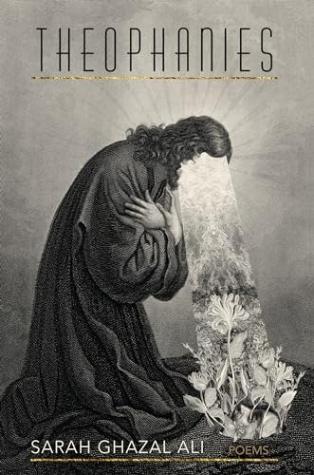
Winner of the 2025 GLCA New Writers Award for Poetry Moving between the scriptures of the Qur’an and the Bible, the poems of Theophanies arise from the speaker’s tenuous grip on her own faith while navigating the colonial legacy of Partition and inherited patriarchal expectations of womanhood. Sarah Ghazal Ali's award-winning debut, Theophanies explores the complexities and spectacles of gender, faith, and family, its poems working to spin miracles from the mundanities of desire and violence. Through art and music, Pakistani history, and scriptural stories, Theophanies struggles to envision a true self and speak back against time to the matriarchs of the larger Abrahamic faiths—the mothers at the heart of sacred history. Theophanies asks: What does it mean to have a woman’s body when that body has been hailed a vessel for the divine? Is seeing really believing, and is believing belonging? The speaker seeks to understand her own, bewildering "I," to use it with reverence, and to mythologize herself and all mothers to ensure their survival in a male-dominated world hard at work erasing them. Stitched through these poems is longing—for mothers, angels, and signs from the divine.
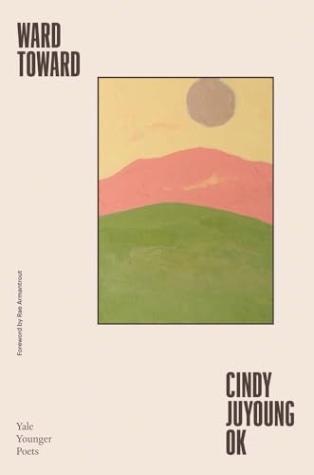
Yale Younger Poet Cindy Juyoung Ok resolutely searches for hope in spaces of fragmentation "Ok's métier in this lovely debut is an elegantly discursive, analytical style studded with ironies."--David Woo, Literary Hub "There are places," Cindy Juyoung Ok writes, "where shaking is expected, loss is / assumed." In the 118th volume of the Yale Series of Younger Poets, Ok moves assuredly between spaces--from the psych ward to a prison cell, from divided countries to hospice wards. She plumbs these institutions of constraint, ward to ward, and the role of each reality's language, word to word, as she uncovers fractured private codes and shares them in argument, song, and prayer. Using visual play in invented forms, Ok counters familiar narratives about mental illness, abuse, and death, positing that it is not a person's character or will that makes survival possible, but luck, and other people. The poems disrupt expectation with the comedy of institutionalized teens, nostalgia after the climate crisis, tenderness in a nursing home, and the wholeness of faltering Englishes. How do pagodas, Seinfeld, ransoms, swans, and copays each make or refuse meaning? Ok's resolute, energized debut shifts language's fissures to reassemble them into a new place of belonging.