#1
Book Scrolling
Best Book Lists, Award Aggregation, & Book Data
Best Book Lists, Award Aggregation, & Book Data
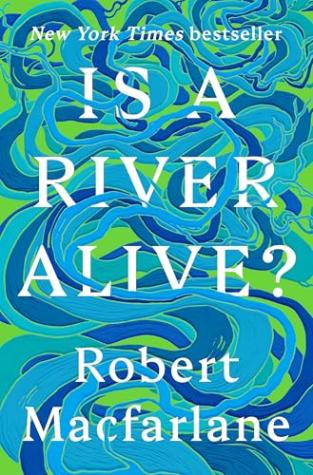
A New York Times Bestseller A #1 Sunday Times (UK) Bestseller Finalist for the 2025 Banff Mountain Book Competition in Environmental Literature A New York Times "New Nonfiction to Read This Spring" Recommendation • A Financial Times "Best Summer Book of 2025" • A Guardian "Nonfiction to Look Forward To in 2025" Pick • A Washington Post "Book to Watch For" in 2025 From the best-selling author of Underland and "the great nature writer…of this generation" (Wall Street Journal), a revelatory book that transforms how we imagine rivers—and life itself. Hailed in the New York Times as “a naturalist who can unfurl a sentence with the breathless ease of a master angler,” Robert Macfarlane brings his glittering style to a profound work of travel writing, reportage, and natural history. Is a River Alive? is a joyful, mind-expanding exploration of an ancient, urgent idea: that rivers are living beings who should be recognized as such in imagination and law. Macfarlane takes readers on three unforgettable journeys teeming with extraordinary people, stories, and places: to the miraculous cloud-forests and mountain streams of Ecuador, to the wounded creeks and lagoons of India, and to the spectacular wild rivers of Canada—imperiled respectively by mining, pollution, and dams. Braiding these journeys is the life story of the fragile chalk stream a mile from Macfarlane’s house, a stream who flows through his own years and days. Powered by dazzling prose and lit throughout by other minds and voices, Is a River Alive? will open hearts, challenge perspectives, and remind us that our fate flows with that of rivers—and always has.
An informative, well-researched retracing of a colonial-era African expedition that brings alive the preposterous “grab for Africa,” from the acclaimed author of The Lost Pianos of Siberia In 1879, King Leopold II of Belgium launched an ambitious plan to plunder Africa’s resources. The key to cracking open the continent, or so he thought, was its elephants — if only he could train them. And so he commissioned the charismatic Irish adventurer Frederick Carter to ship four tamed Asian elephants from India to the East African coast, where they were marched inland towards Congo. The ultimate aim was to establish a training school for African elephants. Following in the footsteps of the four elephants, Roberts pieces together the story of this long-forgotten expedition, in travels that take her to Belgium, Iraq, India, Tanzania and Congo. The storytelling brings to life a compelling cast of historic characters and modern voices, from ivory dealers to Catholic nuns, set against rich descriptions of the landscapes travelled. She digs deep into historic records to reckon with our broken relationship with animals, revealing an extraordinary — and enduring — story of colonial greed, ineptitude, hypocrisy, and folly.
Environmental journalist Alix Morris spends an eye-opening year getting to know these elusive, intelligent creatures, investigating the effects of their extraordinary return from the brink of extinction and how we can try to bring nature back into balance. It might be their large, strangely human eyes or their dog-like playfulness, but seals have long captured people's interest and affection, making them the perfect candidate for an environmental cause, as well as the subject of decades of study. Alix Morris spends a year with these magnetic creatures and brings them to life on the page, season by season, as she learns about their intelligence, their relationships with each other, their ecosystems, and the changing climate. Morris also gets to know all of the competing interests in the intense debate about the newly recovered seal populations in our coastal waters, from local fishermen whose catch is often diminished by savvy seals, to tribes who once relied on seal-hunting for food, clothing, and medicine, to seal rescue workers and biologists, to surfers and swimmers now encountering seal-hunting sharks in coastal waters. A Year with the Seals is a rare look at what happens when conservation efforts actually work, and how human tampering with ecosystems continues to have unexpected consequences. But it's also a gripping adventure story of a journalist determined to understand seals and our relationship with them for herself.
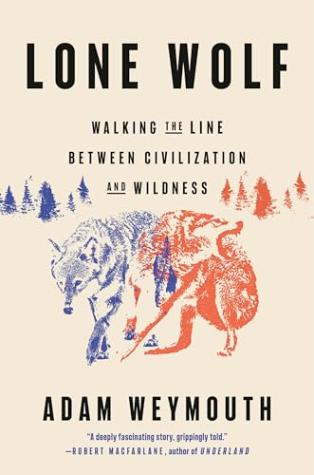
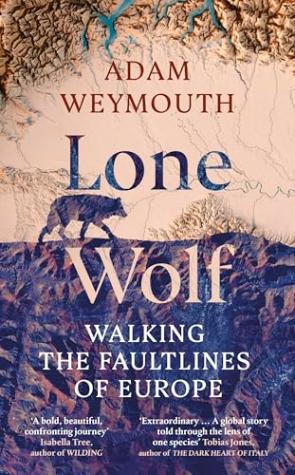
An intimate account of an epic walking journey through a tense and shifting Europe in the footsteps of one extraordinary wolf. In the winter of 2011, a young wolf, named Slavc by the scientists who collared him, left his natal pack's territory in Slovenia, embarking on what would become a two thousand kilometre trek to northern Italy. There, he found a mate—named Juliet—and they produced the first pack in the region in a hundred years. A decade later, captivated by Slavc's journey, Adam Weymouth set out to walk the same route. As he made his way through mountainous terrain, villages and farmland, he bore witness to the fears and harsh realities of those living on the margins of rural society at a time of deep political and social flux, for whom the surging wolf population posed an existential threat. In Lone Wolf, Weymouth interrogates how the wolf—loved and loathed, vilified and romanticized throughout history—is re-emerging in wild and cultivated landscapes; how the borders between us and them are slipping away; and what our deep-rooted fear of the mysterious creature really means. Sharply observed, searching, poetic and revealing, Lone Wolf is a story of wildness and of the human desire for order in an ever-evolving world.
How Silicon Valley's heartless, baseless, and foolish obsessions--with escaping death, emergent AI tyrants, and limitless growth--pervert public discourse and distract us from real social problems Tech billionaires have decided that they should determine our futures for us. According to Elon Musk, Jeff Bezos, Sam Altman, and more, the only good future for humanity is one powered by technology: trillions of humans living in space, functionally immortal, served by superintelligent AIs. In More Everything Forever, science writer Adam Becker investigates these wildly implausible and often profoundly immoral visions of tomorrow--and shows why, in reality, there is no good evidence that they will, or should, come to pass. Nevertheless, these obsessions fuel fears that overwhelm reason--for example, that a rogue AI will exterminate humanity--at the expense of essential work on solving crucial problems like climate change. What's more, these futuristic visions cloak a hunger for power under dreams of space colonies and digital immortality. The giants of Silicon Valley claim that their ideas are based on science, but the reality is darker: they come from a jumbled mix of shallow futurism and racist pseudoscience. More Everything Forever exposes the powerful and sinister ideas that dominate Silicon Valley, challenging us to see how foolish, and dangerous, these visions of the future are.
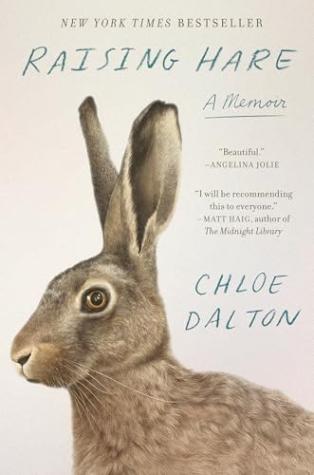
NEW YORK TIMES BESTSELLER • FINALIST FOR THE 2025 WOMEN'S PRIZE • A moving and fascinating meditation on freedom, trust, loss, and our relationship with the natural world, explored through the story of one woman’s unlikely friendship with a wild hare. A BEST BOOK: The New York Times, The Economist, ELLE “Moving. . . . Impart[s] valuable lessons about slowing down and the beauty in the unexpected.”—USA Today “A philosophical masterpiece ruminating on our place as human beings in nature.”—Matt Haig, author of The Midnight Library “A perfect testimony to the transformative power of love. In learning to love an orphaned hare, Chloe Dalton learned to love the whole wild world. The great gift of this remarkable book is the way it teaches us to do the same.”—Margaret Renkl, author of The Comfort of Crows Imagine you could hold a baby hare and bottle-feed it. Imagine that it lived under your roof and bounded around your bedroom at night, drumming on the duvet cover when it wanted your attention. Imagine that, more than two years later, it still ran in from the fields when you called it and slept in your house for hours on end. For political advisor and speechwriter Chloe Dalton, who spent lockdown deep in the English countryside, far away from her usual busy London life, this became her unexpected reality. In February 2021, Dalton stumbles upon a newborn hare—a leveret—that had been chased by a dog. Fearing for its life, she brings it home, only to discover how difficult it is to rear a wild hare, most of whom perish in captivity from either shock or starvation. Through trial and error, she learns to feed and care for the leveret with every intention of returning it to the wilderness. Instead, it becomes her constant companion, wandering the fields and woods at night and returning to Dalton’s house by day. Though Dalton feared that the hare would be preyed upon by foxes, weasels, feral cats, raptors, or even people, she never tried to restrict it to the house. Each time the hare leaves, Chloe knows she may never see it again. Yet she also understands that to confine it would be its own kind of death. Raising Hare chronicles their journey together while also taking a deep dive into the lives and nature of hares, and the way they have been viewed historically in art, literature, and folklore. We witness firsthand the joy at this extraordinary relationship between human and animal, which serves as a reminder that the best things, and most beautiful experiences, arise when we least expect them.
Instant New York Times Bestseller One of Literary Hub's Most Anticipated Books of 2025 A Goodreads Readers' Most Anticipated Fall Book From the New York Times best-selling author of Stiff and Fuzz, a rollicking exploration of the quest to re-create the impossible complexities of human anatomy. The body is the most complex machine in the world, and the only one for which you cannot get a replacement part from the manufacturer. For centuries, medicine has reached for what’s available—sculpting noses from brass, borrowing skin from frogs and hearts from pigs, crafting eye parts from jet canopies and breasts from petroleum by-products. Today we’re attempting to grow body parts from scratch using stem cells and 3D printers. How are we doing? Are we there yet? In Replaceable You, Mary Roach explores the remarkable advances and difficult questions prompted by the human body’s failings. When and how does a person decide they’d be better off with a prosthetic than their existing limb? Can a donated heart be made to beat forever? Can an intestine provide a workable substitute for a vagina? Roach dives in with her characteristic verve and infectious wit. Her travels take her to the OR at a legendary burn unit in Boston, a “superclean” xeno-pigsty in China, and a stem cell “hair nursery” in the San Diego tech hub. She talks with researchers and surgeons, amputees and ostomates, printers of kidneys and designers of wearable organs. She spends time in a working iron lung from the 1950s, stays up all night with recovery techs as they disassemble and reassemble a tissue donor, and travels across Mongolia with the cataract surgeons of Orbis International. Irrepressible and accessible, Replaceable You immerses readers in the wondrous, improbable, and surreal quest to build a new you.
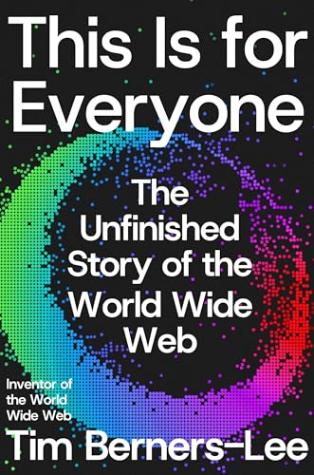
Charming, clever, self-effacing, interesting and thoughtful' Observer 'Visionary... Full of warmth and humanity' Kate Bush 'Profound' Al Gore The groundbreaking memoir from the inventor of the World Wide Web, Sir Tim Berners-Lee. This is the story of our modern age. The most influential inventor of the modern world, Sir Tim Berners-Lee is a different kind of visionary. Born in the same year as Bill Gates and Steve Jobs, Berners-Lee famously shared his invention, the World Wide Web, for no commercial reward. Its widespread adoption changed everything, transforming humanity into the first digital species. Through the web, we live, work, dream and connect. In this intimate memoir, Berners-Lee tells the story of his iconic invention, exploring how it launched a new era of creativity and collaboration while unleashing a commercial race that today imperils democracies and polarizes public debate. As the rapid development of artificial intelligence heralds a new era of innovation, Berners-Lee provides the perfect guide to the crucial decisions ahead – and a gripping, in-the-room account of the rise of the online world. Filled with Sir Tim's characteristic optimism, technical insight and wry humour, this is a book about the power of technology – both to fuel our worst instincts and to profoundly shape our lives for the better. This Is for Everyone is an essential read for understanding our times and a bold manifesto for advancing humanity’s future. 'Who is the greatest living Englishman? It would be hard to argue against the merits of Tim Berners-Lee' Stephen Fry

2025 NATIONAL BOOK AWARD FINALIST “Exceptional. . . . When It All Burns is one of those books that immerses the reader in the nuances of a world most of us know only through the lens of tragedy and destruction. Thomas’ visceral, crystalline prose only adds fuel to the fire.” —Los Angeles Times A hotshot firefighter’s gripping firsthand account of a record-setting fire season Eighteen of California’s largest wildfires on record have burned in the past two decades. Scientists recently invented the term “megafire” to describe wildfires that behave in ways that would have been nearly impossible just a generation ago, burning through winter, exploding in the night, and devastating landscapes historically impervious to incendiary destruction. In When It All Burns, wildland firefighter and anthropologist Jordan Thomas recounts a single, brutal six-month fire season with the Los Padres Hotshots—the special forces of America’s firefighters. Being a hotshot is among the most difficult jobs on earth. Thomas viscerally renders his crew’s attempts to battle flames that are often too destructive to contain. He uncovers the hidden cultural history of megafires, revealing how humanity’s symbiotic relationship with wildfire became a war—and what can be done to change it back. Thomas weaves ecology and the history of Indigenous peoples' oppression, federal forestry, and the growth of the fire industrial complex into a riveting narrative about a new phase in the climate crisis. It's an immersive story of community in the most perilous of circumstances, told with humor, humility, and affection.
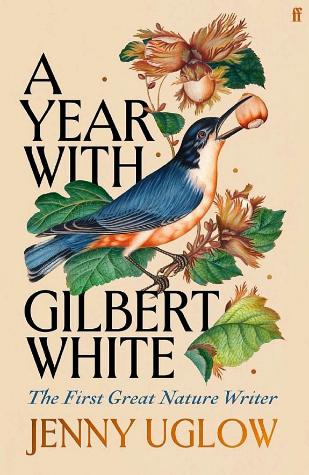
Uglow makes us feel the life beyond the facts.' GUARDIAN 'Few can match Uglow's skill at conjuring up a scene, or illuminating a character.' SUNDAY TIMES 'Charming . . . Like Radio 4's shipping forecast for naturalists.' Andrea Wulf, FINANCIAL TIMES In 1781, Gilbert White was a country curate, living in the Hampshire village he had known all his life. Fascinated by the fauna, flora and people around him, he kept journals for many years, and, at that time, was halfway to completing his path-breaking The Natural History of Selborne. No one had written like this before, with such close observation, humour, and sympathy: his spellbinding book has remained in print ever since, treasured by generations of readers. Jenny Uglow illuminates this quirky, warm-hearted man, 'the father of ecology', by following a single year in his Naturalist's Journal. As his diary jumps from topic to topic, she accompanies Gilbert from frost to summer drought, from the migration of birds to the sex lives of snails and the coming of harvest. Fresh, alive and original - and packed with rich colour illustrations - A Year with Gilbert White invites us to see the natural world anew, with astonishment and wonder. 'A feast of a book, it is beautifully illustrated and compulsively readable.' LITERARY REVIEW'The author brings her subject endearingly alive . . . [an] enriching book.' NATURE

Immediate, intimate and never less than captivating' - Guardian From the bestselling author of Burial Rites comes an inspirational memoir about her travels in Iceland, an extraordinary country that has forged a nation of storytellers. When she was seventeen years old, Hannah Kent travelled to Iceland from Australia. She’d never seen snow before, didn’t speak a word of Icelandic. All she knew was that she wanted to have an experience – to soak up something of the world. Soon she found herself isolated in a remote part of Iceland in a dark winter. It was a gruelling experience, but she quickly fell in love with the country: with its brutally beautiful landscapes and with its people. On returning home, with images of Iceland's towering glaciers and windswept tundras in her dreams, Hannah began to write. Now, as a mother and a wife, she looks back to that extraordinary year in Iceland. Praise for Burial Rites: ‘Outstanding’ – Madeline Miller ‘Gripping, intriguing and unique’ – Kate Mosse ‘One of the best Scandinavian crime novels I’ve read’ – Independent ‘Remarkable’ – The Sunday Times ‘A must-read’ – Grazia
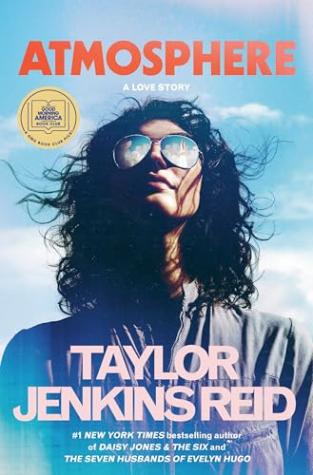
From the #1 New York Times bestselling author of The Seven Husbands of Evelyn Hugo and Daisy Jones & The Six comes an epic new novel set against the backdrop of the 1980s space shuttle program, about the extraordinary lengths we go to live and love beyond our limits. Joan Goodwin has been obsessed with the stars for as long as she can remember. She is content with her life as a professor of physics and astronomy and as aunt to her precocious niece, Frances, until she comes across an advertisement seeking the first women scientists to join NASA's space shuttle program. Suddenly, Joan burns to go to space. Selected from a pool of thousands of applicants in the summer of 1980, Joan begins training at Houston's Johnson Space Center, alongside an exceptional group of fellow candidates: Top Gun pilot Hank Redmond and scientist John Griffin, easygoing even when the stakes are high; mission specialist Lydia Danes, who has worked too hard to play nice; warmhearted Donna Fitzgerald, navigating her own secrets; and Vanessa Ford, the magnetic and mysterious aeronautical engineer who can fix any engine and fly any plane. As they become unlikely friends and prepare for their first flights, Joan finds a love she never imagined. In this new light, Joan begins to question everything she thinks she knows about her place in the observable universe. Then, in December of 1984, on mission STS-LR9, it all changes in an instant. Fast-paced, thrilling, and emotional, Atmosphere is Taylor Jenkins Reid at her best: telling a passionate and soaring story about the transformative power of love–this time among the stars.
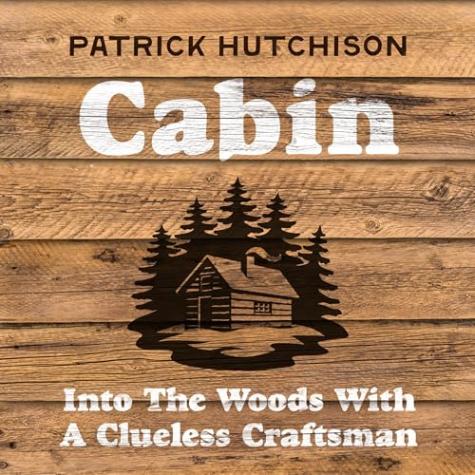
A backwoods memoir for anyone who has ever dreamed of escaping to the wild
An insider account charting one woman's career at the heart of one of the most influential companies on the planet, Careless People gives you a front-row seat to Facebook, the decisions that have shaped world events in recent decades, and the people who made them.
From the acclaimed author of the "wise and addictive" (New York Times) The Gifted School comes a riveting family drama about moral responsibility in the age of artificial intelligence. When the Cassidy-Shaws' autonomous minivan collides with an oncoming car, killing an elderly couple, seventeen-year-old Charlie is in the driver's seat, with his father, Noah, riding shotgun. In the back seat, tweens Alice and Izzy are on their phones, while their mother, Lorelei, a world leader in the field of artificial intelligence, is absorbed in her work. Yet each family member harbors a secret, implicating them all in the tragic accident. During a weeklong recuperation on the Chesapeake Bay, the family confronts the excruciating moral dilemmas triggered by the crash. Noah tries to hold the family together as a seemingly routine police investigation jeopardizes Charlie's future. Alice and Izzy turn strangely furtive. And Lorelei's odd behavior tugs at Noah's suspicions that there is a darker truth behind the incident--suspicions heightened by the sudden intrusion of Daniel Monet, a tech mogul whose mysterious history with Lorelei hints at betrayal. When Charlie falls for Monet's teenaged daughter, the stakes are raised even higher in this propulsive family drama that is also a fascinating exploration of the moral responsibility and ethical consequences of AI. Culpability explores a world newly shaped by chatbots, autonomous cars, drones, and other nonhuman forces in ways that are thrilling, challenging, and unimaginably provocative.
A gem of a book. Full of wisdom, warmth and inspiration. I learned something from every page' NIGEL SLATER 'A delightful book - warm, witty and wise' ALAN TITCHMARSH 'A beautiful refraction of a year, encounters with plants and friends and gardens in the terrific company of Mary Keen. Her diary is a pure delight' EDMUND DE WAAL 'What's your favourite garden?' people ask. And when I answer, 'Mine, of course,' they look surprised. Over her long career, Mary Keen has created some of the finest gardens in England. But rather than tell the story of those paradises, this is the diary about everyday watchfulness in the places Mary loves best - her own back garden and allotment nearby. Beginning at the lowest ebb of the grower's year - when November leaves are falling and flowers in retreat - Mary shows us how one's perspective of time changes in the pleasure of nurturing plants. Time can slide to a standstill as you stop to stare at a flower, or flash to the past when another triggers a memory. As the diary records the ordinary, the ephemeral and the horticulturally useful, in a patchwork of life and tasks, we also witness the little dramas in the village where she lives and meet her family and friends who are an integral part of her gardening community. By the time Diary of a Keen Gardener reaches back to November again, the reader has gained much practical knowledge and come to understand Mary's gardening philosophy, and what she continues to learn about plants, ecology and life. Her diary is an essential book for anyone with an interest in gardening. 'Mary Keen is the Annie Ernaux of the herbaceous border. She has vast reserves of knowledge, an exemplary eye and best of all a roving curiosity and rare openness to experiment and change. A gorgeous, constantly thought-provoking book, beguiling for gardeners and readers alike' OLIVIA LAING
The story of the wildest experiments in early photography and the wild people who undertook them.
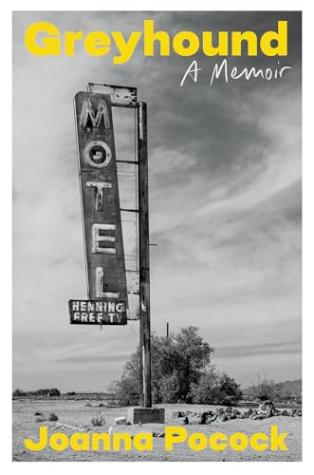
Combining history, reportage, and nature writing with intimate moments of reflection, Greyhound tells of the journey from miscarriage to parenthood, and the purpose creativity gives to our lives when we feel purposeless In 2006, in the wake of several miscarriages, Joanna Pocock traveled by Greyhound bus across the United States from Detroit to Los Angeles. Seventeen years later, she undertakes the same journey, revisiting the cities, edgelands, highways, and motels in the footsteps of the few women writers—Simone de Beauvoir, Ethel Mannin, and Irma Kurtz—who also chronicled their road trips across the United States. Combining memoir, reportage, environmental writing, and literary criticism, Greyhound is a moving and immersive book that captures an America in the throes of late capitalism with all its beauty, horror, and complexity.
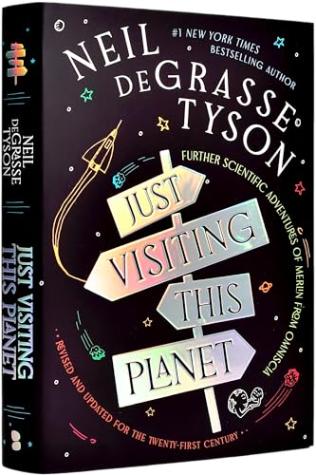
From Neil deGrasse Tyson, #1 New York Times bestselling author of Astrophysics for People in a Hurry, comes a spirited journey to the planets and stars, revealing the answers to many mysteries of our galaxy and beyond. In this companion volume to Merlin's Tour of the Universe, we visit again with Merlin, a timeless space traveler from Planet Omniscia, who answers a collection of imaginative questions about the cosmos from curious stargazers. Whether waxing poetic about Earth and its environs, the Sun and its stellar siblings, the world of light, physical laws, or galaxies near and far, Merlin's remarks are engaging, humorous, and clear as a starry night sky. Merlin tackles such conundrums as: If aliens exploded Earth's moon, what effect would it have on us? Are black holes gathering matter in preparation for another Big Bang in another time and dimension? Why does the Moon look bigger on the horizon? Lively and entertaining, Just Visiting This Planet is an indispensable guidebook to the universe.
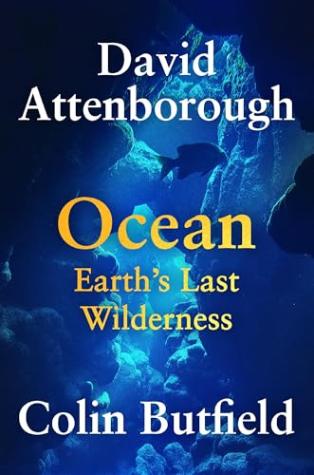
Award-winning broadcaster and natural historian David Attenborough and longtime collaborator Colin Butfield present a powerful call to action focused on our planet's oceans, exploring how critical this habitat is for the survival of humanity and the future of Earth. Through personal stories, history and cutting-edge science, Ocean uncovers the mystery, the wonder and the frailty of the most unexplored habitat on our planet - and the one which shapes the land we live on, regulates our climate and creates the air we breathe. The book showcase the oceans' remarkable resilience: they are the part of our world that can, and in some cases has, recovered the fastest, if we only give them the chance. Drawing a course across David Attenborough's own lifetime, Ocean takes readers on an adventure-laden voyage through eight unique ocean habitats, through countless intriguing species, and through the most astounding discoveries of the last 100 years, to a future vision of a fully restored marine world, even richer and more spectacular than we could possibly hope. Ocean reveals the past, present and potential future of our blue planet. It is a book almost a century in the making, but one that has never been more urgently needed.
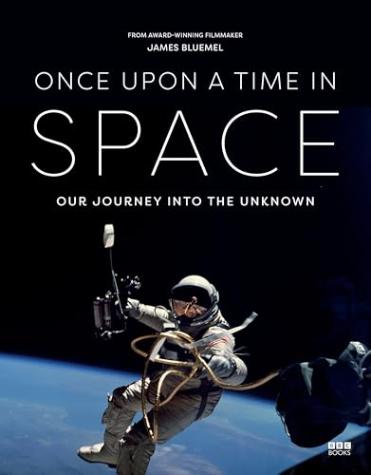
Featuring stunning full-colour photography from both personal collections of astronauts and NASA's archives, the human story of space is told through intimate and powerful testimonies from the astronauts, scientists, engineers and space tourists who have lived it. It's been 63 years since Yuri Gagarin became the first human to ever go into space. Since then, only 676 people have followed him up there. But now with huge technological advances bridging the gap between our planet and all that lies beyond, that number is about to rise dramatically. Once Upon a Time in Space is the human story of how we've made it this far - the remarkable achievements, tragic losses, left-field experiments, renegade characters and ever-shifting powerplay - and where we're about to go. Looking ahead as we take the first steps towards becoming an interplanetary species, Once Upon a Time in Space brings you closer to the incredible story of our next stage of evolution. Life on Earth will never be the same again.
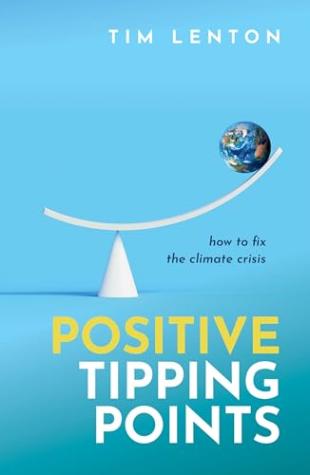
We can all play a part in triggering positive tipping points that accelerate us out of the climate crisis. How do we get out of a climate crisis of our own making? As global change escalates, we are already starting to experience damaging tipping points in the social, ecological and climate systems that we depend upon - and much worse is to come. These shocks tell us we have left it too late for incremental change to save us: we need to change course fast to avoid the worst, yet we are acting far too slowly. Our supposed leaders appear paralysed by the complexity of the situation or, worse still, determined to maintain the status quo. This is leading to increasing despair, especially among young people. At the same time, hopeful signs of change are also growing fast. The climate movement, the spread of electric vehicles, and the rise of renewable energy are all examples of change accelerating in the right direction. They have all passed tipping points where their uptake becomes self-propelling, taking the status quo by surprise - and they are spreading worldwide. To get ourselves out of trouble in time, we need more of these positive tipping points towards global sustainability, which eliminate greenhouse gas emissions, reverse the destruction of nature, and promote social justice. This book identifies the positive tipping points that can help us avoid the worst from damaging tipping points. It takes the reader on a journey through understanding how tipping points happen, showing how tipping points have transformed human societies in the past, and facing up to the profound risks that climate tipping points pose to us all now. Then, it offers hope and empowerment in a series of uplifting examples of social and technological changes that started small but are already spreading rapidly to transform our societies to a more sustainable state. It identifies the positive tipping points that are still needed, the forces that are opposing them, and the actions that can trigger them, showing how we can all play a part in triggering positive tipping points that accelerate us out of the climate crisis.

Pulitzer finalist Shoshana Walter exposes the country’s failed response to the opioid crisis, and the malfeasance, corruption, and snake oil which blight the drug rehabilitation industry. Our country’s leaders all seem to agree: People who suffer from addiction need treatment. Today, more people have access to treatment than ever before. So why isn’t it working? The answer is that in America—where anyone can get addicted—only certain people get a real chance to recover. Despite record numbers of overdose deaths, our default response is still to punish, while rehabs across the United States fail to incorporate scientifically proven strategies and exploit patients. We’ve heard a great deal about the opioid crisis foisted on America by Big Pharma, but we’ve heard too little about the other half of this epidemic—the reason why so many remain mired in addiction. Until now. In this book, you’ll find the stories of four people who represent the failures of the rehab-industrial complex, and the ways our treatment system often prevents recovery. April is a black mom in Philadelphia, who witnessed firsthand how the government’s punitive response to the crack epidemic impeded her own mother’s recovery—and then her own. Chris, a young middle-class white man from Louisiana, received more opportunities in his addiction than April, including the chance to go to treatment instead of prison. Yet the only program the judge permitted was one that forced him to perform unpaid back-breaking labor at for-profit companies. Wendy is a mother from a wealthy suburb of Los Angeles, whose son died in a sober living home. She began investigating for-profit treatment programs—yet law enforcement and regulators routinely ignored her warnings, allowing rehab patients to die, again and again. Larry is a surgeon who himself struggled with addiction, who would eventually become one of the first Suboxone prescribers in the nation, drawing the scrutiny of the Drug Enforcement Administration. Together, these four stories illustrate the pitfalls of a system that not only fails to meet the needs of people with addiction, but actively benefits from maintaining their lower status. They also offer insight into how we might fix that system and save lives.
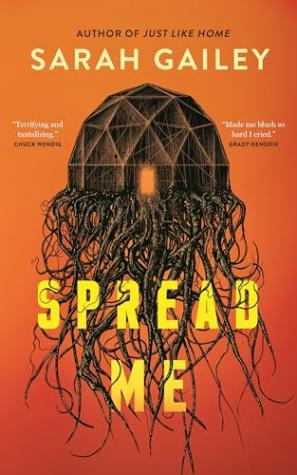
Spread Me is a darkly seductive tale of survival from Sarah Gailey, bestselling author of Just Like Home. A routine probe at a research station turns deadly when the team discovers a strange specimen in search of a warm place to stay. Kinsey has the perfect job as the team leader in a remote research outpost. She loves the isolation and the way the desert keeps temptations from the civilian world far out of reach. When her crew discovers a mysterious specimen buried deep in the sand, Kinsey breaks quarantine and brings it into the hab. But the longer it's inside, the more her carefully controlled life begins to unravel. Temptation has found her after all, and it can't be ignored any longer. One by one, Kinsey's team realizes the thing they're studying is in search of a new host—and one of them is the perfect candidate....
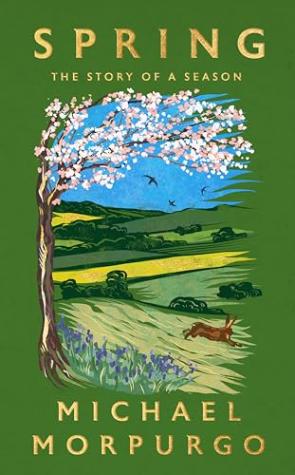
And there, as I struggle to open the gate, I happen to glance down and see it. Frog spawn! Clumps of it, floating like grey slimy sponges on the surface of the puddle. I crouch down to be close to it, to the beginning of new life. That's what I'm feeling all around me as I wend my way up the hill, through Bluebell Wood and homewards, taking my time to stand and stare and wonder.' Michael Morpurgo has lived on Nethercott farm, deep in Devon river country, for more than forty years. In Spring, he observes the changing season all around him, as new shoots emerge and seeds are sown, lambs are born and blossom flowers overhead. As the weeks pass, we accompany Michael as he watches the lambing on the farm, walks through the bluebell woods, and feeds the birds in his garden in his wellies and dressing gown. He describes dramatic encounters with sparrowhawks, hares and otters, while sharing other magical discoveries, new poems and reminiscences about childhood and springs gone by. This is an uplifting burst of springtime joy from one of the nation's best loved authors.
#1 New York Times bestselling author Brené Brown returns with an urgent call to reimagine the essentials of courageous leadership. In a time when uncertainty runs deep and bluster, hubris, and even cruelty are increasingly framed as acceptable leadership, Brown delivers practical, actionable insights that illuminate the mindsets and skill sets essential to reclaiming focus and driving growth through connection, discipline, and accountability. Over the past six years, Brené Brown, along with a global community of coaches and facilitators, has taken more than 150,000 leaders in 45 countries through her Dare to Lead courage-building work. In Strong Ground, Brown shares the lessons from these experiences along with wisdom from other thinkers. This is a vital playbook for everyone from senior leaders developing and executing complex strategies to Gen Z-ers entering and navigating turbulent work environments. It is also an unflinching assessment of what happens when we continue to perpetuate the falsehood that performance and wholeheartedness are mutually exclusive. With equal amounts of optimism and caution about AI, Brown writes, “I hear a lot of experts trying to soothe people’s anxiety about the pace of technological change by offering platitudes like, What makes us human will ensure our relevance. This is dangerous simply because, right now, we’re not especially good at what makes us human. We’re not hardwired for this level of uncertainty, and many of us feel as if the constant need to self-protect is driving the humanity right out of us. This is why organizational transformation today must foster deep connection, deep thinking, and deep collaboration. We need the courage to lead people in a way that honors and protects the wisdom of the human spirit.” Brown offers a broad assessment of the skill sets and mindsets we need moving forward, including the capacity for respectful and difficult conversations, increased productive urgency and smart prioritization rather than reactivity, and strategic risk-taking, paradoxical thinking, and situational and anticipatory awareness skills. She identifies the toughest skill set as the discipline, humility, and confidence to unlearn and relearn. Brown writes, “Individuals and organizations are building new muscles. Finding our strong ground—that athletic stance—is the only thing that can provide both unwavering stability in a maelstrom of uncertainty and a platform for the fast, explosive change that the world is demanding.”
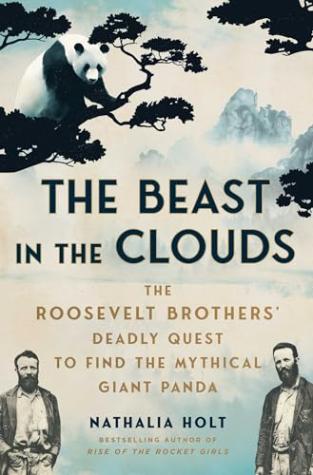
A 2025 New York Times Nonfiction Summer Preview Pick “A beautiful and powerful book.” —Candice Millard, New York Times bestselling author “Valuable, revelatory, and contagiously page-turning.” —David Michaelis, New York Times bestselling author For lovers of history, nature, and adventure, the stunning true story of Theodore Roosevelt’s sons and their 1929 Himalayan expedition to prove the existence of the beishung, the panda bear, to the western world, from the New York Times bestselling author of Rise of the Rocket Girls. The Himalayas—a snowcapped mountain range that hides treacherous glacier crossings, raiders poised to attack unsuspecting travelers, and air so thin that even seasoned explorers die of oxygen deprivation. Yet among the dangers lies one of the most beautiful and fragile ecosystems in the world. During the 1920s, dozens of expeditions scoured the Chinese and Tibetan wilderness in search of the panda bear, a beast that many believed did not exist. When the two eldest sons of President Theodore Roosevelt sought the bear in 1928, they had little hope of success. Together with a team of scientists and naturalists, they accomplished what a decade of explorers could not, ultimately introducing the panda to the West. In the process, they documented a vanishing world and set off a new era of conservation biology. Along the way, the Roosevelt expedition faced an incredible series of hardships as they disappeared in a blizzard, were attacked by robbers, overcome by sickness and disease, and lost their food supply in the mountains. The explorers would emerge transformed, although not everyone would survive. Beast in the Clouds brings alive these extraordinary events in a potent nonfiction thriller featuring the indomitable Roosevelt family. From the soaring beauty of the Tibetan plateau to the somber depths of human struggle, Nathalia Holt brings her signature “immersive, evocative” (Bookreporter) voice to this astonishing tale of adventure, harrowing defeat, and dazzling success.
The book of you is dominated by night-black seas, sprinkled with shining island sentences: tiny islets of remembrance, glimmering in the night.' Memory isn't all that we think it is. Each time we revisit even our most deeply ingrained memories, they can soften and consolidate, distorted. Yet they also carry within them the blueprint of each person's unique style. From episodic memories like shining islands in dark water, and forgotten memories that underpin our personalities, to the memories authored by others that we carry within us, Rowlands explores our negotiations with the past and how memory makes us who we are. Drawing on the latest neurological and psychological research and on a range of writers and thinkers, The Book of Memory is a mesmerising journey into how memories are made, lost and remembered, with important consequences for how we understand ourselves.
The fascinating history of a daring team of sexologists who built the first trans clinic in the shadow of the Third Reich.
#1 New York Times Bestseller #1 Sunday Times Bestseller #1 Amazon Bestseller #1 Audible Bestseller This book was originally published with Mel Robbins as the sole author. A revised cover introduces her daughter, Sawyer Robbins, as the co-author. Customers will be shipped either of the covers at random. A Life-Changing Tool Millions of People Can’t Stop Talking About What if the key to happiness, success, and love was as simple as two words? If you've ever felt stuck, overwhelmed, or frustrated with where you are, the problem isn't you. The problem is the power you give to other people. Two simple words—Let Them—will set you free. Free from the opinions, drama, and judgments of others. Free from the exhausting cycle of trying to manage everything and everyone around you. The Let Them Theory puts the power to create a life you love back in your hands—and this book will show you exactly how to do it. In her latest groundbreaking book, The Let Them Theory, Mel Robbins—New York Times bestselling author and one of the world's most respected experts on motivation, confidence, and mindset—teaches you how to stop wasting energy on what you can't control and start focusing on what truly matters: YOU. Your happiness. Your goals. Your life. Using the same no-nonsense, science-backed approach that's made The Mel Robbins Podcast a global sensation, Robbins explains why The Let Them Theory is already loved by millions and how you can apply it in eight key areas of your life to make the biggest impact. Within a few pages, you'll realize how much energy and time you've been wasting trying to control the wrong things—at work, in relationships, and in pursuing your goals—and how this is keeping you from the happiness and success you deserve. Written as an easy-to-understand guide, Robbins shares relatable stories from her own life, highlights key takeaways, relevant research and introduces you to world-renowned experts in psychology, neuroscience, relationships, happiness, and ancient wisdom who champion The Let Them Theory every step of the way. Learn how to: Stop wasting energy on things you can't control Stop comparing yourself to other people Break free from fear and self-doubt Release the grip of people's expectations Build the best friendships of your life Create the love you deserve Pursue what truly matters to you with confidence Build resilience against everyday stressors and distractions Define your own path to success, joy, and fulfillment . . . and so much more. The Let Them Theory will forever change the way you think about relationships, control, and personal power. Whether you want to advance your career, motivate others to change, take creative risks, find deeper connections, build better habits, start a new chapter, or simply create more happiness in your life and relationships, this book gives you the mindset and tools to unlock your full potential. Order your copy of The Let Them Theory now and discover how much power you truly have. It all begins with two simple words.
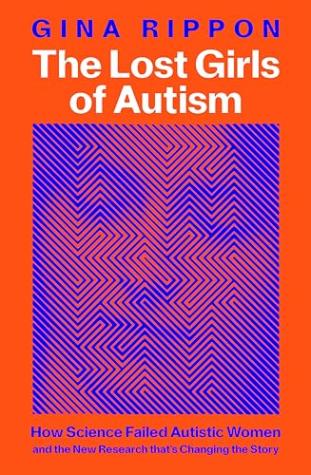
MACMILLAN The Lost Girls of Autism How Science Failed Autistic Women - and the New Research thats Changing the Story. ABISBOOK. MACMILLAN.
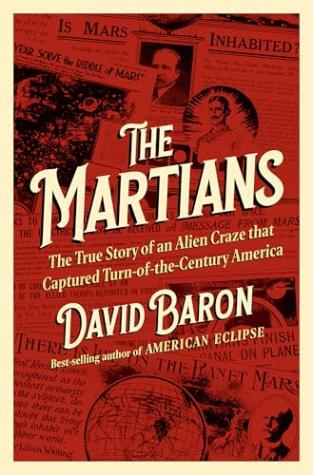
Long before NASA began contemplating a visit to our neighboring world, a turn-of-the-century Mars craze invaded the public's imagination, here thrillingly retold in David Baron's The Martians. "There Is Life on the Planet Mars" --New York Times, December 9, 1906
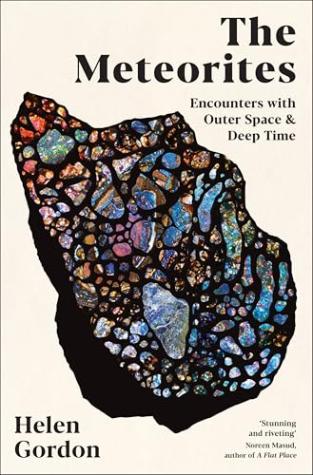
Profile Books The Meteorites Encounters with Outer Space and Deep Time. ABISBOOK. Profile Books.

From one of today’s leading garden designers, known for her keen eye for colour and modern romanticism, comes a volume that reveals in thirty exquisitely planted gardens dozens of ideas on how to adapt traditional garden design elements for today’s more ecologically based aesthetics. Over her thirty-year career, celebrated designer Jo Thompson has become recognised for her timeless planting, well-proportioned, English-style gardens rendered modern by a staunch commitment to biodiversity—to the eye this translates as a looser formality than English gardens of the past, though every bit as romantic. Thompson reminds us that we are never, in complete charge of how our gardens grow; other forces are always at work, as they should be when we allow sustainable practices to help us guide rather than try to dominate nature’s own efforts. Hundreds of beautiful colour photos and chapter-by-chapter case studies of individual gardens designed around various themes provide inspiration for all gardeners who want their gardens to feel not merely well planted, but truly alive and atmospheric.
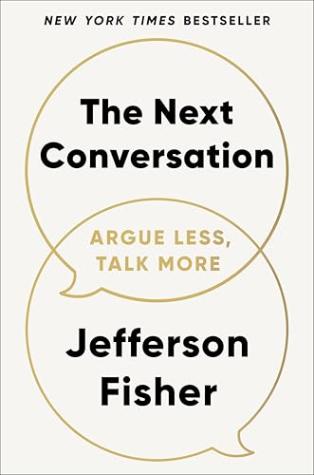
From communication expert Jefferson Fisher, the definitive book on making your next conversation the one that changes everything No matter who you’re talking to, The Next Conversation gives you immediately actionable strategies and phrases that will forever change how you communicate. Jefferson Fisher, trial lawyer and one of the leading voices on real-world communication, offers a tried-and-true framework that will show you how to transform your life and your relationships by improving your next conversation. Fisher has gained millions of followers through short, simple, practical videos teaching people how to argue less and talk more. Whether it’s handling a heated conversation, dealing with a difficult personality, or standing your ground with confidence, his down-to-earth teachings have helped countless people navigate life’s toughest situations. Now for the first time, Fisher has distilled his three-part communication system (Say it with control, Say it with confidence, Say it to connect) that can easily be applied to any situation. You will learn: Why you should never “win” an argument How to assert yourself and communicate with intention How to set boundaries and frame conversations Why saying less is often more How to overcome conflict with connection The Next Conversation will give you practical phrases that will lead to powerful results, from breaking down defensiveness in a hard talk with a family member to finding your own assertive voice at the boardroom conference table. Your every word matters, and by controlling how you communicate every day, you will create waves of positive impact that will resonate throughout your relationships to last a lifetime. Everything you want to say, and how you want to say it, can be found in The Next Conversation.
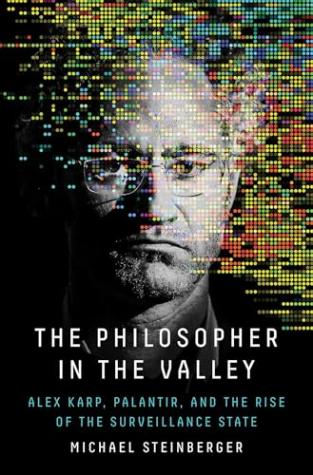
An acclaimed New York Times Magazine writer brings us into the world of the controversial technology firm Palantir and its very colorful and outspoken CEO, Alex Karp, tracing the ascent of Big Data, the rise of surveillance technology, and the shifting global balance of power in the 21st century. Palantir builds data integration software: its technology ingests vast quantities of information and quickly identifies patterns, trends, and connections that might elude the human eye. Founded in 2003 to help the US government in the war on terrorism—an early investor was the CIA—Palantir is now a $400 billion global colossus whose software is used by major intelligence services (including the Mossad), the US military, dozens of federal agencies, and corporate giants like Airbus and BP. From AI to counterterrorism to climate change to immigration to financial fraud to the future of warfare, the company is at the nexus of the most critical issues of the twenty-first century. Its CEO, Alex Karp, is a distinctive figure on the global business scene. A biracial Jew who is also severely dyslexic, Karp has built Palantir into a tech giant despite having no background in either business or computer science. Instead, he’s a trained philosopher who has become known for his strongly held views on a range of issues and for his willingness to grapple with the moral and ethical implications of Palantir’s work. Those questions have taken on added urgency during the Trump era, which has also brought attention to the political activism of Karp’s close friend and Palantir cofounder Peter Thiel. In The Philosopher in the Valley, journalist Michael Steinberger explores the world of Alex Karp, Palantir, and the future that they are leading us toward. It is an urgent and illuminating work about one of Silicon Valley’s most secretive and powerful companies, whose technology is at the leading edge of the surveillance state.
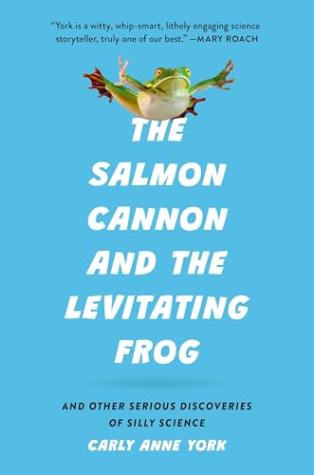
A playful examination of how science's silliest research leads to crucial breakthroughs and enduring insights Why would anyone research how elephants pee? Or study worms who tie themselves into a communal knot? Or quantify the squishability of a cockroach? It all sounds pointless, silly, or even disgusting. Maybe it is. But in The Salmon Cannon and the Levitating Frog, Carly Anne York shows how unappreciated, overlooked, and simply curiosity-driven science has led to breakthroughs big and small. Got wind power? You might have humpback whales to thank. Know anything about particle physics? Turns out there is a ferret close to the heart of it all. And if you want to keep salmon around, be thankful for that cannon! The research itself can seem bizarre. But it drives our economy. And what's more, this stuff is simply cool. York invites readers to appreciate the often unpredictable journey of scientific exploration, highlighting that the heart of science lies in the relentless pursuit of knowledge for its own sake. Emphasizing the hard work of the people behind the discoveries, this is an accessible, story-driven book that shows how important and exciting it is to simply let curiosity run wild.
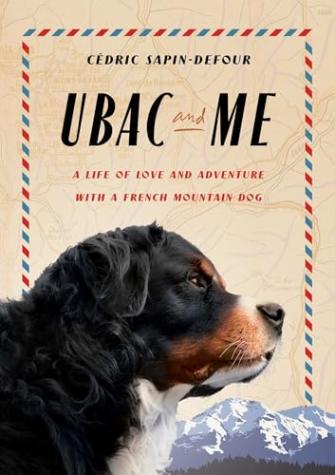
This international sensation is a charming and moving memoir of a dog’s transformative love, and an intimate journey into what heals us after loss. “Having a dog as company makes nothing feel excessive—not time or space. It’s not even about passing time, but being of it.” A tiny ad in a local newspaper catches Cedric Sapin-Defour’s eye: a litter of Bernese Mountain Dog puppies need homes. A lonely, single gym teacher and mountain climber in the French Alps, Cedric visits the dogs and immediately falls for a puppy with a blue collar who steps over his siblings to get to him. Named Ubac, French for the north side of the mountain—the rainy, cloudy slope—the puppy quickly upends Cedric’s life. They go on hikes together, taking to the hills and exploring, forging a bond that brings joy and a sense of fulfillment and adventure. They brave the world together, hate to be apart, crave the mountains and the natural world; they protect each other. Over the course of thirteen years, their pack expands to include Mathilde, Cedric’s wife, and more dogs. Ubac and Me is an intimate meditation on a joyous life lived too fast, the aching pain of separation, and the transformative effect of unconditional love. A dog named for the rainy side of the mountain is an inspiring lesson in how walking the rocky, cloudy hills together can bring the greatest light, the sunniest joys, even if the shared journey is unbearably short.
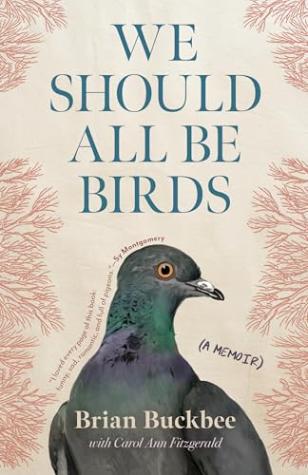
A charming and moving debut memoir about how a man with a mystery illness saves a pigeon, and how the pigeon saves the man.
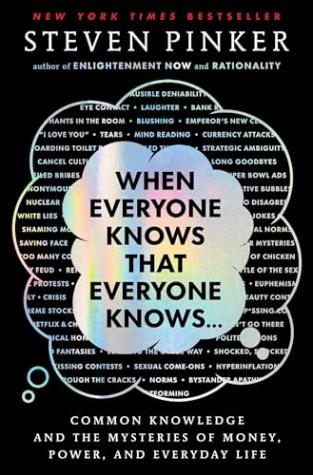
From one of the world’s most celebrated intellectuals, a brilliantly insightful work that explains how we think about each other’s thoughts about each other’s thoughts, ad infinitum. It sounds impossible, but Steven Pinker shows that we do it all the time. This awareness, which we experience as something that is public or “out there,” is called common knowledge, and it has a momentous impact on our social, political, and economic lives. Common knowledge is necessary for coordination, for making arbitrary but complementary choices like driving on the right, using paper currency, and coalescing behind a political leader or movement. It’s also necessary for social coordination: everything from rendezvousing at a time and place to speaking the same language to forming enduring relationships of friendship, romance, or authority. Humans have a sixth sense for common knowledge, and we create it with signals like laughter, tears, blushing, eye contact, and blunt speech. But people also go to great lengths to avoid common knowledge—to ensure that even if everyone knows something, they can’t know that everyone else knows they know it. And so we get rituals like benign hypocrisy, veiled bribes and threats, sexual innuendo, and pretending not to see the elephant in the room. Pinker shows how the hidden logic of common knowledge can make sense of many of life’s enigmas: financial bubbles and crashes, revolutions that come out of nowhere, the posturing and pretense of diplomacy, the eruption of social media shaming mobs and academic cancel culture, the awkwardness of a first date. Artists and humorists have long mined the intrigues of common knowledge, and Pinker liberally uses their novels, jokes, cartoons, films, and sitcom dialogues to illuminate social life’s tragedies and comedies. Along the way he answers questions like: Why do people hoard toilet paper at the first sign of an emergency? Why are Super Bowl ads filled with ads for crypto? Why, in American presidential primary voting, do citizens typically select the candidate they believe is preferred by others rather than their favorite? Why did Russian authorities arrest a protester who carried a blank sign? Why is it so hard for nervous lovers to say goodbye at the end of a phone call? Why does everyone agree that if we were completely honest all the time, life would be unbearable? Consistently riveting in explaining the paradoxes of human behavior, When Everyone Knows That Everyone Knows… invites us to understand the ways we try to get into each other’s heads and the harmonies, hypocrisies, and outrages that result.
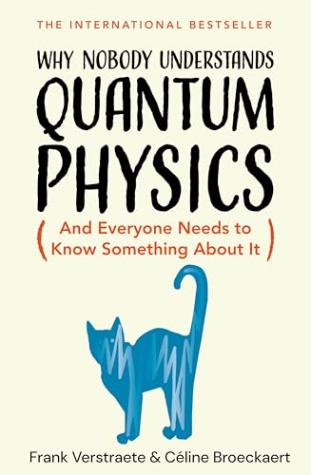
The International Bestseller 'A physics book unlike any other. The scope, depth and artistry are breathtaking' - John Preskill, theoretical physicist and Feynman Professor of Theoretical Physics at Caltech 'Entertaining, unorthodox and highly readable' - Professor Ian Stewart FRS, bestselling co-author of The Science of Discworld Quantum physics is the cornerstone of our world. Yet, at the same time, it's one of the hardest subjects for ordinary mortals to grasp. In Why Nobody Understands Quantum Physics, a husband-and-wife duo demystifies this essential branch of science. He, one of the world's leading physicists, peels back layers of the quantum world with unparalleled insights into the latest research. She, a writer, puts these scientific revelations into everyday language with wit and charm. Together, they unravel the reasons the universe behaves in the weird ways it does - and just why it's so important to understand them. Their book will reveal: How symmetry governs the universe. The untold stories of pioneering women in quantum science. How quantum principles power our gadgets and lives. The real essence behind quantum puzzles and discoveries. The result is a groundbreaking journey into quantum physics that transforms our understanding of the universe and its boundless possibilities with clarity, wonder and humour. Why Nobody Understands Quantum Physics is a bridge between the complex world of quantum physics and the curious mind - simplifying without diluting and enlightening without overwhelming. 'A delightful book for all those who do not speak the language of mathematics but are curious about the most beautiful of theories and their impact on our lives' - Barbara Terhal, theoretical physicist