The Best Books of 2024 – Nonfiction (A Year-End List Aggregation)

Nonfiction – 2024

“What are the best Nonfiction books released in 2024?” We looked at 478 of the top Nonfiction books, aggregating and ranking them so we could

#1
#2
#150
Australian Gospel: A Family Saga

Australian Gospel: A Family Saga

From one of Australia's most brilliant writers, a dark comedy about the tangled fates of two couples and the children trapped between them Michael and Mary Shelley are Christian fanatics who loathe their fellow Australians – especially their 'foul language, reckless indulgence of alcohol and obsession with idiotic ball sports'. Lenore and Tom Blaine are working-class Queensland publicans raising a large family in a raucous, loving, rugby-league-obsessed home. There's just one problem. The Blaines are foster parents to three of the Shelleys' children, who were removed from Michael and Mary as infants. And the Shelleys are prepared to do anything to get them back. Anything. Australian Gospel is a family saga like no other – heartbreaking, hilarious and altogether astonishing. 'The astonishing tale of a foster family held together by ferocious love and courage. What makes a real family? Whose rights should triumph in battles over a child? Which inheritances can we escape, and which will haunt us forever? All this is explored in an irreverently joyful family saga you'll never forget.' Charlotte Wood 'One of the best writers of his generation.' Benjamin Law 'Blaine's native tongue, an ocker irreverence, gives his writing an amiable charm and reflects the styles of artists such as Tim Winton, Stella Franklin and Helen Garner.' Australian Book Review 'Fact is stranger than fiction but it never arrives fully formed. We need writers like Blaine to do that for us. Here he delivers a rollicking, insightful and moving account of the everyday heavens and hells we make for ourselves, and each other.' Sarah Krasnostein, author of The Trauma Cleaner

#154
Because I’m Not Myself, You See

Because I’m Not Myself, You See

A frank, hopeful and darkly funny memoir of postpartum psychosis and recovery 'I do not know who I am anymore or where I have gone ...' Ariane Beeston is a child protection worker and newly registered psychologist when she gives birth to her first child – and very quickly begins to experience scary breaks with reality. Out of fear and shame, she keeps her delusions and hallucinations secret, but as the months pass Ariane gets worse. Much worse. Finally admitted to a mother and baby psychiatric unit, the psychologist is forced to learn how to be the patient. With medication, the support of her husband, psychotherapy and, ultimately, time, Ariane rebuilds herself. And she also begins a new chapter working in perinatal mental health, developing resources to support other new mothers. Because I'm Not Myself, You See is a candid, often humorous memoir of motherhood and madness, interwoven with research and expert commentary. It's the story of the impossible pressures placed on new mothers and how quickly things can go wrong during 'the happiest time of your life'. It's also about life on the other side of serious illness, trying to make sense of what doesn't make sense, and finding humour, beauty and joy when things don't go according to plan. 'Blistering, beautiful, true' —Susan Johnson, author of A Better Woman, From Where I Fell and Aphrodite's Breath 'Ariane Beeston's honesty, poetry and wisdom will save lives.' —Anna Spargo-Ryan, author of A Kind of Magic 'Both riveting and informative, this is an unflinching look at what it is like from inside postpartum psychosis.' —Anne Buist, Professor of Women's Mental Health, University of Melbourne, and co-author with Graeme Simsion of The Glass House 'A memoir like no other ... sing[s] with mordant humour on the page' —Geordie Williamson 'A beautifully written, raw and important memoir for anyone who has had a baby' —Daisy Turnbull 'This book . . . stands on the cliff and dives off with one brave breath. Ariane Beeston gives voice to what many women experience at varying levels and in doing so will make others feel less alone.' —Megan Rogers, author of The Heart Is a Star

#202
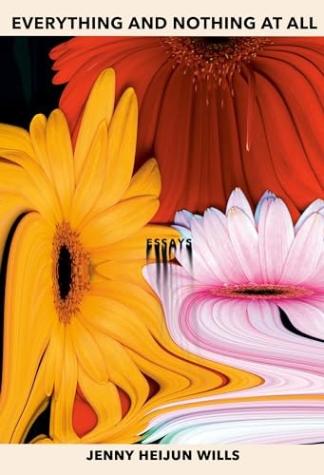
Everything and Nothing At All

Everything and Nothing At All

FINALIST FOR THE 2024 WRITERS' TRUST PRIZE FOR NONFICTION • The Globe and Mail's Best Books of 2024 • CBC's Best Canadian Non-Fiction of 2024 "Here is my disconnect: the private and public self. My mind and body. The real person and curated spectacle. . . . Are there actual roots with which to fasten this performance to anything real?" As a transnational and transracial adoptee, Jenny Heijun Wills has spent her life navigating the fraught spaces of ethnicity and belonging. As a pan-polyam individual, she lives between types of family—adopted, biological, chosen—and "community"; heternormativity and queerness; commitment and a constellation of love. And as a parent with a lifelong eating disorder, who self-harms to cope with mental illness, her love language is to feed, but daily she wishes her body would disappear. These facets of Wills' being have served as the anchors she once clung to and the harsh parameters of what others now imagine she can be. Everything and Nothing At All weaves together a lifetime of literary criticism, cultural study, and a personal history into a staggering tapestry of knowledge. And though the experiences of accumulating this knowledge have often been shot through with pain, Wills spins these threads into priceless gold—a radical, fearless vision of kinship and family. Devastating, illuminating, and beautifully crafted, these essays breathe life into the ambiguities and excesses of Wills' self, transforming them into something more—something that could be everything.

#222
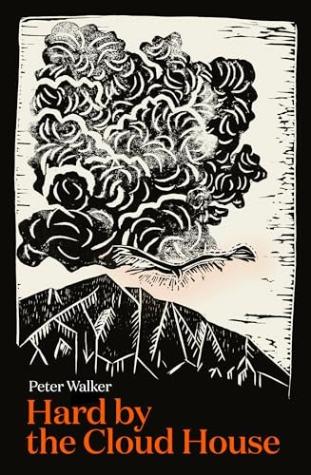
Hard By The Cloud House

Hard By The Cloud House

The legend of Te Hokioi, the extinct giant eagle of New Zealand, leads Peter Walker from a Canterbury sheep run to the Rare Books Room of the British Library and to &‘ sacred' Raiatea in Polynesia, as he uncovers the story of the predator which once ruled over the Southern Alps.Was this bird, whose existence was confirmed by scientists only in 2009, the Rukh of Arab legends? Does that mean that medieval Islamic mariners were once blown far into the Pacific, saw the great raptor and made it back home to tell the tale?From the calamitous encounter of South Island Maori with colonisation to the glories of tenth-century Baghdad, Hard by the Cloud House is a heady mix of history, memoir, science and mythology.

#262
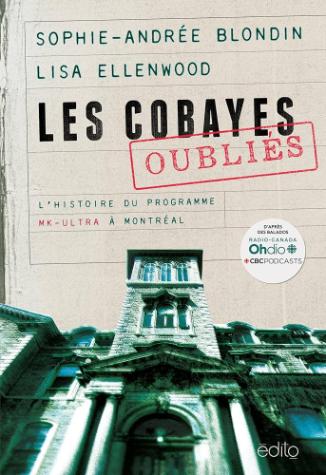
Les cobayes oubliés: L’histoire du programme MK-ULTRA à Montréal

Les cobayes oubliés: L’histoire du programme MK-ULTRA à Montréal

À Montréal, autour des années 1950, le docteur Ewen Cameron, un psychiatre renommé, mène des expériences sur ses patients. Doses massives d’électrochocs, administration de LSD, messages aliénants joués en boucle... Son ambition est grande : il souhaite reprogrammer leur cerveau. Ses patients ne s’en tirent pas tous indemnes. Plusieurs décennies plus tard, des journalistes s’intéressent à ce pan obscur de l’histoire de la psychiatrie au Canada, et le véritable contexte des travaux du Dr Cameron est alors mis au jour. Motivée par le climat paranoïaque de la guerre froide, la CIA a en partie financé ces expériences via le programme occulte MK ULTRA. Objectif : réussir à contrôler le cerveau humain, et notamment celui des prisonniers de guerre. De Montréal à Guantanamo en passant par Nuremberg, le Manitoba et même l’Irlande du Nord, Sophie-Andrée Blondin et Lisa Ellenwood proposent une synthèse inédite du scandale MK-ULTRA. Elles mettent ainsi en lumière les origines scientifiques des tentatives de manipulation de l’esprit, les effets dévastateurs de l’ambition d’un psychiatre, et les séquelles que vivent encore des victimes et leurs familles. Aujourd’hui, une question s’impose : quand la science perd ses repères éthiques sans qu’aucun responsable soit désigné, l’histoire est-elle condamnée à se répéter ?

#272
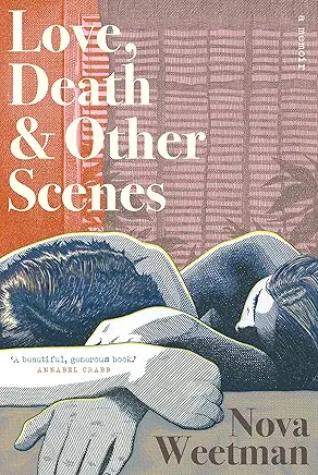
Love, Death & Other Scenes

Love, Death & Other Scenes

Nova Weetman's unforgettable memoir reflects on experiences of love and loss from throughout her life: losing her beloved partner, playwright Aidan Fennessy, during the 2020 Covid lockdown; the death of her mother ten years earlier; her daughter turning eighteen and finishing school; and her own physical ageing. Using these events as a lens, Nova considers how various kinds of losses – and the complicated love they represent – change us and can become the catalysts for letting go.This is a moving, honest account of farewelling a partner of twenty-five years, parenting teenagers through grief, buying property for the first time at the age of fifty, and learning to appreciate spending hours alone with only the household cat for company. Warm and wise – and often joyful – Love, Death & Other Scenes ultimately focuses on the living we do after losses and what we learn from them.

#305
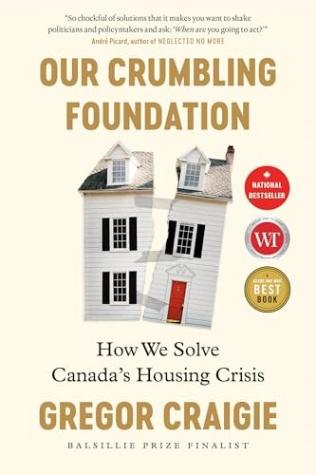
Our Crumbling Foundation

Our Crumbling Foundation

NATIONAL BESTSELLER FINALIST FOR THE BALSILLIE PRIZE FOR PUBLIC POLICY A GLOBE AND MAIL BEST BOOK An urgent and illuminating examination of the unrelenting housing crisis Canadians find ourselves facing, by Balsillie Prize finalist and CBC Radio host Gregor Craigie, Our Crumbling Foundation offers real-life solutions from around the world and hope for new housing innovation in the face of seemingly impossible obstacles. Canada is experiencing a housing shortage. Although house prices in major Canadian cities appeared to have topped out, new housing isn’t coming onto the market quickly enough. Higher interest rates have only tightened the pressure on buyers, and renters, too, as rising mortgage rates cost landlords more, which are passed along to tenants in rent increases. Even with recent federal budget commitments to bring more housing online by 2030, there will still be a shortfall of 3.5 million homes by then. Gregor Craigie is a CBC journalist in Victoria, one of the highest-priced housing markets in the country. On his daily radio show On The Island he's been talking for over 17 years to local experts and to those across the country about housing. Craigie has travelled to many of the places he profiles in the book, and in his interviews with Canadians he presents the human face of the shortfall as he speaks with renters, owners and homeless people, exploring their varying predicaments and perspectives. He then shows, through comparable profiles of people across the globe, how other North American and international jurisdictions (Tokyo, Paris, Berlin, Helsinki, Singapore, Ireland, to name a few) are housing their citizens better, faster and with determination—solutions that could be put into practice here. With passion, knowledge and vigour, Craigie explains how Canada reached this critical impasse and will convince those who may not yet recognize how badly our entire country is in need of change. Our Crumbling Foundation provides hope for finding our way out of the crisis by recommending a number of approaches at all levels of government. The prescription for how we’re going to house ourselves, and do so equitably, requires not just a business solution, nor simply a social solution, but rather a combination of both, working hand-in-hand with all levels of government, and quickly, in order to catch up with and outpace the needs of Canadians in this ever-intensifying crisis over a basic human right.

#318
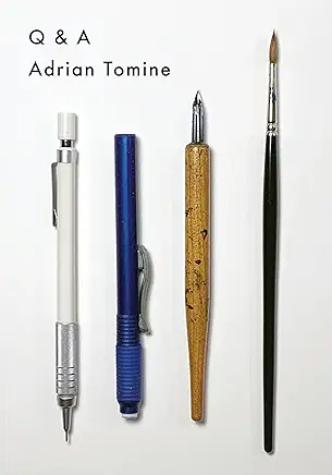
Q&A

Q&A

Everything you wanted to know about storytelling or Adrian Tomine but were too afraid to ask “That would’ve been too easy and spontaneous for me, and I had to find a way to make everything more complicated.” And yet for over thirty years, bestselling author, screenwriter, and New Yorker cover artist Adrian Tomine’s work has set the standard for contemporary storytelling. With Tomine, his readership has grown from the dedicated following of his comic-book series Optic Nerve to include a wider but still engaged, opinionated, and ever-inquiring public. And now, for the first time in print, Tomine responds to his readers directly, tackling their questions and comments with generosity, humor, and vulnerability. Q&A is one part personal history, one part masterclass in crafting quality entertainment. With questions pulled from his time at the Substack Writers’ Residency, and with additional, new material, Q&A is an indispensable addition to the collections of eagle-eyed fans and aspiring artists, writers, and cartoonists alike. Tomine answers questions about his preferred tools, his creative process, the ups and downs of adaptation, and perhaps most importantly—how to pronounce his last name. Illustrated with drafts, outtakes, and photos from the artist’s personal collection, this rare peek into the mind of a contemporary cartooning giant lays out the method to his meticulous brand of madness. The artist looks back on his career in response to queries from his—maybe adoring but mostly curious—public with his signature dry wit and unflinching, self-deprecating honesty.

#346
Sonny Boy: A Memoir

Sonny Boy: A Memoir

The Instant New York Times Bestseller “The book is a beautiful trip.” (New York Times Magazine) • “Soulful . . . Feels like hanging out within a history of American movies over the last 50 years.” (Los Angeles Times) • “Startlingly cinematic ... A fine memoir.” (The Guardian) From one of the most iconic actors in the history of film, an astonishingly revelatory account of a creative life in full To the wider world, Al Pacino exploded onto the scene like a supernova. He landed his first leading role, in The Panic in Needle Park, in 1971, and by 1975, he had starred in four movies—The Godfather and The Godfather Part II, Serpico, and Dog Day Afternoon—that were not just successes but landmarks in the history of film. Those performances became legendary and changed his life forever. Not since Marlon Brando and James Dean in the late 1950s had an actor landed in the culture with such force. But Pacino was in his midthirties by then, and had already lived several lives. A fixture of avant-garde theater in New York, he had led a bohemian existence, working odd jobs to support his craft. He was raised by a fiercely loving but mentally unwell mother and her parents after his father left them when he was young, but in a real sense he was raised by the streets of the South Bronx, and by the troop of buccaneering young friends he ran with, whose spirits never left him. After a teacher recognized his acting promise and pushed him toward New York’s fabled High School of Performing Arts, the die was cast. In good times and bad, in poverty and in wealth and in poverty again, through pain and joy, acting was his lifeline, its community his tribe. Sonny Boy is the memoir of a man who has nothing left to fear and nothing left to hide. All the great roles, the essential collaborations, and the important relationships are given their full due, as is the vexed marriage between creativity and commerce at the highest levels. The book’s golden thread, however, is the spirit of love and purpose. Love can fail you, and you can be defeated in your ambitions—the same lights that shine bright can also dim. But Al Pacino was lucky enough to fall deeply in love with a craft before he had the foggiest idea of any of its earthly rewards, and he never fell out of love. That has made all the difference.

#370
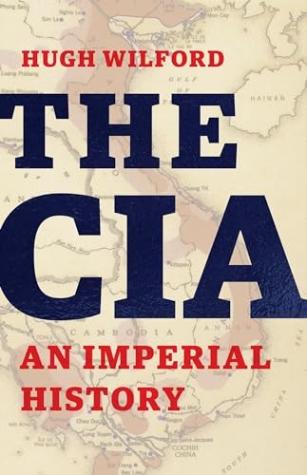
The C.I.A.

The C.I.A.

In this “superb” (Kathryn Olmsted) new history of American intelligence, a celebrated historian uncovers how the CIA became the foremost defender of America’s covert global empire As World War II ended, the United States stood as the dominant power on the world stage. In 1947, to support its new global status, it created the CIA to analyze foreign intelligence. But within a few years, the Agency was engaged in other operations: bolstering pro-American governments, overthrowing nationalist leaders, and surveilling anti-imperial dissenters at home. The Cold War was an obvious reason for this transformation—but not the only one. In The CIA, celebrated intelligence historian Hugh Wilford draws on decades of research to show the Agency as part of a larger picture, the history of Western empire. While young CIA officers imagined themselves as British imperial agents like T. E. Lawrence, successive US presidents used the covert powers of the Agency to hide overseas interventions from postcolonial foreigners and anti-imperial Americans alike. Even the CIA’s post-9/11 global hunt for terrorists was haunted by the ghosts of empires past. Comprehensive, original, and gripping, The CIA is the story of the birth of a new imperial order in the shadows. It offers the most complete account yet of how America adopted unaccountable power and secrecy abroad and at home.

#381
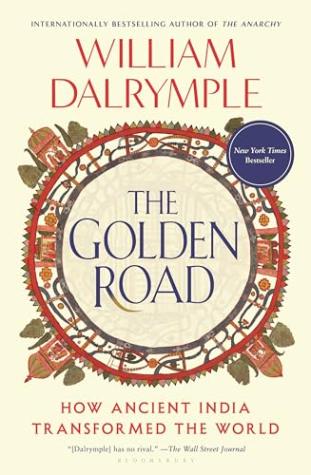
The Golden Road: How Ancient India Transformed the World

The Golden Road: How Ancient India Transformed the World

The internationally bestselling author of The Anarchy returns with a sparkling, soaring history of ideas, tracing South Asia's under-recognized role in producing the world as we know it. For a millennium and a half, India was a confident exporter of its diverse civilization, creating around it a vast empire of ideas. Indian art, religions, technology, astronomy, music, dance, literature, mathematics and mythology blazed a trail across the world, along a Golden Road that stretched from the Red Sea to the Pacific. In The Golden Road, William Dalrymple draws from a lifetime of scholarship to highlight India's oft-forgotten position as the heart of ancient Eurasia. For the first time, he gives a name to this spread of Indian ideas that transformed the world. From the largest Hindu temple in the world at Angkor Wat to the Buddhism of China, from the trade that helped fund the Roman Empire to the creation of the numerals we use today (including zero), India transformed the culture and technology of its ancient world – and our world today as we know it.

#398
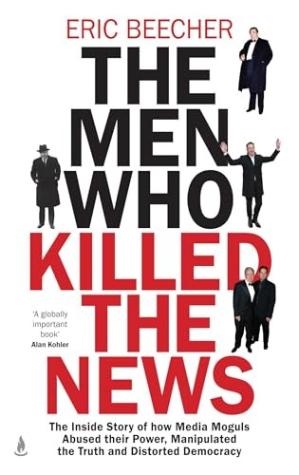
The Men Who Killed the News

The Men Who Killed the News

Crikey owner and ex-News Corp and Fairfax editor lifts the lid on the abuse of power by media moguls - from William Randolph Hearst to Elon Musk - and on his own unique experience of working for (and being sued by) the Murdochs. What's gone wrong with our media? Eric Beecher's answer is: its owners, many of the biggest of them at least. They have exploited their privileged position in society to distort journalism and accumulate vast wealth and power. Few people know the media like Eric Beecher. He has worked at Fairfax and News Corp, founded and sold Text Media, and is currently the biggest shareholder in the news website Crikey. He's been journalist, editor and media proprietor, and has the rare distinction of having both worked for and recently been sued by (unsuccessfully) the Murdochs. This is a book only he could write: a portrait of the rise of media moguls over the past two centuries, and an analysis of how they have destroyed news journalism and undermined truth by using the shield of the 'freedom of the press' to cover their quest for personal power. In a year that will see Fox News and Donald Trump fight an election, no book could be more timely and important in our understanding of how the media has become an agent of misinformation.The Men Who Killed the News is deeply informed by Beecher's own experience and delivers engaging first-hand insights. His in-depth research takes us from Joseph Pulitzer and William Randolph Hearst - the first sensationalist newspaper owners in the US, who made fortunes and established dynasties - to their UK successors Lords Northcliffe and Beaverbrook; contemporary media dictators like Conrad Black, Robert Maxwell and Rupert Murdoch; and on to Musk and Zuckerberg, the latest, tech-inflected manifestation of the mogul. In 2024, more people will vote in elections than ever before: never has the role of the media been more virulent and of more urgent interest. Eric Beecher is the perfect guide to understanding how media power works: the players, the techniques, the strategies, the behind-the-scenes machinations.

#401
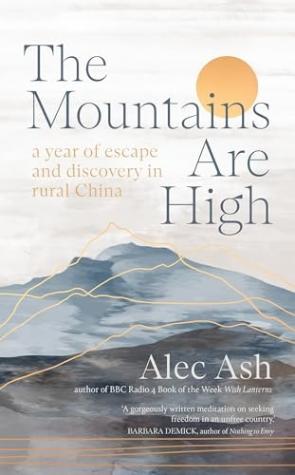
The Mountains Are High

The Mountains Are High

In 2020, Alec Ash left behind his old life as a journalist in buzzy Beijing, and moved to Dali, a rural valley in China's Yunnan province, centred around a great lake shaped like an ear and overlooked by the Cang mountain range. Here, he hoped to find the space and perspective to mend heartbreak after a broken engagement and escape the trappings of fast-paced, high-pressured city life. Originally home to the Bai people, Dali has become a richly diverse community of people of all ages and backgrounds, with one shared goal- to reject the worst parts of modernity and live more simply, in tune with the natural world and away from the nexus of authoritarian power. It is into this community that Alec embeds himself, from political dissidents to bohemian hippies, charting his first year of life in Dali among these fascinating neighbours. The Mountains Are Highis a beautifully written, candid memoir about the catalysts for change and personal development that comes from taking a leap of faith, and how remodeling your attitude to conventional success can genuinely transform your life. As one of the 'new migrants' tells Alec when he arrives- it is easy to change your environment, far more difficult to change your mind. 'I am deeply impressed that Alec was able to create a new life for himself in this remote corner of rural China where "the mountains are high and the emperor far away," and indeed, to gain a new perspective on life. Beautifully crafted, The Mountains are Highwas a joy to read.' -Lijia Zhang, author of Lotus 'The Mountains Are Highis a fascinating story of modern China, told from the perspective of those trying to escape it. Alec Ash conjures up the paradise of Dali and the colourful characters that live there with an eye for the surreal. A writer of great talent.' -Charlie Gilmour, author of Featherhood 'The Mountains Are Highis a treasure. Part escapist tale, and part a lesson on the history, culture, and people of enchanted Dali. It's a young man's journey we all yearn for and only dream of taking.' -James M. Zimmerman, author of The Peking Express- the bandits who stole a train, stunned the West, and broke the Republic of China
#471
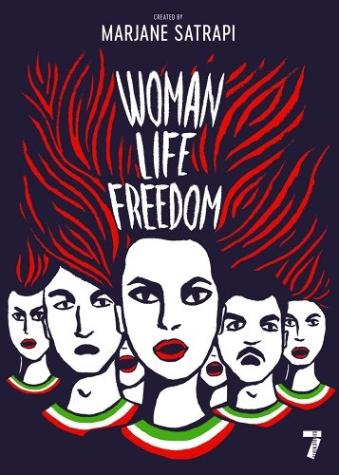
Woman, Life, Freedom

Woman, Life, Freedom

The emancipator revolution of woman, life, freedom in Iran was the most different political and cultural movement among the whole middle east, because it was calling for liberalism in the Middle East. Iranians rose up bravely against the Islamic totalitarian regime. By putting away traditions and political Islam as a governing model in the Middle East region, they want to destroy the rigid laws and put an end to the religious governing system. They want change and are fighting for women's rights, liberalism, equality, and democracy. In this book, the nature and the reason of this revolution is debated.