The Best Books of 2023 – Biography And Memoir (A Year-End List Aggregation)

Bio/Memoir – 2023

“What are the best Biography And Memoir books released in 2023?” We looked at 264 of the top Biography And Memoir books, aggregating and ranking

#1
HOW TO SAY BABYLON

HOW TO SAY BABYLON

Throughout her childhood, Safiya Sinclair's father, a volatile reggae musician and militant adherent to a strict sect of Rastafari, became obsessed with her purity, in particular, with the threat of what Rastas call Babylon, the immoral and corrupting influences of the Western world outside their home. He worried that womanhood would make Safiya and her sisters morally weak and impure, and believed a woman's highest virtue was her obedience. In an effort to keep Babylon outside the gate, he forbade almost everything. In place of pants, the women in her family were made to wear long skirts and dresses to cover their arms and legs, head wraps to cover their hair, no make-up, no jewelry, no opinions, no friends. Safiya's mother, while loyal to her father, nonetheless gave Safiya and her siblings the gift of books, including poetry, to which Safiya latched on for dear life. And as Safiya watched her mother struggle voicelessly for years under housework and the rigidity of her father's beliefs, she increasingly used her education as a sharp tool with which to find her voice and break free. Inevitably, with her rebellion comes clashes with her father, whose rage and paranoia explodes in increasing violence. As Safiya's voice grows, lyrically and poetically, a collision course is set between them. How to Say Babylon is Sinclair's reckoning with the culture that initially nourished but ultimately sought to silence her; it is her reckoning with patriarchy and tradition, and the legacy of colonialism in Jamaica. Rich in lyricism and language only a poet could evoke, How to Say Babylon is both a universal story of a woman finding her own power and a unique glimpse into a rarefied world we may know how to name, Rastafari, but one we know little about.
#2
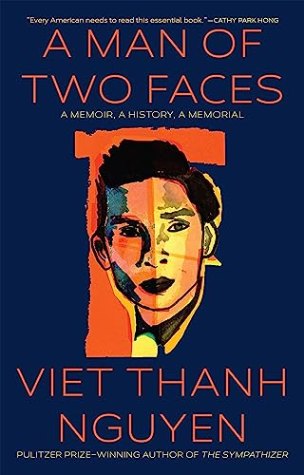
A Man of Two Faces: A Memoir, A History, A Memorial

A Man of Two Faces: A Memoir, A History, A Memorial

With insight, humor, formal invention, and lyricism, in A Man of Two Faces Viet Thanh Nguyen rewinds the film of his own life. He expands the genre of personal memoir by acknowledging larger stories of refugeehood, colonization, and ideas about Vietnam and America, writing with his trademark sardonic wit and incisive analysis, as well as a deep emotional openness about his life as a father and a son.

#3
You Could Make This Place Beautiful

You Could Make This Place Beautiful

INSTANT NEW YORK TIMES BESTSELLER "A bittersweet study in both grief and joy." ---Time "A sparklingly beautiful memoir-in-vignettes" (Isaac Fitzgerald, New York Times bestselling author) that explores coming of age in your middle age--from the bestselling poet and author of Keep Moving. "Life, like a poem, is a series of choices." In her memoir You Could Make This Place Beautiful, poet Maggie Smith explores the disintegration of her marriage and her renewed commitment to herself. The book begins with one woman's personal heartbreak, but its circles widen into a reckoning with contemporary womanhood, traditional gender roles, and the power dynamics that persist even in many progressive homes. With the spirit of self-inquiry and empathy she's known for, Smith interweaves snapshots of a life with meditations on secrets, anger, forgiveness, and narrative itself. The power of these pieces is cumulative: page after page, they build into a larger interrogation of family, work, and patriarchy. You Could Make This Place Beautiful, like the work of Deborah Levy, Rachel Cusk, and Gina Frangello, is an unflinching look at what it means to live and write our own lives. It is a story about a mother's fierce and constant love for her children, and a woman's love and regard for herself. Above all, this memoir is "extraordinary" (Ann Patchett) in the way that it reveals how, in the aftermath of loss, we can discover our power and make something new and beautiful.

#4
King: A Life

King: A Life

King mixes revelatory new research with accessible storytelling to offer an MLK for our times. Vividly written and exhaustively researched, Jonathan Eig's King: A Life is the first major biography in decades of the civil rights icon Martin Luther King Jr.--and the first to include recently declassified FBI files. In this revelatory new portrait of the preacher and activist who shook the world, the bestselling biographer gives us an intimate view of the courageous and often emotionally troubled human being who demanded peaceful protest for his movement but was rarely at peace with himself. He casts fresh light on the King family's origins as well as MLK's complex relationships with his wife, father, and fellow activists. King reveals a minister wrestling with his own human frailties and dark moods, a citizen hunted by his own government, and a man determined to fight for justice even if it proved to be a fight to the death. As he follows MLK from the classroom to the pulpit to the streets of Birmingham, Selma, and Memphis, Eig dramatically re-creates the journey of a man who recast American race relations and became our only modern-day founding father--as well as the nation's most mourned martyr. In this landmark biography, Eig gives us an MLK for our times: a deep thinker, a brilliant strategist, and a committed radical who led one of history's greatest movements, and whose demands for racial and economic justice remain as urgent today as they were in his lifetime. Includes 8 pages of black-and-white photographs

#5
Spare

Spare

It was one of the most searing images of the twentieth century: two young boys, two princes, walking behind their mother’s coffin as the world watched in sorrow—and horror. As Princess Diana was laid to rest, billions wondered what Prince William and Prince Harry must be thinking and feeling—and how their lives would play out from that point on.

#6
Mott Street: A Chinese American Family’s Story of Exclusion and Homecoming.

Mott Street: A Chinese American Family’s Story of Exclusion and Homecoming.

A sweeping narrative history of the Chinese Exclusion Act through an intimate portrayal of one family's epic journey to lay down roots in America *One of Elle's Best Memoirs of 2023 (So Far)* As the only child of a single mother in Queens, Ava Chin found her family's origins to be shrouded in mystery. She had never met her father, and her grandparents' stories didn't match the history she read at school. Mott Street traces Chin's quest to understand her Chinese American family's story. Over decades of painstaking research, she finds not only her father but also the building that provided a refuge for them all. Breaking the silence surrounding her family's past meant confronting the Chinese Exclusion Act of 1882--the first federal law to restrict immigration by race and nationality, barring Chinese immigrants from citizenship for six decades. Chin traces the story of the pioneering family members who emigrated from the Pearl River Delta, crossing an ocean to make their way in the American West of the mid-nineteenth century. She tells of their backbreaking work on the transcontinental railroad and of the brutal racism of frontier towns, then follows their paths to New York City. In New York's Chinatown she discovers a single building on Mott Street where so many of her ancestors would live, begin families, and craft new identities. She follows the men and women who became merchants, "paper son" refugees, activists, and heads of the Chinese tong, piecing together how they bore and resisted the weight of the Exclusion laws. She soon realizes that exclusion is not simply a political condition but also a personal one. Gorgeously written, deeply researched, and tremendously resonant, Mott Street uncovers a legacy of exclusion and resilience that speaks to the American experience, past and present.

#7
Winnie and Nelson

Winnie and Nelson

One of the most celebrated political leaders of a century, Nelson Mandela has been written about by many biographers and historians. But in one crucial area, his life remains largely untold: his marriage to Winnie Madikizela-Mandela. During his years in prison, Nelson grew ever more in love with an idealized version of his wife, courting her in his letters as if they were young lovers frozen in time. But Winnie, every bit his political equal, found herself increasingly estranged from her jailed husband’s politics. Behind his back, she was trying to orchestrate an armed seizure of power, a path he feared would lead to an endless civil war.

#8
Congratulations, The Best Is Over!: Essays

Congratulations, The Best Is Over!: Essays

NATIONAL BESTSELLER - The beloved author of Here for It returns with an all-new collection of heartening, deeply relatable, and laugh-out-loud essays about what happens after happily ever after. "Funny, insightful, and hopeful . . . a profound meditation on what it means to come home, and on finding your way again after the chaos of life takes you off your path."--John Paul Brammer, author of Hola Papi! After going viral "reading" the chaotic political news, having one-too-many awkward social encounters, and coming to terms with his intersecting identities, R. Eric Thomas finally knew who he was and where he was going. He was living his best life. But then everything changed. In this collection of insightful and hilarious essays, Thomas moves back to his perpetually misunderstood hometown of Baltimore (a place he never wanted to return, even to be buried) and behaving completely out of character. They say you can't go home again, but what if you and home have changed beyond recognition? From attending his twenty-year high school reunion and discovering another person's face on his name badge, to splattering an urgent care room with blood à la The Shining, to being terrorized by a plague of gay frogs who've overtaken his backyard, Thomas provides the nitty, and sometimes the gritty, details of wrestling with the life he thought he'd left behind while trying to establish a new one. With wit, heart, and hope for the future, Congratulations, The Best Is Over! is the not-so-gentle reminder we all need that even when life doesn't go according to plan, we can still find our way back home.

#9
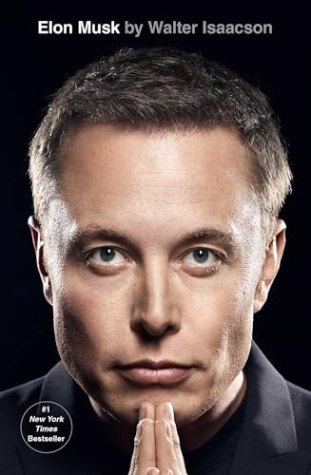
Elon Musk

Elon Musk

#1 New York Times bestseller From the author of Steve Jobs and other bestselling biographies, this is the astonishingly intimate story of the most fascinating and controversial innovator of our era--a rule-breaking visionary who helped to lead the world into the era of electric vehicles, private space exploration, and artificial intelligence. Oh, and took over Twitter. When Elon Musk was a kid in South Africa, he was regularly beaten by bullies. One day a group pushed him down some concrete steps and kicked him until his face was a swollen ball of flesh. He was in the hospital for a week. But the physical scars were minor compared to the emotional ones inflicted by his father, an engineer, rogue, and charismatic fantasist. His father's impact on his psyche would linger. He developed into a tough yet vulnerable man-child, prone to abrupt Jekyll-and-Hyde mood swings, with an exceedingly high tolerance for risk, a craving for drama, an epic sense of mission, and a maniacal intensity that was callous and at times destructive. At the beginning of 2022--after a year marked by SpaceX launching thirty-one rockets into orbit, Tesla selling a million cars, and him becoming the richest man on earth--Musk spoke ruefully about his compulsion to stir up dramas. "I need to shift my mindset away from being in crisis mode, which it has been for about fourteen years now, or arguably most of my life," he said. It was a wistful comment, not a New Year's resolution. Even as he said it, he was secretly buying up shares of Twitter, the world's ultimate playground. Over the years, whenever he was in a dark place, his mind went back to being bullied on the playground. Now he had the chance to own the playground. For two years, Isaacson shadowed Musk, attended his meetings, walked his factories with him, and spent hours interviewing him, his family, friends, coworkers, and adversaries. The result is the revealing inside story, filled with amazing tales of triumphs and turmoil, that addresses the question: are the demons that drive Musk also what it takes to drive innovation and progress?

#10
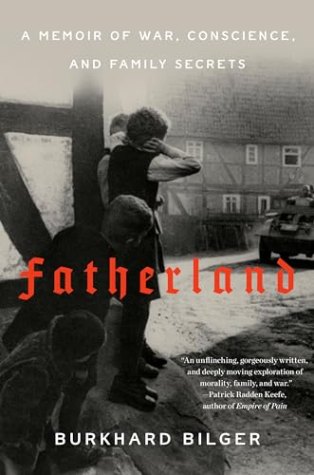
Fatherland: A Memoir of War, Conscience and Family Secrets

Fatherland: A Memoir of War, Conscience and Family Secrets

A New Yorker staff writer investigates his grandfather, a Nazi Party Chief, in "a finely etched memoir with the powerful sweep of history" (David Grann, #1 bestselling author of Killers of the Flower Moon) "Fatherland maintains the momentum of the best mysteries and a commendable balance."--The New York Times "Unflinching and illuminating . . . Bilger's haunting memoir reminds us, the past is prologue to who we are, as well as who we choose to be."--The Wall Street Journal A NEW YORKER BEST BOOK OF THE YEAR One spring day in northeastern France, Burkhard Bilger's mother went to the town of Bartenheim, where her father was posted during the Second World War. As a historian, she had spent years studying the German occupation of France, yet she had never dared to investigate her own family's role in it. She knew only that her father was a schoolteacher who was sent to Bartenheim in 1940 and ordered to reeducate its children--to turn them into proper Germans, as Hitler demanded. Two years later, he became the town's Nazi Party chief. There was little left from her father's era by the time she visited. But on her way back to her car, she noticed an old man walking nearby. He looked about the same age her father would have been if he was still alive. She hurried over to introduce herself and told him her father's name, Karl Gönner. "Do you happen to remember him?" she said. The man stared at her, dumbstruck. "Well, of course!" he said. "I saved his life, didn't I?" Fatherland is the story behind that story--the riveting account of Bilger's nearly ten-year quest to uncover the truth about his grandfather. Was he guilty or innocent, a war criminal or a man who risked his life to shield the villagers? Long admired for his profiles in The New Yorker, Bilger brings the same open-hearted curiosity to his family history and the questions it raises: What do we owe the past? How can we make peace with it without perpetuating its wrongs?

#11
Hijab Butch Blues: A Memoir

Hijab Butch Blues: A Memoir

When fourteen-year-old Lamya H realizes she has a crush on her teacher—her female teacher—she covers up her attraction, an attraction she can’t yet name, by playing up her roles as overachiever and class clown. Born in South Asia, she moved to the Middle East at a young age and has spent years feeling out of place, like her own desires and dreams don’t matter, and it’s easier to hide in plain sight. To disappear. But one day in Quran class, she reads a passage about Maryam that changes everything: When Maryam learned that she was pregnant, she insisted no man had touched her. Could Maryam, uninterested in men, be . . . like Lamya?

#12
Liliana’s Invincible Summer: A Sister’s Search for Justice

Liliana’s Invincible Summer: A Sister’s Search for Justice

October 18, 2019. Cristina Rivera Garza travels from her home in Texas to Mexico City, in search of an old, unresolved criminal file. “My name is Cristina Rivera Garza,” she writes in her request to the attorney general, “and I am writing to you as a relative of Liliana Rivera Garza, who was murdered on July 16, 1990.” It’s been twenty-nine years. Twenty-nine years, three months, and two days since Liliana was murdered by an abusive ex-boyfriend. Inspired by feminist movements across the world and enraged by the global epidemic of femicide and intimate partner violence, Cristina embarks on a path toward justice. Liliana’s Invincible Summer is the account—and the outcome—of that quest.

#13
Master Slave Husband Wife: An Epic Journey from Slavery to Freedom

Master Slave Husband Wife: An Epic Journey from Slavery to Freedom

In 1848, a year of international democratic revolt, a young, enslaved couple, Ellen and William Craft, achieved one of the boldest feats of self-emancipation in American history. Posing as master and slave, while sustained by their love as husband and wife, they made their escape together across more than 1,000 miles, riding out in the open on steamboats, carriages, and trains that took them from bondage in Georgia to the free states of the North.

#14
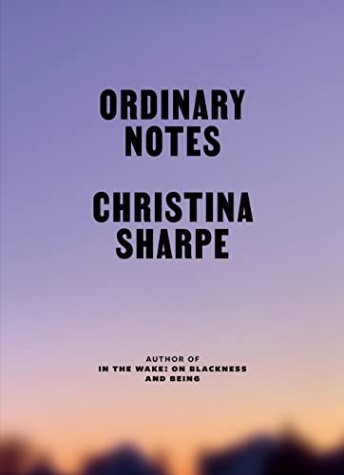
Ordinary Notes

Ordinary Notes

A singular achievement, Ordinary Notes explores profound questions about loss and the shapes of Black life that emerge in the wake. In a series of 248 notes that gather meaning as we read them, Christina Sharpe skillfully weaves artifacts from the past―public ones alongside others that are poignantly personal―with present realities and possible futures, intricately constructing an immersive portrait of everyday Black existence. The themes and tones that echo through these pages―sometimes about language, beauty, memory; sometimes about history, art, photography, and literature―always attend, with exquisite care, to the ordinary-extraordinary dimensions of Black life.

#15
Rough Sleepers: Dr. Jim O’Connell’s Urgent Mission to Bring Healing to Homeless People

Rough Sleepers: Dr. Jim O’Connell’s Urgent Mission to Bring Healing to Homeless People

NEW YORK TIMES BESTSELLER - The powerful story of an inspiring doctor who made a difference, by helping to create a program to care for Boston's homeless community--by the Pulitzer Prize-winning, New York Times bestselling author of Mountains Beyond Mountains "I couldn't put Rough Sleepers down. I am left in awe of the human spirit and inspired to do better."--Abraham Verghese, author of Cutting for Stone Tracy Kidder has been described by The Baltimore Sun as "a master of the nonfiction narrative." In Rough Sleepers, Kidder tells the story of Dr. Jim O'Connell, a gifted man who invented a community of care for a city's unhoused population, including those who sleep on the streets--the "rough sleepers." After Jim O'Connell graduated from Harvard Medical School and was nearing the end of his residency at Massachusetts General, the hospital's chief of medicine made a proposal: Would he defer a prestigious fellowship and spend a year helping to create an organization to bring health care to homeless citizens? That year turned into O'Connell's life's calling. Tracy Kidder spent five years following Dr. O'Connell and his colleagues as they work with thousands of homeless patients, some of whom we meet in this illuminating book. We travel with O'Connell as he navigates the city streets at night, offering medical care, socks, soup, empathy, humor, and friendship to some of the city's most endangered citizens. He emphasizes a style of medicine in which patients come first, joined with their providers in what he calls "a system of friends." Much as he did with Paul Farmer in Mountains Beyond Mountains, Kidder explores how Jim O'Connell and a dedicated group of people have improved countless lives by facing and addressing one of American society's most difficult problems, instead of looking away.

#16
The Art Thief: A True Story of Love, Crime, and a Dangerous Obsession

The Art Thief: A True Story of Love, Crime, and a Dangerous Obsession

In this spellbinding portrait of obsession and flawed genius, the best-selling author of The Stranger in the Woods brings us into Breitwieser’s strange world—unlike most thieves, he never stole for money, keeping all his treasures in a single room where he could admire them.

#17
The Country of the Blind: A Memoir at the End of Sight

The Country of the Blind: A Memoir at the End of Sight

Named one of the Top 10 Best Books of 2023 by Publishers Weekly A witty, winning, and revelatory personal narrative of the author's transition from sightedness to blindness and his quest to learn about blindness as a rich culture all its own "The Country of the Blind is about seeing--but also about marriage and family and the moral and emotional challenge of accommodating the parts of ourselves that scare us. A warm, profound, and unforgettable meditation on how we adjust to new ways of being in the world." --Rachel Aviv, author of Strangers to Ourselves We meet Andrew Leland as he's suspended in the liminal state of the soon-to-be blind: he's midway through his life with retinitis pigmentosa, a condition that ushers those who live with it from sightedness to blindness over years, even decades. He grew up with full vision, but starting in his teenage years, his sight began to degrade from the outside in, such that he now sees the world as if through a narrow tube. Soon--but without knowing exactly when--he will likely have no vision left. Full of apprehension but also dogged curiosity, Leland embarks on a sweeping exploration of the state of being that awaits him: not only the physical experience of blindness but also its language, politics, and customs. He negotiates his changing relationships with his wife and son, and with his own sense of self, as he moves from his mainstream, "typical" life to one with a disability. Part memoir, part historical and cultural investigation, The Country of the Blind represents Leland's determination not to merely survive this transition but to grow from it--to seek out and revel in that which makes blindness enlightening. Thought-provoking and brimming with warmth and humor, The Country of the Blind is a deeply personal and intellectually exhilarating tour of a way of being that most of us have never paused to consider--and from which we have much to learn.

#18
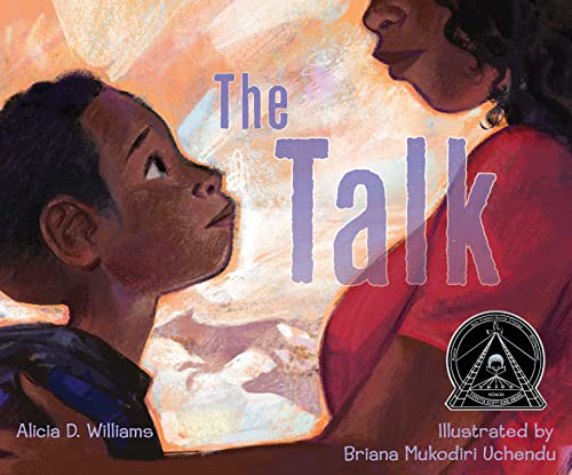
The Talk

The Talk

A Coretta Scott King Author Honor winner! As a little boy grows into a bigger boy, ready to take on the world, he first must have that very difficult conversation far too familiar to so many Black and Brown Americans in this gentle and ultimately hopeful picture book. Jay's most favorite things are hanging out with his pals, getting kisses from Grandma, riding in his dad's cool car, and getting measured by his mom with pencil marks on the wall. But as those height marks inch upward, Grandpa warns Jay about being in too big a group with his friends, Grandma worries others won't see him as quite so cute now that he's older, and Dad has to tell Jay how to act if the police ever pull them over. And Jay just wants to be a kid. All Black and Brown kids get The Talk--the talk that could mean the difference between life and death in a racist world. Told in an age-appropriate fashion, with a perfect pause for parents to insert their own discussions with their children to accompany prompting illustrations, The Talk is a gently honest and sensitive starting point for this far-too-necessary conversation, for Black children, Brown children, and for ALL children. Because you can't make change without knowing what needs changing.

#19
The Woman in Me

The Woman in Me

"In Britney Spears's memoir, she's stronger than ever." --The New York Times The Woman in Me is a brave and astonishingly moving story about freedom, fame, motherhood, survival, faith, and hope. In June 2021, the whole world was listening as Britney Spears spoke in open court. The impact of sharing her voice--her truth--was undeniable, and it changed the course of her life and the lives of countless others. The Woman in Me reveals for the first time her incredible journey--and the strength at the core of one of the greatest performers in pop music history. Written with remarkable candor and humor, Spears's groundbreaking book illuminates the enduring power of music and love--and the importance of a woman telling her own story, on her own terms, at last.

#20
Thicker than Water: A Memoir

Thicker than Water: A Memoir

INSTANT NEW YORK TIMES BESTSELLER Award-winning actor, director, producer, and activist Kerry Washington shares the "exquisitely moving" journey of her life so far (Isabel Wilkerson), and the bravely intimate story of discovering her truth. While on a drive in Los Angeles, on a seemingly average afternoon, Kerry Washington received a text message that would send her on a life-changing journey of self-discovery. In an instant, her very identity was torn apart, with everything she thought she knew about herself thrown into question. In Thicker than Water, Washington gives readers an intimate view into both her public and private worlds--as a mother, daughter, wife, artist, advocate, and trailblazer. Chronicling her upbringing and life's journey thus far, she reveals how she faced a series of challenges and setbacks, effectively hid childhood traumas, met extraordinary mentors, managed to grow her career, and crossed the threshold into stardom and political advocacy, ultimately discovering her truest self and, with it, a deeper sense of belonging. Throughout this profoundly moving and beautifully written memoir, Washington attempts to answer the questions so many have struggled with: Who am I? What is my truest and most authentic self? How do I find a deeper sense of connection and belonging? With grace and honesty, she inspires readers to search for--and find--themselves.

#21
Thunderclap: A Memoir of Art and Life & Sudden Death

Thunderclap: A Memoir of Art and Life & Sudden Death

Named a Best Book of 2023 So Far by The New Yorker and the Financial Times New York Times bestselling author Laura Cumming "combines first-rate art history with deeply felt memoir" (The Washington Post) in this fascinating, little-known story of the massive explosion in Holland that killed Carel Fabritius, renowned painter of The Goldfinch and A View of Delft and nearly killed Johannes Vermeer--two of the greatest artists of the 17th century. "Exquisite." --Simon Schama, The Guardian As a brilliant art critic and historian, Laura Cumming has explored the importance of art in life and can give us a perspective on the time and place in which the artist worked. Now, through the lens of one dramatic event in 17th-century Holland, Cumming "has fashioned a book that combines memoir, art criticism, and history to illuminating effect" (The New York Times Book Review). In 1654, the Thunderclap--an enormous explosion at a gunpowder store--devasted the city of Delft, killing hundreds of people, including the extraordinary painter Carel Fabritius, and injuring thousands more. Framing the story around the life of Fabritius, Cumming illuminates this extraordinary moment in art history while also writing about her own father, a painter. Like Dutch art, the story gradually links country, city, town, street, house, interior--all the way to the bird on its perch, the blue and white tile, the smallest seed in a loaf of bread. The impact of a painting and how it can enter our thoughts, influence our view and understanding of the world is the heart of this book. Cumming has brought her unique eye to her most compelling subject yet. Featuring beautiful full-color images of Dutch paintings throughout, this is "a glorious tribute to the two men who showed her the truth of the notion that paintings offer 'a land in themselves, a society, a place to be'" (The Economist).

#22
While You Were Out: An Intimate Family Portrait of Mental Illness in an Era of Silence

While You Were Out: An Intimate Family Portrait of Mental Illness in an Era of Silence

From award-winning journalist Meg Kissinger, a searing memoir of a family besieged by mental illness, as well as an incisive exploration of the systems that failed them and a testament to the love that sustained them. Growing up in the 1960s in the suburbs of Chicago, Meg Kissinger's family seemed to live a charmed life. With eight kids and two loving parents, the Kissingers radiated a warm, boisterous energy. Whether they were spending summer days on the shores of Lake Michigan, barreling down the ski slopes, or navigating the trials of their Catholic school, the Kissingers always knew how to live large and play hard. But behind closed doors, a harsher reality was unfolding--a heavily medicated mother hospitalized for anxiety and depression, a manic father prone to violence, and children in the throes of bipolar disorder and depression, two of whom would take their own lives. Through it all, the Kissingers faced the world with their signature dark humor and the unspoken family rule: never talk about it. While You Were Out begins as the personal story of one family's struggles then opens outward, as Kissinger details how childhood tragedy catalyzed a journalism career focused on exposing our country's flawed mental health care. Combining the intimacy of memoir with the rigor of investigative reporting, the book explores the consequences of shame, the havoc of botched public policy, and the hope offered by new treatment strategies. Powerful, candid and filled with surprising humor, this is the story of one family's love and resilience in face of great loss.

#24
Worm: A Cuban American Odyssey

Worm: A Cuban American Odyssey

From "America's illustrator in chief" (Fast Company), a stunning graphic memoir of a childhood in Cuba, coming to America on the Mariel boatlift, and a defense of democracy, here and there Hailed for his iconic art on the cover of Time and on jumbotrons around the world, Edel Rodriguez is among the most prominent political artists of our age. Now for the first time, he draws his own life, revisiting his childhood in Cuba and his family's passage on the infamous Mariel boatlift. When Edel was nine, Fidel Castro announced his surprising decision to let 125,000 traitors of the revolution, or "worms," leave the country. The faltering economy and Edel's family's vocal discomfort with government surveillance had made their daily lives on a farm outside Havana precarious, and they secretly planned to leave. But before that happened, a dozen soldiers confiscated their home and property and imprisoned them in a detention center near the port of Mariel, where they were held with dissidents and criminals before being marched to a flotilla that miraculously deposited them, overnight, in Florida. Through vivid, stirring art, Worm tells a story of a boyhood in the midst of the Cold War, a family's displacement in exile, and their tenacious longing for those they left behind. It also recounts the coming-of-age of an artist and activist, who, witnessing American's turn from democracy to extremism, struggles to differentiate his adoptive country from the dictatorship he fled. Confronting questions of patriotism and the liminal nature of belonging, Edel Rodriguez ultimately celebrates the immigrants, maligned and overlooked, who guard and invigorate American freedom.

#26
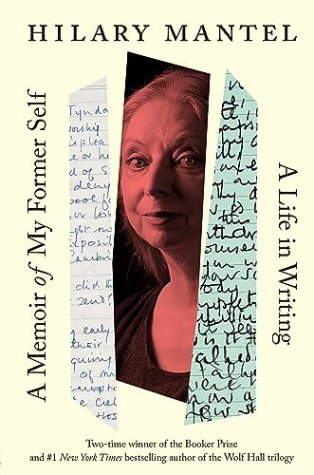
A Memoir of My Former Self: A Life in Writing

A Memoir of My Former Self: A Life in Writing

THE FINAL BOOK FROM ONE OF OUR GREATEST WRITERS In addition to her celebrated career as a novelist, Hilary Mantel contributed for years to newspapers and journals, unspooling stories from her own life and illuminating the world as she found it. “Ink is a generative fluid,” she explains. “If you don’t mean your words to breed consequences, don’t write at all.” A Memoir of My Former Self collects the finest of this writing over four decades. Her subjects are wide-ranging, sharply observed, and beautifully rendered. She discusses nationalism and her own sense of belonging; our dream life popping into our conscious life; the mythic legacy of Princess Diana; the many themes that feed into her novels—revolutionary France, psychics, Tudor England; and other novelists, from Jane Austen to V.S. Naipaul. She writes about her father and the man who replaced him; she writes fiercely and heartbreakingly about the battles with her health that she endured as a young woman, and the stifling years she found herself living in Saudi Arabia. Here, too, is her legendary essay “Royal Bodies,” on our endless fascination with the current royal family. From her unusual childhood to her all-consuming interest in Thomas Cromwell that grew into the Wolf Hall trilogy, A Memoir of My Former Self reveals the shape of Hilary Mantel’s life in her own luminous words, through “messages from people I used to be.” Filled with her singular wit and wisdom, it is essential reading from one of our greatest writers.

#27
All My Knotted-Up Life: A Memoir

All My Knotted-Up Life: A Memoir

New York Times, Publishers Weekly, and Wall Street Journal bestseller! An incredibly thoughtful, disarmingly funny, and intensely vulnerable glimpse into the life and ministry of a woman familiar to many but known by few. "It's a peculiar thing, this having lived long enough to take a good look back. We go from knowing each other better than we know ourselves to barely sure if we know each other at all, to precisely sure that we don't. All my knotted-up life I've longed for the sanity and simplicity of knowing who's good and who's bad. I've wanted to know this about myself as much as anyone. This was not theological. It was strictly relational. God could do what he wanted with eternity. I was just trying to make it here in the meantime. As benevolent as he has been in a myriad of ways, God has remained aloof on this uncomplicated request." - Beth Moore New York Times best-selling author, speaker, visionary, and founder of Living Proof Ministries Beth Moore has devoted her whole life to helping women across the globe come to know the transforming power of Jesus. An established writer of many acclaimed books and Bible studies for women on spiritual growth and personal development, Beth now unveils her own story in a much-anticipated debut memoir. All My Knotted-Up Life includes: 8 pages of photos An exploration of Beth's childhood, love, marriage, and motherhood Insights on what it was like when she was "waist-deep in a season of loss" A discussion of her 2018 break with the Southern Baptist movement Details on the origins of Living Proof Ministries All My Knotted-Up Life is told with surprising candor about some of the personal heartbreaks and behind-the-scenes challenges that have marked Beth's life. But beyond that, it's a beautifully crafted portrait of resilience and survival, a poignant reminder of God's enduring faithfulness, and proof positive that if we ever truly took the time to hear people's full stories . . . we'd all walk around slack-jawed.

#28
All the Beauty in the World: The Metropolitan Museum of Art and Me

All the Beauty in the World: The Metropolitan Museum of Art and Me

Millions of people climb the grand marble staircase to visit the Metropolitan Museum of Art every year. But only a select few have unrestricted access to every nook and cranny. They’re the guards who roam unobtrusively in dark blue suits, keeping a watchful eye on the two million square foot treasure house. Caught up in his glamorous fledgling career at The New Yorker, Patrick Bringley never thought he’d be one of them. Then his older brother was diagnosed with fatal cancer and he found himself needing to escape the mundane clamor of daily life. So he quit The New Yorker and sought solace in the most beautiful place he knew.

#30
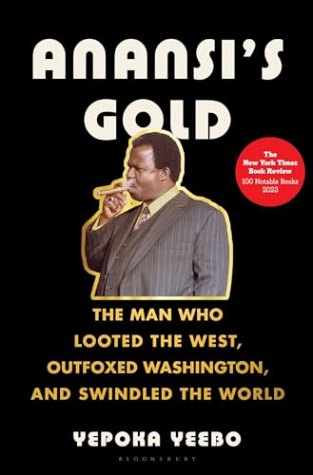
Anansi’s Gold: The Man Who Looted the West, Outfoxed Washington, and Swindled the World

Anansi’s Gold: The Man Who Looted the West, Outfoxed Washington, and Swindled the World

New Yorker Best Book of the Year "A fascinating story brilliantly told."--The Boston Globe * "A non-fiction masterpiece."--Philadelphia Inquirer The astounding, never-before-told story of how an audacious Ghanaian con artist pulled off one of the 20th century's longest-running and most spectacular frauds. When Ghana won its independence from Britain in 1957, it instantly became a target for home-grown opportunists and rapacious Western interests determined to snatch any assets that colonialism hadn't already stripped. A CIA-funded military junta ousted the new nation's inspiring president, Kwame Nkrumah, then falsely accused him of hiding the country's gold overseas. Into this big lie stepped one of history's most charismatic scammers, a con man to rival the trickster god Anansi. Born into poverty in Ghana and trained in the United States, John Ackah Blay-Miezah declared himself custodian of an alleged Nkrumah trust fund worth billions. You, too, could claim a piece--if only you would "invest" in Blay-Miezah's fictitious efforts to release the equally fictitious fund. Over the 1970s and '80s, he and his accomplices--including Ghanaian state officials and Nixon's former attorney general--scammed hundreds of millions of dollars out of thousands of believers. Blay-Miezah lived in luxury, deceiving Philadelphia lawyers, London financiers, and Seoul businessmen alike, all while eluding his FBI pursuers. American prosecutors called his scam "one of the most fascinating--and lucrative--in modern history." In Anansi's Gold, Yepoka Yeebo chases Blay-Miezah's ever-wilder trail and discovers, at long last, what really happened to Ghana's missing wealth. She unfolds a riveting account of Cold War entanglements, international finance, and postcolonial betrayal, revealing how what we call "history" writes itself into being, one lie at a time.

#31
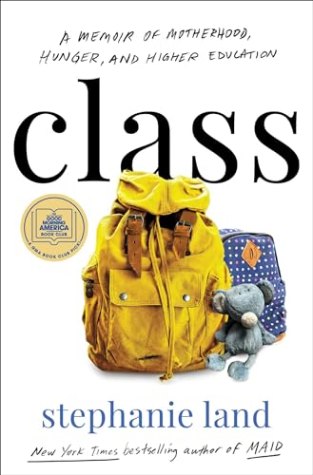
Class: A Memoir of Motherhood, Hunger, and Higher Education

Class: A Memoir of Motherhood, Hunger, and Higher Education

A Good Morning America Book Club Pick - New York Times Most Anticipated Books of Fall "Raw and inspiring." --People "Land is not just exploring her own story, but also the larger implications of what it means to fall between the cracks of American capitalism." --The New York Times From the New York Times bestselling author who inspired the hit Netflix series about a struggling mother barely making ends meet as a housecleaner--a gripping memoir about college, motherhood, poverty, and life after Maid. When Stephanie Land set out to write her memoir Maid, she never could have imagined what was to come. Handpicked by President Barack Obama as one of the best books of 2019, it was called "an eye-opening journey into the lives of the working poor" (People). Later it was adapted into the hit Netflix series Maid, which was viewed by 67 million households and was Netflix's fourth most-watched show in 2021, garnering three Primetime Emmy Award nominations. Stephanie's escape out of poverty and abuse in search of a better life inspired millions. Maid was a story about a housecleaner, but it was also a story about a woman with a dream. In Class, Land takes us with her as she finishes college and pursues her writing career. Facing barriers at every turn including a byzantine loan system, not having enough money for food, navigating the judgments of professors and fellow students who didn't understand the demands of attending college while under the poverty line--Land finds a way to survive once again, finally graduating in her mid-thirties. Class paints an intimate and heartbreaking portrait of motherhood as it converges and often conflicts with personal desire and professional ambition. Who has the right to create art? Who has the right to go to college? And what kind of work is valued in our culture? In clear, candid, and moving prose, Class grapples with these questions, offering a searing indictment of America's educational system and an inspiring testimony of a mother's triumph against all odds.

#32
Doppelganger: A Trip into the Mirror World

Doppelganger: A Trip into the Mirror World

What if you woke up one morning and found you'd acquired another self--a double who was almost you and yet not you at all? What if that double shared many of your preoccupations but, in a twisted, upside-down way, furthered the very causes you'd devoted your life to fighting against? Not long ago, the celebrated activist and public intellectual Naomi Klein had just such an experience--she was confronted with a doppelganger whose views she found abhorrent but whose name and public persona were sufficiently similar to her own that many people got confused about who was who. Destabilized, she lost her bearings, until she began to understand the experience as one manifestation of a strangeness many of us have come to know but struggle to define: AI-generated text is blurring the line between genuine and spurious communication; New Age wellness entrepreneurs turned anti-vaxxers are scrambling familiar political allegiances of left and right; and liberal democracies are teetering on the edge of absurdist authoritarianism, even as the oceans rise. Under such conditions, reality itself seems to have become unmoored. Is there a cure for our moment of collective vertigo? Naomi Klein is one of our most trenchant and influential social critics, an essential analyst of what branding, austerity, and climate profiteering have done to our societies and souls. Here she turns her gaze inward to our psychic landscapes, and outward to the possibilities for building hope amid intersecting economic, medical, and political crises. With the assistance of Sigmund Freud, Jordan Peele, Alfred Hitchcock, and bell hooks, among other accomplices, Klein uses wry humor and a keen sense of the ridiculous to face the strange doubles that haunt us--and that have come to feel as intimate and proximate as a warped reflection in the mirror. Combining comic memoir with chilling reportage and cobweb-clearing analysis, Klein seeks to smash that mirror and chart a path beyond despair. Doppelganger asks: What do we neglect as we polish and perfect our digital reflections? Is it possible to dispose of our doubles and overcome the pathologies of a culture of multiplication? Can we create a politics of collective care and undertake a true reckoning with historical crimes? The result is a revelatory treatment of the way many of us think and feel now--and an intellectual adventure story for our times.

#33
Dyscalculia: A Love Story of Epic Miscalculation

Dyscalculia: A Love Story of Epic Miscalculation

"Powerful . . . a poetic meditation on how love or attempts at loving can drive us to madness."--The Boston Globe "We learn about the cracks in Felix's upbringing, the hurt from the breakup itself, and a pain that spans a lifetime, all through a sharp millennial voice."--Time, "Best Books of 2023 (So Far)" When Camonghne Felix goes through a monumental breakup, culminating in a hospital stay, everything--from her early childhood trauma and mental health to her relationship with mathematics--shows up in the tapestry of her healing. In this exquisite and raw reflection, Felix repossesses herself through the exploration of history she'd left behind, using her childhood "dyscalculia"--a disorder that makes it difficult to learn math--as a metaphor for the consequences of her miscalculations in love. Through reckoning with this breakup and other adult gambles in intimacy, Felix asks the question: Who gets to assert their right to pain? Dyscalculia negotiates the misalignments of perception and reality, love and harm, and the politics of heartbreak, both romantic and familial.

#34
Enchantment: Reawakening Wonder in an Exhausted Age

Enchantment: Reawakening Wonder in an Exhausted Age

#1 NATIONAL BESTSELLER "When I tell you that I dogeared almost every page in this book, I'm telling God's honest truth. I didn't know how much I needed someone else to validate what I was going through. The sense that I had lost my curiosity, my imagination, my ability to make meaning." - NPR Morning Edition host Rachel Martin "Such a teacher for every single person who is trying to live closer to who they were born to be and not who the world tamed them to be." - New York Times bestselling author Glennon Doyle on We Can Do Hard Things "I love Katherine May's new book, Enchantment....It's a beautiful offering of light, truth and charm in these strange, dark times." - New York Times bestselling author Anne Lamott "Katherine May gave so many of us language and vision for the long communal 'wintering' of the last years. Welcome this beautiful meditation for the time we've now entered. I cannot imagine a more gracious companion. This book is a gift." - New York Times bestselling author Krista Tippett "Gentle inspiration for those who feel exhausted or helpless... May shows how paying deliberate attention to what's around us can surprise us with insights and reveal new connections that deepen our appreciation for the world." - Washington Post From the New York Times-bestselling author of Wintering, an invitation to rediscover the feelings of awe and wonder available to us all Many of us feel trapped in a grind of constant change: rolling news cycles, the chatter of social media, our families split along partisan lines. We feel fearful and tired, on edge in our bodies, not quite knowing what has us perpetually depleted. For Katherine May, this low hum of fatigue and anxiety made her wonder what she was missing. Could there be a different way to relate to the world, one that would allow her to feel more rested and at ease, even as seismic changes unfold on the planet? Might there be a way for all of us to move through life with curiosity and tenderness, sensitized to the subtle magic all around? In Enchantment, May invites the reader to come with her on a journey to reawaken our innate sense of wonder and awe. With humor, candor, and warmth, she shares stories of her own struggles with work, family, and the aftereffects of pandemic, particularly feelings of overwhelm as the world rushes to reopen. Craving a different way to live, May begins to explore the restorative properties of the natural world, moving through the elements of earth, water, fire, and air and identifying the quiet traces of magic that can be found only when we look for them. Through deliberate attention and ritual, she unearths the potency and nourishment that come from quiet reconnection with our immediate environment. Blending lyricism and storytelling, sensitivity and empathy, Enchantment invites each of us to open the door to human experience in all its sensual complexity, and to find the beauty waiting for us there.

#35
Everything/Nothing/Someone

Everything/Nothing/Someone

Alice Carrière tells the story of her unconventional upbringing in Greenwich Village as the daughter of a remote mother, the renowned artist Jennifer Bartlett, and a charismatic father, European actor Mathieu Carrière. From an early age, Alice is forced to navigate her mother’s recovered memories of ritualized sexual abuse, which she turns into art, and her father’s confusing attentions. Her days are a mixture of privilege, neglect, loneliness, and danger—a child living in an adult’s world, with little-to-no enforcement of boundaries or supervision.

#36
Going Infinite: The Rise and Fall of a New Tycoon

Going Infinite: The Rise and Fall of a New Tycoon

When Michael Lewis first met him, Sam Bankman-Fried was the world's youngest billionaire and crypto's Gatsby. CEOs, celebrities, and leaders of small countries all vied for his time and cash after he catapulted, practically overnight, onto the Forbes billionaire list. Who was this rumpled guy in cargo shorts and limp white socks, whose eyes twitched across Zoom meetings as he played video games on the side?In Going Infinite Lewis sets out to answer this question, taking readers into the mind of Bankman-Fried, whose rise and fall offers an education in high-frequency trading, cryptocurrencies, philanthropy, bankruptcy, and the justice system. Both psychological portrait and financial roller-coaster ride, Going Infinite is Michael Lewis at the top of his game, tracing the mind-bending trajectory of a character who never liked the rules and was allowed to live by his own--until it all came undone.

#37
Good Girls: A Story and Study of Anorexia

Good Girls: A Story and Study of Anorexia

From Hadley Freeman, bestselling author of House of Glass, comes a "riveting" (The New York Times) memoir about her experience as an anorexic and her journey to recovery. In 1995, Hadley Freeman wrote in her diary: "I just spent three years of my life in mental hospitals. So why am I crazier than I was before " From the ages of fourteen to seventeen, Freeman lived in psychiatric wards after developing anorexia nervosa. Her doctors informed her that her body was cannibalizing her muscles and heart for nutrition, but they could tell her little else: why she had it, what it felt like, what recovery looked like. For the next twenty years, Freeman lived as a "functioning anorexic," grappling with new forms of self-destructive behavior as the anorexia mutated and persisted. Anorexia is one of the most widely discussed but least understood mental illnesses. Through "sharp storytelling, solid research and gentle humor" (The Wall Street Journal), Freeman delivers an incisive and bracing work that details her experiences with anorexia--the shame, fear, loneliness, and rage--and how she overcame it. She interviews doctors to learn how treatment for the illness has changed since she was hospitalized and what new discoveries have been made about the illness, including its connection to autism, OCD, and metabolic rate. She learns why the illness always begins during adolescence and how this reveals the difficulties for girls to come of age. Freeman tracks down the women with whom she was hospitalized and reports on how their recovery has progressed over decades. Good Girls is an honest and hopeful story of resilience that offers a message to the nearly 30 million Americans who suffer from eating disorders: Life can be enjoyed, rather than merely endured.

#38
Madonna: A Rebel Life

Madonna: A Rebel Life

In this "lushly evocative" biography, award-winning author Mary Gabriel chronicles the meteoric rise and enduring influence of the greatest female pop icon of the modern era: Madonna (Booklist, starred review). With her arrival on the music scene in the early 1980s, Madonna generated nothing short of an explosion--as great as that of Elvis or the Beatles--taking the nation by storm with her liberated politics and breathtaking talent. Within two years of her 1983 debut album, a flagship Macy's store in Manhattan held a Madonna lookalike contest featuring Andy Warhol as a judge, and opened a department called "Madonna-land." But Madonna was more than just a pop star. Everywhere, fans gravitated to her as an emblem of a new age, one in which feminism could shed the buttoned-down demeanor of the 1970s and feel relevant to a new generation. Amid the scourge of AIDS, she brought queer identities into the mainstream, fiercely defending a person's right to love whomever--and be whoever--they wanted. Despite fierce criticism, she never separated her music from her political activism. And, as an artist, she never stopped experimenting. Madonna existed to push past boundaries by creating provocative, visionary music, videos, films, and live performances that changed culture globally. Deftly tracing Madonna's story from her Michigan roots to her rise to super-stardom, master biographer Mary Gabriel captures the dramatic life and achievements of one of the greatest artists of our time.

#39
Mexikid

Mexikid

An unforgettable graphic memoir about a Mexican American boy's family and their adventure-filled road trip to bring their abuelito back from Mexico to live with them that National Book Award Finalist Victoria Jamieson calls "one of those books that kids will pass to their friends as soon as they have finished it." Pedro Martín has grown up hearing stories about his abuelito--his legendary crime-fighting, grandfather who was once a part of the Mexican Revolution! But that doesn't mean Pedro is excited at the news that Abuelito is coming to live with their family. After all, Pedro has 8 brothers and sisters and the house is crowded enough! Still, Pedro piles into the Winnebago with his family for a road trip to Mexico to bring Abuelito home, and what follows is the trip of a lifetime, one filled with laughs and heartache. Along the way, Pedro finally connects with his abuelito and learns what it means to grow up and find his grito.

#40
My Name Is Barbra

My Name Is Barbra

The long-awaited memoir by the superstar of stage, screen, recordings, and television Barbra Streisand is by any account a living legend, a woman who in a career spanning six decades has excelled in every area of entertainment. She is among the handful of EGOT winners (Emmy, Grammy, Oscar, and Tony) and has one of the greatest and most recognizable voices in the history of popular music. She has been nominated for a Grammy 46 times, and with Yentl she became the first woman to write, produce, direct, and star in a major motion picture. In My Name Is Barbra, she tells her own story about her life and extraordinary career, from growing up in Brooklyn to her first star-making appearances in New York nightclubs to her breakout performance in Funny Girl on stage and winning the Oscar for that performance on film. Then came a long string of successes in every medium in the years that followed. The book is, like Barbra herself, frank, funny, opinionated, and charming. She recounts her early struggles to become an actress, eventually turning to singing to earn a living; the recording of some of her acclaimed albums; the years of effort involved in making Yentl; her direction of The Prince of Tides; her friendships with figures ranging from Marlon Brando to Madeleine Albright; her political advocacy; and the fulfillment she's found in her marriage to James Brolin. No entertainer's memoir has been more anticipated than Barbra Streisand's, and this engrossing and delightful book will be eagerly welcomed by her millions of fans.

#42
Owner of a Lonely Heart

Owner of a Lonely Heart

"This book...is what memoir writing in the hands of a caring, curious wunderkind can be." --Keise Laymon, author of Heavy From the award-winning author of Stealing Buddha's Dinner, a powerful memoir of a mother-daughter relationship fractured by war and resettlement. At the end of the Vietnam War, when Beth Nguyen was eight months old, she and her family fled Saigon for America. Only Beth's mother stayed--or was left--behind, and they did not meet again until Beth was nineteen. Over the course of her adult life, she and her mother have spent less than twenty-four hours together. Owner of a Lonely Heart is "a portrait of things left unsaid" (The New York Times), a memoir about parenthood, absence, and the condition of being a refugee: the story of Beth's relationship with her mother. Framed by a handful of visits over the course of many years--sometimes brief, sometimes interrupted, some alone with her mother and others with the company of her sister--Beth tells an "unforgettable" (People) coming-of-age story that spans her childhood in the Midwest, her first meeting with her mother, and her own experience of parenthood.

#43
Pageboy: A Memoir

Pageboy: A Memoir

With Juno’s massive success, Elliot became one of the world’s most beloved actors. His dreams were coming true, but the pressure to perform suffocated him. He was forced to play the part of the glossy young starlet, a role that made his skin crawl, on and off set. The career that had been an escape out of his reality and into a world of imagination was suddenly a nightmare.

#45
Soil: The Story of a Black Mother’s Garden

Soil: The Story of a Black Mother’s Garden

A seminal work that expands how we talk about the natural world and the environment as National Book Critics Circle Criticism finalist Camille T. Dungy diversifies her garden to reflect her heritage. In Soil: The Story of a Black Mother's Garden, poet and scholar Camille T. Dungy recounts the seven-year odyssey to diversify her garden in the predominately white community of Fort Collins, Colorado. When she moved there in 2013, with her husband and daughter, the community held strict restrictions about what residents could and could not plant in their gardens. In resistance to the homogenous policies that limited the possibility and wonder that grows from the earth, Dungy employs the various plants, herbs, vegetables, and flowers she grows in her garden as metaphor and treatise for how homogeneity threatens the future of our planet, and why cultivating diverse and intersectional language in our national discourse about the environment is the best means of protecting it. Definitive and singular, Soil functions at the nexus of nature writing, environmental justice, and prose to encourage you to recognize the relationship between the peoples of the African diaspora and the land on which they live, and to understand that wherever soil rests beneath their feet is home.

#46
Sure, I’ll Join Your Cult: A Memoir of Mental Illness and the Quest to Belong Anywhere

Sure, I’ll Join Your Cult: A Memoir of Mental Illness and the Quest to Belong Anywhere

INSTANT NEW YORK TIMES BESTSELLER From "weird, scary, ingenious" (The New York Times) stand-up comedian Maria Bamford, a brutally honest and hilariously frenetic memoir about show business, mental health, and the comfort of rigid belief systems--from Dale Carnegie's How to Win Friends and Influence People, to Suzuki violin training, to Richard Simmons, to 12-step programs. Maria Bamford is a comedian's comedian (an outsider among outsiders) and has forever fought to find a place to belong. From struggling with an eating disorder as a child of the 1980s, to navigating a career in the arts (and medical debt and psychiatric institutionalization), she has tried just about every method possible to not only be a part of the world, but to want to be a part of it. In Bamford's signature voice, Sure, I'll Join Your Cult, brings us on a quest to participate in something. With sincerity and transparency, she recounts every anonymous fellowship she has joined (including but not limited to: Debtors Anonymous, Sex and Love Addicts Anonymous, and Overeaters Anonymous), every hypomanic episode (from worrying about selling out under capitalism to enforcing union rules on her Netflix TV show set to protect her health), and every easy 1-to-3-step recipe for fudge in between. Singular and inimitable, Bamford's memoir explores what it means to keep going, and to be a member of society (or any group she's invited to) despite not being very good at it. In turn, she hopes to transform isolating experiences into comedy that will make you feel less alone (without turning into a cult following).

#47
The Forgotten Girls: An American Story

The Forgotten Girls: An American Story

NEW YORK TIMES BESTSELLER - An acclaimed journalist tries to understand how she escaped her small town in Arkansas while her brilliant friend could not, and, in the process, illuminates the unemployment, drug abuse, sexism, and evangelicalism killing poor, rural white women all over America. "The Forgotten Girls is much more than a memoir; it's the unflinching story of rural women trying to live in the most rugged, ultra-religious, and left-behind places in America."--Beth Macy, author of Dopesick Growing up gifted and working-class poor in the foothills of the Ozarks, Monica and Darci became fast friends. The girls bonded over a shared love of reading and learning, even as they navigated the challenges of their tumultuous family lives and declining town--broken marriages, alcohol abuse, and shuttered stores and factories. They pored over the giant map in their middle-school classroom, tracing their fingers over the world that awaited them, vowing to escape. In the end, Monica left Clinton for college and fulfilled her dreams, but Darci, along with many in their circle of friends, did not. Years later, working as a journalist covering poverty, Potts discovered what she already intuitively knew about the women in Arkansas: Their life expectancy had dropped steeply--the sharpest such fall in a century. This decline has been attributed to "deaths of despair"--suicide, alcoholism, and drug overdoses--but Potts knew their causes were too complex to identify in a sociological study. She had grown up with these women, and when she saw Darci again, she found that her childhood friend--addicted to drugs, often homeless, a single mother--was now on track to becoming a statistic. In this gripping narrative, Potts deftly pinpoints the choices that sent her and Darci on such different paths and then widens the lens to explain why those choices are so limited. The Forgotten Girls is a profound, compassionate look at a population in trouble, and a uniquely personal account of the way larger forces, such as inheritance, education, religion, and politics, shape individual lives.

#48
The Marriage Question: George Eliot’s Double Life

The Marriage Question: George Eliot’s Double Life

A startling new portrait of George Eliot, the beloved novelist and a rare philosophical mind who explored the complexities of marriage. In her mid-thirties, Marian Evans transformed herself into George Eliot--an author celebrated for her genius as soon as she published her debut novel. During those years she also found her life partner, George Lewes--writer, philosopher, and married father of three. After "eloping" to Berlin in 1854, they lived together for twenty-four years: Eliot asked people to call her "Mrs Lewes" and dedicated each novel to her "Husband." Though they could not legally marry, she felt herself initiated into the "great experience" of marriage--"this double life, which helps me to feel and think with double strength." The relationship scandalized her contemporaries yet she grew immeasurably within it. Living at once inside and outside marriage, Eliot could experience this form of life--so familiar yet also so perplexing--from both sides. In The Marriage Question, Clare Carlisle reveals Eliot to be not only a great artist but also a brilliant philosopher who probes the tensions and complexities of a shared life. Through the immense ambition and dark marriage plots of her novels, we see Eliot wrestling--in art and in life--with themes of desire and sacrifice, motherhood and creativity, trust and disillusion, destiny and chance. Carlisle's searching new biography explores how marriage questions grow and change, and joins Eliot in her struggle to marry thought and feeling. Includes black-and-white images

#49
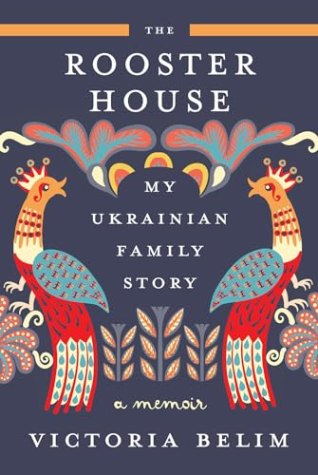
The Rooster House: A Ukrainian Family Memoir

The Rooster House: A Ukrainian Family Memoir

A timely and deeply moving memoir of journalist Victoria Belim's Ukrainian family history, interwoven with the country's turbulent story In 2014, the landmarks of Victoria Belim's personal geography were plunged into tumult at the hands of Russia. Her hometown, Kyiv, was gripped by protests and violence. Crimea, where she'd once been sent to school to avoid radiation from the nuclear disaster at Chernobyl, was invaded. Kharkiv, where her grandmother Valentina studied economics and fell in love; Donetsk, where her father once worked; and Mariupol, where she and her mother bought a cherry tree for Valentina's garden, all became battlegrounds. Victoria, by then a naturalized American citizen then living in Brussels, felt she had to go back. She had to spend time with her aging grandmother and her cousin Dmytro. She had to unravel a family mystery spanning several generations. And she needed to understand how her country's tragic history of communist revolution, civil war, famine, world war, totalitarianism, and fraught independence had changed the course of their lives. The Rooster House is a beautifully written memoir of a family, a country's past, and its dangerous present. It is about parents and children, true believers and victims, gardens and art, secrets and tragedy. Compulsively readable, deeply moving, and at times laugh-out-loud funny, it is a stunning debut book by an experienced, expressive, and gifted writer.

#50
They Called Us Exceptional: And Other Lies That Raised Us

They Called Us Exceptional: And Other Lies That Raised Us

An Indian American daughter reveals how the dangerous model minority myth fractured her family in this "searingly honest memoir that manages to be at once a scalding indictment and a heartfelt love letter" (Scott Stossel, author of My Age of Anxiety). ONE OF THE BEST BOOKS OF THE SEASON: The New York Times, The Washington Post, The Boston Globe, Bustle "In examining with boundless love the secrets and sorrows of one family, Gupta shows us the life-altering power of telling one's truth."--Megha Majumdar, author of A Burning How do we understand ourselves when the story about who we are supposed to be is stronger than our sense of self? What do we stand to gain--and lose--by taking control of our narrative? These questions propel Prachi Gupta's heartfelt memoir and can feel particularly fraught for immigrants and their children who live under immense pressure to belong in America. Prachi Gupta's family embodied the American Dream: a doctor father and a nurturing mother who raised two high-achieving children with one foot in the Indian American community, the other in Pennsylvania's white suburbia. But their belonging was predicated on a powerful myth: that Asian Americans have perfected the alchemy of middle-class life, raising tight-knit, ambitious families that are immune to hardship. Molding oneself to fit this perfect image often comes at a steep but hidden cost. In They Called Us Exceptional, Gupta articulates the dissonance, shame, and isolation of being upheld as an American success story while privately navigating traumas invisible to the outside world. Gupta addresses her mother throughout the book, weaving a deeply vulnerable personal narrative with history, postcolonial theory, and research on mental health, to show how she slowly made sense of her reality and freed herself emotionally and physically from the pervasive, reductive myth that had once defined her. But, tragically, the act that liberated Gupta was also the act that distanced her from those she loved most. By charting her family's slow unraveling and her determination to break the cycle, Gupta shows how traditional notions of success keep us disconnected from ourselves and one another--and passionately argues why we must orient ourselves toward compassion over belonging.

#52
A Brutal Reckoning

A Brutal Reckoning

The story of the pivotal struggle between the Creek Indians and an insatiable, young United States for control over the Deep South--from the acclaimed historian and prize-winning author of The Earth is Weeping The Creek War is one of the most tragic episodes in American history, leading to the greatest loss of Native American life on what is now U.S. soil. What began as a vicious internal conflict among the Creek Indians metastasized like a cancer. The ensuing Creek War of 1813-1814 shattered Native American control of the Deep South and led to the infamous Trail of Tears, in which the government forcibly removed the southeastern Indians from their homeland. The war also gave Andrew Jackson his first combat leadership role, and his newfound popularity after defeating the Creeks would set him on the path to the White House. In A Brutal Reckoning, Peter Cozzens vividly captures the young Jackson, describing a brilliant but harsh military commander with unbridled ambition, a taste for cruelty, and a fraught sense of honor and duty. Jackson would not have won the war without the help of Native American allies, yet he denied their role and even insisted on their displacement, together with all the Indians of the American South in the Trail of Tears. A conflict involving not only white Americans and Native Americans, but also the British and the Spanish, the Creek War opened the Deep South to the Cotton Kingdom, setting the stage for the American Civil War yet to come. No other single Indian conflict had such significant impact on the fate of America--and A Brutal Reckoning is the definitive book on this forgotten chapter in our history.

#53
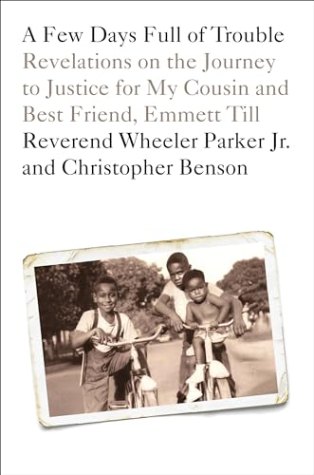
A Few Days Full of Trouble: Revelations on the Journey to Justice for My Cousin and Best Friend, Emmett Till

A Few Days Full of Trouble: Revelations on the Journey to Justice for My Cousin and Best Friend, Emmett Till

The last surviving witness to the lynching of Emmett Till tells his story, with poignant recollections of Emmett as a boy, critical insights into the recent investigation, and powerful lessons for racial reckoning, both then and now. "In this moving and important book, the Reverend Wheeler Parker Jr. and Christopher Benson give us a unique window onto the anguished search for justice in a case whose implications shape us still."--Jon Meacham In 1955, fourteen-year-old Emmett Till was lynched. That remains an undisputed fact of the case that ignited a flame within the Civil Rights Movement that has yet to be extinguished. Yet the rest of the details surrounding the event remain distorted by time and too many tellings. What does justice mean in the resolution of a cold case spanning nearly seven decades? In A Few Days Full of Trouble, this question drives a new perspective on the story of Emmett Till, relayed by his cousin and best friend--the Reverend Wheeler Parker Jr., a survivor of the night of terror when young Emmett was taken from his family's rural Mississippi Delta home in the dead of night. Rev. Parker offers an emotional and suspenseful page-turner set against a backdrop of reporting errors and manipulations, racial reckoning, and political pushback--and he does so accompanied by never-before-seen findings in the investigation, the soft resurrection of memory, and the battle-tested courage of faith. A Few Days Full of Trouble is a powerful work of truth-telling, a gift to readers looking to reconcile the weight of the past with a hope for the future.

#56
A Pocketful of Happiness

A Pocketful of Happiness

Academy Award-nominated actor Richard E. Grant's "genuine and compelling" (The New York Times), "moving and entertaining" (Publishers Weekly, starred review) memoir about finding happiness in even the darkest of days. Richard E. Grant emigrated from Swaziland to London in 1982, with dreams of making it as an actor. Unexpectedly, he met and fell in love with a renowned dialect coach Joan Washington. Their relationship and marriage, navigating the highs and lows of Hollywood, parenthood, and loss, lasted almost forty years. When Joan died in 2021, her final challenge to him was to find a "pocketful of happiness in every day." This honest and frequently hilarious memoir is written in honor of that challenge--Richard has faithfully kept a diary since childhood, and in these entries, he shares raw details of everything he has experienced: both the pain of losing his beloved wife and the excitement of their life together, from the role that transformed his life overnight in Withnail and I to his thrilling Oscar Award nomination thirty years later for Can You Ever Forgive Me?. In "one of the bravest, strongest, funniest memoirs I've ever read" (Bonnie Garmus, New York Times bestselling author of Lessons in Chemistry), A Pocketful of Happiness is a powerful, funny, and moving celebration of life's unexpected joys.

#57
A Slow, Calculated Lynching: The Story of Clyde Kennard

A Slow, Calculated Lynching: The Story of Clyde Kennard

In the years following Brown v. Board of Education, countless Black citizens endured violent resistance and even death while fighting for their constitutional rights. One of those citizens, Clyde Kennard (1927-1963), a Korean War veteran and civil rights leader from Hattiesburg, Mississippi, attempted repeatedly to enroll at the all-white Mississippi Southern College--now the University of Southern Mississippi--in the late 1950s. In A Slow, Calculated Lynching: The Story of Clyde Kennard, Devery S. Anderson tells the story of a man who paid the ultimate price for trying to attend a white college during Jim Crow. Rather than facing conventional vigilantes, he stood opposed to the governor, the Mississippi State Sovereignty Commission, and other high-ranking entities willing to stop at nothing to deny his dreams. In this comprehensive and extensively researched biography, Anderson examines the relentless subterfuge against Kennard, including the cruelly successful attempts to frame him--once for a misdemeanor and then for a felony. This second conviction resulted in a sentence of seven years hard labor at Mississippi State Penitentiary, forever disqualifying him from attending a state-sponsored school. While imprisoned, he developed cancer, was denied care, then sadly died six months after the governor commuted his sentence. In this prolonged lynching, Clyde Kennard was robbed of his ambitions and ultimately his life, but his final days and legacy reject the notion that he was powerless. Anderson highlights the resolve of friends and fellow activists to posthumously restore his name. Those who fought against him, and later for him, link a story of betrayal and redemption, chronicling the worst and best in southern race relations. The redemption was not only a symbolic one for Kennard but proved healing for the entire state. He was gone, but countless others still benefit from Kennard's legacy and the biracial, bipartisan effort he inspired.

#58
Above Ground

Above Ground

A remarkable poetry collection with "inextinguishable generosity and abundant wisdom" (Monica Youn) from Clint Smith, the #1 New York Times bestselling and National Book Critics Circle award-winning author of How the Word Is Passed. Clint Smith's vibrant and compelling new collection traverses the vast emotional terrain of fatherhood, and explores how becoming a parent has recalibrated his sense of the world. There are poems that interrogate the ways our lives are shaped by both personal lineages and historical institutions. There are poems that revel in the wonder of discovering the world anew through the eyes of your children, as they discover it for the first time. There are poems that meditate on what it means to raise a family in a world filled with constant social and political tumult. Above Ground wrestles with how we hold wonder and despair in the same hands, how we carry intimate moments of joy and a collective sense of mourning in the same body. Smith's lyrical, narrative poems bring the reader on a journey not only through the early years of his children's lives, but through the changing world in which they are growing up--through the changing world of which we are all a part. Above Ground is a breathtaking collection that follows Smith's first award-winning book of poetry, Counting Descent.

#59
Abroad in Japan

Abroad in Japan

THE NUMBER ONE BESTSELLER 'Chris Broad explores Japan in all its quirky glory..Endlessly fascinating!' Will Ferguson, author of Hokkaido Highway Blues 'Carves a unique path across Japan bringing him into contact with far too many cats, heartening renewal in Tohoku, and even pizza with Ken Watanabe.' Iain Maloney, author of The Only Gaijin in the Village 'Fascinating, fact-packed and very funny..An excellent and enjoyable read for the Japan-curious. I loved it and learned a lot.' Sam Baldwin, author of For Fukui's Sake: Two years in rural Japan When Englishman Chris Broad landed in a rural village in northern Japan he wondered if he'd made a huge mistake. With no knowledge of the language and zero teaching experience, was he about to be the most quickly fired English teacher in Japan's history? Abroad in Japan charts a decade of living in a foreign land and the chaos and culture clash that came with it. Packed with hilarious and fascinating stories, this book seeks out to unravel one the world's most complex cultures. Spanning ten years and all forty-seven prefectures, Chris takes us from the lush rice fields of the countryside to the frenetic neon-lit streets of Tokyo. With blockbuster moments such as a terrifying North Korean missile incident, a mortifying experience at a love hotel and a week spent with Japan's biggest movie star, Abroad in Japan is an extraordinary and informative journey through the Land of the Rising Sun. Number one Sunday Times bestseller, August 2023. Cover may vary.

#61
All Things Move

All Things Move

Contemporary themes: the search for meaning and for spirituality in a secular world; the art of attention; reconciliation with the Catholic Church; the meaning and value of art (and the humanities) in the 21st century, especially art from cultures and eras radically different from our own. Editorial comps include: Mark Doty's Still Life with Oysters and Lemons, So Much Longing in So Little Space: The Art of Edvard Munsch by Karl Ove Knausgaard, and Lonely City: Adventures in the Art of Being Alone by Olivia Laing Marshall's nonfiction and journalism have appeared in Slate, The Common, Maclean's, the Globe and Mail, and elsewhere. Include four-colour images throughout.

#62
Alone: The Journeys of Three Young Refugees

Alone: The Journeys of Three Young Refugees

Finalist, Governor General's Literary Award in the Translation Category Each year, more than 400 minors arrive alone in Canada requesting refugee status. They arrive without their parents, accompanied by no adult at all. Alone relates the journey of three of them: Afshin, Alain and Patricia. Their story opens a window onto the many heartbreaks, difficult sacrifices and countless hardships that punctuate their obstacle-filled path. But Alone most especially tells of the courage and resilience that these young people demonstrated before being able to finally obtain a life where threats and danger are no longer a part of their everyday existence. Key Text Features: author's note captions chapters character drawings comic map dialogue flags further information illustrations introduction maps writing inspiration Correlates to the Common Core State Standards in English Language Arts: CCSS.ELA-LITERACY.RI.6.3 Analyze in detail how a key individual, event, or idea is introduced, illustrated, and elaborated in a text (e.g., through examples or anecdotes). CCSS.ELA-LITERACY.RI.6.7 Integrate information presented in different media or formats (e.g., visually, quantitatively) as well as in words to develop a coherent understanding of a topic or issue.

#64
American Breakdown

American Breakdown

A Silent Spring for the human body, this wide-ranging, genre-crossing literary mystery interweaves the author's quest to understand the source of her own condition with her telling of the story of the chronically ill 19th-century diarist Alice James--ultimately uncovering the many hidden health hazards of life in America.When Jennifer Lunden became chronically ill after moving from Canada to Maine, her case was a medical mystery. Just 21, unable to hold a book or stand for a shower, she lost her job and consigned herself to her bed. The doctor she went to for help told her she was "just depressed."After suffering from this enigmatic illness for five years, she discovered an unlikely source of hope and healing: a biography of Alice James, the bright, witty, and often bedridden sibling of brothers Henry James, the novelist, and William James, the father of psychology. Alice suffered from a life-shattering illness known as neurasthenia, now often dismissed as a "fashionable illness."In this meticulously researched and illuminating debut, Lunden interweaves her own experience with Alice's, exploring the history of medicine and the effects of the industrial revolution and late-stage capitalism to tell a riveting story of how we are a nation struggling--and failing--to be healthy.Although science--and the politics behind its funding--has in many ways let Lunden and millions like her down, in the end science offers a revelation that will change how readers think about the ecosystems of their bodies, their communities, the country, and the planet.

#65
American Grunt

American Grunt

Working dead-end blue-collar jobs your whole life can take a dramatic physical and emotional toll-unless you learn to embrace the absurdity.Kevin Cramer has almost died at work three separate times, surviving each incident only through a minor miracle. It got him asking the question-why? Why do so many of us get up and trudge to a place we dislike every day? American Grunt: Ridiculous Stories of a Life Lived at $8.00 an Hour is Cramer's quest to find meaning in a career spanning nearly a hundred forgettable jobs from paper boy to construction laborer, including all the warehouses, bars, parking lots, schools, and delivery trucks in between. American Grunt is a book for all of us whose dreams never quite materialized and who found ourselves both laughing and weeping at the insanity of where we got stuck. This story provides hope that despite all the frustration, it's possible to live a modern blue-collar life without the oft-attached bitterness.

#67
Among the Braves

Among the Braves

Through the eyes of two frontline journalists comes a gripping narrative history of the Hong Kong pro-democracy movement centered around a cast of four core activists, culminating in the 2019 mass protests and Beijing's brutal crackdown. Hong Kong was an experiment in governance. Handed back to China in 1997 after 156 years of British rule, it was meant to be a carve-out between hostile systems: a bridge between communism and capitalism, authoritarianism and liberal democracy. "One country, two systems" kept its media free, its courts independent and its protests boisterous, designed also to convince Taiwan of a peaceful solution to Beijing's desire for reunification. Yet this formulation excluded Hong Kong's own people, their future negotiated by political titans in faraway capitals. In 2019, an ill-conceived law spear-headed by a sycophantic leader pushed millions to take to the streets in one of the most enduring protest movements the world has ever seen. Xi Jinping responded with a draconian national security law that sought not only to end the demonstrations but quash the "problem" of Hong Kongers' identity and desire for freedom. Reverend Chu, who believed Hong Kong had to carry the spirit of students at Tiananmen Square, saw his silver-haired comrades who birthed the city's modern pro-democracy movement handcuffed and taken from their homes. Tommy, an art student radicalized into throwing Molotov cocktails, watched "braves" like him brutalized by police before his own arrest prompted him to flee. Finn epitomized the decentralized nature of the movement and its internet-fueled victories, but online anonymity couldn't stop his life from unravelling. Gwyneth could predict her eventual fate when she chose to give up her career as a journalist to stand for election as an opposition candidate, and did it anyway. In Among the Braves, Shibani Mahtani and Timothy McLaughlin tell the story of Hong Kong's past, and what the sacrifices of its people mean for global democracy's shaky foundation.

#68
AND FINALLY

AND FINALLY

From the bestselling neurosurgeon and author of Do No Harm, comes Henry Marsh's And Finally, an unflinching and deeply personal exploration of death, life and neuroscience. As a retired brain surgeon, Henry Marsh thought he understood illness, but he was unprepared for the impact of his diagnosis of advanced cancer. And Finally explores what happens when someone who has spent a lifetime on the frontline of life and death finds himself contemplating what might be his own death sentence. As he navigates the bewildering transition from doctor to patient, he is haunted by past failures and projects yet to be completed, and frustrated by the inconveniences of illness and old age. But he is also more entranced than ever by the mysteries of science and the brain, the beauty of the natural world and his love for his family. Elegiac, candid, luminous and poignant, And Finally is ultimately not so much a book about death, but a book about life and what matters in the end.

#71
Arrested Adolescence

Arrested Adolescence

Nathan Leopold seemed to live a charmed life: a published, polyglot college graduate by the time he was 19 and from a prominent, wealthy Chicago family. So, it was a shock to everyone when he and his lover, Richard Loeb, confessed to killing their 14-year-old neighbor Bobby Franks "for a thrill."During the summer of 1924 the world watched in fascinated horror as the pair were defended by the famous Clarence Darrow in what many labeled "the trial of the century." There was a massive public outcry when the murderers were spared the death penalty, and once they were behind bars, most hoped they would never be heard from again.33 years after the murder, it seemed that Nathan Leopold was a changed man. In prison he ran a high school and library, worked as a nurse, and helped find a cure for malaria. He was deemed rehabilitated and paroled to a tiny town in the mountains of Puerto Rico. There he got a degree in social work, raised funds to build a hospital, and advocated for the abolishment of prisons and capital punishment. When he died in 1971 there was an outpouring of support for the "gentle" "reformed" killer. Yet his life was not what it seemed.100 years after the murder, this groundbreaking new biography uses previously unseen archival collections to look at the full life of Nathan Leopold and reveal the motivations behind Bobby's death and the secrets kept hidden from history.

#72
Artificial: A Love Story

Artificial: A Love Story

Winner of the Living Now Book Award Finalist for the American Book Fest Best Book Awards A visionary story of three generations of artists whose search for meaning and connection transcends the limits of life How do we relate to—and hold—our family’s past? Is it through technology? Through spirit? Art, poetry, music? Or is it through the resonances we look for in ourselves? In Artificial, we meet the Kurzweils, a family of creators who are preserving their history through unusual means. At the center is renowned inventor and futurist Ray Kurzweil, who has long been saving the documents of his deceased father, Fredric, an accomplished conductor and pianist from Vienna who fled the Nazis in 1938. Once, Fred’s life was saved by his art: an American benefactor, impressed by Fred’s musical genius, sponsored his emigration to the United States. He escaped just one month before Kristallnacht. Now, Fred has returned. Through AI and salvaged writing, Ray is building a chatbot that writes in Fred’s voice, and he enlists his daughter, cartoonist Amy Kurzweil, to help him ensure the immortality of their family’s fraught inheritance. Amy’s deepening understanding of her family’s traumatic uprooting resonates with the creative life she fights to claim in the present, as Amy and her partner, Jacob, chase jobs, and each other, across the country. Kurzweil evokes an understanding of accomplishment that centers conversation and connection, knowing and being known by others. With Kurzweil’s signature humanity and humor, in boundary-pushing, gorgeous handmade drawings, Artificial guides us through nuanced questions about art, memory, and technology, demonstrating that love, a process of focused attention, is what grounds a meaningful life.

#73
Astor: The Rise and Fall of an American Fortune

Astor: The Rise and Fall of an American Fortune

The number one New York Times bestselling authors of Vanderbilt return with another riveting history of a legendary American family, the Astors, and how they built and lavished their fortune. The story of the Astors is a quintessentially American story--of ambition, invention, destruction, and reinvention.From 1783, when German immigrant John Jacob Astor first arrived in the United States, until 2009, when Brooke Astor's son, Anthony Marshall, was convicted of defrauding his elderly mother, the Astor name occupied a unique place in American society.The family fortune, first made by a beaver trapping business that grew into an empire, was then amplified by holdings in Manhattan real estate. Over the ensuing generations, Astors ruled Gilded Age New York society and inserted themselves into political and cultural life, but also suffered the most famous loss on the Titanic, one of many shocking and unexpected twists in the family's story.In this unconventional, page-turning historical biography, featuring black-and-white and color photographs, #1 New York Times bestselling authors Anderson Cooper and Katherine Howe chronicle the lives of the Astors and explore what the Astor name has come to mean in America--offering a window onto the making of America itself.

#74
August Wilson: A Life

August Wilson: A Life

The first authoritative biography of August Wilson, the most important and successful American playwright of the late 20th century, by a theater critic who knew him. August Wilson wrote a series of ten plays celebrating African American life in the 20th century, one play for each decade. No other American playwright has completed such an ambitious oeuvre. Two of the plays became successful films, Fences, starring Denzel Washington and Viola Davis; and Ma Rainey's Black Bottom, starring Viola Davis and Chadwick Boseman. Fences and The Piano Lesson won the Pulitzer Prize for Drama; Fences won the Tony Award for Best Play, and years after Wilson's death in 2005, Jitney earned a Tony Award for Best Revival of a Play. Through his brilliant use of vernacular speech, Wilson developed unforgettable characters who epitomized the trials and triumphs of the African American experience. He said that he didn't research his plays but wrote from "the blood's memory," a sense of racial history that he believed African Americans shared. Author and theater critic Patti Hartigan traced his ancestry back to slavery, and his plays echo with uncanny similarities to the history of his ancestors. She interviewed Wilson many times before his death and traces his life from his childhood in Pittsburgh (where nine of the plays take place) to Broadway. She also interviewed scores of friends, theater colleagues and family members, and conducted extensive research to tell the story of a writer who left an indelible imprint on American theater and opened the door for future playwrights of color.

#75
Awe: The New Science of Everyday Wonder and How It Can Transform Your Life

Awe: The New Science of Everyday Wonder and How It Can Transform Your Life

Awe is mysterious. How do we begin to quantify the goose bumps we feel when we see the Grand Canyon, or the utter amazement when we watch a child walk for the first time? How do you put into words the collective effervescence of standing in a crowd and singing in unison, or the wonder you feel while gazing at centuries-old works of art? Up until fifteen years ago, there was no science of awe, the feeling we experience when we encounter vast mysteries that transcend our understanding of the world. Scientists were studying emotions like fear and disgust, emotions that seemed essential to human survival. Revolutionary thinking, though, has brought into focus how, through the span of evolution, we’ve met our most basic needs socially. We’ve survived thanks to our capacities to cooperate, form communities, and create culture that strengthens our sense of shared identity—actions that are sparked and spurred by awe.

#77
Becoming Ella Fitzgerald: The Jazz Singer Who Transformed American Song

Becoming Ella Fitzgerald: The Jazz Singer Who Transformed American Song

Ella Fitzgerald (1917-1996) possessed one of the twentieth century's most astonishing voices. In this first major biography since Fitzgerald's death, historian Judith Tick offers a sublime portrait of this ambitious risk-taker whose exceptional musical spontaneity made her a transformational artist. Becoming Ella Fitzgerald clears up long-enduring mysteries. Archival research and in-depth family interviews shed new light on the singer's difficult childhood in Yonkers, New York, the tragic death of her mother, and the year she spent in a girls' reformatory school--where she sang in its renowned choir and dreamed of being a dancer. Rarely seen profiles from the Black press offer precious glimpses of Fitzgerald's tense experiences of racial discrimination and her struggles with constricting models of Black and white femininity at midcentury.Tick's compelling narrative depicts Fitzgerald's complicated career in fresh and original detail, upending the traditional view that segregates vocal jazz from the genre's mainstream. As she navigated the shifting tides between jazz and pop, she used her originality to pioneer modernist vocal jazz. Interpreting long-lost setlists, reviews from both white and Black newspapers, and newly released footage and recordings, the book explores how Ella's transcendence as an improvisor produced onstage performances every bit as significant as her historic recorded oeuvre.From the singer's first performance at the Apollo Theatre's famous "Amateur Night" to the Savoy Ballroom, where Fitzgerald broke through with Chick Webb's big band in the 1930s, Tick evokes the jazz world in riveting detail. She describes how Ella helped shape the bebop movement in the 1940s, as she joined Dizzy Gillespie and her then-husband, Ray Brown, in the world-touring Jazz at the Philharmonic, one of the first moments of high-culture acceptance for the disreputable art form.Breaking ground as a female bandleader, Fitzgerald refuted expectations of musical Blackness, deftly balancing artistic ambition and market expectations. Her legendary exploration of the Great American Songbook in the 1950s fused a Black vocal aesthetic and jazz improvisation to revolutionize the popular repertoire. This hybridity often confounded critics, yet throughout the 1970s and 1980s, Ella reached audiences around the world, electrifying concert halls, and sold millions of records.A masterful biography, Becoming Ella Fitzgerald describes a powerful woman who set a standard for American excellence nearly unmatched in the twentieth century.

#79
Before the Light Fades

Before the Light Fades

A fascinating story of courage, doubt and defiance across three generations' SARAH WATERS 'A fierce and beautiful book' EDMUND DE WAAL 'Heartfelt and upfront... A grieving daughter rediscovers her mother's political past' BLAKE MORRISON, Guardian 'A compelling reconstruction of her mother's life as a young anti-nuclear activist defying her suburban parents' CATHERINE TAYLOR, Financial Times 'Eloquent, piercing, gloriously humane' PHILIPPE SANDS After the sudden death of her mother at age 75, Natasha Walter was thrown into a time of bewilderment and sadness. It was only when she began to search back through Ruth's history, that she began to understand how her life led to death by her own hand. She learns that Ruth had been brought up to be a conventional young woman, but chose to take huge risks and even break the law for her beliefs in the nuclear disarmament movement of the 1960s. Reaching further back she explores the history of Ruth's parents, and the story of her grandfather who, as part of the anti-Nazi resistance in the 1930s in Germany, was imprisoned for three years and then went on the run across Europe, finally finding safety in England. Honest about loss, this memoir also searches for what is valuable in the legacy of a family who lived through some of the great crises of the twentieth century. Without false hope, and with honest passion, Natasha Walter shows us why, even when success is far from assured, it is always important to stand up for what you believe.

#80
Better Living Through Birding: Notes from a Black Man in the Natural World

Better Living Through Birding: Notes from a Black Man in the Natural World

NEW YORK TIMES BESTSELLER - Central Park birder Christian Cooper takes us beyond the viral video that shocked a nation and into a world of avian adventures, global excursions, and the unexpected lessons you can learn from a life spent looking up. "Wondrous . . . captivating."--Ed Yong, Pulitzer Prize-winning author of An Immense World Longlisted for the Andrew Carnegie Medal Christian Cooper is a self-described "Blerd" (Black nerd), an avid comics fan and expert birder who devotes every spring to gazing upon the migratory birds that stop to rest in Central Park, just a subway ride away from where he lives in New York City. While in the park one morning in May 2020, Cooper was engaged in the birdwatching ritual that had been a part of his life since he was ten years old when what might have been a routine encounter with a dog walker exploded age-old racial tensions. Cooper's viral video of the incident would send shock waves through the nation. In Better Living Through Birding, Cooper tells the story of his extraordinary life leading up to the now-infamous incident in Central Park and shows how a life spent looking up at the birds prepared him, in the most uncanny of ways, to be a gay, Black man in America today. From sharpened senses that work just as well at a protest as in a park to what a bird like the Common Grackle can teach us about self-acceptance, Better Living Through Birding exults in the pleasures of a life lived in pursuit of the natural world and invites you to discover them yourself. Equal parts memoir, travelogue, and primer on the art of birding, this is Cooper's story of learning to claim and defend space for himself and others like him, from his days at Marvel Comics introducing the first gay storylines to vivid and life-changing birding expeditions through Africa, Australia, the Americas, and the Himalayas. Better Living Through Birding recounts Cooper's journey through the wonderful world of birds and what they can teach us about life, if only we would look and listen.

#81
BFF

BFF

* "A love story about the miracle of friendship." --Maggie Smith * "Fearless and unflinching." --Pittsburgh Post-Gazette * From the author of Group, a New York Times bestseller and Reese's Book Club Pick, a poignant, funny, and emotionally satisfying memoir about Christie Tate's lifelong struggle to sustain female friendship, and the extraordinary friend who changed everything. After more than a decade of dead-end dates and dysfunctional relationships, Christie Tate has reclaimed her voice and settled down. Her days of agonizing in group therapy over guys who won't commit are over, the grueling emotional work required to attach to another person tucked neatly into the past. Or so she thought. Weeks after giddily sharing stories of her new boyfriend at Saturday morning recovery meetings, Christie receives a gift from a friend. Meredith, twenty years older and always impeccably accessorized, gives Christie a box of holiday-themed scarves as well as a gentle suggestion: maybe now is the perfect time to examine why friendships give her trouble. "The work never ends, right?" she says with a wink. Christie isn't so sure, but she soon realizes that the feeling of "apartness" that has plagued her since childhood isn't magically going away now that she's in a healthy romantic relationship. With Meredith by her side, she embarks on a brutally honest exploration of her friendships past and present, sorting through the ways that debilitating shame and jealousy have kept the lasting bonds she craves out of reach--and how she can overcome a history of letting go too soon. "An outstanding portrait of self-excavation" (Publishers Weekly, starred review), BFF explores what happens when we finally break the habits that impair our ability to connect with others, and the ways that one life--however messy and imperfect--can change another.

#82
Bhutan to Blacktown

Bhutan to Blacktown

I lost my possessions, my salary, my status, my career, my country. And in that fall, I gained everything. Bhutan is known as the land of Gross National Happiness, a Buddhist Shangri-la hidden in the Himalayas. But in the late 1980s, Bhutan waged a brutal ethnic-cleansing campaign against its citizens of Nepali ancestry, including Om Dhungel and his family. Bhutan to Blacktown tells Om Dhungel’s remarkable story — his journey from a remote village to a senior position in the Bhutanese Civil Service, to life as a human rights activist in Nepal and, eventually, to his work as a community leader in Blacktown, western Sydney. Every step prepared Om for the central role he would play in settling more than 5000 Bhutanese refugees, in one of the most successful refugee initiatives in Australia’s history. Written with Walkley Award-winning journalist James Button, Bhutan to Blacktown is a story of grit and struggle, humour and irrepressible optimism — and how losing nearly everything shaped one man’s character and fate. ‘What you hold in your hands is a great Australian story.’ — Foreword by Prime Minister Anthony Albanese ‘A heartbreaking story of exile, with a stirring Australian ending.’ — George Megalogenis ‘Om Dhungel’s journey of the heart and soul, from the fields of southern Bhutan to the streets of Blacktown, Sydney, is a journey from which we can all learn, regardless of our origins.’ — Michael Hutt, Professor of Nepali and Himalayan Studies, School of Oriental and African Studies, University of London ‘Om’s optimism and tenacity helped him travel the harrowing path of a stateless person to build a new life for himself and his community. By telling his inspirational story and shedding light on the resettlement experience of Bhutanese refugees in Australia, Om brings the issue of refugees and the conditions for their successful integration in their new countries to a wider audience.’ — Bhim Subba, author of Himalayan waters and former Director General of the Department of Power in the Government of Bhutan

#83
Biting the Hand: Growing Up Asian in Black and White America

Biting the Hand: Growing Up Asian in Black and White America

Julia Lee is angry. And she has questions. What does it mean to be Asian in America? What does it look like to be an ally or an accomplice? How can we shatter the structures of white supremacy that fuel racial stratification? When Julia was fifteen, her hometown went up in smoke during the 1992 Los Angeles riots. The daughter of Korean immigrant store owners in a predominantly Black neighborhood, Julia was taught to be grateful for the privilege afforded to her. However, the acquittal of four white police officers in the beating of Rodney King, following the murder of Latasha Harlins by a Korean shopkeeper, forced Julia to question her racial identity and complicity. She was neither Black nor white. So who was she? This question would follow Julia for years to come, resurfacing as she traded in her tumultuous childhood for the white upper echelon of elite academia. It was only when she began a PhD in English that she found answers--not through studying Victorian literature, as Julia had planned, but rather in the brilliant prose of writers like James Baldwin and Toni Morrison. Their works gave Julia the vocabulary and, more important, the permission to critically examine her own tortured position as an Asian American, setting off a powerful journey of racial reckoning, atonement, and self-discovery. With prose by turns scathing and heart-wrenching, Julia lays bare the complex disorientation and shame that stem from this country's imposed racial hierarchy. And she argues that Asian Americans must work toward lasting social change alongside Black and brown communities in order to combat the scarcity culture of white supremacy through abundance and joy. In this passionate, no-holds-barred memoir, Julia interrogates her own experiences of marginality and resistance, and ultimately asks what may be the biggest question of all--what can we do?

#84
Black On Madison Avenue

Black On Madison Avenue

"Black on Madison Avenue" tells the shocking truth about one of the most un-diverse white-collar professions in America. "Black on Madison Avenue" tells the explosive stories that Madison Avenue doesn't want you to read. "Black on Madison Avenue" reveals the incredible experiences of a Black man who has spent 40+ years on Madison Avenue at some of the advertising industry's most prestigious agencies and gives readers a rare glimpse of what it's like to be one of the very, very few Black professionals in the advertising agency business. Advertising decides what America wants. And yet, for an industry that professes to be the vanguard of creativity, popular culture and forward thinking, advertising is one of the most un-diverse white-collar professions in America. Surprisingly, despite all of its public gestures of "wokeness", Madison Avenue would like to keep it that way. "Black on Madison Avenue" explains how - and why - the author landed on Madison Avenue, and shares some of his incredible adventures over the past 40+ years. Yes, adventures. Have you ever gotten into a shouting match with a Venezuelan Army general in the middle of a military coup? He has. He kidnapped advertising legend Jim Jordan, insulted high-ranking Chinese government officials at a formal dinner and launched the first multicultural marketing holding company. Mark Robinson was the co-founder of Spike/DDB, along with filmmaker Spike Lee and has stories no one else could tell. Robinson's stories include Bill Cosby, Mike Tyson, Vanessa Williams, Usher, Oprah, Zsa Zsa Gabor, James Brown and Notorious B.I.G. "I have given my entire adult professional life to this business. Advertising is not just what I do. It is a part of who I am. I am Black on Madison Avenue."

#85
Brave the Wild River

Brave the Wild River

In the summer of 1938, botanists Elzada Clover and Lois Jotter set off to run the Colorado River, accompanied by an ambitious and entrepreneurial expedition leader, a zoologist, and two amateur boatmen. With its churning waters and treacherous boulders, the Colorado was famed as the most dangerous river in the world. Journalists and veteran river runners boldly proclaimed that the motley crew would never make it out alive. But for Clover and Jotter, the expedition held a tantalizing appeal: no one had yet surveyed the plant life of the Grand Canyon, and they were determined to be the first.Through the vibrant letters and diaries of the two women, science journalist Melissa L. Sevigny traces their daring forty-three-day journey down the river, during which they meticulously cataloged the thorny plants that thrived in the Grand Canyon's secret nooks and crannies. Along the way, they chased a runaway boat, ran the river's most fearsome rapids, and turned the harshest critic of female river runners into an ally. Clover and Jotter's plant list, including four new cactus species, would one day become vital for efforts to protect and restore the river ecosystem. Brave the Wild River is a spellbinding adventure of two women who risked their lives to make an unprecedented botanical survey of a defining landscape in the American West, at a time when human influences had begun to change it forever.

#87
But Will You Love Me Tomorrow: An Oral History of the ’60s Girl Groups

But Will You Love Me Tomorrow: An Oral History of the ’60s Girl Groups

Featuring over 300 hours of new interviews with 100+ subjects, an oral history of the girl groups (such as The Ronettes, The Shirelles, The Supremes, and The Vandellas) that redefined the early 1960s The girl group sound, made famous and unforgettable by acts like The Ronettes, The Shirelles, The Supremes, and The Vandellas, took over the airwaves by capturing the mixture of innocence and rebellion emblematic of America in the 1960s. As songs like "Will You Love Me Tomorrow," "Then He Kissed Me," and "Be My Baby" rose to the top of the charts, girl groups cornered the burgeoning post-war market of teenage rock and roll fans, indelibly shaping the trajectory of pop music in the process. While the songs are essential to the American canon, many of the artists remain all but anonymous to most listeners. With more than 100 subjects that made the music, from the singers to the songwriters, to their agents, managers, and sound engineers--and even to the present-day celebrities inspired by their lasting influence-But Will You Love Me Tomorrow: An Oral History of 60s Girl Groups tells a national coming-of-age story that gives particular insight into the experiences of the female singers and songwriters who created the movement.

#88
Camera Girl

Camera Girl

"One of the most detailed, nuanced portraits of Jackie to date." --The Washington Post An illuminating and "wholly refreshing" (David Maraniss, New York Times bestselling author) biography of the young Jackie Bouvier Kennedy that covers her formative adventures abroad in Paris; her life as a writer and photographer in Washington, DC; and her romance with a dashing, charismatic Massachusetts congressman who shared her intellectual passion. Camera Girl "shines with wit and intelligence" (Library Journal, starred review) as it brings to life Jackie's years as a young, single woman trying to figure out who she wanted to become. Chafing at the expectations of her family and the societal limitations placed on women in that era, Jackie pursued her dream career as a writer. Set primarily during the years of 1949 to 1953, when Jackie was in her early twenties, the book recounts in heretofore unrevealed detail the story of her late college years and her early adulthood as a working woman. Before she met John F. Kennedy, Jacqueline Bouvier was the Washington Times-Herald's "Inquiring Camera Girl," posing compelling questions to members of the public on the streets of DC and snapping their photos with her unwieldy Graflex camera. She then fashioned the results into a daily column, of which six hundred were published. Carl Sferrazza Anthony, a historian and leading expert on First Ladies, draws on these columns and previously unseen archives of Jackie's writings from this time, along with insights gleaned from interviews he conducted with her friends, colleagues, and family members. Camera Girl offers a fresh perspective on the woman later known as Jacqueline Kennedy and Jackie O, introducing us to the headstrong, self-assured young woman who went on to be one of the world's most famous people. "For anyone of any age, the Jackie in Camera Girl offers an example of intentional living" (Hillary Rodham Clinton).

#92
CHINESE PRODIGAL

CHINESE PRODIGAL

From an exciting and sharp-voiced new observer of American culture, a forthright and probing debut exploring Asian American identity in a racially codified countryAfter his father's passing in 2019, David Shih sought to unravel the underlying tensions that defined the complex relationship between him and his parents. Ultimately, this forced a reckoning with the expectations he encountered as the only son of Chinese immigrants, and with the realities of what it means to be Asian in a de facto segregated country. At a moment when anti-Asian racism is increasingly overt, Chinese Prodigal is a work of rare subtlety, offering a new vocabulary for understanding a racial hierarchy too often conceived as binary.In public life and in Shih's own, "Asian Americanness" has changed shape constantly, directed by the needs of the country's racial imaginary. A sliding scale, visibility for Asians in America has always been relative to the meanings of white and Black. A memoir in essays, Chinese Prodigal examines the emergence of "Asian American" identity in a post-Civil Rights America in the wake of Vincent Chin's death. Shih guides us through the roles offered to Asian Americans to play, whether a model minority, a collaborator in the carceral state, or a plaintiff in the right-wing effort to dismantle affirmative action, illuminating what these issues have to teach us about American values and about the vexed place Asians and Asian Americans inhabit today. And mining his own experiences--from his failures of filiality to his negotiations within an interracial marriage--Shih masterfully captures the intimate costs of becoming an American.Chinese Prodigal knits together the personal, the historical, and the present, offering an incisive examination of a society and the people it has never made space for. It is a moving testimony of a son, father, and citizen stepping outside the identities imposed on him.

#93
Choosing Family: A Memoir of Queer Motherhood and Black Resistance

Choosing Family: A Memoir of Queer Motherhood and Black Resistance

Choosing Family: A Memoir of Queer Motherhood and Black Resistance is a brilliant literary memoir of chosen family and chosen heritage, told against the backdrop of Chicago's North and South Sides. As a multiracial household in Chicago's North Side community of Rogers Park, race is at the core of Francesca T. Royster and her family's world, influencing everyday acts of parenting and the conception of what family truly means. Like Maggie Nelson's The Argonauts, this lyrical and affecting memoir focuses on a unit of three: the author; her wife, Annie, who's white; and Cecilia, the Black daughter they adopt as a couple in their 40s and 50s. Choosing Family chronicles this journey to motherhood while examining the messiness and complexity of adoption and parenthood from a Black, queer, and feminist perspective. Royster also explores her memories of the matriarchs of her childhood and the homes these women created in Chicago's South Side--itself a dynamic character in the memoir--where "family" was fluid, inclusive, and not necessarily defined by marriage or other socially recognized contracts. Calling upon the work of some of her favorite queer thinkers, including José Esteban Muñoz and Audre Lorde, Royster interweaves her experiences and memories with queer and gender theory to argue that many Black families, certainly her own, have historically had a "queer" attitude toward family: configurations that sit outside the white normative experience and are the richer for their flexibility and generosity of spirit. A powerful, genre-bending memoir of family, identity, and acceptance, Choosing Family, ultimately, is about joy--about claiming the joy that society did not intend to assign to you, or to those like you.

#97
Deliver Me From Nowhere: The Making of Bruce Springsteen’s Nebraska

Deliver Me From Nowhere: The Making of Bruce Springsteen’s Nebraska

The fascinating story behind the making of Bruce Springsteen's most surprising album, Nebraska, revealing its pivotal role in Springsteen's career "Brilliant reading . . . For fans of American music, Deliver Me from Nowhere makes a great ghost story."--The Boston Globe Without Nebraska, Bruce Springsteen might not be who he is today. The natural follow-up to Springsteen's hugely successful album The River should have been the hit-packed Born in the U.S.A. But instead, in 1982, he came out with an album consisting of a series of dark songs he had recorded by himself, for himself. But more than forty years later, Nebraska is arguably Springsteen's most important record--the lasting clue to understanding not just his career as an artist and the vision behind it, but also the man himself. Nebraska is rough and unfinished, recorded on cassette tape with a simple four-track recorder by Springsteen, alone in his bedroom, just as the digital future was announcing itself. And yet Springsteen now considers it his best album. Nebraska expressed a turmoil that was reflective of the mood of the country, but it was also a symptom of trouble in the artist's life, the beginnings of a mental breakdown that Springsteen would only talk about openly decades after the album's release. Warren Zanes spoke to many people involved with making Nebraska, including Bruce Springsteen himself. He also interviewed more than a dozen celebrated artists and musical insiders, from Rosanne Cash to Steven Van Zandt, about their reactions to the album. Zanes interweaves these conversations with inquiries into the myriad cultural touchpoints, including Terrence Malick's Badlands and the short stories of Flannery O'Conner, that influenced Springsteen as he was writing the album's haunting songs. The result is a textured and revelatory account of not only a crucial moment in the career of an icon but also a record that upended all expectations and predicted a home-recording revolution.

#98
DIFFER WE MUST

DIFFER WE MUST

An instant New York Times bestseller A compelling and nuanced exploration of Abraham Lincoln's political acumen, illuminating a great politician's strategy in a country divided--and lessons for our own disorderly present In 1855, with the United States at odds over slavery, the lawyer Abraham Lincoln wrote a note to his best friend, the son of a Kentucky slaveowner. Lincoln rebuked his friend for failing to oppose slavery. But he added: "If for this you and I must differ, differ we must," and said they would be friends forever. Throughout his life and political career, Lincoln often agreed to disagree. Democracy demanded it, since even an adversary had a vote. The man who went on to become America's sixteenth president has assumed many roles in our historical consciousness, but most notable is that he was, unapologetically, a politician. And as Steve Inskeep argues, it was because he was willing to engage in politics--meeting with critics, sometimes working with them and other times outwitting them--that he was able to lead a social revolution. In Differ We Must, Inskeep illuminates Lincoln's life through sixteen encounters, some well-known, some obscure, but all imbued with new significance here. Each interaction was with a person who differed from Lincoln, and in each someone wanted something from the other. While Lincoln didn't always change his critics' beliefs--many went to war against him--he did learn how to make his beliefs actionable. He told jokes, relied on sarcasm, and often made fun of himself--but behind the banter was a distinguished storyteller who carefully chose what to say and what to withhold. He knew his limitations and, as history came to prove, he knew how to prioritize. Many of his greatest acts came about through his engagement with people who disagreed with him--meaning that in these meetings, Lincoln became the Lincoln we know. As the host of NPR's Morning Edition for almost two decades, Inskeep has mastered the art of bridging divides and building constructive debate in interviews; in Differ We Must, he brings his skills to bear on a prior master, forming a fresh and compelling narrative of Lincoln's life. With rich detail and enlightening commentary, Inskeep expands our understanding of a politician who held strong to his moral compass while navigating between corrosive political factions, one who began his career in the minority party and not only won the majority but succeeded in uniting a nation.

#100
Don’t Tell Anybody the Secrets I Told You

Don’t Tell Anybody the Secrets I Told You

NEW YORK TIMES BESTSELLER - The iconic singer-songwriter and three-time Grammy winner opens up about her traumatic childhood in the Deep South, her years of being overlooked in the music industry, and the stories that inspired her enduring songs in this "bracingly candid chronicle" (The Wall Street Journal). "[Williams's] memoir transmutes the wisdom, pain, and hard-won joy of her life into stories that stick with you."--Vogue Lucinda Williams's rise to fame was anything but easy. Raised in a working-class family in the Deep South, she moved from town to town each time her father--a poet, a textbook salesman, a professor, a lover of parties--got a new job, totaling twelve different places by the time she was eighteen. Her mother suffered from severe mental illness and was in and out of hospitals. And when Williams was about a year old, she had to have an emergency tracheotomy--an inauspicious start for a singing career. But she was also born a fighter, and she would develop a voice that has captivated millions. In Don't Tell Anybody the Secrets I Told You, Williams takes readers through the events that shaped her music--from performing for family friends in her living room to singing at local high schools and colleges in Mexico City, to recording her first album with Folkway Records and headlining a sold-out show at Radio City Music Hall. She reveals the inspirations for her unforgettable lyrics, including the doomed love affairs with "poets on motorcycles" and the gothic southern landscapes of the many different towns of her youth, including Macon, Lake Charles, Baton Rouge, and New Orleans. Williams spent years working at health food stores and record stores during the day so she could play her music at night, and faced record companies who told her that her music was not "finished," that it was "too country for rock and too rock for country." But her fighting spirit persevered, leading to a hard-won success that spans seventeen Grammy nominations and a legacy as one of the greatest and most influential songwriters of our time. Raw, intimate, and honest, Don't Tell Anybody the Secrets I Told You is an evocative reflection on an extraordinary woman's life journey.

#101
Don’t Think, Dear

Don’t Think, Dear

Can ballet ever be reconciled with feminist ideals? 'Beautiful, difficult, and compelling.' VANITY FAIR 'Don’t think, dear,' said Balanchine. 'Just do.' For centuries, being a ballerina has been synonymous with being beautiful, thin, obedient and feminine. It is the crucible of womanhood, together with the harassment, physical abuse and eating disorders endemic at top schools. Can we abide this in a post #MeToo world? Weaving together her own time at America’s most elite ballet school with the lives of renowned ballerinas throughout history, Alice Robb interrogates what it means to perform ballet today. She confronts the all-consuming nature of the form: the obsessive and dangerous practices to perfect the body, the embrace of submission and the idealisation of suffering. Yet ballet also gifts its dancers ‘brains in their toes’, a way to fully inhabit their bodies and a sanctuary of control away from the pressures of the outside world. Perhaps it is time to reimagine its liberating potential. *** 'Part memoir, part journalistic investigation, the book weaves [Robb’s] early experiences as a dancer with those of her contemporaries, and of famous ballerinas… Don’t Think, Dear is powered by a fundamental love of the art form while exposing the toxic culture that runs through it.' GUARDIAN '[Robb’s] timely book is a critical yet personal examination of classical ballet – a performing art highly dependent on the talent of women – filtered through the lens of 21st-century feminism… she brings a welcome academic rigour to a subject clearly born of deeply held emotions.' THE TIMES 'A study of an obsession remarkable for its nuance and insight… It might be easy… to assume that Don’t Think, Dear is Robb’s litany of grievances about a demanding art form in which she failed to flourish. Rather, it is a book about love, even if that love is ultimately unrequited… fascinating.' TLS

#102
Easily Slip into Another World: A Life in Music

Easily Slip into Another World: A Life in Music

An autobiography of one of the towering figures of contemporary American music and a powerful meditation on history, race, capitalism, and art. Henry Threadgill has had a singular life in music. At 79, the saxophonist, flautist, and celebrated composer is one of three jazz artists (along with Ornette Coleman and Wynton Marsalis) to have won a Pulitzer Prize. In Easily Slip into Another World, Threadgill recalls his childhood and upbringing in Chicago, his family life and education, and his brilliant career in music. Here are riveting recollections of the music scene in Chicago in the early 1960s, when Threadgill developed his craft among friends and schoolmates who would go on to form the core of the highly influential Association for the Advancement of Creative Musicians (AACM); the year and a half he spent touring with an evangelical preacher in the mid-1960s; his military service in Vietnam--a riveting tale in itself, but also representative of an under-recognized aspect of jazz history, given the number of musicians in Threadgill's generation who served in the armed forces. We appreciate his genius as he travels to the Netherlands, Venezuela, Trinidad, Sicily, and Goa enriching his art; immerses himself in the volatile downtown scene in New York City in the 1970s and 1980s; collaborates with choreographers, writers, and theater directors as well as an astonishing range of musicians, from AACM stalwarts (Muhal Richard Abrams, Roscoe Mitchell, Wadada Leo Smith, and Leroy Jenkins), to Chicago bluesmen, downtown luminaries, and world music innovators; shares his impressions of the recording industry his perspectives on music education and the history of Black music in the United States; and, of course, accounts for his work with the various ensembles he has directed over the past five decades.

#104
Endgame: Inside the Royal Family and the Monarchy’s Fight for Survival

Endgame: Inside the Royal Family and the Monarchy’s Fight for Survival

Endgame, the explosive book from longtime royal journalist Omid Scobie and author of the international blockbuster Finding Freedom, is a penetrating investigation into the current state of the British monarchy--an unpopular king, a power-hungry heir to the throne, a queen willing to go to dangerous lengths to preserve her image, and a prince forced to start a new life after being betrayed by his own family.Queen Elizabeth II's death ruptured the already-fractured foundations of the House of Windsor--and dismantled the protective shield around it. With an institution long plagued by antiquated ideas around race, class and money, the monarchy and those who prop it up are now exposed and at odds with a rapidly modernizing world. Relying on his vast experience as a royal reporter and over a decade of conversations and interviews with current and former Palace staff, trusted friends of the royals and even the family members themselves, Scobie pulls back the curtain on an institution in turmoil to show what the monarchy must change in order to survive. This is the monarchy's endgame. Do they have what it takes to save it?

#105
Erotic Vagrancy

Erotic Vagrancy

Thirteen years in the writing, Erotic Vagrancy doesn't only surpass every other biography of Elizabeth Taylor and Richard Burton yet to appear, this rich, vital and passionately articulated book, which is as extravagant and wayward as its two subjects, is also about celebrity, creativity, being flawed, being brilliant, sexuality, the intermingling of a low and a highbrow existence, pride, insecurity, attraction and repulsion, and devilry. We see Taylor the child actress exchanging dogs and horses for husbands. We see Burton emerging from the mists and brimstone of Wales to be the greatest theatrical animal of his generation. The pair come together in Rome during the making of Cleopatra, which gives Lewis the opportunity for a major farcical set-piece. We then enter a world of jewels and private jets, vodka, yachts and furs - the splendid vulgarity of the Sixties, where the narrative of Taylor and Burton becomes a Pop Art story. Then, inevitably, it all goes wrong, with alcoholism, violence, recrimination and divorce ( twice ) - with Burton, whom Lewis depicts as a Faustus figure, damned by fame, dead at fifty-eight. Stephen Fry has said, 'It is one of the very best biographies I have ever read. One of the best books about fame, desire, Hollywood and mid-to-late twentieth century culture ever written. Inside which, brilliant, hilarious and sensitive insights on all manner of subjects fizz and froth. Magnificent, terrible, tragic, triumphant.'

#106
Family Style: Memories of an American From Vietnam

Family Style: Memories of an American From Vietnam

A moving young adult graphic memoir about a Vietnamese immigrant boy's search for belonging in America, perfect for fans of American Born Chinese and The Best We Could Do! Thien's first memory isn't a sight or a sound. It's the sweetness of watermelon and the saltiness of fish. It's the taste of the foods he ate while adrift at sea as his family fled Vietnam. After the Pham family arrives at a refugee camp in Thailand, they struggle to survive. Things don't get much easier once they resettle in California. And through each chapter of their lives, food takes on a new meaning. Strawberries come to signify struggle as Thien's mom and dad look for work. Potato chips are an indulgence that bring Thien so much joy that they become a necessity. Behind every cut of steak and inside every croissant lies a story. And for Thien Pham, that story is about a search-- for belonging, for happiness, for the American dream.

#107
Fassbinder Thousands of Mirrors

Fassbinder Thousands of Mirrors

A kaleidoscopic study of Rainer Werner Fassbinder. Melodrama, biography, cold war thriller, drug memoir, essay in fragments, and mystery, Thousands of Mirrors is cult critic Ian Penman’s long-awaited first full-length book: a kaleidoscopic study of Rainer Werner Fassbinder. Written over a short period "in the spirit" of RWF, who would often get films made in a matter of weeks or months, Thousands of Mirrors presents the filmmaker as Penman’s equivalent of what Baudelaire was to Benjamin: an urban poet in the turbulent, seeds-sown, messy era just before everything changed. Beautifully written and extraordinarily compelling, echoing the fragmentary works of Roland Barthes and Emil Cioran, Eduardo Galeano and Alexander Kluge, this story has everything: sex, drugs, art, the city, cinema, and revolution.

#111
France on Trial

France on Trial

For three weeks in July 1945 all eyes were fixed on a humid Paris, where France's disgraced former head of state was on trial, accused of masterminding a plot to overthrow democracy. Would Philippe Pétain, hero of Verdun, be condemned as the traitor of Vichy? In the terrible month of October 1940, few things were more shocking than the sight of Marshal Philippe Pétain--supremely decorated hero of the First World War, now head of the French government--shaking hands with Hitler. Pausing to look at the cameras, Pétain announced that France would henceforth collaborate with Germany. "This is my policy," he intoned. "My ministers are responsible to me. It is I alone who will be judged by History." Five years later, in July 1945, after a wave of violent reprisals following the liberation of Paris, Pétain was put on trial for his conduct during the war. He stood accused of treason, charged with heading a conspiracy to destroy France's democratic government and collaborating with Nazi Germany. The defense claimed he had sacrificed his personal honor to save France and insisted he had shielded the French people from the full scope of Nazi repression. Former resisters called for the death penalty, but many identified with this conservative military hero who had promised peace with dignity. The award-winning author of a landmark biography of Charles de Gaulle, Julian Jackson uses Pétain's three-week trial as a lens through which to examine one of history's great moral dilemmas. Was the policy of collaboration "four years to erase from our history," as the prosecution claimed? Or was it, as conservative politicians insist to this day, a sacrifice that placed pragmatism above moral purity? As head of the Vichy regime, Pétain became the lightning rod for collective guilt and retribution. But he has also been an icon of the nationalist right ever since. In France on Trial, Jackson blends courtroom drama, political intrigue, and brilliant narrative history to highlight the hard choices and moral compromises leaders make in times of war.

#115
George: A Magpie Memoir

George: A Magpie Memoir

"Poignant and funny...a passionate book about unconditional love and commitment." --The Washington Post * "Captivating." --Associated Press * "Rich with imagery...It's impossible not to be smitten." --Star Tribune (Minneapolis) From poet and painter Frieda Hughes, an intimate, charming, and humorous memoir recounting her experience rescuing and raising an abandoned baby magpie in the Welsh countryside. When Frieda Hughes moved to a ramshackle estate in the wilds of Wales, she was expecting to take on a few projects: planting a garden, painting, writing her poetry column for The Times (London), and possibly even breathing new life into her ailing marriage. But instead, she found herself rescuing a baby magpie, the sole survivor of a nest destroyed in a storm--and embarking on an obsession that would change the course of her life. As the magpie, George, grows from a shrieking scrap of feathers and bones into an intelligent, unruly companion, Frieda finds herself captivated--and apprehensive of what will happen when the time comes to finally set him free. With irresistible humor and heart, Frieda invites us along on her unlikely journey toward joy and connection in the wake of sadness and loss; a journey that began with saving a tiny wild creature and ended with her being saved in return.

#117
Girls and Their Monsters

Girls and Their Monsters

For readers of Hidden Valley Road and Patient H.M., an "intimate and compassionate portrait" (Grace M. Cho) of the Genain quadruplets, the harrowing violence they experienced, and its psychological and political consequences, from the author of The Unfit Heiress. In 1954, researchers at the newly formed National Institute of Mental Health set out to study the genetics of schizophrenia. When they got word that four 24-year-old identical quadruplets in Lansing, Michigan, had all been diagnosed with the mental illness, they could hardly believe their ears. Here was incontrovertible proof of hereditary transmission and, thus, a chance to bring international fame to their fledgling institution. The case of the pseudonymous Genain quadruplets, they soon found, was hardly so straightforward. Contrary to fawning media portrayals of a picture-perfect Christian family, the sisters had endured the stuff of nightmares. Behind closed doors, their parents had taken shocking measures to preserve their innocence while sowing fears of sex and the outside world. In public, the quadruplets were treated as communal property, as townsfolk and members of the press had long ago projected their own paranoid fantasies about the rapidly diversifying American landscape onto the fair-skinned, ribbon-wearing quartet who danced and sang about Christopher Columbus. Even as the sisters' erratic behaviors became impossible to ignore and the NIMH whisked the women off for study, their sterling image did not falter. Girls and Their Monsters chronicles the extraordinary lives of the quadruplets and the lead psychologist who studied them, asking questions that speak directly to our times: How do delusions come to take root, both in individuals and in nations? Why does society profess to be "saving the children" when it readily exploits them? What are the authoritarian ends of innocence myths? And how do people, particularly those with serious mental illness, go on after enduring the unspeakable? Can the unbreakable bonds of sisterhood help the deeply wounded heal?

#119
God Is An Octopus

God Is An Octopus

Intensely readable, poetic, truthful, wise and wonderful.' STEPHEN FRY 'An extraordinary book.' SUNDAY TIMES Struggling to comprehend the shocking death of his teenage daughter, Ben Goldsmith finds solace in nature by immersing himself in plans to rewild his farm. In July 2019, Ben Goldsmith lost his fifteen-year-old daughter, Iris, in an accident on their family farm in Somerset. Iris's death left her family reeling. Grasping for answers, Ben threw himself into searching for some ongoing trace of his beloved child, exploring ideas that until then had seemed too abstract to mean much to him. Missing his daughter terribly and struggling to imagine how he would face the rest of his life in the shadow of this loss, Ben found solace in nature, the object of a lifelong fascination. As Ben set about rewilding his farm, nature became a vital source of meaning and hope. This book is the story of a year of soul-searching that followed a terrible loss. In an instant, Ben's world had turned dark. Yet, unbelievably to him, the seasons kept on turning, and as he immersed himself in the dramatic restoration of nature in the place where it happened, he found healing. In God is an Octopus, Ben tells a powerful, immersive and inspiring story of finding comfort and strength in nature after suffering loss and despair.

#121
Henry III

Henry III

The second volume in the definitive history of Henry III's rule, covering the revolutionary events between 1258 and the king's death in 1272 After coming to the throne aged just nine, Henry III spent much of his reign peaceably. Conciliatory and deeply religious, he created a magnificent court, rebuilt Westminster Abbey, and invested in soft power. Then, in 1258, the king faced a great revolution. Led by Simon de Montfort, the uprising stripped him of his authority and brought decades of personal rule to a catastrophic end. In the brutal civil war that followed, the political community was torn apart in a way unseen again until Cromwell. Renowned historian David Carpenter brings to life the dramatic events in the last phase of Henry III's momentous reign. Carpenter provides a fresh account of the king's strenuous efforts to recover power and sheds new light on the characters of the rebel de Montfort, Queen Eleanor, and Lord Edward--the future Edward I. A groundbreaking biography, Henry III illuminates as never before the political twists and turns of the day, showing how politics and religion were intimately connected.

#122
Hey, Hun: Sales, Sisterhood, Supremacy, and the Other Lies Behind Multilevel Marketing

Hey, Hun: Sales, Sisterhood, Supremacy, and the Other Lies Behind Multilevel Marketing

She signed up for the sisterhood, free cars, and the promise of a successful business of her own. Instead, she ended up with an addiction, broken friendships, and the rubble of a toppled pyramid . . . scheme. Hey, Hun: Sales, Sisterhood, Supremacy, and the Other Lies Behind Multilevel Marketing is the eye-opening, funny, and dangerous personal story of author Emily Lynn Paulson rising to the top of the pyramid in the multilevel marketing (MLM) world, only to recognize that its culture and business practices went beyond a trendy marketing scheme and into the heart of white supremacy in America. A significant polemic on how MLMs operate, Hey, Hun expertly lays out their role in the cultural epidemic of isolation and the cult-like ideologies that course through their trainings, marketing, and one-on-one interactions. Equally entertaining and smart, Paulson's first-person accounts, acerbic wit, and biting commentary will leave you with a new perspective on those "Hey Hun" messages flooding your inbox. THE EXPERTS ARE RAVING: "This book is a must-read for all women, especially those struggling with the deep ache to belong, be successful, or feel their self-worth. HEY, HUN is at once a cautionary tale, an educational service, and a vulnerable memoir. It's essential reading for anyone considering joining, trying to escape, or healing from the toxic, culty structure that is MLM." -- Sarah Edmondson, actress, host of A Little Bit Culty podcast, author of Scarred: The True Story of How I Escaped NXIVM, the Cult That Bound My Life "Emily's experience is so raw, honest, and relatable that HEY, HUN should be required reading for anyone involved with MLM--past, present, or future." -- Roberta Blevins, anti-MLM adovcate, host of the Life After MLM podcast, and star of the LulaRich documentary "I expected Emily's account of her time in an MLM to be eye-opening. I didn't expect it to shine a light on so many dark aspects of American culture. HEY, HUN blew me away. An incredibly smart, vulnerable, and jaw-dropping expose. As entertaining as it is important." -- Laura McKowen, author of We Are The Luckiest and founder of The Luckiest Club "As a former boss babe myself, I thought I knew everything I needed to know about multilevel marketing. I was so wrong. HEY, HUN delves into the underbelly of how women are targeted to feed a deeply patriarchal system under the guise of empowerment. You will laugh, you will cry, but most importantly, you will see the truth. And it's more nefarious than you ever imagined." -- Celeste Yvonne, author of It's Not About The Wine "If sunlight is the best disinfectant, HEY, HUN throws open the curtains! Emily Lynn Paulson's insider take on 'girl boss' culture brings transparency to an opaque world and offers real-life insight into the difficult choices women face when realigning our work with our values. A riveting read." -- Becky Vollmer, empowerment expert and author of You Are Not Stuck

#123
Hitler, Stalin, Mum and Dad

Hitler, Stalin, Mum and Dad

Epic, moving and important' Robert Harris From longstanding political columnist and commentator Daniel Finkelstein, a powerful memoir exploring both his mother and his father's devastating experiences of persecution, resistance and survival during the Second World War. Daniel's mother Mirjam Wiener was the youngest of three daughters born in Germany to Alfred and Margarete Wiener. Alfred, a decorated hero from the Great War, is now widely acknowledged to have been the first person to recognise the existential danger Hitler posed to the Jews and began, in 1933, to catalogue in detail Nazi crimes. After moving his family to Amsterdam, he relocated his library to London and was preparing to bring over his wife and children when Germany invaded Holland. Before long, the family was rounded up, robbed, humiliated, and sent to Bergen-Belsen. Daniel's father Ludwik was born in Lwow, the only child of a prosperous Jewish family. In 1939, after Hitler and Stalin carved up Poland, the family was rounded up by the communists and sent to do hard labour in a Siberian gulag. Working as slave labourers on a collective farm, his father survived the freezing winters in a tiny house they built from cow dung. Hitler, Stalin, Mum and Dad is a deeply moving, personal and at times horrifying memoir about his parents' experiences at the hands of the two genocidal dictators of the 20th century. It is a story of persecution and survival; and the consequences of totalitarianism told with the almost unimaginable bravery of two ordinary families shining through.

#124
How Far to the Promised Land: One Black Family’s Story of Hope and Survival in the American South

How Far to the Promised Land: One Black Family’s Story of Hope and Survival in the American South

From the New York Times contributing opinion writer and award-winning author of Reading While Black, a riveting intergenerational account of his family's search for home and hope "A riveting book that invites you into the personal journey of one of the finest writers alive today."--Beth Moore, New York Times bestselling author of All My Knotted-Up Life A PUBLISHERS WEEKLY BEST BOOK OF THE YEAR For much of his life, Esau McCaulley was taught to see himself as an exception: someone who, through hard work, faith, and determination, overcame childhood poverty, anti-Black racism, and an absent father to earn a job as a university professor and a life in the middle class. But that narrative was called into question one night, when McCaulley answered the phone and learned that his father--whose absence defined his upbringing--died in a car crash. McCaulley was being asked to deliver his father's eulogy, to make sense of his complicated legacy in a country that only accepts Black men on the condition that they are exceptional, hardworking, perfect. The resulting effort sent McCaulley back through his family history, seeking to understand the community that shaped him. In these pages, we meet his great-grandmother Sophia, a tenant farmer born with the gift of prophecy who scraped together a life in Jim Crow Alabama; his mother, Laurie, who raised four kids alone in an era when single Black mothers were demonized as "welfare queens"; and a cast of family, friends, and neighbors who won small victories in a world built to swallow Black lives. With profound honesty and compassion, he raises questions that implicate us all: What does each person's struggle to build a life teach us about what we owe each other? About what it means to be human? How Far to the Promised Land is a thrilling and tender epic about being Black in America. It's a book that questions our too-simple narratives about poverty and upward mobility; a book in which the people normally written out of the American Dream are given voice.

#125
How Not to Kill Yourself

How Not to Kill Yourself

FINALIST FOR THE KIRKUS PRIZE FOR NONFICTION - A MOST ANTICIPATED BOOK - An intimate, insightful, at times even humorous blend of memoir and philosophy that examines why the thought of death is so compulsive for some while demonstrating that there's always another solution--from the acclaimed writer and philosophy professor, based on his viral essay, "I'm Still Here." "A deep meditation that searches through Martin's past looking for answers about why he is the way he is, while also examining the role suicide has played in our culture for centuries, how it has evolved, and how philosophers have examined it." --Esquire "A rock for people who've been troubled by suicidal ideation, or have someone in their lives who is." --The New York Times "If you're going to write a book about suicide, you have to be willing to say the true things, the scary things, the humiliating things. Because everybody who is being honest with themselves knows at least a little bit about the subject. If you lie or if you fudge, the reader will know." The last time Clancy Martin tried to kill himself was in his basement with a dog leash. It was one of over ten attempts throughout the course of his life. But he didn't die, and like many who consider taking their own lives, he hid the attempt from his wife, family, coworkers, and students, slipping back into his daily life with a hoarse voice, a raw neck, and series of vague explanations. In How Not to Kill Yourself, Martin chronicles his multiple suicide attempts in an intimate depiction of the mindset of someone obsessed with self-destruction. He argues that, for the vast majority of suicides, an attempt does not just come out of the blue, nor is it merely a violent reaction to a particular crisis or failure, but is the culmination of a host of long-standing issues. He also looks at the thinking of a number of great writers who have attempted suicide and detailed their experiences (such as David Foster Wallace, Yiyun Li, Akutagawa, Nelly Arcan, and others), at what the history of philosophy has to say both for and against suicide, and at the experiences of those who have reached out to him across the years to share their own struggles. The result combines memoir with critical inquiry to powerfully give voice to what for many has long been incomprehensible, while showing those presently grappling with suicidal thoughts that they are not alone, and that the desire to kill oneself--like other self-destructive desires--is almost always temporary and avoidable.

#126
How to Say Goodbye

How to Say Goodbye

A USA TODAY Bestseller "A poem to mortality and the beauty of how we can cope with it."--Atul Gawande, author of Being Mortal New York Times-bestselling artist Wendy MacNaughton shares wisdom from hospice caregivers: how to be, when to help, what to say--with full-color drawings throughout. As artist-in-residence at the Zen Hospice Project Guest House in San Francisco, Wendy MacNaughton witnessed firsthand how difficult it is to know what to do when we're sharing final moments with a loved one. In this tenderly illustrated guide to saying goodbye, MacNaughton shows how to make sure those moments are meaningful. Using a framework of "the five things" taught to her by a professional caregiver, How to Say Goodbye provides a model for having conversations of love, respect, and closure: with the words "I forgive you," "Please forgive me," "Thank you," "I love you," and "Goodbye," each oriented toward finding mutual peace and understanding when it matters most. With a foreword by renowned physician and author BJ Miller, and practical resources, How to Say Goodbye features MacNaughton's drawn-from-life artwork from both the Zen Hospice Project Guest House and her own aunt's bedside as she died, paired with gentle advice from hospice caregivers on creating a positive sensory experience, acknowledging what you can't control, and sharing memories and gratitude. A poignant guide to embracing the present and deepening relationships during great vulnerability, How to Say Goodbye shows that just as there is no one right way to live a good life, there is no one right way to say goodbye. Whether we're confused, scared, or uncertain, this book is a starting point.

#128
I Must Be Dreaming

I Must Be Dreaming

#1 New York Times bestselling, award-winning New Yorker cartoonist Roz Chast's new graphic narrative, exploring the surreal nighttime world inside her mind-and untangling one of our most enduring human mysteries: dreams. Ancient Greeks, modern seers, Freud, Jung, neurologists, poets, artists, shamans-humanity has never ceased trying to decipher one of the strangest unexplained phenomena we all experience: dreaming. Now, in her new book, Roz Chast illustrates her own dream world, a place that is sometimes creepy but always hilarious, accompanied by an illustrated tour through "Dream-Theory Land" guided by insights from poets, philosophers, and psychoanalysts alike. Illuminating, surprising, funny, and often profound, I Must Be Dreaming explores Roz Chast's newest subject of fascination-and promises to make it yours, too.

#130
I Would Meet You Anywhere: A Memoir

I Would Meet You Anywhere: A Memoir

"Susan Kiyo Ito is like a surgeon operating on herself. She is delicate, precise, and at times cutting with her words. But it is all in service of her own healing and to encourage us all to be brave enough to do the same in our own stories." --W. Kamau Bell, author of Do the Work! An Antiracist Activity Book Growing up with adoptive nisei parents, Susan Kiyo Ito knew only that her birth mother was Japanese American and her father white. But finding and meeting her birth mother in her early twenties was only the beginning of her search for answers, history, and identity. Though the two share a physical likeness, an affinity for ice cream, and a relationship that sometimes even feels familial, there is an ever-present tension between them, as a decades-long tug-of-war pits her birth mother's desire for anonymity against Ito's need to know her origins, to see and be seen. Along the way, Ito grapples with her own reproductive choices, the legacy of the Japanese American incarceration experience during World War II, and the true meaning of family. An account of love, what it's like to feel neither here nor there, and one writer's quest for the missing pieces that might make her feel whole, I Would Meet You Anywhere is the stirring culmination of Ito's decision to embrace her right to know and tell her own story.

#131
I’ve Been Thinking

I’ve Been Thinking

Daniel C. Dennett, preeminent philosopher and cognitive scientist, has spent his career considering the thorniest, most fundamental mysteries of the mind. Do we have free will? What is consciousness and how did it come about? What distinguishes human minds from the minds of animals? Dennett's answers have profoundly shaped our age of philosophical thought. In I've Been Thinking, he reflects on his amazing career and lifelong scientific fascinations.Dennett's relentless curiosity has taken him from a childhood in Beirut and the classrooms of Harvard, Oxford, and Tufts, to "Cognitive Cruises" on sailboats and the fields and orchards of Maine, and to laboratories and think tanks around the world. Along the way, I've Been Thinking provides a master class in the dominant themes of twentieth-century philosophy and cognitive science--including language, evolution, logic, religion, and AI--and reveals both the mistakes and breakthroughs that shaped Dennett's theories.Key to this journey are Dennett's interlocutors--Douglas Hofstadter, Marvin Minsky, Willard Van Orman Quine, Gilbert Ryle, Richard Rorty, Thomas Nagel, John Searle, Gerald Edelman, Stephen Jay Gould, Jerry Fodor, Rodney Brooks, and more--whose ideas, even when he disagreed with them, helped to form his convictions about the mind and consciousness. Studded with photographs and told with characteristic warmth, I've Been Thinking also instills the value of life beyond the university, one enriched by sculpture, music, farming, and deep connection to family.Dennett compels us to consider: What do I really think? And what if I'm wrong? This memoir by one of the greatest minds of our time will speak to anyone who seeks to balance a life of the mind with adventure and creativity.

#133
Impossible People: A Completely Average Recovery Story

Impossible People: A Completely Average Recovery Story

In her keenly observed graphic memoir, Impossible People, celebrated cartoonist Julia Wertz chronicles her haphazard attempts at sobriety and the relentlessly challenging, surprisingly funny, and occasionally absurd cycle of addiction and recovery. Opening at the culmination of a disastrous trip to Puerto Rico, the first page of Impossible People finds Julia standing stupefied in the middle of the jungle beside a rental Jeep she's just crashed. From this moment, the story flashes back to the beginning of her five-year journey towards sobriety that includes group therapy sessions, relapses, an ill-fated relationship, terrible dates, and an unceremonious eviction from her New York City apartment. Far from the typical addiction narrative that follows an upward trajectory from rock bottom to rehab to recovery, Impossible People portrays the lesser told but more common story: That the road to recover is not always linear. With unflinching honesty, Wertz details the arduous, frustrating, and hilarious story of trying and failing and trying again.

#136
Invitation to a Banquet: The Story of Chinese Food

Invitation to a Banquet: The Story of Chinese Food

Chinese was the earliest truly global cuisine. When the first Chinese laborers began to settle abroad, restaurants appeared in their wake. Yet Chinese has the curious distinction of being both one of the world's best-loved culinary traditions and one of the least understood. For more than a century, the overwhelming dominance of a simplified form of Cantonese cooking ensured that few foreigners experienced anything of its richness and sophistication--but today that is beginning to change.In Invitation to a Banquet, award-winning cook and writer Fuchsia Dunlop explores the history, philosophy, and techniques of Chinese culinary culture. In each chapter, she examines a classic dish, from mapo tofu to Dongpo pork, knife-scraped noodles to braised pomelo pith, to reveal a distinctive aspect of Chinese gastronomy, whether it's the importance of the soybean, the lure of exotic ingredients, or the history of Buddhist vegetarian cuisine. Meeting food producers, chefs, gourmets, and home cooks as she tastes her way across the country, Fuchsia invites readers to join her on an unforgettable journey into Chinese food as it is cooked, eaten, and considered in its homeland.Weaving together history, mouthwatering descriptions of food, and on-the-ground research conducted over the course of three decades, Invitation to a Banquet is a lively, landmark tribute to the pleasures and mysteries of Chinese cuisine.

#139
It. Goes. So. Fast.

It. Goes. So. Fast.

An Instant New York Times Bestseller "This voice-driven, relatable, heartfelt and emotional story will make any parent tear up." --Good Morning America, "15 Delightful Books Perfect for Spring Reading" Operating Instructions meets Glennon Doyle in this new book by famed NPR reporter Mary Louise Kelly that is destined to become a classic--about the year before her son goes to college--and the joys, losses and surprises that happen along the way. The time for do-overs is over. Ever since she became a parent, Mary Louise Kelly has said "next year." Next year will be the year she makes it to her son James's soccer games (which are on weekdays at 4 p.m., right when she is on the air on NPR's All Things Considered, talking to millions of listeners). Drive carpool for her son Alexander? Not if she wants to do that story about Ukraine and interview the secretary of state. Like millions of parents who wrestle with raising children while pursuing a career, she has never been cavalier about these decisions. The bargain she has always made with herself is this: this time I'll get on the plane, and next year I'll find a way to be there for the mom stuff. Well, James and Alexander are now seventeen and fifteen, and a realization has overtaken Mary Louise: her older son will be leaving soon for college. There used to be years to make good on her promises; now, there are months, weeks, minutes. And with the devastating death of her beloved father, Mary Louise is facing act three of her life head-on. Mary Louise is coming to grips with the reality every parent faces. Childhood has a definite expiration date. You have only so many years with your kids before they leave your house to build their own lives. It's what every parent is supposed to want, what they raise their children to do. But it is bittersweet. Mary Louise is also dealing with the realities of having aging parents. This pivotal time brings with it the enormous questions of what you did right and what you did wrong. This chronicle of her eldest child's final year at home, of losing her father, as well as other curve balls thrown at her, is not a definitive answer―not for herself and certainly not for any other parent. But her questions, her issues, will resonate with every parent. And, yes, especially with mothers, who are judged more harshly by society and, more important, judge themselves more harshly. What would she do if she had to decide all over again? Mary Louise's thoughts as she faces the coming year will speak to anyone who has ever cared about a child or a parent. It. Goes. So. Fast. is honest, funny, poignant, revelatory, and immensely relatable.

#140
Jovita Wore Pants: The Story of a Mexican Freedom Fighter

Jovita Wore Pants: The Story of a Mexican Freedom Fighter

The remarkable true story of Jovita Valdovinos, a Mexican revolutionary who disguised herself as a man to fight for her rights!* "Graceful . . deft . . . mesmerizing. . . . Bravery and determination prevail in this inspiring tale." -- Kirkus Reviews, starred review* "Gorgeous...hits the perfect balance of lively and lyrical...outstanding." -- School Library Journal, starred review* "Exquisite prose. . . . stunning spreads." -- BookPage, starred reviewJovita dreamed of wearing pants! She hated the big skirts Abuela made her wear. She wanted to scale the tallest mesquite tree on her rancho, ride her horse, and feel the wind curl her face into a smileWhen her father and brothers joined the Cristero War to fight for religious freedom, Jovita wanted to go, too. Forbidden, she defied her father's rules - and society's - and found a clever way to become a trailblazing revolutionary, wearing pants!This remarkable true story about a little-known maverick Mexican heroine is brought vividly to life by her great-niece and Américas Award-winner Aida Salazar, and Eisner Award-honoree Molly Mendoza.

#142
Larry McMurtry: A Life

Larry McMurtry: A Life

A biography of the late Pulitzer Prize-winning American novelist and screenwriter Larry McMurtry from New York Times bestselling author Tracy Daugherty. In over forty books, in a career that spanned over sixty years, Larry McMurtry staked his claim as a superior chronicler of the American West, and as the Great Plains' keenest witness since Willa Cather and Wallace Stegner. Larry McMurtry: A Life traces his origins as one of the last American writers who had direct contact with this country's pioneer traditions. It follows his astonishing career as bestselling novelist, Pulitzer-Prize winner, author of the beloved Lonesome Dove, Academy-Award winning screenwriter, public intellectual, and passionate bookseller. A sweeping and insightful look at a versatile, one-of-a-kind American writer, this book is a must-read for every Larry McMurtry fan.

#144
Leg: The Story of a Limb and the Boy Who Grew From It

Leg: The Story of a Limb and the Boy Who Grew From It

Greg Marshall’s early years were pretty bizarre. Rewind the VHS tapes (this is the ’90s) and you’ll see a lopsided teenager limping across a high school stage, or in a wheelchair after leg surgeries, pondering why he’s crushing on half of the Utah Jazz. Add to this home-video footage a mom clacking away at her newspaper column between chemos, a dad with ALS, and a cast of foulmouthed siblings. Fast forward the tape and you’ll find Marshall happily settled into his life as a gay man only to discover he’s been living in another closet his whole life: he has cerebral palsy. Here, in the hot mess of it all, lies Greg Marshall’s wellspring of wit and wisdom.

#145
Lesbian Love Story: A Memoir In Archives

Lesbian Love Story: A Memoir In Archives

When Amelia Possanza moved to Brooklyn to build a life of her own, she found herself surrounded by queer stories: she read them on landmark placards, overheard them on the pool deck when she joined the world’s largest LGBTQ swim team, and even watched them on TV in her cockroach-infested apartment. These stories inspired her to seek out lesbians throughout history who could become her role models, in romance and in life.

#146
Leslie F*cking Jones

Leslie F*cking Jones

A NEW YORK TIMES BESTSELLER Hey you guys, it's Leslie. I'm excited to share my story with you. Now, I'm gonna be honest: Some of the details might be vague because a b*tch is fifty-five and she's smoked a ton of weed. But while bits might be a touch hazy, I can promise you the underlying truth is REAL. Whether I'm talking about my childhood growing up in the South, my early stand-up days driving from gig to gig through the darkest parts of our country and praying I wouldn't get murdered, what Chris Rock told Lorne Michaels, that time I wanted to shoot Whoopi Goldberg on SNL, and yeah, I'll tell you all about Ghostbusters and the nudes and Supermarket Sweep and The Daily Show . . . I'm sharing it all in these pages. It's not easy being a woman in comedy, especially when you're a tall-*ss Black woman with a trumpet voice. I have to fight so that no one takes me for granted, and no one takes advantage. These are the stories that explain why. (Cue the Law & Order theme.)

#147
Lessons Learned

Lessons Learned

Women physicians now comprise 50 percent or more of most U.S. medical school classes. Yet relatively few fill the most senior management positions within the healthcare system. At a time when most agree that the U.S. healthcare delivery system needs fundamental change, this book makes the case for talented women physician executives, articulate in the language of healthcare policy and business, to be among those leading the way. In Lessons Learned: Stories from Women Physician Leaders, editor and author Deborah M. Shlian, MD, MBA, profiles 33 exceptional women physicians who have defied the odds. They share their personal and compelling stories - including obstacles and challenges faced in balancing work, family, and personal life - as their career paths take them from clinical medicine to leadership within government, academia, hospitals, provider groups, managed care, pharma, consulting, and entrepreneurial venture. The lessons they learned are relevant not only to women and are not applicable just to healthcare-they are universal. The stories (which are actually "case studies") illustrate the trailblazing and creativity of a group of professional women who understand how to use processes and procedures to manage the complexities of large organizations and how to exercise leadership to motivate and lead others through change and uncertainty. The women profiled are intentionally a diverse group. A couple are nearer to the beginning of their management careers, others are midway, several have reached senior-level positions, and a few are close to or have already retired. Some are married, some are not, some have children, and some have none. Some are surgeons by training, others are primary care doctors. While they work as physician managers in virtually every type of healthcare organization in the U.S., their stories share many common themes. Lessons Learned is a distinctive resource, addressing such topics as: Career options after medical training. Leadership opportunities beyond a traditional clinical setting. Challenges for women in the workplace, discrimination, salary discrepancies, and different expectations. Role models, mentorships, and sponsorships at the leadership level. Work-life balance. Bonus #1: Many chapters include a vignette about leadership and how to navigate the complex environment of an often male-dominated upper-echelon work environment. It provides assurance there is a support system in a physician's career journey. Bonus #2: Virtually all the women in this book are willing to mentor and share advice. They can provide a valuable resource for young physicians looking for support. Contacts are available through the editor Dr. Deborah Shlian. From the Foreword by Theresa Rohr-Kirchgraber, MD, FACP, FAMWA, president of the American Medical Women's Association (AMWA), "From these women, we can all learn that that if there is not a path, we can create one. If the path is not well trodden, we must walk it and make it passable for the next generation. If the path is narrow, we must walk with others as we widen it. None of us is on this journey alone. We stand on the shoulders of those who have gone before us, beside those who are with us, and for those who come after us."

#148
Life in Five Senses

Life in Five Senses

NEW YORK TIMES BESTSELLER • The author of The Happiness Project discovers a surprising path to a life of more energy, creativity, luck, and love: by tuning in to the five senses. “Life in Five Senses invites us into the seismic shift toward a life grounded in sensation, vitality, and innate intelligence.”—GLENNON DOYLE, author of Untamed “An inspiring and practical guide to living in the moment.”—SUSAN CAIN, author of Bittersweet and Quiet For more than a decade, Gretchen Rubin had been studying happiness and human nature. Then, one day, a visit to her eye doctor made her realize that she’d been overlooking a key element of happiness: her five senses. She’d spent so much time stuck in her head that she’d allowed the vital sensations of life to slip away, unnoticed. This epiphany lifted her from a state of foggy preoccupation into a world invigorated by seeing, hearing, smelling, tasting, and touching. In this journey of self-experimentation, Rubin explores the mysteries and joys of the five senses as a path to a happier, more mindful life. Drawing on cutting-edge science, philosophy, literature, and her own efforts to practice what she learns, she investigates the profound power of tuning in to the physical world. From the simple pleasures of appreciating the magic of ketchup and adding favorite songs to a playlist, to more adventurous efforts like creating a daily ritual of visiting the Metropolitan Museum of Art and attending a flavor university, Rubin shows us how to experience each day with depth, delight, and connection. In the rush of daily life, she finds, our five senses offer us immediate, sustainable ways to cheer up, calm down, and engage the world around us—as well as ways to glimpse the soul and touch the transcendent. Life in Five Senses is an absorbing, layered story of discovery filled with profound insights and practical suggestions about how to heighten our senses and use our powers of perception to live fuller, richer lives—and, ultimately, how to move through the world with more vitality and love.

#150
Losing Our Religion: An Altar Call for Evangelical America

Losing Our Religion: An Altar Call for Evangelical America

Former Southern Baptist pastor and Christianity Today editor-in-chief Russell Moore calls for repentance and renewal in American evangelicalism American evangelical Christianity has lost its way. While the witness of the church before a watching world is diminished beyond recognition, congregations are torn apart over Donald Trump, Christian nationalism, racial injustice, sexual predation, disgraced leaders, and covered-up scandals. Left behind are millions of believers who counted on the church to be a place of belonging and hope. As greater and greater numbers of younger Americans bleed out from the church, even the most rooted evangelicals are wondering, "Can American Christianity survive?" In Losing Our Religion, Russell Moore calls his fellow evangelical Christians to conversion over culture wars, to truth over tribalism, to the gospel over politics, to integrity over influence, and to renewal over nostalgia. With both prophetic honesty and pastoral love, Moore offers a word of counsel for how a new generation of disillusioned and exhausted believers can find a path forward after the crisis and confusion of the last several years. Believing the gospel is too important to leave it to hucksters and grifters, he shows how a Christian can avoid both cynicism and complicity in order to imagine a different, hopeful vision for the church. The altar call of the old evangelical revivals was both a call to repentance and the offer of a new start. In the same way, this book invites unmoored and discouraged Christians to step out into an uncertain future, first by letting go of the kind of cultural, politicized, status quo Christianity that led us to this moment of reckoning. Only when we see how lost we are, we can find our way again. Only when we bury what's dead can we experience life again. Only when we lose our religion can we be amazed by grace again.

#151
Lou Reed: The King of New York

Lou Reed: The King of New York

Since his death ten years ago, Lou Reed’s living presence has only grown. The great rock-poet presided over the marriage of Brill Building pop and the European avant-garde, and left American culture transfigured. In Lou Reed: The King of New York, Will Hermes offers the definitive narrative of Reed’s life and legacy, dramatizing his long, brilliant, and contentious dialogue with fans, critics, fellow artists, and assorted habitués of the demimonde. We witness Reed’s complex partnerships with David Bowie, Andy Warhol, John Cale, and Laurie Anderson; track the deadpan wit, street-smart edge, and poetic flights that defined his craft as a singer and songwriter with the Velvet Underground and beyond; and explore the artistic ambition and gift for self-sabotage he took from his mentor Delmore Schwartz.

#154
Madame Restell

Madame Restell

"Madame Restell is a sharp, witty Gilded Age medical history which introduces us to an iconic, yet tragically overlooked, feminist heroine: a glamorous women's healthcare provider in Manhattan, known to the world as Madame Restell. A celebrity in her day with a flair for high fashion and public, petty beefs, Restell was a self-made woman and single mother who used her wit, her compassion, and her knowledge of family medicine to become one of the most in-demand medical workers in New York. Not only that, she used her vast resources to care for the most vulnerable women of the city: unmarried women in need of abortions, birth control, and other medical assistance. In defiance of increasing persecution from powerful men, Restell saved the lives of thousands of young women; in fact, in historian Jennifer Wright's own words, "despite having no formal training and a near-constant steam of women knocking at her door, she never lost a patient." Restell was a revolutionary who opened the door to the future of reproductive choice for women, and Wright brings Restell and her circle to life in this dazzling, sometimes dark, and thoroughly entertaining tale. In addition to uncovering the forgotten history of Restell herself, the book also doubles as an eye-opening look into the "greatest American scam you've never heard about": the campaign to curtail women's power by restricting their access to healthcare. Before the 19th century, abortion and birth control were not only legal in the United States, but fairly common, and public healthcare needs (for women and men alike) were largely handled by midwives and female healers. However, after the Birth of the Clinic, newly-minted male MDs wanted to push women out of their space-by forcing women back into the home and turning medicine into a standardized, male-only practice. At the same time, a group of powerful, secular men-threatened by women's burgeoning independence in other fields-persuaded the Christian leadership to declare abortion a sin, rewriting the meaning of "Christian morality" to protect their own interests. As Wright explains, "their campaign to do so was so insidious-and successful-that it remains largely unrecognized to this day, a century and a half later." By unraveling the misogynistic and misleading lies that put women's health in jeopardy, Wright simultaneously restores Restell to her rightful place in history and obliterates the faulty, fractured reasoning underlying the very foundation of what has since been dubbed the "pro-life" movement. Thought-provoking, character-driven, funny, and feminist as hell, Madame Restell is required reading for anyone and everyone who believes that when it comes to women's rights, women's bodies, and women's history, women should have the last word"--

#156
Mass Supervision: Probation, Parole, and the Illusion of Safety and Freedom

Mass Supervision: Probation, Parole, and the Illusion of Safety and Freedom

With a foreword by Bruce Western The most comprehensive critique of probation and parole--and a provocative and compelling argument for abolishing both--from the former Probation Commissioner of New York City Imagine if probation didn't exist. And I came to you with $80 million and 30,000 people the courts considered troubled and troubling. And you could do anything you wanted with that money to make New York City safer and help people turn their lives around. Would you go out and hire a thousand civil service-protected bureaucrats to supervise people as they piss in a cup once a week, and to tell them to go forth and sin no more? --Vincent Schiraldi's Job Interview with NYC Mayor Mike Bloomberg We've heard a lot in recent years about the nearly 2.1 million people incarcerated in American prisons and jails. But what about the approximately 4 million more who are on probation and parole--monitored by the state at great expense and at risk of being sent to prison at the whim of a probation or parole officer for the least imaginable infraction? Vincent Schiraldi was New York City probation commissioner under Mayor Bloomberg, supervising a system charged with monitoring 30,000 people on a daily basis. In Mass Supervision, he combines firsthand experience with deep research on the inadequately explored practices of probation and parole, to illustrate how these forms of state supervision have strayed from their original goal of providing constructive and rehabilitative alternatives to prison. They have become instead, Schiraldi argues, a "recidivism trap" for people trying to lead productive lives in the wake of a criminal conviction. Schiraldi offers the first full and up-to-date account of these two key aspects of our criminal justice system, showing that these practices increase incarceration, have little impact on crime rates, and needlessly disrupt countless lives. Ultimately, he argues that they should be dramatically downsized or even abolished completely.

#157
Metamorphosis

Metamorphosis

A darkly comic and moving reflection on what it means to be human in a world where nothing is certain, from the award-winning Oxford professor We all have trapdoors in our lives. Sometimes we jump off just in time ... But sometimes we are unlucky. My own trapdoor was hidden in the consulting room of an Oxford neurologist. When the trapdoor opened for Robert Douglas-Fairhurst, he plummeted into a world of MRI scans, a disobedient body and the crushing unpredictability of a multiple sclerosis diagnosis. But, like Alice tumbling into Wonderland, his fall did something else. It took him deep into his own mind: his hopes, his fears, his loves and losses, and the books that would sustain, inform and nourish him as his life began to transform in ways he could never have imagined. From Kafka to Barbellion, this is a literary map of the journey from the kingdom of the well to the land of the sick, and forwards into a hopeful future. It's an ode to great writing, to storytelling, to science and to the power of the imagination. 'A pitch-perfect memoir: stylish, erudite, touchingly honest and darkly funny' Jacqueline Wilson

#158
Monsters: A Fan’s Dilemma

Monsters: A Fan’s Dilemma

NATIONAL BESTSELLER - A NEW YORK TIMES MOST ANTICIPATED BOOK - A timely, passionate, provocative, blisteringly smart interrogation of how we make and experience art in the age of cancel culture, and of the link between genius and monstrosity. Can we love the work of controversial classic and contemporary artists but dislike the artist? "A lively, personal exploration of how one might think about the art of those who do bad things" --Vanity Fair "Monsters leaves us with Dederer's passionate commitment to the artists whose work most matters to her, and a framework to address these questions about the artists who matter most to us." --The Washington Post "[Dederer] breaks new ground, making a complex cultural conversation feel brand new." --Ada Calhoun, author of Also a Poet From the author of the New York Times best seller Poser and the acclaimed memoir Love and Trouble, Monsters is "part memoir, part treatise, and all treat" (The New York Times). This unflinching, deeply personal book expands on Claire Dederer's instantly viral Paris Review essay, "What Do We Do with the Art of Monstrous Men?" Can we love the work of artists such as Hemingway, Sylvia Plath, Miles Davis, Polanski, or Picasso? Should we? Dederer explores the audience's relationship with artists from Michael Jackson to Virginia Woolf, asking: How do we balance our undeniable sense of moral outrage with our equally undeniable love of the work? Is male monstrosity the same as female monstrosity? And if an artist is also a mother, does one identity inexorably, and fatally, interrupt the other? In a more troubling vein, she wonders if an artist needs to be a monster in order to create something great. Does genius deserve special dispensation? Does art have a mandate to depict the darker elements of the psyche? And what happens if the artist stares too long into the abyss? Highly topical, morally wise, honest to the core, Monsters is certain to incite a conversation about whether and how we can separate artists from their art.

#159
My Effin’ Life

My Effin’ Life

The long-awaited memoir, generously illustrated with never-before-seen photos, from the iconic Rock and Roll Hall of Famer, Rush bassist, and bestselling author of Geddy Lee's Big Beautiful Book of Bass.Geddy Lee is one of rock and roll's most respected bassists. For nearly five decades, his playing and work as co-writer, vocalist and keyboardist has been an essential part of the success story of Canadian progressive rock trio Rush. Here for the first time is his account of life inside and outside the band.Long before Rush accumulated more consecutive gold and platinum records than any rock band after the Beatles and the Rolling Stones, before the seven Grammy nominations or the countless electrifying live performances across the globe, Geddy Lee was Gershon Eliezer Weinrib, after his grandfather murdered in the Holocaust.As he recounts the transformation, Lee looks back on his family, in particular his loving parents and their horrific experiences as teenagers during World War II.He talks candidly about his childhood and the pursuit of music that led him to drop out of high school.He tracks the history of Rush which, after early struggles, exploded into one of the most beloved bands of all time.He shares intimate stories of his lifelong friendships with bandmates Alex Lifeson and Neil Peart--deeply mourning Peart's recent passing--and reveals his obsessions in music and beyond.This rich brew of honesty, humor, and loss makes for a uniquely poignant memoir.

#160
My Friend Anne Frank

My Friend Anne Frank

THE INSTANT NEW YORK TIMES BESTSELLER "Both heartbreaking and life-affirming" (Edith Eger, author of The Choice), the long-awaited memoir of Holocaust survivor Hannah Pick-Goslar, who shares an intimate look into her life and friendship with Anne Frank. In 1933, Hannah Pick-Goslar and her family fled Nazi Germany to live in Amsterdam, where she struck up a close friendship with her next-door neighbor, an outspoken and fun-loving young girl named Anne Frank. For several years, the inseparable pair enjoyed a carefree childhood of games, sleepovers, and treats with the other children in their neighborhood of Rivierenbuurt. But in 1942, Hannah and Anne's lives abruptly changed forever. As the Nazi occupation of Amsterdam progressed, Anne and the Frank family seemingly vanished, leaving behind unmade beds and dishes in the sink--but no trace of Anne's precious diary. Torn from her dear friend without warning, Hannah spent the next two years tormented by questions about Anne's fate, wondering if she had, by some miracle, managed to escape danger. In this long-awaited memoir, Hannah shares the story of her childhood during the Holocaust, from the introduction of anti-Jewish laws in Amsterdam to the gradual disappearance of classmates and, eventually, the Frank family, to Hannah and her family's imprisonment in the Bergen-Belsen concentration camp. As Hannah chronicles the experiences of her own life during and after the war, she provides a searing look at what countless children endured at the hands of the Nazi regime, as well as an intimate, never-before-seen portrait of the most recognizable victim of the Holocaust. Culminating in an astonishing fateful reunion, My Friend Anne Frank is the profoundly moving story of childhood and friendship during one of the darkest periods in the world's history.

#161
My Hijacking

My Hijacking

In this moving and thought-provoking memoir, a historian offers a personal look at the fallibilities of memory and the lingering impact of trauma as she goes back fifty years to tell the story of being a passenger on an airliner hijacked in 1970.On September 6, 1970, twelve-year-old Martha Hodes and her thirteen-year-old sister were flying unaccompanied back to New York City from Israel when their plane was hijacked by members of the Popular Front for the Liberation of Palestine and forced to land in the Jordan desert. Too young to understand the sheer gravity of the Israeli-Palestinian conflict, Martha coped by suppressing her fear and anxiety. Nearly a half-century later, her memories of those six days and nights as a hostage are hazy and scattered. Was it the passage of so much time, or that her family couldn't endure the full story, or had trauma made her repress such an intense life-and-death experience? A professional historian, Martha wanted to find out.Drawing on deep archival research, childhood memories, and conversations with relatives, friends, and fellow hostages, Martha Hodes sets out to re-create what happened to her, and what it was like for those at home desperately hoping for her return. Thrown together inside a stifling jetliner, the hostages forged friendships, provoked conflicts, and dreamed up distractions. Learning about the lives and causes of their captors--some of them kind, some frightening--the sisters pondered a deadly divide that continues today. A thrilling tale of fear, denial, and empathy, My Hijacking sheds light on the hostage crisis that shocked the world, as the author comes to a deeper understanding of both what happened in the Jordan desert in 1970 and her own fractured family and childhood sorrows.

#162
My Picture Diary

My Picture Diary

The wife of Japan's most lauded manga-ka documents a year in their lives with her own artistry. In 1981, Fujiwara Maki began a picture diary about daily life with her son and husband, the legendary manga author Tsuge Yoshiharu. Publishing was not her original intention. "I wanted to record our family's daily life while our son, Shosuke, was small. But as 8mm cameras were too expensive and we were poor, I decided on the picture diary format instead. I figured Shosuke would enjoy reading it when he got older." Drawn in a simple, personable style, and covering the same years fictionalized in Tsuge's final masterpiece The Man Without Talent, Fujiwara's journal focuses on the joys of daily life amidst the stresses of childrearing, housekeeping, and managing a depressed husband. A touching and inspiring testimony of one Japanese woman's resilience, My Picture Diary is also an important glimpse of the enigma that is Tsuge. Fujiwara's diary is unsparing. It provides a stark picture of the gender divide in their household: Tsuge sleeps until noon and does practically nothing. He never compliments her cooking, and dictates how money is spent. Not once is he shown drawing. And yet Fujiwara remains surprisingly empathetic toward her mercurial husband. Translated by Ryan Holmberg, this edition sheds light on Fujiwara's life, her own career in art, writing, and underground theater, and her extensive influence upon her husband's celebrated manga.

#163
National Dish

National Dish

In this engrossing and timely journey to the crossroads of food and identity, award-winning writer Anya von Bremzen explores six of the world's most fascinating and iconic culinary cultures--France, Italy, Japan, Spain, Mexico, and Turkey--brilliantly weaving cuisine, history, and politics into a work of scintillating connoisseurship and charm We all have an idea in our heads about what French food is--or Italian, or Japanese, or Mexican, or . . . But where did those ideas come from? Who decides what makes a national food canon? Recipient of three James Beard awards, Anya von Bremzen has written definitive cookbooks on Russian, Spanish, and Latin American cuisines, as well as her internationally acclaimed memoir Mastering the Art of Soviet Cooking. Now in National Dish, she sets out to investigate the truth behind the eternal cliché--"we are what we eat"--traveling to six storied food capitals, going high and low, from world-famous chefs to scholars to strangers in bars, in search of how cuisine became connected to place and identity. Paris is where the whole idea of food as national heritage was first invented, and so it is where Anya must begin. With an inquisitive eye and unmistakable wit, she ponders the codification of French food and the current tension between locavorism and globalization. From France, she's off to Naples, to probe the myth and reality of pizza, pasta, and Italian-ness. Next up, Tokyo, where Anya and her partner Barry explore ramen, rice, and the distance between Japan's future and its past. From there they move to Seville, to search for the community-based essence of Spain's tapas traditions, and then Oaxaca, where debates over postcolonial cultural integration find expression in maize and mole. In Istanbul, a traditional Ottoman potluck becomes a lens on how a former multicultural empire defines its food heritage. Finally, they land back in their beloved home in Queens, for a dinner centered on Ukrainian borsch, a meal that has never felt more loaded, or more precious and poignant. A unique and magical cook's tour of the world, National Dish brings us to a deep appreciation of how the country makes the food, and the food the country.

#164
Necessary Trouble

Necessary Trouble

AN INSTANT NEW YORK TIMES BESTSELLER A memoir of coming of age in a conservative Southern family in postwar America. To grow up in the 1950s was to enter a world of polarized national alliances, nuclear threat, and destabilized social hierarchies. Two world wars and the depression that connected them had unleashed a torrent of expectations and dissatisfactions--not only in global affairs but in American society and Americans' lives. A privileged white girl in conservative, segregated Virginia was expected to adopt a willful blindness to the inequities of race and the constraints of gender. For Drew Gilpin, the acceptance of both female subordination and racial hierarchy proved intolerable and galvanizing. Urged to become "well adjusted" and to fill the role of a poised young lady that her upbringing imposed, she found resistance was necessary for her survival. During the 1960s, through her love of learning and her active engagement in the civil rights, student, and antiwar movements, Drew forged a path of her own--one that would eventually lead her to become a historian of the very conflicts that were instrumental in shaping the world she grew up in. Culminating in the upheavals of 1968, Necessary Trouble captures a time of rapid change and fierce reaction in one young woman's life, tracing the transformations and aftershocks that we continue to grapple with today. Includes black-and-white images

#165
Of Time and Turtles: Mending the World, Shell by Shattered Shell

Of Time and Turtles: Mending the World, Shell by Shattered Shell

When acclaimed naturalist Sy Montgomery and wildlife artist Matt Patterson arrive at Turtle Rescue League, they are greeted by hundreds of turtles recovering from injury and illness. Endangered by cars and highways, pollution and poachers, these turtles—with wounds so severe that even veterinarians would have dismissed them as fatal—are given a second chance at life. The League’s founders, Natasha and Alexxia, live by one motto: Never give up on a turtle.

#168
Opposable Thumbs: How Siskel & Ebert Changed Movies Forever

Opposable Thumbs: How Siskel & Ebert Changed Movies Forever

Once upon a time, if you wanted to know if a movie was worth seeing, you didn't check out Rotten Tomatoes or IMDB. You asked whether Siskel & Ebert had given it "two thumbs up." On a cold Saturday afternoon in 1975, two men (who had known each other for eight years before they'd ever exchanged a word) met for lunch in a Chicago pub. Gene Siskel was the film critic for the Chicago Tribune. Roger Ebert had recently won the Pulitzer Prize--the first ever awarded to a film critic--for his work at the Chicago Sun-Times. To say they despised each other was an understatement. When they reluctantly agreed to collaborate on a new movie review show with PBS, there was at least as much sparring off-camera as on. No decision--from which films to cover to who would read the lead review to how to pronounce foreign titles--was made without conflict, but their often-antagonistic partnership (which later transformed into genuine friendship) made for great television. In the years that followed, their signature "Two thumbs up!" would become the most trusted critical brand in Hollywood. In Opposable Thumbs, award-winning editor and film critic Matt Singer eavesdrops on their iconic balcony set, detailing their rise from making a few hundred dollars a week on local Chicago PBS to securing multimillion-dollar contracts for a syndicated series (a move that convinced a young local host named Oprah Winfrey to do the same). Their partnership was cut short when Gene Siskel passed away in February of 1999 after a battle with brain cancer that he'd kept secret from everyone outside his immediate family--including Roger Ebert, who never got to say goodbye to his longtime partner. But their influence on in the way we talk about (and think about) movies continues to this day.

#169
ORPHAN BACHELORS

ORPHAN BACHELORS

From the bestselling and award-winning author of novels Bone and Steer Toward Rock, Fae Myenne Ng's Orphan Bachelors is an extraordinary memoir of her beloved San Francisco's Chinatown and of a family building a life in a country bent on their exclusionIn pre-Communist China, Fae Myenne Ng's father memorized a book of lies and gained entry to the United States as a stranger's son, evading the Exclusion Act, an immigration law which he believed was meant to extinguish the Chinese American family. During the McCarthy era, he entered the Confession Program in a failed attempt to salvage his marriage only to have his citizenship revoked to resident alien. Exclusion and Confession, America's two slamming doors. As Ng's father said, "America didn't have to kill any Chinese, the Exclusion Act ensured none would be born."Ng was her parents' precocious first born, the translator, the bossy eldest sister. A child raised by a seafaring father and a seamstress mother, by San Francisco's Chinatown and its legendary Orphan Bachelors -- men without wives or children, Exclusion's living legacy. She and her siblings were their stand-in descendants, Ng's family grocery store their haven.Each Orphan Bachelor bequeathed the children their true American inheritance. Ng absorbed their suspicious, lonely, barren nature; she found storytelling and chosen children in the form of her students. Exclusion's legacy followed her from the back alleys of Chinatown in the 60s, to Manhattan in the 80s, to the high desert of California in the 90s, until her return home in the 2000s when the untimely deaths of her youngest brother and her father devastated the family. As a child, Ng believed her father's lies; as an adult, she returned to her childhood home to write his truth. Orphan Bachelors weaves together the history of one family, lucky to exist and nevertheless doomed; an elegy for brothers estranged and for elders lost; and insights into writing between languages and teaching between generations. It also features Cantonese profanity, snakes that cure fear and opium that conquers sorrow, and a seemingly immortal creep of tortoises. In this powerful remembrance, Fae Myenne Ng gives voice to her valiant ancestors, her bold and ruthless Orphan Bachelors, and her own inner self, howling in Cantonese, impossible to translate but determined to be heard.

#170
Oscar Wilde on Trial

Oscar Wilde on Trial

The most authoritative account of a pivotal event in legal and cultural history: the trials of Oscar Wilde on charges of "gross indecency" Among the most infamous prosecutions of a literary figure in history, the two trials of Oscar Wilde for committing acts of "gross indecency" occurred at the height of his fame. After being found guilty, Wilde spent two years in prison, emerged bankrupt, and died in a cheap hotel room in Paris a few years after his release. The trials prompted a new intolerance toward homosexuality: habits of male bonding that were previously seen as innocent were now viewed as a threat, and an association grew in the public mind between gay men and the arts. Oscar Wilde on Trial assembles accounts from a variety of sources, including official and private letters, newspaper accounts, and previously published (but very incomplete) transcripts, to provide the most accurate and authoritative account to date of events that were pivotal in both legal and cultural history.

#175
Queens of a Fallen World

Queens of a Fallen World

FINALIST: THE CUNDILL HISTORY PRIZE 2023The vibrant and surprising lives of the women in Augustine's Confessions While many know of Saint Augustine and his Confessions, few are aware of how his life and thought were influenced by women. Queens of a Fallen World tells a story of betrayal, love, and ambition in the ancient world as seen through a woman's eyes. Historian Kate Cooper introduces us to four women whose hopes and plans collided in Augustine's early adulthood: his mother, Monnica of Thagaste; his lover; his fiancée; and Justina, the troubled empress of ancient Rome. Drawing upon their depictions in the Confessions, Cooper skilfully reconstructs their lives against the backdrop of their fourth-century society. Though they came from different walks of life, each found her own way of prevailing in a world ruled by men. A refreshingly complex and compelling portrait of Augustine, Queens of a Fallen World is the riveting story of four remarkable women who set him on course to change history.

#176
Quietly Hostile: Essays

Quietly Hostile: Essays

NEW YORK TIMES BESTSELLER - A GLAMOUR BEST BOOK OF THE YEAR - A hilarious new essay collection from Samantha Irby "engages readers with her characteristic combination of laugh-out-loud moments, heartfelt passages and plenty of awkward experiences.... Quietly Hostile will delight established fans and newcomers alike (Parade). "Brilliant and one of the funniest people I've ever read." --Roxane Gay - "The king of sparkling misanthropy and tender, loving dread." --Jia Tolentino "Absolutely hilarious.... If you are feeling down, or you feel like you haven't read anything you've loved in a long time, all you need is Samantha Irby.... She will make you laugh on every page." --Emma Straub, bestselling author of This Time Tomorrow, on The Today Show Samantha Irby's career has taken her to new heights. She dodges calls from Hollywood and flop sweats on the red carpet at premieres (well, one premiere). But nothing is ever as it seems online, where she can crop out all the ugly parts. Irby got a lot of weird emails about Carrie Bradshaw, and not only is there diarrhea to avoid, but now--anaphylactic shock. She is turned away from restaurants for being inappropriately dressed and looks for the best ways to cope, i.e., reveling in the offerings of QVC and adopting a deranged pandemic dog. Quietly Hostile makes light as Irby takes us on another outrageously funny tour of all the gory details that make up the true portrait of a life behind the screenshotted depression memes. Relatable, poignant, and uproarious, once again, Irby is the tonic we all need to get by. A BEST BOOK from Vogue, Esquire, PopSugar, Glamour, The Skimm, and more

#177
Raw Dog: The Naked Truth About Hot Dogs

Raw Dog: The Naked Truth About Hot Dogs

A NEW YORK TIMES AND INDIE BESTSELLER! Part travelogue, part culinary history, all capitalist critique--comedian Jamie Loftus's debut, Raw Dog, will take you on a cross-country road trip in the summer of 2021, and reveal what the creation, culture, and class influence of hot dogs says about America now. Featured in: NPR Weekend Edition - Bon Appétit - Oprah Daily - Glamour - NY Mag - Splendid Table - The Wall Street Journal - Eater - Betches - USA Today - Boston Globe - Eater - Slate - The Next Big Idea Club - Buzzfeed and more "Wise and funny" --ANDY RICHTER - "Revealing, funny, sad, horny, and insatiably curious" --SARAH MARSHALL - "A wild ride" --ROBERT EVANS - "Deeply incisive and hilariously honest" --JACK O'BRIEN - "Gonzo yet vulnerable" --GABE DUNN - "Hot dog Moby-Dick" --BRANSON REESE - "One of the freshest and most insightful new comedic voices of this decade." --LINDSAY ELLIS Hot dogs. Poor people created them. Rich people found a way to charge fifteen dollars for them. They're high culture, they're low culture, they're sports food, they're kids' food, they're hangover food, and they're deeply American, despite having no basis whatsoever in America's Indigenous traditions. You can love them, you can hate them, but you can't avoid the great American hot dog. Raw Dog: The Naked Truth About Hot Dogs is part investigation into the cultural and culinary significance of hot dogs and part travelog documenting a cross-country road trip researching them as they're served today. From avocado and spice in the West to ass-shattering chili in the East to an entire salad on a slice of meat in Chicago, Loftus, her pets, and her ex eat their way across the country during the strange summer of 2021. It's a brief window into the year between waves of a plague that the American government has the resources to temper, but not the interest. So grab a dog, lay out your picnic blanket, and dig into the delicious and inevitable product of centuries of violence, poverty, and ambition, now rolling around at your local 7-Eleven. The hardcover edition of Raw Dog: The Naked Truth About Hot Dogs includes gorgeous endpapers, an illustrated case, as well as illustrations by the author throughout. "Raw Dog will leave you nourished." --BuzzFeed "You will certainly never read a funnier book about taking a hot dog-themed road trip across America." --Glamour
#178
Red Memory: Living, Remembering and Forgetting China’s Cultural Revolution

Red Memory: Living, Remembering and Forgetting China’s Cultural Revolution

"It is impossible to understand China today without understanding the Cultural Revolution," Tania Branigan writes. During this decade of Maoist fanaticism between 1966 and 1976, children turned on parents, students condemned teachers, and as many as two million people died for their supposed political sins, while tens of millions were hounded, ostracized, and imprisoned. Yet in China this brutal and turbulent period exists, for the most part, as an absence; official suppression and personal trauma have conspired in national amnesia. Red Memory uncovers forty years of silence through the stories of individuals who lived through the madness. Deftly exploring how this era defined a generation and continues to impact China today, Branigan asks: What happens to a society when you can no longer trust those closest to you? What happens to the present when the past is buried, exploited, or redrawn? And how do you live with yourself when the worst is over?

#180
Ringmaster: Vince McMahon and the Unmaking of America

Ringmaster: Vince McMahon and the Unmaking of America

INSTANT NEW YORK TIMES BESTSELLER "Riveting, essential reading." --Rick Perlstein, author of Reaganland The definitive biography of Vince McMahon, former WWE chairman and CEO, charts his rise from rural poverty to the throne of one of the world's most influential media empires--and features never-before-seen research and exclusive interviews with more than 150 people who witnessed, aided, and suffered from his ascent. Even if you've never watched a minute of professional wrestling, you are living in Vince McMahon's world. In his four decades as the defining figure of American pro wrestling, McMahon was the man behind Dwayne "The Rock" Johnson, "Stone Cold" Steve Austin, John Cena, Dave Bautista, Bret "The Hitman" Hart, and Hulk Hogan, to name just a few of the mega-stars who owe him their careers. For more than twenty-five years, he has also been a performer in his own show, acting as the diabolical "Mr. McMahon"--a figure who may have more in common with the real Vince than he would care to admit. Just as importantly, McMahon is one of Donald Trump's closest friends--and Trump's experiences as a performer in McMahon's programming were, in many ways, a dress rehearsal for the 45th President's campaigns and presidency. McMahon and his wife, Linda, are major Republican donors. Linda was in Trump's cabinet. McMahon makes deals with the Saudi government worth hundreds of millions of dollars. And for generations of people who have watched wrestling, he has been a defining cultural force. Accessible to anyone, regardless of wrestling knowledge, Ringmaster is an unauthorized, independent, investigative chronicle of Vince McMahon's origins and rise to supreme power. It is built on exclusive interviews with more than 150 people, from McMahon's childhood friends to those who accuse him of destroying their lives. Far more than just an athletics or entertainment biography, Ringmaster uses Vince's story as a new lens for understanding the contemporary American apocalypse.

#181
Romney: A Reckoning

Romney: A Reckoning

NEW YORK TIMES BESTSELLER! A remarkably illuminating biography of one of America's most fascinating political figures--including news-making revelations from Mitt Romney himself about dissension within today's Republican Party--written with his full cooperation by an award-winning writer at The Atlantic. Few figures in American politics have seen more and said less than Mitt Romney. An outspoken dissident in Donald Trump's GOP, he has made headlines in recent years for standing alone against the forces he believes are poisoning the party he once led. Romney was the first senator in history to vote to remove from office a president of his own party. When that president's supporters went on to storm the US Capitol, Romney delivered a thundering speech from the Senate floor accusing his fellow Republicans of stoking insurrection. Despite these moments of public courage, Romney has shared very little about what he's witnessed behind the scenes over his three decades in politics--in GOP cloakrooms and caucus lunches, in his private meetings with Donald Trump and his family, in his dealings with John McCain, George W. Bush, Barack Obama, Joe Biden, Mitch McConnell, Joe Manchin, and Kyrsten Sinema. Now, exclusively for this biography, Romney has provided a window to his most private thoughts. Based on dozens of interviews with Romney, his family, and his inner circle as well as hundreds of pages of his personal journals and private emails, this in-depth portrait by award-winning journalist McKay Coppins shows a public servant authentically wrestling with the choices he has made over his career. In lively, revelatory detail, the book traces Romney's early life and rise through the ranks of a fast-transforming Republican Party and exposes how a trail of seemingly small compromises by political leaders has led to a crisis in democracy. Ultimately, Romney: A Reckoning is a redemptive story about a flawed politician who summoned his moral courage just as fear and divisiveness were overtaking American life.

#184
Saved

Saved

AN INSTANT #1 NEW YORK TIMES BESTSELLER "An affecting, singular story...a bracing tale of life on the edge of death." --Kirkus ReviewsWhen veteran war reporter Benjamin Hall woke up in Kyiv on the morning of March 14, 2022, he had no idea that, within hours, Russian bombs would nearly end his life. As a journalist for Fox News, Hall had worked in dangerous war zones like Syria and Afghanistan, but with three young daughters at home, life on the edge was supposed to be a thing of the past. Yet when Russia viciously attacked Ukraine in February 2022, Hall quickly volunteered to go. A few weeks later, while on assignment, Hall and his crew were blown up in a Russian strike. With Hall himself gravely injured and stuck in Kyiv, it was unclear if he would make it out alive.This is the story of how he survived--a story that continues to this day. For the first time, Hall shares his experience in full--from his ground-level view of the war to his dramatic rescue to his arduous, and ongoing, recovery. Going inside the events that have permanently transformed him, Hall recalls his time at the front lines of our world's conflicts, exploring how his struggle to step away from war reporting led him back one perilous last time. Featuring nail-biting accounts from the many people across multiple countries who banded together to get him to safety, Hall offers a stunning look at complex teamwork and heartfelt perseverance that turned his life into a mission.Through it all, Hall's spirit has remained undaunted, buoyed by that remarkable corps of people from around the world whose collective determination ensured his survival. Evocative, harrowing, and deeply moving, Saved is a powerful memoir of family and friends, of life and healing, and of how to respond when you are tested in ways you never thought possible.Benjamin Hall's memoir includes a 16-page color photo insert.

#186
Sink

Sink

"A brilliant and brilliantly different" (Kiese Laymon), wrenching and redemptive coming-of-age memoir about the difficulty of growing up in a hazardous home and the glory of finding salvation in geek culture. Stranded within an ever-shifting family's desperate but volatile attempts to love, saddled with a mercurial mother mired in crack addiction, and demeaned daily for his perceived weakness, Joseph Earl Thomas grew up feeling he was under constant threat. Roaches fell from the ceiling, colonizing bowls of noodles and cereal boxes. Fists and palms pounded down at school and at home, leaving welts that ached long after they disappeared. An inescapable hunger gnawed at his frequently empty stomach, and requests for food were often met with indifference if not open hostility. Deemed too unlike the other boys to ever gain the acceptance he so desperately desired, he began to escape into fantasy and virtual worlds, wells of happiness in a childhood assailed on all sides. In a series of exacting and fierce vignettes, Thomas guides readers through the unceasing cruelty that defined his circumstances, laying bare the depths of his loneliness and illuminating the vital reprieve geek culture offered him. With remarkable tenderness and devastating clarity, he explores how lessons of toxic masculinity were drilled into his body and the way the cycle of violence permeated the very fabric of his environment. Even in the depths of isolation, there were unexpected moments of joy carved out, from summers where he was freed from the injurious structures of his surroundings to the first glimpses of kinship he caught on his journey to becoming a Pokémon master. SINK follows Thomas's coming-of-age towards an understanding of what it means to lose the desire to fit in--with his immediate peers, turbulent family, or the world--and how good it feels to build community, love, and salvation on your own terms.

#187
Stay True

Stay True

PULITZER PRIZE WINNER - NEW YORK TIMES BESTSELLER - A gripping memoir on friendship, grief, the search for self, and the solace that can be found through art, by the New Yorker staff writer Hua Hsu "This book is exquisite and excruciating and I will be thinking about it for years and years to come." --Rachel Kushner, New York Times bestselling author of The Flamethrowers and The Mars Room In the eyes of eighteen-year-old Hua Hsu, the problem with Ken--with his passion for Dave Matthews, Abercrombie & Fitch, and his fraternity--is that he is exactly like everyone else. Ken, whose Japanese American family has been in the United States for generations, is mainstream; for Hua, the son of Taiwanese immigrants, who makes 'zines and haunts Bay Area record shops, Ken represents all that he defines himself in opposition to. The only thing Hua and Ken have in common is that, however they engage with it, American culture doesn't seem to have a place for either of them. But despite his first impressions, Hua and Ken become friends, a friendship built on late-night conversations over cigarettes, long drives along the California coast, and the successes and humiliations of everyday college life. And then violently, senselessly, Ken is gone, killed in a carjacking, not even three years after the day they first meet. Determined to hold on to all that was left of one of his closest friends--his memories--Hua turned to writing. Stay True is the book he's been working on ever since. A coming-of-age story that details both the ordinary and extraordinary, Stay True is a bracing memoir about growing up, and about moving through the world in search of meaning and belonging.

#188
Still Life at Eighty

Still Life at Eighty

From the New York Times bestselling author of A Three Dog Life, a witty and irreverent look at aging and the writing life, delivered with trademark brevity, humor, and wise wit. “The Emily Dickinson of memoirists” (Stephen King) Abigail Thomas shares her thoughts on aging in this irresistibly wry memoir-in-vignettes—offering richly insightful writing tips along the way. While reflecting on the past, Abby accepts the shape of her present. No more driving, no more dancing, mostly sitting in a comfortable chair in a sunny corner with three dogs for company—as well as the birds and other critters that she watches out her window. Only this beloved writer could generate so much enthusiasm over what might seem so little. Vivid memories fall like confetti, as time contracts, shoots forward, loops and suddenly she is back in her twenties in New York City, drinking, sleeping with strangers, falling in and out of love, believing in a better world. Sometimes dread or grief arrives, inhabits her body like a shadow, and all she can do is write it away, paying close attention to what catches her eye, sticks in her brain, keeps her in the moment. Whether you’re a book lover, dog lover—or both—pull up a chair, pour a cup of tea, and enter Abigail Thomas’s quietly mesmerizing world.

#189
Stone Soup

Stone Soup

More than twenty years ago, Anita Lobel published her childhood memoir, NO PRETTY PICTURES, to much acclaim. A child's tale of surviving Hitler's Poland, a rescue by the Swedish Red Cross in 1945, and ending with school years in Stockholm, that book was written in a young girl's voice. NO PRETTY PICTURES was nominated for the National Book Award, received gratifying reviews, and sold extremely well. Now, these many years later, she has decided to tell the rest of her story. STONE SOUP is an adult memento which begins in the early 1950s with an unwanted transplantation to New York City, then grows into a new rescue with acceptance to art school, the discovery of new friends and the proper marriage to one of those friends who happens to be a creator of children's books. That is followed by the birth of children, income from satisfying work as a designer and illustrator, and a growing sense of having arrived at a point on the path to shedding the dual stigmas of poverty and exile. The trust in the good marriage turns out to last, until it doesn't. Its gradual dissolution begins with the impulsive acquisition of a status house on a status street in Park Slope, Brooklyn. In a series of segments, the delight and playfulness connected with the ownership of this house lead to fear and trembling, suspicions and magical thinking that evil dwells and breathes in the old walls of that too, too solid house, and reflects back on the life lived within them.The "ideal" husband's secrets and betrayals can no longer be ignored, and the door to the couple's charmed, elegant life is broken down for good. Eventually, the husband contracts the plague of the eighties, and their relationship reshapes itself. In separate apartments very near each other in lower Manhattan, the husband and wife become a sad and changed couple. But as the husband descends into the inevitable, a fairy tale ending presents itself to the wife, and her road to recovery begins. STONE SOUP is a raw, yet engaging work of autofiction that will appeal to readers of literary fiction and memoirs, to all those fascinated by power couples of the publishing world, and to readers of NO PRETTY PICTURES who will, surely, want to know how it all arrives at this moment.

#190
Strong Female Character

Strong Female Character

INTERNATIONAL BESTSELLER • “Witty, dry, and gimlet-eyed, this is a necessary corrective in a world where Autistic women are all either written off as quiet and docile, or erased entirely.” —Devon Price, Ph.D., author of Unmasking Autism Scottish comedian Fern Brady was told she couldn't be autistic because she'd had loads of boyfriends and is good at eye contact. In this frank and surreal memoir, she delivers a sharp and often hilarious portrait of neurodivergence and living unmasked. Finalist for the Porchlight Business Book Award • A Harper’s Bazaar Best Book of the Year After reading about autism in her teens, Fern Brady knew instinctively that she had it—autism explained her sensory issues, her meltdowns, her inability to pick up on social cues—and she told her doctor as much. But it took until she was thirty-four for her to get diagnosed. Strong Female Character is about the years in between, and the unique combination of sexism and ableism that so often prevents autistic women from getting diagnosed until adulthood. Coming from a working-class Scottish Catholic family, Fern wasn’t exactly poised to receive an open-minded acceptance of her neurodivergence. With the piercing clarity and wit that has put her at the top of the British comedy scene, she now reflects on the ways her undiagnosed autism influenced her youth, from the tree that functioned as her childhood best friend to the psychiatric facility where she ended up when neither her parents nor school knew what to do with her. In a memoir as hilarious as it is heartbreaking, Fern leaves no stone unturned while detailing her futile attempts at employment, her increasingly destructive coping mechanisms, and the meltdowns that left her mind (and apartment) in ruins. Her chaotic, nonlinear journey—from stripping to getting arrested to finding a lifeline in comedy to her breakout appearance on the Taskmaster TV show as her full, unmasked self—is both a remarkable coming-of-age tale and a dark but poignant tribute to life at the intersection of womanhood and neurodiversity. Strong Female Character is a story of how being female can get in the way of being autistic and how being autistic gets in the way of being the 'right kind' of woman.

#191
Strong Female Character

Strong Female Character

INTERNATIONAL BESTSELLER • “Witty, dry, and gimlet-eyed, this is a necessary corrective in a world where Autistic women are all either written off as quiet and docile, or erased entirely.” —Devon Price, Ph.D., author of Unmasking Autism Scottish comedian Fern Brady was told she couldn't be autistic because she'd had loads of boyfriends and is good at eye contact. In this frank and surreal memoir, she delivers a sharp and often hilarious portrait of neurodivergence and living unmasked. Finalist for the Porchlight Business Book Award • A Harper’s Bazaar Best Book of the Year After reading about autism in her teens, Fern Brady knew instinctively that she had it—autism explained her sensory issues, her meltdowns, her inability to pick up on social cues—and she told her doctor as much. But it took until she was thirty-four for her to get diagnosed. Strong Female Character is about the years in between, and the unique combination of sexism and ableism that so often prevents autistic women from getting diagnosed until adulthood. Coming from a working-class Scottish Catholic family, Fern wasn’t exactly poised to receive an open-minded acceptance of her neurodivergence. With the piercing clarity and wit that has put her at the top of the British comedy scene, she now reflects on the ways her undiagnosed autism influenced her youth, from the tree that functioned as her childhood best friend to the psychiatric facility where she ended up when neither her parents nor school knew what to do with her. In a memoir as hilarious as it is heartbreaking, Fern leaves no stone unturned while detailing her futile attempts at employment, her increasingly destructive coping mechanisms, and the meltdowns that left her mind (and apartment) in ruins. Her chaotic, nonlinear journey—from stripping to getting arrested to finding a lifeline in comedy to her breakout appearance on the Taskmaster TV show as her full, unmasked self—is both a remarkable coming-of-age tale and a dark but poignant tribute to life at the intersection of womanhood and neurodiversity. Strong Female Character is a story of how being female can get in the way of being autistic and how being autistic gets in the way of being the 'right kind' of woman.

#193
Sunshine: A Graphic Novel

Sunshine: A Graphic Novel

The extraordinary -- and extraordinarily powerful -- follow-up to Hey, Kiddo.When Jarrett J. Krosoczka was in high school, he was part of a program that sent students to be counselors at a camp for seriously ill kids and their families. Going into it, Jarrett was worried: Wouldn't it be depressing, to be around kids facing such a serious struggle? Wouldn't it be grim?But instead of the shadow of death, Jarrett found something else at Camp Sunshine: the hope and determination that gets people through the most troubled of times. Not only was he subject to some of the usual rituals that come with being a camp counselor (wilderness challenges, spooky campfire stories, an extremely stinky mascot costume), but he also got a chance to meet some extraordinary kids facing extraordinary circumstances. He learned about the captivity of illness, for sure but he also learned about the freedom a safe space can bring.Now, in his follow-up to the National Book Award finalist Hey, Kiddo, Jarrett brings readers back to Camp Sunshine so we can meet the campers and fellow counselors who changed the course of his life.

#195
Swerve

Swerve

Swerve is defined as: "A sharp departure from a straight path". On a number of levels, that describes this true story of an odd, effeminate and quirky orphan as he makes his way in the world. From his earliest memories to his high school graduation from Fr Flanagan's BoysTown, "Swerve" tells the story of an orphan boy, raised by the Catholic Church and the foster care system in 1950s and 60s Michigan. He is adopted, at 2 years old, into a colorful family embroiled in a well meaning but ultimately failed attempt to save a crumbling marriage and is placed in the care of Catholic Social Services in Detroit at 6. From there he is disconnected from everyone he knows as family and an endless parade of changing faces, and sometimes harrowing, environments ensues, where we get to know an array of interesting characters who help shape the young boy as he struggles his way through school without the love and support of a family. While trying to find himself, he is repeatedly plucked from one placement and plopped into another entire world that had no connection to anything, or anyone, he knew from the last one. Along the way he is treated with love and kindness, at times, and subjected to crushing horrors at others. Through his eyes we see anger, terror, forgiveness, fun and gratitude as he struggles in vain to find a way back to a home and family that no longer exists. He travels through a dizzying array of Foster Homes, Children's homes, and Catholic Military Academies, all of which seem to be taking him progressively further and further away from the family he so deeply longs for, culminating with his admission to BoysTown at 14. There, with unsteady steps, he begins to see that he has value as a human being and learns about the real meaning of family. "Swerve: The Story of an Orphan Boy" is a cringe-worthy indictment of the turbulent instability of what life is really like for LGBTQ+ children raised by institutions like the foster care system or The Catholic Church. It is an inspiring story of the resilience of the human spirit against what might sometimes seem like insurmountable odds and demonstrates the adage often spoken by the LGBTQ+ community to those among us who feel lost and alone. "It Gets Better!" G.L. Franklyn is a descriptive storyteller with a writing style that paints vivid images of the people, events, and places he encounters during his journey, with a consistently lighthearted and conversational voice and a subtle comic undertone, that cushions the longing, loneliness and fear that his story includes. He pulls the reader into the story with him as if they were there at his side along the way. WARNING: One chapter of the story contains a graphic depiction of Homosexual Sexual Assault and a few others briefly mentions sex acts between boys and adult/child sexual molestation.

#196
TABULA RASA

TABULA RASA

A literary legend's engaging review of his career, stressing the work he never completed, and why. Over seven decades, John McPhee has set a standard for literary nonfiction. Assaying mountain ranges, bark canoes, experimental aircraft, the Swiss Army, geophysical hot spots, ocean shipping, shad fishing, dissident art in the Soviet Union, and an even wider variety of other subjects, he has consistently written narrative pieces of immaculate design. In Tabula Rasa, Volume 1, McPhee looks back at his career from the vantage point of his desk drawer, reflecting wryly upon projects he once planned to do but never got around to--people to profile, regions he meant to portray. There are so many examples that he plans to go on writing these vignettes, an ideal project for an old man, he says, and a "reminiscent montage" from a writing life. This first volume includes, among other things, glimpses of a frosty encounter with Thornton Wilder, interrogative dinners with Henry Luce, the allure of western Spain, criteria in writing about science, fireworks over the East River as seen from Malcolm Forbes's yacht, the evolving inclinations of the Tower of Pisa, the islands among the river deltas of central California, teaching in a pandemic, and persuading The New Yorker to publish an entire book on oranges. The result is a fresh survey of McPhee's singular planet.

#200
The Body Liberation Project

The Body Liberation Project

From author and wellness personality Chrissy King, an exciting, genre-redefining narrative mix of memoir, inspiration, and activities and prompts, with timely messages about social and racial justice and how the world needs to move beyond body positivity to something even more exciting and revolutionary: body liberation. When Chrissy King first joined a gym, she had one goal in mind: to “get skinny.” In pursuit of this goal, she fell into the all-too-common cycle of “not enough-ness”; no matter what she achieved, there was always something she felt she needed to change about her body, her appearance, herself. This made her realize the most liberating truth of all: She was not the problem. Diet and fitness industries rooted in white supremacy were the problem; Eurocentric and carefully manufactured beauty standards were the problem; discourses telling her that her happiness was directly tied to her physical appearance were the problem. So she created an actionable method to redefine the relationship we have with our bodies, thereby achieving a sense of self-worth that is completely separate from how we look. The Body Liberation Project is about finding actual freedom in our bodies by discovering strength and aspects of fitness, movement, and eating that work for YOU. It’s about realizing that the goal is not to look at our bodies and love everything we see; it’s to understand that at our essence we are so much more than our bodies. But it’s also about recognizing the harsh realities that prohibit people in marginalized bodies from being able to do so. Society constantly bombards those who fall outside Eurocentric standards of beauty (think Black, fat, trans, etc.) with the message that they are less attractive, and part of the journey toward body liberation is examining your own privilege, acknowledging the harm you may be causing others, and mourning your old ideas about what a body “should” look like. Recognizing that none of us are free until all of us are, Chrissy King shares the wisdom, the tools, and the inspiration to motivate readers to find body liberation and, even more important, to pass it on.

#201
The Boy From Kyiv: Alexei Ratmansky’s Life in Ballet

The Boy From Kyiv: Alexei Ratmansky’s Life in Ballet

The Boy from Kyiv is the life story of Alexei Ratmansky, the most celebrated ballet choreographer of our time. "[A] spirited, engaging biography . . . Ms. Harss analyzes each of Mr. Ratmansky's ballets, skillfully describing them in such vivid detail that you can almost see them . . . A deeply researched portrait." --Moira Hodgson, The Wall Street Journal Alexei Ratmansky is transforming ballet for the twenty-first century. An artist of daring imagination, the choreographer has created breathtakingly original works for the world's most revered companies. He has fashioned a singular approach to balletic storytelling that bridges the space between narrative and abstraction and heightens ambiguity and surprise on the stage. He has boldly restored great centuries-old ballets to their former glory, combining archival research with his own choreographic genius to retrieve detail and color once lost to the ages. And above all, he is renowned for fusing the Western and Eastern ballet traditions, and for drawing on the visual arts, literature, music, film, and beyond with inspired vim, to forge a style that is vibrant, eclectic, and utterly new: one that promises to leave an indelible mark on this venerable art form. But before Ratmansky was the artistic director of the Bolshoi Ballet, the resident choreographer at American Ballet Theatre, the artist in residence at New York City Ballet, and generally, as The New Yorker has it, "the most sought-after man in ballet," he was just a boy from Kyiv, sneaking into the ballet at night, concocting his own juvenile adaptations of novels and stories, and dreaming up new possibilities for bodies in motion. In The Boy from Kyiv, the first biography of this groundbreaking artist, the celebrated dance writer Marina Harss takes us behind the curtain to reveal Ratmansky's fascinating life, from his Soviet boyhood through his globe-spanning career. Over a decade in the making, this biography arrives at a pivotal moment in Ratmansky's journey, one that has seen him painfully and publicly break ties with Russia, the country in which he made his name, in solidarity with his native Ukraine, and take on a new challenge at the storied New York City Ballet. Told with the lyricism, drama, and verve that befit its subject, The Boy from Kyiv is a riveting account of this major artist's ascent to the peaks of his field, a mesmerizing study of creativity in action, and a triumphant testament to ballet's enduring vitality.

#202
THE DEAD ARE GODS

THE DEAD ARE GODS

An Oprah Daily Spring 2023 Reading List Pick "...striking a deeply resonant chord for anyone who has experienced the obsessive self-searching that often accompanies a sudden loss." -- Oprah Daily "A gorgeous, grief-stricken remembrance... a wise reminder that we all must "weather the storm" of loss." --People Magazine "Carson captures the pervasive nature of grief with a poetic voice that beautifully resonates." -- Shondaland "This is raw, heartfelt, beautiful, soul-opening and real." -- Zibby Owens for Good Morning America From an exciting new literary voice: a memoir that explores grief, Blackness, and recovery after the death of a dear friend. After an unexpected phone call on an early morning in 2018, writer and model Eirinie Carson learned of her best friend Larissa's death. In the wake of her shock, Eirinie attempts to make sense of the events leading up to Larissa's death and uncovers startling secrets about her life in the process. THE DEAD ARE GODS is Eirinie's striking, intimate, and profoundly moving depiction of life after a sudden loss. Amid navigating moments of intense grief, Eirinie is overwhelmed by her love for Larissa. She finds power in pulling moments of joy from the depths of her emotion. Eirinie's portrayal of what love feels like after death bursts from the page alongside a timely, honest, and personal exploration of Black love and Black life. Perhaps, Eirinie proposes, "The only way out is through."

#203
The Dictionary People: The unsung heroes who created the Oxford English Dictionary

The Dictionary People: The unsung heroes who created the Oxford English Dictionary

The New York Times Book Review Editors' Choice - A history and celebration of the many far-flung volunteers who helped define the English language, word by word. "Enthralling and exuberant, Sarah Ogilvie tells the surprising story of the making of the OED. Philologists, fantasists, crackpots, criminals, career spinsters, suffragists, and Australians: here is a wonder book for word lovers." --Jeanette Winterson, author of Oranges Are Not the Only Fruit The Oxford English Dictionary is one of mankind's greatest achievements, and yet, curiously, its creators are almost never considered. Who were the people behind this unprecedented book? As Sarah Ogilvie reveals, they include three murderers, a collector of pornography, the daughter of Karl Marx, a president of Yale, a radical suffragette, a vicar who was later found dead in the cupboard of his chapel, an inventor of the first American subway, a female anti-slavery activist in Philadelphia . . . and thousands of others. Of deep transgenerational and broad appeal, a thrilling literary detective story that, for the first time, unravels the mystery of the endlessly fascinating contributors the world over who, for over seventy years, helped to codify the way we read and write and speak. It was the greatest crowdsourcing endeavor in human history, the Wikipedia of its time. The Dictionary People is a celebration of words, language, and people, whose eccentricities and obsessions, triumphs, and failures enriched the English language.

#204
The Exceptions: Nancy Hopkins, Mit, and the Fight for Women in Science

The Exceptions: Nancy Hopkins, Mit, and the Fight for Women in Science

In 1963, a female student was attending a lecture given by Nobel Prize winner James Watson, then tenured at Harvard. At nineteen, she was struggling to define her future. She had given herself just ten years to fulfill her professional ambitions before starting the family she was expected to have. For women at that time, a future on the usual path of academic science was unimaginable—but during that lecture, young Nancy Hopkins fell in love with the promise of genetics. Confidently believing science to be a pure meritocracy, she embarked on a career.

#206
The Girl Before Her

The Girl Before Her

A coming-of-age tale of dislocation and inherited trauma from the acclaimed young French Vietnamese novelistFrench Vietnamese writer Line Papin's stunning English-language debut, The Girl Before Her offers a window onto the existential anguish of displacement as experienced by a child on the cusp of becoming a woman. Uprooted without explanation from the sunshine and chaos of Hà Nội at the age of ten, the narrator finds herself adrift in the unfamiliar, gray world of France and grappling with a deep sense of uncertainty about who she is and where she belongs. Lacking the words to express her growing sense of alienation, she stops talking, then eating. She is hospitalized and almost dies from anorexia. Part meditation, part family history, part message in a bottle to her younger selves, Papin's lyrical work of autofiction explores what it takes to embrace one's multiracial, transnational self by making peace with the generations of women who've come before. The Girl Before Her is the first book to be published by Ink & Blood, a new joint imprint from Kaya Press and the Diasporic Vietnamese Artist Network (DVAN), which aims to bring Vietnamese literary voices from across the globe to English readers.

#207
The Golden Ticket

The Golden Ticket

What do we, as parents, really mean when we say we want the best for our children? Irena Smith tackles this question from a unique vantage point: as a former Stanford admissions officer, a private Palo Alto college counselor, and a mother of three children who struggle to find their place in the long shadow of Stanford University. Written as a series of responses to actual college essay prompts, this witty, raw memoir takes the reader from the smoke-filled lobby of the Hebrew Aid Society in Rome, where Irena and her parents await asylum with other Soviet refugees in 1977, to the overpriced house she and her husband buy in Palo Alto in 1999, to the hushed inner sanctum of the Stanford admissions office. Irena grows a successful college counseling practice but struggles to reconcile the lofty aspirations of tightly wound, competitive high school seniors (and their anxious parents) with her own attempts to keep her family from unraveling as, one by one, her children are diagnosed with autism, learning differences, depression, and anxiety. And although she doesn't initially understand her children--or how to help them--she will not stop stumbling and learning until she figures it out. The Golden Ticket opens a much-needed conversation about extreme parenting, the weight of generational expectations, and what happens when Gen-X dreams meet unexpected realities. It's a sharp-eyed depiction of hard-won triumphs and of the messy, challenging parts of parenting you won't see on Facebook or Instagram. Above all, it's an invitation to embrace a broader, more generous definition of success.

#208
The Half Known Life: In Search of Paradise

The Half Known Life: In Search of Paradise

INSTANT NATIONAL BESTSELLER "Masterful...A book of inner journeys told through extraordinary exteriors...One of his very best." --Washington Post "Dazzling." --Time Magazine, Best Books of 2023 From "one of the most soulful and perceptive writers of our time" (Brain Pickings): a journey through competing ideas of paradise to see how we can live more peacefully in an ever more divided and distracted world. Paradise: that elusive place where the anxieties, struggles, and burdens of life fall away. Most of us dream of it, but each of us has very different ideas about where it is to be found. For some it can be enjoyed only after death; for others, it's in our midst--or just across the ocean--if only we can find eyes to see it. Traveling from Iran to North Korea, from the Dalai Lama's Himalayas to the ghostly temples of Japan, Pico Iyer brings together a lifetime of explorations to upend our ideas of utopia and ask how we might find peace in the midst of difficulty and suffering. Does religion lead us back to Eden or only into constant contention? Why do so many seeming paradises turn into warzones? And does paradise exist only in the afterworld - or can it be found in the here and now? For almost fifty years Iyer has been roaming the world, mixing a global soul's delight in observing cultures with a pilgrim's readiness to be transformed. In this culminating work, he brings together the outer world and the inner to offer us a surprising, original, often beautiful exploration of how we might come upon paradise in the midst of our very real lives.

#213
The In-Betweens: A Lyrical Memoir

The In-Betweens: A Lyrical Memoir

"Utterly captivating and resonant." --Chicago Review of Books "Gorgeously told." --Philadelphia Inquirer "Resonant. . . . Engagingly delivered, candid reflections on heritage and identity." --Kirkus Reviews The In-Betweens tells the story of a biracial boy becoming a man, all the while trying to find himself, trying to come to terms with his white family, and trying to find his place in American society. A rich narrative in the tradition of Justin Torres's We the Animals and Bryan Washington's Memorial, Davon Loeb's memoir is relevant to the country's current climate and is part of the necessary rewrite of the nation's narrative and identity. The son of a Black mother with deep family roots in Alabama and a white Jewish man from Long Island, Loeb grows up in a Black family in the Pine Barrens of New Jersey as one of the few nonwhite children in their suburban neighborhood. Despite his many and ongoing efforts to fit in, Loeb acutely feels his difference--he is singled out in class during Black History Month; his hair doesn't conform to the latest fad; coaches and peers assume he is a talented athlete and dancer; and on the field trip to the Holocaust Museum, he is the Black Jew. But all is not struggle. In lyrical vignettes, Loeb vibrantly depicts the freedom, joys, and wonder of childhood; the awkwardness of teen years, first jobs, first passions. Loeb tells an individual story universally, and readers, regardless of subjectivity and relation, will see themselves throughout The In-Betweens.

#216
The Loneliness Files

The Loneliness Files

What does it mean to be a body behind a screen, lost in the hustle of an online world? In our age of digital hyper-connection, Athena Dixon invites us to consider this question with depth, heart, and ferocity, investigating the gaps that technology cannot fill and confronting a lifetime of loneliness. Living alone as a middle-aged woman without children or pets and working forty hours a week from home, more than three hundred fifty miles from her family and friends, Dixon begins watching mystery videos on YouTube, listening to true crime podcasts, and playing video game walk-throughs just to hear another human voice. She discovers the story of Joyce Carol Vincent, a woman who died alone, her body remaining in front of a glowing television set for three years before the world finally noticed. Searching for connection, Dixon plumbs the depths of communal loneliness, asking essential questions of herself and all of us: How have her past decisions left her so alone? Are we, as humans, linked by a shared loneliness? How do we see the world and our place in it? And finally, how do we find our way back to each other? Searing and searching, The Loneliness Files is a groundbreaking memoir in essays that ultimately brings us together in its piercing, revelatory examination of how and why it is that we break apart.

#217
The Madman in the White House

The Madman in the White House

"A rich study of the role of personal psychology in the shaping of the new global order after World War I. So long as so much political power is concentrated in one human mind, we are all at the mercy of the next madman in the White House." --Gary J. Bass, author of The Blood Telegram The notorious psychobiography of Woodrow Wilson, rediscovered nearly a century after it was written by Sigmund Freud and US diplomat William C. Bullitt, sheds new light on how the mental health of a controversial American president shaped world events. When the fate of millions rests on the decisions of a mentally compromised leader, what can one person do? Disillusioned by President Woodrow Wilson's destructive and irrational handling of the 1919 Treaty of Versailles, a US diplomat named William C. Bullitt asked this very question. With the help of his friend Sigmund Freud, Bullitt set out to write a psychological analysis of the president. He gathered material from personal archives and interviewed members of Wilson's inner circle. In The Madman in the White House, Patrick Weil resurrects this forgotten portrait of a troubled president. After two years of collaboration, Bullitt and Freud signed off on a manuscript in April 1932. But the book was not published until 1966, nearly thirty years after Freud's death and only months before Bullitt's. The published edition was heavily redacted, and by the time it was released, the mystique of psychoanalysis had waned in popular culture and Wilson's legacy was unassailable. The psychological study was panned by critics, and Freud's descendants denied his involvement in the project. For nearly a century, the mysterious, original Bullitt and Freud manuscript remained hidden from the public. Then in 2014, while browsing the archives of Yale University, Weil happened upon the text. Based on his reading of the 1932 manuscript, Weil examines the significance of Bullitt and Freud's findings and offers a major reassessment of the notorious psychobiography. The result is a powerful warning about the influence a single unbalanced personality can have on the course of history.

#218
The Male Gazed: On Hunks, Heartthrobs, and What Pop Culture Taught Me About (Desiring) Men

The Male Gazed: On Hunks, Heartthrobs, and What Pop Culture Taught Me About (Desiring) Men

Featuring deep dives into thirst traps, drag queens, Antonio Banderas, and telenovelas--all in the service of helping us reframe how we talk about (desiring) men--this insightful memoir-in-essays is as much a coming of age as a coming out book Manuel Betancourt has long lustfully coveted masculinity--in part because he so lacked it. As a child in Bogotá, Colombia, he grew up with the social pressure to appear strong, manly, and, ultimately, straight. And yet in the films and television he avidly watched, Betancourt saw glimmers of different possibilities. From the stars of telenovelas and the princes of Disney films to pop sensation Ricky Martin and teen heartthrobs in shows like Saved By the Bell, he continually found himself asking: Do I want him or do I want to be him? The Male Gazed grapples with the thrall of masculinity, examining its frailty and its attendant anxieties even as it focuses on its erotic potential. Masculinity, Betancourt suggests, isn't suddenly ripe for deconstruction--or even outright destruction--amid so much talk about its inherent toxicity. Looking back over decades' worth of pop culture's attempts to codify and reframe what men can be, wear, do, and desire, this book establishes that to gaze at men is still a subversive act. Written in the spirit of Hanif Abdurraqib and Olivia Laing, The Male Gazed mingles personal anecdotes with cultural criticism to offer an exploration of intimacy, homoeroticism, and the danger of internalizing too many toxic ideas about masculinity as a gay man.

#221
The Migrant Chef: The Life and Times of Lalo García

The Migrant Chef: The Life and Times of Lalo García

Born in rural Mexico, Eduardo "Lalo" García Guzmán and his family left for the United States when he was a child, picking fruits and vegetables on the migrant route from Florida to Michigan. He worked in Atlanta restaurants as a teenager before being convicted of a robbery, incarcerated, and eventually deported. Lalo landed in Mexico City as a new generation of chefs was questioning the hierarchies that had historically privileged European cuisine in elite spaces. At his acclaimed restaurant, Máximo Bistrot, he began to craft food that narrated his memories and hopes.Mexico City-based journalist Laura Tillman spent five years immersively reporting on Lalo's story: from Máximo's kitchen to the onion fields of Vidalia, Georgia, to Dubai's first high-end Mexican restaurant, to Lalo's hometown of San José de las Pilas. What emerges is a moving portrait of Lalo's struggle to find authenticity in an industry built on the very inequalities that drove his family to leave their home, and of the artistic process as Lalo calls on the experiences of his life to create transcendent cuisine. The Migrant Chef offers an unforgettable window into a family's border-eclipsing dreams, Mexico's culinary heritage, and the making of a chef.

#222
The Mysterious Case of Rudolf Diesel: Genius, Power, and Deception on the Eve of World War I

The Mysterious Case of Rudolf Diesel: Genius, Power, and Deception on the Eve of World War I

INSTANT NEW YORK TIMES BESTSELLER The hidden history of one of the world's greatest inventors, a man who disrupted the status quo and then disappeared into thin air on the eve of World War I--this book answers the hundred-year-old mystery of what really became of Rudolf Diesel. September 29, 1913: the steamship Dresden is halfway between Belgium and England. On board is one of the most famous men in the world, Rudolf Diesel, whose new internal combustion engine is on the verge of revolutionizing global industry forever. But Diesel never arrives at his destination. He vanishes during the night and headlines around the world wonder if it was an accident, suicide, or murder. After rising from an impoverished European childhood, Diesel had become a multi-millionaire with his powerful engine that does not require expensive petroleum-based fuel. In doing so, he became not only an international celebrity but also the enemy of two extremely powerful men: Kaiser Wilhelm II of Germany and John D. Rockefeller, the founder of Standard Oil and the richest man in the world. The Kaiser wanted the engine to power a fleet of submarines that would finally allow him to challenge Great Britain's Royal Navy. But Diesel had intended for his engine to be used for the betterment of mankind and refused to keep the technology out of the hands of the British or any other nation. For John D. Rockefeller, the engine was nothing less than an existential threat to his vast and lucrative oil empire. As electric lighting began to replace kerosene lamps, Rockefeller's bottom line depended on the world's growing thirst for gasoline to power its automobiles and industries. At the outset of this new age of electricity and oil, Europe stood on the precipice of war. Rudolf Diesel grew increasingly concerned about Germany's rising nationalism and military spending. The inventor was on his way to London to establish a new company that would help Britain improve its failing submarine program when he disappeared. Now, New York Times bestselling author Douglas Brunt reopens the case and provides an astonishing new conclusion about Diesel's fate. "Equal parts Walter Isaacson and Sherlock Holmes, The Mysterious Case of Rudolf Diesel yanks back the curtain on the greatest caper of the 20th century in this riveting history" (Jay Winik, New York Times bestselling author).

#223
The Odyssey of Phillis Wheatley

The Odyssey of Phillis Wheatley

"[An] erudite, enlightening new biography . . . [Waldstreicher's] interpretations equal Wheatley's own intentional verse, making it a joy to follow along as he unpacks her words and their arrangement." --Tiya Miles, The Atlantic "Thoroughly researched, beautifully rendered and cogently argued . . . The Odyssey of Phillis Wheatley is [. . .] historical biography at its best." --Kerri Greenidge, The New York Times Book Review (Editors' Choice) A paradigm-shattering biography of Phillis Wheatley, whose extraordinary poetry set African American literature at the heart of the American Revolution. Admired by George Washington, ridiculed by Thomas Jefferson, published in London, and read far and wide, Phillis Wheatley led one of the most extraordinary American lives. Seized in West Africa and forced into slavery as a child, she was sold to a merchant family in Boston, where she became a noted poet at a young age. Mastering the Bible, Greek and Latin translations, and the works of Pope and Milton, she composed elegies for local elites, celebrated political events, praised warriors, and used her verse to variously lampoon, question, and assert the injustice of her enslaved condition. "Can I then but pray / Others may never feel tyrannic sway?" By doing so, she added her voice to a vibrant, multisided conversation about race, slavery, and discontent with British rule; before and after her emancipation, her verses shook up racial etiquette and used familiar forms to create bold new meanings. She demonstrated a complex but crucial fact of the times: that the American Revolution both strengthened and limited Black slavery. In this new biography, the historian David Waldstreicher offers the fullest account to date of Wheatley's life and works, correcting myths, reconstructing intimate friendships, and deepening our understanding of her verse and the revolutionary era. Throughout The Odyssey of Phillis Wheatley, he demonstrates the continued vitality and resonance of a woman who wrote, in a founding gesture of American literature, "Thy Power, O Liberty, makes strong the weak / And (wond'rous instinct) Ethiopians speak."

#225
The Palace: From the Tudors to the Windsors, 500 Years of History at Hampton Court

The Palace: From the Tudors to the Windsors, 500 Years of History at Hampton Court

The popular and "scrupulous historian" (Daily Mail, London) Gareth Russell presents five hundred years of British history--from King Henry VIII to Queen Elizabeth II--as seen through the doorways of the exquisite Hampton Court Palace. Architecturally breathtaking and rich in splendid art and décor, Hampton Court Palace has been the stage of some of the most important events in British history, such as the commissioning of King James's version of the Bible, the staging of many of Shakespeare's plays, and Queen Elizabeth II's coronation ball. Accessible, engaging, and unputdownable, The Palace takes us into every room in the castle, revealing the ups and downs of royal history and illustrating what was at play politically, socially, and economically at the time. An engaging and charming history book that is perfect for fans of Alison Weir, Philippa Gregory, and Andrew Lownie, The Palace makes you feel as if you were in the room as history was made.

#226
The People’s Hospital: Hope and Peril in American Medicine

The People’s Hospital: Hope and Peril in American Medicine

Here, we follow the lives of five uninsured Houstonians as their struggle for survival leads them to a hospital that prioritizes people over profit. First, we meet Stephen, the restaurant franchise manager who signed up for his company’s lowest priced plan, only to find himself facing insurmountable costs after a cancer diagnosis. Then Christian—a young college student and retail worker who can’t seem to get an accurate diagnosis, let alone treatment, for his debilitating knee pain. Geronimo, thirty-six years old, has liver failure, but his meager disability check disqualifies him for Medicaid—and puts a life-saving transplant just out of reach. Roxana, who’s lived in the community without a visa for more than two decades, suffers from complications related to her cancer treatment. And finally, there’s Ebonie, a young mother whose high-risk pregnancy endangers her life. Whether due to immigration status, income, or the vagaries of state Medicaid law, all five are denied access to care. For all five, this exclusion could prove life-threatening.

#227
The Quickening: Creation and Community at the Ends of the Earth

The Quickening: Creation and Community at the Ends of the Earth

An August 2023 Indie Next Pick, selected by booksellers A Vogue Most Anticipated Book of 2023 A WBUR Summer Reading Recommendation A Next Big Idea Club's August 2023 Must-Read BookAn astonishing, vital book about Antarctica, climate change, and motherhood from the author of Rising, finalist for the Pulitzer Prize in General Nonfiction. In 2019, fifty-seven scientists and crew set out onboard the Nathaniel B. Palmer. Their destination: Thwaites Glacier. Their goal: to learn as much as possible about this mysterious place, never before visited by humans, and believed to be both rapidly deteriorating and capable of making a catastrophic impact on global sea-level rise.In The Quickening, Elizabeth Rush documents their voyage, offering the sublime--seeing an iceberg for the first time; the staggering waves of the Drake Passage; the torqued, unfamiliar contours of Thwaites--alongside the workaday moments of this groundbreaking expedition. A ping-pong tournament at sea. Long hours in the lab. All the effort that goes into caring for and protecting human life in a place that is inhospitable to it. Along the way, she takes readers on a personal journey around a more intimate question: What does it mean to bring a child into the world at this time of radical change?What emerges is a new kind of Antarctica story, one preoccupied not with flag planting but with the collective and challenging work of imagining a better future. With understanding the language of a continent where humans have only been present for two centuries. With the contributions and concerns of women, who were largely excluded from voyages until the last few decades, and of crew members of color, whose labor has often gone unrecognized. The Quickening teems with their voices--with the colorful stories and personalities of Rush's shipmates--in a thrilling chorus.Urgent and brave, absorbing and vulnerable, The Quickening is another essential book from Elizabeth Rush.

#228
The Race to Be Myself

The Race to Be Myself

Olympian and World Champion Caster Semenya is finally ready to share the vivid and heartbreaking story of how the world came to know her name. Thrust into the spotlight at just eighteen years old after winning the Berlin World Championships in 2009, Semenya's win was quickly overshadowed by criticism and speculation about her body, and she became the center of a still-raging firestorm about how gender plays out in sports, our expectations of female athletes, and the right to compete as you are.Told with captivating speed and candor, The Race to Be Myself is the journey of Semenya's years as an athlete in the public eye, and her life behind closed doors. From her rural beginnings running free in the dust, to crushing her opponents in record time on the track, to the accusations and falsehoods spread about her in the press, the legal trial she went through in order to compete, and the humiliation she has been forced to endure publicly and privately. This book is a searing testimony for anyone who has been forced to stop doing what they love.

#230
The Secret Life of John le Carré

The Secret Life of John le Carré

Winner of the Crime Fest HRF Keating Award 'Not merely the conclusive homage to a compulsively fascinating character, but an insightful study into the biographical process itself' Nicholas Shakespeare 'Now that he is dead, we can know him better.' Secrecy came naturally to John le Carré, and there were some secrets that he fought fiercely to keep. Nowhere was this more so than in his private life. Apparently content in his marriage, the novelist conducted a string of love affairs over four decades. To keep these relationships secret, he made use of tradecraft that he had learned as a spy: code names and cover stories, cut outs, safe houses and dead letter boxes. Such affairs introduced both jeopardy and excitement into what was otherwise a quiet, ordered life. Le Carré seemed to require the stimulus they provided in order to write, though this meant deceiving those closest to him. It is no coincidence that betrayal became a recurrent theme in his work. Adam Sisman's definitive biography, published in 2015, revealed much about the elusive spy-turned-novelist; yet le Carré was adamant that some subjects should remain hidden, at least during his lifetime. The Secret Life of John le Carré is the story of what was left out, and offers reflections on the difficult relationship between biographer and subject. More than that, it adds a necessary coda to the life and work of this complex, driven, restless man. The Secret Life of John le Carré reveals a hitherto-hidden perspective on the life and work of the spy-turned-author and a fascinating meditation on the complex relationship between biographer and subject. 'Now that he is dead,' Sisman writes, 'we can know him better.'

#231
The Shadow of Isandlwana

The Shadow of Isandlwana

"Lord Chelmsford is not a bad man. He is industrious and conscientious so far as his lights guide him. But nature has refused to him the qualities of a great captain. He has suffered much and is entitled to certain commiseration." - Thomas Gibson Bowles, Vanity Fair General Lord Chelmsford's military career took him around the world; he served in the Crimean War, the Indian Mutiny and the Abyssinian Expedition, before commanding the British invasion of the Zulu Kingdom in South Africa. In January 1879, disaster struck when Chelmsford divided his forces at Isandlwana in the face of the enemy and the Zulu overwhelmed his camp, killing more than 1,300 of its defenders. Such a defeat was almost unprecedented in a Victorian colonial campaign. Despite Chelmsford's later victories at Gingindlovu and Ulundi, he was humiliatingly relieved of his command. His responsibility for Isandlwana dogged him for the rest of his days, and he would forever be associated with this historic defeat. In this comprehensive new biography, Anglo-Zulu War specialist John Laband, explores the personal character and military career of Lord Chelmsford, providing a well-rounded, well-balanced and well-informed picture of this complex military figure.

#233
The Underworld Journeys to the Depths of the Ocean

The Underworld Journeys to the Depths of the Ocean

For all of human history, the deep ocean has been a source of wonder and terror, an unknown realm that evoked a singular, compelling question: What’s down there? Unable to answer this for centuries, people believed the deep was a sinister realm of fiendish creatures and deadly peril. But now, cutting-edge technologies allow scientists and explorers to dive miles beneath the surface, and we are beginning to understand this strange and exotic underworld: A place of soaring mountains, smoldering volcanoes, and valleys 7,000 feet deeper than Everest is high, where tectonic plates collide and separate, and extraordinary life forms operate under different rules. Far from a dark void, the deep is a vibrant realm that’s home to pink gelatinous predators and shimmering creatures a hundred feet long and ancient animals with glass skeletons and sharks that live for half a millennium—among countless other marvels.

#234
The Upstairs Delicatessen: On Eating, Reading, Reading About Eating, and Eating While Reading

The Upstairs Delicatessen: On Eating, Reading, Reading About Eating, and Eating While Reading

Garner gathers a literary chorus to capture the joys of reading and eating in this comic, personal classic. Reading and eating, like Krazy and Ignatz, Sturm und Drang, prosciutto and melon, Simon and Schuster, and radishes and butter, have always, for me, simply gone together. The book you're holding is a product of these combined gluttonies. Dwight Garner, the beloved New York Times critic and the author of Garner's Quotations, serves up the intertwined pleasures of books and food. The product of a lifetime of obsessively reading, eating, and every combination therein, The Upstairs Delicatessen: On Eating, Reading, Reading About Eating, and Eating While Reading is a charming, emotional memoir, one that only Garner could write. In it, he records the voices of great writers and the stories from his life that fill his mind as he moves through the sections of the day and of this book: breakfast, lunch, shopping, the occasional nap, drinking, and dinner. Through his lifelong infatuation with these twin joys, we meet the man behind the pages and the plates, and a portrait of Garner, eager and insatiable, emerges. He writes with tenderness and humor about his mayonnaise-laden childhood in West Virginia and Naples, Florida (and about his father's famous peanut butter and pickle sandwich), his mind-opening marriage to a chef from a foodie family ("Cree grew up taking leftover frog legs to school in her lunch box"), and the words and dishes closest to his heart. This is a book to be savored, though it may just whet your appetite for more.

#235
The Urgent Life

The Urgent Life

"The Urgent Life shines a bright light on the intricacies of the shadows she’s been in, and illuminates the beauty of her urgent life.” —Serena Williams From iconic leader Bozoma Saint John, comes a memoir of grief, and one woman's drive to thrive in the face of loss When Bozoma Saint John's husband, Peter, died of cancer, she made one big decision: to live life urgently. Bozoma was no stranger to adversity, having lost her college boyfriend to suicide, navigated an interracial marriage, grieved a child born prematurely--a process that led to her and Peter's separation--and coparented the daughter who she and Peter shared. When Peter knew his cancer was terminal, he gave Bozoma a short list of things to do: cancel the divorce, and fix the wrongs immediately. In The Urgent Life, Bozoma takes readers through the dizzying, numbing days of multiple griefs, and the courage which these sparked in her to live life in accordance with her deepest values time and time again. We witness Bozoma's journey forward through the highs and the lows, as she negotiates life as a woman determined to learn from tragedies to build a remarkable life worth living even in her brokenness. Bozoma's story is extraordinary, but her grief is not uncommon, and her courage is sure to touch any reader who has loved, mourned and is finding a path through loss and grief, as well as anyone who is maneuvering a pivot and wants to live life to its fullest.

#236
The Wreck: A Daughter’s Memoir of Becoming a Mother

The Wreck: A Daughter’s Memoir of Becoming a Mother

Equal parts investigative and deeply introspective, The Wreck is a profound memoir about recognizing the echoes of history within ourselves, and the alchemy of turning inherited grief into renewal. There is a secret that young Cassandra Jackson doesn't know, and it's evident in the way her father cries her name out in his sleep. Through awkward encounters with family, she comes to realize that she is named after her father's niece, and looks eerily like the child's mother, both of whom were killed in a car wreck along with her father's beloved mother, and--as she soon discovers--his first wife. Cassandra learns to keep silent about the wreck, but soon learns there is no way to outpace the claw-like grip of her family's past trauma. In this luminous memoir, Jackson attempts to unearth her lost family, while also creating a new one--only to discover little progress separates the past from the present. As she moves back and forth between her girlhood and her journey to motherhood, Jackson reveals the chilling parallels between the harrowing inhumanity of Jim Crow medical care and the toxic discrimination that undergirds healthcare in the United States today. But as she traces the cascading effects of loss punctuated by racism, she also discovers a powerful legacy of fearless love and furious perseverance that she hopes to extend to a new generation. Lyrical, urgent, and wise, this is an unforgettable story of reclaiming the past to reclaim ourselves.

#237
The Young Man

The Young Man

WINNER OF THE 2022 NOBEL PRIZE IN LITERATURE Annie Ernaux's most recent book, dazzling and breathtaking, published in France in 2022, is about her affair with a man 30 years her junior. "A sublime book." --Elle "Once again the work of the writer Annie Ernaux appears as both a rigorous study of life and an experiment. These fragments of living, however evanescent, are precious, irreplaceable, like a skin that never fades." --Caroline Montpetit in Le Devoir The Young Man is Annie Ernaux's account of her passionate love affair with A., a man some 30 years younger, when she was in her fifties. The relationship pulls her back to memories of her own youth and at the same time leaves her feeling ageless, outside of time-- together with a sense that she is living her life backwards. Amidst talk of having a child together, she feels time running its course, and menopause approaching. The Young Man recalls Ernaux as the "scandalous girl" she once was, but is composed with the mastery and the self-assurance she has achieved across decades of writing. It was first published in France in 2022.

#238
This Country: Searching for Home in (Very) Rural America

This Country: Searching for Home in (Very) Rural America

"In Mahdavian's hands, comics feel like poetry. Perfect ink drawings bring land, beast, and humans, with all their delicacy and yearning, viscerally to life. This Country ... made me want to grant my own surroundings the grace, humor, and dignity of Mahdavian's observant study." --Amy Kurzweil, cartoonist and author of Flying Couch: A Graphic Memoir A gorgeously illustrated and written debut graphic memoir about belonging, identity, and making a home in the remote American West, by New Yorker cartoonist Navied Mahdavian. Before Navied Mahdavian moved with his wife and dog in November of 2016 from San Francisco to an off-the-grid cabin in rural Idaho, he had never fished, gardened, hiked, hunted, or lived in a snowy place. But there, he could own land, realize his dream of being an artist, and start a family--the Millennial dream. Over the next three years, Mahdavian leaned into the wonders of the natural Idaho landscape and found himself adjusting to and enjoying a slower pace of living. But beyond the boundaries of his six acres, he was confronted with the realities of America's political shifts and forced to confront the question: Do I belong here? Mahdavian's beautifully written and unflinchingly honest graphic memoir charts his growth and struggles as an artist, citizen, and new father. It celebrates his love of place and honors the relationships he makes in rural America, touching on dynamics like culture, environment, and identity in America, and even articulating difficult moments of racism and brutality he found there as a Middle Eastern American. With wit, compassion, and a sense of humor, Mahdavian's insider perspective offers a unique portrait of one of the most remote and wild areas of the American West.

#240
Three Worlds

Three Worlds

In July 1950, Avi Shlaim, only five, and his family were forced into exile, fleeing their beloved Iraq to the new state of Israel. 'Remarkable.' Max Hastings, THE SUNDAY TIMES Today the once flourishing Jewish community of Iraq, at one time numbering over 130,000 and tracing its history back 2,600 years, has all but vanished. Why so? One explanation speaks of the timeless clash between Arab and Jewish civilisations and a heroic Zionist mission to rescue Eastern Jews from backward nations and unceasing persecution. Avi Shlaim tears up this script. His parents had many Muslim friends in Baghdad and no interest in Zionism. As anti-Semitism surged in Iraq, the Zionist underground fanned the flames. Yet when Iraqi Jews fled to Israel, they faced an uncertain future, their history was rewritten to serve a Zionist narrative. This memoir breathes life into an almost forgotten world. Weaving together the personal and the political, Three Worlds offers a fresh perspective on Arab-Jews, caught in the crossfire of Zionism and nationalism. *** A TLS AND NEW STATESMAN BOOK OF THE YEAR 2023 A NOVARA BEST BOOK OF 2024 'A beautifully written book which artfully blends the personal with the political.' Justin Marozzi, SPECTATOR 'Three Worlds, by the Oxford historian of the modern Middle East Avi Shlaim, is an often enchanting memoir of his childhood in Baghdad... A gripping account... A lost world in Iraq is brilliantly brought back to life in this fascinating memoir.' David Abulafia, FINANCIAL TIMES

#242
To Free the Captives: A Plea for the American Soul

To Free the Captives: A Plea for the American Soul

In 2020, heartsick from constant assaults on Black life, Tracy K. Smith found herself soul-searching and digging into the historical archive for help navigating the “din of human division and strife.” With lyricism and urgency, Smith draws on several avenues of thinking—personal, documentary, and spiritual—to understand who we are as a nation and what we might hope to mean to one another.

#243
To Name the Bigger Lie: A Memoir in Two Stories

To Name the Bigger Lie: A Memoir in Two Stories

Part coming-of-age story, part psychological thriller, part philosophical investigation, this unforgettable memoir traces the ramifications of a series of lies that threaten to derail the author's life--exploring the line between truth and deception, fact and fiction, and reality and conspiracy. Sarah's story begins as she's researching what she believes will be a book about her high school philosophy teacher, a charismatic instructor who taught her and her classmates to question everything--in the end, even the reality of historical atrocities. As she digs into the effects of his teachings, her life takes a turn into the fantastical when her wife, Marta, is notified that she's been investigated for sexual misconduct at the university where they both teach. Based in part on a viral New York Times essay, To Name the Bigger Lie follows the investigation as it upends Sarah's understanding of truth. She knows the claims made against Marta must be lies, and as she uncovers the identity of the person behind them and then tries, with increasing desperation, to prove their innocence, she's drawn back into the questions that her teacher inspired all those years ago: about the nature of truth, the value of skepticism, and the stakes we all have in getting the story right. A compelling, incisive journey into honesty and betrayal, this memoir explores the powerful pull of dangerous conspiracy theories and the pliability of personal narratives in a world dominated by hoaxes and fakes. To Name the Bigger Lie reads like the best of psychological thrillers--made all the more riveting because it's true.

#246
Toy Fights

Toy Fights

Don Paterson is one of our most acclaimed contemporary poets, possessed of "an infinite sensitivity to the world" (Zadie Smith). But his current standing gives few hints of his hilariously misspent youth. An indifferent student prone to obsessions (with girls at school and . . . origami), Paterson nevertheless made clear early on his immense gift for observation. In Toy Fights, he vividly re-creates the customs of the Scottish working class, from the titular childhood game ("basically twenty minutes of extreme violence without pretext") to the virtues of the sugary sweet known as tablet. When American pop culture arrived, Paterson fell hard for the so-called outlaw sound; by his teens, he was traveling with his father, a Stetson-wearing "country" musician, and becoming guitar-mad himself. A memoir of family, music, and highly inventive profanity, Toy Fights is an unforgettable account of the years we all spend in rehearsal for real life.

#247
Trail of the Lost: The Relentless Search to Bring Home the Missing Hikers of the Pacific Crest Trail

Trail of the Lost: The Relentless Search to Bring Home the Missing Hikers of the Pacific Crest Trail

** THE INSTANT NEW YORK TIMES BESTSELLER ** ** AN AMAZON "BEST BOOKS OF THE MONTH" FOR AUGUST 2023 (Biographies & Memoirs) ** From an award-winning former law enforcement park ranger and investigator, this female-driven true crime adventure follows the author's quest to find missing hikers along the Pacific Crest Trail by pairing up with an eclectic group of unlikely allies. As a park ranger with the National Park Service's law enforcement team, Andrea Lankford led search and rescue missions in some of the most beautiful (and dangerous) landscapes across America, from Yosemite to the Grand Canyon. But though she had the support of the agency, Andrea grew frustrated with the service's bureaucratic idiosyncrasies, and left the force after twelve years. Two decades later, however, she stumbles across a mystery that pulls her right back where she left off: three young men have vanished from the Pacific Crest Trail, the 2,650-mile trek made famous by Cheryl Strayed's Wild, and no one has been able to find them. It's bugging the hell out of her. Andrea's concern soon leads her to a wild environment unlike any she's ever encountered: missing person Facebook groups. Andrea launches an investigation, joining forces with an eclectic team of amateurs who are determined to solve the cases by land and by screen: a mother of the missing, a retired pharmacy manager, and a mapmaker who monitors terrorist activity for the government. Together, they track the activities of kidnappers and murderers, investigate a cult, rescue a psychic in peril, cross paths with an unconventional scientist, and reunite an international fugitive with his family. Searching for the missing is a brutal psychological and physical test with the highest stakes, but eventually their hardships begin to bear strange fruits--ones that lead them to places and people they never saw coming. Beautifully written, heartfelt, and at times harrowing, TRAIL OF THE LOST paints a vivid picture of hiker culture and its complicated relationship with the ever-expanding online realm, all while exploring the power and limits of determination, generosity, and hope. It also offers a deep awe of the natural world, even as it unearths just how vast and treacherous it can be. On the TRAIL OF THE LOST, you may not find what you are looking for, but you will certainly find more than you seek.

#248
Transplant: A Memoir

Transplant: A Memoir

Transplant: A Memoir, is a page-turning, personal journey into one Black woman's battle with kidney disease and the American medical system. Bernardine Watson's book is at once a truth-telling and an affirmation of the life force propelling us all toward love and hope. A vibrant, powerful portrait of what it means to be Black, female, and confronting a deadly disease in today's America. Winner of the first annual Washington Writers' Publishing House Creative Nonfiction Award, 2023. Named one of the '5 over 50' debuts in 2023 by Poets & Writers magazine.

#249
True West

True West

NEW YORK TIMES EDITORS' CHOICE - A revelatory biography of the world-famous playwright and actor Sam Shepard, whose work was matched by his equally dramatic life, including collaborations with the Rolling Stones and Bob Dylan as well as tumultuous relationships with Patti Smith, Joni Mitchell, and Jessica Lange "What [True West] achieves in its finest pages is placing the artist in his time. . . . I was filled with excitement, envy and reverence for the New York City that embraced the young Shepard in the 1960s and early '70s."--Ethan Hawke, The Washington Post True West: Sam Shepard's Life, Work, and Times is the story of an American icon, a lasting portrait of Sam Shepard as he really was, revealed by those who knew him best. This sweeping biography charts Shepard's long and complicated journey from a small town in Southern California to become an internationally known playwright and movie star. The only son of an alcoholic father, Shepard crafted a public persona as an authentic American archetype: the loner, the cowboy, the drifter, the stranger in a strange land. Despite his great critical and financial success, he seemed, like so many of his characters, to remain perpetually dispossessed. Much like Robert Greenfield's biographies of Jerry Garcia and Timothy Leary, this book delves deeply into Shepard's life as well as the ways in which his work illuminates it. True West takes readers through the world of downtown theater in Lower Manhattan in the early sixties; the jazz scene at New York's Village Gate; fringe theater in London in the seventies; Bob Dylan's legendary Rolling Thunder tour; the making of classic films like Zabriskie Point, Days of Heaven, and The Right Stuff; and Broadway productions of Buried Child, True West, and Fool for Love. For this definitive biography, Greenfield interviewed dozens of people who knew Shepard well, many of whom had never before spoken on the record about him. While exploring his relationships with Patti Smith, Bob Dylan, Joni Mitchell, and Jessica Lange across the long arc of his brilliant career, Greenfield makes the case for Shepard as not just a great American writer but a unique figure who first brought the sensibility of rock 'n' roll to theater.

#251
Unearthing

Unearthing

A searing and unforgettable memoir about a family secret revealed by a DNA test, the lessons learned in its aftermath, and the indelible power of love. "A moving account...[and] a reminder of the abundance of experience present in all families, and the power and healing that can come from honoring those many truths." --The Washington Post Three months after Kyo Maclear's father dies in December 2018, she gets the results of a DNA test showing that she and the father who raised her are not biologically related. Suddenly Maclear becomes a detective in her own life, unravelling a family mystery piece by piece, and assembling the story of her biological father. Along the way, larger questions arise: what exactly is kinship? What does it mean to be a family? And how do we belong to larger ecosystems? Unearthing is a captivating and propulsive story of inheritance that goes beyond heredity. Infused with moments of suspense, it is also a thoughtful reflection on race, lineage, and our cultural fixation on recreational genetics. Readers of Michelle Zauner's bestseller Crying in H Mart will recognize Maclear's unflinching insights on grief and loyalty, and keen perceptions into the relationship between mothers and daughters. What gets planted, and what gets buried? What role does storytelling play in unearthing the past and making sense of a life? Can the humble act of tending a garden provide common ground for an inquisitive daughter and her complicated mother? "A lovely meditation on the hidden past and the blossoming future" (Kirkus Reviews) and a "generous, open-handed perspective" (NPR), Unearthing bursts with the very love it seeks to understand.

#253
Unreliable Narrator: Me, Myself, and Impostor Syndrome

Unreliable Narrator: Me, Myself, and Impostor Syndrome

"A deeply honest and funny look at how exhausting it can be to live a human life, Unreliable Narrator is a book for anyone who wants to laugh and feel less alone."--Amy Poehler A hilarious and insightful collection of essays exploring impostor syndrome, from the inside and out, by the most successful fraud in comedy Aparna Nancherla is a superstar comedian on the rise--a darling of Netflix and Comedy Central's comedy special lineups, a headliner at comedy shows and music festivals, a frequenter of late night television and the subject of numerous profiles. She's also a successful actor who has written a barrage of thoughtful essays published by the likes of the New York Times. If you ask her, though, she's a total fraud. She'd hate to admit it, but no one does impostor syndrome quite like Aparna Nancherla. UNRELIABLE NARRATOR is a collection of essays that uses Aparna's signature humor to illuminate an interior life, one constantly bossed around by her depression (whom she calls Brenda), laced with anxiety like a horror movie full of jump-scares, and plagued by an unrepenting love-hate relationship with her career as a painfully shy standup comedian. But luckily, crippling self-doubt comes with the gift of keen self-examination. These essays deliver hilarious and incredibly insightful meditations on body image, productivity culture, the ultra-meme-ability of mental health language, and who, exactly, gets to make art "about nothing." Despite her own arguments to the contrary, UNRELIABLE NARRATOR is undeniable proof that Aparna is a force--as a comedian and author alike--to be reckoned with.

#254
Unscripted: The Epic Battle for a Media Empire and the Redstone Family Legacy

Unscripted: The Epic Battle for a Media Empire and the Redstone Family Legacy

An instant New York Times bestseller - Nominated for the Financial Times and Schroders Business Book of the Year Award "Addicted to Succession? Well, here's the real thing." - The Hollywood Reporter "Jaw-dropping . . . an epic tale of toxic wealth and greed populated by connivers and manipulators." --The New York Times Book Review, Editors' Choice The shocking inside story of the struggle for power and control at Paramount Global, the multibillion-dollar entertainment empire controlled by the Redstone family, and the dysfunction, misconduct, and deceit that threatened the future of the company, from the Pulitzer Prize-winning journalists who first broke the news In 2016, the fate of Paramount Global--the multibillion-dollar entertainment empire that includes Paramount, CBS, MTV, Nickelodeon, Showtime, and Simon & Schuster--hung precariously in the balance. Its founder and head, ninety-three-year-old Sumner M. Redstone, was facing a very public lawsuit brought by a former romantic companion, Manuela Herzer--a lawsuit that placed Sumner's deteriorating health and questionable judgment under a harsh light. As one of the last in a long line of all-powerful media moguls, Sumner had been a relentlessly demanding boss, and an even more demanding father. When his daughter, Shari, took control of her father's business, she faced the hostility of boards and management who for years had heard Sumner disparage her. Les Moonves, the popular CEO of CBS, felt particularly threatened and schemed with his allies on the board to strip Shari of power. But while he publicly battled Shari, news began to leak that Moonves had been involved in multiple instances of sexual misconduct, and he began working behind the scenes to try to make the stories disappear. Unscripted is an explosive and unvarnished look at the usually secret inner workings of two public companies, their boards of directors, and a wealthy, dysfunctional family in the throes of seismic changes, from the Pulitzer Prize-winning journalists James B. Stewart and Rachel Abrams. Through the microcosm of Paramount, whose once victorious business model of cable fees and ticket sales is crumbling under the assault of technological advances, and whose workplace is undergoing radical change in the wake of #MeToo, Black Lives Matter, and a distaste for the old guard, Stewart and Abrams lay bare the battle for power at any price--and the carnage that ensued.

#255
Waiting to Be Arrested at Night

Waiting to Be Arrested at Night

One by one, Tahir Hamut Izgil's friends disappeared. The Chinese government's brutal persecution of the Uyghur people had continued for years, but in 2017 it assumed a terrifying new scale. The Uyghurs, a predominantly Muslim minority group in western China, were experiencing an echo of the worst horrors of the twentieth century, amplified by China's establishment of an all-seeing high-tech surveillance state. Over a million people have vanished into China’s internment camps for Muslim minorities.

#256
Walking with Sam

Walking with Sam

An intimate, funny, and poignant New York Times bestseling travel memoir following award-winning author and actor Andrew McCarthy as he walks the Camino de Santiago with his son Sam. When Andrew McCarthy's eldest son began to take his first steps into adulthood, McCarthy found himself wishing time would slow down. Looking to create a more meaningful connection with Sam before he fled the nest, as well as recreate his own life-altering journey decades before, McCarthy decided the two of them should set out on a trek like few others: 500 miles across Spain's Camino de Santiago. Over the course of the journey, the pair traversed an unforgiving landscape, having more honest conversations in five weeks than they'd had in the preceding two decades. Discussions of divorce, the trauma of school, McCarthy's difficult relationship with his own father, fame, and Flaming Hot Cheetos threatened to either derail their relationship or cement it. Walking With Sam captures this intimate, candid and hopeful expedition as the father son duo travel across the country and towards one another.

#257
We Could Have Been Friends, My Father and I: A Palestinian Memoir

We Could Have Been Friends, My Father and I: A Palestinian Memoir

NATIONAL BOOK AWARD FINALIST A subtle psychological portrait of the author's relationship with his father during the twentieth-century battle for Palestinian human rights. Aziz Shehadeh was many things: lawyer, activist, and political detainee, he was also the father of bestselling author and activist Raja. In this new and searingly personal memoir, Raja Shehadeh unpicks the snags and complexities of their relationship. A vocal and fearless opponent, Aziz resists under the British mandatory period, then under Jordan, and, finally, under Israel. As a young man, Raja fails to recognize his father's courage and, in turn, his father does not appreciate Raja's own efforts in campaigning for Palestinian human rights. When Aziz is murdered in 1985, it changes Raja irrevocably. This is not only the story of the battle against the various oppressors of the Palestinians, but a moving portrait of a particular father and son relationship.

#259
Went to London, Took the Dog: A Diary

Went to London, Took the Dog: A Diary

How do I get rid of the mosquitoes infesting the garden? Should my kids be drinking so much? And why the f*** doesn't anyone in North London know how to clean up after their dog? These are just some of the questions plaguing Nina Stibbe as she makes her return to London, reflecting on what it means to turn your whole life around aged sixty. Whether it's dinner parties with the great and the good of the London literati, micromanaging her son's online dating profile, or avoiding peak times at the launderette, Nina Stibbe's utterly inimitable wit is ever present throughout this diary forty years after the Love, Nina years.

#261
What the Dead Know: Learning About Life as a New York City Death Investigator

What the Dead Know: Learning About Life as a New York City Death Investigator

A "remarkably candid and sensitive" (The Wall Street Journal) memoir of more than twenty years of death-scene investigations by New York City death investigator Barbara Butcher. Barbara Butcher was early in her recovery from alcoholism when she found an unexpected lifeline: a job at the Medical Examiner's Office in New York City. The second woman ever hired for the role of Death Investigator in Manhattan, she was the first to last more than three months. The work was gritty, demanding, morbid, and sometimes dangerous--and she loved it. Butcher (yes, that's her real name, and she has heard all the jokes) spent day in and day out investigating double homicides, gruesome suicides, and most heartbreaking of all, underage rape victims who had also been murdered. In What the Dead Know, she writes with the kind of New York attitude and bravado you might expect from decades in the field, investigating more than 5,500 death scenes, 680 of which were homicides. In the opening chapter, she describes how just from sheer luck of having her arm in a cast, she avoided a boobytrapped suicide. Later in her career, she describes working the nation's largest mass murder, the attack on 9/11, where she and her colleagues initially relied on family members' descriptions to help distinguish among the 21,900 body parts of the victims. This is the "breathtakingly honest, compassionate, and raw" (Patricia Cornwell), "completely unputdownable" (Adriana Trigiani, New York Times bestselling author of The Good Left Undone) real-life story of a woman who, in dealing with death every day, learned surprising lessons about life--and how some of those lessons saved her from becoming a statistic herself. Fans of Kathy Reichs, Patricia Cornwell, and true crime won't be able to put this down.

#263
What’s The Worst That Can Happen?

What’s The Worst That Can Happen?

In 2006, I was told by a spirit guide that I would write a book. Yes, I see spirits. "That sounds good but what story had I to tell? Tell the story of how you came from the slums of Glasgow, pushed away your gifts of 'sixth sense' and rediscovered them as an adult." Okay, from the slums of Glasgow to discovering that you're a psychic in your late forties sounds good but the part in between might sound uninteresting. "Think about it," I was told, "You will soon be given the opportunity to write." My life was to follow two paths; communicating with spirit and learning to replace fear with love. My guidance came from two sources; spirit and dreams.

#265
Wish I Was Here

Wish I Was Here

"One of our greatest and most original living writers sets out the perils of the writing life with joyful provocation in this "anti-memoir." M. John Harrison has produced one of the greatest bodies of fiction of any living British author, encompassing space opera, speculative fiction, fantasy, and magical and literary realism. But is there even an M. John Harrison and if so, where do we find him? This is the question the author asks in this memoir-as-mystery, turning for clues to forty years of notetaking: "A note or it never happened. A note or you never looked." Are these notebooks records of failed presence? How do they shine a light on a childhood in the industrial Midlands, a portrait of a young artist in counterculture London, on an adulthood of restless escape into hill and moorland landscapes? And do they tell us anything about the writing of books, each one so different from the last that it might have been written by another version of the author? With aphoristic daring and laconic wit, this anti-memoir will fascinate and delight. It confirms M. John Harrison still further in his status as the most original British writer of his generation."--

#266
Woman, Captain, Rebel

Woman, Captain, Rebel

A daring and magnificent historical narrative nonfiction account of Iceland's most famous female sea captain who constantly fought for women's rights and equality--and who also solved one of the country's most notorious robberies.Every day was a fight for survival, equality, and justice for Iceland's most renowned female fishing captain of the 19th century.History would have us believe the sea has always been a male realm, the idea of female captains almost unthinkable. But there is one exception, so notable she defies any expectation.This is her remarkable story.Captain Thurídur, born in Iceland in 1777, lived a life that was both controversial and unconventional. Her first time fishing, on the open unprotected rowboats of her time, was at age 11. Soon after, she audaciously began wearing trousers. She later became an acclaimed fishing captain brilliant at weather-reading and seacraft and consistently brought in the largest catches. In the Arctic seas where drownings occurred with terrifying regularity, she never lost a single crewmember. Renowned for her acute powers of observation, she also solved a notorious crime. In this extremely unequal society, she used the courts to fight for justice for the abused, and in her sixties, embarked on perilous journeys over trackless mountains.Weaving together fastidious research and captivating prose, Margaret Willson reveals Captain Thurídur's fascinating story, her extraordinary courage, intelligence, and personal integrity.Through adventure, oppression, joy, betrayal, and grief, Captain Thurídur speaks a universal voice. Here is a woman so ahead of her times she remains modern and inspirational today. Her story can now finally be told.Praise for Woman, Captain, Rebel: "Meticulously researched and evocatively written, Woman, Captain, Rebel provides not only a captivating insight into 19th-century Iceland, but also introduces readers to the inspirational, real-life fishing captain Thurídur, a tough and fiercely independent woman who deserves to be a role model of determination and perseverance for us all." --Eliza Reid, internationally bestselling author of Secrets of the Sprakkar"A crime has been committed in 19th century Iceland and in steps a mysterious seawoman moonlighting as a detective, dressed in male clothes. Margaret Willson unravels this legendary casework of Captain Thurídur, down to the finest detail, with a brilliant portrait of old Iceland by the sea." --Egill Bjarnason, author of How Iceland Changed the World"Reading about this remarkable woman's journey will challenge your ideas about history and change yours too." --Major General Mari K. Eder, author of The Girls Who Stepped Out of Line"All credit to Margaret Willson for excavating the story of Thurídur Einarsdóttir in a century which can at long last appreciate this feisty and resilient Icelandic seafarer. The meticulous research is worn so lightly that it reads like a saga." --Sally Magnusson, author and broadcaster"A beautiful story of one woman's perseverance against tragedy, hardship, and the open seas." --Katharine Gregorio, author of The Double Life of Katharine Clark"With a clear, compelling narrative voice, Willson illuminates the life of an extraordinary woman and brings rural Iceland to life for her readers." --Shelf Awareness