#1
Book Scrolling
Best Book Lists, Award Aggregation, & Book Data
Best Book Lists, Award Aggregation, & Book Data
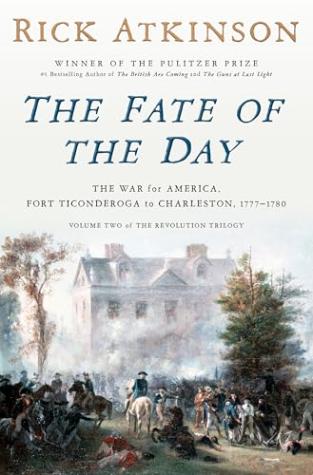

In the second volume of the landmark American Revolution trilogy by the Pulitzer Prize–winning and #1 New York Times bestselling author of The British Are Coming, George Washington’s army fights on the knife edge between victory and defeat. The first twenty-one months of the American Revolution—which began at Lexington and ended at Princeton—was the story of a ragged group of militiamen and soldiers fighting to forge a new nation. By the winter of 1777, the exhausted Continental Army could claim only that it had barely escaped annihilation by the world’s most formidable fighting force. Two years into the war, George III is as determined as ever to bring his rebellious colonies to heel. But the king’s task is now far more complicated: fighting a determined enemy on the other side of the Atlantic has become ruinously expensive, and spies tell him that the French and Spanish are threatening to join forces with the Americans. Prize-winning historian Rick Atkinson provides a riveting narrative covering the middle years of the Revolution. Stationed in Paris, Benjamin Franklin woos the French; in Pennsylvania, George Washington pleads with Congress to deliver the money, men, and materiel he needs to continue the fight. In New York, General William Howe, the commander of the greatest army the British have ever sent overseas, plans a new campaign against the Americans—even as he is no longer certain that he can win this searing, bloody war. The months and years that follow bring epic battles at Brandywine, Saratoga, Monmouth, and Charleston, a winter of misery at Valley Forge, and yet more appeals for sacrifice by every American committed to the struggle for freedom. Timed to coincide with the 250th anniversary of the beginning of the Revolution, Atkinson’s brilliant account of the lethal conflict between the Americans and the British offers not only deeply researched and spectacularly dramatic history, but also a new perspective on the demands that a democracy makes on its citizens.
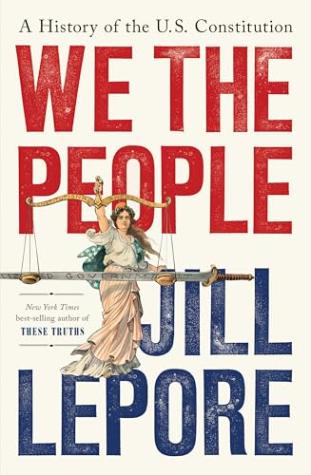
From the best-selling author of These Truths comes We the People, a stunning new history of the U.S. Constitution, for a troubling new era.
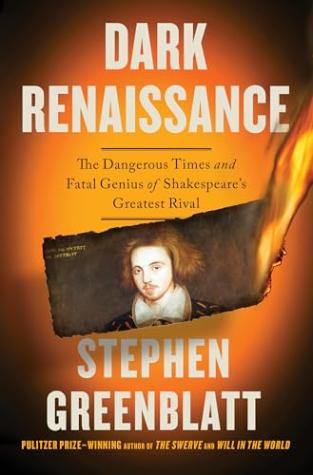
Poor boy. Spy. Transgressor. Genius. In repressive Elizabethan England, artists are frightened into dull conventionality; foreigners are suspect; popular entertainment largely consists of coarse spectacles, animal fights, and hangings. Into this crude world of government censorship and religious authoritarianism comes an ambitious cobbler’s son from Canterbury with a daring desire to be known—and an uncanny ear for Latin poetry. A torment for most schoolboys, yet for a few, like Christopher Marlowe, a secret portal to beauty, visionary imagination, transgressive desire, and dangerous skepticism. What Marlowe seizes in his rare opportunity for a classical education, and what he does with it, brings about a spectacular explosion of English literature, language, and culture. His astonishing literary success will, in turn, nourish the talent of a collaborator and rival, William Shakespeare. Dark Renaissance illuminates both Marlowe’s times and the origins and significance of his work—from his erotic translations of Ovid to his portrayal of unfettered ambition in a triumphant Tamburlaine to Doctor Faustus, his unforgettable masterpiece about making a pact with the devil in exchange for knowledge. Introducing us to Marlowe’s transgressive genius in the form of a thrilling page-turner, Stephen Greenblatt brings a penetrating understanding of the literary work to reveal the inner world of the author, bringing to life a homosexual atheist who was tormented by his own compromises, who refused to toe the party line, and who was murdered just when he had found love. Meanwhile, he explores how the people Marlowe knew, and the transformations they wrought, gave birth to the economic, scientific, and cultural power of the modern world including Faustian bargains with which we reckon still.
"The epic, true story of the Abuelas de Plaza de Mayo, grandmothers who fought to find their stolen grandchildren during Argentina's brutal dictatorship"-- Provided by publisher.
A major reassessment of one of Britain’s most important monarchs 'After finishing this beguiling book, there seems no point in reading anything else. It’s the quintessence of James; rather like his big brain, it flows everywhere and is impossible to contain. In research, analysis and imagination, it’s a masterpiece... In [Jackson's] mirror one views a life perfectly rendered — complete, complex and awe-inspiring' - Gerard de Groot, The Times James VI & I, who died 400 years ago, was one of Britain’s most consequential and interesting monarchs, not least in creating the British monarchy itself by joining the English and Scottish thrones. A major intellectual, James's preoccupations ranged from witchcraft and theological controversy to hunting, diplomacy, poetry and sartorial fashion. The 'Mirror of Great Britain' was a spectacular jewel that gave symbolic endorsement to James's vision of British union, but mirrors themselves — with their limitless capacity to magnify, illuminate and distort — supplied James with one of his favourite literary metaphors. Ruler of Scotland for nearly four decades before his accession to the English throne in 1603, James was a ‘cradle king’ whose long reigns encompassed extraordinary dramas, including his abduction in the ‘Ruthven Raid’ in 1582 and his attempted assassination in the Gunpowder Plot of 1605. In his lifetime, James often confounded contemporaries’ expectations while his posthumous reputation has been distorted by crude stereotypes. Closely attentive to James’s own words — in numerous publications, manuscript musings, topical verse and private correspondence — Clare Jackson's wonderful new book tells the story of this highly unusual monarch with great flair and insight.
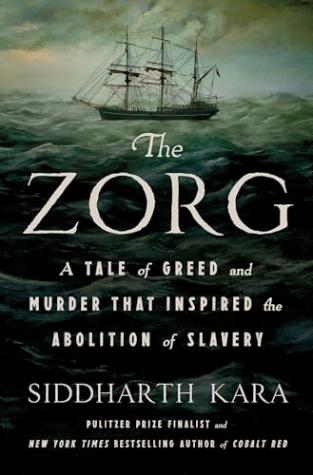
From Pulitzer finalist and New York Times bestselling author of Cobalt Red: A notorious slave ship incident that led to the abolition of slavery in the UK and sparked the US abolitionist movement In late October 1780, a slave ship set sail from the Netherlands, bound for Africa’s Windward and Gold Coasts, where it would take on its human cargo. The Zorg (a Dutch word meaning “care”) was one of thousands of such ships, but the harrowing events that ensued on its doomed journey were unique. After reaching Africa, the Zorg was captured by a privateer and came under British command. With a new captain and crew, the ship was crammed with 442 slaves and departed in 1781 for Jamaica. But a series of unpredictable weather events and mistakes in navigation left the ship drastically off course and running out of water. So a proposition was put forth: Save the crew and the most valuable of the slaves—by throwing dozens of people, starting with women and children, overboard. What followed was a fascinating legal drama in England’s highest court that turned the brutal calculus of slavery into front-page news. The case of the Zorg catapulted the nascent anti-slavery movement from a minor evangelical cause to one of the most consequential moral campaigns in history—sparking the abolitionist movement in both England and the young United States Siddharth Kara utilizes primary-source research, gripping storytelling, and painstaking investigation to uncover the Zorg’s journey, the lives and fates of the slaves on board, and the mysterious identity of the abolitionist who finally revealed the truth of what happened on the ship.
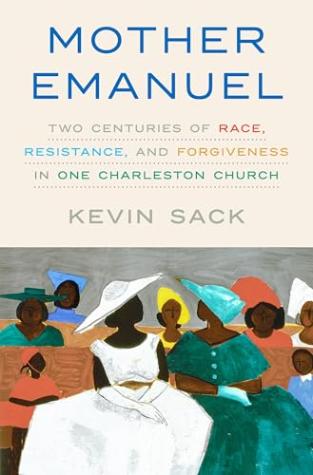
A sweeping history of one of the nation’s most important African American churches and a profound story of courage and grace amid the fight for racial justice—from Pulitzer Prize–winning journalist Kevin Sack “A masterpiece . . . a dense, rich, captivating narrative, featuring vivid prose . . . expansive, inspiring and hugely important.”—The New York Times “Race, religion, and terror combine for an extraordinary story of America.”—Eddie S. Glaude, Jr., bestselling author of Begin Again Few people beyond South Carolina’s Lowcountry knew of Emanuel African Methodist Episcopal Church in Charleston—Mother Emanuel—before the night of June 17, 2015, when a twenty-one-year-old white supremacist walked into Bible study and slaughtered the church’s charismatic pastor and eight other worshippers. Although the shooter had targeted Mother Emanuel—the first A.M.E. church in the South—to agitate racial strife, he did not anticipate the aftermath: an outpouring of forgiveness from the victims’ families and a reckoning with the divisions of caste that have afflicted Charleston and the South since the earliest days of European settlement. Mother Emanuel explores the fascinating history that brought the church to that moment and the depth of the desecration committed in its fellowship hall. It reveals how African Methodism was cultivated from the harshest American soil, and how Black suffering shaped forgiveness into both a religious practice and a survival tool. Kevin Sack, who has written about race in his native South for more than four decades, uses the church to trace the long arc of Black life in the city where nearly half of enslaved Africans disembarked in North America and where the Civil War began. Through the microcosm of one congregation, he explores the development of a unique practice of Christianity, from its daring breakaway from white churches in 1817, through the traumas of Civil War and Reconstruction, to its critical role in the Civil Rights Movement and beyond. At its core, Mother Emanuel is an epic tale of perseverance, not just of a congregation but of a people who withstood enslavement, Jim Crow, and all manner of violence with an unbending faith.
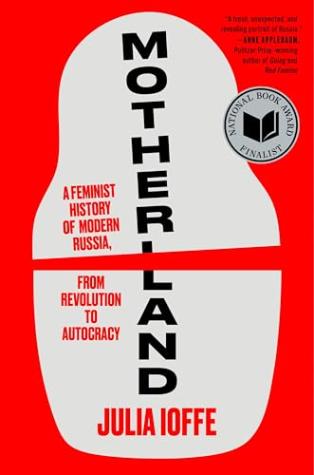
Award-winning journalist Julia Ioffe tells the story of modern Russia through the history of its women, from revolution to utopia to autocracy. In 1990, seven-year-old Julia Ioffe and her family fled the Soviet Union. Nearly twenty years later, Ioffe returned to Moscow--only to discover just how much Russian society had changed while she had been living in America. The Soviet women she had known growing up--doctors, engineers, scientists--had seemingly been replaced with women desperate to marry rich and become stay-at-home moms. How had Russia gone from portraying itself as the vanguard of world feminism to the last bastion of conservative Christian values? In Motherland, Ioffe turns modern Russian history on its head, telling it exclusively through the stories of its women. From her own physician great-grandmothers to Lenin's lover, a feminist revolutionary; from the hundreds of thousands of Soviet girls who fought in World War II to the millions of single mothers who rebuilt and repopulated a devastated country; from the members of Pussy Riot to Yulia Navalnaya, wife of opposition leader Alexei Navalny, she chronicles one of the most audacious social experiments in history and how it failed the very women it was meant to liberate--and documents how that failure paved the way to the revanche of Vladimir Putin. Part memoir, part journalistic exploration, part history, Motherland paints a portrait of modern Russia through the women who shaped it. With deep emotion, Ioffe shows what it means to live through the cataclysms of revolution, war, idealism, and heartbreak--and reveals how the story of Russia today is inextricably tied to the history of its women.
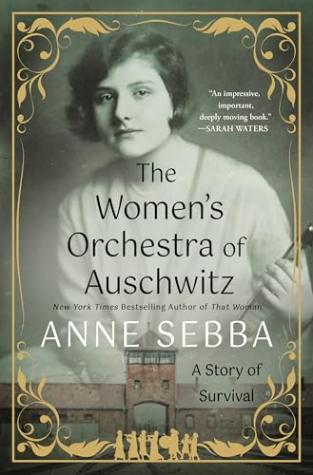
Moving and powerful, this is a vivid portrait of the women who came together to form an orchestra in order to survive the horrors of Auschwitz. New York Times bestselling author of Les Parisiennes and That Woman: A Life of Wallis Simpson now examines how a disparate band of young girls struggled to overcome differences and little musical knowledge to please the often-sadistic Nazi overseers. In 1943, German SS officers in charge of Auschwitz-Birkenau ordered that an orchestra be formed among the female prisoners. Almost fifty women and girls from eleven nations were drafted into a band that would play in all weathers marching music to other inmates, forced laborers who left each morning and returned, exhausted and often broken, at the end of the day. While still living amid the harshest of circumstances, with little more than a bowl of soup to eat, they were also made to give weekly concerts for Nazi officers, and individual members were sometimes summoned to give solo performances. For almost all of the musicians chosen to take part, being in the orchestra saved their lives. But at what cost? What role could music play in a death camp? What was the effect on those women who owed their survival to their participation in a Nazi propaganda project? And how did it feel to be forced to provide solace to the perpetrators of a genocide that claimed the lives of their family and friends? In The Women's Orchestra of Auschwitz, award-winning historian Anne Sebba traces these tangled questions of deep moral complexity with sensitivity and care. From Alma Rosé, the orchestra's main conductor, niece of Gustav Mahler and a formidable pre-war celebrity violinist, to Anita Lasker-Wallfisch, its teenage cellist and last surviving member, Sebba draws on meticulous archival research and exclusive first-hand accounts to tell the full and astonishing story of the orchestra, its members, and the response of other prisoners for the first time.
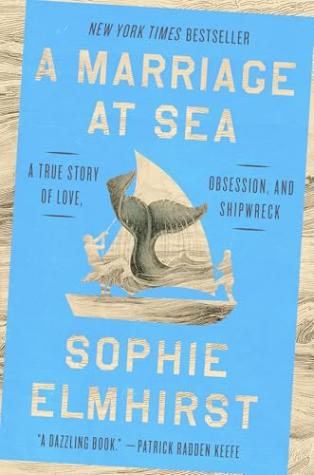
“This is nonfiction that reads like fiction – the best kind. Elmhirst’s retelling is a triumph, second only to the seemingly impossible feat of Maurice and Maralyn themselves. You won’t be able to put it down.” – USA Today “Remarkable… I found myself, alternately, holding my breath as I read at top speed, wandering rooms in search of someone to read aloud to, and placing the book facedown, arrested by quiet statements that left me reeling with their depth.” – The New York Times “Such an emotionally vivid portrait of a couple in isolation that I was shocked it wasn’t fiction. How could a writer get so deeply into the minds of two real people in such extraordinary circumstances? … So brilliantly depicted.” – Elle, Best Books of Summer “A beautiful meditation on endurance, codependence, and the power of love. A dazzling book.” – Patrick Radden Keefe “An enthralling, engrossing story of survival and the resilience of the human spirit.” —Bill Bryson The electrifying true story of a young couple shipwrecked at sea: a mind-blowing tale of obsession, survival, and partnership stretched to its limits. Maurice and Maralyn make an odd couple. He’s a loner, awkward and obsessive; she’s charismatic and ambitious. But they share a horror of wasting their lives. And they dream – as we all dream – of running away from it all. What if they quit their jobs, sold their house, bought a boat, and sailed away? Most of us begin and end with the daydream. But in June 1972, Maurice and Maralyn set sail. For nearly a year all went well, until deep in the Pacific, a breaching whale knocked a hole in their boat and it sank beneath the waves. What ensues is a jaw-dropping fight to survive in the wild ocean, with little hope of rescue. Alone together for months in a tiny rubber raft, starving and exhausted, Maurice and Maralyn have to find not only ways to stay alive but ways to get along, as their inner demons emerge and their marriage is put to the greatest of tests. Although they could run away from the world, they can’t run away from themselves. Taut, propulsive, and dazzling, A Marriage at Sea pairs an adrenaline-fueled high seas adventure with a gutting love story that asks why we love difficult people, and who we become under the most extreme conditions imaginable.
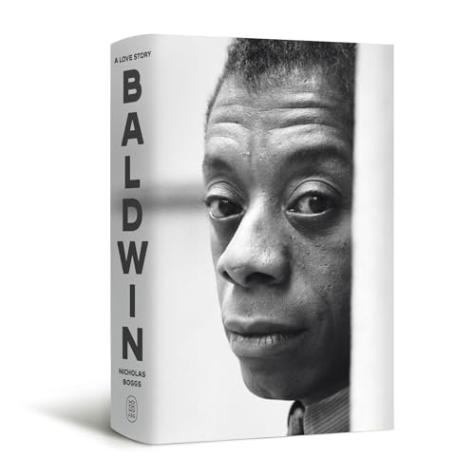
Drawing on new archival material, original research, and interviews, this spellbinding book is the first major biography of James Baldwin in three decades, revealing how profoundly his personal relationships shaped his life and work. Baldwin: A Love Story, the first major biography of James Baldwin in three decades, reveals how profoundly the writer’s personal relationships shaped his life and work. Drawing on newly uncovered archival material and original research and interviews, this spellbinding book tells the overlapping stories of Baldwin’s most sustaining intimate and artistic relationships: with his mentor, the Black American painter Beauford Delaney; with his lover and muse, the Swiss painter Lucien Happersberger; and with his collaborators, the famed Turkish actor Engin Cezzar and the iconoclastic French artist Yoran Cazac, whose long-overlooked significance as Baldwin’s last great love is explored in these pages for the first time. Nicholas Boggs shows how Baldwin drew on all the complex forces within these relationships—geographical, cultural, political, artistic, and erotic— and alchemized them into novels, essays, and plays that speak truth to power and had an indelible impact on the civil rights movement and on Black and queer literary history. Richly immersive, Baldwin: A Love Story follows the writer’s creative journey between Harlem, Paris, Switzerland, the southern United States, Istanbul, Africa, the South of France, and beyond. In so doing, it magnifies our understanding of the public and private lives of one of the major literary figures of the twentieth century, whose contributions only continue to grow in influence.
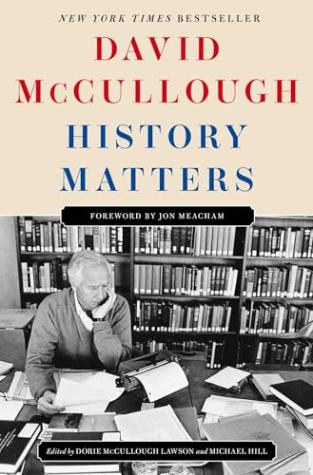
In this posthumous collection of thought-provoking essays—many never published before—Pulitzer Prize–winning historian and bestselling author David McCullough affirms the value of history, how we can be guided by its lessons, and the enduring legacy of American ideals. History Matters brings together selected essays by beloved historian David McCullough, some published here for the first time, written at different points over the course of his long career but all focused on the subject of his lifelong passion: the importance of history in understanding our present and future. Edited by McCullough’s daughter, Dorie McCullough Lawson, and his longtime researcher, Michael Hill, History Matters is a tribute to a master historian and offers fresh insights into McCullough’s enduring interests and writing life. The book also features a foreword by Jon Meacham. McCullough highlights the importance of character in political leaders, with Harry Truman and George Washington serving as exemplars of American values like optimism and determination. He shares his early influences, from the books he cherished in his youth to the people who mentored him. He also pays homage to those who inspired him, such as writer Paul Horgan and painter Thomas Eakins, illustrating the diverse influences on his writing as well as the influence of art. Rich with McCullough’s signature grace, curiosity, and narrative gifts, these essays offer vital lessons in viewing history through the eyes of its participants, a perspective that McCullough believed was crucial to understanding the present as well as the past. History Matters is testament to McCullough’s legacy as one of the great storytellers of this nation’s history and of the lasting promise of American ideals.
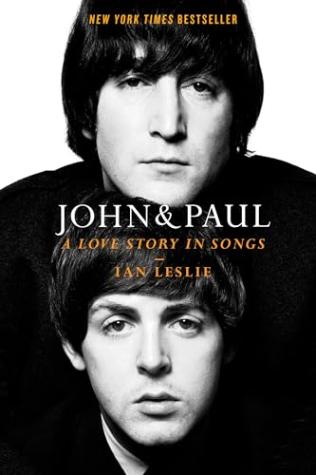
"The Beatles shook the world to its core in the 1960s and, to this day, new generations continue to fall in love with their songs and their story. At the heart of this phenomenon lies the dynamic between John Lennon and Paul McCartney. Few other musical partnerships have been rooted in such a deep, intense, and complicated personal relationship. John and Paul's relationship was defined by its complexity: compulsive, tender and tempestuous; full of longing, riven by jealousy. ... [This book] traces its twists and turns and reveals how these shifts manifested themselves in the music. The two of them shared a private language, rooted in the stories, comedy, and songs they both loved as teenagers, and later, in the lyrics of Beatles songs. In John & Paul, ... Leslie uses the songs they wrote to trace the shared journey of these two ... men before, during, and after The Beatles"--
The #1 New York Times Bestseller! One of Barack Obama's Summer Reading List Picks “Comprehensive, enthralling . . . Mark Twain flows like the Mississippi River, its prose propelled by Mark Twain’s own exuberance.” —The Boston Globe “Chernow writes with such ease and clarity . . . For all its length and detail, [Mark Twain] is deeply absorbing throughout.” — The Washington Post Pulitzer Prize-winning biographer Ron Chernow illuminates the full, fascinating, and complex life of the writer long celebrated as the father of American literature, Mark Twain Before he was Mark Twain, he was Samuel Langhorne Clemens. Born in 1835, the man who would become America’s first, and most influential, literary celebrity spent his childhood dreaming of piloting steamboats on the Mississippi. But when the Civil War interrupted his career on the river, the young Twain went west to the Nevada Territory and accepted a job at a local newspaper, writing dispatches that attracted attention for their brashness and humor. It wasn’t long before the former steamboat pilot from Missouri was recognized across the country for his literary brilliance, writing under a pen name that he would immortalize. In this richly nuanced portrait of Mark Twain, acclaimed biographer Ron Chernow brings his considerable powers to bear on a man who shamelessly sought fame and fortune, and crafted his persona with meticulous care. After establishing himself as a journalist, satirist, and lecturer, he eventually settled in Hartford with his wife and three daughters, where he went on to write The Adventures of Tom Sawyer and Adventures of Huckleberry Finn. He threw himself into the hurly-burly of American culture, and emerged as the nation’s most notable political pundit. At the same time, his madcap business ventures eventually bankrupted him; to economize, Twain and his family spent nine eventful years in exile in Europe. He suffered the death of his wife and two daughters, and the last stage of his life was marked by heartache, political crusades, and eccentric behavior that sometimes obscured darker forces at play. Drawing on Twain’s bountiful archives, including thousands of letters and hundreds of unpublished manuscripts, Chernow masterfully captures the man whose career reflected the country’s westward expansion, industrialization, and foreign wars, and who was the most important white author of his generation to grapple so fully with the legacy of slavery. Today, more than one hundred years after his death, Twain’s writing continues to be read, debated, and quoted. In this brilliant work of scholarship, a moving tribute to the writer’s talent and humanity, Chernow reveals the magnificent and often maddening life of one of the most original characters in American history.
In this “extraordinary and brilliant book” (Helen Castor, author of She-Wolves), a prize-winning historian offers the definitive account of the sixteenth-century uprising that revolutionized Europe The German Peasants’ War was the greatest popular uprising in Western Europe before the French Revolution. In 1524 and 1525, it swept across Germany with astonishing speed as well over a hundred thousand people massed in armed bands to demand a new and more egalitarian order. The peasants took control of vast areas of southern and middle Germany, torching and plundering the monasteries, convents, and castles that stood in their way. But they proved no match for the forces of the lords, who put down the revolt by slaying somewhere between seventy and a hundred thousand peasants in just over two months. In Summer of Fire and Blood, the first history of the German Peasants’ War in a generation, historian Lyndal Roper exposes the far-reaching ramifications of this rebellion. Though the war’s victors portrayed the uprising as naive and inchoate, Roper reveals a mass movement that sought to make good on the radical potential of the Protestant Reformation. By recovering what the people themselves felt and believed, Summer of Fire and Blood reconstructs the thrilling, tragic story of the peasants’ fight to change the world.
A sweeping chronicle of four tumultuous years in 1980s New York that changed the city forever—and anticipated the forces that would soon divide the nation—from the bestselling author of Ladies and Gentlemen, the Bronx Is Burning “A rip-roaring, sweeping, essential work of history . . . a deeply reported and brilliantly observed account of how the modern city was born and why all of us continue to live with the results.”—Jonathan Eig, Pulitzer Prize–winning author of King: A Life New York entered 1986 as a city reborn. Record profits on Wall Street sent waves of money splashing across Manhattan, bringing a battered city roaring back to life. But it also entered 1986 as a city whose foundation was beginning to crack. Thousands of New Yorkers were sleeping in the streets, addicted to drugs, dying of AIDS, or suffering from mental illnesses. Nearly one-third of the city’s Black and Hispanic residents were living below the federal poverty line. Long-simmering racial tensions threatened to boil over. The events of the next four years would split the city open. Howard Beach. Black Monday. Tawana Brawley. The crack epidemic. The birth of ACT UP. The Central Park jogger. The release of Do the Right Thing. And a cast of outsized characters—Ed Koch, Donald Trump, Al Sharpton, Spike Lee, Rudy Giuliani, Larry Kramer—would compete to shape the city’s future while building their own mythologies. The Gods of New York is a kaleidoscopic and deeply immersive portrait of a city whose identity was suddenly up for grabs: Could it be both the great working-class city that lifted up immigrants from around the world and the money-soaked capital of global finance? Could it retain a civic culture—a common idea of what it meant to be a New Yorker—when the rich were building a city of their own and vast swaths of its citizens were losing faith in the systems meant to protect them? New York City was one thing at the dawn of 1986; it would be something very different as 1989 came to a close. This is the story of how that happened.
The internationally bestselling author of The Anarchy returns with a sparkling, soaring history of ideas, tracing South Asia's under-recognized role in producing the world as we know it. For a millennium and a half, India was a confident exporter of its diverse civilization, creating around it a vast empire of ideas. Indian art, religions, technology, astronomy, music, dance, literature, mathematics and mythology blazed a trail across the world, along a Golden Road that stretched from the Red Sea to the Pacific. In The Golden Road, William Dalrymple draws from a lifetime of scholarship to highlight India's oft-forgotten position as the heart of ancient Eurasia. For the first time, he gives a name to this spread of Indian ideas that transformed the world. From the largest Hindu temple in the world at Angkor Wat to the Buddhism of China, from the trade that helped fund the Roman Empire to the creation of the numerals we use today (including zero), India transformed the culture and technology of its ancient world – and our world today as we know it.
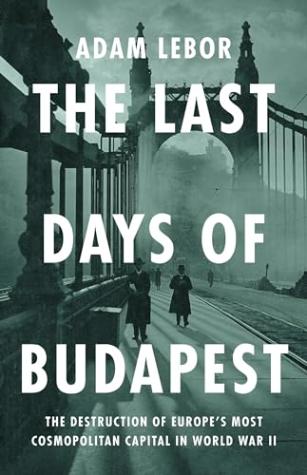
In 1945, Budapest, once one of the cultured twin capitals of the Austro-Hungarian empire, became the site of the last great, brutal city siege of WWII--now brilliantly recreated in this new history. Although Hungary was a German ally in 1941, two years into World War II, it was still possible for Allied prisoners of war, French and Polish refugees, spies of every kind, and the city's large Jewish population to live freely and openly, enjoying the cafes and boulevards that made Budapest one of the great European capitals. While the other multicultural centers of Europe had fallen to the almost all-consuming conflict, Budapest remained intact, a shining reminder of what middle European high culture could be. In September 1944, three months after D-Day, life in the city seemed idyllic. But under the guise of peace existed an undercurrent of tension and anxiety: British and American troops advanced from the west and Soviet troops from the east. Who would reach the capital first? By mid-October 1944, Budapest had collapsed into anarchy: death squads roamed the streets, the city's remaining Jews were funneled into ghettos, Russian shells destroyed city blocks, and everyone struggled to find food and survive the winter. Using newly uncovered diaries and archives, Adam Lebor brilliantly recreates the increasingly desperate efforts of Hungary's leaders to avoid being drawn into the cataclysm of war, the moral and tactical ambiguity they deployed in the attempt, and the ultimate tragedy that befell Hungary and, in particular, its Jewish population. Told through the lives of a glamorous aristocrats, SS Officers, a rebellious teenage Jewish school student, Hungary's most popular singer and actress, and a housewife trying desperately to keep her family alive, the story of how Budapest is threatened from all sides as the war tightens its noose is highly dramatic and utterly compelling.
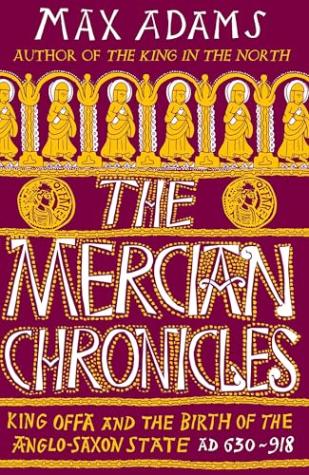
Apollo The Mercian Chronicles King Offa and the Birth of the Anglo-Saxon State, AD 630918 (The Founders of Britain Quartet). ABISBOOK. Apollo.
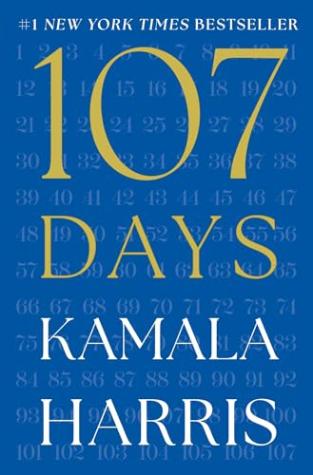
For the first time, and with surprising and revealing insights, former Vice President Kamala Harris tells the story of one of the wildest and most consequential presidential campaigns in American history. Your Secret Service code name is Pioneer. You are the first woman in history to be elected vice president of the United States. On July 21, 2024, your running mate, Joe Biden, announces that he will not be seeking reelection. The presidential election will occur on November 5, 2024. You have 107 days. From the chaos of campaign strategy sessions to the intensity of debate prep under relentless scrutiny and the private moments that rarely make headlines, Kamala Harris offers an unfiltered look at the pressures, triumphs, and heartbreaks of a history-defining race. With behind-the-scenes details and a voice that is both intimate and urgent, this is more than a political memoir—it’s a chronicle of resilience, leadership, and the high stakes of democracy in action. Written with candor, a unique perspective, and the pace of a page-turning novel, 107 Days takes you inside the race for the presidency as no one has ever done before.
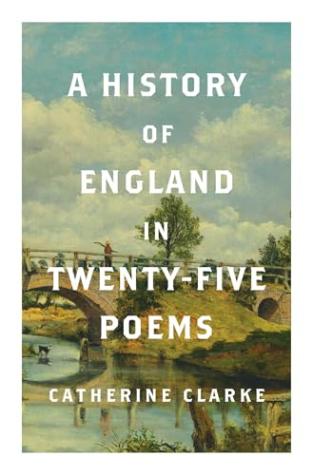
A delightful, thoughtful and original new way to understand England's history 'Catherine Clarke uses an eclectic mix of verse — satirical, scabrous, tragic, lyrical — to tell the English national story... the emotional intimacy of poetry (aided by Clarke’s careful, historically informed analysis) offers valuable insights into great historical events' - Katherine Harvey, The Times 'Catherine Clarke traces centuries of English thought and poetry, from the time of Beowulf to the protests written in the wake of Brexit. She weaves together the personal and the public with stories... an excellent, all-encompassing read' - The Idler This is the history of England told in a new way: glimpsed through twenty-five remarkable poems written down between the eighth century and today, which connect us directly with the nation’s past, and the experiences, emotions and imaginations of those who lived it. These poems open windows onto wildly different worlds – from the public to the intimate, from the witty to the savage, from the playful to the wistful. They take us onto battlefields, inside royal courts, down coal mines and below stairs in great houses. Their creators, witnesses to events from the Great Fire of London to the Miners’ Strike, range from the famous to the forgotten, yet each invites us into an immersive encounter with their own time. A History of England in 25 Poems is a portal to the past; a constant companion, filled with vivid voices and surprising stories alongside familiar landmarks, and language that speaks in new ways on each reading. Catherine Clarke’s knowledge and passion take us inside the words and the moments they capture, with thoughtful insights, humour and new perspectives on how the nation has dreamed itself into existence – and who gets to tell England’s story.
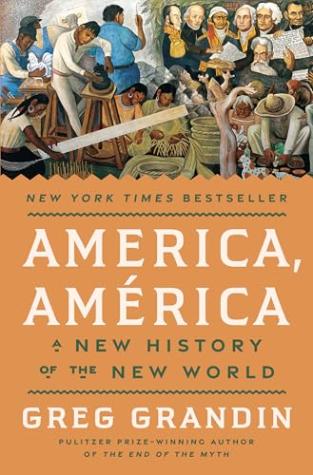
A New York Times bestseller • A 2025 Kirkus Prize finalist in Nonfiction • Shortlisted for the 2025 Cundill History Prize “An extraordinarily ambitious book . . . America, América reads at times as the historical equivalent of the great epic novels of Gabriel García Márquez.” —Irish Times From the Pulitzer Prize–winning historian, the first comprehensive history of the Western Hemisphere, a sweeping five-century narrative of North and South America that redefines our understanding of both The story of how the United States’ identity was formed is almost invariably told by looking east to Europe. But as Greg Grandin vividly demonstrates, the nation’s unique sense of itself was in fact forged facing south toward Latin America. In turn, Latin America developed its own identity in struggle with the looming colossus to the north. In this stunningly original reinterpretation of the New World, Grandin reveals how North and South emerged from a constant, turbulent engagement with each other. America, América traverses half a millennium, from the Spanish Conquest—the greatest mortality event in human history—through the eighteenth-century wars for independence, the Monroe Doctrine, the coups and revolutions of the twentieth century, and beyond. Grandin shows, among other things, how in response to U.S. interventions, Latin Americans remade the rules, leading directly to the founding of the United Nations; and how the Good Neighbor Policy allowed FDR to assume the moral authority to lead the fight against world fascism. Grandin’s book sheds new light on well-known historical figures like Bartolomé de las Casas, Simón Bolívar, and Woodrow Wilson, as well as lesser-known actors such as the Venezuelan Francisco de Miranda, who almost lost his head in the French Revolution and conspired with Alexander Hamilton to free America from Spain; the Colombian Jorge Gaitán, whose unsolved murder inaugurated the rise of Cold War political terror, death squads, and disappearances; and the radical journalist Ernest Gruening, who, in championing non-interventionism in Latin America, helped broker the most spectacularly successful policy reversal in United States history. This is a monumental work of scholarship that will fundamentally change the way we think of Spanish and English colonialism, slavery and racism, and the rise of universal humanism. At once comprehensive and accessible, America, América shows that centuries of bloodshed and diplomacy not only helped shape the political identities of the United States and Latin America but also the laws, institutions, and ideals that govern the modern world. In so doing, Grandin argues that Latin America’s deeply held culture of social democracy can be an effective counterweight to today’s spreading rightwing authoritarianism. A culmination of a decades-long engagement with hemispheric history, drawing on a vast array of sources, and told with authority and flair, this is a genuinely new history of the New World.
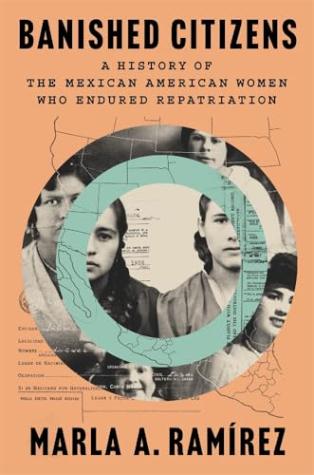
From 1921 to 1944, the United States removed approximately one million ethnic Mexicans—mostly women and children who were US citizens—across the southern border. Marla A. Ramírez explores the lasting effects of “repatriation” on banished women and their descendants, who acted with resilience in their efforts to reclaim citizenship and return home.
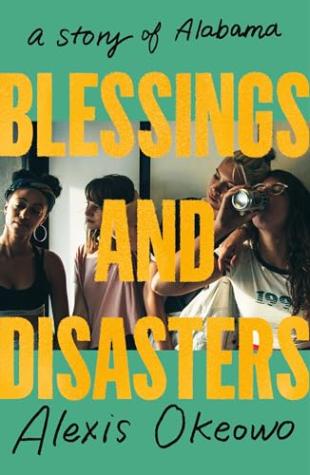
From a New Yorker staff writer and PEN Award winner, a blend of memoir, history, and reportage on one of the most complex and least understood states in America. “In Alabama, we exist at the border of blessing and disaster....” Alexis Okeowo grew up in Montgomery, Alabama—the former seat of the Confederacy—as the daughter of Nigerian immigrants. Here, she weaves her family’s story with her state’s, from Alabama’s forced removal of the Creek nation, making room for enslaved West Africans, to present-day legislative battles for “evolution disclaimers” in biology textbooks. She immerses us in the landscape, no longer one of cotton fields but rather one dominated by auto plants and Amazon warehouses. Defying stereotypes at every turn, Okeowo shows how people can love their home while still acknowledging its sins. In this emotional, perspective-shifting work that is both a memoir and a journalistic triumph, Okeowo investigates her life, other Alabamians’ lives, and the state’s lesser-known histories, to examine why Alabama has been the stage for the most extreme results of the American experiment.
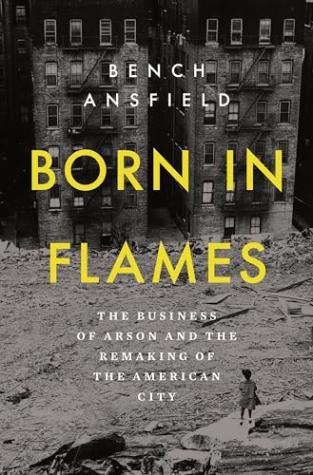
"A young historian's superlative debut . . . this excellent book delivers the truth about 'the burning years." --Kirkus Reviews (starred review) "[R]iveting . . . an outstanding exposé of the predatory capitalist machinations behind the 'Bronx is burning' saga."--Publishers Weekly (starred review) The explosive account of the arson wave that hit the Bronx and other American cities in the 1970s--and its legacy today.
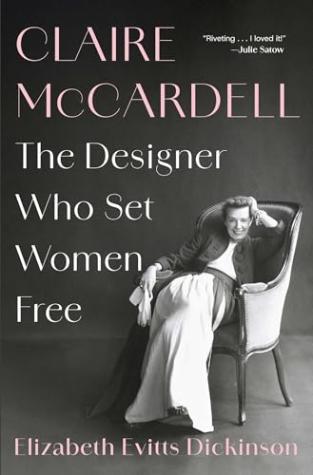
The riveting hidden history of Claire McCardell, the most influential fashion designer you’ve never heard of. Claire McCardell forever changed fashion—and most importantly, the lives of women. She shattered cultural norms around women’s clothes, and today much of what we wear traces back to her ingenious, rebellious mind. McCardell invented ballet flats and mix-and-match separates, and she introduced wrap dresses, hoodies, leggings, denim, and more into womenswear. She tossed out corsets in favor of a comfortably elegant look and insisted on pockets, even as male designers didn’t see a need for them. She made zippers easy to reach because a woman “may live alone and like it,” McCardell once wrote, “but you may regret it if you wrench your arm trying to zip a back zipper into place.” After World War II, McCardell fought the severe, hyper-feminized silhouette championed by male designers, like Christian Dior. Dior claimed that he wanted to “save women from nature.” McCardell, by contrast, wanted to set women free. Claire McCardell became, as the young journalist Betty Friedan called her in 1955, “The Gal Who Defied Dior.” Filled with personal drama and industry secrets, this story reveals how Claire McCardell built an empire at a time when women rarely made the upper echelons of business. At its core, hers is a story about our right to choose how we dress—and our right to choose how we live.
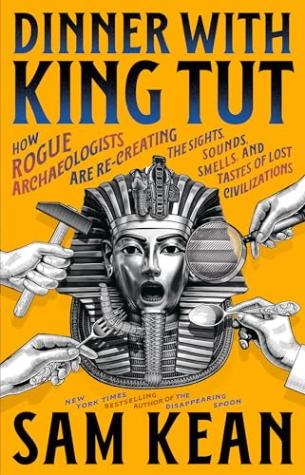
New York Times's 21 Nonfiction Books Coming This Summer | Boston Globe's Best Summer 2025 Books From “one of America’s smartest and most charming writers” (NPR), an archaeological romp through the entire history of humankind—and through all five senses—from tropical Polynesian islands to forbidding arctic ice floes, and everywhere in between. Whether it’s the mighty pyramids of Egypt or the majestic temples of Mexico, we have a good idea of what the past looked like. But what about our other senses: The tang of Roman fish sauce and the springy crust of Egyptian sourdough? The boom of medieval cannons and the clash of Viking swords? The frenzied plays of an Aztec ballgame...and the chilling reality that the losers might also lose their lives? History often neglects the tastes, textures, sounds, and smells that were an intimate part of our ancestors’ lives, but a new generation of researchers is resurrecting those hidden details, pioneering an exciting new discipline called experimental archaeology. These are scientists gone rogue: They make human mummies. They investigate the unsolved murders of ancient bog bodies. They carve primitive spears and go hunting, then knap their own obsidian blades to skin the game. They build perilous boats and plunge out onto the open sea—all in the name of experiencing history as it was, with all its dangers, disappointments, and unexpected delights. Beloved author Sam Kean joins these experimental archaeologists on their adventures across the globe, from the Andes to the South Seas. He fires medieval catapults, tries his hand at ancient surgery and tattooing, builds Roman-style roads—and, in novelistic interludes, spins gripping tales about the lives of our ancestors with vivid imagination and his signature meticulous research. Lively, offbeat, and filled with stunning revelations about our past, Dinner with King Tut sheds light on days long gone and the intrepid experts resurrecting them today, with startling, lifelike detail and more than a few laughs along the way.
God is an Englishman Christianity and the Creation of England. ABISBOOK. Forum.
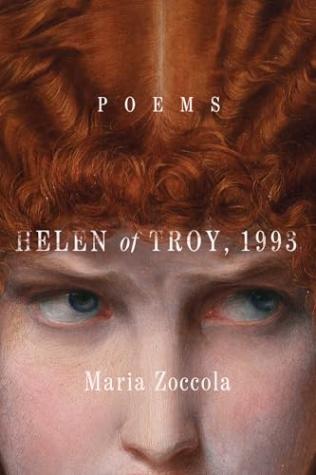
Part myth retelling, part character study, this debut poetry collection reimagines the mythic beauty from Homer's "Iliad" as a disgruntled housewife in 1990s Tennessee. Zoccola explores Helen's isolation and rebellion as her expansive personality clashes with the social rigidity of a small town: she marries the wrong man, gives birth to a child she is not ready to parent, and begins an affair that throws her life into chaos, but she never surrenders ownership of her story or her choices.

Chatto Windus Mining Men. ABISBOOK. Chatto Windus.
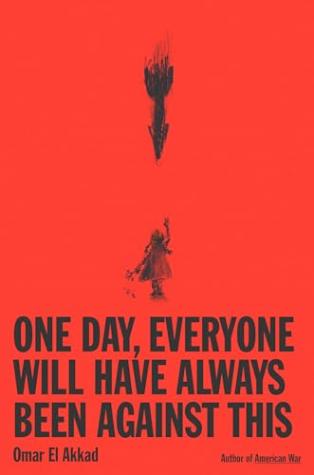
NEW YORK TIMES BESTSELLER • SHORTLISTED FOR THE 2025 PALESTINE BOOK AWARDS • From award-winning novelist and journalist Omar El Akkad comes a powerful reckoning with what it means to live in a West that betrays its fundamental values "[A] bracing memoir and manifesto."—The New York Times “I can’t think of a more important piece of writing to read right now. I found hope here, and help, to face what the world is now, all that it isn’t anymore. Please read this. I promise you won’t regret it.”—Tommy Orange, bestselling author of Wandering Stars and There There On October 25, 2023, after just three weeks of the bombardment of Gaza, Omar El Akkad put out a tweet: “One day, when it’s safe, when there’s no personal downside to calling a thing what it is, when it’s too late to hold anyone accountable, everyone will have always been against this.” This tweet has been viewed more than 10 million times. As an immigrant who came to the West, El Akkad believed that it promised freedom. A place of justice for all. But in the past twenty years, reporting on the War on Terror, Ferguson, climate change, Black Lives Matter protests, and more, and watching the unmitigated slaughter in Gaza, El Akkad has come to the conclusion that much of what the West promises is a lie. That there will always be entire groups of human beings it has never intended to treat as fully human—not just Arabs or Muslims or immigrants, but whoever falls outside the boundaries of privilege. One Day, Everyone Will Have Always Been Against This is a chronicle of that painful realization, a moral grappling with what it means, as a citizen of the U.S., as a father, to carve out some sense of possibility in a time of carnage. This is El Akkad’s nonfiction debut, his most raw and vulnerable work to date, a heartsick breakup letter with the West. It is a brilliant articulation of the same breakup we are watching all over the United States, in family rooms, on college campuses, on city streets; the consequences of this rupture are just beginning. This book is for all the people who want something better than what the West has served up. This is the book for our time.
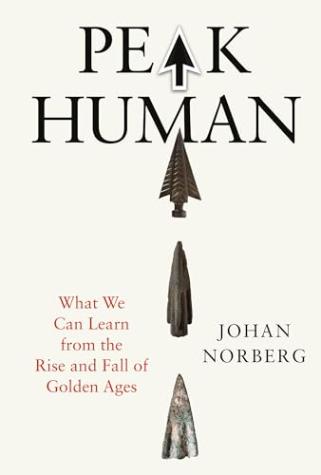
"All golden ages are marked by periods of spectacular cultural flourishing, scientific exploration, technological achievement and economic growth; yet no two are the same. Their beliefs, societies and place in the wider world all vary. Despite this, all previous golden ages have ended, whether it be because of external pressures or internal fracturing; too much hubris or too little wariness. Looking at seven of humanity's greatest civilizations - ancient Athens, the Roman Republic, Abbasid Baghdad, Song China, Renaissance Italy, the Dutch Republic and the Anglosphere - historian and commentator Johan Norberg seeks to distil their strengths and shortcomings in answering the question: how do we ensure that our current golden age doesn't end? As insightful as it is riveting, Peak Human is at once a paean to our incredible progress and a warning that we cannot afford to be complacent."--Publisher's description.
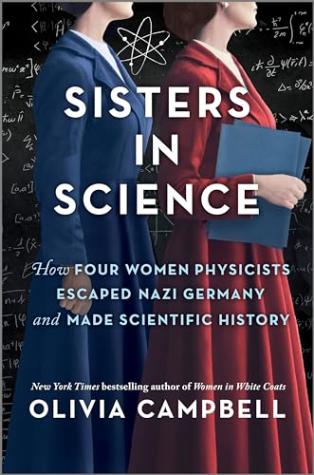
The extraordinary true story of four women pioneers in physics during World War II and their daring escape out of Nazi Germany In the 1930s, Germany was a hotbed of scientific thought. But after the Nazis took power, Jewish and female citizens were forced out of their academic positions. Hedwig Kohn, Lise Meitner, Hertha Sponer and Hildegard Stücklen were eminent in their fields, but they had no choice but to flee due to their Jewish ancestry or anti-Nazi sentiments. Their harrowing journey out of Germany became a life-and-death situation that required Herculean efforts of friends and other prominent scientists. Lise fled to Sweden, where she made a groundbreaking discovery in nuclear physics, and the others fled to the United States, where they brought advanced physics to American universities. No matter their destination, each woman revolutionized the field of physics when all odds were stacked against them, galvanizing young women to do the same. Well researched and written with cinematic prose, Sisters in Science brings these trailblazing women to life and shows us how sisterhood and scientific curiosity can transcend borders and persist—flourish, even—in the face of seemingly insurmountable odds.
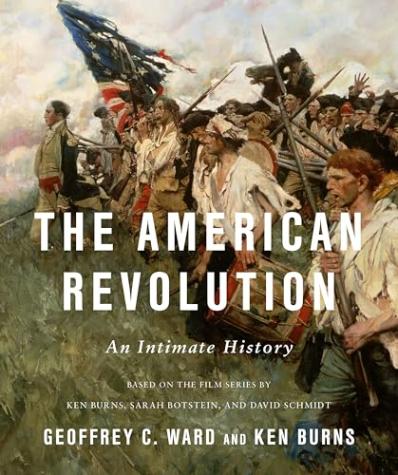
From the award-winning historian and filmmakers of The Civil War, Baseball, Jazz, The Roosevelts, and others: a richly illustrated, human-centered history of America’s founding struggle—expanding on the landmark, six-part PBS series to be aired in November 2025 “From a small spark kindled in America, a flame has arisen not to be extinguished.” —Thomas Paine In defeating the British Empire and giving birth to a new nation, the American Revolution turned the world upside down. Thirteen colonies on the Atlantic coast rose in rebellion, won their independence, and established a new form of government that radically reshaped the continent and inspired independence movements and democratic reforms around the globe. The American Revolution was at once a war for independence, a civil war, and a world war, fought by neighbors on American farms and between global powers an ocean or more away. In this sumptuous volume, historian Geoffrey C. Ward ably steers us through the international forces at play, telling the story not from the top down but from the bottom up—and through the eyes of not only our “Founding Fathers” but also those of ordinary soldiers, as well as underrepresented populations such as women, African Americans, Native Americans, and American Loyalists, asking who exactly was entitled to life, liberty, and the pursuit of happiness. Enriched by guest essays from lauded historians such as Vincent Brown, Maya Jasanoff, and Alan Taylor, and by an astonishing array of prints, drawings, paintings, texts, and pamphlets from the time period, and newly commissioned art and maps—and woven together with the words of Thomas Paine—The American Revolution reveals a nation still grappling with the questions that fueled its remarkable founding.
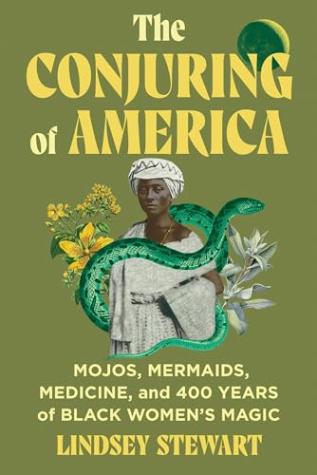
One of BookRiot's Best New Nonfiction Out in July, a crucial telling of U.S. history centering the Black women whose magic gave rise to the rich tapestry of American culture we see today—from Vicks VapoRub and Aunt Jemima’s pancake mix, to the magic of Disney’s The Little Mermaid (2023), and the all-American blue jean. Emerging first on plantations in the American South, enslaved conjure women used their magic to treat illnesses. These women combined their ancestral spiritual beliefs from West Africa with local herbal rituals and therapeutic remedies to create conjure, forging a secret well of health and power hidden to their oppressors and many of the modern-day staples we still enjoy. In The Conjuring of America, Black feminist philosopher Lindsey Stewart exposes this vital contour of American history. In the face of slavery, Negro Mammies fashioned a legacy of magic that begat herbal experts, fearsome water bearers, and powerful mojos—roles and traditions that for centuries have been passed down to respond to Black struggles in real time. And when Jim Crow was born, Granny Midwives and textile weavers leveled their techniques to protect our civil and reproductive rights, while Candy Ladies fed a generation of freedom crusaders. Sourcing firsthand accounts the of enslaved, dispatches from the lore of Oshun, and the wisdom of beloved Black women writers, Stewart proves indisputably that conjure informs our lives in ways remarkable and ordinary. Above all, The Conjuring of America is a love letter to the magic Black women used to sow messages of rebellion, freedom, and hope.
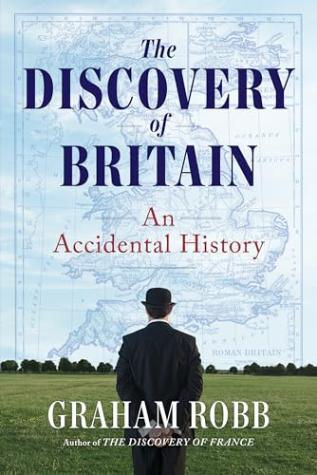
Graham Robb takes readers on a time-traveling adventure around the "spindly, sea-wracked island" he calls home. Interweaving personal and historical narratives and making use of contemporary sources, Graham Robb's lively exploration of Britain through the ages peels back the layers of this island nation and shows how it came to be. We follow Robb as he travels along the warpaths of long-forgotten kings, under the chalk ramparts and grassy folds of ancient hill-towns, down the ghost trails of Roman and Saxon streets. Armed with poignant observations and an infectious love for his subject, Robb recounts the epic stories of wars and conquests, of feuding kings and rebellious peasants, of innovations and upheavals, from the creation of Stonehenge to the dawn of the railway, from the advent of multiculturalism to the recent political earthquakes--distilling a social, political, and geographical history of Britain that is at once panoramic and intimate, poignant and entertaining.
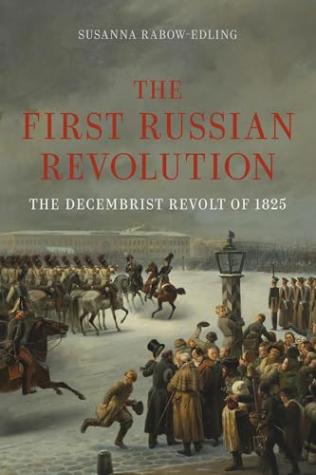
Looking two hundred years in the past, an enlightening study of the neglected liberal tradition in Russian political thought with resonance for today. On December 14, 1825, a group of young Russian army officers led three thousand troops to Senate Square in St. Petersburg, aiming to force the senate to adopt a liberal constitution and transform the Russian Empire. The Decembrist Revolt--as it came to be known--was suppressed, with a second uprising in the south meeting the same fate. Five leaders were executed, and many others exiled to Siberia. Why did so many young noblemen risk their lives for regime change, what was their vision for an alternative society, and what were the consequences for participants and their families? This book highlights the often-neglected liberal tradition in Russian political thought and the experiences of Decembrist wives and fiancées, offering a fresh reinterpretation in the light of recent events in Russia.
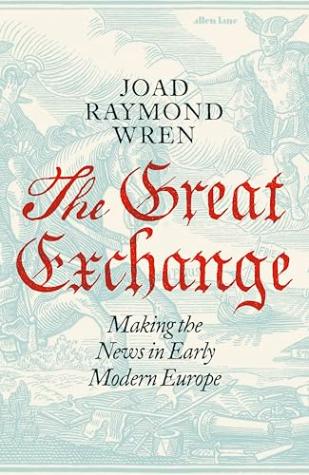
An epic history of the birth of news in Europe News moves. It is a battle, a scandal, a disaster. It is a letter, a newspaper, a proclamation. News is a material thing, but also something between us, something we take into us and feel. This book tells the story of news from the sunset of the Middle Ages to the rise of mass media in modern times. It begins in Renaissance Italy, with the envoys and merchants who drew in and disseminated news across Europe, establishing its channels and conventions. Following the beat of news around the continent, it uncovers a vast, invisible network traversing the boundaries of geography and politics, religion and language. Joad Raymond Wren allows the reader to see news – of the battle of Lepanto, the siege of Vienna – spreading around this network in real time. Dispelling the tenacious myth that news was until the printing press scarce and unreliable, and until the telegraph slow and provincial, he opens up windows onto a world buzzing with news from faraway. News brought the distant closer, and provided the means for Europe to know itself. The continent was, for a time, held together by that most essential of human acts: communication.
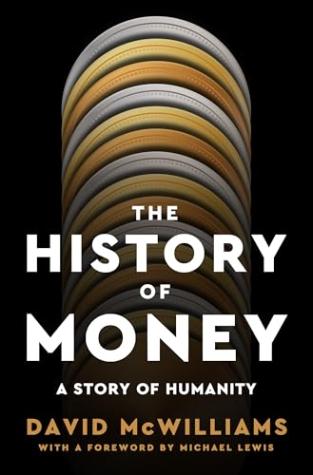
In this fresh, eye-opening global history, economist David McWilliams charts the relationship between humans and money—from clay tablets in Mesopotamia to cryptocurrency in Silicon Valley. The story of humanity is inextricable from that of money. No innovation has defined our own evolution so thoroughly and changed the direction of our planet’s history so dramatically. And yet despite money’s primacy, most of us don’t truly understand it. As leading economist David McWilliams shows, money is central to every aspect of our civilization, from the political to the artistic. “Money defines the relationship between worker and employer, buyer and seller, merchant and producer. But not only that: it also defines the bond between the governed and the governor, the state and the citizen. Money unlocks pleasure, puts a price on desire, art and creativity. It motivates us to strive, achieve, invent and take risks. Money also brings out humanity’s darker side, invoking greed, envy, hatred, violence and, of course, colonialism.” In The History of Money, McWilliams takes us across the world, from the birthplace of money in ancient Babylon to the beginning of trade along the Silk Road, from Marrakech markets to Wall Street. Along the way, we meet a host of innovators, emperors, frauds, and speculators, who have disrupted society and transformed the way we live. Filled with memorable anecdotes, and with a foreword by Michael Lewis, The History of Money is an essential, extremely readable history of humanity’s most consequential invention.

In this groundbreaking work of investigative journalism and true crime, Stacy Horn sheds light on how the subprime mortgage scandal of the 1970s and a long history of white-collar crime slowly devastated East New York, a Brooklyn neighborhood that would come to be known as the Killing Fields. On a warm summer evening in 1991, seventeen-year-old Julia Parker was murdered in the Brooklyn neighborhood of East New York. An area known for an exorbitant level of violence and crime, East New York had come to be known as the Killing Fields. In the six months after Julia Parker's death, 62 more people were murdered in the same area. In the early 1990s, murder rates in the neighborhood climbed to the highest in NYPD history. East New York was dying. But how did this once thriving, diverse, family neighborhood fall into such ruin? The answer can be found two decades earlier. In response to redlining and discriminatory housing practices, the Johnson administration passed the Housing and Urban Development Act in 1968. The Federal Housing Authority aimed to use this piece of legislation to help low-income families of color finally achieve homeownership. But they could never have predicted how banks, lenders, realtors, and corrupt FHA officials themselves would use the newly passed law to make victims of the very people they were trying to help, and the devastation they would leave in their wake. A compulsively readable hybrid of true crime and investigative journalism, The Killing Fields of East New York reveals how white-collar crime reduced a prospering neighborhood to abandoned buildings and empty lots. Following the dual threads of the hunt for the network of criminals behind the first subprime mortgage scandal and the ensuing downfall of East New York, Stacy Horn weaves a compelling narrative of government failure, a desperate community, and ultimately the largest series of mortgage fraud prosecutions in American history. The Killing Fields of East New York deftly demonstrates how different types of crime are profoundly entangled, and how the crimes committed in nice suits and corner offices are just as destructive as those committed on the street.
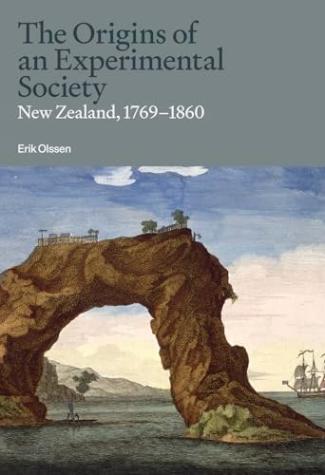
The history of New Zealand explained through powerful beliefs and the people who held them.
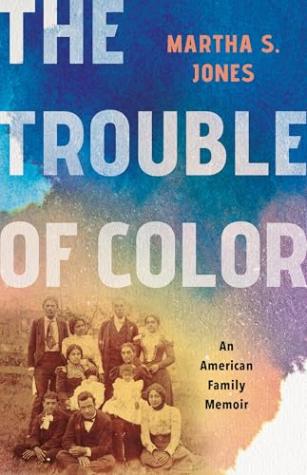
"A child of the civil rights era, Martha S. Jones grew up feeling her Black identity was obvious to all who saw her. But in Jones's first semester of college, a Black Studies classmate challenged her right to speak. Suspicious of the color of her skin and the texture of her hair, he confronted her with a question that inspired a lifetime of introspection: "Who do you think you are?" Now a prizewinning scholar of Black history, Jones delves into her own family's past for answers, only to find a story that archives alone can't tell, a story of race in America that takes us beyond slavery, Jim Crow, and civil rights. Ever since her great-great-great-grandmother Nancy emerged from bondage in 1865 determined to raise a free family, skin color has determined Jones's ancestors' lives. But color and race are not the same, and through her family's story, Jones discovers the uneven, unpredictable relationship between the two. Drawing readers along the shifting and jagged path of America's color line, The Trouble of Color is a lyrical, deeply felt meditation on the most fundamental matters of identity, belonging, and family"--
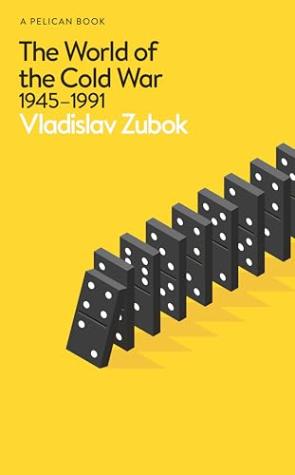
Why did the Cold War erupt so soon after the Second World War? How did it escalate so rapidly, spanning five continents over six decades? And what led to the spectacular collapse of the Soviet Union? In this comprehensive guide to the most widespread conflict in contemporary history, Vladislav Zubok traces the origins of the Cold War in post-war Europe, through the tumultuous decades of confrontation, to the fall of the Berlin Wall and beyond. With remarkable clarity and unique perspective, Zubok argues that the Cold War, often seen as an existential battle between capitalist democracy and totalitarian communism, has long been misunderstood. He challenges the popular Western narrative that economic superiority and democratic values led the USA to victory. Instead, he looks beyond the familiar images of East-West rivalry, shining a light on the impact of non-Western actors and placing the war in the context of global decolonisation, Soviet weakness and the accidents of history. Here, he interrogates what happens when stability and peace are no longer the default, when treaties are broken and when diplomacy ceases to function. Drawing on years of research and informed by Zubok's three decades in the USSR followed by three decades in the West, The World of the Cold War paints a striking portrait of a world on the brink.
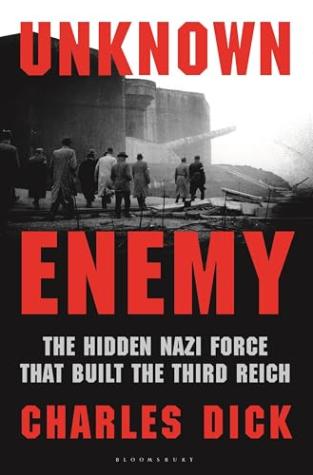
The harrowing true story of Organisation Todt, the builders-turned-killers at the center of the Nazi war machine. Adolf Hitler described the Organisation Todt as “the greatest construction organization of all time.” It was from this organization, headed by Albert Speer, that Hitler enlisted the nation's leading engineers and architects to build his empire of dreams. In time, it became a key partner to the SS and the Wehrmacht and led to the deaths of millions. Unknown Enemy reveals the full extent of the OT and its long arm across Europe and the Reich. In wartime, its operations relied mainly on Germany's slave labor system, the largest exploitation of foreign labor since the end of the Transatlantic Slave Trade. Charles Dick takes us inside the OT's vast building projects throughout German-occupied Europe, from the Arctic circle to the Balkans, to tell the story of how engineers and builders-so-called “ordinary men”-perpetrated some of the gravest war crimes under its banner. Despite its extensive network, the Organisation Todt largely managed to slip under the radar of war prosecutors after Germany's defeat. Drawing on extensive new research, first-person accounts and survivor testimony, Unknown Enemy finally unearths its dark story.
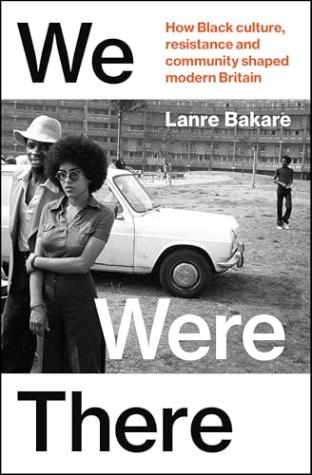
We Were There How Black culture, resistance and community shaped modern Britain. ABISBOOK. The Bodley Head Ltd.