The Best Books of 2025 – Nonfiction

Nonfiction – 2025
#1
One Day, Everyone Will Have Always Been Against This

One Day, Everyone Will Have Always Been Against This

NEW YORK TIMES BESTSELLER • SHORTLISTED FOR THE 2025 PALESTINE BOOK AWARDS • From award-winning novelist and journalist Omar El Akkad comes a powerful reckoning with what it means to live in a West that betrays its fundamental values "[A] bracing memoir and manifesto."—The New York Times “I can’t think of a more important piece of writing to read right now. I found hope here, and help, to face what the world is now, all that it isn’t anymore. Please read this. I promise you won’t regret it.”—Tommy Orange, bestselling author of Wandering Stars and There There On October 25, 2023, after just three weeks of the bombardment of Gaza, Omar El Akkad put out a tweet: “One day, when it’s safe, when there’s no personal downside to calling a thing what it is, when it’s too late to hold anyone accountable, everyone will have always been against this.” This tweet has been viewed more than 10 million times. As an immigrant who came to the West, El Akkad believed that it promised freedom. A place of justice for all. But in the past twenty years, reporting on the War on Terror, Ferguson, climate change, Black Lives Matter protests, and more, and watching the unmitigated slaughter in Gaza, El Akkad has come to the conclusion that much of what the West promises is a lie. That there will always be entire groups of human beings it has never intended to treat as fully human—not just Arabs or Muslims or immigrants, but whoever falls outside the boundaries of privilege. One Day, Everyone Will Have Always Been Against This is a chronicle of that painful realization, a moral grappling with what it means, as a citizen of the U.S., as a father, to carve out some sense of possibility in a time of carnage. This is El Akkad’s nonfiction debut, his most raw and vulnerable work to date, a heartsick breakup letter with the West. It is a brilliant articulation of the same breakup we are watching all over the United States, in family rooms, on college campuses, on city streets; the consequences of this rupture are just beginning. This book is for all the people who want something better than what the West has served up. This is the book for our time.
#2
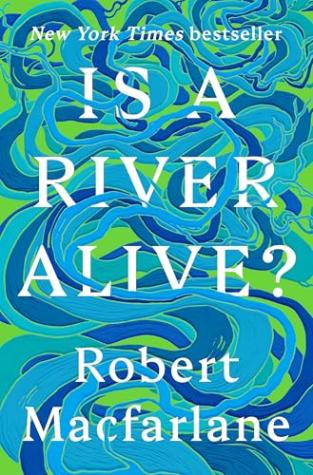
Is a River Alive?

Is a River Alive?

A New York Times Bestseller A #1 Sunday Times (UK) Bestseller Finalist for the 2025 Banff Mountain Book Competition in Environmental Literature A New York Times "New Nonfiction to Read This Spring" Recommendation • A Financial Times "Best Summer Book of 2025" • A Guardian "Nonfiction to Look Forward To in 2025" Pick • A Washington Post "Book to Watch For" in 2025 From the best-selling author of Underland and "the great nature writer…of this generation" (Wall Street Journal), a revelatory book that transforms how we imagine rivers—and life itself. Hailed in the New York Times as “a naturalist who can unfurl a sentence with the breathless ease of a master angler,” Robert Macfarlane brings his glittering style to a profound work of travel writing, reportage, and natural history. Is a River Alive? is a joyful, mind-expanding exploration of an ancient, urgent idea: that rivers are living beings who should be recognized as such in imagination and law. Macfarlane takes readers on three unforgettable journeys teeming with extraordinary people, stories, and places: to the miraculous cloud-forests and mountain streams of Ecuador, to the wounded creeks and lagoons of India, and to the spectacular wild rivers of Canada—imperiled respectively by mining, pollution, and dams. Braiding these journeys is the life story of the fragile chalk stream a mile from Macfarlane’s house, a stream who flows through his own years and days. Powered by dazzling prose and lit throughout by other minds and voices, Is a River Alive? will open hearts, challenge perspectives, and remind us that our fate flows with that of rivers—and always has.

#3
#4
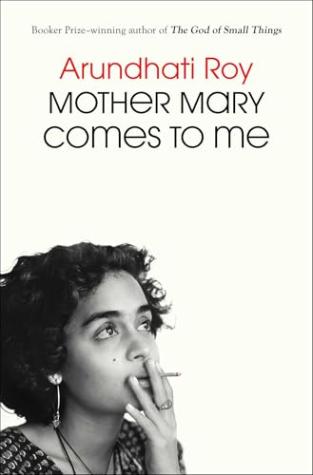
Mother Mary Comes to Me

Mother Mary Comes to Me

Finalist for the Kirkus Prize A raw and deeply moving memoir from the legendary author of The God of Small Things and The Ministry of Utmost Happiness that traces the complex relationship with her mother, Mary Roy, a fierce and formidable force who shaped Arundhati’s life both as a woman and a writer. Mother Mary Comes to Me, Arundhati Roy’s first work of memoir, is a soaring account, both intimate and inspirational, of how the author became the person and the writer she is, shaped by circumstance, but above all by her complex relationship to the extraordinary, singular mother she describes as “my shelter and my storm.” “Heart-smashed” by her mother Mary’s death in September 2022 yet puzzled and “more than a little ashamed” by the intensity of her response, Roy began to write, to make sense of her feelings about the mother she ran from at age eighteen, “not because I didn’t love her, but in order to be able to continue to love her.” And so begins this astonishing, sometimes disturbing, and surprisingly funny memoir of the author’s journey from her childhood in Kerala, India, where her single mother founded a school, to the writing of her prizewinning novels and essays, through today. With the scale, sweep, and depth of her novels, The God of Small Things and The Ministry of Utmost Happiness, and the passion, political clarity, and warmth of her essays, Mother Mary Comes to Me is an ode to freedom, a tribute to thorny love and savage grace—a memoir like no other.

#5
#6
#7
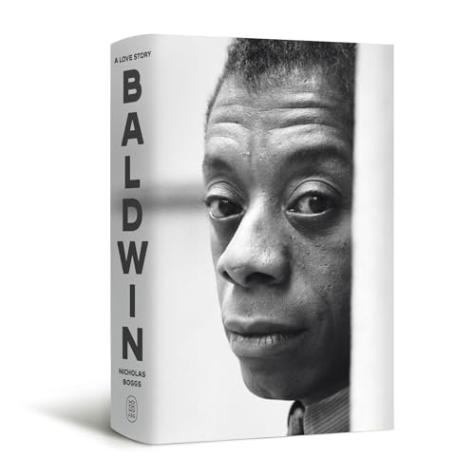
Baldwin: A Love Story

Baldwin: A Love Story

Drawing on new archival material, original research, and interviews, this spellbinding book is the first major biography of James Baldwin in three decades, revealing how profoundly his personal relationships shaped his life and work. Baldwin: A Love Story, the first major biography of James Baldwin in three decades, reveals how profoundly the writer’s personal relationships shaped his life and work. Drawing on newly uncovered archival material and original research and interviews, this spellbinding book tells the overlapping stories of Baldwin’s most sustaining intimate and artistic relationships: with his mentor, the Black American painter Beauford Delaney; with his lover and muse, the Swiss painter Lucien Happersberger; and with his collaborators, the famed Turkish actor Engin Cezzar and the iconoclastic French artist Yoran Cazac, whose long-overlooked significance as Baldwin’s last great love is explored in these pages for the first time. Nicholas Boggs shows how Baldwin drew on all the complex forces within these relationships—geographical, cultural, political, artistic, and erotic— and alchemized them into novels, essays, and plays that speak truth to power and had an indelible impact on the civil rights movement and on Black and queer literary history. Richly immersive, Baldwin: A Love Story follows the writer’s creative journey between Harlem, Paris, Switzerland, the southern United States, Istanbul, Africa, the South of France, and beyond. In so doing, it magnifies our understanding of the public and private lives of one of the major literary figures of the twentieth century, whose contributions only continue to grow in influence.

#8
#9
Raising Hare: A Memoir

Raising Hare: A Memoir

NEW YORK TIMES BESTSELLER • FINALIST FOR THE 2025 WOMEN'S PRIZE • A moving and fascinating meditation on freedom, trust, loss, and our relationship with the natural world, explored through the story of one woman’s unlikely friendship with a wild hare. A BEST BOOK: The New York Times, The Economist, ELLE “Moving. . . . Impart[s] valuable lessons about slowing down and the beauty in the unexpected.”—USA Today “A philosophical masterpiece ruminating on our place as human beings in nature.”—Matt Haig, author of The Midnight Library “A perfect testimony to the transformative power of love. In learning to love an orphaned hare, Chloe Dalton learned to love the whole wild world. The great gift of this remarkable book is the way it teaches us to do the same.”—Margaret Renkl, author of The Comfort of Crows Imagine you could hold a baby hare and bottle-feed it. Imagine that it lived under your roof and bounded around your bedroom at night, drumming on the duvet cover when it wanted your attention. Imagine that, more than two years later, it still ran in from the fields when you called it and slept in your house for hours on end. For political advisor and speechwriter Chloe Dalton, who spent lockdown deep in the English countryside, far away from her usual busy London life, this became her unexpected reality. In February 2021, Dalton stumbles upon a newborn hare—a leveret—that had been chased by a dog. Fearing for its life, she brings it home, only to discover how difficult it is to rear a wild hare, most of whom perish in captivity from either shock or starvation. Through trial and error, she learns to feed and care for the leveret with every intention of returning it to the wilderness. Instead, it becomes her constant companion, wandering the fields and woods at night and returning to Dalton’s house by day. Though Dalton feared that the hare would be preyed upon by foxes, weasels, feral cats, raptors, or even people, she never tried to restrict it to the house. Each time the hare leaves, Chloe knows she may never see it again. Yet she also understands that to confine it would be its own kind of death. Raising Hare chronicles their journey together while also taking a deep dive into the lives and nature of hares, and the way they have been viewed historically in art, literature, and folklore. We witness firsthand the joy at this extraordinary relationship between human and animal, which serves as a reminder that the best things, and most beautiful experiences, arise when we least expect them.

#10
Things in Nature Merely Grow

Things in Nature Merely Grow

Yiyun Li’s remarkable, defiant work of radical acceptance as she considers the loss of her son James. “There is no good way to say this,” Yiyun Li writes at the beginning of this book. “There is no good way to state these facts, which must be acknowledged. My husband and I had two children and lost them both: Vincent in 2017, at sixteen, James in 2024, at nineteen. Both chose suicide, and both died not far from home.” There is no good way to say this—because words fall short. It takes only an instant for death to become fact, “a single point in a timeline.” Living now on this single point, Li turns to thinking and reasoning and searching for words that might hold a place for James. Li does what she can: “doing the things that work,” including not just writing but gardening, reading Camus and Wittgenstein, learning the piano, and living thinkingly alongside death. This is a book for James, but it is not a book about grieving or mourning. As Li writes, “The verb that does not die is to be. Vincent was and is and will always be Vincent. James was and is and will always be James. We were and are and will always be their parents. There is no now and then, now and later, only, now and now and now and now.” Things in Nature Merely Grow is a testament to Li’s indomitable spirit.

#11
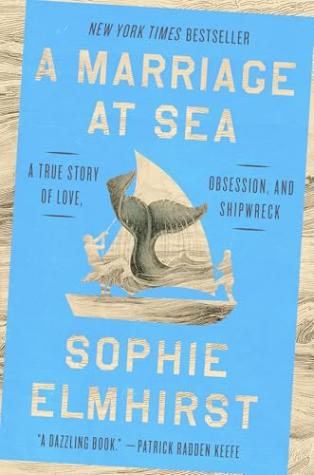
A Marriage at Sea: A True Story of Love, Obsession, and Shipwreck

A Marriage at Sea: A True Story of Love, Obsession, and Shipwreck

“This is nonfiction that reads like fiction – the best kind. Elmhirst’s retelling is a triumph, second only to the seemingly impossible feat of Maurice and Maralyn themselves. You won’t be able to put it down.” – USA Today “Remarkable… I found myself, alternately, holding my breath as I read at top speed, wandering rooms in search of someone to read aloud to, and placing the book facedown, arrested by quiet statements that left me reeling with their depth.” – The New York Times “Such an emotionally vivid portrait of a couple in isolation that I was shocked it wasn’t fiction. How could a writer get so deeply into the minds of two real people in such extraordinary circumstances? … So brilliantly depicted.” – Elle, Best Books of Summer “A beautiful meditation on endurance, codependence, and the power of love. A dazzling book.” – Patrick Radden Keefe “An enthralling, engrossing story of survival and the resilience of the human spirit.” —Bill Bryson The electrifying true story of a young couple shipwrecked at sea: a mind-blowing tale of obsession, survival, and partnership stretched to its limits. Maurice and Maralyn make an odd couple. He’s a loner, awkward and obsessive; she’s charismatic and ambitious. But they share a horror of wasting their lives. And they dream – as we all dream – of running away from it all. What if they quit their jobs, sold their house, bought a boat, and sailed away? Most of us begin and end with the daydream. But in June 1972, Maurice and Maralyn set sail. For nearly a year all went well, until deep in the Pacific, a breaching whale knocked a hole in their boat and it sank beneath the waves. What ensues is a jaw-dropping fight to survive in the wild ocean, with little hope of rescue. Alone together for months in a tiny rubber raft, starving and exhausted, Maurice and Maralyn have to find not only ways to stay alive but ways to get along, as their inner demons emerge and their marriage is put to the greatest of tests. Although they could run away from the world, they can’t run away from themselves. Taut, propulsive, and dazzling, A Marriage at Sea pairs an adrenaline-fueled high seas adventure with a gutting love story that asks why we love difficult people, and who we become under the most extreme conditions imaginable.

#13
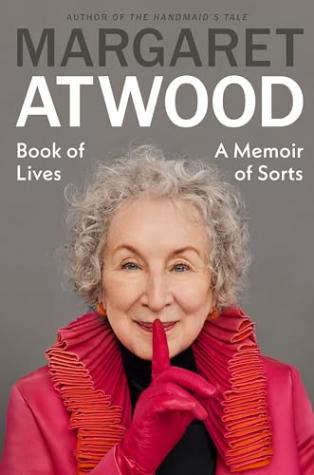
Book of Lives: A Memoir of Sorts

Book of Lives: A Memoir of Sorts

How does one of the greatest storytellers of our time write her own life? The long-awaited memoir from one of our most lauded and influential cultural figures. “Every writer is at least two beings: the one who lives, and the one who writes. Though everything written must have passed through their minds, or mind, they are not the same.” Raised by ruggedly independent, scientifically minded parents—entomologist father, dietician mother—Atwood spent most of each year in the wild forest of northern Quebec. This childhood was unfettered and nomadic, sometimes isolated (on her eighth birthday: “It sounds forlorn. It was forlorn. It gets more forlorn.”), but also thrilling and beautiful. From this unconventional start, Atwood unfolds the story of her life, linking seminal moments to the books that have shaped our literary landscape, from the cruel year that spawned Cat’s Eye to the Orwellian 1980s of East Berlin where she wrote The Handmaid’s Tale. In pages bursting with bohemian gatherings, her magical life with the wildly charismatic writer Graeme Gibson and major political turning points, we meet poets, bears, Hollywood actors and larger-than-life characters straight from the pages of an Atwood novel. As we travel with her along the course of her life, more and more is revealed about her writing, the connections between real life and art—and the workings of one of our greatest imaginations.

#14
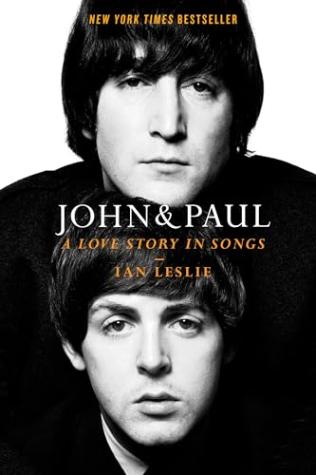
John And Paul: A Love Story in Songs

John And Paul: A Love Story in Songs

"The Beatles shook the world to its core in the 1960s and, to this day, new generations continue to fall in love with their songs and their story. At the heart of this phenomenon lies the dynamic between John Lennon and Paul McCartney. Few other musical partnerships have been rooted in such a deep, intense, and complicated personal relationship. John and Paul's relationship was defined by its complexity: compulsive, tender and tempestuous; full of longing, riven by jealousy. ... [This book] traces its twists and turns and reveals how these shifts manifested themselves in the music. The two of them shared a private language, rooted in the stories, comedy, and songs they both loved as teenagers, and later, in the lyrics of Beatles songs. In John & Paul, ... Leslie uses the songs they wrote to trace the shared journey of these two ... men before, during, and after The Beatles"--

#15
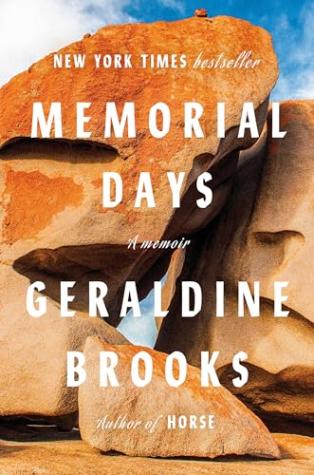
Memorial Days: A Memoir

Memorial Days: A Memoir

A New York Times Bestseller “Brooks tracks the geography of grief with patience and grace as she comes to terms with the ongoing nature of outliving the ones you love most. ... Her memoir is certainly a testament to her own unique loss, but it’s moreover a lifeline to others who will find themselves in this familiar, shattered landscape of grief.” —Los Angeles Times “A rich account of marriage and mourning.” —Washington Post A heartrending and beautiful memoir of sudden loss and a journey towards peace, from the bestselling, Pulitzer Prize-winning author of Horse Many cultural and religious traditions expect those who are grieving to step away from the world. In contemporary life, we are more often met with red tape and to-do lists. This is exactly what happened to Geraldine Brooks when her partner of more than three decades, Tony Horwitz – just sixty years old and, to her knowledge, vigorous and healthy – collapsed and died on a Washington, D. C. sidewalk. After spending their early years together in conflict zones as foreign correspondents, Geraldine and Tony settled down to raise two boys on Martha’s Vineyard. The life they built was one of meaningful work, good humor, and tenderness, as they spent their days writing and their evenings cooking family dinners or watching the sun set with friends at the beach. But all of this ended abruptly when, on Memorial Day 2019, Geraldine received the phone call we all dread. The demands were immediate and many. Without space to grieve, the sudden loss became a yawning gulf. Three years later, she booked a flight to a remote island off the coast of Australia with the intention of finally giving herself the time to mourn. In a shack on a pristine, rugged coast she often went days without seeing another person. There, she pondered the various ways in which cultures grieve and what rituals of her own might help to rebuild a life around the void of Tony’s death. A spare and profoundly moving memoir that joins the classics of the genre, Memorial Days is a portrait of a larger-than-life man and a timeless love between souls that exquisitely captures the joy, agony, and mystery of life.

#16
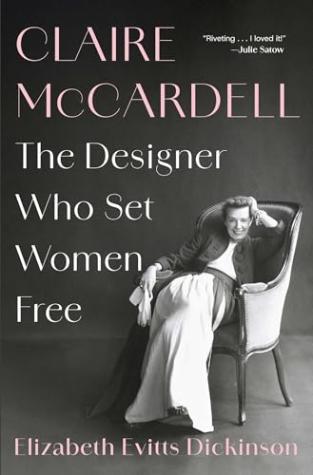
Claire McCardell: The Designer Who Set Women Free

Claire McCardell: The Designer Who Set Women Free

The riveting hidden history of Claire McCardell, the most influential fashion designer you’ve never heard of. Claire McCardell forever changed fashion—and most importantly, the lives of women. She shattered cultural norms around women’s clothes, and today much of what we wear traces back to her ingenious, rebellious mind. McCardell invented ballet flats and mix-and-match separates, and she introduced wrap dresses, hoodies, leggings, denim, and more into womenswear. She tossed out corsets in favor of a comfortably elegant look and insisted on pockets, even as male designers didn’t see a need for them. She made zippers easy to reach because a woman “may live alone and like it,” McCardell once wrote, “but you may regret it if you wrench your arm trying to zip a back zipper into place.” After World War II, McCardell fought the severe, hyper-feminized silhouette championed by male designers, like Christian Dior. Dior claimed that he wanted to “save women from nature.” McCardell, by contrast, wanted to set women free. Claire McCardell became, as the young journalist Betty Friedan called her in 1955, “The Gal Who Defied Dior.” Filled with personal drama and industry secrets, this story reveals how Claire McCardell built an empire at a time when women rarely made the upper echelons of business. At its core, hers is a story about our right to choose how we dress—and our right to choose how we live.

#17
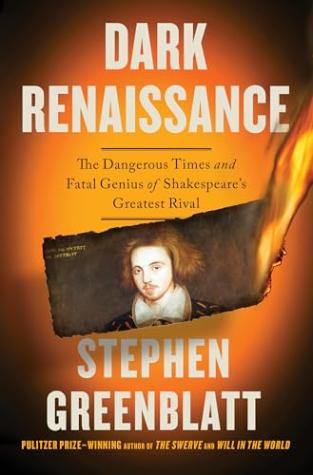
Dark Renaissance: The Dangerous Times and Fatal Genius of Shakespeare’s Greatest Rival

Dark Renaissance: The Dangerous Times and Fatal Genius of Shakespeare’s Greatest Rival

Poor boy. Spy. Transgressor. Genius. In repressive Elizabethan England, artists are frightened into dull conventionality; foreigners are suspect; popular entertainment largely consists of coarse spectacles, animal fights, and hangings. Into this crude world of government censorship and religious authoritarianism comes an ambitious cobbler’s son from Canterbury with a daring desire to be known—and an uncanny ear for Latin poetry. A torment for most schoolboys, yet for a few, like Christopher Marlowe, a secret portal to beauty, visionary imagination, transgressive desire, and dangerous skepticism. What Marlowe seizes in his rare opportunity for a classical education, and what he does with it, brings about a spectacular explosion of English literature, language, and culture. His astonishing literary success will, in turn, nourish the talent of a collaborator and rival, William Shakespeare. Dark Renaissance illuminates both Marlowe’s times and the origins and significance of his work—from his erotic translations of Ovid to his portrayal of unfettered ambition in a triumphant Tamburlaine to Doctor Faustus, his unforgettable masterpiece about making a pact with the devil in exchange for knowledge. Introducing us to Marlowe’s transgressive genius in the form of a thrilling page-turner, Stephen Greenblatt brings a penetrating understanding of the literary work to reveal the inner world of the author, bringing to life a homosexual atheist who was tormented by his own compromises, who refused to toe the party line, and who was murdered just when he had found love. Meanwhile, he explores how the people Marlowe knew, and the transformations they wrought, gave birth to the economic, scientific, and cultural power of the modern world including Faustian bargains with which we reckon still.

#19
How to End a Story: Collected Diaries

How to End a Story: Collected Diaries

For the first time ever, collected here are all three volumes of the diaries of Helen Garner, inviting readers into the world behind the novels and nonfiction of a literary force. The name Helen Garner commands near-universal acclaim. A master of many literary forms, Garner is best known for her frank, unsparing, and intricate portraits of "ordinary people in difficult times" (New York Times). But the inspiration for it all was her extensive collection of diaries—fastidiously kept, intricately written, and delightfully dishy, unspooling the inner lives of her insular world in bohemian Melbourne. Now, for the first time, all three volumes of Garner's inimitable diaries are collected into one book. Spanning more than two decades, each finely etched volume reveals Garner like never before: a fledgling author publishing her lightning-rod debut novel in the late 70s; in the throes of a consuming affair in the late 80s; and clinging to a disintegrating marriage in the late 90s. And all the while, they bear witness to one of the world's great writers hard at work. Devastatingly honest and disarmingly funny, How to End a Story is a portrait of loss, betrayal, and the sheer force of a woman’s anger—but also of resilience, quotidian moments of joy, the immutable ties of motherhood, and the regenerative power of a room of one’s own.

#23
#24
#28
Replaceable You: Adventures in Human Anatomy

Replaceable You: Adventures in Human Anatomy

Instant New York Times Bestseller One of Literary Hub's Most Anticipated Books of 2025 A Goodreads Readers' Most Anticipated Fall Book From the New York Times best-selling author of Stiff and Fuzz, a rollicking exploration of the quest to re-create the impossible complexities of human anatomy. The body is the most complex machine in the world, and the only one for which you cannot get a replacement part from the manufacturer. For centuries, medicine has reached for what’s available—sculpting noses from brass, borrowing skin from frogs and hearts from pigs, crafting eye parts from jet canopies and breasts from petroleum by-products. Today we’re attempting to grow body parts from scratch using stem cells and 3D printers. How are we doing? Are we there yet? In Replaceable You, Mary Roach explores the remarkable advances and difficult questions prompted by the human body’s failings. When and how does a person decide they’d be better off with a prosthetic than their existing limb? Can a donated heart be made to beat forever? Can an intestine provide a workable substitute for a vagina? Roach dives in with her characteristic verve and infectious wit. Her travels take her to the OR at a legendary burn unit in Boston, a “superclean” xeno-pigsty in China, and a stem cell “hair nursery” in the San Diego tech hub. She talks with researchers and surgeons, amputees and ostomates, printers of kidneys and designers of wearable organs. She spends time in a working iron lung from the 1950s, stays up all night with recovery techs as they disassemble and reassemble a tissue donor, and travels across Mongolia with the cataract surgeons of Orbis International. Irrepressible and accessible, Replaceable You immerses readers in the wondrous, improbable, and surreal quest to build a new you.

#37
Joyride: A Memoir

Joyride: A Memoir

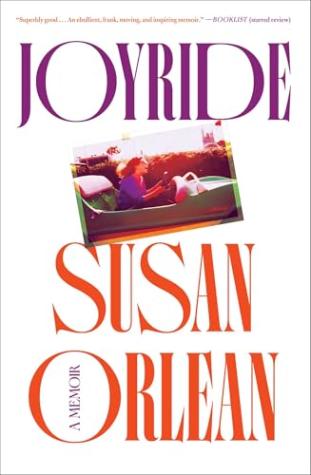
From the beloved New Yorker writer Susan Orlean, New York Times bestselling author of The Orchid Thief and The Library Book and hailed as “a national treasure” by The Washington Post, Joyride is a masterful memoir of finding her creative calling and purpose that invites us to approach life with wonder, curiosity, and an irrepressible sense of delight. “The story of my life is the story of my stories,” writes Susan Orlean in this extraordinary, era-defining memoir from one of the greatest practitioners of narrative nonfiction of our time. Joyride is a magic carpet ride through Orlean’s life and career, where every day is an opportunity for discovery and every moment holds the potential for wonder. Throughout her storied career, her curiosity draws her to explore the most ordinary and extraordinary of places, from going deep inside the head of a regular ten-year-old boy for a legendary profile (“The American Man Age Ten”) to reporting on a woman who owns twenty-seven tigers, from capturing the routine magic of Saturday night to climbing Mt. Fuji. Not only does Orlean’s account of a writing life offer a trove of indispensable gleanings for writers, it’s also an essential and practical guide to embracing any creative path. She takes us through her process of dreaming up ideas, managing deadlines, connecting with sources, chasing every possible lead, confronting writer’s block and self-doubt, and crafting the perfect lede—a Susan specialty. While Orlean has always written her way into other people’s lives in order to understand the human experience, Joyride is her most personal book ever—a searching journey through finding her feet as a journalist, recovering from the excruciating collapse of her first marriage, falling head-over-heels in love again, becoming a mother while mourning the decline of her own mother, sojourning to Hollywood for films based on her work including Adaptation and Blue Crush, and confronting mortality. Joyride is also a time machine to a bygone era of journalism, from Orlean’s bright start in the golden age of alt-weeklies to her career-making days working alongside icons such as Robert Gottlieb, Tina Brown, David Remnick, Anna Wintour, Sonny Mehta, and Jonathan Karp—forces who shaped the media industry as we know it today. Infused with Orlean’s signature warmth and wit, Joyride is a must-read for anyone who hungers to start, build, and sustain a creative life. Orlean inspires us to seek out daily inspiration and rediscover the marvels that surround us.
#39
Mark Twain

Mark Twain

The #1 New York Times Bestseller! One of Barack Obama's Summer Reading List Picks “Comprehensive, enthralling . . . Mark Twain flows like the Mississippi River, its prose propelled by Mark Twain’s own exuberance.” —The Boston Globe “Chernow writes with such ease and clarity . . . For all its length and detail, [Mark Twain] is deeply absorbing throughout.” — The Washington Post Pulitzer Prize-winning biographer Ron Chernow illuminates the full, fascinating, and complex life of the writer long celebrated as the father of American literature, Mark Twain Before he was Mark Twain, he was Samuel Langhorne Clemens. Born in 1835, the man who would become America’s first, and most influential, literary celebrity spent his childhood dreaming of piloting steamboats on the Mississippi. But when the Civil War interrupted his career on the river, the young Twain went west to the Nevada Territory and accepted a job at a local newspaper, writing dispatches that attracted attention for their brashness and humor. It wasn’t long before the former steamboat pilot from Missouri was recognized across the country for his literary brilliance, writing under a pen name that he would immortalize. In this richly nuanced portrait of Mark Twain, acclaimed biographer Ron Chernow brings his considerable powers to bear on a man who shamelessly sought fame and fortune, and crafted his persona with meticulous care. After establishing himself as a journalist, satirist, and lecturer, he eventually settled in Hartford with his wife and three daughters, where he went on to write The Adventures of Tom Sawyer and Adventures of Huckleberry Finn. He threw himself into the hurly-burly of American culture, and emerged as the nation’s most notable political pundit. At the same time, his madcap business ventures eventually bankrupted him; to economize, Twain and his family spent nine eventful years in exile in Europe. He suffered the death of his wife and two daughters, and the last stage of his life was marked by heartache, political crusades, and eccentric behavior that sometimes obscured darker forces at play. Drawing on Twain’s bountiful archives, including thousands of letters and hundreds of unpublished manuscripts, Chernow masterfully captures the man whose career reflected the country’s westward expansion, industrialization, and foreign wars, and who was the most important white author of his generation to grapple so fully with the legacy of slavery. Today, more than one hundred years after his death, Twain’s writing continues to be read, debated, and quoted. In this brilliant work of scholarship, a moving tribute to the writer’s talent and humanity, Chernow reveals the magnificent and often maddening life of one of the most original characters in American history.

#43
The Fate of the Day: The War for America, Fort Ticonderoga to Charleston, 1777-1780 (Revolution Trilogy, #2)

The Fate of the Day: The War for America, Fort Ticonderoga to Charleston, 1777-1780 (Revolution Trilogy, #2)

In the second volume of the landmark American Revolution trilogy by the Pulitzer Prize–winning and #1 New York Times bestselling author of The British Are Coming, George Washington’s army fights on the knife edge between victory and defeat. The first twenty-one months of the American Revolution—which began at Lexington and ended at Princeton—was the story of a ragged group of militiamen and soldiers fighting to forge a new nation. By the winter of 1777, the exhausted Continental Army could claim only that it had barely escaped annihilation by the world’s most formidable fighting force. Two years into the war, George III is as determined as ever to bring his rebellious colonies to heel. But the king’s task is now far more complicated: fighting a determined enemy on the other side of the Atlantic has become ruinously expensive, and spies tell him that the French and Spanish are threatening to join forces with the Americans. Prize-winning historian Rick Atkinson provides a riveting narrative covering the middle years of the Revolution. Stationed in Paris, Benjamin Franklin woos the French; in Pennsylvania, George Washington pleads with Congress to deliver the money, men, and materiel he needs to continue the fight. In New York, General William Howe, the commander of the greatest army the British have ever sent overseas, plans a new campaign against the Americans—even as he is no longer certain that he can win this searing, bloody war. The months and years that follow bring epic battles at Brandywine, Saratoga, Monmouth, and Charleston, a winter of misery at Valley Forge, and yet more appeals for sacrifice by every American committed to the struggle for freedom. Timed to coincide with the 250th anniversary of the beginning of the Revolution, Atkinson’s brilliant account of the lethal conflict between the Americans and the British offers not only deeply researched and spectacularly dramatic history, but also a new perspective on the demands that a democracy makes on its citizens.

#44
The Zorg: A Tale of Greed and Murder That Inspired the Abolition of Slavery

The Zorg: A Tale of Greed and Murder That Inspired the Abolition of Slavery

From Pulitzer finalist and New York Times bestselling author of Cobalt Red: A notorious slave ship incident that led to the abolition of slavery in the UK and sparked the US abolitionist movement In late October 1780, a slave ship set sail from the Netherlands, bound for Africa’s Windward and Gold Coasts, where it would take on its human cargo. The Zorg (a Dutch word meaning “care”) was one of thousands of such ships, but the harrowing events that ensued on its doomed journey were unique. After reaching Africa, the Zorg was captured by a privateer and came under British command. With a new captain and crew, the ship was crammed with 442 slaves and departed in 1781 for Jamaica. But a series of unpredictable weather events and mistakes in navigation left the ship drastically off course and running out of water. So a proposition was put forth: Save the crew and the most valuable of the slaves—by throwing dozens of people, starting with women and children, overboard. What followed was a fascinating legal drama in England’s highest court that turned the brutal calculus of slavery into front-page news. The case of the Zorg catapulted the nascent anti-slavery movement from a minor evangelical cause to one of the most consequential moral campaigns in history—sparking the abolitionist movement in both England and the young United States Siddharth Kara utilizes primary-source research, gripping storytelling, and painstaking investigation to uncover the Zorg’s journey, the lives and fates of the slaves on board, and the mysterious identity of the abolitionist who finally revealed the truth of what happened on the ship.

#47
Aflame: Learning from Silence

Aflame: Learning from Silence

“Reading Aflame may help many to lead lives of greater compassion and deeper peace of mind.” —His Holiness the Dalai Lama From the bestselling author of The Art of Stillness, a revelatory exploration of the abiding clarity and calm to be found in quiet retreat Pico Iyer has made more than one hundred retreats over the past three decades to a small Benedictine hermitage high above the sea in Big Sur, California. He’s not a Christian—or a member of any religious group—but his life has been transformed by these periods of time spent in silence. That silence reminds him of what is essential and awakens a joy that nothing can efface. It’s not just freedom from distraction and noise and rush: it’s a reminder of some deeper truths he misplaced along the way. In Aflame, Iyer connects with inner stillness and joy in his many seasons at the monastery, even as his life is going through constant change: a house burns down, a parent dies, a daughter is diagnosed with cancer. He shares the revelations he experiences, alongside wisdom from other nonmonastics who have learned from adversity and inwardness. And most profoundly, he shows how solitude can be a training in community and companionship. In so doing, he offers a unique outsider’s view of monastic life—and of a group of selfless souls who have dedicated their days to ensuring there’s a space for quiet and recollection that’s open to us all. Radiant, intimate, and gripping, Aflame offers ageless counsel about the power of silence and what it can teach us about how to live, how to love, and, ultimately, how to die.

#48
America, América: A New History of the New World

America, América: A New History of the New World

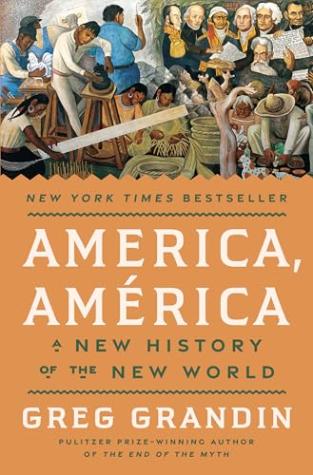
A New York Times bestseller • A 2025 Kirkus Prize finalist in Nonfiction • Shortlisted for the 2025 Cundill History Prize “An extraordinarily ambitious book . . . America, América reads at times as the historical equivalent of the great epic novels of Gabriel García Márquez.” —Irish Times From the Pulitzer Prize–winning historian, the first comprehensive history of the Western Hemisphere, a sweeping five-century narrative of North and South America that redefines our understanding of both The story of how the United States’ identity was formed is almost invariably told by looking east to Europe. But as Greg Grandin vividly demonstrates, the nation’s unique sense of itself was in fact forged facing south toward Latin America. In turn, Latin America developed its own identity in struggle with the looming colossus to the north. In this stunningly original reinterpretation of the New World, Grandin reveals how North and South emerged from a constant, turbulent engagement with each other. America, América traverses half a millennium, from the Spanish Conquest—the greatest mortality event in human history—through the eighteenth-century wars for independence, the Monroe Doctrine, the coups and revolutions of the twentieth century, and beyond. Grandin shows, among other things, how in response to U.S. interventions, Latin Americans remade the rules, leading directly to the founding of the United Nations; and how the Good Neighbor Policy allowed FDR to assume the moral authority to lead the fight against world fascism. Grandin’s book sheds new light on well-known historical figures like Bartolomé de las Casas, Simón Bolívar, and Woodrow Wilson, as well as lesser-known actors such as the Venezuelan Francisco de Miranda, who almost lost his head in the French Revolution and conspired with Alexander Hamilton to free America from Spain; the Colombian Jorge Gaitán, whose unsolved murder inaugurated the rise of Cold War political terror, death squads, and disappearances; and the radical journalist Ernest Gruening, who, in championing non-interventionism in Latin America, helped broker the most spectacularly successful policy reversal in United States history. This is a monumental work of scholarship that will fundamentally change the way we think of Spanish and English colonialism, slavery and racism, and the rise of universal humanism. At once comprehensive and accessible, America, América shows that centuries of bloodshed and diplomacy not only helped shape the political identities of the United States and Latin America but also the laws, institutions, and ideals that govern the modern world. In so doing, Grandin argues that Latin America’s deeply held culture of social democracy can be an effective counterweight to today’s spreading rightwing authoritarianism. A culmination of a decades-long engagement with hemispheric history, drawing on a vast array of sources, and told with authority and flair, this is a genuinely new history of the New World.

#49
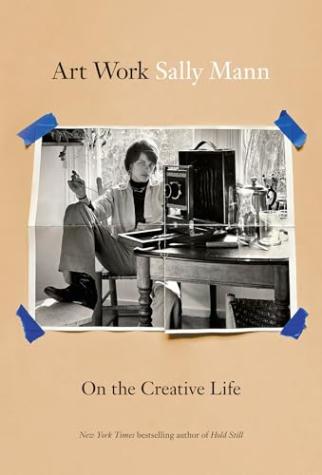
Art Work: On the Creative Life

Art Work: On the Creative Life

The much-anticipated new book by artist and New York Times bestselling author Sally Mann about the challenges and transcendent pleasures of the creative process “Erudite, frank, and funny.” —Amor Towles, bestselling author of A Gentleman in Moscow and The Lincoln Highway Art Work, by photographer and writer Sally Mann, offers a spellbinding mix of wild and illuminating stories, practical (and some impractical) advice, and life lessons. Written in the same direct, fearless, and occasionally outrageous tone of her bestselling memoir, Hold Still, this new book reaffirms Mann as a unique and resonant voice for our times and is destined to become a classic. Illustrated throughout with photographs, journal entries, and letters that bring immediacy and poignancy to the narrative, Art Work is full of thought-provoking insights about the hazards of early promise; the unpredictable role of luck; the value of work, work, work, and more hard work; the challenges of rejection and distraction; the importance of risk-taking; and the rewards of knowing why and when you say yes. In sparkling prose and thoughtfully juxtaposed visuals and ephemera, Art Work is a generous, provocative, and compulsively readable exploration of creativity by one of our most original thinkers.

#50
Bibliophobia: A Memoir

Bibliophobia: A Memoir

“A wise, tremendously moving exploration of what it means to seek companionship and understanding, in books and in life.”—Hua Hsu, author of Stay True “A must for the obsessive reader.”—Elif Batuman, author of Either/Or and The Idiot Books can seduce you. They can, Sarah Chihaya believes, annihilate, reveal, and provoke you. And anyone incurably obsessed with books understands this kind of unsettling literary encounter. Sarah calls books that have this effect “Life Ruiners”. Her Life Ruiner, Toni Morrison’s The Bluest Eye, became a talisman for her in high school when its electrifying treatment of race exposed Sarah’s deepest feelings about being Japanese American in a predominantly white suburb of Cleveland. But Sarah had always lived through her books, seeking escape, self-definition, and rules for living. She built her life around reading, wrote criticism, and taught literature at an Ivy League University. Then she was hospitalized for a nervous breakdown, and the world became an unreadable blank page. In the aftermath, she was faced with a question. Could we ever truly rewrite the stories that govern our lives? Bibliophobia is an alternately searing and darkly humorous story of breakdown and survival told through books. Delving into texts such as Anne of Green Gables, Possession, A Tale for the Time Being, The Last Samurai, Chihaya interrogates her cultural identity, her relationship with depression, and the intoxicating, sometimes painful, ways books push back on those who love them.

#53
Homework: A Memoir

Homework: A Memoir

Named a most anticipated book of 2025 by Vulture | The Guardian | Financial Times | The Observer | The Times (London) | Literary Hub "A picture of postwar England unlike any other . . . A highly original memoir that will provoke, amuse, beguile—and endure." —Antony Quinn, Financial Times "Homework is wonderful Geoff-Dyer writing, which we've all learned to crave; something to delight and to move us and to edify us on every page. I find him an irresistible writer." —Richard Ford A portrait of a young boy, who keeps passing exams—and of a changing England in the 1960s and 1970s. The only child of a sheet-metal worker and a dinner lady who worked at the canteen of the local school, Geoff Dyer grew up in a world shaped by memories of the Depression and the Second World War. But far from being a story of hardship overcome, this loving memoir is a celebration of opportunities afforded by the postwar settlement, of which the author was an unconscious beneficiary. The crux comes at the age of eleven with the exam that decided the future of generations of British schoolkids: secondary modern or the transformative possibilities of grammar school? One of the lucky winners, Dyer goes to grammar school, where he develops a love of literature (and beer and prog rock). Mapping a path from primary school through the tribulations of teenage sport, gig-going, romantic fumblings, fights (well, getting punched in the face), and other misadventures with comic affection, Homework takes us to the threshold of university, where Dyer gets the first intimations that a short geographical journey—just forty miles—might extend to the length of a life. Recalling an eroded but strangely resilient England, Homework traces, in perfectly phrased and hilarious detail, roots that extend into the deep foundations of class society.

#54
I Regret Almost Everything: A Memoir

I Regret Almost Everything: A Memoir

New York Times Bestseller The entertaining, irreverent, and surprisingly moving memoir by the visionary restaurateur behind such iconic New York institutions as Balthazar and Pastis. A memoir by the legendary proprietor of Balthazar, Pastis, Minetta Tavern, and Morandi, taking us from his gritty London childhood in the fifties to his serendipitous arrival in New York, where he founded the era-defining establishments the Odeon, Cafe Luxembourg, and Nell’s. Eloquent and opinionated, Keith McNally writes about the angst of being a child actor, his lack of insights from traveling overland to Kathmandu at nineteen, the instability of his two marriages and family relationships, his devastating stroke, and his Instagram notoriety.

#55
I’ll Tell You When I’m Home: A Memoir

I’ll Tell You When I’m Home: A Memoir

The rich and deeply personal debut memoir by award-winning Palestinian American poet and novelist Hala Alyan, whose experience of motherhood via surrogacy forces her to reckon with her own past, and the legacy of her family’s exile and displacement, all in the name of a new future. After a decade of yearning for parenthood, years marked by miscarriage after miscarriage, Hala Alyan makes the decision to use a surrogate. In this charged time, she turns to the archetype of the waiting woman—the Scheherazade who tells stories to ensure another dawn—to confront her own narratives of motherhood, love, and inheritance. As her baby grows in the body of another woman, in another country, Hala finds her own life unraveling—a husband who wants to leave; the cost of past traumas and addictions threatening to resurface; the city of her youth, Beirut, on the brink of crisis. She turns to family stories and communal myths: of grandmothers mapping their lives through Palestine, Kuwait, Syria, Lebanon; of eradicated villages and invading armies; of places of refuge that proved only temporary; of men that left and women that stayed; of the contradictions of her own Midwestern childhood, and adolescence in various Arab cities. Meanwhile, as the baby grows from the size of a poppyseed to a grain of rice, then a lime, and beyond, Hala gathers the stories that are her legacy, setting down the ones that confine, holding close those that liberate. It is emotionally charged, painstaking work, but now the stakes are higher: how to honor ancestors and future generations alike in the midst of displacement? How to impart love for those who are no longer here, for places one can no longer touch? A stunningly lyrical and brutally honest quest for motherhood, selfhood, and peoplehood, I’ll Tell You When I’m Home is a powerful story of unraveling and becoming, of destruction and redemption, and of homelands lost and recreated.

#56
Mother Emanuel: Two Centuries of Race, Resistance, and Forgiveness in One Charleston Church

Mother Emanuel: Two Centuries of Race, Resistance, and Forgiveness in One Charleston Church

A sweeping history of one of the nation’s most important African American churches and a profound story of courage and grace amid the fight for racial justice—from Pulitzer Prize–winning journalist Kevin Sack “A masterpiece . . . a dense, rich, captivating narrative, featuring vivid prose . . . expansive, inspiring and hugely important.”—The New York Times “Race, religion, and terror combine for an extraordinary story of America.”—Eddie S. Glaude, Jr., bestselling author of Begin Again Few people beyond South Carolina’s Lowcountry knew of Emanuel African Methodist Episcopal Church in Charleston—Mother Emanuel—before the night of June 17, 2015, when a twenty-one-year-old white supremacist walked into Bible study and slaughtered the church’s charismatic pastor and eight other worshippers. Although the shooter had targeted Mother Emanuel—the first A.M.E. church in the South—to agitate racial strife, he did not anticipate the aftermath: an outpouring of forgiveness from the victims’ families and a reckoning with the divisions of caste that have afflicted Charleston and the South since the earliest days of European settlement. Mother Emanuel explores the fascinating history that brought the church to that moment and the depth of the desecration committed in its fellowship hall. It reveals how African Methodism was cultivated from the harshest American soil, and how Black suffering shaped forgiveness into both a religious practice and a survival tool. Kevin Sack, who has written about race in his native South for more than four decades, uses the church to trace the long arc of Black life in the city where nearly half of enslaved Africans disembarked in North America and where the Civil War began. Through the microcosm of one congregation, he explores the development of a unique practice of Christianity, from its daring breakaway from white churches in 1817, through the traumas of Civil War and Reconstruction, to its critical role in the Civil Rights Movement and beyond. At its core, Mother Emanuel is an epic tale of perseverance, not just of a congregation but of a people who withstood enslavement, Jim Crow, and all manner of violence with an unbending faith.

#64
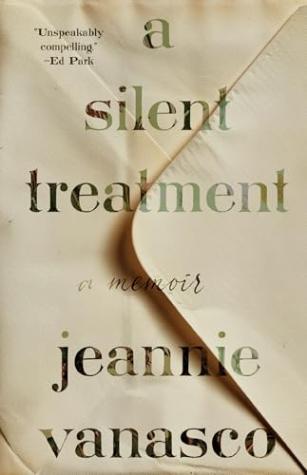
A Silent Treatment: A Memoir

A Silent Treatment: A Memoir

She did it to my dad, though. They used the silent treatment on each other, she explained, because they didn't want to say something they'd regret. What does she want to say now that she'd regret? Jeannie Vanasco's mother starts using the silent treatment not long after moving into the renovated apartment within Jeannie's home. The silences begin at any perceived slight. Her shortest period of silence lasts two weeks. Her longest, six months. As Vanasco guides us through her mother's childhood, their shared past, and the devastating silence of their present, she paints a layered, complicated portrait of a mother and daughter looking, failing, and--in big and small ways--succeeding to understand each other. In the margins of her research, at her kitchen table with her partner, in phone calls to friends, and in delightful hey google queries, Vanasco explores the loneliness and isolation of silence as punishment, both in her own life and beyond it, and confronts her greatest fear: that her mother will never speak to her again. From the acclaimed author of Things We Didn't Talk About When I was a Girl and The Glass Eye, Jeannie Vanasco's A Silent Treatment is a searingly honest and lasting testament to the power of all things left unsaid.

#65
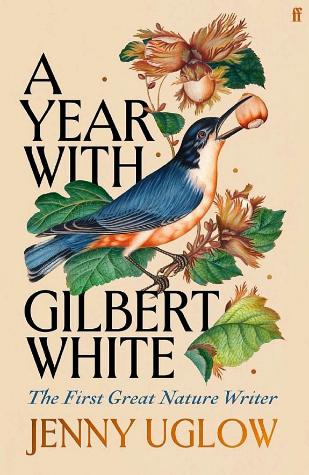
A Year with Gilbert White: The First Great Nature Writer

A Year with Gilbert White: The First Great Nature Writer

Uglow makes us feel the life beyond the facts.' GUARDIAN 'Few can match Uglow's skill at conjuring up a scene, or illuminating a character.' SUNDAY TIMES 'Charming . . . Like Radio 4's shipping forecast for naturalists.' Andrea Wulf, FINANCIAL TIMES In 1781, Gilbert White was a country curate, living in the Hampshire village he had known all his life. Fascinated by the fauna, flora and people around him, he kept journals for many years, and, at that time, was halfway to completing his path-breaking The Natural History of Selborne. No one had written like this before, with such close observation, humour, and sympathy: his spellbinding book has remained in print ever since, treasured by generations of readers. Jenny Uglow illuminates this quirky, warm-hearted man, 'the father of ecology', by following a single year in his Naturalist's Journal. As his diary jumps from topic to topic, she accompanies Gilbert from frost to summer drought, from the migration of birds to the sex lives of snails and the coming of harvest. Fresh, alive and original - and packed with rich colour illustrations - A Year with Gilbert White invites us to see the natural world anew, with astonishment and wonder. 'A feast of a book, it is beautifully illustrated and compulsively readable.' LITERARY REVIEW'The author brings her subject endearingly alive . . . [an] enriching book.' NATURE

#68
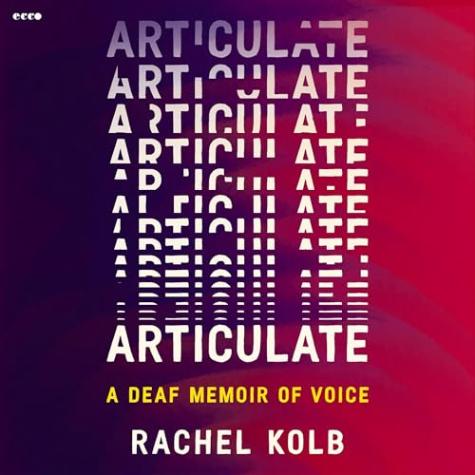
Articulate

Articulate

A deaf writer’s exploration of language, communication, and what it means to be articulate—and her journey to reclaim her voice Rachel Kolb was born profoundly deaf the same year that the Americans with Disabilities Act was passed, and she grew up as part of the first generation of deaf people with legal rights to accessibility services. Still, from a young age, she contorted herself to expectations set by a world that prioritizes hearing people. So even while she found clarity and meaning in American Sign Language (ASL) and written literature, she learned to speak through speech therapy and to piece together missing sounds through lipreading and an eventual cochlear implant. Now, in Articulate, Kolb blends personal narrative with commentary to explore the different layers of deafness, language, and voice. She tells the story of how, over time, she came to realize that clear or articulate self-expression isn’t just a static pinnacle to reach, a set of words to pronounce correctly, but rather a living and breathing process that happens between individual human beings. In chronicling her own voice and the many ways she’s come to understand it, Kolb illuminates the stakes and complexities of finding mutual and reciprocal forms of communication. Part memoir, part cultural exploration, Articulate details a life lived among words in varied sensory forms and considers why and how those words matter. Told through rich storytelling, analysis, and humor, this is a linguistic coming-of-age in both Deaf and hearing worlds, challenging us to consider how language expresses our humanity—and offering more ways we might exist together.

#71
Awake: A Memoir

Awake: A Memoir

From Jen Hatmaker—beloved New York Times bestselling author and host of the For the Love podcast—a brutally honest, funny, and revealing memoir about the traumatic end of her twenty-six-year-long marriage, and the beginning of a different kind of love story. At 2:30 a.m. on July 11th, 2020, Jen Hatmaker woke up to her husband of twenty-six years whispering in his phone to another woman from their bed. It was the end of life as she knew it. In the months that followed, she went from being a shiny, funny, popular leader, to a divorced wreck on antidepressants and anti-anxiety meds parenting five kids alone with no clue about her own bank accounts. Having led millions of women for over a decade—urging them to embrace authenticity, find radical agency, and create healthy relationships—this seemed nothing less than total failure. In Awake, Jen shares for the first time what happened when she found herself completely lost at sea—and how she made it to shore. In candid, surprisingly funny vignettes spanning forty years of girlhood, marriage, and parenting, Jen lays bare the disorienting upheaval of midlife—the implosion of a marriage, the unraveling of religious and cultural systems, and the grief that accompanies change you didn’t ask for. And, drawing on all her resources—from without and from within—Jen dares to question the systems beneath the whole house of cards, and to reckon with the myths, half-truths, and lies that brought her to this point. More than one woman’s story, Awake is a critical analysis of the story given to all of us: the story of gender limitations, religious subservience, body shame, self-erasure. With refreshing candor, Jen explores a Midlife Renaissance—grieving what’s lost, cherishing possibility, and entering the second half of life wide awake.

#72
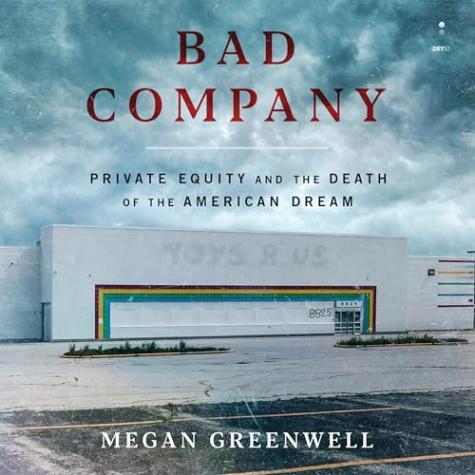
Bad Company

Bad Company

*ONE OF AV CLUB'S BEST BOOKS OF 2025* "[An] indictment of an industry that has cannily tilted the playing field in its favor. Bad Company details how clichéd abstractions like ‘consolidation’ and ‘efficiency’ have given cover to real betrayals.” - The New York Times A timely work of singular reportage and a damning indictment of the private equity industry told through the stories of four American workers whose lives and communities were upended by the ruinous effects of private equity takeovers. Private equity runs our country, yet few Americans have any idea how ingrained it is in their lives. Private equity controls our hospitals, daycare centers, supermarket chains, voting machine manufacturers, local newspapers, nursing home operators, fertility clinics, and prisons. The industry even manages highways, municipal water systems, fire departments, emergency medical services, and owns a growing swath of commercial and residential real estate. Private equity executives, meanwhile, are not only among the wealthiest people in American society, but have grown to become modern-day barons with outsized influence on our politics and legislation. CEOs of firms like Blackstone, Carlyle, KKR, and Apollo are rewarded with seats in the Senate and on the boards of the country’s most august institutions; meanwhile, entire communities are hollowed out as a result of their buyouts. Workers lose their jobs. Communities lose their institutions. Only private equity wins. Acclaimed journalist Megan Greenwell’s Bad Company unearths the hidden story of private equity by examining the lives of four American workers that were devastated as private equity upended their employers and communities: a Toys R Us floor supervisor, a rural doctor, a local newspaper journalist, and an affordable housing organizer. Taken together, their individual experiences also pull back the curtain on a much larger project: how private equity reshaped the American economy to serve its own interests, creating a new class of billionaires while stripping ordinary people of their livelihoods, their health care, their homes, and their sense of security. In the tradition of deeply human reportage like Matthew Desmond’s Evicted, Megan Greenwell pulls back the curtain on shadowy multibillion dollar private equity firms, telling a larger story about how private equity is reshaping the economy, disrupting communities, and hollowing out the very idea of the American dream itself. Timely and masterfully told, Bad Company is a forceful rebuke of America’s most consequential, yet least understood economic forces.

#75
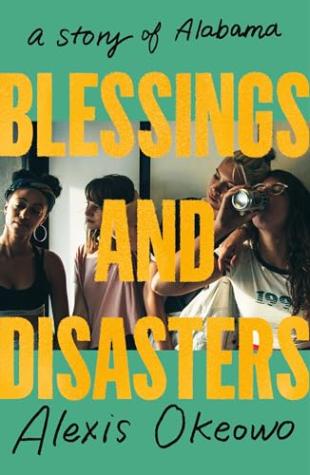
Blessings and Disasters: A Story of Alabama

Blessings and Disasters: A Story of Alabama

From a New Yorker staff writer and PEN Award winner, a blend of memoir, history, and reportage on one of the most complex and least understood states in America. “In Alabama, we exist at the border of blessing and disaster....” Alexis Okeowo grew up in Montgomery, Alabama—the former seat of the Confederacy—as the daughter of Nigerian immigrants. Here, she weaves her family’s story with her state’s, from Alabama’s forced removal of the Creek nation, making room for enslaved West Africans, to present-day legislative battles for “evolution disclaimers” in biology textbooks. She immerses us in the landscape, no longer one of cotton fields but rather one dominated by auto plants and Amazon warehouses. Defying stereotypes at every turn, Okeowo shows how people can love their home while still acknowledging its sins. In this emotional, perspective-shifting work that is both a memoir and a journalistic triumph, Okeowo investigates her life, other Alabamians’ lives, and the state’s lesser-known histories, to examine why Alabama has been the stage for the most extreme results of the American experiment.

#77
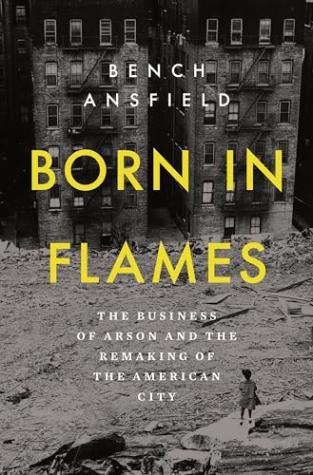
BORN IN FLAMES

BORN IN FLAMES

"A young historian's superlative debut . . . this excellent book delivers the truth about 'the burning years." --Kirkus Reviews (starred review) "[R]iveting . . . an outstanding exposé of the predatory capitalist machinations behind the 'Bronx is burning' saga."--Publishers Weekly (starred review) The explosive account of the arson wave that hit the Bronx and other American cities in the 1970s--and its legacy today.

#78
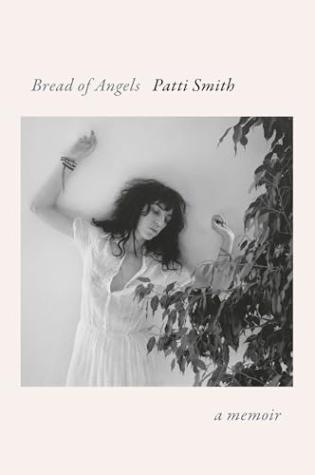
Bread of Angels: A Memoir

Bread of Angels: A Memoir

NEW YORK TIMES BESTSELLER • A radiant new memoir from artist and writer Patti Smith, author of the National Book Award winner Just Kids A TIME BEST BOOK OF THE YEAR “God whispers through a crease in the wallpaper,” writes Patti Smith in this moving account of her life. A post–World War II childhood unfolds in a condemned housing complex where we enter the child’s world of the imagination. Smith, the captain of her loyal and beloved sibling army, vanquishes bullies, communes with the king of tortoises, and searches for sacred silver pennies. The most intimate of Smith’s memoirs, Bread of Angels takes us through her teenage years where the first glimmers of art and romance take hold. Arthur Rimbaud and Bob Dylan emerge as creative role models as she begins to write poetry then lyrics, ultimately merging both into the songs of iconic recordings such as Horses, Wave, and Easter. She leaves it all behind to marry her one true love, Fred Sonic Smith, with whom she creates a life of devotion and adventure on a canal in St. Clair Shores, Michigan. Here, she invents a room of her own, a low table, a Persian cup, inkwell and pen, entering at dawn to write. The couple spend nights in their landlocked Chris-Craft studying nautical maps and charting new adventures as they start a family. A series of profound losses mark her life. Grief and gratitude are braided through years of caring for her children, rebuilding her life and, finally, writing again—the one constant in a life driven by artistic freedom and the power of the imagination to transform the commonplace into the magical, and pain into hope. In the final pages, we meet Smith on the road again, the vagabond who travels to commune with herself, who lives to write and writes to live.

#84
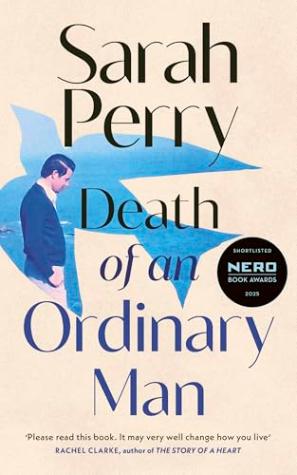
Death of an Ordinary Man

Death of an Ordinary Man

**SHORTLISTED FOR THE NERO BOOK AWARDS NON-FICTION AWARD 2025** 'Please read this book. It may very well change how you live' Rachel Clarke 'I was spellbound' Kathryn Mannix This is not a book about grief: it is a book about dying, the universal aspect of life, and it is a book about family, and care and love. Sarah Perry's father-in-law David died in the autumn of 2022, only nine days after a cancer diagnosis. Until then he'd been a healthy and happy man: he loved stamp collecting, fish and chips, comic novels, his local church, and the Antiques Roadshow. He was in some ways a very ordinary man, but as he began to die, it became clear how extraordinary he was. Sarah and her husband Robert nursed David themselves at home. They bathed and cleaned and dressed him, comforted him in pain, sat with him through waking and sleeping, talked to him, sang to him, prayed with him. Day by day and hour by hour, they witnessed what happens to the body and spirit as death approaches and finally arrives. ‘We cannot be but somewhat changed by this remarkable book’ Daily Telegraph 'By the end I was left shaken, deeply moved' Christos Tsiolkas 'This book will be a lifeline for so many people' Seán Hewitt ‘Sarah is in a league of her own as a writer – I don't know how she does it’ Sara Collins 'To read this book is a privilege, a gift on the craft of dying' Amy Key

#86
Dinner with King Tut: How Rogue Archaeologists Are Re-creating the Sights, Sounds, Smells, and Tastes of Lost Civilizations

Dinner with King Tut: How Rogue Archaeologists Are Re-creating the Sights, Sounds, Smells, and Tastes of Lost Civilizations

New York Times's 21 Nonfiction Books Coming This Summer | Boston Globe's Best Summer 2025 Books From “one of America’s smartest and most charming writers” (NPR), an archaeological romp through the entire history of humankind—and through all five senses—from tropical Polynesian islands to forbidding arctic ice floes, and everywhere in between. Whether it’s the mighty pyramids of Egypt or the majestic temples of Mexico, we have a good idea of what the past looked like. But what about our other senses: The tang of Roman fish sauce and the springy crust of Egyptian sourdough? The boom of medieval cannons and the clash of Viking swords? The frenzied plays of an Aztec ballgame...and the chilling reality that the losers might also lose their lives? History often neglects the tastes, textures, sounds, and smells that were an intimate part of our ancestors’ lives, but a new generation of researchers is resurrecting those hidden details, pioneering an exciting new discipline called experimental archaeology. These are scientists gone rogue: They make human mummies. They investigate the unsolved murders of ancient bog bodies. They carve primitive spears and go hunting, then knap their own obsidian blades to skin the game. They build perilous boats and plunge out onto the open sea—all in the name of experiencing history as it was, with all its dangers, disappointments, and unexpected delights. Beloved author Sam Kean joins these experimental archaeologists on their adventures across the globe, from the Andes to the South Seas. He fires medieval catapults, tries his hand at ancient surgery and tattooing, builds Roman-style roads—and, in novelistic interludes, spins gripping tales about the lives of our ancestors with vivid imagination and his signature meticulous research. Lively, offbeat, and filled with stunning revelations about our past, Dinner with King Tut sheds light on days long gone and the intrepid experts resurrecting them today, with startling, lifelike detail and more than a few laughs along the way.

#96
Languages of Home: Essays on Writing, Hoop, and American Lives 1975-2025

Languages of Home: Essays on Writing, Hoop, and American Lives 1975-2025

The first ever collection of John Edgar Wideman’s most influential essays and articles, five decades of cultural and literary criticism that paint a vivid portrait of America’s changing landscape and chronicle the emergence and evolution of a major presence in fiction. John Edgar Wideman, acclaimed since the early 1970s for his award-winning fiction and memoirs, has long been engaged in a project to redefine, from the perspective of an American of color, the wondrous and appalling power of his country’s literary culture and history. Now, curated by him, in this first-time collection from his extensive body of long-form journalism and biographical essays, readers are offered a chance to see and judge for themselves how Wideman has proven himself to be a luminous witness of America’s history. This volume goes beyond mere compilation; its challenging, insightful critical essays tell the story of a nation in transition—from the shame of legalized human slavery, to the Civil Rights Movement, to the rise of the Obama era, and beyond. Originally featured in publications such as Esquire, Vogue, and The New Yorker, these narratives explore the elusive cores of an American culture, politics, and identity. With his unique depictions of iconic figures such as Zora Neale Hurston, Malcolm X, Spike Lee, Emmett Till, and Michael Jordan, and intimate questioning of his own life, Wideman shares his original views of the changing tides of an American experience.

#97
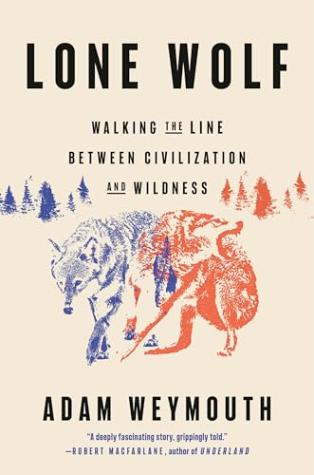
Lone Wolf

Lone Wolf

An intimate account of an epic walking journey through a tense and shifting Europe in the footsteps of one extraordinary wolf. In the winter of 2011, a young wolf, named Slavc by the scientists who collared him, left his natal pack's territory in Slovenia, embarking on what would become a two thousand kilometre trek to northern Italy. There, he found a mate—named Juliet—and they produced the first pack in the region in a hundred years. A decade later, captivated by Slavc's journey, Adam Weymouth set out to walk the same route. As he made his way through mountainous terrain, villages and farmland, he bore witness to the fears and harsh realities of those living on the margins of rural society at a time of deep political and social flux, for whom the surging wolf population posed an existential threat. In Lone Wolf, Weymouth interrogates how the wolf—loved and loathed, vilified and romanticized throughout history—is re-emerging in wild and cultivated landscapes; how the borders between us and them are slipping away; and what our deep-rooted fear of the mysterious creature really means. Sharply observed, searching, poetic and revealing, Lone Wolf is a story of wildness and of the human desire for order in an ever-evolving world.

#103
Motherland: A Feminist History of Modern Russia, from Revolution to Autocracy

Motherland: A Feminist History of Modern Russia, from Revolution to Autocracy

Award-winning journalist Julia Ioffe tells the story of modern Russia through the history of its women, from revolution to utopia to autocracy. In 1990, seven-year-old Julia Ioffe and her family fled the Soviet Union. Nearly twenty years later, Ioffe returned to Moscow--only to discover just how much Russian society had changed while she had been living in America. The Soviet women she had known growing up--doctors, engineers, scientists--had seemingly been replaced with women desperate to marry rich and become stay-at-home moms. How had Russia gone from portraying itself as the vanguard of world feminism to the last bastion of conservative Christian values? In Motherland, Ioffe turns modern Russian history on its head, telling it exclusively through the stories of its women. From her own physician great-grandmothers to Lenin's lover, a feminist revolutionary; from the hundreds of thousands of Soviet girls who fought in World War II to the millions of single mothers who rebuilt and repopulated a devastated country; from the members of Pussy Riot to Yulia Navalnaya, wife of opposition leader Alexei Navalny, she chronicles one of the most audacious social experiments in history and how it failed the very women it was meant to liberate--and documents how that failure paved the way to the revanche of Vladimir Putin. Part memoir, part journalistic exploration, part history, Motherland paints a portrait of modern Russia through the women who shaped it. With deep emotion, Ioffe shows what it means to live through the cataclysms of revolution, war, idealism, and heartbreak--and reveals how the story of Russia today is inextricably tied to the history of its women.

#104
No More Tears: The Dark Secrets of Johnson & Johnson

No More Tears: The Dark Secrets of Johnson & Johnson

An explosive, deeply reported exposé of Johnson & Johnson, one of America’s oldest and most trusted pharmaceutical companies—from an award-winning investigative journalist “A page-turning drama that raises life-or-death questions about the world’s largest healthcare conglomerate.”—Jonathan Eig, Pulitzer Prize–winning author of King: A Life One day in 2004, Gardiner Harris, a pharmaceutical reporter for The New York Times, was early for a flight and sat down at an airport bar. He struck up a conversation with the woman on the barstool next to him, who happened to be a drug sales rep for Johnson & Johnson. Her horrific story about unethical sales practices and the devastating impact they’d had on her family fundamentally changed the nature of how Harris would cover the company—and the entire pharmaceutical industry—for the Times. His subsequent investigations and ongoing research since that very first conversation led to this book—a blistering exposé of a trusted American institution and the largest healthcare conglomerate in the world. Harris takes us light-years away from the company’s image as the child-friendly “baby company” as he uncovers reams of evidence showing decades of deceitful and dangerous corporate practices that have threatened the lives of millions. He covers multiple disasters: lies and cover-ups regarding the link of Johnson’s Baby Powder to cancer, the surprising dangers of Tylenol, a criminal campaign to sell antipsychotics that have cost countless lives, a popular drug used to support cancer patients that actually increases the risk that cancer tumors will grow, and deceptive marketing that accelerated opioid addictions through their product Duragesic (fentanyl) that rival even those of the Sacklers and Purdue Pharma. Filled with shocking and infuriating but utterly necessary revelations, No More Tears is a landmark work of investigative journalism that lays bare the deeply rooted corruption behind the image of babies bathing with a smile.

#105
No Sense in Wishing

No Sense in Wishing

“Among the most profound and dazzling debuts I've ever read.” —Kiese Laymon, award-winning author of Heavy: An American Memoir An essay collection from culture critic Lawrence Burney that is a personal and analytical look at his home city of Baltimore, music from throughout the global Black diaspora, and the traditions that raised him. There are moments throughout our lives when we discover an artist, an album, a film, or a cultural artifact that leaves a lasting impression, helping inform how we understand the world, and ourselves, moving forward. In No Sense in Wishing, Lawrence Burney explores these profound interactions with incisive and energizing prose, offering us a personal and critical perspective on the people, places, music, and art that transformed him. In a time when music is spearheading Black Americans’ connection with Africans on The Continent, Burney takes trips to cover the bubbling creative scenes in Lagos and Johannesburg that inspire teary-eyed reflections of self and belonging. Seeing his mother perform as the opening act at a Gil Scott-Heron show as a child inspires an essay about parent-child relationships and how personal taste is often inherited. And a Maryland crab feast with family facilitates an assessment of how the Black people in his home state have historically improvised paths for their liberation. Taking us on a journey from the streets of Baltimore to the concert halls of Lagos, No Sense in Wishing is a kaleidoscopic exploration of Burney’s search for self. With its gutsy and uncompromising criticism alongside intimate personal storytelling, it’s like an album that hits all the right notes, from a promising writer on the rise.

#106
Nothing More of This Land: Community, Power, and the Search for Indigenous Identity

Nothing More of This Land: Community, Power, and the Search for Indigenous Identity

From award-winning journalist Joseph Lee, a sweeping, personal exploration of Indigenous identity and the challenges facing Indigenous people around the world. Before Martha’s Vineyard became one of the most iconic vacation destinations in the country, it was home to the Wampanoag people. Today, as tourists flock to the idyllic beaches, the island has become increasingly unaffordable for tribal members, with nearly three-quarters now living off-island. Growing up Aquinnah Wampanoag, journalist Joseph Lee grappled with what this situation meant for his tribe, how the community can continue to grow, and more broadly, what it means to be Indigenous. In Nothing More of This Land, Lee weaves his own story and that of his family into a panoramic narrative of Indigenous life around the world. He takes us from the beaches of Martha’s Vineyard to the icy Alaskan tundra, the smoky forests of Northern California to the halls of the United Nations, and beyond. Along the way he meets activists fighting to protect their land, families clashing with their own tribal leaders, and communities working to reclaim tradition. Together, these stories reject stereotypes to show the diversity of Indigenous people today and chart a way past the stubborn legacy of colonialism.

#108
Red Scare

Red Scare

This wry, big-hearted noir brings 1950s New York to life, from the tenements of Hell’s Kitchen to the mansions of Riverdale, from Sing Sing to City Hall, with a gripping murder mystery laying bare the explosive conflicts between its big wheels, its working stiffs, its gangsters, and its dreamers. July 1950: Mick Mulligan has just hung out his shingle as a private investigator in New York’s sweaty Hell’s Kitchen. A former Hollywood cartoonist who was blacklisted during a communist witch hunt, Mick is broke, divorced, and in need of a paying gig to make his child support payments. But maybe not this gig. First off, it’s impossible. Worse, it’s liable to get him killed. Last year, universally reviled cab company owner Irwin Johnson was murdered. One of his drivers, an African American Communist Party member named Harold Williams, was arrested, tried, and found guilty, despite scant evidence. Now his execution date is two weeks away. New York City labor leader Duke Rogowski asks Mick to find fresh evidence that might buy Harold a stay of execution. Lots of people might have wanted Irwin Johnson dead—anyone from his betrayed wife to his jilted mistresses’ jealous husbands to the mafiosi he was stealing business from. But no one has any reason to help Mick exonerate Harold Williams, and some of Irwin’s former associates are happy to take a blunt object to the head of anyone asking awkward questions. Yet Mick can’t abandon a potentially innocent man to the electric chair. Can he pull off a miracle?

#114
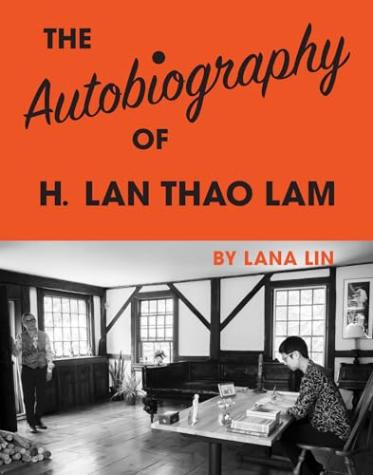
The Autobiography of H. LAN Thao Lam

The Autobiography of H. LAN Thao Lam

Longlisted for the 2025 National Book Award in Nonfiction Situated between memoir, social criticism, and conceptual art, The Autobiography of H. Lan Thao Lam is an incisive response to a modernist classic and an affecting exploration of the poetics and politics of our times. In her 1933 The Autobiography of Alice B. Toklas, Gertrude Stein invented a new literary form by narrating her own story from the perspective of her partner, blurring the lines between portrait and self-portrait. Almost a century later, experimental filmmaker and artist Lana Lin has resurrected Stein’s project to tell a different story of queer love, life, and artistic collaboration. At heart a candid chronicle of her partner Lan Thao’s life journey from Việt Nam during the war, and her own troubled history as a gender-queer Taiwanese American, Lin draws in subjects as varied as photography, cancer, tropical fruit, 9/11, and Eve Sedgwick’s eyeglasses, weaving an intimate landscape of living that is also a critical investigation of race and gender.

#115
The Beast in the Clouds

The Beast in the Clouds

A 2025 New York Times Nonfiction Summer Preview Pick “A beautiful and powerful book.” —Candice Millard, New York Times bestselling author “Valuable, revelatory, and contagiously page-turning.” —David Michaelis, New York Times bestselling author For lovers of history, nature, and adventure, the stunning true story of Theodore Roosevelt’s sons and their 1929 Himalayan expedition to prove the existence of the beishung, the panda bear, to the western world, from the New York Times bestselling author of Rise of the Rocket Girls. The Himalayas—a snowcapped mountain range that hides treacherous glacier crossings, raiders poised to attack unsuspecting travelers, and air so thin that even seasoned explorers die of oxygen deprivation. Yet among the dangers lies one of the most beautiful and fragile ecosystems in the world. During the 1920s, dozens of expeditions scoured the Chinese and Tibetan wilderness in search of the panda bear, a beast that many believed did not exist. When the two eldest sons of President Theodore Roosevelt sought the bear in 1928, they had little hope of success. Together with a team of scientists and naturalists, they accomplished what a decade of explorers could not, ultimately introducing the panda to the West. In the process, they documented a vanishing world and set off a new era of conservation biology. Along the way, the Roosevelt expedition faced an incredible series of hardships as they disappeared in a blizzard, were attacked by robbers, overcome by sickness and disease, and lost their food supply in the mountains. The explorers would emerge transformed, although not everyone would survive. Beast in the Clouds brings alive these extraordinary events in a potent nonfiction thriller featuring the indomitable Roosevelt family. From the soaring beauty of the Tibetan plateau to the somber depths of human struggle, Nathalia Holt brings her signature “immersive, evocative” (Bookreporter) voice to this astonishing tale of adventure, harrowing defeat, and dazzling success.

#119
The Conjuring of America

The Conjuring of America

One of BookRiot's Best New Nonfiction Out in July, a crucial telling of U.S. history centering the Black women whose magic gave rise to the rich tapestry of American culture we see today—from Vicks VapoRub and Aunt Jemima’s pancake mix, to the magic of Disney’s The Little Mermaid (2023), and the all-American blue jean. Emerging first on plantations in the American South, enslaved conjure women used their magic to treat illnesses. These women combined their ancestral spiritual beliefs from West Africa with local herbal rituals and therapeutic remedies to create conjure, forging a secret well of health and power hidden to their oppressors and many of the modern-day staples we still enjoy. In The Conjuring of America, Black feminist philosopher Lindsey Stewart exposes this vital contour of American history. In the face of slavery, Negro Mammies fashioned a legacy of magic that begat herbal experts, fearsome water bearers, and powerful mojos—roles and traditions that for centuries have been passed down to respond to Black struggles in real time. And when Jim Crow was born, Granny Midwives and textile weavers leveled their techniques to protect our civil and reproductive rights, while Candy Ladies fed a generation of freedom crusaders. Sourcing firsthand accounts the of enslaved, dispatches from the lore of Oshun, and the wisdom of beloved Black women writers, Stewart proves indisputably that conjure informs our lives in ways remarkable and ordinary. Above all, The Conjuring of America is a love letter to the magic Black women used to sow messages of rebellion, freedom, and hope.

#122
The Gods of New York

The Gods of New York

A sweeping chronicle of four tumultuous years in 1980s New York that changed the city forever—and anticipated the forces that would soon divide the nation—from the bestselling author of Ladies and Gentlemen, the Bronx Is Burning “A rip-roaring, sweeping, essential work of history . . . a deeply reported and brilliantly observed account of how the modern city was born and why all of us continue to live with the results.”—Jonathan Eig, Pulitzer Prize–winning author of King: A Life New York entered 1986 as a city reborn. Record profits on Wall Street sent waves of money splashing across Manhattan, bringing a battered city roaring back to life. But it also entered 1986 as a city whose foundation was beginning to crack. Thousands of New Yorkers were sleeping in the streets, addicted to drugs, dying of AIDS, or suffering from mental illnesses. Nearly one-third of the city’s Black and Hispanic residents were living below the federal poverty line. Long-simmering racial tensions threatened to boil over. The events of the next four years would split the city open. Howard Beach. Black Monday. Tawana Brawley. The crack epidemic. The birth of ACT UP. The Central Park jogger. The release of Do the Right Thing. And a cast of outsized characters—Ed Koch, Donald Trump, Al Sharpton, Spike Lee, Rudy Giuliani, Larry Kramer—would compete to shape the city’s future while building their own mythologies. The Gods of New York is a kaleidoscopic and deeply immersive portrait of a city whose identity was suddenly up for grabs: Could it be both the great working-class city that lifted up immigrants from around the world and the money-soaked capital of global finance? Could it retain a civic culture—a common idea of what it meant to be a New Yorker—when the rich were building a city of their own and vast swaths of its citizens were losing faith in the systems meant to protect them? New York City was one thing at the dawn of 1986; it would be something very different as 1989 came to a close. This is the story of how that happened.

#124
The Golden Road: How Ancient India Transformed the World

The Golden Road: How Ancient India Transformed the World

The internationally bestselling author of The Anarchy returns with a sparkling, soaring history of ideas, tracing South Asia's under-recognized role in producing the world as we know it. For a millennium and a half, India was a confident exporter of its diverse civilization, creating around it a vast empire of ideas. Indian art, religions, technology, astronomy, music, dance, literature, mathematics and mythology blazed a trail across the world, along a Golden Road that stretched from the Red Sea to the Pacific. In The Golden Road, William Dalrymple draws from a lifetime of scholarship to highlight India's oft-forgotten position as the heart of ancient Eurasia. For the first time, he gives a name to this spread of Indian ideas that transformed the world. From the largest Hindu temple in the world at Angkor Wat to the Buddhism of China, from the trade that helped fund the Roman Empire to the creation of the numerals we use today (including zero), India transformed the culture and technology of its ancient world – and our world today as we know it.

#125
THE HISTORY OF MONEY

THE HISTORY OF MONEY

In this fresh, eye-opening global history, economist David McWilliams charts the relationship between humans and money—from clay tablets in Mesopotamia to cryptocurrency in Silicon Valley. The story of humanity is inextricable from that of money. No innovation has defined our own evolution so thoroughly and changed the direction of our planet’s history so dramatically. And yet despite money’s primacy, most of us don’t truly understand it. As leading economist David McWilliams shows, money is central to every aspect of our civilization, from the political to the artistic. “Money defines the relationship between worker and employer, buyer and seller, merchant and producer. But not only that: it also defines the bond between the governed and the governor, the state and the citizen. Money unlocks pleasure, puts a price on desire, art and creativity. It motivates us to strive, achieve, invent and take risks. Money also brings out humanity’s darker side, invoking greed, envy, hatred, violence and, of course, colonialism.” In The History of Money, McWilliams takes us across the world, from the birthplace of money in ancient Babylon to the beginning of trade along the Silk Road, from Marrakech markets to Wall Street. Along the way, we meet a host of innovators, emperors, frauds, and speculators, who have disrupted society and transformed the way we live. Filled with memorable anecdotes, and with a foreword by Michael Lewis, The History of Money is an essential, extremely readable history of humanity’s most consequential invention.

#128
The Killing Fields of East New York: The First Subprime Mortgage Scandal, a White-Collar Crime Spree, and the Collapse of an American Neighborhood

The Killing Fields of East New York: The First Subprime Mortgage Scandal, a White-Collar Crime Spree, and the Collapse of an American Neighborhood

In this groundbreaking work of investigative journalism and true crime, Stacy Horn sheds light on how the subprime mortgage scandal of the 1970s and a long history of white-collar crime slowly devastated East New York, a Brooklyn neighborhood that would come to be known as the Killing Fields. On a warm summer evening in 1991, seventeen-year-old Julia Parker was murdered in the Brooklyn neighborhood of East New York. An area known for an exorbitant level of violence and crime, East New York had come to be known as the Killing Fields. In the six months after Julia Parker's death, 62 more people were murdered in the same area. In the early 1990s, murder rates in the neighborhood climbed to the highest in NYPD history. East New York was dying. But how did this once thriving, diverse, family neighborhood fall into such ruin? The answer can be found two decades earlier. In response to redlining and discriminatory housing practices, the Johnson administration passed the Housing and Urban Development Act in 1968. The Federal Housing Authority aimed to use this piece of legislation to help low-income families of color finally achieve homeownership. But they could never have predicted how banks, lenders, realtors, and corrupt FHA officials themselves would use the newly passed law to make victims of the very people they were trying to help, and the devastation they would leave in their wake. A compulsively readable hybrid of true crime and investigative journalism, The Killing Fields of East New York reveals how white-collar crime reduced a prospering neighborhood to abandoned buildings and empty lots. Following the dual threads of the hunt for the network of criminals behind the first subprime mortgage scandal and the ensuing downfall of East New York, Stacy Horn weaves a compelling narrative of government failure, a desperate community, and ultimately the largest series of mortgage fraud prosecutions in American history. The Killing Fields of East New York deftly demonstrates how different types of crime are profoundly entangled, and how the crimes committed in nice suits and corner offices are just as destructive as those committed on the street.

#129
The Let Them Theory: A Life-Changing Tool That Millions of People Can’t Stop Talking About

The Let Them Theory: A Life-Changing Tool That Millions of People Can’t Stop Talking About

#1 New York Times Bestseller #1 Sunday Times Bestseller #1 Amazon Bestseller #1 Audible Bestseller This book was originally published with Mel Robbins as the sole author. A revised cover introduces her daughter, Sawyer Robbins, as the co-author. Customers will be shipped either of the covers at random. A Life-Changing Tool Millions of People Can’t Stop Talking About What if the key to happiness, success, and love was as simple as two words? If you've ever felt stuck, overwhelmed, or frustrated with where you are, the problem isn't you. The problem is the power you give to other people. Two simple words—Let Them—will set you free. Free from the opinions, drama, and judgments of others. Free from the exhausting cycle of trying to manage everything and everyone around you. The Let Them Theory puts the power to create a life you love back in your hands—and this book will show you exactly how to do it. In her latest groundbreaking book, The Let Them Theory, Mel Robbins—New York Times bestselling author and one of the world's most respected experts on motivation, confidence, and mindset—teaches you how to stop wasting energy on what you can't control and start focusing on what truly matters: YOU. Your happiness. Your goals. Your life. Using the same no-nonsense, science-backed approach that's made The Mel Robbins Podcast a global sensation, Robbins explains why The Let Them Theory is already loved by millions and how you can apply it in eight key areas of your life to make the biggest impact. Within a few pages, you'll realize how much energy and time you've been wasting trying to control the wrong things—at work, in relationships, and in pursuing your goals—and how this is keeping you from the happiness and success you deserve. Written as an easy-to-understand guide, Robbins shares relatable stories from her own life, highlights key takeaways, relevant research and introduces you to world-renowned experts in psychology, neuroscience, relationships, happiness, and ancient wisdom who champion The Let Them Theory every step of the way. Learn how to: Stop wasting energy on things you can't control Stop comparing yourself to other people Break free from fear and self-doubt Release the grip of people's expectations Build the best friendships of your life Create the love you deserve Pursue what truly matters to you with confidence Build resilience against everyday stressors and distractions Define your own path to success, joy, and fulfillment . . . and so much more. The Let Them Theory will forever change the way you think about relationships, control, and personal power. Whether you want to advance your career, motivate others to change, take creative risks, find deeper connections, build better habits, start a new chapter, or simply create more happiness in your life and relationships, this book gives you the mindset and tools to unlock your full potential. Order your copy of The Let Them Theory now and discover how much power you truly have. It all begins with two simple words.

#133
The Waterbearers: A Memoir of Mothers and Daughters

The Waterbearers: A Memoir of Mothers and Daughters

“An epic love song and remarkable ballad of generations.” —Leslie Jamison “I couldn’t write about Black motherhood without writing about America.” —Sasha Bonét Sasha Bonét grew up in 1990s Houston, worlds removed from the Louisiana cotton plantation that raised her grandmother, Betty Jean, and the Texas bayous that shaped Sasha’s mother, Connie. And though each generation did better, materially, than the last, all of them carried the complex legacy of Black American motherhood with its origins in slavery. All of them knew that the hands used to comb and braid hair, shell pecans, and massage weary muscles were the very hands used to whip children into submission. When she had her own daughter, Sofia, Bonét was determined to interrupt this tradition. She brought Sofia to New York and set off on a journey—not only up and down the tributaries of her bloodline but also into the lives of Black women in history and literature—Betty Davis, Recy Taylor, and Iberia Hampton among them—to understand both the love and pain they passed on to their children and to create a way of mothering that honors the legacy but abandons the violence that shaped it. The Waterbearers is a dazzling and transformative work of American storytelling that reimagines not just how we think of Black women, but how we think of ourselves—as individuals, parents, communities, and a country.

#137
Water Mirror Echo: Bruce Lee and the Making of Asian America

Water Mirror Echo: Bruce Lee and the Making of Asian America

"Water Mirror Echo is a remarkable story of a man, the traditions and communities that created him, and the new worlds he made possible. Like Bruce Lee himself, Jeff Chang is blessed with the vision to see things we do not yet see, thinking and writing with a restless, chasm-crossing, almost prophetic ambition." — Hua Hsu, Pulitzer Prize-winning author of Stay True: A Memoir "This book is as celebratory as it is incisive, as it is, at times, heartbreaking. A massive achievement." — Hanif Abdurraqib, National Book Award-winning author of There’s Always This Year and A Little Devil in America A cultural biography, both sweeping and intimate, of the legend Bruce Lee, set against the extraordinary, untold story of the rise of Asian America—from the author of the award-winning classic Can’t Stop Won’t Stop and one of the finest culture observers of our era. More than a half-century after his passing, Bruce Lee is as towering a figure to people around the world as ever. On his path to becoming a global icon, he popularized martial arts in the West, became a bridge to people and cultures from the East, and just as he was set to conquer Hollywood once and for all, he died of cerebral edema at age thirty-two. It’s no wonder that Bruce Lee’s legend has only bloomed in the decades since. Yet, in so many ways, the legend has eclipsed the man. Forgotten is the stark reality of the baby boy born in segregated San Francisco, who spent his youth in war-ravaged, fight-crazy Hong Kong. Forgotten is the curious teenager who found his way back to America, where he embraced West Coast counterculture and meshed it with the Asian worldviews and philosophies that reared him. Forgotten is the man whose very presence broke barriers and helped shape the idea of what being an Asian in America is, at the very dawn of Asian America. Water Mirror Echo—a title inspired by Bruce Lee’s own way of moving, being and responding to the world—is a page-turning and powerful reminder. At the helm is Jeff Chang, the award-winning author of Can’t Stop Won’t Stop, whose writing on culture, politics, the arts and music have made him one of the most acclaimed and distinctive voices of our time. In his hands, Bruce Lee’s story brims with authenticity. Now, based on in-depth interviews with Lee’s closest intimates, thousands of newly available personal documents, and featuring dozens of gorgeous photographs from the family’s archive, Chang achieves the nearly impossible. He reveals the man behind the enduring iconography and stirringly shows Lee’s growing fame ushering in something that’s turned out to be even more enduring: the creation of Asian America.
#139
When It All Burns: Fighting Fire in a Transformed World

When It All Burns: Fighting Fire in a Transformed World

2025 NATIONAL BOOK AWARD FINALIST “Exceptional. . . . When It All Burns is one of those books that immerses the reader in the nuances of a world most of us know only through the lens of tragedy and destruction. Thomas’ visceral, crystalline prose only adds fuel to the fire.” —Los Angeles Times A hotshot firefighter’s gripping firsthand account of a record-setting fire season Eighteen of California’s largest wildfires on record have burned in the past two decades. Scientists recently invented the term “megafire” to describe wildfires that behave in ways that would have been nearly impossible just a generation ago, burning through winter, exploding in the night, and devastating landscapes historically impervious to incendiary destruction. In When It All Burns, wildland firefighter and anthropologist Jordan Thomas recounts a single, brutal six-month fire season with the Los Padres Hotshots—the special forces of America’s firefighters. Being a hotshot is among the most difficult jobs on earth. Thomas viscerally renders his crew’s attempts to battle flames that are often too destructive to contain. He uncovers the hidden cultural history of megafires, revealing how humanity’s symbiotic relationship with wildfire became a war—and what can be done to change it back. Thomas weaves ecology and the history of Indigenous peoples' oppression, federal forestry, and the growth of the fire industrial complex into a riveting narrative about a new phase in the climate crisis. It's an immersive story of community in the most perilous of circumstances, told with humor, humility, and affection.

#140
Who Is Government?: The Untold Story of Public Service

Who Is Government?: The Untold Story of Public Service

“Perhaps never before has there been a book better timed or more urgent.” —Washington Post “Michael Lewis has this incredible ability to zoom in on one person's story, and from there reveals something much bigger about our culture. His books leave you seeing the world differently, and his books about federal workers are no exception.” —Katie Couric As seen on CBS Mornings, CNN Anderson Cooper, ABC News Live, MSNBC Morning Joe, and many more Who works for the government and why does their work matter? An urgent and absorbing civics lesson from an all-star team of writers and storytellers. The government is a vast, complex system that Americans pay for, rebel against, rely upon, dismiss, and celebrate. It’s also our shared resource for addressing the biggest problems of society. And it’s made up of people, mostly unrecognized and uncelebrated, doing work that can be deeply consequential and beneficial to everyone. Michael Lewis invited his favorite writers, including Casey Cep, Dave Eggers, John Lanchester, Geraldine Brooks, Sarah Vowell, and W. Kamau Bell, to join him in finding someone doing an interesting job for the government and writing about them. The stories they found are unexpected, riveting, and inspiring, including a former coal miner devoted to making mine roofs less likely to collapse, saving thousands of lives; an IRS agent straight out of a crime thriller; and the manager who made the National Cemetery Administration the best-run organization, public or private, in the entire country. Each essay shines a spotlight on the essential behind-the-scenes work of exemplary federal employees. Whether they’re digitizing archives, chasing down cybercriminals, or discovering new planets, these public servants are committed to their work and universally reluctant to take credit. Expanding on the Washington Post series, the vivid profiles in Who Is Government? blow up the stereotype of the irrelevant bureaucrat. They show how the essential business of government makes our lives possible, and how much it matters.

#142
You Didn’t Hear This From Me: (Mostly) True Notes on Gossip

You Didn’t Hear This From Me: (Mostly) True Notes on Gossip

AN INSTANT NEW YORK TIMES AND USA TODAY BESTSELLER • NAMED A BEST BOOK OF THE MONTH BY TIME MAGAZINE, AMAZON, AND KOBO • NAMED MOST ANTICIPATED BY LIT HUB, PUREWOW, AND W MAGAZINE “Gossip is the only cultural tradition I care about, and Kelsey McKinney has written its Bible” – Samantha Irby, #1 NYT bestselling author From the host of the Normal Gossip podcast, a delightfully insightful exploration of our obsession with gossip that weaves together journalism, cultural criticism, and memoir. As the pandemic forced us to socialize at a distance, Kelsey McKinney was mourning the juicy updates and jaw-dropping stories she’d typically collect over drinks with friends—and from her hunger, the blockbuster Normal Gossip podcast was born. With listenership in the millions, Kelsey found herself thinking more critically about gossip as a form, and wanting to better understand the role it plays in our culture. In You Didn't Hear This From Me, McKinney explores the murkiness of everyday storytelling. Why is gossip considered a sin, and how can we better recognize when it's being weaponized? Why do we think we’re entitled to every detail of a celebrity’s personal life? And how do we define “gossip,” anyway? As much as the book aims to treat gossip as a subject worthy of rigor, it also hopes to capture the heart of gossiping: how enchanting and fun it can be to lean over and whisper something a little salacious into your friend’s ear. With wit and honesty, McKinney unmasks what we're actually searching for when we demand to know the truth—and how much the truth really matters in the first place.

#143
A History of Boston

A History of Boston

"Dain's A History of Boston helps the reader understand how land-use and environment contribute to shaping a community. Dain's Boston is the go-to book." - R.J. Lyman Boston is today one of the world's greatest cities, first in higher education, hospitals, life science companies, and sports teams. It was the home of the Great Puritan Migration, the American Revolution, the Industrial Revolution, the first civil rights movement, the abolition movement, and the women's rights movement. But the city that gave us the first use of ether as anesthesia, the telephone, technicolor film, and the mutual fund--the city where Martin Luther King Jr. and Coretta Scott founded their world-changing partnership--was also the hub of the anti-immigration movement, the divisive busing era, and decades of self-inflicted decay. Boston has the most important history of any American city. Yet its history has never been given a comprehensive treatment until now. Join Dan Dain as he acts as your tour guide from the arrival of First Peoples up to the election of Boston's first woman and person of color as mayor. Dain's masterful work explores the policies and practices that took Boston from its highest heights to its lowest lows and back again, and examines the central role that density, diversity, and good urban design play in the success of cities like Boston.

#147
A YEAR WITH THE SEALS

A YEAR WITH THE SEALS

Environmental journalist Alix Morris spends an eye-opening year getting to know these elusive, intelligent creatures, investigating the effects of their extraordinary return from the brink of extinction and how we can try to bring nature back into balance. It might be their large, strangely human eyes or their dog-like playfulness, but seals have long captured people's interest and affection, making them the perfect candidate for an environmental cause, as well as the subject of decades of study. Alix Morris spends a year with these magnetic creatures and brings them to life on the page, season by season, as she learns about their intelligence, their relationships with each other, their ecosystems, and the changing climate. Morris also gets to know all of the competing interests in the intense debate about the newly recovered seal populations in our coastal waters, from local fishermen whose catch is often diminished by savvy seals, to tribes who once relied on seal-hunting for food, clothing, and medicine, to seal rescue workers and biologists, to surfers and swimmers now encountering seal-hunting sharks in coastal waters. A Year with the Seals is a rare look at what happens when conservation efforts actually work, and how human tampering with ecosystems continues to have unexpected consequences. But it's also a gripping adventure story of a journalist determined to understand seals and our relationship with them for herself.

#154
All the Way to the River: Love, Loss, and Liberation

All the Way to the River: Love, Loss, and Liberation

A WATERSTONES BEST BOOK OF SEPTEMBER 2025 'No one who reads this book will ever forget it' Meg Mason 'An absolute masterclass and truth-bomb ... I think many people will be shaken awake by this book' Emma Gannon In her first non-fiction book in a decade, the no. 1 bestselling writer who taught millions of readers to live authentically (Eat Pray Love) and creatively (Big Magic) shows how to break free. In 2000, Elizabeth Gilbert met Rayya. They became friends, then best friends, then inseparable. When tragedy entered their lives, the truth was finally laid bare: the two were in love. They were also a pair of addicts, on a collision course toward catastrophe. What if your most beautiful love story turned into your biggest nightmare? What if the dear friend who taught you so much about your self-destructive tendencies became the unstable partner with whom you disastrously reenacted every one of them? And what if your most devastating heartbreak opened a pathway to your greatest awakening? All the Way to the River is a landmark memoir that will resonate with anyone who has ever been captive to love – or to any other passion, substance or craving – and who yearns, at long last, for liberation.

#156
Always Home, Always Homesick: A Love Letter to Iceland

Always Home, Always Homesick: A Love Letter to Iceland

Immediate, intimate and never less than captivating' - Guardian From the bestselling author of Burial Rites comes an inspirational memoir about her travels in Iceland, an extraordinary country that has forged a nation of storytellers. When she was seventeen years old, Hannah Kent travelled to Iceland from Australia. She’d never seen snow before, didn’t speak a word of Icelandic. All she knew was that she wanted to have an experience – to soak up something of the world. Soon she found herself isolated in a remote part of Iceland in a dark winter. It was a gruelling experience, but she quickly fell in love with the country: with its brutally beautiful landscapes and with its people. On returning home, with images of Iceland's towering glaciers and windswept tundras in her dreams, Hannah began to write. Now, as a mother and a wife, she looks back to that extraordinary year in Iceland. Praise for Burial Rites: ‘Outstanding’ – Madeline Miller ‘Gripping, intriguing and unique’ – Kate Mosse ‘One of the best Scandinavian crime novels I’ve read’ – Independent ‘Remarkable’ – The Sunday Times ‘A must-read’ – Grazia

#164
Are You Mad at Me?

Are You Mad at Me?

Instant New York Times Bestseller From psychotherapist and social media star Meg Josephson, a groundbreaking “cure for chronic people-pleasing” (Adam Grant, #1 New York Times bestselling author) that explores the common survival instinct called fawning and offers “explanations, comfort, and best of all, solutions” (Christie Tate, New York Times bestselling author). Are you... - Constantly worried about what people think of you, if they like you, if they’re mad at you? - The eldest daughter and/or the angry daughter? - Anxious, a perfectionist, or an overachiever? - Always overextending yourself (and then resentful)? - Someone who avoids conflict at all costs? - Fearful of getting into trouble or being seen as “bad”? - Silencing your needs for the comfort and happiness of everyone else? - Prone to overexplain or over apologize? - Eternally obsessing over why someone texted with a period instead of an exclamation point? Psychotherapist Meg Josephson is here to show you that people-pleasing is not a personality trait. It’s a common survival mechanism known as “fawning”: an instinct often learned in childhood to become more appealing to a perceived threat in order to feel safe. Yet many people are stuck in this way of being for their whole lives. Are You Mad at Me? weaves Josephson’s own moving story with that of fascinating client stories and thought-provoking exercises to show you how to: - Identify all the roles you might play—from peacekeeper to performer to caretaker to lone wolf to perfectionist to chameleon—that keep you far from yourself. - Stop fearing your thoughts and emotions, even if they’re unpleasant. - Rethink conflict and boundaries as an opening for deeper connection. - Practice “leaning back” in relationships. - Recognize when people-pleasing is actually necessary (with your chaotic boss) and when it’s not (with your close friends) and stop self-loathing when you slip into old patterns. - Shift away from the familiar chaos, anxiety, and resentment you’re used to as you move closer to yourself and a life that no longer depletes you—but brings you joy. With Josephson’s “lucid prose and smart mix of clinical expertise, personal disclosure, and pertinent case studies” (Publishers Weekly), Are You Mad at Me? will help you shed the behaviors that are keeping you stuck in the past so that you can live in your most authentic present.

#189
Clam Down

Clam Down

In this wondrously unusual memoir, a woman retreats into her shell in the aftermath of her divorce, and must choose between the pleasures and the perils of a closed-up life—a transformation fable from an acclaimed 5 Under 35 National Book Foundation honoree. “A marvel and a delight . . . This is a book that will stay with me forever.”—Leslie Jamison, author of Splinters We’ve all heard the story about waking up as a cockroach—but what if a crisis turned you into a clam? After the dissolution of her marriage, a writer is transformed into a “clam” via typo after her mother keeps texting her to “clam down.” The funny if unhelpful command forces her to ask what it means to “clam down”—to retreat, hide, close up, and stay silent. Idiomatically, we are said to “clam up” when we can’t speak, and to “come out of our shell” when we reemerge, transformed. In order to understand her path, the clam digs into examples of others who have embraced lives of reclusiveness and extremity. Finally, she confronts her own “clam genealogy” to interview her dad, who disappeared for a decade to write a mysterious accounting software called Shell Computing. By excavating his past to better understand his decisions, she learns not only how to forgive him but also how to move on from her own wounds of abandonment and insecurity. Using a genre-defying structure and written in novelistic prose that draws from art, literature, and natural history, Anelise Chen unfolds a complex story of interspecies connectedness, in which humans learn lessons of adaptation and survival from their mollusk kin. While it makes sense in certain situations to retreat behind fortified walls, the choice to do so also exacts a price. What is the price of building up walls? How can one take them back down when they are no longer necessary?

#202
Desi Arnaz: The Man Who Invented Television

Desi Arnaz: The Man Who Invented Television

An illuminating biography of Desi Arnaz, the visionary, trailblazing Cuban American who revolutionized television and brought laughter to millions as Lucille Ball’s beloved husband on I Love Lucy, leaving a remarkable legacy that continues to influence American culture today. Desi Arnaz is a name that resonates with fans of classic television, but few understand the depth of his contributions to the entertainment industry. In Desi Arnaz, Todd S. Purdum offers a captivating biography that dives into the groundbreaking Latino artist and businessman known to millions as Ricky Ricardo from I Love Lucy. Beyond his iconic role, Arnaz was a pioneering entrepreneur who fundamentally transformed the television landscape. His journey from Cuban aristocracy to world-class entertainer is remarkable. After losing everything during the 1933 Cuban revolution, Arnaz reinvented himself in pre-World War II Miami, tapping into the rising demand for Latin music. By twenty, he had formed his own band and sparked the conga dance craze in America. Behind the scenes, he revolutionized television production by filming I Love Lucy before a live studio audience with synchronized cameras, a model that remains a sitcom gold standard today. Despite being underestimated due to his accent and origins, Arnaz’s legacy is monumental. Purdum’s biography, enriched with unpublished materials and interviews, reveals the man behind the legend and highlights his enduring contributions to pop culture and television. This book is a must-read biography about innovation, resilience and the relentless drive of a man who changed TV forever.

#204
Do Admit: The Mitford Sisters and Me

Do Admit: The Mitford Sisters and Me

Mimi Pond crafts a gorgeous, dazzling biography of the Mitford Sisters Born with pedigrees but without the pocketbooks to match, The Mitfords were certainly no strangers to lies, intrigue, or scandal. Nancy, Pamela, Diana, Unity, Jessica, and Deborah. All six sisters were weaned on their family’s well-documented upper class eccentricities: a ne’er do well would-be entrepreneur father; a stern, stiff-upper-lipped mother; a revolving door of governesses of varying propriety, all against the backdrop of a crumbling estate falling into disrepair. The sisters grew from cloistered turn-of-the-century country girls into debutantes who would marry into political influence—for better or worse. Is it any wonder that a young, working class Mimi in Southern California becomes enamored with The Mitfords’ downright fanciful rich-and-famous lifestyle? This charming, inventively cartooned, and lovingly researched biography captures the dramatic, over-the-top antics of high society’s strongest personalities as they rubbed elbows with some of history’s most infamous fascists and communists. Pond’s genius for classic cartooning in the vein of the Vanity Fair caricature and the satirical illustrations of Charles Addams brings the aesthetic decadence of the 1920s and ‘30s to life with effortless aplomb, warts and all.

#207
EMINENT JEWS

EMINENT JEWS

Leonard Bernstein, Mel Brooks, Betty Friedan, and Norman Mailer. Brilliant, brash, yet soulful, they were 100 percent Jewish and 100 percent American. They upended the restrained culture of their forebears and changed American life. They worked in different fields, and, apart from clinking glasses at parties now and then, they hardly knew one another. But they shared a historical moment and a common temperament. For all four, their Jewish heritage was electrified by American liberty. The results were explosive. As prosperity for Jews increased and anti-Semitism began to fade after World War II, these four creative giants stormed through the latter half of the twentieth century, altering the way people around the world listened to music, defined what was vulgar, comprehended the relations of men and women, and understood the American soul. They were not saints; they were turbulent and self-dissatisfied intellectuals who fearlessly wielded their own newly won freedom to charge up American culture. Celebratory yet candid, at times fiercely critical, David Denby presents these four figures as egotistical and generous—larger-than-life, all of them, yet vulnerable, even heartbreaking, in their ambition, ferocity, and pride.

#222
Gemini

Gemini

ONE OF TIME MAGAZINE'S MOST ANTICIPATED BOOKS OF FALL 2025 From the bestselling author of Apollo 13 comes the thrilling untold story of the pioneering Gemini program that was instrumental in getting Americans on the moon. Without Gemini, there would be no Apollo. After we first launched Americans into space but before we touched down on the moon’s surface, there was the Gemini program. It was no easy jump from manned missions in low-Earth orbit to a successful moon landing, and the ten-flight, twenty-month celestial story of the Gemini program is an extraordinary one. There was unavoidable darkness in the program—the deaths and near-deaths that defined it, and the blood feud with the Soviet Union that animated it. But there were undeniable and previously inconceivable successes. With a war raging in Vietnam and lawmakers calling for cuts to NASA’s budget, the success of the Gemini program—or the space program in general—was never guaranteed. Yet against all odds, the remarkable scientists and astronauts behind the project persevered, and their efforts paid off. Later, with the knowledge gained from the Gemini flights, NASA would launch the legendary Apollo program. Told with Jeffrey Kluger’s signature cinematic storytelling and in-depth research and interviews, Gemini is an edge-of-your-seat narrative chronicling the history of the least appreciated—and most groundbreaking—space program in American history. Finally, Gemini’s story will be told, and finally, we’ll learn the truth of how we landed on the moon.

#226
GIRLS PLAY DEAD

GIRLS PLAY DEAD

A lyrical and groundbreaking exploration of the misun­derstood ways women survive and forever carry trauma from the award-winning New York Times Magazine writer Jen Percy. “A groundbreaking exploration of women’s often shamed and silenced responses to sexual assault...Extensive, empathetic...A vital record of a little discussed aspect of women’s lived reality.” —Publishers Weekly (starred review) “Girls Play Dead reads like a novel, exquisitely rendered, and a kind of geography, mapping out the complexities of women’s experiences going ‘down below’ and the specific ways that they come to understand their altered bodies and minds.” —Rachel Aviv, New York Times bestselling author of Strangers to Ourselves After a childhood spent learning survival strategies in the wilderness, Jen Percy thought she knew how she would respond in the face of danger. But a series of unsettling interactions with men left her feeling betrayed and confounded by her body's passivity. Forced to reckon the myths of her own empowerment, Percy set off a broader inquiry into the way fear shapes behavior in the context of sexual violence, including the strange behaviors of three generations of women in her family. Drawing on original reporting, years of conversations with survivors, and her own life story, Percy explores the surprising ways in which responses to sexual violence are shaped by both evolutionary instinct and gendered scripts. She takes on taboo subjects—orgasms during assault, sexual promiscuity, female rage, freezing and passivity—illuminating how society misreads these acts as deviance or consent, rather than brilliant acts of self-preservation. Like Joan Didion, Katherine Boo, and Janet Malcolm, Percy is a fearless cultural critic with a talent for wresting deep truths from lived experiences. Girls Play Dead meaningfully expands the language available to survivors and complicates our expectations of how a trauma story should sound—especially when belief, justice, and healing are contingent on how well a story “makes sense.” Percy examines how trauma corrupts storytelling itself, making survivors’ accounts seem fractured or surreal—and therefore less credible to institutions demanding coherence—resulting in an ambitious testament to the mind as a record of resilience.

#228
Goblin Mode

Goblin Mode

In Caroline Hagood' s GOBLIN MODE: A SPECULATIVE MEMOIR, the protagonist, who is and is not Caroline Hagood, takes a surreal odyssey through humor, horror, and plague-time Brooklyn. In a supercharged three-day stretch, she navigates a city full of flashers and parrots who talk to her on subways, makes an ominous visit to a bioluminescent bay in Fajardo, Puerto Rico at Christmastime, mothers two spirited children in an apartment that' s probably haunted, and lives in a world that may or may not be about to shut down. This state of goblin mode that she inhabits is metaphorical, said to have taken root since Covid and all the other sociopolitical unrest. But it' s also very real, in the form of an actual goblin that has been following her around since childhood, daring her to live more fiercely...

#231
Greyhound: A Memoir

Greyhound: A Memoir

Combining history, reportage, and nature writing with intimate moments of reflection, Greyhound tells of the journey from miscarriage to parenthood, and the purpose creativity gives to our lives when we feel purposeless In 2006, in the wake of several miscarriages, Joanna Pocock traveled by Greyhound bus across the United States from Detroit to Los Angeles. Seventeen years later, she undertakes the same journey, revisiting the cities, edgelands, highways, and motels in the footsteps of the few women writers—Simone de Beauvoir, Ethel Mannin, and Irma Kurtz—who also chronicled their road trips across the United States. Combining memoir, reportage, environmental writing, and literary criticism, Greyhound is a moving and immersive book that captures an America in the throes of late capitalism with all its beauty, horror, and complexity.

#237
History Matters

History Matters

In this posthumous collection of thought-provoking essays—many never published before—Pulitzer Prize–winning historian and bestselling author David McCullough affirms the value of history, how we can be guided by its lessons, and the enduring legacy of American ideals. History Matters brings together selected essays by beloved historian David McCullough, some published here for the first time, written at different points over the course of his long career but all focused on the subject of his lifelong passion: the importance of history in understanding our present and future. Edited by McCullough’s daughter, Dorie McCullough Lawson, and his longtime researcher, Michael Hill, History Matters is a tribute to a master historian and offers fresh insights into McCullough’s enduring interests and writing life. The book also features a foreword by Jon Meacham. McCullough highlights the importance of character in political leaders, with Harry Truman and George Washington serving as exemplars of American values like optimism and determination. He shares his early influences, from the books he cherished in his youth to the people who mentored him. He also pays homage to those who inspired him, such as writer Paul Horgan and painter Thomas Eakins, illustrating the diverse influences on his writing as well as the influence of art. Rich with McCullough’s signature grace, curiosity, and narrative gifts, these essays offer vital lessons in viewing history through the eyes of its participants, a perspective that McCullough believed was crucial to understanding the present as well as the past. History Matters is testament to McCullough’s legacy as one of the great storytellers of this nation’s history and of the lasting promise of American ideals.

#242
How to Be Unmothered

How to Be Unmothered

Mapping the fault lines between mother and child (humanity's first and supposedly strongest bond), and with a poet's homeric vision of her native Trinidad, Camille U. Adams weaves the Caribbean island's history of colonial violence with her own family's legacy of abandonment. For generations, the women of Camille U. Adams' family have left their daughters. Some follow the siren call of rum, the centuries-old vice which alighted on Trinidad's shores from European ships. Others flee the behind-closed-doors beatings of husbands, fathers, and brothers, rushing into any arms that offer refuge. Some simply disappear, their passage marked by unkept promises and open wounds. As a young girl, Adams finds solace in Trinidad's whispering fever grass, sweet ixora flowers, and the cradling branches of the rose mango tree--all of their roots connecting her to the land's long memory. But where flora gives way to the rank pavement of Covigne Road, gunshots echo and men amass in the doorways of derelict garages, their mouths and hands promising violation. Home offers no safety: just an explosive father, cowed sisters, and a mother whose only reprieve is control. Cloying, suffocating, the maternal embrace threatens to blot out all else. Is it better to be choked, or not to be held at all? Tormented by her mother's presence and haunted by her absence, Camille U. Adams' dazzling debut is a breathtaking account of survival and self-determination, reimagining the meaning of escape, its cost, and what comes after.

#243
HOW TO COOK A COYOTE

HOW TO COOK A COYOTE

Soigné! A recipe for survival. A juicy, sexy, and wise memoir from the “gifted essayist and meditative thinker” that captures the urgency of life at the age of ninety-eight (The New York Times) From telling what it’s like to go blind to confronting the ongoing erosion of time and the mystery of what’s to come, How to Cook a Coyote recounts a decade of change as the celebrated food writer and critic Betty Fussell moves from Manhattan to the Montecito retirement community where Julia Child once resided. As Fussell recalls family, friends, enemies, and lovers with wry humor, affection, and a sharp-eyed confrontation with mortality, all the while, the coyote watches. An emblem of the wild and her metaphor for all the things one can’t control—this coyote stalks her, taking on greater emotional and metaphorical resonance as the days progress. Ultimately this exciting new work from an incomparable voice in American writing provides a recipe for how to enjoy each moment as if it were the last day of your life.

#246
Human/Animal: A Bestiary in Essays

Human/Animal: A Bestiary in Essays

Amie Souza Reilly bought an old house in the suburbs. She had just gotten remarried and was looking forward to a new start with her new husband and her six-year-old son. But immediately after moving in, the next-door neighbors began a crusade to push them out. The two brothers followed her, peered in her windows, stood in her yard, trapped her inside her car. As they broke boundary after suburban boundary, she found herself implicated in their violence. Human/Animal merges personal narrative and cultural criticism to unleash the complicated relationship between instinct and action, violence and regret. This bestiary-in-essays wrestles American colonialism, horror films, feminism, and gender studies to confront the intrusive neighbors the author could not. Ultimately, this book asks larger questions about proximity, care, and the line between human and animal. Illustrated with the author's own sketches, Human/Animal: A Bestiary in Essays grapples not only with Reilly's place in her neighborhood, but with America's past and current political climate.

#249
I SEEK A KIND PERSON

I SEEK A KIND PERSON

This gripping family memoir of grief, courage, and hope tells the hidden stories of children who escaped the Holocaust, building connections across generations and continents. In 1938, Jewish families are scrambling to flee Vienna. Desperate, they take out advertisements offering their children into the safe keeping of readers of a British newspaper, the Manchester Guardian. The right words in the right order could mean the difference between life and death. 83 years later, Guardian journalist Julian Borger comes across the ad that saved his father, Robert, from the Nazis. Robert had kept this a secret, like almost everything else about his traumatic Viennese childhood, until he took his own life. Drawn to the shadows of his family's past and starting with nothing but a page of newspaper ads, Borger traces the remarkable stories of his father, the other advertised children, and their families, each thrown into the maelstrom of a world at war. From a Viennese radio shop to the Shanghai ghetto, internment camps and family homes across Britain, the deep forests and concentration camps of Nazi Germany, smugglers saving Jewish lives in Holland, an improbable French Resistance cell, and a redemptive story of survival in New York, Borger unearths the astonishing journeys of the children at the hands of fate, their stories of trauma and the kindness of strangers.

#255
Kerala: 1956 to the Present

Kerala: 1956 to the Present

Kerala is different, but not in the way we think.' Economic change in this southern state has fascinated economists. Most studies focused on the state's unusual human development, asked how a poor and economically stagnant state could achieve high levels of education and healthcare and pointed to politics and government policy to answer the question. Little of that scholarship took history seriously. History, this book says, shows that the foundations of human development were laid before the formation of the state and were owed to many factors besides politics. The striking thing about the state is its unusual income growth, which has been faster than most states since the 1990s. The question the authors ask is, 'How could an income-poor state break out of stagnation so dramatically?' The answers consider past globalisation, labour mobility, a legacy of welfare spending, and the positive ways these features interacted since India's economic reforms.

#256
KICKING THE HORNET’S NEST

KICKING THE HORNET’S NEST

The compelling, groundbreaking investigation of how the choices of twelve US presidents, from Truman to Trump, have fueled turbulence and turmoil in the Middle East. And the one president who chose a better way. Kicking the Hornet’s Nest is a riveting exploration of how twelve US presidents have shaped the Middle East, often unleashing instability and conflict along the way. It is also the story of one US president who successfully charted a better course. From Truman to Trump, Daniel Zoughbie meticulously unpacks the decisions that have set the stage for today’s unrest. But this book is more than just a history lesson; it’s a sharp analysis of presidential decision-making and its far-reaching consequences. Today, the Middle East stands as a volatile landscape, more tumultuous than at any time since the fall of the Ottoman Empire. Zoughbie paints a vivid picture of how nearly every major nation-state in the Middle East and North Africa has grappled with existential crises in the recent years, paving the way for terrorist groups to threaten national sovereignty and for local conflicts to destabilize world order. Drawing on a vast array of primary sources and interviews with world leaders, the narrative explores pressing issues like nuclear proliferation, genocide, and nationalist conflicts fueled by sectarian fervor that have triggered global refugee waves. Kicking the Hornet’s Nest is an eye-opening study of US presidential decision-making and foreign policy. With compassion and insight, Zoughbie reveals the essential information necessary for anyone seeking to understand eight decades of US foreign policy and its profound impact on billions of lives worldwide.

#266
LOVE AND NEED

LOVE AND NEED

Braiding together biography and criticism, Adam Plunkett challenges our understanding of Robert Frost’s life and poetic legacy in a pathbreaking new work. By the middle of the twentieth century, Robert Frost was the best-loved poet in America. He was our nation’s bard, simple and sincere, accompanying us on wooded roads and articulating our hopes and fears. After Frost’s death, these cliches gave way to equally broad (though opposed) portraits sketched by his biographers, chief among them Lawrance Thompson. When the critic Helen Vendler reviewed Thompson’s biography, she asked whether anyone could avoid the conclusion that Frost was a “monster.” In Love and Need: The Life of Robert Frost’s Poetry, Adam Plunkett blends biography and criticism to find the truth of Frost’s life—one that lies between the two poles of perception. Plunkett reveals a new Frost through a careful look at the poems and people he knew best, showing how the stories of his most important relationships, heretofore partly told, mirror dominant themes of Frost’s enduring poetry: withholding and disclosure, privacy and intimacy. Not least of these relationships is the fraught, intense friendship between Frost and Thompson, the major biographer whose record of Frost Plunkett seeks to set straight. Moving through Frost’s most important work and closest relationships with the attention to detail necessary to see familiar things anew, Plunkett offers an original interpretation of Frost’s poetry, tracing Frost’s distinctive achievement to an engagement with poetic tradition far deeper and more extensive than he ever let on. Frost invited his readers into a conversation like the one he sustained with his literary forebears, intimate and profound, yet Frost kept his private self at a remove. Here, Plunkett brings the two together—the poet and the poetry—and draws us back into conversation with America’s poet.

#269
MAILMAN

MAILMAN

An exuberant, hilarious, and profound memoir by a mailman in the Blue Ridge Mountains of Virginia, who found that working for the post office saved his life, taught him who he was, gave him purpose, and educated him deeply about a country he loves but had lost touch with. Steve Grant was laid off in March of 2020. He was fifty and had cancer, so he needed health insurance, fast. Which is how he found himself a rural letter carrier in Appalachia, back in his old hometown. Suddenly, he was the guy with the goods, delivering dog food and respirators and lube and heirloom tomato seeds and Lord of the Rings replica swords. He transported chicken feed to grandmothers living alone in the mountains and forded a creek with a refrigerator on his back. But while he carried the mail, he also carried a whole lot more than just the mail, including a family legacy of rage and the anxiety of having lost his identity along with his corporate job. And yet, slowly, surrounded by a ragtag but devoted band of letter carriers, working this different kind of job, Grant found himself becoming a different kind of person. He became a lifeline for lonely people, providing fleeting moments of human contact and the assurance that our government still cares. He embraced the thrill of tackling new challenges, the pride of contributing to something greater than himself, the joy of camaraderie, and the purpose found in working hard for his family and doing a small, good thing for his community. He even kindled a newfound faith. A brash and loving portrait of an all-American institution, Mailman offers a deeply felt portrait of both rural America and the dedicated (and eccentric) letter carriers who keep our lives running smoothly day to day. One hell of a raconteur, Steve Grant has written an irreverent, heartfelt, and often hilarious tribute to the simple heroism of daily service, the dignity and struggle of blue-collar work, the challenge and pleasure of coming home again after twenty-five years away, and the delight of going the extra mile for your neighbors, every day.

#271
Matriarch: A Memoir

Matriarch: A Memoir

A glorious chronicle of a life like none other - enlightening, entertaining, surprising, empowering - and a testament to the world-changing power of Black motherhood Tina Knowles, the mother of three iconic singer-songwriters Beyoncé Knowles-Carter, Solange Knowles, and bonus daughter Kelly Rowland, is known the world-over as a Matriarch with a capital M: a determined, self-possessed, self-aware, and wise woman who raised and inspired two of the great artists of our time. But this story is about so much more than that. This is a story about the wisdom that women pass down to each other, from mothers to daughters, across generations. Matriarch is a powerful reading experience, keepsake and gift of wisdom for readers everywhere - a poignant and impactful memoir that will feel as warm, honest, thoughtful, and aspirational as the author herself, filled with stories that highlight never-heard stories from a remarkable family's journey, along with a host of colourful characters and trailblazers along the way. This book will not only give readers a glimpse into fascinating personal stories, but will also share timely and urgent stories of resilience, humanity, and respect. As Ms. Knowles so eloquently puts it herself: 'I think when you value yourself and respect yourself, everything else just falls into place.'
#276
MORE EVERYTHING FOREVER

MORE EVERYTHING FOREVER

How Silicon Valley's heartless, baseless, and foolish obsessions--with escaping death, emergent AI tyrants, and limitless growth--pervert public discourse and distract us from real social problems Tech billionaires have decided that they should determine our futures for us. According to Elon Musk, Jeff Bezos, Sam Altman, and more, the only good future for humanity is one powered by technology: trillions of humans living in space, functionally immortal, served by superintelligent AIs. In More Everything Forever, science writer Adam Becker investigates these wildly implausible and often profoundly immoral visions of tomorrow--and shows why, in reality, there is no good evidence that they will, or should, come to pass. Nevertheless, these obsessions fuel fears that overwhelm reason--for example, that a rogue AI will exterminate humanity--at the expense of essential work on solving crucial problems like climate change. What's more, these futuristic visions cloak a hunger for power under dreams of space colonies and digital immortality. The giants of Silicon Valley claim that their ideas are based on science, but the reality is darker: they come from a jumbled mix of shallow futurism and racist pseudoscience. More Everything Forever exposes the powerful and sinister ideas that dominate Silicon Valley, challenging us to see how foolish, and dangerous, these visions of the future are.

#281
Nightshining

Nightshining

A propulsive, layered examination of the conflict between the course of nature and human legacies of resistance and control. Floods, geoengineering, climate crisis. Her first year in Margaretville, New York, Jennifer Kabat wakes to a rain-swollen stream and three-foot waves in her basement. This is far from the first--and hardly the worst--natural disaster to devastate her town. As Kabat dives deeper into the region's fraught environmental history, she discovers it was more than once the site of Cold War weather experimentation. She traces connections across history, following a technology that spirals up from a 1950 flood in her town to the Vietnam War, the Reagan presidency, and a present day "fix" for climate change. She encounters unlikely characters along the way, including two scientists at General Electric: Vincent Schaefer, who never finished high school, and Kurt Vonnegut's older brother Bernard. And all the while she searches for ways to cope with the grief of her environmentalist father's recent passing. "Because I need the water to speak to me too," she writes. Inquisitive and experimental, Nightshining uses place as a palimpsest of history, digging into questions of personal responsibility and planetary change. With "characteristically lyrical incision" (Marko Gluhaich), Kabat circles back to her own life experience and the essence of being human--the cosmos thrumming in our bodies, connecting readers to the land around us and time before us.

#287
Ocean

Ocean

Award-winning broadcaster and natural historian David Attenborough and longtime collaborator Colin Butfield present a powerful call to action focused on our planet's oceans, exploring how critical this habitat is for the survival of humanity and the future of Earth. Through personal stories, history and cutting-edge science, Ocean uncovers the mystery, the wonder and the frailty of the most unexplored habitat on our planet - and the one which shapes the land we live on, regulates our climate and creates the air we breathe. The book showcase the oceans' remarkable resilience: they are the part of our world that can, and in some cases has, recovered the fastest, if we only give them the chance. Drawing a course across David Attenborough's own lifetime, Ocean takes readers on an adventure-laden voyage through eight unique ocean habitats, through countless intriguing species, and through the most astounding discoveries of the last 100 years, to a future vision of a fully restored marine world, even richer and more spectacular than we could possibly hope. Ocean reveals the past, present and potential future of our blue planet. It is a book almost a century in the making, but one that has never been more urgently needed.

#296
ORIGINAL SIN

ORIGINAL SIN

THE INSTANT #1 NEW YORK TIMES BESTSELLER "Superbly reported . . . Reads like a Shakespearean drama on steroids." — Los Angeles Times "Explosive." —The New York Times "[The] most significant book to date about Biden’s cognitive decline." — The Atlantic "Destined to stand alongside classics like Theodore White’s The Making of the President 1960 and even Carl Bernstein and Bob Woodward’s All the President’s Men as one of the great books about American electoral politics.” — Richard Aldous, Persuasion From two of America’s most respected journalists comes an unflinching and explosive reckoning with one of the most fateful decisions in American political history: Joe Biden’s run for reelection despite evidence of his serious decline—amid desperate efforts to hide the extent of that deterioration. In Greek tragedy, the protagonist’s effort to avoid his fate is what seals his fate. In 2024, American politics became a Greek tragedy. Joe Biden launched his successful 2020 bid for the White House with the stated goal of saving the nation from a second Trump presidential term. He, his family, and his senior aides were so convinced that only he could beat Trump again, they lied to themselves, allies, and the public about his condition and limitations. At his debate with Trump on June 27, 2024, the consequences of that deception were exposed to the world. It was shocking and upsetting. Now the full, unsettling truth is being told for the first time. Jake Tapper and Alex Thompson take us behind closed doors and into private conversations between the heaviest of hitters, revealing how big the problem was and how many people knew about it. From White House staffers at the highest to lowest levels, to leaders of Congress and the Cabinet, from governors to donors and Hollywood players, the truth is finally being told. What you will learn makes President Biden’s decision to run for reelection seem shockingly narcissistic, self-delusional, and reckless—a desperate bet that went bust—and part of a larger act of extended public deception that has few precedents. The story the authors tell raises fundamental issues of accountability and responsibility that will continue for decades. The irony is biting: In the name of defeating what they called an existential threat to democracy, Biden and his inner circle ensured it, tossing aside his implicit promise to serve for only one term, denying the existence of health issues the nation had been watching for years, dooming the Democrats to defeat. The decision to run again, the Original Sin of this president, led to a campaign of denial and gaslighting, leading directly to Donald Trump's return to power and all that has happened as a consequence. Rarely does hubris meet nemesis more explosively. Wherever you stand on the political spectrum, Original Sin is essential reading.
#300
Paper Girl: A Memoir of Home and Family in a Fractured America

Paper Girl: A Memoir of Home and Family in a Fractured America

"There couldn’t be a timelier book . . . searingly poignant, essential . . . Macy follows closely in the footsteps of . . . Barbara Ehrenreich and Tracy Kidder, combining memoir with reportage, a raft of sobering statistics and, most uniquely in our era, a willingness to engage in uncomfortable conversations." —The Washington Post From one of our most acclaimed chroniclers of the forces eroding America’s social fabric, her most personal and powerful work: a reckoning with the changes that have rocked her own beloved small Ohio hometown Urbana, Ohio, was not a utopia when Beth Macy grew up there in the ’70s and ’80s—certainly not for her family. Her dad was known as the town drunk, which hurt, as did their poverty. But Urbana had a healthy economy and thriving schools, and Macy had middle-class schoolmates whose families became her role models. Though she left for college on a Pell Grant and then a faraway career in journalism, she still clung gratefully to the place that had helped raise her. But as Macy’s mother’s health declined in 2020, she couldn’t shake the feeling that her town had dramatically hardened. Macy had grown up as the paper girl, delivering the local newspaper, which was the community’s civic glue. Now she found scant local news and precious little civic glue. Yes, much of the work that once supported the middle class had gone away, but that didn’t begin to cover the forces turning Urbana into a poorer and angrier place. Absenteeism soared in the schools and in the workplace as a mental health crisis gripped the small city. Some of her old friends now embraced conspiracies. In nearby Springfield, Macy watched as her ex-boyfriend—once the most liberal person she knew—became a lead voice of opposition against the Haitian immigrants, parroting false talking points throughout the 2024 presidential campaign. This was not an assignment Beth Macy had ever imagined taking on, but after her mother’s death, she decided to figure out what happened to Urbana in the forty years since she’d left. The result is an astonishing book that, by taking us into the heart of one place, brings into focus our most urgent set of national issues. Paper Girl is a gift of courage, empathy, and insight. Beth Macy has turned to face the darkness in her family and community, people she loves wholeheartedly, even the ones she sometimes struggles to like. And in facing the truth—in person, with respect—she has found sparks of human dignity that she has used to light a signal fire of warning but also of hope.

#303
Peak Human

Peak Human

"All golden ages are marked by periods of spectacular cultural flourishing, scientific exploration, technological achievement and economic growth; yet no two are the same. Their beliefs, societies and place in the wider world all vary. Despite this, all previous golden ages have ended, whether it be because of external pressures or internal fracturing; too much hubris or too little wariness. Looking at seven of humanity's greatest civilizations - ancient Athens, the Roman Republic, Abbasid Baghdad, Song China, Renaissance Italy, the Dutch Republic and the Anglosphere - historian and commentator Johan Norberg seeks to distil their strengths and shortcomings in answering the question: how do we ensure that our current golden age doesn't end? As insightful as it is riveting, Peak Human is at once a paean to our incredible progress and a warning that we cannot afford to be complacent."--Publisher's description.

#312
Recipes from the American South

Recipes from the American South

A home cook's guide to one of America's most diverse - and delicious - cuisines, from James Beard Award-winning author and culinary historian Michael W. Twitty 'Our cuisine, with its grits and black-eyed peas, crab cakes, red rice, and endless variations on the staple foods of the region, casts a spell that, if you're lucky, gets passed down with snapping string beans at the table and chewing cane on the back porch.' - Michael W. Twitty In the introduction to this groundbreaking recipe collection, acclaimed historian Michael W. Twitty declares, 'No one state or area can give you the breadth of the Southern story or fully set the Southern table.' To answer this, Recipes from the American Southjourneys from the Louisiana Bayou to the Chesapeake Bay, showcasing more than 260 of the region's most beloved dishes. Across more than 400 pages, Twitty explores the broad culinary sweep that Southern history and its many cultures represent. Recipes for breads and biscuits, mains and sides, stews, sauces, and sweets feature insightful headnotes and clear, step-by-step instructions. Home cooks will discover both iconic dishes and lesser-known specialties: Chicken and Dumplings, She-crab Soup, Red Eye Gravy, Benne Seed Wafers, Hummingbird Cake, and Mint Juleps appear alongside Shrimp Pilau, Chorizo Dirty Rice, Sumac Lemonade, and Cajun Pig's Ears Pastry. A masterful storyteller, Twitty enriches his extensive recipe collection with lyrical, deeply researched essays that celebrate the region's "multicultural gumbo" of influences from immigrants from across the globe. Vibrant food photography adds further color to the fascinating narrative. Expansive, authoritative, and beautifully designed, Recipes from the American South is a classic cookbook in the making.

#338
Thank You, John

Thank You, John

Sex sells, but what can it buy? Thank You, John is Best American Essays Notable Michelle Gurule's debut memoir: a heartfelt, laugh-out-loud tragi-comedy of errors based on her time spent as an inexperienced sugarbaby in 2010s Denver. Michelle, a queer, wanna-be writer exasperated by student loans, bad teeth, and the poor decisions of her loveable sitcom-worthy family, believes a sugar daddy is written in her density as firmly as she believes her idol, Alanis Morissette, holds the musical blueprint to the life she desires most. With a salt-of-the-earth Chicano father who's convinced aliens will eventually rule the world, a white mother who maxes out her credit cards on fast food, and a sugar-hyped 7-year-old nephew, Michelle diagnoses herself as self-parentified with a core mistrust in the world's unreliability. Left to her own devices and barely making ends meet, she turns to the world of stripping until her chance for financial freedom arrives in the form of John, a lonely older man who offers her a weekly pile of cash for lively conversation and sex. She will keep her family, and only her family, availed of all the gritty details. Grateful and convinced by the immediate improvement money makes in her life, sugaring takes the role of any other exploitative job in America- the physical wear and tear, competition between colleagues, the crossed personal boundaries, dangerous power imbalances, and the reliance on hierarchy to keep only the rich and powerful rich and powerful -- it's just a lot more intimate. A worthy sacrifice, right? Looking back at her time as a 24-year-old stripper and sugarbaby, struggling to pull herself-and her entire family-out of poverty, Gurule grins and bears it all in a tragi-comedy of errors: heartbreak, complete social isolation and self-denial, glares at The Cheesecake Factory, cringey sex, and scheme after scheme for a better life with everything money can buy. "Your teeth will ache as you read this book, both with pain and with pleasure." --Celia Laskey, author of Under the Rainbow and So Happy for You

#341
THE AFGHANS

THE AFGHANS

"An astonishing feat of writing and reporting and one of the finest books written on Afghanistan in a generation."--Eliza Griswold, Pulitzer Prize-winning author of Amity and Prosperity From the internationally bestselling author of The Bookseller of Kabul, an expansive, deeply felt portrait of Afghanistan, examining the human cost of wars fought, lost, and won. From Soviet occupation to the rise of the Taliban, from the outbreak of the War on Terror to its disastrous fallout, The Afghans is an extraordinary journey told over the course of three lives. Since she was a girl, Jamila fought tirelessly for her education. At 25, strengthened by the Quran and supported by the flow of international aid that accompanied U.S. invasion, she set off on a campaign to lead Afghanistan to a better future. Meanwhile, teenager Bashir joined the Taliban, eager to kill infidels in a holy war he would one day lead. In their crosshairs, Ariana grew up with hopes of becoming a lawyer-only to have them dashed in 2021 as the U.S. military pulled out and the Taliban retook Kabul, shuttered schools, and wiped the country clean of Western influence. Taking us through the Taliban's first year in power, The Afghans is an essential contribution to the American reckoning with our longest war and a profound work of empathy for three people shaped by a ruinous battle for the soul of their nation.

#362
The Future of Truth

The Future of Truth

From legendary filmmaker and author Werner Herzog, a compact, effervescent, and deeply personal exploration of art, philosophy, and history that unravels one of our most elusive and contested questions: What is truth—and how to find it in our “post-truth” era? For over half a century, Werner Herzog has challenged, enriched, and expanded our understanding of the truth. His films and books have mixed fiction and nonfiction, documentary and drama, reality and imagination. Invariably, Herzog goes beyond the appearance of what is true in search of a higher truth, or what he has often referred to as the “ecstatic truth.” In The Future of Truth, a great artist ventures an answer to one of humanity’s deepest, most eternal questions. At a moment when deepfake AI videos are proliferating, and most people have simply thrown up their hands in despair at the ubiquity of what we now know as fake news—not to mention the constant lying and propagandizing from certain public figures—Herzog seeks a remedy. Mixing memoir, history, politics, poetry, science, and fierce opinion, he writes with dazzling originality and panache, urging readers to be unflagging and imaginative in the pursuit of truth, endless though the quest may be: I don’t think truth is some kind of polestar in the sky that we will one day get to. It’s more like an incessant striving. A movement, an uncertain journey, a seeking full of futile endeavor. But it is this journey into the unknown, into a vast twilit forest, that gives our lives meaning and purpose; it is what distinguishes us from the beasts in the fields.

#364
The German Empire, 1871-1918

The German Empire, 1871-1918

Furious economic growth and social change resulted in pervasive civic conflict in imperial Germany. Roger Chickering presents a wide-ranging history of this fractious period, from German national unification to the close of the First World War. Throughout this time, national unity remained an acute issue. It appeared to be resolved momentarily in the summer of 1914, only to dissolve in the war that followed. This volume examines the impact of rapid industrialization and urban growth on Catholics and Protestants, farmers and city dwellers, industrial workers and the middle classes. Focusing on its religious, social, regional, and ethnic reverberations, Chickering also examines the social, cultural, and political dimensions of domestic conflict. Providing multiple lenses with which to view the German Empire, Chickering's survey examines local and domestic experiences as well as global ramifications. The German Empire, 1871-1918 provides the most comprehensive survey of this restless era available in the English language.

#365
The Gloomy Girl Variety Show

The Gloomy Girl Variety Show

"A literary revue merging memoir, art, and criticism to trace a first-generation Nigerian American's search for home and belonging on her own terms. Freda Epum meditates on the cost of living and enduring as a Black disabled woman in America and examines her journey through healthcare and housing systems via a pop cultural lens: our collective obsession with HGTV's home buying and makeover shows"--

#375
The Last Days of Budapest

The Last Days of Budapest

In 1945, Budapest, once one of the cultured twin capitals of the Austro-Hungarian empire, became the site of the last great, brutal city siege of WWII--now brilliantly recreated in this new history. Although Hungary was a German ally in 1941, two years into World War II, it was still possible for Allied prisoners of war, French and Polish refugees, spies of every kind, and the city's large Jewish population to live freely and openly, enjoying the cafes and boulevards that made Budapest one of the great European capitals. While the other multicultural centers of Europe had fallen to the almost all-consuming conflict, Budapest remained intact, a shining reminder of what middle European high culture could be. In September 1944, three months after D-Day, life in the city seemed idyllic. But under the guise of peace existed an undercurrent of tension and anxiety: British and American troops advanced from the west and Soviet troops from the east. Who would reach the capital first? By mid-October 1944, Budapest had collapsed into anarchy: death squads roamed the streets, the city's remaining Jews were funneled into ghettos, Russian shells destroyed city blocks, and everyone struggled to find food and survive the winter. Using newly uncovered diaries and archives, Adam Lebor brilliantly recreates the increasingly desperate efforts of Hungary's leaders to avoid being drawn into the cataclysm of war, the moral and tactical ambiguity they deployed in the attempt, and the ultimate tragedy that befell Hungary and, in particular, its Jewish population. Told through the lives of a glamorous aristocrats, SS Officers, a rebellious teenage Jewish school student, Hungary's most popular singer and actress, and a housewife trying desperately to keep her family alive, the story of how Budapest is threatened from all sides as the war tightens its noose is highly dramatic and utterly compelling.

#378
THE LIFE AND POETRY OF FRANK STANFORD

THE LIFE AND POETRY OF FRANK STANFORD

"The full-throated biography fans have been yearning for." --Kirkus Starred Review, April 2025 When twenty-nine-year-old Frank Stanford put three bullets in his chest on June 3, 1978, he ended a life that had been inextricably linked with poetry since childhood. Deeply influential but largely unknown outside his corner of the poetry world, this prodigy of the American South inspired a cult following that has kept his reputation and work flickering on the periphery of the American literary tradition ever since. The Life and Poetry of Frank Stanford offers for the first time a comprehensive study of Stanford's life and work, introducing to a broad readership poetry that remains both captivating to poets and, in its celebration of everyday experience over academic erudition, accessible to those who rarely read poetry. Stanford's poems range from one line to his 15,283-line epic, The Battlefield Where the Moon Says I Love You. The vital thread running through all of his poetry is an ear for language that vies with Walt Whitman in its expansiveness and generosity. Stanford's omnivorous attraction to vernacular, particularly Black and rural vernacular, centered on an admiration for the marginalized and eccentric. Blending the Southern Gothic of Faulkner and O'Connor with a racially egalitarian vision, his poetry thrives on the stories and traditions of the oppressed and forgotten. The themes that preoccupied Stanford's prolific output--language, sex, death, class, geography, commercialism, surrealism, film, race--also preoccupied the poet in his daily life, which was marked by heavy drinking, philandering, mental instability, emotional abuse, and, through it all, an inveterate desire for beauty. Constantly attentive to this tension, biographer James McWilliams traces the short and painfully complicated life of this hidden talent who left a lifetime's worth of poetry that, through its grounding in the mundane, achieved a vision of the transcendent.

#392
THE PHILOSOPHER IN THE VALLEY

THE PHILOSOPHER IN THE VALLEY

An acclaimed New York Times Magazine writer brings us into the world of the controversial technology firm Palantir and its very colorful and outspoken CEO, Alex Karp, tracing the ascent of Big Data, the rise of surveillance technology, and the shifting global balance of power in the 21st century. Palantir builds data integration software: its technology ingests vast quantities of information and quickly identifies patterns, trends, and connections that might elude the human eye. Founded in 2003 to help the US government in the war on terrorism—an early investor was the CIA—Palantir is now a $400 billion global colossus whose software is used by major intelligence services (including the Mossad), the US military, dozens of federal agencies, and corporate giants like Airbus and BP. From AI to counterterrorism to climate change to immigration to financial fraud to the future of warfare, the company is at the nexus of the most critical issues of the twenty-first century. Its CEO, Alex Karp, is a distinctive figure on the global business scene. A biracial Jew who is also severely dyslexic, Karp has built Palantir into a tech giant despite having no background in either business or computer science. Instead, he’s a trained philosopher who has become known for his strongly held views on a range of issues and for his willingness to grapple with the moral and ethical implications of Palantir’s work. Those questions have taken on added urgency during the Trump era, which has also brought attention to the political activism of Karp’s close friend and Palantir cofounder Peter Thiel. In The Philosopher in the Valley, journalist Michael Steinberger explores the world of Alex Karp, Palantir, and the future that they are leading us toward. It is an urgent and illuminating work about one of Silicon Valley’s most secretive and powerful companies, whose technology is at the leading edge of the surveillance state.

#417
The Trouble of Color: An American Family Memoir

The Trouble of Color: An American Family Memoir

"A child of the civil rights era, Martha S. Jones grew up feeling her Black identity was obvious to all who saw her. But in Jones's first semester of college, a Black Studies classmate challenged her right to speak. Suspicious of the color of her skin and the texture of her hair, he confronted her with a question that inspired a lifetime of introspection: "Who do you think you are?" Now a prizewinning scholar of Black history, Jones delves into her own family's past for answers, only to find a story that archives alone can't tell, a story of race in America that takes us beyond slavery, Jim Crow, and civil rights. Ever since her great-great-great-grandmother Nancy emerged from bondage in 1865 determined to raise a free family, skin color has determined Jones's ancestors' lives. But color and race are not the same, and through her family's story, Jones discovers the uneven, unpredictable relationship between the two. Drawing readers along the shifting and jagged path of America's color line, The Trouble of Color is a lyrical, deeply felt meditation on the most fundamental matters of identity, belonging, and family"--

#418
The Uncool: A Memoir

The Uncool: A Memoir

"The long-awaited memoir by Cameron Crowe--one of America's most iconic journalists and filmmakers--revealing his formative years in rock and roll and bringing to life stories that shaped a generation, in the bestselling tradition of Patti Smith's Just Kids with a dash of Moss Hart's Act One. The Uncool is a ... dispatch from a lost world, the real-life events that became Almost Famous, and a coming-of-age journey filled with characters you won't soon forget"--

#431
This Is For Everyone

This Is For Everyone

Charming, clever, self-effacing, interesting and thoughtful' Observer 'Visionary... Full of warmth and humanity' Kate Bush 'Profound' Al Gore The groundbreaking memoir from the inventor of the World Wide Web, Sir Tim Berners-Lee. This is the story of our modern age. The most influential inventor of the modern world, Sir Tim Berners-Lee is a different kind of visionary. Born in the same year as Bill Gates and Steve Jobs, Berners-Lee famously shared his invention, the World Wide Web, for no commercial reward. Its widespread adoption changed everything, transforming humanity into the first digital species. Through the web, we live, work, dream and connect. In this intimate memoir, Berners-Lee tells the story of his iconic invention, exploring how it launched a new era of creativity and collaboration while unleashing a commercial race that today imperils democracies and polarizes public debate. As the rapid development of artificial intelligence heralds a new era of innovation, Berners-Lee provides the perfect guide to the crucial decisions ahead – and a gripping, in-the-room account of the rise of the online world. Filled with Sir Tim's characteristic optimism, technical insight and wry humour, this is a book about the power of technology – both to fuel our worst instincts and to profoundly shape our lives for the better. This Is for Everyone is an essential read for understanding our times and a bold manifesto for advancing humanity’s future. 'Who is the greatest living Englishman? It would be hard to argue against the merits of Tim Berners-Lee' Stephen Fry

#436
THREE OR MORE IS A RIOT

THREE OR MORE IS A RIOT

From one of the definitive journalists of this era -- acclaimed historian, Pulitzer finalist, staff writer at the New Yorker, and dean of Columbia Journalism School--comes a kaleidoscopic, real-time portrait of our last turbulent decade. What just happened? From the moment Trayvon Martin's senseless murder initiated the Black Lives Matter movement in 2014, America has been convulsed by the new social movements--around guns, gender violence, sexual harrassment, race, policing, and on and on--and an equally powerful backlash that abetted the rise of the MAGA movement. In this punchy, powerful collection of dispatches, mostly published in The New Yorker, Jelani Cobb tries to pull the signal from the noise of chaotic era. Cobb's work as a reporter takes readers to the frontlines of sometimes violent conflict and he uses his gifts as a critic and historian to crack open the meaning of it all. Through a stunning melange of narrative journalism, criticism, and penetrating profiles, Cobb captures the crises, characters, movements, and art of an era--and helps readers understand what might be coming next. Cobb has added new material to this collection--retrospective pieces that bring these stories up to date and tie them together, shaping these powerful short dispatches into a cohesive, epic narrative of one of the most consequential periods in recent American history.

#441
TROUBLEMAKER

TROUBLEMAKER

Troublemaker tells the wild and unlikely story of Jessica Mitford, fifth of the six famous Mitford Girls, a British aristocrat-turned-American Communist, famous for exposés like The American Way of Death; this biography brings her astonishing self-transformation to life with a riveting, often hilarious account of trading wealth and status for a life of radical activism. Who could predict that a British aristocrat would so energize American antifascist and civil rights struggles that Time magazine would crown her “Queen of the Muckrakers”? Jessica Mitford, always known as Decca, was brought up by an eccentric English family to marry well and reproduce her wealth and privilege, not to advocate for the rights of others. Her beautiful sisters have been subjects of books and movies dedicated to their naughty, glamorous lives. Decca ran away to America to forge a rebel’s life. As this richly researched book details, Decca broke the Mitford mold. Instead of settling for life as a professional Beauty, she fought fascism in the Spanish Civil War, became an American Communist and pioneered witty, hugely popular journalism, including her 1963 blockbuster The American Way of Death. Decca dedicated her life to social justice and proved herself an immensely effective ally, but she also injected laughter into all her political work, annoying some activists with her relentless antics but encouraging many others to find joy in the struggle. From famed baby doctor Benjamin Spock to best friend Maya Angelou, her anti-authoritarian irreverence had a profound impact on American culture. Mining extensive, untapped sources, and with nearly fifty new interviews, Kaplan’s passionate biography beautifully illuminates how Decca’s hard-won and self-taught social empathy offers a powerful example of female freedom, the dramatic, novelistic story of an extraordinary woman of her time who is remarkably relevant and resonant today.

#443
UBAC AND ME

UBAC AND ME

This international sensation is a charming and moving memoir of a dog’s transformative love, and an intimate journey into what heals us after loss. “Having a dog as company makes nothing feel excessive—not time or space. It’s not even about passing time, but being of it.” A tiny ad in a local newspaper catches Cedric Sapin-Defour’s eye: a litter of Bernese Mountain Dog puppies need homes. A lonely, single gym teacher and mountain climber in the French Alps, Cedric visits the dogs and immediately falls for a puppy with a blue collar who steps over his siblings to get to him. Named Ubac, French for the north side of the mountain—the rainy, cloudy slope—the puppy quickly upends Cedric’s life. They go on hikes together, taking to the hills and exploring, forging a bond that brings joy and a sense of fulfillment and adventure. They brave the world together, hate to be apart, crave the mountains and the natural world; they protect each other. Over the course of thirteen years, their pack expands to include Mathilde, Cedric’s wife, and more dogs. Ubac and Me is an intimate meditation on a joyous life lived too fast, the aching pain of separation, and the transformative effect of unconditional love. A dog named for the rainy side of the mountain is an inspiring lesson in how walking the rocky, cloudy hills together can bring the greatest light, the sunniest joys, even if the shared journey is unbearably short.

#444
Uncanny Valley Girls

Uncanny Valley Girls

"A poignant, innovative, and urgent blend of memoir and criticism that has replenished my belief in how art and love can save your life."--Torrey Peters "I'm in awe--this collection is an absolute sensation."--Jeanne Thornton A sharply personal and expansive essay collection dedicated to the strange and absurd beauty of horror films, exploring the complications of gender, the insidiousness of class ascension, and the latent violence hidden in our own uncanny reflections. This is how it worked: first I loved them, and then I loved myself. At twenty-seven, poet Zefyr Lisowski found herself in the place she feared most: a locked psych ward. While inside, she turned to horror movies--her deepest, most constant comfort. Rather than disturb, scary movies have always provided solace and connection for Lisowski, as they do many others--offering a vision of a world filled equally with beauty and pain, and a reason to reach out to others and hold them tight. After all, as Lisowski argues, what terrifies us most about these movies is our own uncanny reflection--and at the root of that fear, a desperate desire to love and be loved. In these wide-ranging essays, Lisowski weaves theory and memoir into nuanced critiques of films such as The Texas Chain Saw Massacre and Saint Maud. From fears about sickness and disability, to trans narratives and the predator/victim complex, to the struggle to live in a world that wants you dead, she explores horror's reciprocal impact on our culture and--by extension--our lives. Through it all, Lisowski lays bare her own complex biography--spanning from a trans childhood in the South to the sweaty dancefloors of Brooklyn--and the family, friends, and lovers that have bloomed with her into the present. Deeply felt, blood-spattered, and brimming with care and wonder, Uncanny Valley Girls thrusts this seasoned poet to centerstage.

#446
Unknown Enemy:

Unknown Enemy:

The harrowing true story of Organisation Todt, the builders-turned-killers at the center of the Nazi war machine. Adolf Hitler described the Organisation Todt as “the greatest construction organization of all time.” It was from this organization, headed by Albert Speer, that Hitler enlisted the nation's leading engineers and architects to build his empire of dreams. In time, it became a key partner to the SS and the Wehrmacht and led to the deaths of millions. Unknown Enemy reveals the full extent of the OT and its long arm across Europe and the Reich. In wartime, its operations relied mainly on Germany's slave labor system, the largest exploitation of foreign labor since the end of the Transatlantic Slave Trade. Charles Dick takes us inside the OT's vast building projects throughout German-occupied Europe, from the Arctic circle to the Balkans, to tell the story of how engineers and builders-so-called “ordinary men”-perpetrated some of the gravest war crimes under its banner. Despite its extensive network, the Organisation Todt largely managed to slip under the radar of war prosecutors after Germany's defeat. Drawing on extensive new research, first-person accounts and survivor testimony, Unknown Enemy finally unearths its dark story.

#447
Unpacking My Father’s Bookstore

Unpacking My Father’s Bookstore

Unpacking My Father's Bookstore brings to life the history of J. Roth / Bookseller of Fine & Scholarly Judaica, which was a microcosm of the Los Angeles Jewish community from 1966 to 1994 and one of the premier Jewish bookstores in the United States. Blending critical analysis with a personal account of growing up in his father's bookstore, and connecting both to larger forces that helped shape Jewish and American book retailing in the twentieth-century, Laurence Roth crafts a richly felt narrative about his family's Jewish experience in America. It is a reminder, too, that while most independent bookstores like J. Roth Bookseller disappear from history, these retailers often had outsized effects on their communities. Breaking with conventional modes of scholarship, Unpacking My Father's Bookstore tells a unique and troubled story that rarely gets told, one that is both personal and analytical, theoretical but rooted in the everyday.

#449
Vagabond: A Memoir

Vagabond: A Memoir

This memoir is a celebration of Tim Curry's’s life’s work, and a testament to his profound impact on the entertainment industry as we know it today. There are few stars in Hollywood today that can boast the kind of resume Tony award-nominated actor Tim Curry has built over the past five decades. From his breakout role as Dr. Frank-N-Furter in The Rocky Horror Picture Show to his iconic depiction as the sadistic clown Pennywise in It to his critically acclaimed role as the original King Arthur in both the Broadway and West End versions of Spamalot, Curry redefined what it meant to be a “character actor,” portraying heroes and villains alike with complexity, nuance, and a genuine understanding of human darkness. Now, in his memoir, Curry takes readers behind-the-scenes of his rise to fame from his early beginnings as a military brat to his formative years in boarding school and university, to the moment when he hit the stage for the first time. He goes in-depth about what it was like to work on some of the most emblematic works of the 20th century, constantly switching between a camera and a live audience. He also explores the voicework that defined his later career and provided him with a chance to pivot after surviving a catastrophic stroke in 2012 that nearly took his life. With the upcoming 50th anniversary of The Rocky Horror Picture Show and the 40th anniversary of Clue, there’s never been a better time for Tim to share his story with the world.
#454
Wards of the State

Wards of the State

"Told through the stories of eight former foster youth, a jolting exploration of a broken system from an award-winning journalist Through the stories of eight former foster kids, Claudia Rowe illustrates exactly where, when, and how the system is failing the children that it parents. With accounts from psychologists to advocates to judges to the former foster children themselves, Wards of the State paves a road to reform by pulling back the curtain on the heartbreaking realities faced by children in a system that fails its most vulnerable youth. By the time Maryanne was 19 years old, she was on trial for murder. After having been in and out of the foster homes for nearly a decade, she was trafficked and assaulted, and ultimately pointed a gun at her assailant-and pulled the trigger. She fled, but with no family and no real friends, it didn't take long for the police to catch up with her. In court, the defense blamed not the traffickers, nor Maryanne, but the state itself-or rather, the foster care system, which turns the state into the parent of hundreds of thousands of children. The state of Washington didn't listen, but Claudia Rowe did. Wards of the State by journalist and author Claudia Rowe widens an eye-opening case from a true-crime lens to an exploration of the foster care-to-prison pipeline. The system is broken--hundreds of thousands of children every year leave America's $30 billion dollar foster care system and enter its prisons, where in some cases, 75 percent of inmates are former foster kids"--

#462
When Everyone Knows That Everyone Knows . . .: Common Knowledge and the Mysteries of Money, Power, and Everyday Life

When Everyone Knows That Everyone Knows . . .: Common Knowledge and the Mysteries of Money, Power, and Everyday Life

From one of the world’s most celebrated intellectuals, a brilliantly insightful work that explains how we think about each other’s thoughts about each other’s thoughts, ad infinitum. It sounds impossible, but Steven Pinker shows that we do it all the time. This awareness, which we experience as something that is public or “out there,” is called common knowledge, and it has a momentous impact on our social, political, and economic lives. Common knowledge is necessary for coordination, for making arbitrary but complementary choices like driving on the right, using paper currency, and coalescing behind a political leader or movement. It’s also necessary for social coordination: everything from rendezvousing at a time and place to speaking the same language to forming enduring relationships of friendship, romance, or authority. Humans have a sixth sense for common knowledge, and we create it with signals like laughter, tears, blushing, eye contact, and blunt speech. But people also go to great lengths to avoid common knowledge—to ensure that even if everyone knows something, they can’t know that everyone else knows they know it. And so we get rituals like benign hypocrisy, veiled bribes and threats, sexual innuendo, and pretending not to see the elephant in the room. Pinker shows how the hidden logic of common knowledge can make sense of many of life’s enigmas: financial bubbles and crashes, revolutions that come out of nowhere, the posturing and pretense of diplomacy, the eruption of social media shaming mobs and academic cancel culture, the awkwardness of a first date. Artists and humorists have long mined the intrigues of common knowledge, and Pinker liberally uses their novels, jokes, cartoons, films, and sitcom dialogues to illuminate social life’s tragedies and comedies. Along the way he answers questions like: Why do people hoard toilet paper at the first sign of an emergency? Why are Super Bowl ads filled with ads for crypto? Why, in American presidential primary voting, do citizens typically select the candidate they believe is preferred by others rather than their favorite? Why did Russian authorities arrest a protester who carried a blank sign? Why is it so hard for nervous lovers to say goodbye at the end of a phone call? Why does everyone agree that if we were completely honest all the time, life would be unbearable? Consistently riveting in explaining the paradoxes of human behavior, When Everyone Knows That Everyone Knows… invites us to understand the ways we try to get into each other’s heads and the harmonies, hypocrisies, and outrages that result.
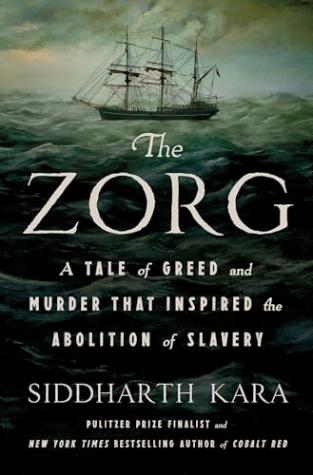
#467
Wild Thing

Wild Thing

ONCE MORE, IN SECRET This isn't your average love story. Five years ago, Dylan Forrester had her heart smashed into smithereens. But while she died inside, other parts of her life thrived. And now? It seems like she has it all. A skyrocketing career, a steady boyfriend and a picture-perfect life. But behind the fake smile, you'll find the truth: she's a chaotic mess. Enter Brax. Six foot three. Tattooed. A human wrecking ball of bad decisions. Oh, and her ex--the one who shattered her into tiny, unfixable pieces. When fate throws them together, buried feelings and bad decisions take control, threatening to blow their lives to bits. Told in gripping alternating timelines, Wild Thing is a razor-sharp dive into love's darker edges, the places where morals are tested, and secrets are exposed.
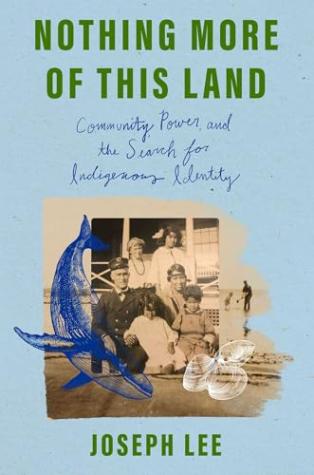
#470
You Have a New Memory

You Have a New Memory

An open-hearted interrogation of our digital selves, braiding cultural criticism, memoir, and narrative musings into an exploration of identity, girlhood, media, tech, nature and "finding the depth and beauty in the fucked-up world we live in" (Phoebe Bridgers) from writer, artist, and conflicted influencer Aiden Arata. If you told Aiden Arata in 1995 that the internet would one day crown her the "meme queen of depression" and mega corporations would fly her to conferences to speak about commodifying one's emotions for views, she would have asked you what a meme was. Now, in her highly anticipated debut, she brings us raw reportage from that liminal space between online and offline worlds, illuminating how we got here and where to go next. In this collection of kaleidoscopic essays, Aiden artfully explores what it means to exist on the internet, from fan fic forums to TikTok. She exposes influencer grifts from the perspective of a grifter, digs into the alluring aesthetic numbness of stay-at-home girlfriend content creators, and interrogates our online fetishization of doom to grapple with the real-world apocalypse. In her own words, "In some ways, the internet feels like a neutral energy in the way that money is a neutral energy, only as virtuous or wicked as the person using it. But then you have to follow that line of inquiry somewhere annoying like, Am I using it for good?" YOU HAVE A NEW MEMORY is a deeply human inventory of the digital sphere, a searing analysis of the present and a prescient assessment of the future. Aiden is the wry, unexpected voice we need to navigate existing simultaneously as creators, consumers, and products in our increasingly braver and newer world.