The Best Books of 2023 – Poetry (A Year-End List Aggregation)

Poetry – 2023

“What are the best Poetry books released in 2023?” We looked at 92 of the top Poetry books, aggregating and ranking them so we could

#1
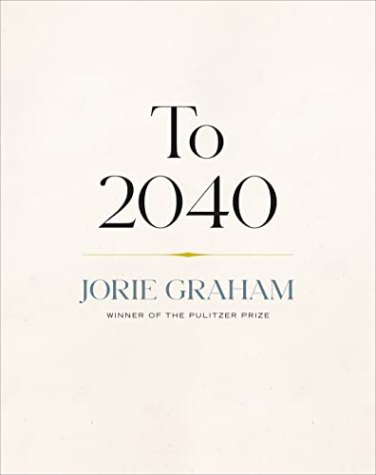
To 2040

To 2040

Jorie Graham’s fifteenth poetry collection, To 2040, opens in question punctuated as fact: “Are we / extinct yet. Who owns / the map.” In these visionary new poems, Graham is part historian, part cartographer as she plots an apocalyptic world where rain must be translated, silence sings louder than speech, and wired birds parrot recordings of their extinct ancestors. In one poem, the speaker is warned by a clairvoyant “the American experiment will end in 2030.” Graham shows us our potentially inevitable future soundtracked by sirens among industrial ruins, contemplating the loss of those who inhabited and named them

#2
Above Ground

Above Ground

A remarkable poetry collection with "inextinguishable generosity and abundant wisdom" (Monica Youn) from Clint Smith, the #1 New York Times bestselling and National Book Critics Circle award-winning author of How the Word Is Passed. Clint Smith's vibrant and compelling new collection traverses the vast emotional terrain of fatherhood, and explores how becoming a parent has recalibrated his sense of the world. There are poems that interrogate the ways our lives are shaped by both personal lineages and historical institutions. There are poems that revel in the wonder of discovering the world anew through the eyes of your children, as they discover it for the first time. There are poems that meditate on what it means to raise a family in a world filled with constant social and political tumult. Above Ground wrestles with how we hold wonder and despair in the same hands, how we carry intimate moments of joy and a collective sense of mourning in the same body. Smith's lyrical, narrative poems bring the reader on a journey not only through the early years of his children's lives, but through the changing world in which they are growing up--through the changing world of which we are all a part. Above Ground is a breathtaking collection that follows Smith's first award-winning book of poetry, Counting Descent.

#3
From From: Poems

From From: Poems

Monica Youn’s From From brilliantly evokes the conflicted consciousness of deracination. If you have no core of “authenticity,” no experience of your so-called homeland, how do you piece together an Asian American identity out of Westerners’ ideas about Asians? Your sense of yourself is part stereotype, part aspiration, part guilt. In this dazzling collection, one sequence deconstructs the sounds and letters of the word “deracinations” to create a sonic landscape of micro- and macroaggressions, assimilation, and self-doubt. A kaleidoscopic personal essay explores the racial positioning of Asian Americans and the epidemic of anti-Asian hate. Several poems titled “Study of Two Figures” anatomize and dissect the Asian other: Midas the striving, nouveau-riche father; Dr. Seuss and the imaginary daughter Chrysanthemum-Pearl he invented while authoring his anti-Japanese propaganda campaign; Pasiphaë, mother of the minotaur, and Sado, the eighteenth-century Korean prince, both condemned to containers allegorical and actual.

#4
Judas Goat: Poems

Judas Goat: Poems

Gabrielle Bates’s electric debut collection Judas Goat plumbs the depths of intimate relationships. The book’s eponymous animal is used to lead sheep to slaughter while its own life is spared, and its harrowing existence echoes through this spellbinding collection of forty poems, which wrestle with betrayal and forced obedience, violence and young womanhood, and the “forbidden felt language” of sexual and sacred love. These poems conjure encounters with figures from scriptures, domesticated animals eyeing the wild, and mothering as a shapeshifting, spectral force; they question what it means to love another person and how to exorcise childhood fears. All the while, the Deep South haunts, and no matter how far away the speaker moves, the South always draws her back home.

#5
Promises of Gold

Promises of Gold

In this groundbreaking collection of poems, José Olivarez explores every kind of love―self, brotherly, romantic, familial, cultural. Grappling with the contradictions of the American Dream with unflinching humanity, he lays bare the ways in which “love is complicated by forces larger than our hearts.”

#6
The Lights: Poems

The Lights: Poems

The Lights is a constellation of verse and prose, voice mails and vignettes, songs and felt silences, that brings the personal and the collective into startling relation. Sometimes the scale is intimate, quiet, and sometimes the poems are sweeping, Orphic experiments in the animation of our common world. Written over a span of fifteen years, The Lights registers the pleasures, risks, and absurdities of making art and family and meaning against a backdrop of interlocking, accelerating crises, but for all their insight and critique, Ben Lerner’s poems ultimately communicate―in their unpredictability, in their intensities―the promise of mysterious sources of lift and illumination.

#7
All Souls

All Souls

In All Souls, Saskia Hamilton transforms compassion, fear, expectation, and memory into art of the highest order. Judgment is suspended as the poems and lyric fragments make an inventory of truths that carry us through night’s reckoning with mortal hope into daylight. But even daylight―with its escapements and unbreakable numbers, “restless, / irregular light and shadow, awakened”―can’t appease the crisis of survival at the heart of this collection. Marked with a new openness and freedom―a new way of saying that is itself a study of what can and can’t be said―the poems give way to Hamilton’s mind, and her unerring descriptions of everyday life: “the asphalt velvety in the rain.”

#8
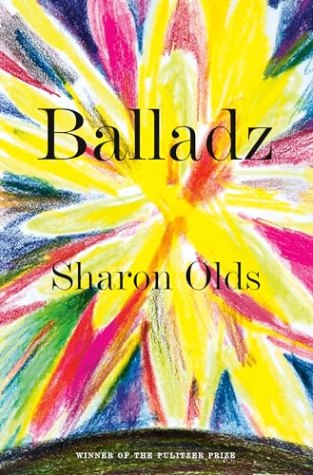
Balladz

Balladz

At the time of have-not, I look at myself in this mirror, writes Olds in this self-scouring, exhilarating volume, which opens with a section of quarantine poems, and at its center boasts what she calls Amherst Balladz (whose syntax honors Emily Dickinson: "she was our Girl - our Woman - / Man enough - for me") and many more in her own contemporary, long-flowing-sentence rhythm. Olds sings of her childhood, young womanhood, and maturity all mixed up together, seeing an early lover in the one who is about to buried; seeing her whiteness, seeing her privilege; seeing her mother (whom her readers will recognize) "flushed exalted at Punishment time"; seeing how we've spoiled the earth but carrying a stray indoor spider carefully back out to the garden.

#9
I Do Everything I’m Told

I Do Everything I’m Told

Restless, contradictory, and witty, Megan Fernandes’ I Do Everything I’m Told explores disobedience and worship, longing and possessiveness, and nights of wandering cities. Its poems span thousands of miles, as a masterful crown of sonnets starts in Shanghai, then moves through Brooklyn, Los Angeles, Lisbon, Palermo, Paris, and Philadelphia―with a speaker who travels solo, adventures with strangers, struggles with the parameters of sexuality, and speculates on desire.

#10
My Head Has a Bellyache: And More Nonsense for Mischievous Kids and Immature Grown-Ups

My Head Has a Bellyache: And More Nonsense for Mischievous Kids and Immature Grown-Ups

I'm Just No Good at Rhyming is this century's most acclaimed comedic poetry collection so far, described as "a worthy heir to Silverstein, Seuss, and even Ogden Nash" (PublishersWeekly), "wildly imaginative...inspired and inspiring" (Kirkus), and as "everything a book for kids should be" (B.J. Novak). Now, Chris Harris delivers all that and more with dazzling new heights of creativity, kooky conundrums, witty wordsmithing, and of course, wacky laugh-out-loud fun!

#11
Remember

Remember

So begins the picture book adaptation of the renowned poem that encourages young readers to reflect on family, nature, and their heritage. In simple and direct language, Harjo, a member of the Mvskoke Nation, urges readers to pay close attention to who they are, the world they were born into, and how all inhabitants on earth are connected. Michaela Goade, drawing from her Tlingit culture, has created vivid illustrations that make the words come alive in an engaging and accessible way.

#12
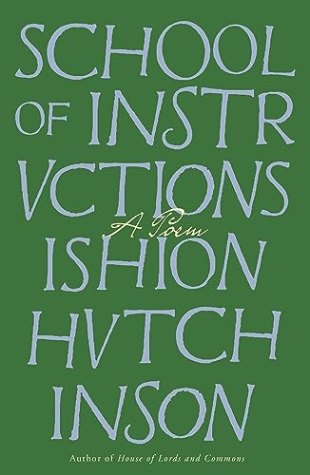
School of Instructions

School of Instructions

Deep-dyed in language both sensuous and biblical, Ishion Hutchinson's School of Instructions memorializes the experience of West Indian soldiers volunteering in British regiments in the Middle East during World War I. The poem narrates the psychic and physical terrors of these young Black fighters in as they struggle against the colonial power they served; their story overlaps with that of Godspeed, a schoolboy living in rural Jamaica of the 1990s. This visionary collision, in which the horizontal, documentary shape of the narrative is interrupted by sudden lyric effusions, unsettles both time and event, mapping great moments of heroism onto the trials of everyday existence It reshapes grand gestures of heroism in a music of supple, vigilant intensity.

#13
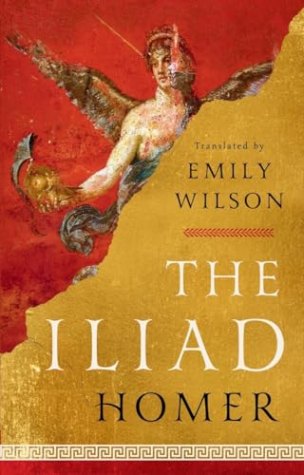
The Iliad

The Iliad

When Emily Wilson’s translation of The Odyssey appeared in 2017―rendering the ancient poem in contemporary language that was “fresh, unpretentious and lean” (Madeline Miller, Washington Post)―critics lauded it as “a revelation” (Susan Chira, New York Times) and “a cultural landmark” (Charlotte Higgins, Guardian) that would forever change how Homer is read in English. Now Wilson has returned with an equally revelatory translation of Homer’s other great epic―the most revered war poem of all time.

#14
The Kingdom of Surfaces

The Kingdom of Surfaces

In The Kingdom of Surfaces, award-winning poet Sally Wen Mao examines art and history―especially the provenance of objects such as porcelain, silk, and pearls―to frame an important conversation on beauty, empire, commodification, and violence. In lyric poems and wide-ranging sequences, Mao interrogates gendered expressions such as the contemporary “leftover women,” which denotes unmarried women, and the historical “castle-toppler,” a term used to describe a concubine whose beauty ruins an emperor and his empire. These poems also explore the permeability of object and subject through the history of Chinese women in America, labor practices around the silk loom, and the ongoing violence against Asian people during the COVID-19 pandemic.

#16
Welcome to the Wonder House

Welcome to the Wonder House

This collection of poems, creatively presented in the format of an allegorical house, will engage anyone who has ever wondered "why?" as it shows young readers that wonder is everywhere--in yourself and in the world around you. Welcome to the Wonder House, a place to explore the cornerstone of every great thinker--a sense of wonder. This Wonder House has many rooms--one for nature, one for quiet, and one for mystery, among others. Each room is filled with poems and objects covering a wide variety of STEAM topics, including geology, paleontology, physics, astronomy, creative writing, and drawing, that will inspire curiosity in young readers. This enchanting book written by award-winning poets Rebecca Kai Dotlich and Georgia Heard both sparks wonder and shows readers how to kindle it in themselves.

#17
A Working Life

A Working Life

From “one of the essential voices in American poetry” (New York Times) comes a rich new collection of expansive, light-footed, and cheerfully foreboding poems oddly in tune with our strange and evolving present The first new collection since Evolution from the prolific poet, activist, and writer Eileen Myles, a “Working Life” unerringly captures the measure of life. Whether alone or in relationship, on city sidewalks or in the country, their lyrics always engage with permanence and mortality, danger and safety, fear and wonder. a “Working Life” is a book transfixed by the everyday: the “sweet accumulation” of birds outside a window, a cup of coffee and a slice of pizza, a lover’s foot on the bed. These poems arise in the close quarters of air travel, the flashing of a landscape through a train window, or simply in a truck tooling around town, or on foot with a dog in all the places that held us during the pandemic lockdowns. Myles’s lines unabashedly sing the happy contradictions of love and sex, spill over with warnings about the not-so future world threatened by climate change and capitalism, and also find transcendent wonder in the landscapes and animals around us, and in the solitary and collective act of caring for one another and our world. With intelligence, heart, and singular vision, a “Working Life” shows Eileen Myles working at a thrilling new pitch of their poetic and philosophical powers.

#19
Beijing Sprawl

Beijing Sprawl

Stories of friendship, failure, and survival from Xu Zechen, author of "some of the most exciting and energized writing coming out of China now." (Paul French) Muyu, a seventeen-year-old from a small village, came to Beijing for his piece of the dream: money, love, a good life. But in the city, daily life for him and his friends--purveyors of fake IDs and counterfeit papers--is a precarious balance of struggle and guile. Surveying the neighborhood from the rooftop of the apartment they all share, the young men play cards, drink beer, and discuss their aspirations, hoping for the best but expecting little more than the comfort of each other's company. In these connected stories translated from Chinese by Eric Abrahamsen and Jeremy Tiang, Xu's characters observe as others like them--workers, students, drifters, and the just plain unlucky--get by the best ways they know how: by jogging excessively, herding pigeons, building cars from scraps, and holding their friends close through the miasma of so-called progress.

#20
Birth Canal

Birth Canal

This dazzling novella from a rising star of Indonesian literature explores generational legacies, lost loves, the damage that war does to men, and the damage that men do to women. In today's Jakarta, an unnamed man tells the story of his lifelong friend Nastiti, and what happened on the day she vanished. In the Dutch East Indies' Semarang, a young Indo-Dutch girl, Rukmini, is captured by the Japanese military and is forced into prostitution. Years later, Arini travels to the Netherlands to share her mother's dark past with a researcher. After the American occupation of Japan in WWII ends, a former war photographer revisits his memories of Hanako, the wife of a traumatised ex-Imperial soldier, but can't escape his own darkness. And in present-day Osaka, a young Indonesian woman, Dara, haunted by her past and struggling to conceive, becomes obsessed with a Japanese porn star. Full of surprising turns, and in stunning prose, Birth Canal tells the interwoven stories of women that span time and history.

#21
Black Observatory: Poems

Black Observatory: Poems

Telescopes aim to observe the light of the cosmos, but Christopher Brean Murray turns his powerful lens toward the strange darkness of human existence in Black Observatory, selected by Dana Levin as winner of the Jake Adam York Prize. With speakers set adrift in mysterious settings--a motel in the middle of a white-sand desert, a house haunted by the ghost of a dead writer, an abandoned settlement high in the mountains, a city that might give way to riotous forest--Black Observatory upends the world we think we know. Here, an accident with a squirrel proves the least bizarre moment of a day that is ordinary in outline only. The future is revealed in a list of odd crimes-to-be. And in a field of grasses, a narrator loses himself in a past and present "human conflagration / of desire and doubt," the "path to a field of unraveling."Unraveling lies at the heart of these poems. Murray picks at the frayed edges of everyday life, spinning new threads and weaving an uncanny and at times unnerving tapestry in its place. He arranges and rearranges images until the mundane becomes distorted: a cloud "stretches and coils and becomes an intestine / embracing the anxious protagonist," thoughts "leap from sagebrush / like jackrabbits into your high beams," a hot black coffee tastes "like runoff from a glacier." In the process, our world emerges in surprising, disquieting relief.Simultaneously comic and tragic, playful and deeply serious, Black Observatory is a singular debut collection, a portrait of reality in penumbra.

#23
But She Is Also Jane

But She Is Also Jane

Conversational, irreverent, and disarmingly honest, the poems of But She Is Also Jane follow the everyday contours of women's lives and the expectations they grapple with. As our speaker approaches middle age, she copes with the loss of loved ones, the realities of an emptying nest, the routine indignities of sexism, and nostalgia for the past. Laura Read's third poetry collection balances discussions of Degas, Vermeer, and Marie Curie with reflections on Sammy Hagar, a troubling outing to a male revue, and memories of watching Mork and Mindy on the night of her mother's hysterectomy.

#25
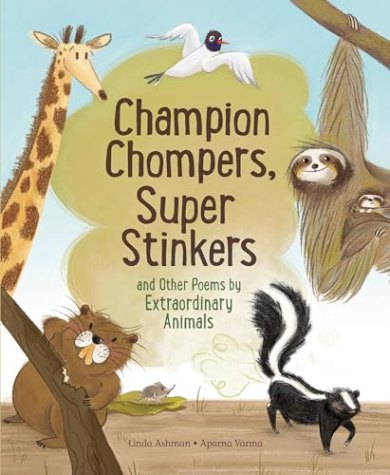
Champion Chompers, Super Stinkers and Other Poems by Extraordinary Animals

Champion Chompers, Super Stinkers and Other Poems by Extraordinary Animals

Kids discover animal extremes through playful poems and fascinating facts. Who’s tops in the animal world? Readers get to find out, as they play a guessing game that uses delightful persona poems to introduce 19 animals who are the best in some way. Each poem offers hints about the identity of an animal and what makes it so amazing. Included are popular categories, such as Biggest Animal Ever (blue whale) and Fastest Short-Distance Runner (cheetah), as well as more unexpected ones, such as Best Engineer (North American beaver) and Longest Tongue (giant anteater). It’s a lively, fun way to learn - for animal lovers of every stripe!

#26
Chrome Valley

Chrome Valley

Boldly lyrical and fiercely honest, Mahogany L. Browne's Chrome Valley offers an intricate portrait of Black womanhood in America. "We praise their names / & the hands that write / Praise the mouth that speaks," she writes in tribute to those who came before her. Browne captures a quintessential girlhood through the pleasures and pangs of young love: the thrill of skating hip to hip at the roller rink, the heat of holding hands in the dark, and, sometimes, the sting of a palm across the cheek. Friendship, too, comes with its own complex yearnings: "you ain't had freedom / 'til you climb on bus 62 / & head to the closest mall / for a good seat at the girl fight." Reflections of Browne's mother, Redbone, bolster the collection with moments of unwavering strength: "give me my mother's bone structure / & her gap tooth slaughter / give me her spine--Redbone got a spine for the world." Other moments explore the inherent anxieties shared among Black mothers, rhythmically intoning names like the tolling of a church bell: "Because Kadiatou Diallo / Because Sybrina Fulton / Because Valeria Bell / Because Mamie Till." The characters in Chrome Valley grapple with the legacies of inherited trauma but also revel in the beauty of the undaunted self-determination passed down from Black woman to Black woman. Transcendent and grounded, funny and furious, Chrome Valley brings depth to a movement, solidifying Mahogany L. Browne as one of the most significant poetic voices of our time.

#28
Congratulations, The Best Is Over!: Essays

Congratulations, The Best Is Over!: Essays

NATIONAL BESTSELLER - The beloved author of Here for It returns with an all-new collection of heartening, deeply relatable, and laugh-out-loud essays about what happens after happily ever after. "Funny, insightful, and hopeful . . . a profound meditation on what it means to come home, and on finding your way again after the chaos of life takes you off your path."--John Paul Brammer, author of Hola Papi! After going viral "reading" the chaotic political news, having one-too-many awkward social encounters, and coming to terms with his intersecting identities, R. Eric Thomas finally knew who he was and where he was going. He was living his best life. But then everything changed. In this collection of insightful and hilarious essays, Thomas moves back to his perpetually misunderstood hometown of Baltimore (a place he never wanted to return, even to be buried) and behaving completely out of character. They say you can't go home again, but what if you and home have changed beyond recognition? From attending his twenty-year high school reunion and discovering another person's face on his name badge, to splattering an urgent care room with blood à la The Shining, to being terrorized by a plague of gay frogs who've overtaken his backyard, Thomas provides the nitty, and sometimes the gritty, details of wrestling with the life he thought he'd left behind while trying to establish a new one. With wit, heart, and hope for the future, Congratulations, The Best Is Over! is the not-so-gentle reminder we all need that even when life doesn't go according to plan, we can still find our way back home.

#30
Couplets: A Love Story

Couplets: A Love Story

"An astounding debut." --Adrienne Raphel, The New York Times Book Review A dazzling love story in poems about one woman's coming-out, coming-of-age, and coming undone A woman lives an ordinary life in Brooklyn. She has a boyfriend. They share a cat. She writes poems in the prevailing style. She also has dreams: of being seduced by a throng of older women, of kissing a friend in a dorm-room closet. But the dreams are private, not real. One night, she meets another woman at a bar, and an escape hatch swings open in the floor of her life. She falls into a consuming affair--into queerness, polyamory, kink, power and loss, humiliation and freedom, and an enormous surge of desire that lets her leave herself behind. Maggie Millner's captivating, seductive debut is a love story in poems that explores obsession, gender, identity, and the art and act of literary transformation. In rhyming couplets and prose vignettes, Couplets chronicles the strictures, structures, and pitfalls of relationships--the mirroring, the pleasing, the small jealousies and disappointments--and how the people we love can show us who we truly are. "An endlessly inventive, wise, exhilarating book." --Garth Greenwell, author of Cleanness and What Belongs to You

#31
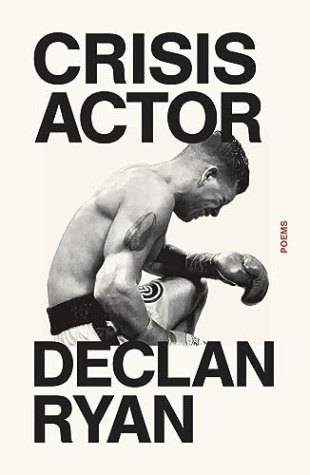
Crisis Actor

Crisis Actor

The brilliant and bracing debut collection of poetry from Declan Ryan: a writer, critic, and fierce new literary voice. Declan Ryan's Crisis Actor chronicles various kinds of failures and farewells. It is peopled by faded heroes and deferential devotees, a hanged donkey and a bloated rat, solitary bachelors and disillusioned youths—these are the watchers, not the players. The poems are awash in rueful self-accusation and laconic skepticism. There are touching elegies, reportage, and bruised, wary replayings. A blistering sequence about boxers and their fates weaves through the collection. The overwhelming sense is of life going on elsewhere, the halcyon days and brightness of years long past. This is the aftermath of being one who—in Matthew Arnold’s words—"has reached his utmost limits and finds . . . himself far less than he had imagined himself." But there are still flashes of camaraderie, of stars aligning: lunchtimes in sunlit garden squares, languorous afternoons in pubs cheering for hard-won triumphs. These precious, precarious moments point to how we might reclaim potential, discover human connection in times of defeat or despair, and reach toward grace and redemption.

#33
Disruptions: Stories

Disruptions: Stories

An exquisite new collection from a Pulitzer Prize-winning master of the short story, the culmination of a five-decade career: work that takes us beneath the placid surface of suburban life into the elusive strangeness of the everyday Here are eighteen stories of astonishing range and precision. A housewife drinks alone in her Connecticut living room. A guillotine glimmers above a sleepy town green. A pre-recorded customer service message sends a caller into a reverie of unspeakable yearning. With the deft touch and funhouse-mirror perspectives for which he has won countless admirers, Steven Millhauser gives us the towns, marriages, and families of a quintessential American lifestyle that is at once instantly recognizable and profoundly unsettling. Disruptions is a collection of provocative, bracingly original new work from a writer at the peak of his form.

#34
Dragon Palace

Dragon Palace

"How can a person resist?"-The Paris ReviewStories from a Japanese master of transformative fiction, where reality, myth, and human foibles meet shifting dimensions of gender, biology, and destiny.From the bestselling author of Strange Weather in Tokyo comes this otherworldly collection of eight stories, each a masterpiece of transformation, infused with humor, sex, and the universal search for love and beauty--in a world where the laws of time and space, and even species boundaries, don't apply. Meet a shape-shifting con man, a goddess who uses sex to control her followers, an elderly man possessed by a fox spirit, a woman who falls in love with her 400-year-old ancestor, a kitchen god with three faces in a weasel-infested apartment block, moles who provide underground sanctuary for humans who have lost the will to live, a man nurtured through life by his seven extraordinary sisters, and a woman who is handed from husband to husband until she is finally able to return to the sea.

#38
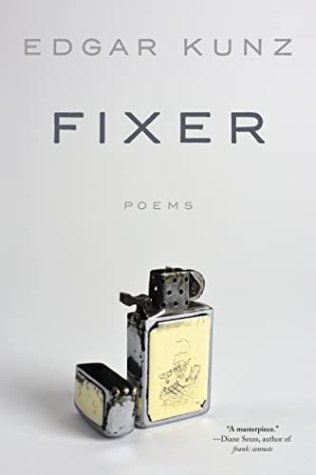
Fixer: Poems

Fixer: Poems

A New York Times Editors’ Choice book from the author of the award-winning Tap Out – “a gritty, insightful debut” (Washington Post) – Edgar Kunz’s second poetry collection propels the reader across the shifting terrain of late-capitalist America. Temp jobs, conspiracy theories, squatters, talk therapy, urban gardening, the robot revolution: this collection fixes its eye on the strangeness of labor, through poems that are searching, keen, and wry. The virtuosic central sequence explores the untimely death of the poet’s estranged father, a handyman and addict, and the brothers left to sort through the detritus of a life long lost to them. Through lyrical, darkly humorous vignettes, Kunz asks what it costs to build a home and a love that not only lasts but sustains.

#39
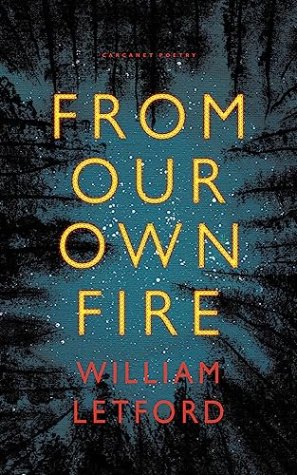
From Our Own Fire

From Our Own Fire

This prose and poetry tour de force of storytelling has the narrative punch of a novel. It is a new departure for the poet, and for poetry itself. It takes the reader into the not-too-distant future: an artificial intelligence rules the world, and a working-class family use their wits to live off the land. William Letford blends prose and his inimitable poetry: sci-fi and hunter-gatherer are merged into a coherent story in the pages of a stonemason's journal. 'You won't see the best of a Macallum until you put something in their fist, ' says Letford, introducing the family. 'Joiner, nurse, stonemason, hairdresser, plumber, gardener. Lorna even repairs vintage watches. That's the quantum mechanics of manual labour.' We join the Macallum family as they combine their skills to reconnect with the land in a world where the empowered are hell-bent on creating a new utopia. Joe, the stonemason, records in his journal the struggles and successes of a carnival of characters. They hurl grace and humour at a future that is being shaped by a single, powerful entity. Letford's storytelling is gritty and beautiful. 'A Macallum, it seems to me now, is made to move, to think on the run. The sofas in our houses were sinkholes. The actors on a fifty-two-inch flat screen - shadows on a cave wall.'

#41
Girlfriends

Girlfriends

In seven light-filled prisms of short stories, Emily Zhou chronicles modern queer life with uncompromising and hilarious lucidity. Attending to the intimacy of Gen Z women's lives, these stories move from the provinces to the metropolis, from chaotic student accommodation to insecure jobs, from parties to dates to the nights after, from haplessness to some kind of power. Funny and devastating, like a trans Mary McCarthy, Zhou depicts with shocking precision the choices and shifts through which we work on each other and ourselves. Tender, merciless, and gracious, Girlfriends is a breath of fresh air.

#43
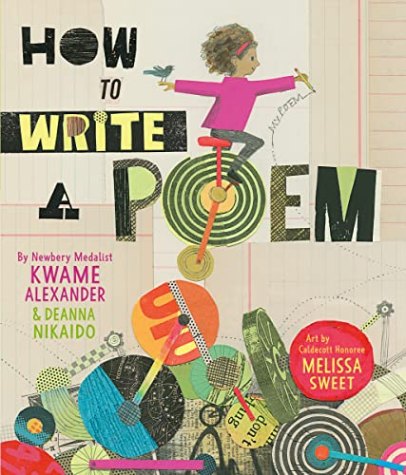
How to Write a Poem

How to Write a Poem

In this evocative and playful companion to their New York Times bestselling picture book How to Read a Book, Newbery Medalist Kwame Alexander teams up with poet Deanna Nikaido and Caldecott Honoree Melissa Sweet to celebrate the magic of discovering your very own poetry in the world around you. Begin with a questionlike an acornwaiting for spring. From this first stanza, readers are invited to pay attention--and to see that paying attention itself is poetry. Kwame Alexander and Deanna Nikaido's playful text and Melissa Sweet's dynamic, inventive artwork are paired together to encourage readers to listen, feel, and discover the words that dance in the world around them--poems just waiting to be written down.

#45
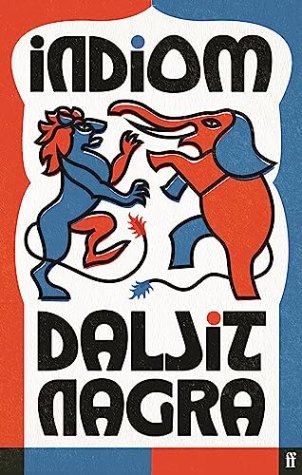
indiom

indiom

A cast of 'Indic-heritage poets' meets to perform poems and discuss the future of poetry. indiom engages eclectic, often Rabelaisian styles on subjects as various as the Indian poet Nissim Ezekiel, Shakespearean comedy, Under Milk Wood, The Simpsons and Newcastle United. Daljit Nagra's mock epic scrutinises the legacies of Empire and issues such as power and status, casteism and colourism, mimicry and mockery. What is Britishness now? How can humour help us survive hardship? The result is a capacious 'talkie'/poem/play of resistance and redress whose ludic structures defy boundaries: a story of intertextual and misplaced identities, gods and miracles, celluloid tragedy and blushing romantic desire amid an awkwardly rolling cricket ball and rioting poodles.

#47
Love and Other Flight Delays

Love and Other Flight Delays

One of Amazon's Best Romances of March! Love takes flight in a collection of sexy, fun novellas all set at the airport from the acclaimed author of The Fastest Way to Fall. The Love Connection An airport pet groomer meets her frequent-flier crush and finds herself in a fake-dating situation with a professional risk assessor who moonlights as a romance author. The Missed Connection Two strangers share a romantic night only to discover months later that they're professional rivals about to embark on an extended business trip together in this grumpy-meets-sunshine romance. The Sweetest Connection Two best friends have one week to return a lost love letter found in a candy store at the airport--and work up the courage to confess the deep feelings between them--before one of them leaves the country.

#50
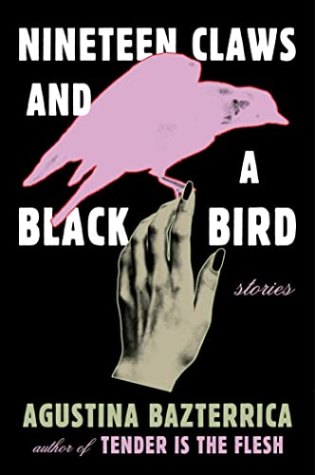
Nineteen Claws and a Black Bird: Stories

Nineteen Claws and a Black Bird: Stories

A collection of nineteen dark, wildly imaginative short stories from the author of the award-winning TikTok sensation Tender Is the Flesh. From celebrated author Agustina Bazterrica, this collection of nineteen brutal, darkly funny short stories takes into our deepest fears and through our most disturbing fantasies. Through stories about violence, alienation, and dystopia, Bazterrica's vision of the human experience emerges in complex, unexpected ways--often unsettling, sometimes thrilling, and always profound. In "Roberto," a girl claims to have a rabbit between her legs. A woman's neighbor jumps to his death in "A Light, Swift, and Monstrous Sound," and in "Candy Pink," a woman fails to contend with a difficult breakup in five easy steps. Written in Bazterrica's signature clever, vivid style, these stories question love, friendship, family relationships, and unspeakable desires.

#51
No Sweet Without Brine

No Sweet Without Brine

Cynthia Manick's poetry collection personifies love of self and culture through fresh observations and bitter truths voiced with breathtaking lyricism.No Sweet Without Brine is both a soulful and celebratory collection that summons sticky sweet memories with an acrid aftertaste of deep thought. Satisfying moments are captured in odes to Idris Elba's dulcet tones on a meditation app and the satisfaction of half-priced Entenmann's poundcake; in childlike observations of parental Black love, the coveted female form on Jet Magazine covers, and the desire for Zamunda to be a real place full of Black joy. The sour taps into an analysis of reclusiveness, silencing catcalls from men on the street, and detailed recipes and advice to the Black girls forced to endow themselves with armor against the world.Cynthia Manick's latest is a playlist of everyday life, introverted thoughts, familial bonds, and social commentary. In piercing language, she traces the circle of life for a narrator who dares to exist between youthful remembrances and adulthood realities. Each poem in No Sweet Without Brine is a reminder that a hint of sorrow makes the celebration and recognition of the glory of Blackness in all ways, and through all people, that much sweeter.

#52
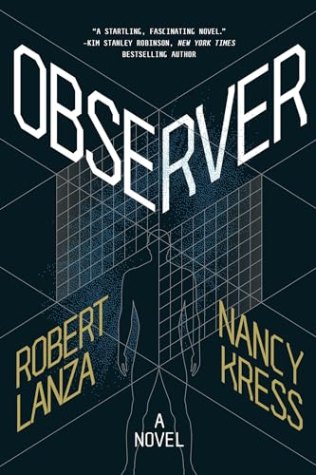
Observer

Observer

#1 NATIONAL BESTSELLER "Mind-bending ... A novel full of life-affirming ideas." - Kirkus Reviews (Starred Review)"The cutting edge of science tipping into something new and marvelous ... a startling, fascinating novel." - KIM STANLEY ROBINSON, New York Timesbestselling author "Real science and limitless imagination combine in a thrilling story you won't soon forget." - ROBIN COOK, #1New York Timesbestselling author of Coma(and 37 other international bestsellers)"Brilliant ... A riveting and moving story." - RHONDA BYRNE, #1New York Timesbestselling author ofThe Secret.Caro Soames-Watkins, a talented neurosurgeon whose career has been upended by controversy, is jobless, broke, and the sole supporter of her sister, a single mother with a severely disabled child.When she receives a strange job offer from Nobel Prize-winning scientist Sam Watkins, a great uncle she barely knows, desperation forces her to take it in spite of serious suspicions.Watkins has built a mysterious medical facility in the Caribbean to conduct research into the nature of consciousness, reality, and life after death. Helped in his mission by his old friend, eminent physicist George Weigert, and young tech entrepreneur Julian Dey, Sam has gone far beyond curing the body to develop a technology that could solve the riddl

#53
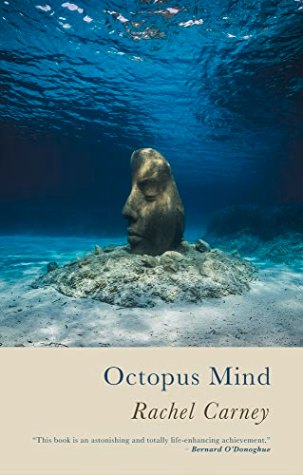
Octopus Mind

Octopus Mind

Octopus Mind plays with an array of rich and original metaphors to explore the intricacies of neurodiversity, perception and the human mind. These poems articulate the desire to understand and be understood by oneself and others in a complex world. They observe the nuances of creativity, art, relationships, and self-expression through the lens of neurodiversity, reflecting on the poet's experience of being diagnosed with dyspraxia as an adult. They delve into the challenges of neurodiversity, but also reveal its gifts. Poems respond to visual artists like Gwen John, whose paintings break new ground for women representing their own visions of themselves. Other poems suggest that this can be a struggle however, as Pablo Picasso paints not a woman but his own despair in 'Blue Nude', while Elizabeth Siddal reflects on her own image, fetishized by the Pre-Raphaelite painters, and Henri Rousseau's painting becomes an outlet for self-deception and frustration. Some of the most stunning poems in this collection perform a kind of magic or sleight of hand, as dyspraxia is explored through unique and remarkable metaphors, including a series of artefacts in a museum, a walk along the seashore, and a swaying tree. The 'Octopus Mind' evokes the possibilities of what it means to be human, through obsession, self-deception, realisation, and acceptance. The speaker in Octopus Mind is endearingly humble and we journey with them beyond self-criticism to reclaiming the self. In 'Growing', the narrator declares 'I will grow // into myself, climbing, steady, / grip by grip, leaf by leaf'. In 'Understood' the narrator describes the complex process of re-imagining one's place in the world, armed with new knowledge: 'Slowly, we adjust / our own soft ignorance / unroll our prejudice / in gentle waves.' "A poet of multiple uncanny self-portraits, of the 'octopus mind', who explores the gaps between mind and body, and body and world, with deft, diverse diagnoses."Damian Walford Davies "Extraordinary poems of self-encounter, of divergence, of bruised bodies out of balance with themselves, laid bare – and of new-found identities, and joyous release." Richard Marggraf Turley "Rachel Carney's debut collection delights in its curiosity and surrealism. This is a collection that 'swims out into deep ocean currents' to explore the workings of the mind and the impacts of this on the self." Katherine Stansfield

#55
Pig

Pig

From the brilliantly talented National Poetry Series and James Laughlin Award winner comes a third collection of poems that uses the humble pig as a lens to explore the body, faith, desire, and power. This imaginative and singular poetry collection interrogates the broadest ideas surrounding the humble pig--farm animal, men/masculinity, police and state violence, desire, queerness, global food systems, religion/Judaism and law--to reimagine various chaotic histories of the body, faith, ecology, desire, hygiene, and power. Sam Sax draws on autobiography and history to create poems that explore topics ranging from drag queens and Miss Piggy to pig farming and hog lagoons. Collectively, these poems, borne of Sax's obsession, offer a varied picture of what it means to be a human being. Delivered in a variety of forms, infused with humor, grace, sadness, and anger, Pig is a wholly unique collection from a virtuosic and original poet.

#57
Quiet: Poems

Quiet: Poems

A black British poet making her thrilling American debut explores the importance of "quiet" in producing forms of community, resistance, and love. "Bulley's stunning poems draw you in with their melodious versatility, intellect and dexterity; [they] perfectly embody the political through the personal."--Bernardine Evaristo, Booker Prize-winning author of Girl, Woman, Other How does one encounter meaning amid so many kinds of noise? What is quiet when it isn't silence? Where does quiet exist--and what liberating potential might it hold? These poems dwell on ideas of black interiority, intimacy, and selfhood, and they celebrate as fiercely as they mourn. With a metaphysical edge and a formal restlessness attuned to both the sonics and the inadequacies of language, Quiet navigates the tension between the impulse to guard one's inner life and the knowledge that, as Audre Lorde writes, "your silence will not protect you."

#58
Quietly Hostile: Essays

Quietly Hostile: Essays

NEW YORK TIMES BESTSELLER - A GLAMOUR BEST BOOK OF THE YEAR - A hilarious new essay collection from Samantha Irby "engages readers with her characteristic combination of laugh-out-loud moments, heartfelt passages and plenty of awkward experiences.... Quietly Hostile will delight established fans and newcomers alike (Parade). "Brilliant and one of the funniest people I've ever read." --Roxane Gay - "The king of sparkling misanthropy and tender, loving dread." --Jia Tolentino "Absolutely hilarious.... If you are feeling down, or you feel like you haven't read anything you've loved in a long time, all you need is Samantha Irby.... She will make you laugh on every page." --Emma Straub, bestselling author of This Time Tomorrow, on The Today Show Samantha Irby's career has taken her to new heights. She dodges calls from Hollywood and flop sweats on the red carpet at premieres (well, one premiere). But nothing is ever as it seems online, where she can crop out all the ugly parts. Irby got a lot of weird emails about Carrie Bradshaw, and not only is there diarrhea to avoid, but now--anaphylactic shock. She is turned away from restaurants for being inappropriately dressed and looks for the best ways to cope, i.e., reveling in the offerings of QVC and adopting a deranged pandemic dog. Quietly Hostile makes light as Irby takes us on another outrageously funny tour of all the gory details that make up the true portrait of a life behind the screenshotted depression memes. Relatable, poignant, and uproarious, once again, Irby is the tonic we all need to get by. A BEST BOOK from Vogue, Esquire, PopSugar, Glamour, The Skimm, and more

#59
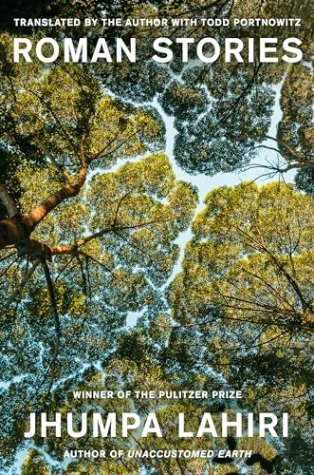
Roman Stories

Roman Stories

The first short story collection by the Pulitzer Prize-winning author and master of the form since her number one New York Times best seller Unaccustomed Earth - Rome--metropolis and monument, suspended between past and future, multi-faceted and metaphysical--is the protagonist, not the setting, of these nine stories "A delectable, sun-washed treat . . . the stories have the beating heart of the city itself, a place of magnificent decay and vibrant, varied life." --Vogue In "The Boundary," one family vacations in the Roman countryside, though we see their lives through the eyes of the caretaker's daughter, who nurses a wound from her family's immigrant past. In "P's Parties," a Roman couple, now empty nesters, finds comfort and community with foreigners at their friend's yearly birthday gathering--until the husband crosses a line. And in "The Steps," on a public staircase that connects two neighborhoods and the residents who climb up and down it, we see Italy's capital in all of its social and cultural variegations, filled with the tensions of a changing city: visibility and invisibility, random acts of aggression, the challenge of straddling worlds and cultures, and the meaning of home. These are splendid, searching stories, written in Jhumpa Lahiri's adopted language of Italian and seamlessly translated by the author and by Knopf editor Todd Portnowitz. Stories steeped in the moods of Italian master Alberto Moravia and guided, in the concluding tale, by the ineluctable ghost of Dante Alighieri, whose words lead the protagonist toward a new way of life.

#60
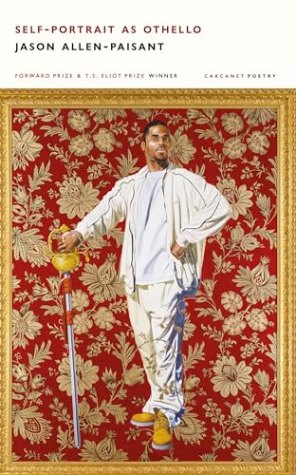
Self-Portrait As Othello

Self-Portrait As Othello

The interlocking poems of this collection imagine Othello in the urban landscapes of modern London, Paris and Venice and invent the kinds of narrative he might tell about his intersecting identities. Poetic memoir and ekphrastic experiment, Self-Portrait as Othello focuses on a character at once fictional and real. Othello here represents a structure of feeling that was emerging in seventeenth-century Venice, and is still with us

#61
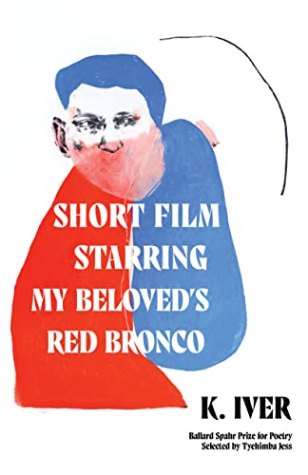
Short Film Starring My Beloved’s Red Bronco

Short Film Starring My Beloved’s Red Bronco

Short Film Starring My Beloved's Red Bronco, selected by Tyehimba Jess for the 2022 Ballard Spahr Prize for Poetry, is an aching tribute to the power and precarity of queer love. In small-town Mississippi, before the aughts, a child "assigned 'woman'" and a boy "forced to call / himself a girl" love one another-from afar, behind closed doors, in motels. The child survives an injurious mother and the beast-shaped men she brings home; the boy becomes a soldier. Years later, the boy--the eponymous beloved, Missy--dies by suicide, kicking up a riptide of memory. This is where K. Iver writes, at the confluence of love poem and elegy. "I say to the water if you were here, / you'd be here." With cinematic precision, they conjure dorm-room landlines, the lingering sweetness of shared candy, a ballet strap and "soft / fingers tracing it, afraid to touch / the skin." They punctuate depictions of familial abuse and the cruel politics of the Deep South with fairy tales: a girl who endures abuse refusing to grow into a mother who inflicts it herself, queer youth kissing fearlessly, bodies transcending the violence of a reductive gender binary. In these fantasies, "there's no / reason to leave town no hidden / torches waiting for us to fall asleep." Short Film Starring My Beloved's Red Bronco sees us through a particular kind of grief--one so relentless, it's precious. It presses us, also, to continue advocating for a world in which queer love fantasies become reality and queer love poems "swaddle the impossible / contours of joy."

#62
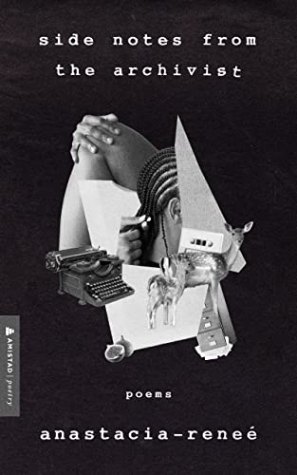
Side Notes from the Archivist: Poems

Side Notes from the Archivist: Poems

The award-winning, genre-crossing writer demonstrates her power as a funkadelic and formidable feminist voice in this rich and beautiful collection of verse and image--a multi-part retrospective that traverses time, space, and reality to illuminate the expansiveness of Black femme lives.Side Notes from the Archivist is a preservation of Black culture viewed through a feminist lens. The Archivist leads readers through poems that epitomize youthful renditions of a Black girl coming of age in Philadelphia's pre-funk '80s; episodic adventures of "the Black Girl" whose life is depicted through the white gaze; and selections of verse evincing affection for self and testimony to the magnificence within Black femme culture at-large.Every poem in Side Notes elevates and honestly illustrates the buoyancy of Blackness and the calamity of Black lives on earth. In her uniquely embracing and experimental style, Anastacia-Reneé documents these truths as celebrations of diverse subjects, from Solid Gold to halal hotdogs; as homages and reflections on iconic images, from Marsha P. Johnson to Aunt Jemima; and as critiques of systemic oppression forcing some to countdown their last heartbeat.From internet "Fame" to the toxicity of the white gaze, Side Notes from the Archivist cements Anastacia-Reneé role as a leading light in the womanist movement--an artist whose work is in conversation with advocates of Black culture and thought such as Audre Lorde, Amiri Baraka, and Nikki Giovanni.

#63
Sidle Creek

Sidle Creek

"Sidle Creek is one of the best story collections I've read in a long time." - Ron Rash, New York Times bestselling author of Serena Set in the bruised, mined, and timbered hills of Appalachia in western Pennsylvania, Sidle Creek is a tender, truthful exploration of a small town and the people who live there, told by a brilliant new voice in fiction. In Sidle Creek, McIlwain skillfully interrogates the myths and stereotypes of the mining, mill, and farming towns where she grew up. With stories that take place in diners and dive bars, town halls and bait shops, McIlwain's writing explores themes of class, work, health, and trauma, and the unexpected human connections of small, close-knit communities. All the while, the wild beauty of the natural world weaves its way in, a source of the town's livelihood - and vulnerable to natural resource exploitation. With an alchemic blend of taut prose, gorgeous imagery, and deep sensitivity for all of the living beings within its pages, Sidle Creek will sit snugly on bookshelves between Annie Proulx, Joy Williams, and Louise Erdrich.

#65
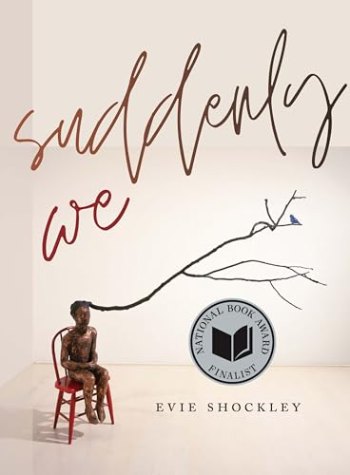
Suddenly We

Suddenly We

Finalist for the 2024 National Book Award for Poetry In her new poetry collection, Evie Shockley mobilizes visual art, sound, and multilayered language to chart routes towards openings for the collective dreaming of a more capacious "we." How do we navigate between the urgency of our own becoming and the imperative insight that whoever we are, we are in relation to each other? Beginning with the visionary art of Black women like Alison Saar and Alma Thomas, Shockley's poems draw and forge a widening constellation of connections that help make visible the interdependence of everyone and everything on Earth. perched i am black, comely, a girl on the cusp of desire. my dangling toes take the rest the rest of my body refuses. spine upright, my pose proposes anticipation. i poise in copper-colored tension, intent on manifesting my soul in the discouraging world. under the rough eyes of others, i stiffen. if i must be hard, it will be as a tree, alive with change. inside me, a love of beauty rises like sap, sprouts from my scalp and stretches forth. i send out my song, an aria blue and feathered, and grow toward it, choirs bare, but soon to bud. i am black and becoming. —after Alison Saar's Blue Bird

#67
Temple Folk

Temple Folk

Finalist for the 2023 National Book Award for Fiction A groundbreaking debut collection portraying the lived experiences of Black Muslims grappling with faith, family, and freedom in America. In Temple Folk, Black Muslims contemplate the convictions of their race, religion, economics, politics, and sexuality in America. The ten stories in this collection contribute to the bounty of diverse narratives about Black life by intimately portraying the experiences of a community that resists the mainstream culture to which they are expected to accept and aspire to while functioning within the country in which they are born. In "Due North," an obedient daughter struggles to understand why she's haunted by the spirit of her recently deceased father. In "Who's Down?" a father, after a brief affair with vegetarianism, conspires with his daughter to order him a double cheeseburger. In "Candy for Hanif" a mother's routine trip to the store for her disabled son takes an unlikely turn when she reflects on a near-death experience. In "Woman in Niqab," a daughter's suspicion of her father's infidelity prompts her to wear her hair in public. In "New Mexico," a federal agent tasked with spying on a high-ranking member of the Nation of Islam grapples with his responsibilities closer to home. With an unflinching eye for the contradictions between what these characters profess to believe and what they do, Temple Folk accomplishes the rare feat of presenting moral failures with compassion, nuance, and humor to remind us that while perfection is what many of us strive for, it's the errors that make us human.

#68
The Beast You Are: Stories

The Beast You Are: Stories

A haunting collection of short fiction from the bestselling author of The Pallbearers Club, A Head Full of Ghosts, and The Cabin at the End of the World. Paul Tremblay has won widespread acclaim for illuminating the dark horrors of the mind in novels and stories that push the boundaries of storytelling itself. The fifteen pieces in this brilliant collection, The Beast You Are, are all monsters of a kind, ready to loudly (and lovingly) smash through your head and into your heart.In "The Dead Thing," a middle-schooler struggles to deal with the aftermath of her parents' substance addictions and split. One day, her little brother claims he found a shoebox with "the dead thing" inside. He won't show it to her and he won't let the box out of his sight. In "The Last Conversation," a person wakes in a sterile, white room and begins to receive instructions via intercom from a woman named Anne. When they are finally allowed to leave the room to complete a task, what they find is as shocking as it is heartbreaking.The title novella, "The Beast You Are," is a mini epic in which the destinies and secrets of a village, a dog, and a cat are intertwined with a giant monster that returns to wreak havoc every thirty years.A masterpiece of literary horror and psychological suspense, The Beast You Are is a fearlessly imagined collection from one of the most electrifying and innovative writers working today.

#69
The Blue House: Collected Works of Tomas Tranströmer

The Blue House: Collected Works of Tomas Tranströmer

Nobel Prize-winner Tomas Tranströmer explores the personal and political, the ecological and existential, through poems that expand like the widening scope of a telephoto lens. With slow strokes and subtle, rich lines, The Blue House: Collected Works of Tomas Tranströmer is evidence of a Nobel Prize-winning poet tracing the world with his pen. A stunning testament to an illustrious career, The Blue House gathers poems and writings from Tranströmer's fourteen collections into a single book. Original Swedish sits alongside their English translations as Patty Crane translates his words into revelatory language acute in the understanding of human change and loss. Subtle in politics and exact in imagery, the poems of The Blue House range from agile haiku to cinematic prose. Social phenomena are observed in rich detail--a "dictator's bust" presiding over a train car of doomed passengers--and the collection is propelled by empathy and curiosity. Under Tranströmer's watchful eye, no subject is overlooked: Milij Balakirev, the Russian composer; Nils Dacke, the Swedish peasant who led a rebellion against the king; and him, the stranger who forgets his name by the roadside. From the personal to the political to the existential, Tranströmer's poems act as a telephoto lens, granting us reinvigorated access to the world we live in.

#71
The End of the World Is a Cul de Sac

The End of the World Is a Cul de Sac

Brilliant, dark stories of women's lives by "a very major talent" (Joseph O'Connor, Irish Times) In these visceral, stunningly crafted stories by the author of the much-acclaimed Trespasses, women's lives are etched by poverty--material, emotional, sexual--but also splashed by beauty, sometimes even joy, as they search for the good in the cards they've been dealt. A wife is abandoned by her new husband in a derelict housing estate, with blood on her hands. An expectant mother's worst fears about her husband's entanglement with a teenage girl are confirmed. A sister is tormented by visions of the man her brother murdered during the Troubles. A woman struggles to forgive herself after an abortion threatens to destroy her marriage. Plumbing the depths of intimacy, violence, and redemption, these stories are "dazzling, heartbreaking . . . keen to share the lessons of a lifetime" (Guardian).

#72
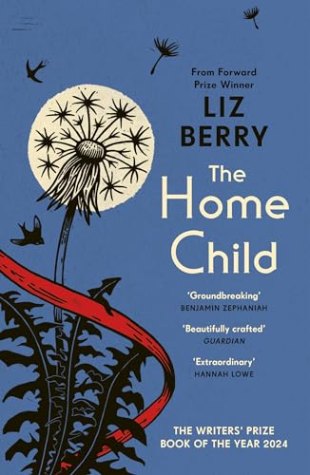
The Home Child

The Home Child

*WINNER OF THE WRITERS' PRIZE - BOOK OF THE YEAR* Inspired by a true story, The Home Child is a beautiful novel-in-verse about a child far from home ‘Ground-breaking’ Benjamin Zephaniah ‘Beautifully crafted’ Guardian ‘Extraordinary’ Hannah Lowe In 1908, Eliza Showell, twelve years old and newly orphaned, boards a ship that will carry her from the slums of the Black Country to rural Nova Scotia. She will never return or see her family again. With nothing to call her own, the wild beauty of her surroundings is the only solace Eliza has – until another Home Child, a boy, arrives at the farm and changes everything. Inspired by the true story of Liz Berry’s great aunt, this spellbinding novel in verse is an exquisite portrait of a girl far from home. ‘One of the outstanding books of this year. Although this is a historical tale its resonance is timeless’ Sunday Times ‘Deeply moving. A graceful, delicate book, stunning in its emotional depth... I know I'll return to it many times in the future’ Megan Hunter, author of The End We Start From

#73
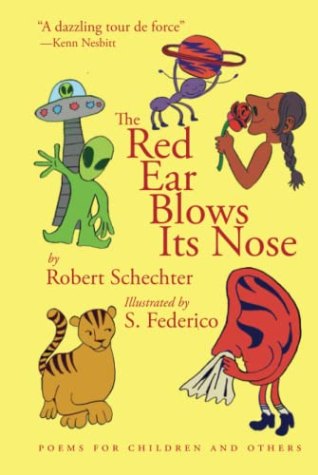
The Red Ear Blows Its Nose: Poems for Children and Others

The Red Ear Blows Its Nose: Poems for Children and Others

The Red Ear Blows Its Nose dishes out uproarious hilarity, cutting wit, wordplay, and sobering wisdom in an illustrated collection of poems for children and others. It considers thinking and the brain, identity and what it means to be a person, nature and the seasons, and assorted creatures, including a horse who says “Moo.” This debut collection from Robert Schechter proves to be the work of a master, complemented by S. Federico’s stunning illustrations, which visually leap off the page. This collection is an experience not to be missed. PRAISE FOR THE RED EAR BLOWS ITS NOSE: Short, punchy, and clever poems, as if Shel Silverstein and Ogden Nash had a baby. Some are only two lines long. My favorite: “When livestock salesmen cannot sleep, / do they lie in bed discounting sheep?” Wow! —Jane Yolen, author of the How Do Dinosaurs books What a splendid collection of poetry. Here are poems that fizz with imagination, wisdom, and an infectious exuberance at the sheer wonder of words. Beautifully crafted and terrifically funny, this is a book for children (and grown-ups) to return to again and again. —Kate Wakeling, winner, 2017 CLiPPA (UK) You’ll feel like a “cool in-the-know one” when you read Robert Schechter’s clever collection of poems. This book will open your mind up to a world where foxes cartwheel through trombones, a horse might choose to moo, and you can dive into a lake filled with yellow puffs of popcorn. Children who are reading (and thinking) beyond their age level will love it; you will, too. If you’re a fan of John Ciardi and Richard Wilbur and X. J. Kennedy, or Jack Prelutsky and J. Patrick Lewis and Kenn Nesbitt, you’ll want to add Robert Schechter to your list of favorite poets! —Janet Wong, winner of the 2021 NCTE Award for Excellence in Poetry for Children The Red Ear Blows Its Nose is a dazzling tour de force of ingenious poems that sparkle with Schechter’s witty, wonderful wordplay. Read this book. Your brain will thank you. Mine did. —Kenn Nesbitt, former Children’s Poet Laureate (2013–15) Robert Schechter’s poems sing with irrepressible joy. His humor, wit, and verbal dexterity make The Red Ear Blows Its Nose a book that both children and adults will want to read over and over and over again. He is clearly one of the most accomplished poets writing for children today. —Valerie Bloom MBE, winner, 2022 CLiPPA (UK) Schechter’s The Red Ear Blows Its Nose is a masterful collection from a masterful poet. Not only does every poem take you somewhere new, spinning ideas and jokes and thoughts and dreams and facts and observations on the tip of its finger like a Harlem Globetrotter at a showing-off convention, but it does so with such surefootedness, such deft rhythm and rhyme, that the poems are joys to read aloud. They sing themselves out of your mouth and will stick in the minds of kids and grown-ups everywhere they get heard. Schechter, it seems to me, is way up there with the great American kids’ poets, a real Shel Silverstein for today’s generation. —A. F. Harrold It’s entertaining—sometimes hilarious, sometimes beautiful, always thought-provoking—and nothing short of brilliant. —Diana Murray, author of City Shapes, Summer Color! and the Unicorn Day series

#74
The Ruins of Nostalgia

The Ruins of Nostalgia

New work from one of the most compelling and transformative writers of the contemporary prose poem What is it to feel nostalgia, to be skeptical of it yet cleave intently to the complex truths of feeling and thought? In a series of 64 gorgeous, ramifying, unsettling prose poems addressing late-twentieth- and twenty-first century experience and its discontents, The Ruins of Nostalgia offers a strikingly original exploration of the misunderstood phenomenon of nostalgia as both feeling-state and historical phenomenon. Each poem, also titled The Ruins of Nostalgia, is a kind of lyrical mini-essay, playful, passionate, analytic. Some poems take a location, memory, conceit, or object as their theme. Throughout the series, the poems recognize and celebrate the nostalgias they ironize, which are in turn celebrated and then ironized again. Written often in the fictional persona of the first-person plural, The Ruins of Nostalgia explores the rich territory where individual response meets a collective phenomenon. [sample poem] The Ruins of Nostalgia 13 Where once there had been a low-end stationery store minded by an elderly beauty queen, there was now a store for high-end espresso machines minded by nobody. Where once there had been an illegal beer garden in a weedy lot, there was now a complex of luxury lofts with Parisian-style ivory façades. Where once there had been a bookstore and a bike shop and a bakery, there was now a wax museum for tourists. Where once there had been an empty lot there was now a building. Where once there had been an empty lot there was now a building. Where once there had been an empty lot there was now a building. Where once there had been an empty lot there was now a building. Where once there had been farms there were now subdivisions. Where once there had been subdivisions there were now sub-subdivisions. We lived in a sub-subdivision of a subdivision. We ourselves had become subdivided--where once we had merely been of two minds. * Where once there had been a river there was now a road. A vocal local group had started a movement to break up the road and "daylight" the river, which still flowed, in the dark, underneath the road. * Could we daylight the farms, the empty lots, the stationery store, the elderly beauty queen, the city we moved to? Was it still flowing somewhere, under the luxury lofts, deliquescing in the dark, inhabited by our luxury selves, not yet subdivided, because not yet whole? * Could we daylight the ruins of nostalgia?

#77
The Ugly History of Beautiful Things: Essays on Desire and Consumption

The Ugly History of Beautiful Things: Essays on Desire and Consumption

Paris Review contributor Katy Kelleher explores our obsession with gorgeous things, unveiling the fraught histories of makeup, flowers, perfume, silk, and other beautiful objects. April recommended reading by the New York Times Book Review, Vanity Fair, Goodreads, Jezebel, Christian Science Monitor, All Arts, and the Next Big Idea Club One of Curbed's and Globe and Mail's (Toronto) best books of the spring A most anticipated book of 2023 by The Millions Katy Kelleher has spent much of her life chasing beauty. As a child, she uprooted handfuls of purple, fragrant little flowers from the earth, plucked iridescent seashells from the beach, and dug for turquoise stones in her backyard. As a teenager she applied glittery shimmer to her eyelids after religiously dabbing on her signature scent of orange blossoms and jasmine. And as an adult, she coveted gleaming marble countertops and delicate porcelain to beautify her home. This obsession with beauty led her to become a home, garden, and design writer, where she studied how beautiful things are mined, grown, made, and enhanced. In researching these objects, Kelleher concluded that most of us are blind to the true cost of our desires. Because whenever you find something unbearably beautiful, look closer, and you'll inevitably find a shadow of decay lurking underneath. In these dazzling and deeply researched essays, Katy Kelleher blends science, history, and memoir to uncover the dark underbellies of our favorite goods. She reveals the crushed beetle shells in our lipstick, the musk of rodents in our perfume, and the burnt cow bones baked into our dishware. She untangles the secret history of silk and muses on her problematic prom dress. She tells the story of countless workers dying in their efforts to bring us shiny rocks from unsafe mines that shatter and wound the earth, all because a diamond company created a compelling ad. She examines the enduring appeal of the beautiful dead girl and the sad fate of the ugly mollusk. With prose as stunning as the objects she describes, Kelleher invites readers to examine their own relationships with the beautiful objects that adorn their body and grace their homes. And yet, Kelleher argues that while we have a moral imperative to understand our relationship to desire, we are not evil or weak for desiring beauty. The Ugly History of Beautiful Things opens our eyes to beauty that surrounds us, helps us understand how that beauty came to be, what price was paid and by whom, and how we can most ethically partake in the beauty of the world.

#78
The Wren, the Wren

The Wren, the Wren

Nell McDaragh never knew her grandfather, the celebrated Irish poet Phil McDaragh. But his love poems seem to speak directly to her. Restless and wryly self-assured, at twenty-two Nell leaves her mother Carmel's orderly home to find her own voice as a writer (mostly online, ghost-blogging for an influencer) and to live a poetical life. As she chases obsessive love, damage, and transcendence, in Dublin and beyond, her grandfather's poetry seems to guide her home.Nell's mother, Carmel McDaragh, knows the magic of her Daddo's poetry too well--the kind of magic that makes women in their nighties slip outside for a kiss and then elope, as her mother Terry had done. In his poems to Carmel, Phil envisions his daughter as a bright-eyed wren ascending in escape from his hand. But it is Phil who departs, abandoning his wife and two young daughters. Carmel struggles to reconcile "the poet" with the father whose desertion scars her life, along with that of her fiercely dutiful sister and their gentle, cancer-ridden mother. To distance herself from this betrayal, Carmel turns inward, raising Nell, her daughter, and one trusted love, alone. The Wren, the Wren brings to life three generations of McDaragh women who must contend with inheritances--of poetic wonder and of abandonment by a man who is lauded in public and carelessly selfish at home. Their other, stronger inheritance is a sustaining love that is "more than a strand of DNA, but a rope thrown from the past, a fat twisted rope, full of blood." In sharp prose studded with crystalline poetry, Anne Enright masterfully braids a family story of longing, betrayal, and hope.

#79
To Be Named Something Else

To Be Named Something Else

To Be Named Something Else, winner of the 2023 Miller Williams Poetry Prize, is a high-spirited celebration of Black matriarchy and lineage--both familial and literary. Centering the coming-of-age of Black femmes in Harlem, Shaina Phenix's debut collection, in the words of series judge Patricia Smith: "enlivens the everyday--the everyday miraculous, the everyday hallelujah, the numbing everyday love, the everyday risk of just being Black and living. There is absolutely nowhere these poems aren't--we're dancing and sweating through our clothes, terminating a pregnancy in a chilled room of white and silver, finally gettin' those brows threaded and nails did, practicing gettin' the Holy Ghost, sending folks to their rest, having babies, listening carefully to the lessons of elders, and sometimes even talking back. . . . To Be Named Something Else is a book of reason and reckoning, substance and shadow. It's tender and wide-aloud and just about everything we need right now, when both reason and reckoning are in such woefully short supply." Phenix's full-throated poetry, with its "superlative combination of formalism and funk," is assuredly something else.

#80
Today I Am a River

Today I Am a River

Bright, lyrical poems and lovely illustrations encourage children to immerse themselves in the natural world. Today I am sunlight! Heart happy, bright as a yellow bird flying to the top of the sky, shining and calling HOORAY! Goldlight, gladlight, today I am sunlight! Beautiful poetry and entrancing art inspire young readers to celebrate the natural world through movement, imagination, and play. As they pretend they are a skunk or a snake, sunlight or a stone, they will move their bodies and enjoy imaginative play. From the creative team who brought you Breathe and Be: A Book of Mindfulness Poems comes a perfect book for quiet time or bedtime, as well to spark activities for story time or in the classroom. Today I Am a River empowers children to imagine the world from a multitude of perspectives other than their own and instills in them an appreciation and reverence for the natural world.

#82
Unreliable Narrator: Me, Myself, and Impostor Syndrome

Unreliable Narrator: Me, Myself, and Impostor Syndrome

"A deeply honest and funny look at how exhausting it can be to live a human life, Unreliable Narrator is a book for anyone who wants to laugh and feel less alone."--Amy Poehler A hilarious and insightful collection of essays exploring impostor syndrome, from the inside and out, by the most successful fraud in comedy Aparna Nancherla is a superstar comedian on the rise--a darling of Netflix and Comedy Central's comedy special lineups, a headliner at comedy shows and music festivals, a frequenter of late night television and the subject of numerous profiles. She's also a successful actor who has written a barrage of thoughtful essays published by the likes of the New York Times. If you ask her, though, she's a total fraud. She'd hate to admit it, but no one does impostor syndrome quite like Aparna Nancherla. UNRELIABLE NARRATOR is a collection of essays that uses Aparna's signature humor to illuminate an interior life, one constantly bossed around by her depression (whom she calls Brenda), laced with anxiety like a horror movie full of jump-scares, and plagued by an unrepenting love-hate relationship with her career as a painfully shy standup comedian. But luckily, crippling self-doubt comes with the gift of keen self-examination. These essays deliver hilarious and incredibly insightful meditations on body image, productivity culture, the ultra-meme-ability of mental health language, and who, exactly, gets to make art "about nothing." Despite her own arguments to the contrary, UNRELIABLE NARRATOR is undeniable proof that Aparna is a force--as a comedian and author alike--to be reckoned with.

#83
Up Late

Up Late

Reeling in the face of collapsing systems, of politics, identity, and the banalities and distortions of modern living, Nick Laird confronts age-old anxieties, questions of aloneness, friendship, the push and pull of daily life. These poems transport us from a clifftop in Ireland's County Cork to a bench in New York's Washington Square, from a face-off between Freud and Michelangelo's Moses to one between the poet and a squirrel in a London garden.At the book's heart lies the Forward Prize-winning title sequence, a profound meditation on a father's dying at the height of the Covid-19 pandemic. The reverberations of this knockout poem echo through the volume in its interrogations of inheritance and legacy, illness and justice, accounts of what is lost and what, if anything, can be retained. Amid rage, grief, and the conflagration of reality, Laird finds tenderness in the moments of connection that grow between the cracks and offers glimpses into the unadulterated world of childhood, where everything is still at stake and infinite.Astonishing in its emotional range and intellect, Up Late is a powerful volume from an "exceptionally gifted poet" (Paul Muldoon, Times Literary Supplement).

#85
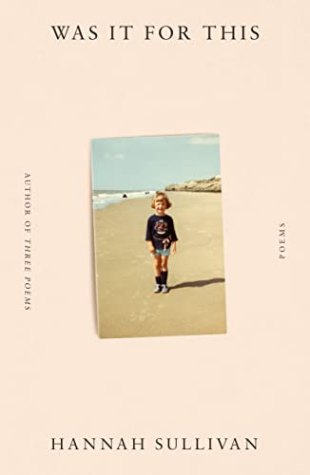
Was It for This

Was It for This

A hybrid new collection from the author of Three Poems—about London, terror, new motherhood, the Grenfell Tower fire, and how we live now. Hannah Sullivan’s first collection, Three Poems, won the T. S. Eliot Prize and the inaugural John Pollard International Poetry Prize. Was It for This continues that book’s project, offering a trenchant exploration of the ways in which we attempt to map our lives in space and time. But there is also the wider, collective experience to contend with, the upheaval of historic event and present disaster. “Tenants,” the first poem, is an elegy for Grenfell, written from the uneasy perspective of a new mother living a few streets away. Elsewhere, from the terraces and precincts of seventies and eighties London to the late-at-night decks of American suburbs, intimately inhabited geographies provide reference points and sites for revisiting. Nothing is too small or unlovely to be transfixed by the poet’s attention, from the thin concrete pillars of a flyover to an elderly peacock’s broken train. There is a memorializing strain in the forensic accumulation of detail, but there is also celebration, a keen sense of holding on to and cherishing what we can.

#86
We Play Here

We Play Here

Four female friends navigate the political turbulence of North Belfast in the late 80s in this extraordinary, evocative verse novel. We Play Here is a collection of four poem-stories, taking place in an underdeveloped area of Protestant North Belfast in the summer of 1988, against a background of political turbulence during the Troubles. Written from the perspectives of four female friends in the months between finishing primary school and starting high school, the girls inhabit an eerie, elemental landscape of normalized violence, poverty and neglect. This is a lyrical and graceful evocation of working-class girlhood that rings of Elena Ferrante's studies of female friendships in the Neapolitan novels, Didier Eribon's Returning to Reims, and Annie Ernaux's The Years. It is a radical approach to girlhood and girl-friendships, the kind of skewered space before an imposition of gender, or before the trappings of gender make themselves strongly known. Innocence is tinged here with a kind of hidden menace.

#88
Wednesday’s Child: Stories

Wednesday’s Child: Stories

A new collection--about loss, alienation, aging, and the strangeness of contemporary life--by the award-winning, and inimitable, author of The Book of Goose. A grieving mother makes a spreadsheet of everyone she's lost. Elsewhere, a professor develops a troubled intimacy with her hairdresser. And every year, a restless woman receives an email from a strange man twice her age and several states away. In the stories of Wednesday's Child, people strive for an ordinary existence until doing so becomes unsustainable, until the surface cracks and the grand mysterious forces--death, violence, estrangement--come to light. Even before such moments, everyday life is laden with meaning, studded with indelible details: a filched jar of honey, a mound of wounded ants, a photograph kept hidden for many years, until it must be seen. Yiyun Li is a truly original writer, an alchemist of opposites: tender and unsentimental, metaphysical and blunt, funny and horrifying, omniscient and unusually aware of just how much we cannot know. Beloved for her novels and her memoir, she returns here to her earliest form, gathering pieces that have appeared in The New Yorker, Zoetrope, and other publications. Taken together, these stories, written over the span of a decade, articulate the cost, both material and emotional, of living--exile, assimilation, loss, love--with Li's trademark unnerving beauty and wisdom.

#89
West: A Translation

West: A Translation

National Book Award, 2023 Longlist * "Elegiac and shot through with righteous anger, this essential collection demands a national reckoning."--Publishers Weekly, STARRED REVIEW* "A must-have for libraries." --Booklist, STARRED REVIEW"A remarkable collection offering history not typically told in textbooks."--Library Journal Punctuated by historical images and told through multiple voices, languages, literary forms and documents, West: A Translation explores what unites and divides America, drawing a powerful, necessary connection between the completion of the transcontinental railroad and the Chinese Exclusion Act.In 2018, Utah Poet Laureate Paisley Rekdal was commissioned to write a poem commemorating the 150th anniversary of the transcontinental railroad. The result is West: A Translation--an unflinching hybrid collection of poems and essays that draws a powerful, necessary connection between the railroad's completion and the Chinese Exclusion Act (1882-1943). Carved into the walls of the Angel Island Immigration Station, where Chinese migrants to the United States were detained during the Chinese Exclusion Act, is a poem elegizing a detainee who committed suicide. As West translates this anonymous Chinese elegy character by character, what's left is a haunting narrative distilled through the history and lens of transcontinental railroad workers, and a sweeping exploration of the railroad's cultural impact on America. Punctuated by historical images and told through multiple voices, languages, literary forms and documents, West explores what unites and divides America, and how our ideas about American history creep forward, even as the nation itself constantly threatens to spiral back.West is accompanied by a website (www.westtrain.org) which features video poems and encourages self-exploration of the transcontinental railroad's history through an interactive, non-linear structure. Pairing this urgent book and innovative website, Rekdal masterfully challenges how histories themselves get written and disseminated. The result is a tour de force of resistance and resilience.

#90
Witness

Witness

A Must-Read at The New York Times, NPR, Los Angeles Times, Vulture, The Boston Globe, Shondaland, St. Louis Post-Dispatch, Chicago Review of Books, Essence, Literary Hub, The Millions, The Root "Exhilarating . . . Brinkley is a writer whose versatility knows no boundaries . . . A gift of the highest quality." --Mateo Askaripour, The New York Times Book Review From National Book Award finalist Jamel Brinkley, Witness is an elegant, insistent narrative of actions taken and not taken. What does it mean to really see the world around you--to bear witness? And what does it cost us, both to see and not to see? In these ten stories, each set in the changing landscapes of contemporary New York City, a range of characters--from children to grandmothers to ghosts--live through the responsibility of perceiving and the moral challenge of speaking up or taking action. Though they strive to connect with, stand up for, care for, and remember one another, they often fall short, and the structures they build around these ambitions and failures shape their futures as well as the legacies and prospects of their communities and their city. In its portraits of families and friendships lost and found, the paradox of intimacy, the long shadow of grief, and the meaning of home, Witness enacts its own testimony. Here is a world where fortunes can be made and stolen in just a few generations, where strangers might sometimes show kindness while those we trust--doctors, employers, siblings--too often turn away, where joy comes in snatches: flowers on a windowsill, dancing in the street, glimpsing your purpose, change on the horizon. With prose as upendingly beautiful as it is artfully, seamlessly crafted, Jamel Brinkley offers nothing less than the full scope of life and death and change in the great, unending drama of the city.

#91
You Could Make This Place Beautiful

You Could Make This Place Beautiful

INSTANT NEW YORK TIMES BESTSELLER "A bittersweet study in both grief and joy." ---Time "A sparklingly beautiful memoir-in-vignettes" (Isaac Fitzgerald, New York Times bestselling author) that explores coming of age in your middle age--from the bestselling poet and author of Keep Moving. "Life, like a poem, is a series of choices." In her memoir You Could Make This Place Beautiful, poet Maggie Smith explores the disintegration of her marriage and her renewed commitment to herself. The book begins with one woman's personal heartbreak, but its circles widen into a reckoning with contemporary womanhood, traditional gender roles, and the power dynamics that persist even in many progressive homes. With the spirit of self-inquiry and empathy she's known for, Smith interweaves snapshots of a life with meditations on secrets, anger, forgiveness, and narrative itself. The power of these pieces is cumulative: page after page, they build into a larger interrogation of family, work, and patriarchy. You Could Make This Place Beautiful, like the work of Deborah Levy, Rachel Cusk, and Gina Frangello, is an unflinching look at what it means to live and write our own lives. It is a story about a mother's fierce and constant love for her children, and a woman's love and regard for herself. Above all, this memoir is "extraordinary" (Ann Patchett) in the way that it reveals how, in the aftermath of loss, we can discover our power and make something new and beautiful.