
The Best Books of 2023 – History (A Year-End List Aggregation)

History – 2023

“What are the best History books released in 2023?” We looked at 316 of the top History books, aggregating and ranking them so we could

#1
The Wager: A Tale of Shipwreck, Mutiny and Murder

The Wager: A Tale of Shipwreck, Mutiny and Murder

From the author of Killers of the Flower Moon, a page-turning story of shipwreck, survival, and savagery, culminating in a court martial that reveals a shocking truth. The powerful narrative reveals the deeper meaning of the events on The Wager, showing that it was not only the captain and crew who ended up on trial, but the very idea of empire. A Best Book of the Year: The New York Times, The Wall Street Journal, The New Yorker, TIME, Smithsonian, NPR, Vulture, Kirkus Reviews "Riveting...Reads like a thriller, tackling a multilayered history--and imperialism--with gusto." --Time "A tour de force of narrative nonfiction." --The Wall Street Journal On January 28, 1742, a ramshackle vessel of patched-together wood and cloth washed up on the coast of Brazil. Inside were thirty emaciated men, barely alive, and they had an extraordinary tale to tell. They were survivors of His Majesty's Ship the Wager, a British vessel that had left England in 1740 on a secret mission during an imperial war with Spain. While the Wager had been chasing a Spanish treasure-filled galleon known as "the prize of all the oceans," it had wrecked on a desolate island off the coast of Patagonia. The men, after being marooned for months and facing starvation, built the flimsy craft and sailed for more than a hundred days, traversing nearly 3,000 miles of storm-wracked seas. They were greeted as heroes. But then ... six months later, another, even more decrepit craft landed on the coast of Chile. This boat contained just three castaways, and they told a very different story. The thirty sailors who landed in Brazil were not heroes - they were mutineers. The first group responded with countercharges of their own, of a tyrannical and murderous senior officer and his henchmen. It became clear that while stranded on the island the crew had fallen into anarchy, with warring factions fighting for dominion over the barren wilderness. As accusations of treachery and murder flew, the Admiralty convened a court martial to determine who was telling the truth. The stakes were life-and-death--for whomever the court found guilty could hang. The Wager is a grand tale of human behavior at the extremes told by one of our greatest nonfiction writers. Grann's recreation of the hidden world on a British warship rivals the work of Patrick O'Brian, his portrayal of the castaways' desperate straits stands up to the classics of survival writing such as The Endurance, and his account of the court martial has the savvy of a Scott Turow thriller. As always with Grann's work, the incredible twists of the narrative hold the reader spellbound.

#2
A Fever in the Heartland: The Ku Klux Klan’s Plot to Take Over America, and the Woman Who Stopped Them

A Fever in the Heartland: The Ku Klux Klan’s Plot to Take Over America, and the Woman Who Stopped Them

A historical thriller by the Pulitzer and National Book Award-winning author that tells the riveting story of the Klan's rise to power in the 1920s, the cunning con man who drove that rise, and the woman who stopped them. The Roaring Twenties--the Jazz Age--has been characterized as a time of Gatsby frivolity. But it was also the height of the uniquely American hate group, the Ku Klux Klan. Their domain was not the old Confederacy, but the Heartland and the West. They hated Blacks, Jews, Catholics and immigrants in equal measure, and took radical steps to keep these people from the American promise. And the man who set in motion their takeover of great swaths of America was a charismatic charlatan named D.C. Stephenson. Stephenson was a magnetic presence whose life story changed with every telling. Within two years of his arrival in Indiana, he'd become the Grand Dragon of the state and the architect of the strategy that brought the group out of the shadows - their message endorsed from the pulpits of local churches, spread at family picnics and town celebrations. Judges, prosecutors, ministers, governors and senators across the country all proudly proclaimed their membership. But at the peak of his influence, it was a seemingly powerless woman - Madge Oberholtzer - who would reveal his secret cruelties, and whose deathbed testimony finally brought the Klan to their knees. A FEVER IN THE HEARTLAND marries a propulsive drama to a powerful and page-turning reckoning with one of the darkest threads in American history.

#3
King: A Life

King: A Life

King mixes revelatory new research with accessible storytelling to offer an MLK for our times. Vividly written and exhaustively researched, Jonathan Eig's King: A Life is the first major biography in decades of the civil rights icon Martin Luther King Jr.--and the first to include recently declassified FBI files. In this revelatory new portrait of the preacher and activist who shook the world, the bestselling biographer gives us an intimate view of the courageous and often emotionally troubled human being who demanded peaceful protest for his movement but was rarely at peace with himself. He casts fresh light on the King family's origins as well as MLK's complex relationships with his wife, father, and fellow activists. King reveals a minister wrestling with his own human frailties and dark moods, a citizen hunted by his own government, and a man determined to fight for justice even if it proved to be a fight to the death. As he follows MLK from the classroom to the pulpit to the streets of Birmingham, Selma, and Memphis, Eig dramatically re-creates the journey of a man who recast American race relations and became our only modern-day founding father--as well as the nation's most mourned martyr. In this landmark biography, Eig gives us an MLK for our times: a deep thinker, a brilliant strategist, and a committed radical who led one of history's greatest movements, and whose demands for racial and economic justice remain as urgent today as they were in his lifetime. Includes 8 pages of black-and-white photographs

#4
Revolutionary Spring: Europe Aflame and the Fight for a New World, 1848-1849

Revolutionary Spring: Europe Aflame and the Fight for a New World, 1848-1849

As history, the uprisings of 1848 have long been overshadowed by the French Revolution of 1789 and the Russian revolutions of the early twentieth century. And yet in 1848 nearly all of Europe was aflame with conflict. Parallel political tumults spread like brush fire across the entire continent, leading to significant changes that continue to shape our world today. These battles for the future were fought with one eye kept squarely on the past: The men and women of 1848 saw the urgent challenges of their world as shaped profoundly by the past, and saw themselves as inheritors of a revolutionary tradition.

#5
Emperor of Rome: Ruling the Ancient Roman World

Emperor of Rome: Ruling the Ancient Roman World

In her international bestseller SPQR, Mary Beard told the thousand-year story of ancient Rome. Now she shines her spotlight on the emperors who ruled the Roman empire, from Julius Caesar (assassinated 44 BCE) to Alexander Severus (assassinated 235 CE). Emperor of Rome is not your usual chronological account of Roman rulers, one after another: the mad Caligula, the monster Nero, the philosopher Marcus Aurelius. Beard asks bigger questions: What power did emperors actually have? Was the Roman palace really so bloodstained? She tracks down the emperor at home, at the races, on his travels, even on his way to heaven. She introduces his wives and lovers, rivals and slaves, court jesters and soldiers—and the ordinary people who pressed begging letters into his hands. Emperor of Rome goes directly to the heart of Roman (and our own) fantasies about what it was to be Roman, offering an account of Roman history as it has never been presented before.

#6
Master Slave Husband Wife: An Epic Journey from Slavery to Freedom

Master Slave Husband Wife: An Epic Journey from Slavery to Freedom

In 1848, a year of international democratic revolt, a young, enslaved couple, Ellen and William Craft, achieved one of the boldest feats of self-emancipation in American history. Posing as master and slave, while sustained by their love as husband and wife, they made their escape together across more than 1,000 miles, riding out in the open on steamboats, carriages, and trains that took them from bondage in Georgia to the free states of the North.

#7
Pax: War and Peace in Rome’s Golden Age

Pax: War and Peace in Rome’s Golden Age

From a "remarkably gifted historian" (New York Times), the definitive account of the golden age of Rome -- an ultimate superpower at the pinnacle of its greatness The Pax Romana has long been shorthand for the empire's golden age. Stretching from Caledonia to Arabia, Rome ruled over a quarter of the world's population. It was the wealthiest and most formidable state in the history of humankind. Pax is a captivating narrative history of Rome at the height of its power. From the gilded capital to realms beyond the frontier, historian Tom Holland shows ancient Rome in all its glory: Nero's downfall, the destruction of Jerusalem and Pompeii, the building of the Colosseum and Hadrian's Wall, the conquests of Trajan. Vividly sketching the lives of Romans both ordinary and spectacular, from slaves to emperors, Holland shows that Roman peace was the fruit of unprecedented military violence. A stunning portrait of Rome's glory days, this is the epic history of the Pax Romana.

#8
The Earth Transformed: An Untold History

The Earth Transformed: An Untold History

A MOST ANTICIPATED BOOK OF THE YEAR: A revolutionary new history that reveals how climate change has dramatically shaped the development--and demise--of civilizations across time *Detailing many years of extensive research, endnotes for this edition run to more than 200 pages. They are available online via a link contained in the book.* Global warming is one of the greatest dangers mankind faces today. Even as temperatures increase, sea levels rise, and natural disasters escalate, our current environmental crisis feels difficult to predict and understand. But climate change and its effects on us are not new. In a bold narrative that spans centuries and continents, Peter Frankopan argues that nature has always played a fundamental role in the writing of history. From the fall of the Moche civilization in South America that came about because of the cyclical pressures of El Niño to volcanic eruptions in Iceland that affected Egypt and helped bring the Ottoman empire to its knees, climate change and its influences have always been with us. Frankopan explains how the Vikings emerged thanks to catastrophic crop failure, why the roots of regime change in eleventh-century Baghdad lay in the collapse of cotton prices resulting from unusual climate patterns, and why the western expansion of the frontiers in North America was directly affected by solar flare activity in the eighteenth century. Again and again, Frankopan shows that when past empires have failed to act sustainably, they have been met with catastrophe. Blending brilliant historical writing and cutting-edge scientific research, The Earth Transformed will radically reframe the way we look at the world and our future.

#9
The Rediscovery of America: Native Peoples and the Unmaking of U.S. History

The Rediscovery of America: Native Peoples and the Unmaking of U.S. History

The most enduring feature of U.S. history is the presence of Native Americans, yet most histories focus on Europeans and their descendants. This long practice of ignoring Indigenous history is changing, however, as a new generation of scholars insists that any full American history address the struggle, survival, and resurgence of American Indian nations. Indigenous history is essential to understanding the evolution of modern America.

#10
The World: A Family History of Humanity

The World: A Family History of Humanity

NEW YORK TIMES BESTSELLER - A magisterial world history unlike any other that tells the story of humanity through the one thing we all have in common: families - From the author of The Romanovs "Succession meets Game of Thrones." --The Spectator - "The author brings his cast of dynastic titans, rogues and psychopaths to life...An epic that both entertains and informs." --The Economist, Best Books of the Year Around 950,000 years ago, a family of five walked along the beach and left behind the oldest family footprints ever discovered. For award-winning historian Simon Sebag Montefiore, these poignant, familiar fossils serve as an inspiration for a new kind of world history, one that is genuinely global, spans all eras and all continents, and focuses on the family ties that connect every one of us. In this epic, ever-surprising book, Montefiore chronicles the world's great dynasties across human history through palace intrigues, love affairs, and family lives, linking grand themes of war, migration, plague, religion, and technology to the people at the heart of the human drama. It features a cast of extraordinary diversity: in addition to rulers and conquerors, there are priests, charlatans, artists, scientists, tycoons, gangsters, lovers, husbands, wives, and children. There is Hongwu, the beggar who founded the Ming dynasty; Ewuare, the Leopard-King of Benin; Henry Christophe, King of Haiti; Kamehameha, the conqueror of Hawaii; Zenobia, the Arab empress who defied Rome; Lady Murasaki, the first female novelist; Sayyida al-Hurra, the Moroccan pirate-queen. Here too are moderns such as Indira Gandhi, Margaret Thatcher, Barack Obama, Vladimir Putin, and Volodymyr Zelensky. Here are the Caesars, Medicis and Incas, Ottomans and Mughals, Bonapartes, Habsburgs and Zulus, Rothschilds, Rockefellers and Krupps, Churchills, Kennedys, Castros, Nehrus, Pahlavis and Kenyattas, Saudis, Kims and Assads. These powerful families represent the breadth of human endeavor, with bloody succession battles, treacherous conspiracies, and shocking megalomania alongside flourishing culture, moving romances, and enlightened benevolence. A dazzling achievement as spellbinding as fiction, The World captures the whole human story in a single, masterful narrative.

#11
A Northern Wind: Britain 1962-65

A Northern Wind: Britain 1962-65

The early sixties in Britain told as only David Kynaston ('the most entertaining historian alive' Spectator ) can. Running from 1962 to 1965, A Northern Wind is the anticipated new volume in the landmark 'Tales of a New Jerusalem' series.

#12
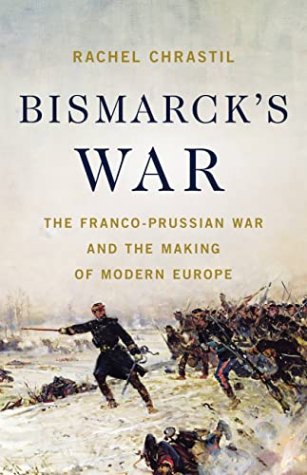
Bismarck’s War: The Franco-Prussian War and the Making of Modern Europe

Bismarck’s War: The Franco-Prussian War and the Making of Modern Europe

Among the conflicts that convulsed Europe during the nineteenth century, none was more startling and consequential than the Franco-Prussian War of 1870–1871. Deliberately engineered by Prussian chancellor Otto von Bismarck, the war succeeded in shattering French supremacy, deposing Napoleon III, and uniting a new German Empire. But it also produced brutal military innovations and a precarious new imbalance of power that together set the stage for the devastating world wars of the next century.

#13
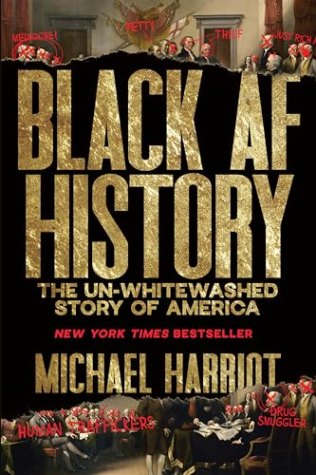
Black AF History: The Un-Whitewashed Story of America

Black AF History: The Un-Whitewashed Story of America

NEW YORK TIMES BESTSELLER From acclaimed columnist and political commentator Michael Harriot, a searingly smart and bitingly hilarious retelling of American history that corrects the record and showcases the perspectives and experiences of Black Americans.America's backstory is a whitewashed mythology implanted in our collective memory. It is the story of the pilgrims on the Mayflower building a new nation. It is George Washington's cherry tree and Abraham Lincoln's log cabin. It is the fantastic tale of slaves that spontaneously teleported themselves here with nothing but strong backs and negro spirituals. It is a sugarcoated legend based on an almost true story.It should come as no surprise that the dominant narrative of American history is blighted with errors and oversights--after all, history books were written by white men with their perspectives at the forefront. It could even be said that the devaluation and erasure of the Black experience is as American as apple pie.In Black AF History, Michael Harriot presents a more accurate version of American history. Combining unapologetically provocative storytelling with meticulous research based on primary sources as well as the work of pioneering Black historians, scholars, and journalists, Harriot removes the white sugarcoating from the American story, placing Black people squarely at the center. With incisive wit, Harriot speaks hilarious truth to oppressive power, subverting conventional historical narratives with little-known stories about the experiences of Black Americans. From the African Americans who arrived before 1619 to the unenslavable bandit who inspired America's first police force, this long overdue corrective provides a revealing look into our past that is as urgent as it is necessary. For too long, we have refused to acknowledge that American history is white history. Not this one. This history is Black AF.

#14
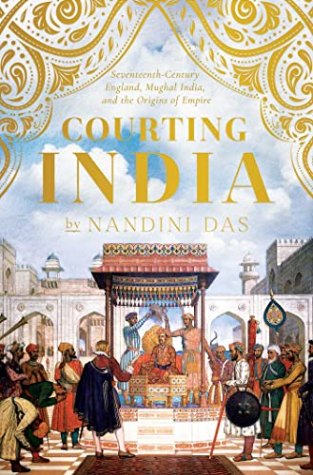
Courting India: England, Mughal India and the Origins of Empire

Courting India: England, Mughal India and the Origins of Empire

Traditional interpretations of the British Empire’s emerging success and expansion have long overshadowed the deep uncertainty that marked its initial entanglement with India. In Courting India: Renaissance London, Mughal India, and the Origins of Empire, acclaimed historian Nandini Das examines the British arrival in India in the early 17th century with fresh eyes, resulting in a profound and groundbreaking account of one of the most important encounters in the history of colonialism.

#15
On Savage Shores: How Indigenous Americans Discovered Europe

On Savage Shores: How Indigenous Americans Discovered Europe

We have long been taught to presume that modern global history began when the "Old World" encountered the "New", when Christopher Columbus “discovered” America in 1492. But, as Caroline Dodds Pennock conclusively shows in this groundbreaking book, for tens of thousands of Aztecs, Maya, Totonacs, Inuit and others—enslaved people, diplomats, explorers, servants, traders—the reverse was true: they discovered Europe.

#16
The Palace: From the Tudors to the Windsors, 500 Years of History at Hampton Court

The Palace: From the Tudors to the Windsors, 500 Years of History at Hampton Court

The popular and "scrupulous historian" (Daily Mail, London) Gareth Russell presents five hundred years of British history--from King Henry VIII to Queen Elizabeth II--as seen through the doorways of the exquisite Hampton Court Palace. Architecturally breathtaking and rich in splendid art and décor, Hampton Court Palace has been the stage of some of the most important events in British history, such as the commissioning of King James's version of the Bible, the staging of many of Shakespeare's plays, and Queen Elizabeth II's coronation ball. Accessible, engaging, and unputdownable, The Palace takes us into every room in the castle, revealing the ups and downs of royal history and illustrating what was at play politically, socially, and economically at the time. An engaging and charming history book that is perfect for fans of Alison Weir, Philippa Gregory, and Andrew Lownie, The Palace makes you feel as if you were in the room as history was made.

#17
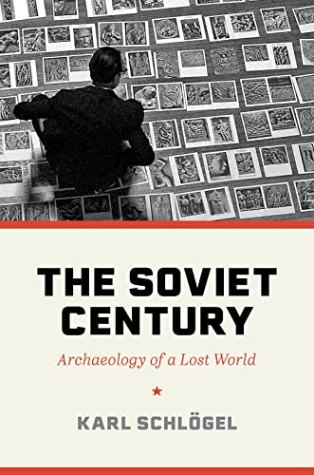
The Soviet Century: Archeology of a Lost World

The Soviet Century: Archeology of a Lost World

The Soviet Union is gone, but its ghostly traces remain, not least in the material vestiges left behind in its turbulent wake. What was it really like to live in the USSR? What did it look, feel, smell, and sound like? In The Soviet Century, Karl Schlögel, one of the world’s leading historians of the Soviet Union, presents a spellbinding epic that brings to life the everyday world of a unique lost civilization.

#19
When Crack Was King: A People’s History of a Misunderstood Era

When Crack Was King: A People’s History of a Misunderstood Era

A poignant and compelling re-examination of a tragic era in America history . . . insightful . . . and deeply moving."--Bryan Stevenson, author of the #1 New York Times bestseller Just Mercy A PUBLISHERS WEEKLY BEST BOOK OF THE YEAR The crack epidemic of the 1980s and 1990s is arguably the least examined crisis in American history. Beginning with the myths inspired by Reagan's war on drugs, journalist Donovan X. Ramsey's exacting analysis traces the path from the last triumphs of the Civil Rights Movement to the devastating realities we live with today: a racist criminal justice system, continued mass incarceration and gentrification, and increased police brutality. When Crack Was King follows four individuals to give us a startling portrait of crack's destruction and devastating legacy: Elgin Swift, an archetype of American industry and ambition and the son of a crack-addicted father who turned their home into a "crack house"; Lennie Woodley, a former crack addict and sex worker; Kurt Schmoke, the longtime mayor of Baltimore and an early advocate of decriminalization; and Shawn McCray, community activist, basketball prodigy, and a founding member of the Zoo Crew, Newark's most legendary group of drug traffickers. Weaving together riveting research with the voices of survivors, When Crack Was King is a crucial reevaluation of the era and a powerful argument for providing historically violated communities with the resources they deserve.

#20
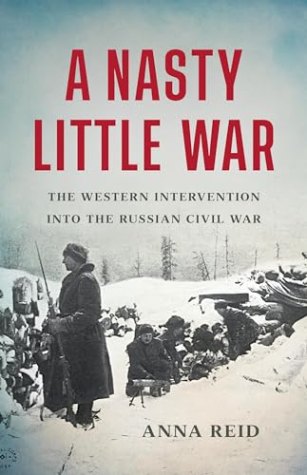
A Nasty Little War: The Western Intervention Into the Russian Civil War

A Nasty Little War: The Western Intervention Into the Russian Civil War

The first comprehensive history of the failed Allied Intervention in the Russian Civil War, a decisive turning point in the relationship between Russia and the West Overlapping with and overshadowed by the First World War, the Allied Intervention in the Russian Civil War was one of the most ambitious military ventures of the twentieth century. Launched in the summer of 1918, it drew in 180,000 troops from fifteen different countries in theaters ranging from the Caspian Sea to the Arctic, and from Poland to the Pacific. Though little remembered today, its consequences stoked global political turmoil for decades to come. In A Nasty Little War, top Russia historian Anna Reid offers a sweeping and deeply researched account of the conflict. Initially launched to prevent Germany from exploiting the power vacuum in Eastern Europe left by the Russian Revolution, the Intervention morphed into a bid to destroy the Bolsheviks on the battlefield. But Allied armaments, supplies, and loans could not prevent Russia's anti-Bolshevik armies from collapsing, and the Allies were forced to retreat in defeat. The humiliation sapped British imperial swagger, chastened American idealism, and stoked militarism and nationalism in France and Germany. Combining immersive storytelling with deep research, A Nasty Little War reveals how the Allied Intervention reshaped the West's relationship with Russia.

#21
An Army Afire: How the US Army Confronted Its Racial Crisis in the Vietnam Era

An Army Afire: How the US Army Confronted Its Racial Crisis in the Vietnam Era

By the late 1960s, what had been widely heralded as the best qualified, best-trained army in US history was descending into crisis as the Vietnam War raged without end. Morale was tanking. AWOL rates were rising. And in August 1968, a group of Black soldiers seized control of the infamous Long Binh Jail, burned buildings, and beat a white inmate to death with a shovel. The days of "same mud, same blood" were over, and a new generation of Black GIs had decisively rejected the slights and institutional racism their forefathers had endured. As Black and white soldiers fought in barracks and bars, with violence spilling into surrounding towns within the US and in West Germany, Vietnam, South Korea, and Japan, army leaders grew convinced that the growing racial crisis undermined the army's ability to defend the nation. Acclaimed military historian Beth Bailey shows how the US Army tried to solve that racial crisis (in army terms, "the problem of race"). Army leaders were surprisingly creative in confronting demands for racial justice, even willing to challenge fundamental army principles of discipline, order, hierarchy, and authority. Bailey traces a frustrating yet fascinating story, as a massive, conservative institution came to terms with demands for change.

#23
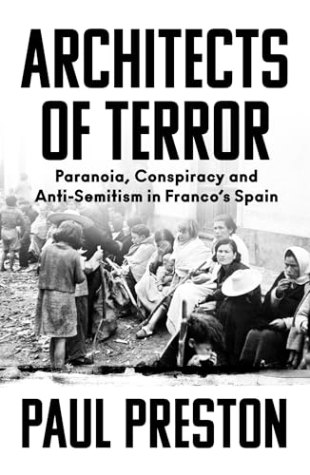
Architects of Terror: Paranoia, Conspiracy and Anti-Semitism in Franco’s Spain

Architects of Terror: Paranoia, Conspiracy and Anti-Semitism in Franco’s Spain

A TIMES HISTORY BOOK OF THE YEAR From the preeminent historian of 20th century Spain Paul Preston, Architects of Terror is a new history of how paranoia, conspiracy and anti-Semitism was used to justify the military coup of 1936 and enabled the construction of a dictatorship built on violence and persecution. It is the previously untold story of how antisemitic beliefs were weaponised to justify and propagate the Franco overthrow of liberal Spain.The Spanish military coup of 1936 was launched to overturn the social and economic reforms of the democratic Second Republic, and its educational and cultural challenges to the established order. The consequent civil war was fought in the interests of the landowners, industrialists, bankers, clerics and army officers whose privileges were threatened. However, a central justification for a war that took the lives of around 500,000 Spaniards was that it was being fought to combat an alleged scheme for world domination by a non-existent 'Jewish- Masonic-Bolshevik Conspiracy'. Despite the fact that Spain had only a tiny minority of Jews and Freemasons, Franco and his inner circle were ardent believers in this fabricated conspiracy and spread the notion that the survival of Catholic Spain, as well, of course, of the establishment 's economic interests, required the total annihilation of Jews and Freemasons. Architects of Terror is the story of how fake news, mendacity, corruption and nostalgia for lost empire generated violence and hatred. The book presents vivid portraits of the key ideologues who propagated the myth of the Jewish-Masonic-Bolshevik Conspiracy and of the military figures who implemented the atrocities that it justified. Among the convictions shared by these individuals was their belief in the idea that Freemasonry was responsible for Spain 's loss of empire and in the factual veracity of The Protocols of the Elders of Zion, the notorious fiction about the global domination of the Jews.This is a history that reverberates in our own political moment

#24
Astor: The Rise and Fall of an American Fortune

Astor: The Rise and Fall of an American Fortune

The number one New York Times bestselling authors of Vanderbilt return with another riveting history of a legendary American family, the Astors, and how they built and lavished their fortune. The story of the Astors is a quintessentially American story--of ambition, invention, destruction, and reinvention.From 1783, when German immigrant John Jacob Astor first arrived in the United States, until 2009, when Brooke Astor's son, Anthony Marshall, was convicted of defrauding his elderly mother, the Astor name occupied a unique place in American society.The family fortune, first made by a beaver trapping business that grew into an empire, was then amplified by holdings in Manhattan real estate. Over the ensuing generations, Astors ruled Gilded Age New York society and inserted themselves into political and cultural life, but also suffered the most famous loss on the Titanic, one of many shocking and unexpected twists in the family's story.In this unconventional, page-turning historical biography, featuring black-and-white and color photographs, #1 New York Times bestselling authors Anderson Cooper and Katherine Howe chronicle the lives of the Astors and explore what the Astor name has come to mean in America--offering a window onto the making of America itself.

#25
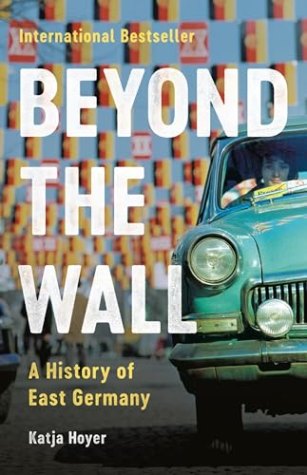
Beyond the Wall: East Germany, 1949-1990

Beyond the Wall: East Germany, 1949-1990

AN INTERNATIONAL BESTSELLER - From the ashes of the Second World War to the fall of the Berlin Wall, the definitive history of East Germany, "a fascinating, sparkling book, filled with insights" (Peter Frankopan) In 1990, a country disappeared. When the Iron Curtain fell, East Germany ceased to be. For over forty years, from the ruin of the Second World War to the cusp of a new millennium, the German Democratic Republic presented a radically different Germany than what had come before and what exists today. Socialist solidarity, secret police, central planning, barbed wire: this was a Germany forged on the fault lines of ideology and geopolitics. In Beyond the Wall, acclaimed historian Katja Hoyer sets aside the usual Cold War caricatures of the GDR to offer a kaleidoscopic new vision of this vanished country, revealing the rich political, social, and cultural landscape that existed amid oppression and hardship. Drawing on a vast array of never-before-seen interviews and documents, this is the definitive history of the other Germany, beyond the Wall.

#26
Blood Memory: The Tragic Decline and Improbable Resurrection of the American Buffalo

Blood Memory: The Tragic Decline and Improbable Resurrection of the American Buffalo

The epic story of the buffalo in America, from prehistoric times to today--a moving and beautifully illustrated work of natural history inspired by the PBS series "American Buffalo" The American buffalo--our nation's official mammal--is an improbable, shaggy beast that has found itself at the center of many of our most mythic and sometimes heartbreaking tales. The largest land animals in the Western Hemisphere, they are survivors of a mass extinction that erased ancient species that were even larger. For nearly 10,000 years, they evolved alongside Native people who weaved them into every aspect of daily life; relied on them for food, clothing, and shelter; and revered them as equals. Newcomers to the continent found the buffalo fascinating at first, but in time they came to consider them a hindrance to a young nation's expansion. And in the space of only a decade, they were slaughtered by the millions for their hides, with their carcasses left to rot on the prairies. Then, teetering on the brink of disappearing from the face of the earth, they would be rescued by a motley collection of Americans, each of them driven by different--and sometimes competing--impulses. This is the rich and complicated story of a young republic's heedless rush to conquer a continent, but also of the dawn of the conservation era--a story of America at its very best and worst.

#27
Elon Musk

Elon Musk

#1 New York Times bestseller From the author of Steve Jobs and other bestselling biographies, this is the astonishingly intimate story of the most fascinating and controversial innovator of our era--a rule-breaking visionary who helped to lead the world into the era of electric vehicles, private space exploration, and artificial intelligence. Oh, and took over Twitter. When Elon Musk was a kid in South Africa, he was regularly beaten by bullies. One day a group pushed him down some concrete steps and kicked him until his face was a swollen ball of flesh. He was in the hospital for a week. But the physical scars were minor compared to the emotional ones inflicted by his father, an engineer, rogue, and charismatic fantasist. His father's impact on his psyche would linger. He developed into a tough yet vulnerable man-child, prone to abrupt Jekyll-and-Hyde mood swings, with an exceedingly high tolerance for risk, a craving for drama, an epic sense of mission, and a maniacal intensity that was callous and at times destructive. At the beginning of 2022--after a year marked by SpaceX launching thirty-one rockets into orbit, Tesla selling a million cars, and him becoming the richest man on earth--Musk spoke ruefully about his compulsion to stir up dramas. "I need to shift my mindset away from being in crisis mode, which it has been for about fourteen years now, or arguably most of my life," he said. It was a wistful comment, not a New Year's resolution. Even as he said it, he was secretly buying up shares of Twitter, the world's ultimate playground. Over the years, whenever he was in a dark place, his mind went back to being bullied on the playground. Now he had the chance to own the playground. For two years, Isaacson shadowed Musk, attended his meetings, walked his factories with him, and spent hours interviewing him, his family, friends, coworkers, and adversaries. The result is the revealing inside story, filled with amazing tales of triumphs and turmoil, that addresses the question: are the demons that drive Musk also what it takes to drive innovation and progress?
#28
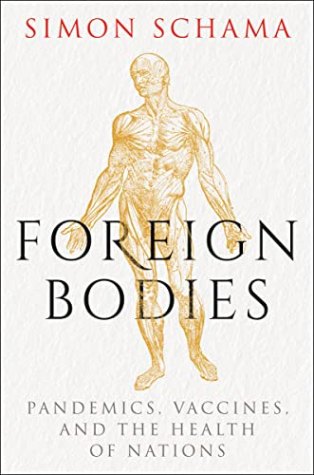
Foreign Bodies: Pandemics, Vaccines and the Health of Nations

Foreign Bodies: Pandemics, Vaccines and the Health of Nations

A vibrant cultural history investigating pandemics and vaccines, by bestselling author and historian Simon SchamaCities and countries engulfed by panic and death, desperate for vaccines but fearful of what inoculation may bring. This is what the world has just gone through with Covid-19. But as Simon Schama shows in his epic history of vulnerable humanity caught between the terror of contagion and the ingenuity of science, it has happened before.Characteristically, Schama's message is delivered through gripping, page-turning stories set in the eighteenth and nineteenth centuries: smallpox strikes London; cholera hits Paris; plague comes to India. Threading through the scenes of terror, suffering and hope - in hospitals and prisons, palaces, and slums - are an unforgettable cast of characters: a philosopher-playwright burning up with smallpox in a country chateau; a vaccinating doctor paying house calls in Halifax; a woman doctor in south India driving her inoculator-carriage through the stricken streets as dead monkeys drop from the trees. But we are also in the labs when great, life-saving breakthroughs happen, in Paris, Hong Kong, and Mumbai.At the heart of it all is an unsung hero: Waldemar Haffkine, a gun-toting Jewish student in Odesa turned microbiologist at the Pasteur Institute, hailed in England as "the saviour of mankind" for vaccinating millions against cholera and bubonic plague in British India while being cold-shouldered by the medical establishment of the Raj. Creator of the world's first mass production line of vaccines in Mumbai, he is tragically brought down in an act of shocking injustice.Foreign Bodies crosses borders between east and west, Asia and Europe, the worlds of rich and poor, politics and science. Its thrilling story carries with it the credo of its author on the interconnectedness of humanity and nature; of the powerful and the people. Ultimately, Schama says, as we face the challenges of our times together, "there are no foreigners, only familiars."

#29
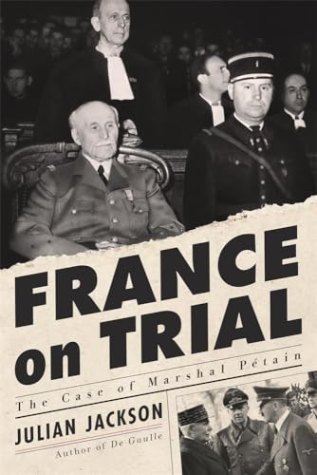
France on Trial

France on Trial

For three weeks in July 1945 all eyes were fixed on a humid Paris, where France's disgraced former head of state was on trial, accused of masterminding a plot to overthrow democracy. Would Philippe Pétain, hero of Verdun, be condemned as the traitor of Vichy? In the terrible month of October 1940, few things were more shocking than the sight of Marshal Philippe Pétain--supremely decorated hero of the First World War, now head of the French government--shaking hands with Hitler. Pausing to look at the cameras, Pétain announced that France would henceforth collaborate with Germany. "This is my policy," he intoned. "My ministers are responsible to me. It is I alone who will be judged by History." Five years later, in July 1945, after a wave of violent reprisals following the liberation of Paris, Pétain was put on trial for his conduct during the war. He stood accused of treason, charged with heading a conspiracy to destroy France's democratic government and collaborating with Nazi Germany. The defense claimed he had sacrificed his personal honor to save France and insisted he had shielded the French people from the full scope of Nazi repression. Former resisters called for the death penalty, but many identified with this conservative military hero who had promised peace with dignity. The award-winning author of a landmark biography of Charles de Gaulle, Julian Jackson uses Pétain's three-week trial as a lens through which to examine one of history's great moral dilemmas. Was the policy of collaboration "four years to erase from our history," as the prosecution claimed? Or was it, as conservative politicians insist to this day, a sacrifice that placed pragmatism above moral purity? As head of the Vichy regime, Pétain became the lightning rod for collective guilt and retribution. But he has also been an icon of the nationalist right ever since. In France on Trial, Jackson blends courtroom drama, political intrigue, and brilliant narrative history to highlight the hard choices and moral compromises leaders make in times of war.
#30
I Saw Death Coming: A History of Terror and Survival in the War Against Reconstruction

I Saw Death Coming: A History of Terror and Survival in the War Against Reconstruction

Longlisted for the National Book Award in Nonfiction "Powerful and deeply moving."--Los Angeles Times * Shortlisted for the Museum of African American History's Stone Book Award From a groundbreaking scholar, a heart-wrenching reexamination of the struggle for survival in the Reconstruction-era South, and what it cost. The story of Reconstruction is often told from the perspective of the politicians, generals, and journalists whose accounts claim an outsized place in collective memory. But this pivotal era looked very different to African Americans in the South transitioning from bondage to freedom after 1865. They were besieged by a campaign of white supremacist violence that persisted through the 1880s and beyond. For too long, their lived experiences have been sidelined, impoverishing our understanding of the obstacles post-Civil War Black families faced, their inspiring determination to survive, and the physical and emotional scars they bore because of it. In I Saw Death Coming, Kidada E. Williams offers a breakthrough account of the much-debated Reconstruction period, transporting readers into the daily existence of formerly enslaved people building hope-filled new lives. Drawing on overlooked sources and bold new readings of the archives, Williams offers a revelatory and, in some cases, minute-by-minute record of nighttime raids and Ku Klux Klan strikes. And she deploys cutting-edge scholarship on trauma to consider how the effects of these attacks would linger for decades--indeed, generations--to come. For readers of Carol Anderson, Tiya Miles, and Clint Smith, I Saw Death Coming is an indelible and essential book that speaks to some of the most pressing questions of our times.

#31
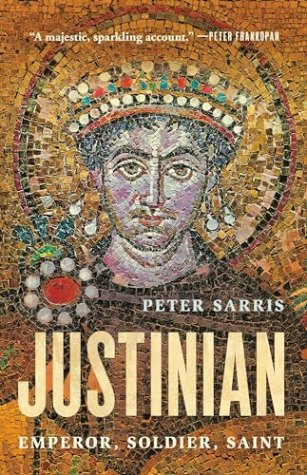
Justinian: Emperor, Soldier, Saint

Justinian: Emperor, Soldier, Saint

A definitive new biography of the Byzantine emperor Justinian Justinian is a radical reassessment of an emperor and his times. In the sixth century CE, the emperor Justinian presided over nearly four decades of remarkable change, in an era of geopolitical threats, climate change, and plague. From the eastern Roman--or Byzantine--capital of Constantinople, Justinian's armies reconquered lost territory in Africa, Italy, and Spain. But these military exploits, historian Peter Sarris shows, were just one part of a larger program of imperial renewal. From his dramatic overhaul of Roman law, to his lavish building projects, to his fierce persecution of dissenters from Orthodox Christianity, Justinian's vigorous statecraft--and his energetic efforts at self-glorification--not only set the course of Byzantium but also laid the foundations for the world of the Middle Ages. Even as Justinian sought to recapture Rome's past greatness, he paved the way for what would follow.

#33
Madame Restell

Madame Restell

"Madame Restell is a sharp, witty Gilded Age medical history which introduces us to an iconic, yet tragically overlooked, feminist heroine: a glamorous women's healthcare provider in Manhattan, known to the world as Madame Restell. A celebrity in her day with a flair for high fashion and public, petty beefs, Restell was a self-made woman and single mother who used her wit, her compassion, and her knowledge of family medicine to become one of the most in-demand medical workers in New York. Not only that, she used her vast resources to care for the most vulnerable women of the city: unmarried women in need of abortions, birth control, and other medical assistance. In defiance of increasing persecution from powerful men, Restell saved the lives of thousands of young women; in fact, in historian Jennifer Wright's own words, "despite having no formal training and a near-constant steam of women knocking at her door, she never lost a patient." Restell was a revolutionary who opened the door to the future of reproductive choice for women, and Wright brings Restell and her circle to life in this dazzling, sometimes dark, and thoroughly entertaining tale. In addition to uncovering the forgotten history of Restell herself, the book also doubles as an eye-opening look into the "greatest American scam you've never heard about": the campaign to curtail women's power by restricting their access to healthcare. Before the 19th century, abortion and birth control were not only legal in the United States, but fairly common, and public healthcare needs (for women and men alike) were largely handled by midwives and female healers. However, after the Birth of the Clinic, newly-minted male MDs wanted to push women out of their space-by forcing women back into the home and turning medicine into a standardized, male-only practice. At the same time, a group of powerful, secular men-threatened by women's burgeoning independence in other fields-persuaded the Christian leadership to declare abortion a sin, rewriting the meaning of "Christian morality" to protect their own interests. As Wright explains, "their campaign to do so was so insidious-and successful-that it remains largely unrecognized to this day, a century and a half later." By unraveling the misogynistic and misleading lies that put women's health in jeopardy, Wright simultaneously restores Restell to her rightful place in history and obliterates the faulty, fractured reasoning underlying the very foundation of what has since been dubbed the "pro-life" movement. Thought-provoking, character-driven, funny, and feminist as hell, Madame Restell is required reading for anyone and everyone who believes that when it comes to women's rights, women's bodies, and women's history, women should have the last word"--

#34
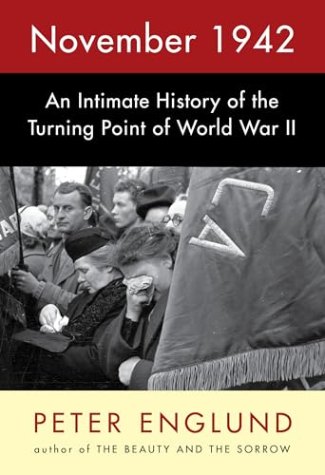
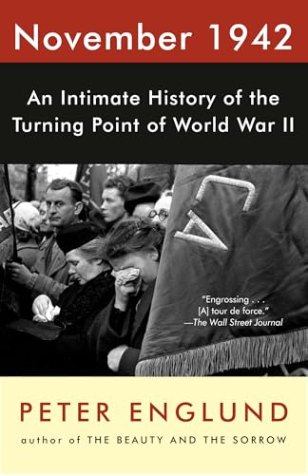
November 1942: An Intimate History of the Turning Point of World War II

November 1942: An Intimate History of the Turning Point of World War II

An intimate history of the most important month of World War II, completely based on the diaries, letters and memoirs of the people who lived through it At the beginning of November 1942, it looked as if the Axis powers could still win the Second World War; at the end of that month, it was obviously just a matter of time before they would lose. In between were el-Alamein, Guadalcanal, the French North Africa landings, the Japanese retreat in New Guinea and the Soviet encirclement of the German 6th Army at Stalingrad. It may have been the most important thirty days of the twentieth century. In this hugely innovative and riveting history, Peter Englund has reduced an epoch-making event to its basic component: the individual experience. Englund's narrative is based solely on what he learned from the writings of soldiers and ordinary citizens alike. They comprise a remarkable, deeply personal resource. In thirty memorable days, among those we meet are: a Soviet infantryman at Stalingrad; an American pilot on Guadalcanal; an Italian truck driver in the North African desert; a partisan in the Belarussian forests; a machine gunner in a British bomber; a twelve-year-old girl in Shanghai; a university student in Paris; a housewife on Long Island; a shipwrecked Chinese sailor; a prisoner in Treblinka; a Korean "comfort woman" in Mandalay; Albert Camus, Vasily Grossman and Vera Brittain--forty characters in all. In addition, we experience the construction and launching of SS James Oglethorpe, a Liberty ship built in Savannah; the fate of U-604, a German submarine; the building of the first nuclear reactor in Chicago; and the making of Casablanca. Not since the publication of the author's last book, The Beauty and the Sorrow, which similarly looked at the First World War, have we had such a mesmerizing work of history.

#36
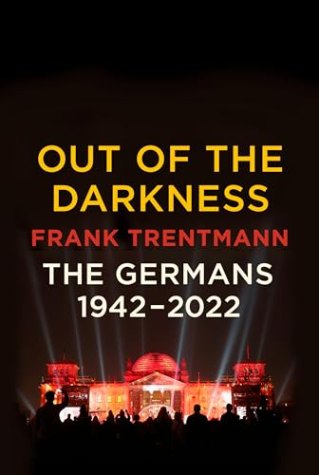
Out of the Darkness

Out of the Darkness

A gripping and nuanced history of the German people from World War II to the war in Ukraine, including revealing new primary source material on Germany's transformation In 1945, Germany lay in ruins, morally and materially. Its citizens stood condemned by history, responsible for a horrifying genocide and war of extermination. But by the end of Angela Merkel's tenure as chancellor in 2021, Germany looked like the moral voice of Europe, welcoming more than one million refugees, holding together the tenuous threads of the European Union, and making military restraint the center of its foreign policy. At the same time, Germany's rigid fiscal discipline and energy deals with Vladimir Putin have cast a shadow over the present. Innumerable scholars have asked how Germany could have degenerated from a nation of scientists, poets, and philosophers into one responsible for genocide. This book raises another vital question: How did a nation whose past has been marked by mass murder, a people who cheered Adolf Hitler, reinvent themselves, and how much? Trentmann tells this dramatic story of the German people from the middle of World War II through the Cold War and the division into East and West to the fall of the Berlin Wall and the struggle to find a place in the world today. This journey is marked by a series of extraordinary moral conflicts: admissions of guilt and shame vying with immediate economic concerns; restitution for some but not others; tolerance versus racism; compassion versus complicity. Through a range of voices--German soldiers and German Jews; displaced persons in limbo; East German women and shopkeepers angry about energy shortages; opponents and supporters of nuclear power; volunteers helping migrants and refugees, and right-wing populists attacking them--Trentmann paints a remarkable and surprising portrait spanning eighty years of the conflicted people at the center of Europe, showing how the Germans became who they are today.

#37
Pathogenesis: A History of the World in Eight Plagues

Pathogenesis: A History of the World in Eight Plagues

According to the accepted narrative of progress, humans have thrived thanks to their brains and brawn, collectively bending the arc of history. But in this revelatory book, Professor Jonathan Kennedy argues that the myth of human exceptionalism overstates the role that we play in social and political change. Instead, it is the humble microbe that wins wars and topples empires.

#38
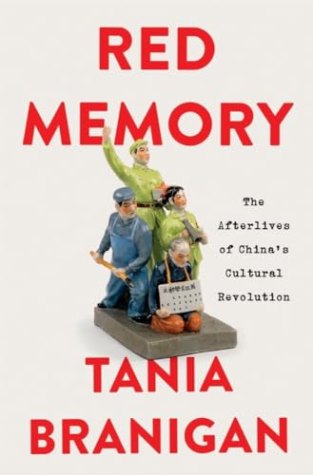
Red Memory: Living, Remembering and Forgetting China’s Cultural Revolution

Red Memory: Living, Remembering and Forgetting China’s Cultural Revolution

"It is impossible to understand China today without understanding the Cultural Revolution," Tania Branigan writes. During this decade of Maoist fanaticism between 1966 and 1976, children turned on parents, students condemned teachers, and as many as two million people died for their supposed political sins, while tens of millions were hounded, ostracized, and imprisoned. Yet in China this brutal and turbulent period exists, for the most part, as an absence; official suppression and personal trauma have conspired in national amnesia. Red Memory uncovers forty years of silence through the stories of individuals who lived through the madness. Deftly exploring how this era defined a generation and continues to impact China today, Branigan asks: What happens to a society when you can no longer trust those closest to you? What happens to the present when the past is buried, exploited, or redrawn? And how do you live with yourself when the worst is over?

#39
Road to Surrender: Three Men and the Countdown to the End of World War II

Road to Surrender: Three Men and the Countdown to the End of World War II

A riveting, immersive account of the agonizing decision to use nuclear weapons against Japan--a crucial turning point in World War II and geopolitical history--with you-are-there immediacy by the New York Times bestselling author of Ike's Bluff and Sea of Thunder. "As Christopher Nolan's movie Oppenheimer shows, the shockwaves reverberate still. The veteran biographer Evan Thomas now enters the debate."--The Wall Street Journal At 9:20 a.m. on the morning of May 30, General Groves receives a message to report to the office of the secretary of war "at once." Stimson is waiting for him. He wants to know: has Groves selected the targets yet? So begins this suspenseful, impeccably researched history that draws on new access to diaries to tell the story of three men who were intimately involved with America's decision to drop the atomic bomb--and Japan's decision to surrender. They are Henry Stimson, the American Secretary of War, who oversaw J. Robert Oppenheimer under the Manhattan Project; Gen. Carl "Tooey" Spaatz, head of strategic bombing in the Pacific, who supervised the planes that dropped the bombs; and Japanese Foreign Minister Shigenori Togo, the only one in Emperor Hirohito's Supreme War Council who believed even before the bombs were dropped that Japan should surrender. Henry Stimson had served in the administrations of five presidents, but as Oppenheimer's work progressed, he found himself tasked with the unimaginable decision of determining whether to deploy the bomb. The new president, Harry S. Truman, thus far a peripheral figure in the momentous decision, accepted Stimson's recommendation to drop the bomb. Army Air Force Commander Gen. Spaatz ordered the planes to take off. Like Stimson, Spaatz agonized over the command even as he recognized it would end the war. After the bombs were dropped, Foreign Minister Togo was finally able to convince the emperor to surrender. To bring these critical events to vivid life, bestselling author Evan Thomas draws on the diaries of Stimson, Togo and Spaatz, contemplating the immense weight of their historic decision. In Road to Surrender, an immersive, surprising, moving account, Thomas lays out the behind-the-scenes thoughts, feelings, motivations, and decision-making of three people who changed history.

#40
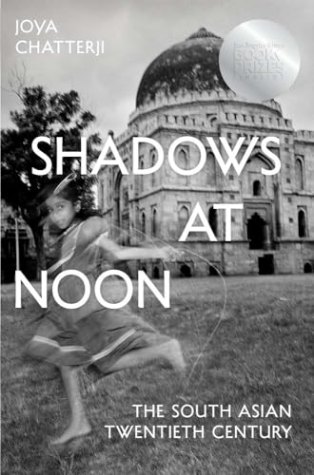
Shadows at Noon: The South Asian Twentieth Century

Shadows at Noon: The South Asian Twentieth Century

A groundbreaking view of South Asian history in the twentieth century that underlines the similarities and intertwined cultures of India and Pakistan "[A] definitive new 20th-century thematic history of the Indian subcontinent that rejects hegemonic conceptions of national 'difference.'"--Financial Times This radically original and ambitious history of the Indian subcontinent explores the region's unique twentieth-century history and foregrounds the deep connections, rather than the well-publicized fissures, between the cultures of India and Pakistan. Taking the partitions of British India rather than the two world wars as the century's inflection points, Joya Chatterji examines how issues of nationalism, internal and external migration, and technological innovation contributed to South Asia's tumultuous twentieth century. Chatterji weaves together elements of her autobiography and family history; stories of such legendary figures as Tagore, Jinnah, Gandhi, and Nehru; and, in particular, the accounts of the many who were left behind and marginalized in relentless nation-building projects. Chatterji examines the countries' mirroring patterns in state building, social and cultural life, modes of leisure, consumption, and oppression, and offers a timely course correction to our understanding of the dynamics of South Asian history. It reframes the events of the twentieth century that are continuing to play out in the present day.

#41
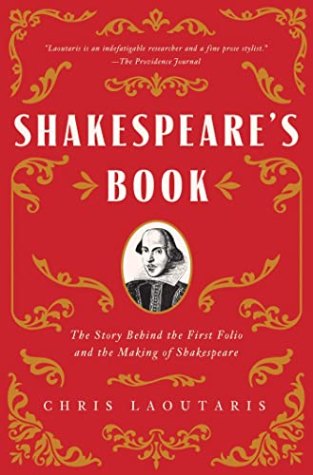
Shakespeare’s Book: The Intertwined Lives Behind the First Folio

Shakespeare’s Book: The Intertwined Lives Behind the First Folio

The never-before-told story of how the makers of The First Folio created Shakespeare as we know him today. 2023 marks the 400-year anniversary of the publication of Mr William Shakespeare's Comedies, Histories, & Tragedies, known today simply as the First Folio. It is difficult to imagine a world without The Tempest, Twelfth Night, Antony and Cleopatra, The Winter's Tale, and Macbeth, but these are just some of the plays that were only preserved thanks to the astounding labor of love that was the first collected edition of Shakespeare's plays. When the First Folio hit the bookstalls in 1623, nearly eight years after the dramatist's death, it provided eighteen previously unpublished plays, and significantly revised versions of close to a dozen other dramatic works, many of which may not have survived without the efforts of those who backed, financed, curated, and crafted what is arguably one of the most important conservation projects in literary history. Without the First Folio Shakespeare is unlikely to have acquired the towering international stature he now enjoys across the arts, the pedagogical arena, and popular culture. Its lasting impact on English national heritage, as well as its circulation across cultures, languages, and media, makes the First Folio the world's most influential secular book. But who were the personalities behind the project and did Shakespeare himself play a role in its inception? Shakespeare's Book: The Story Behind the First Folio and the Making of Shakespeare charts, for the first time, the manufacture of the First Folio against a turbulent backdrop of seismic political events and international tensions which intersected with the lives of its creators and which left their indelible marks on this ambitious publication-project. This story uncovers the friendships, bonds, social ties, and professional networks that facilitated the production of Shakespeare's book--as well as the personal challenges, tragedies and dangers that threw obstacles in the path of its chief backers. It reveals how Shakespeare himself, before his death, may have influenced the ways in which his own public identity would come to be enshrined in the First Folio, shaping his legacy to future generations and determining how the world would remember him: "not of an age, but for all time." Shakespeare's Book tells the true story of how the makers of the First Folio created "Shakespeare" as we know him today.

#42
The Blazing World: A New History of Revolutionary England

The Blazing World: A New History of Revolutionary England

A fresh, exciting, "readable and informative" history (The New York Times) of seventeenth-century England, a time of revolution when society was on fire and simultaneously forging the modern world. - "Recapture[s] a lost moment when a radically democratic commonwealth seemed possible."--Adam Gopnik, The New Yorker "[Healy] makes a convincing argument that the turbulent era qualifies as truly 'revolutionary, ' not simply because of its cascading political upheavals, but in terms of far-reaching changes within society.... Wryly humorous and occasionally bawdy"-- The Wall Street Journal The seventeenth century was a revolutionary age for the English. It started as they suddenly found themselves ruled by a Scotsman, and it ended in the shadow of an invasion by the Dutch. Under James I, England suffered terrorism and witch panics. Under his son Charles, state and society collapsed into civil war, to be followed by an army coup and regicide. For a short time--for the only time in history--England was a republic. There were bitter struggles over faith and Parliament asserted itself like never before. There were no boundaries to politics. In fiery, plague-ridden London, in coffee shops and alehouses, new ideas were forged that were angry, populist, and almost impossible for monarchs to control. But the story of this century is less well known than it should be. Myths have grown around key figures. People may know about the Gunpowder Plot and the Great Fire of London, but the Civil War is a half-remembered mystery to many. And yet the seventeenth century has never seemed more relevant. The British constitution is once again being bent and contorted, and there is a clash of ideologies reminiscent of when Roundhead fought Cavalier. The Blazing World is the story of this strange, twisting, fascinating century. It shows a society in sparkling detail. It was a new world of wealth, creativity, and daring curiosity, but also of greed, pugnacious arrogance, and colonial violence.

#43
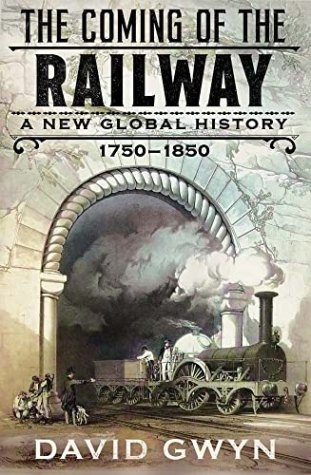
The Coming of the Railway: A New Global History, 1750-1850

The Coming of the Railway: A New Global History, 1750-1850

The first global history of the epic early days of the iron railway Railways, in simple wooden or stone form, have existed since prehistory. But from the 1750s onward the introduction of iron rails led to a dramatic technological evolution--one that would truly change the world. In this rich new history, David Gwyn tells the neglected story of the early iron railway from a global perspective. Driven by a combination of ruthless enterprise, brilliant experimenters, and international cooperation, railway construction began to expand across the world with astonishing rapidity. From Britain to Australia, Russia to America, railways would bind together cities, nations, and entire continents. Rail was a tool of industry and empire as well as, eventually, passenger transport, and developments in technology occurred at breakneck speed--even if the first locomotive in America could muster only 6 mph. The Coming of the Railway explores these fascinating developments, documenting the early railway's outsize social, political, and economic impact--carving out the shape of the global economy as we know it today.

#44
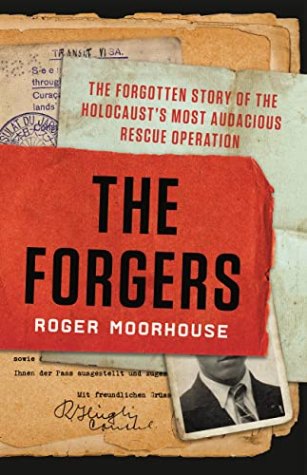
The Forgers: The Forgotten Story of the Holocaust’s Most Audacious Rescue Operation

The Forgers: The Forgotten Story of the Holocaust’s Most Audacious Rescue Operation

The secret history of one of the largest--and least-known--rescue operations of World War II Between 1940 and 1943, a group of Polish diplomats in Switzerland engaged in a wholly remarkable--and until now, completely unknown--humanitarian operation. In concert with Jewish activists, they masterminded a systematic program of forging passports and identity documents for Latin American countries, which were then smuggled into German-occupied Europe to save the lives of thousands of Jews facing extermination in the Holocaust. With the international community failing to act, the operation was one of the largest actions to aid Jews of the entire war. The Forgers tells this extraordinary story for the first time. We follow the desperate bids of Jews to obtain these lifesaving documents as the Nazi death machine draws ever closer. And we witness the quiet heroism of a group of ordinary men who decided to do something rather than nothing and saved thousands of lives.

#45
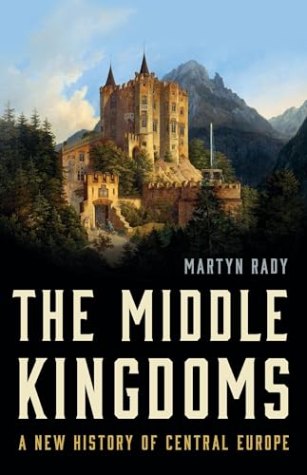
The Middle Kingdoms: A New History of Central Europe

The Middle Kingdoms: A New History of Central Europe

An essential new history of Central Europe, the contested lands so often at the heart of world history Central Europe has long been infamous as a region beset by war, a place where empires clashed and world wars began. In The Middle Kingdoms, Martyn Rady offers the definitive history of the region, demonstrating that Central Europe has always been more than merely the fault line between West and East. Even as Central European powers warred with their neighbors, the region developed its own cohesive identity and produced tremendous accomplishments in politics, society, and culture. Central Europeans launched the Reformation and Romanticism, developed the philosophy of the Renaissance and the Enlightenment, and advanced some of the twentieth century's most important artistic movements. Drawing on a lifetime of research and scholarship, The Middle Kingdoms tells as never before the captivating story of two thousand years of Central Europe's history and its enduring significance in world affairs.

#46
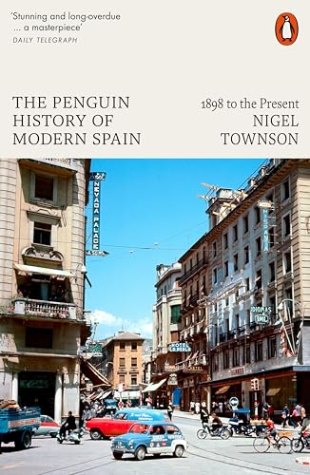
The Penguin History of Modern Spain: 1898 to the Present

The Penguin History of Modern Spain: 1898 to the Present

A revelatory new history of Spain, from the late nineteenth century to the twenty-first 'Spain is different, ' proclaimed the Franco regime in the 1940s, keen to attract foreign tourists. For the most part, the world has agreed. From the end of its 'glorious empire' in 1898 to the dazzling World Cup victory in 2010, the prevailing narrative of modern Spain has emphasized the country's peculiarity. Generations of historians and readers have been transfixed by its implosion into civil war in the 1930s, seduced by the valiant struggle of the republicans, horrified by the barbarity of the dictatorship which followed. Franco's Spain was seen as an anomaly in the midst of prosperous and permissive post-war Western Europe. But, as Nigel Townson shows in this richly layered and exciting new history, beyond the familiar image, there lies a radically different history of Spain: of a dynamic and progressive society that fits firmly into the narrative of modern Europe. Drawing on over forty years of post-Franco scholarship, The Penguin History of Modern Spain transforms our knowledge of Spain and its politics, society, economics and culture. It interweaves cutting-edge Spanish-led research - never before published in English - and testimonies of peasants, housewives, soldiers, workers, entrepreneurs, feminists and worker-priests, for an original and surprising portrait, which allows us, at last, to discern the country behind the veil of propaganda and romantic myths which still endure today

#47
The Savage Storm: The Heroic True Story of One of the Least told Campaigns of WW2

The Savage Storm: The Heroic True Story of One of the Least told Campaigns of WW2

Acclaimed WWII historian James Holland both narrates and reframes the controversial first months of the Italian Campaign and sets a new standard in the chronicling of war Following victory in Sicily, while the central command planned the spring 1944 invasion of France, Allied troops crossed into southern Italy in September 1943, expecting to drive Axis forces north and liberate Rome by Christmas. Italy quickly surrendered but German divisions fiercely resisted, and the hoped-for quick victory descended into one of the most challenging and protracted battles of the entire war.James Holland's The Savage Storm, chronicling the dramatic opening months of the Italian Campaign in unflinching and insightful detail, is unlike any campaign history yet written. Holland has always narrated war at ground level, but here goes further by chronicling events almost entirely through the contemporary eyes of those who were there on all sides and at all levels--Allied, Axis, civilians alike. Weaving together a wealth of letters, diaries, and other documents--from the likes of American General Mark Clark, German battalion commander Georg Zellner, New Zealand lance-corporal Roger Smith, legendary war reporter Ernie Pyle, and Italian politician Filippo Caracciolo--Holland traces the battles as they were experienced across plains, over mountains, through shattered villages and cities, in intense heat and, towards the end of December 1943, frigid cold and relentless rain.Such close-up views persuade Holland to recast important aspects of the campaign, reappraising the reputation of Mark Clark himself and other senior commanders of the U.S. Fifth and British Eighth armies. Given the shortage of Allied shipping and materiel allocated to Italy because of the build-up for D-Day, more was expected of Allied troops in Italy than anywhere else, and, as accounts at the time attest, a huge price was paid by everyone for each bloodily contested mile. Putting readers vividly in the moment as events unfolded, with characters made unforgettable by their own words, The Savage Storm is a defining account of the pivotal months leading to Monte Cassino, and a landmark in the writing about war.

#48
The Sisterhood: The Secret History of Women at the CIA

The Sisterhood: The Secret History of Women at the CIA

The acclaimed author of Code Girls returns with a "rip-roaring" (Steve Coll), "staggeringly well-researched" (The New York Times) history of three generations at the CIA, "electric with revelations" (Booklist) about the women who fought to become operatives, transformed spycraft, and tracked down Osama bin Laden. "This masterful book cements Liza Mundy as one of our foremost historians."--Kate Moore, bestselling author of The Radium Girls One of Kirkus Reviews' Most Anticipated Books of the Fall Created in the aftermath of World War II, the Central Intelligence Agency relied on women even as it attempted to channel their talents and keep them down. Women sent cables, made dead drops, and maintained the agency's secrets. Despite discrimination--even because of it--women who started as clerks, secretaries, or unpaid spouses rose to become some of the CIA's shrewdest operatives. They were unlikely spies--and that's exactly what made them perfect for the role. Because women were seen as unimportant, pioneering female intelligence officers moved unnoticed around Bonn, Geneva, and Moscow, stealing secrets from under the noses of their KGB adversaries. Back at headquarters, women built the CIA's critical archives--first by hand, then by computer. And they noticed things that the men at the top didn't see. As the CIA faced an identity crisis after the Cold War, it was a close-knit network of female analysts who spotted the rising threat of al-Qaeda--though their warnings were repeatedly brushed aside. After the 9/11 attacks, more women joined the agency as a new job, targeter, came to prominence. They showed that data analysis would be crucial to the post-9/11 national security landscape--an effort that culminated spectacularly in the CIA's successful effort to track down bin Laden in his Pakistani compound. Propelled by the same meticulous reporting and vivid storytelling that infused Code Girls, The Sisterhood offers a riveting new perspective on history, revealing how women at the CIA ushered in the modern intelligence age, and how their silencing made the world more dangerous.
#49
The Six: The Untold Story of America’s First Women Astronauts

The Six: The Untold Story of America’s First Women Astronauts

In the bestselling tradition of Hidden Figures and Code Girls, the remarkable true story of America's first women astronauts--six extraordinary women, each making history going to orbit aboard NASA's Space Shuttle. When NASA sent astronauts to the moon in the 1960s and 1970s the agency excluded women from the corps, arguing that only military test pilots--a group then made up exclusively of men--had the right stuff. It was an era in which women were steered away from jobs in science and deemed unqualified for space flight. Eventually, though, NASA recognized its blunder and opened the application process to a wider array of hopefuls, regardless of race or gender. From a candidate pool of 8,000 six elite women were selected in 1978--Sally Ride, Judy Resnik, Anna Fisher, Kathy Sullivan, Shannon Lucid, and Rhea Seddon. In The Six, acclaimed journalist Loren Grush shows these brilliant and courageous women enduring claustrophobic--and sometimes deeply sexist--media attention, undergoing rigorous survival training, and preparing for years to take multi-million-dollar payloads into orbit. Together, the Six helped build the tools that made the space program run. One of the group, Judy Resnik, sacrificed her life when the Space Shuttle Challenger exploded at 46,000 feet. Everyone knows of Sally Ride's history-making first space ride, but each of the Six would make their mark.

#50
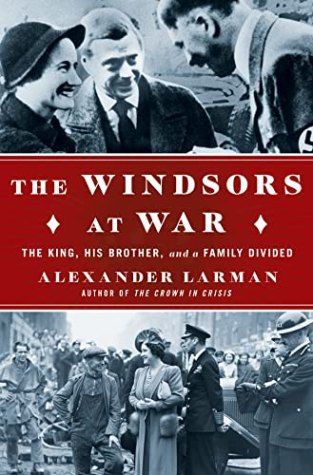
The Windsors at War: The Nazi Threat to the Crown

The Windsors at War: The Nazi Threat to the Crown

The next volume in Alexander Larman's biographical chronicle of the Windsor family, as they go to war with Adolf Hitler--and each other. At the beginning of 1937, the British monarchy was in a state of turmoil. The previous king, Edward VIII, had abdicated the throne, leaving his unprepared and terrified brother Bertie to become George VI, surrounded by a gaggle of courtiers and politicians who barely thought him up to the job. Meanwhile, as the now-Duke of Windsor awaited the decree that would allow him to marry his mistress Wallis Simpson, he took an increased interest in the expansionist plans of Adolf Hitler. He may even have gone so far as to betray his country in the process. And as double agents and Nazi spies thronged the corridors of Buckingham Palace, the only man the King could trust was his Prime Minister, Winston Churchill. But they faced a formidable, even unbeatable, adversary: his own brother. The Windsors at War tells the never-before-told story of World War Two in Britain and America with a fresh focus on the royal family, their conflicted relationships, and the events that rocked the international press. How did this squabbling, dysfunctional family manage to put their differences aside and unite to help win the greatest conflict of their lifetimes? Alexander Larman, author of The Crown in Crisis, now chronicles the Windsor family at war with Germany--and each other.

#51
There Will Be Fire: Margaret Thatcher, the IRA, and Two Minutes That Changed History

There Will Be Fire: Margaret Thatcher, the IRA, and Two Minutes That Changed History

A race-against-the-clock narrative that finally illuminates a history-changing event: the IRA's attempt to assassinate Margaret Thatcher and the epic manhunt that followed. A bomb planted by the Irish Republican Army exploded at 2:54 a.m. on October 12, 1984. It was the last day of the Conservative Party Conference at the Grand Hotel in the coastal town of Brighton, England. Rooms were obliterated, dozens of people wounded, five killed. Prime Minister Margaret Thatcher was in her suite when the explosion occurred; had she been just a few feet in another direction, flying tiles and masonry would have sliced her to ribbons. As it was, she survived--and history changed. There Will Be Fire is the gripping story of how the IRA came astonishingly close to killing Thatcher, in the most spectacular attack ever linked to the Northern Ireland Troubles. Journalist Rory Carroll reveals the long road to Brighton, the hide-and-seek between the IRA and British security services, the planting of the bomb itself, and the painstaking search for clues and suspects afterward. In There Will Be Fire, Carroll draws on his own interviews and original reporting, reveals new information, and weaves together previously unconnected threads. There Will Be Fire is journalistic nonfiction that reads like a thriller, propelled by a countdown to detonation.

#52
Thunderclap: A Memoir of Art and Life & Sudden Death

Thunderclap: A Memoir of Art and Life & Sudden Death

Named a Best Book of 2023 So Far by The New Yorker and the Financial Times New York Times bestselling author Laura Cumming "combines first-rate art history with deeply felt memoir" (The Washington Post) in this fascinating, little-known story of the massive explosion in Holland that killed Carel Fabritius, renowned painter of The Goldfinch and A View of Delft and nearly killed Johannes Vermeer--two of the greatest artists of the 17th century. "Exquisite." --Simon Schama, The Guardian As a brilliant art critic and historian, Laura Cumming has explored the importance of art in life and can give us a perspective on the time and place in which the artist worked. Now, through the lens of one dramatic event in 17th-century Holland, Cumming "has fashioned a book that combines memoir, art criticism, and history to illuminating effect" (The New York Times Book Review). In 1654, the Thunderclap--an enormous explosion at a gunpowder store--devasted the city of Delft, killing hundreds of people, including the extraordinary painter Carel Fabritius, and injuring thousands more. Framing the story around the life of Fabritius, Cumming illuminates this extraordinary moment in art history while also writing about her own father, a painter. Like Dutch art, the story gradually links country, city, town, street, house, interior--all the way to the bird on its perch, the blue and white tile, the smallest seed in a loaf of bread. The impact of a painting and how it can enter our thoughts, influence our view and understanding of the world is the heart of this book. Cumming has brought her unique eye to her most compelling subject yet. Featuring beautiful full-color images of Dutch paintings throughout, this is "a glorious tribute to the two men who showed her the truth of the notion that paintings offer 'a land in themselves, a society, a place to be'" (The Economist).

#54
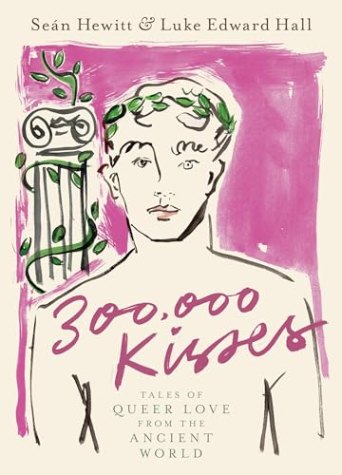
300,000 Kisses: Tales of Queer Love from the Ancient World

300,000 Kisses: Tales of Queer Love from the Ancient World

A landmark illustrated anthology of queer Greek and Roman love stories that reclaim and celebrate homosexual love and sensuality, from artist Luke Edward Hall and award-winning poet Seán Hewitt. For centuries, evidence of queer love in the ancient world has either been ignored or suppressed. Even today, only a few narratives are widely known: the wild romance of Achilles and Patroclus; the yearning love of Sappho's lyrics; and the three genders introduced in Plato's Symposium. Yet there is a rich literary tradition of queer Greek and Roman love that extends far beyond the prudish translations of these familiar handful of stories. In 300,000 Kisses, award-winning poet Seán Hewitt and renowned designer Luke Edward Hall collect these stories--including some of the most beautiful and moving in the classical canon--and bring them to vivid life. Alongside celebrated works by Homer, Sappho, Ovid and Catullus, they include a wide range of rarely anthologized sources: raunchy poems, thoughtful dialogues, philosophical treatises, and even a graffiti text salvaged from the ruins of Pompeii. Through Hewitt's contemporary translations and Hall's vibrant illustrations, we encounter relationships that are by turns heartfelt and nourishing, unrequited and lustful, toxic and crude, tender and fulfilling. A groundbreaking anthology that seeks to change the way we see the ancient world, 300,000 Kisses is a fascinating journey through love in all its forms.

#55
A Brutal Reckoning

A Brutal Reckoning

The story of the pivotal struggle between the Creek Indians and an insatiable, young United States for control over the Deep South--from the acclaimed historian and prize-winning author of The Earth is Weeping The Creek War is one of the most tragic episodes in American history, leading to the greatest loss of Native American life on what is now U.S. soil. What began as a vicious internal conflict among the Creek Indians metastasized like a cancer. The ensuing Creek War of 1813-1814 shattered Native American control of the Deep South and led to the infamous Trail of Tears, in which the government forcibly removed the southeastern Indians from their homeland. The war also gave Andrew Jackson his first combat leadership role, and his newfound popularity after defeating the Creeks would set him on the path to the White House. In A Brutal Reckoning, Peter Cozzens vividly captures the young Jackson, describing a brilliant but harsh military commander with unbridled ambition, a taste for cruelty, and a fraught sense of honor and duty. Jackson would not have won the war without the help of Native American allies, yet he denied their role and even insisted on their displacement, together with all the Indians of the American South in the Trail of Tears. A conflict involving not only white Americans and Native Americans, but also the British and the Spanish, the Creek War opened the Deep South to the Cotton Kingdom, setting the stage for the American Civil War yet to come. No other single Indian conflict had such significant impact on the fate of America--and A Brutal Reckoning is the definitive book on this forgotten chapter in our history.

#56
A Burning House

A Burning House

Despite the civil rights progress he fought for and saw on the horizon in the 1950s and '60s, Martin Luther King Jr.--increasingly concerned by America's moral vision, admitted--"I've come to believe that we are integrating into a burning house."In A Burning House, Brandon Washington contends that American Evangelicalism is a house ablaze: burning in the destructive fires of discrimination and injustice. The stain of segregation remains prevalent, not only in our national institutions, but also in our churches, and this has long tarnished the witness of Christianity and hampered our progress toward a Christ-like vision of Shalom--peace, justice, and wholeness--in the world. Common doctrine may unite black and white evangelicals, but rifts such as social ethics and cultural influences still separate us.Throughout this challenging but reconciliatory book, Washington gives a historical and theological appraisal of American evangelicalism to understand how we came to be where we are and what our response should be. Instead of calling the movement to become something new, he challenges it to live into what it has always been in Christ and strive for deliberate and sacrificial integration--the unity of believers of all ethnicities.A Burning House is a rallying call to a waning movement whose most public leaders have often turned a blind eye to, or even justified, the sin of racism--a movement whose theology is sometimes compromised by a secular anthropology. This is a call to both white and black evangelicals to better understand our past so that we can better embrace the unifying and comprehensive message of the gospel we preach.

#58
A Few Days Full of Trouble: Revelations on the Journey to Justice for My Cousin and Best Friend, Emmett Till

A Few Days Full of Trouble: Revelations on the Journey to Justice for My Cousin and Best Friend, Emmett Till

The last surviving witness to the lynching of Emmett Till tells his story, with poignant recollections of Emmett as a boy, critical insights into the recent investigation, and powerful lessons for racial reckoning, both then and now. "In this moving and important book, the Reverend Wheeler Parker Jr. and Christopher Benson give us a unique window onto the anguished search for justice in a case whose implications shape us still."--Jon Meacham In 1955, fourteen-year-old Emmett Till was lynched. That remains an undisputed fact of the case that ignited a flame within the Civil Rights Movement that has yet to be extinguished. Yet the rest of the details surrounding the event remain distorted by time and too many tellings. What does justice mean in the resolution of a cold case spanning nearly seven decades? In A Few Days Full of Trouble, this question drives a new perspective on the story of Emmett Till, relayed by his cousin and best friend--the Reverend Wheeler Parker Jr., a survivor of the night of terror when young Emmett was taken from his family's rural Mississippi Delta home in the dead of night. Rev. Parker offers an emotional and suspenseful page-turner set against a backdrop of reporting errors and manipulations, racial reckoning, and political pushback--and he does so accompanied by never-before-seen findings in the investigation, the soft resurrection of memory, and the battle-tested courage of faith. A Few Days Full of Trouble is a powerful work of truth-telling, a gift to readers looking to reconcile the weight of the past with a hope for the future.

#61
A Slow, Calculated Lynching: The Story of Clyde Kennard

A Slow, Calculated Lynching: The Story of Clyde Kennard

In the years following Brown v. Board of Education, countless Black citizens endured violent resistance and even death while fighting for their constitutional rights. One of those citizens, Clyde Kennard (1927-1963), a Korean War veteran and civil rights leader from Hattiesburg, Mississippi, attempted repeatedly to enroll at the all-white Mississippi Southern College--now the University of Southern Mississippi--in the late 1950s. In A Slow, Calculated Lynching: The Story of Clyde Kennard, Devery S. Anderson tells the story of a man who paid the ultimate price for trying to attend a white college during Jim Crow. Rather than facing conventional vigilantes, he stood opposed to the governor, the Mississippi State Sovereignty Commission, and other high-ranking entities willing to stop at nothing to deny his dreams. In this comprehensive and extensively researched biography, Anderson examines the relentless subterfuge against Kennard, including the cruelly successful attempts to frame him--once for a misdemeanor and then for a felony. This second conviction resulted in a sentence of seven years hard labor at Mississippi State Penitentiary, forever disqualifying him from attending a state-sponsored school. While imprisoned, he developed cancer, was denied care, then sadly died six months after the governor commuted his sentence. In this prolonged lynching, Clyde Kennard was robbed of his ambitions and ultimately his life, but his final days and legacy reject the notion that he was powerless. Anderson highlights the resolve of friends and fellow activists to posthumously restore his name. Those who fought against him, and later for him, link a story of betrayal and redemption, chronicling the worst and best in southern race relations. The redemption was not only a symbolic one for Kennard but proved healing for the entire state. He was gone, but countless others still benefit from Kennard's legacy and the biracial, bipartisan effort he inspired.

#63
A Social History of Modern Tehran

A Social History of Modern Tehran

Tehran, the capital of Iran since the late eighteenth century, is now one of the largest cities in the Middle East. Exploring Tehran's development from the nineteenth to the mid-twentieth century, Ashkan Rezvani Naraghi paints a vibrant picture of a city undergoing rapid and dynamic social transformation. Rezvani Naraghi demonstrates that this shift was the product of a developing discourse around spatial knowledge, in which the West became the model for the social practices of the state and sections of Iranian society. As traditional social spaces, such as coffee houses, bathhouses, and mosques, were replaced by European-style cafes, theatres, and sports clubs, Tehran and its people were irreversibly altered. Using an array of archival sources, Rezvani Naraghi stresses the agency of everyday inhabitants in shaping urban change. This enlightening history not only allows us to better understand the contours of contemporary Tehran, but to develop a new way of imagining, talking about, and building 'the city'.

#64
A Travel Guide to the Middle Ages: The World Through Medieval Eyes

A Travel Guide to the Middle Ages: The World Through Medieval Eyes

“[An] immensely entertaining history.” —The New Yorker A captivating journey of the expansive world of medieval travel, from London to Constantinople to the court of China and beyond. Europeans of the Middle Ages were the first to use travel guides to orient their wanderings, as they moved through a world punctuated with miraculous wonders and beguiling encounters. In this vivid and alluring history, medievalist Anthony Bale invites readers on an odyssey across the medieval world, recounting the advice that circulated among those venturing to the road for pilgrimage, trade, diplomacy, and war. Journeying alongside scholars, spies, and saints, from Western Europe to the Far East, the Antipodes and the ends of the earth, Bale provides indispensable information on the exchange rate between Bohemian ducats and Venetian groats, medieval cures for seasickness, and how to avoid extortionist tour guides and singing sirens. He takes us from the streets of Rome, more ruin than tourist spot, and tours of the Khan’s court in Beijing to Mamluk-controlled Jerusalem, where we ride asses across the holy terrain, and bustling bazaars of Tabriz. We also learn of rumored fantastical places, like ones where lambs grow on trees and giant canes grow fruit made of gems. And we are offered a glimpse of what non-European travelers thought of the West on their own travels. Using previously untranslated contemporaneous documents from a colorful range of travelers, and from as far and wide as Turkey, Iceland, North Africa, and Russia, A Travel Guide to the Middle Ages is a witty and unforgettable exploration of how Europeans understood—and often misunderstood—the larger world.

#65
African and Caribbean People in Britain: A History

African and Caribbean People in Britain: A History

SHORTLISTED FOR THE WOLFSON HISTORY PRIZE A major new history of Britain that transforms our understanding of this country's past 'I've waited so long so read a comprehensively researched book about Black history on this island. This is it: a journey of discovery and a truly exciting and important work' Zainab Abbas Despite the best efforts of researchers and campaigners, there remains today a steadfast tendency to reduce the history of African and Caribbean people in Britain to a simple story: it is one that begins in 1948 with the arrival of a single ship, the Empire Windrush, and continues mostly apart from a distinct British history, overlapping only on occasion amid grotesque injustice or pioneering protest. Yet, as acclaimed historian Hakim Adi demonstrates, from the very beginning, from the moment humans first stood on this rainy isle, there have been African and Caribbean men and women set at Britain's heart. Libyan legionaries patrolled Hadrian's Wall while Rome's first 'African Emperor' died in York. In Elizabethan England, 'Black Tudors' served in the land's most eminent households while intrepid African explorers helped Sir Francis Drake to circumnavigate the globe. And, as Britain became a major colonial and commercial power, it was African and Caribbean people who led the radical struggle for freedom - a struggle which raged throughout the twentieth century and continues today in Black Lives Matter campaigns. Charting a course through British history with an unobscured view of the actions of African and Caribbean people, Adi reveals how much our greatest collective achievements - universal suffrage, our victory over fascism, the forging of the NHS - owe to these men and women, and how, in understanding our history in these terms, we are more able to fully understand our present moment.

#68
Agave Spirits

Agave Spirits

All tequilas are mezcals; all mezcals are made from agaves; and every bottle of mezcal is the remarkable result of collaborations among agave entrepreneurs, botanists, distillers, beverage distributors, bartenders, and more. How these groups come together in this "spirits world" is the subject of this fascinating new book by the acclaimed ethnobotanist Gary Paul Nabhan and the pioneering restauranteur David Suro Pinera. Join them as they delight in the diversity of the distillate agave spirits, as they endeavor to track down the more distant kin in the family of agaves, and as, along the way, they reveal the stunning innovations that have been transforming the industry around tequilas and mezcals in recent decades.The result of the authors' fieldwork and on-the-ground interviews with mezcaleros in eight Mexican states, Agave Spirits shows how traditional methods of mezcal production are inspiring a new generation of individuals, including women, both in and beyond the industry. And as they reach back into a rich, centuries-long history, Nabhan and Suro Pinera make clear that understanding the story behind a bottle of mezcal, more than any other drink, will not only reveal what lies ahead for the tradition--including its ability to adapt in the face of the climate crisis--but will also enrich the drinking experience for readers.Essential reading for mezcal connoisseurs and amateurs interested in unlocking the past of a delightful distillate, Agave Spirits tells the tale of the most flavorful and memorable spirits humankind has ever sipped and savored. Featuring twelve illustrations by René Alejandro Hernández Tapia and indices that list common and scientific names for agave species, as well as the names of plants, animals, and domesticated agaves used in the production of distillates.

#69
Alexandria

Alexandria

A SUNDAY TIMES AND TLS BOOK OF THE YEAR 'Fascinating and important' Natalie Haynes, author of Stone Blind 'Monumental and vividly imagined' Daily Telegraph 'Wonderfully entertaining' Sunday Times 'Lively and engrossing ' Literary Review On a sparsely populated Egyptian coastline, Alexander the Great sketched his vision of a metropolis into the sand. Situated on the cusp of three continents, it became the city where Greeks and Egyptians, Romans and Jews created a global knowledge capital that changed the face of philosophy, religion and science forever. In this sweeping biography of the great city, Islam Issa takes us on a fascinating journey across millennia. Rich in big ideas, brutal tragedies and distinctive characters, Alexandria tells the gripping story of a city that has shaped our modern world. 'A multifaceted history of an enthralling city' Lloyd Llewellyn-Jones, author of Persians: The Age of the Great Kings 'A cornucopia of fascinating details, every page revealing a new delight' Paul Strathern, author of The Medici

#70
All Things Move

All Things Move

Contemporary themes: the search for meaning and for spirituality in a secular world; the art of attention; reconciliation with the Catholic Church; the meaning and value of art (and the humanities) in the 21st century, especially art from cultures and eras radically different from our own. Editorial comps include: Mark Doty's Still Life with Oysters and Lemons, So Much Longing in So Little Space: The Art of Edvard Munsch by Karl Ove Knausgaard, and Lonely City: Adventures in the Art of Being Alone by Olivia Laing Marshall's nonfiction and journalism have appeared in Slate, The Common, Maclean's, the Globe and Mail, and elsewhere. Include four-colour images throughout.

#71
American Breakdown

American Breakdown

A Silent Spring for the human body, this wide-ranging, genre-crossing literary mystery interweaves the author's quest to understand the source of her own condition with her telling of the story of the chronically ill 19th-century diarist Alice James--ultimately uncovering the many hidden health hazards of life in America.When Jennifer Lunden became chronically ill after moving from Canada to Maine, her case was a medical mystery. Just 21, unable to hold a book or stand for a shower, she lost her job and consigned herself to her bed. The doctor she went to for help told her she was "just depressed."After suffering from this enigmatic illness for five years, she discovered an unlikely source of hope and healing: a biography of Alice James, the bright, witty, and often bedridden sibling of brothers Henry James, the novelist, and William James, the father of psychology. Alice suffered from a life-shattering illness known as neurasthenia, now often dismissed as a "fashionable illness."In this meticulously researched and illuminating debut, Lunden interweaves her own experience with Alice's, exploring the history of medicine and the effects of the industrial revolution and late-stage capitalism to tell a riveting story of how we are a nation struggling--and failing--to be healthy.Although science--and the politics behind its funding--has in many ways let Lunden and millions like her down, in the end science offers a revelation that will change how readers think about the ecosystems of their bodies, their communities, the country, and the planet.

#73
Among the Braves

Among the Braves

Through the eyes of two frontline journalists comes a gripping narrative history of the Hong Kong pro-democracy movement centered around a cast of four core activists, culminating in the 2019 mass protests and Beijing's brutal crackdown. Hong Kong was an experiment in governance. Handed back to China in 1997 after 156 years of British rule, it was meant to be a carve-out between hostile systems: a bridge between communism and capitalism, authoritarianism and liberal democracy. "One country, two systems" kept its media free, its courts independent and its protests boisterous, designed also to convince Taiwan of a peaceful solution to Beijing's desire for reunification. Yet this formulation excluded Hong Kong's own people, their future negotiated by political titans in faraway capitals. In 2019, an ill-conceived law spear-headed by a sycophantic leader pushed millions to take to the streets in one of the most enduring protest movements the world has ever seen. Xi Jinping responded with a draconian national security law that sought not only to end the demonstrations but quash the "problem" of Hong Kongers' identity and desire for freedom. Reverend Chu, who believed Hong Kong had to carry the spirit of students at Tiananmen Square, saw his silver-haired comrades who birthed the city's modern pro-democracy movement handcuffed and taken from their homes. Tommy, an art student radicalized into throwing Molotov cocktails, watched "braves" like him brutalized by police before his own arrest prompted him to flee. Finn epitomized the decentralized nature of the movement and its internet-fueled victories, but online anonymity couldn't stop his life from unravelling. Gwyneth could predict her eventual fate when she chose to give up her career as a journalist to stand for election as an opposition candidate, and did it anyway. In Among the Braves, Shibani Mahtani and Timothy McLaughlin tell the story of Hong Kong's past, and what the sacrifices of its people mean for global democracy's shaky foundation.

#74
An American Story

An American Story

From the fireside tales in an African village, through the unspeakable passage across the Atlantic, to the backbreaking work in the fields of the South, this is a story of a people's struggle and strength, horror and hope. This is the story of American slavery, a story that needs to be told and understood by all of us. A testament to the resilience of the African American community, this book honors what has been and envisions what is to be.

#76
Anansi’s Gold: The Man Who Looted the West, Outfoxed Washington, and Swindled the World

Anansi’s Gold: The Man Who Looted the West, Outfoxed Washington, and Swindled the World

New Yorker Best Book of the Year "A fascinating story brilliantly told."--The Boston Globe * "A non-fiction masterpiece."--Philadelphia Inquirer The astounding, never-before-told story of how an audacious Ghanaian con artist pulled off one of the 20th century's longest-running and most spectacular frauds. When Ghana won its independence from Britain in 1957, it instantly became a target for home-grown opportunists and rapacious Western interests determined to snatch any assets that colonialism hadn't already stripped. A CIA-funded military junta ousted the new nation's inspiring president, Kwame Nkrumah, then falsely accused him of hiding the country's gold overseas. Into this big lie stepped one of history's most charismatic scammers, a con man to rival the trickster god Anansi. Born into poverty in Ghana and trained in the United States, John Ackah Blay-Miezah declared himself custodian of an alleged Nkrumah trust fund worth billions. You, too, could claim a piece--if only you would "invest" in Blay-Miezah's fictitious efforts to release the equally fictitious fund. Over the 1970s and '80s, he and his accomplices--including Ghanaian state officials and Nixon's former attorney general--scammed hundreds of millions of dollars out of thousands of believers. Blay-Miezah lived in luxury, deceiving Philadelphia lawyers, London financiers, and Seoul businessmen alike, all while eluding his FBI pursuers. American prosecutors called his scam "one of the most fascinating--and lucrative--in modern history." In Anansi's Gold, Yepoka Yeebo chases Blay-Miezah's ever-wilder trail and discovers, at long last, what really happened to Ghana's missing wealth. She unfolds a riveting account of Cold War entanglements, international finance, and postcolonial betrayal, revealing how what we call "history" writes itself into being, one lie at a time.
#78
Art Monsters: Unruly Bodies in Feminist Art

Art Monsters: Unruly Bodies in Feminist Art

A Must-Read: Vogue, Chicago Review of Books, Literary Hub "Destined to become a new classic . . . Elkin shatters the truisms that have evolved around feminist thought." --Chris Kraus, author of I Love Dick and After Kathy Acker: A Literary Biography What kind of art does a monster make? And what if monster is a verb? Noun or a verb, the idea is a dare: to overwhelm limits, to invent our own definitions of beauty. In this dazzlingly original reassessment of women's stories, bodies, and art, Lauren Elkin--the celebrated author of Flâneuse--explores the ways in which feminist artists have taken up the challenge of their work and how they not only react against the patriarchy but redefine their own aesthetic aims. How do we tell the truth about our experiences as bodies? What is the language, what are the materials, that we need to transcribe them? And what are the unique questions facing those engaged with female bodies, queer bodies, sick bodies, racialized bodies? Encompassing with a rich genealogy of work across the literary and artistic landscape, Elkin makes daring links between disparate points of reference-- among them Julia Margaret Cameron's photography, Kara Walker's silhouettes, Vanessa Bell's portraits, Eva Hesse's rope sculptures, Carolee Schneemann's body art, Theresa Hak Kyung Cha's trilingual masterpiece DICTEE--and steps into the tradition of cultural criticism established by Susan Sontag, Hélène Cixous, and Maggie Nelson. An erudite, potent examination of beauty and excess, sentiment and touch, the personal and the political, the ambiguous and the opaque, Art Monsters is a radical intervention that forces us to consider how the idea of the art monster might transform the way we imagine--and enact--our lives.

#79
Asian Americans in an Anti-Black World

Asian Americans in an Anti-Black World

Where do Asian Americans fit into the U.S. racial order? Are they subordinated comparably to Black people or permitted adjacency to whiteness? The racial reckoning prompted by the police murder of George Floyd and the surge in anti-Asian hate during the COVID-19 pandemic raise these questions with new urgency. Asian Americans in an Anti-Black World is a groundbreaking study that will shake up scholarly and popular thinking on these matters. Theoretically innovative and based on rigorous historical research, this provocative book tells us we must consider both anti-Blackness and white supremacy--and the articulation of the two forces--in order to understand U.S. racial dynamics. The construction of Asian Americans as not-white but above all not-Black has determined their positionality for nearly two centuries. How Asian Americans choose to respond to this status will help to define racial politics in the U.S. in the twenty-first century.

#80
Atlas of Classical History

Atlas of Classical History

Featuring over 130 colour maps of ancient physical and human landscapes spanning Britain to India and deep into the Sahara, this atlas is a compact kaleidoscope of peoples, migrations, empires, strife, cultures, cities and travels from Greece's Bronze Age to Rome's fall in the West.This revised edition of the Atlas of Classical History equips readers with a clear visual grasp of the spatial dimension, a vital aspect for understanding history. Users gain insight into the formative roles of physical landscape - seas, rivers, mountains, deserts - in Mediterranean peoples' development. The maps in all their variety of scope, scale and colour offer an absorbing means to track the growth of states on the ground, especially their relationships, conflicts, urbanization, communications and cultures. Each map is enriched by readily identifiable symbols and concise accompanying texts, as well as recommendations for further reading. With its vast geographical sweep in a compact format, this book is a comprehensive reference work primarily aimed at non-specialists.With updated text and thoroughly revised maps now presented in colour, the Atlas of Classical History remains an essential reference volume for all those interested in the civilizations of ancient Europe, North Africa and Western Asia, as well as for students and scholars of ancient Greek and Roman history.

#82
Becoming Ella Fitzgerald: The Jazz Singer Who Transformed American Song

Becoming Ella Fitzgerald: The Jazz Singer Who Transformed American Song

Ella Fitzgerald (1917-1996) possessed one of the twentieth century's most astonishing voices. In this first major biography since Fitzgerald's death, historian Judith Tick offers a sublime portrait of this ambitious risk-taker whose exceptional musical spontaneity made her a transformational artist. Becoming Ella Fitzgerald clears up long-enduring mysteries. Archival research and in-depth family interviews shed new light on the singer's difficult childhood in Yonkers, New York, the tragic death of her mother, and the year she spent in a girls' reformatory school--where she sang in its renowned choir and dreamed of being a dancer. Rarely seen profiles from the Black press offer precious glimpses of Fitzgerald's tense experiences of racial discrimination and her struggles with constricting models of Black and white femininity at midcentury.Tick's compelling narrative depicts Fitzgerald's complicated career in fresh and original detail, upending the traditional view that segregates vocal jazz from the genre's mainstream. As she navigated the shifting tides between jazz and pop, she used her originality to pioneer modernist vocal jazz. Interpreting long-lost setlists, reviews from both white and Black newspapers, and newly released footage and recordings, the book explores how Ella's transcendence as an improvisor produced onstage performances every bit as significant as her historic recorded oeuvre.From the singer's first performance at the Apollo Theatre's famous "Amateur Night" to the Savoy Ballroom, where Fitzgerald broke through with Chick Webb's big band in the 1930s, Tick evokes the jazz world in riveting detail. She describes how Ella helped shape the bebop movement in the 1940s, as she joined Dizzy Gillespie and her then-husband, Ray Brown, in the world-touring Jazz at the Philharmonic, one of the first moments of high-culture acceptance for the disreputable art form.Breaking ground as a female bandleader, Fitzgerald refuted expectations of musical Blackness, deftly balancing artistic ambition and market expectations. Her legendary exploration of the Great American Songbook in the 1950s fused a Black vocal aesthetic and jazz improvisation to revolutionize the popular repertoire. This hybridity often confounded critics, yet throughout the 1970s and 1980s, Ella reached audiences around the world, electrifying concert halls, and sold millions of records.A masterful biography, Becoming Ella Fitzgerald describes a powerful woman who set a standard for American excellence nearly unmatched in the twentieth century.

#83
Bede and the Theory of Everything

Bede and the Theory of Everything

An accessible biography of the venerable Bede, regarded as the father of English history. A 2023 History Today Book of the Year This book investigates the life and world of Bede (c. 673–735), the foremost scholar of the early Middle Ages and the “father of English history.” It examines his notable feats, including calculating the first tide tables, creating the Ceolfrith Bibles and the Lindisfarne Gospels, writing the earliest extant Old English poetry, and composing his famous Ecclesiastical History of the English People. In addition to providing an accessible overview of Bede’s life and work, Michelle P. Brown describes new discoveries regarding Bede’s handwriting, his historical research, and his previously lost Old English translation of St John’s Gospel, dictated on his deathbed.

#85
Biography of X

Biography of X

National Bestseller. A New York Times Book Review Editors' Choice. Winner of the 2023 Brooklyn Library Prize. One of Publishers Weekly's Ten Best Books of 2023. "A major novel, and a notably audacious one." --Dwight Garner, The New York Times "It feels fairly rare for a novel to be hugely intelligent and moving and fun in equal measure, but with Biography of X, Catherine Lacey somehow--magically--makes the nearly impossible look easy." --Lauren Groff From one of our fiercest stylists, a roaring epic chronicling the life, times, and secrets of a notorious artist. When X--an iconoclastic artist, writer, and polarizing shape-shifter--falls dead in her office, her widow, CM, wild with grief and refusing everyone's good advice, hurls herself into writing a biography of the woman she deified. Though X was recognized as a crucial creative force of her era, she kept a tight grip on her life story. Not even CM knows where X was born, and in her quest to find out, she opens a Pandora's box of secrets, betrayals, and destruction. All the while, she immerses herself in the history of the Southern Territory, a fascist theocracy that split from the rest of the country after World War II, and which finally, in the present day, is being forced into an uneasy reunification. A masterfully constructed literary adventure complete with original images assembled by X's widow, Biography of X follows CM as she traces X's peripatetic trajectory over decades, from Europe to the ruins of America's divided territories, and through her collaborations and feuds with everyone from Bowie and Waits to Sontag and Acker. At last, when she finally understands the scope of X's defining artistic project, CM realizes her wife's deceptions were far crueler than she imagined. Pulsing with suspense and intellect while blending nonfiction and fiction, Biography of X is a roaring epic that plumbs the depths of grief, art, and love. In her most ambitious novel yet, Catherine Lacey pushes her craft to its highest level, introducing us to an unforgettable character who, in her tantalizing mystery, shows us the fallibility of the stories we craft for ourselves.

#86
Bipolar General

Bipolar General

Maj. Gen. Gregg Martin cut a striking figure in the Army: athletic, quick witted, devout, and studious, he was a natural leader. Thanks to his engineering and leadership knowhow, Martin was chosen to lead the thousands of combat engineers who paved the way for 100,000 Army troops to battle their way to Baghdad in 2003. Martin was astonishing to watch as he led this effort, his mind laser focused and body vibrating with energy. He made quick decisions, often anticipating and solving problems before orders came down. Only years later would he learn how the pressure of organizing dozens of simultaneous life-or-death missions each day altered the biochemistry of his brain. Since adolescence he'd had what psychiatrists call a 'hyperthymic personality' - an exceptionally positive, energetic, and can-do disposition. But the Iraq War triggered what military and Veterans Administration psychiatrists ultimately diagnosed as late-onset bipolar disorder, a chemical imbalance that sends sufferers whipsawing between grandiose imaginings and suicidal depressions. His increasing erratic behavior led to his forced resignation as president of the National Defense University and ended his military career. Bipolar General offers a candid account of Martin's personal journey with undiagnosed mental illness as he rose through the ranks of the U.S. Army. The author provides a first-hand look at the various treatments available for bipolar disorder ranging from powerful medications to electroconvulsive therapy. He discusses why his condition went undiagnosed for so long and explores what can be done both within and outside the armed forces to diagnose and treat mental illness. Bipolar General should be of value to those with mental illness and to the communities of family, friends, and caregivers surrounding them.

#87
Black Ball: Kareem Abdul-Jabbar, Spencer Haywood, and the Generation That Saved the Soul of the NBA

Black Ball: Kareem Abdul-Jabbar, Spencer Haywood, and the Generation That Saved the Soul of the NBA

A vital narrative history of 1970s pro basketball, and the Black players who shaped the NBA Against a backdrop of ongoing resistance to racial desegregation and strident calls for Black Power, the NBA in the 1970s embodied the nation's imagined descent into disorder. A new generation of Black players entered the league then, among them Kareem Abdul-Jabbar and Spencer Haywood, and the press and public were quick to blame this cohort for the supposed decline of pro basketball, citing drugs, violence, and greed. Basketball became a symbol for post-civil rights America: the rules had changed, allowing more Black people onto the playing field, and now they were ruining everything. Enter Black Ball, a gripping history and corrective in which scholar Theresa Runstedtler expertly rewrites basketball's "Dark Ages." Weaving together a deep knowledge of the game with incisive social analysis, Runstedtler argues that this much-maligned period was pivotal to the rise of the modern-day NBA. Black players introduced an improvisational style derived from the playground courts of their neighborhoods. They also challenged the team owners' autocratic power, garnering higher salaries and increased agency. Their skills, style, and savvy laid the foundation for the global popularity and profitability of the league we know today.

#90
Blackouts

Blackouts

Winner of the National Book Award for Fiction A Best Book of the Year: The New York Times Book Review, NPR, The Washington Post, Time, BookPage, The New York Public Library, Powell's A Must-Read: The New York Times, Time, Los Angeles Times, Chicago Tribune, The Guardian, Boston Herald, Literary Hub, The Rumpus, The Bay Area Reporter, Datebook, Electric Literature, The Stacks, Them, Publishers Weekly "Sweeping, ingenious . . . A kiss to build a dream on." --Maureen Corrigan, NPR's Fresh Air From the bestselling author of We the Animals, Blackouts mines lost histories--personal and collective. Out in the desert in a place called the Palace, a young man tends to a dying soul, someone he once knew briefly but who has haunted the edges of his life: Juan Gay. Playful raconteur, child lost and found and lost, guardian of the institutionalized, Juan has a project to pass along, one built around a true artifact of a book--Sex Variants: A Study of Homosexual Patterns--and its devastating history. This book contains accounts collected in the early twentieth century from queer subjects by a queer researcher, Jan Gay, whose groundbreaking work was then co-opted by a committee, her name buried. The voices of these subjects have been filtered, muted, but it is possible to hear them from within and beyond the text, which, in Juan's tattered volumes, has been redacted with black marker on nearly every page. As Juan waits for his end, he and the narrator recount for each other moments of joy and oblivion; they resurrect loves, lives, mothers, fathers, minor heroes. In telling their own stories and the story of the book, they resist the ravages of memory and time. The past is with us, beside us, ahead of us; what are we to create from its gaps and erasures? A book about storytelling--its legacies, dangers, delights, and potential for change--and a bold exploration of form, art, and love, Justin Torres's Blackouts uses fiction to see through the inventions of history and narrative. A marvel of creative imagination, it draws on testimony, photographs, illustrations, and a range of influences as it insists that we look long and steadily at what we have inherited and what we have made--a world full of ghostly shadows and flashing moments of truth. A reclamation of ransacked history, a celebration of defiance, and a transformative encounter, Blackouts mines the stories that have been kept from us and brings them into the light.

#93
Brave the Wild River

Brave the Wild River

In the summer of 1938, botanists Elzada Clover and Lois Jotter set off to run the Colorado River, accompanied by an ambitious and entrepreneurial expedition leader, a zoologist, and two amateur boatmen. With its churning waters and treacherous boulders, the Colorado was famed as the most dangerous river in the world. Journalists and veteran river runners boldly proclaimed that the motley crew would never make it out alive. But for Clover and Jotter, the expedition held a tantalizing appeal: no one had yet surveyed the plant life of the Grand Canyon, and they were determined to be the first.Through the vibrant letters and diaries of the two women, science journalist Melissa L. Sevigny traces their daring forty-three-day journey down the river, during which they meticulously cataloged the thorny plants that thrived in the Grand Canyon's secret nooks and crannies. Along the way, they chased a runaway boat, ran the river's most fearsome rapids, and turned the harshest critic of female river runners into an ally. Clover and Jotter's plant list, including four new cactus species, would one day become vital for efforts to protect and restore the river ecosystem. Brave the Wild River is a spellbinding adventure of two women who risked their lives to make an unprecedented botanical survey of a defining landscape in the American West, at a time when human influences had begun to change it forever.

#95
But Will You Love Me Tomorrow: An Oral History of the ’60s Girl Groups

But Will You Love Me Tomorrow: An Oral History of the ’60s Girl Groups

Featuring over 300 hours of new interviews with 100+ subjects, an oral history of the girl groups (such as The Ronettes, The Shirelles, The Supremes, and The Vandellas) that redefined the early 1960s The girl group sound, made famous and unforgettable by acts like The Ronettes, The Shirelles, The Supremes, and The Vandellas, took over the airwaves by capturing the mixture of innocence and rebellion emblematic of America in the 1960s. As songs like "Will You Love Me Tomorrow," "Then He Kissed Me," and "Be My Baby" rose to the top of the charts, girl groups cornered the burgeoning post-war market of teenage rock and roll fans, indelibly shaping the trajectory of pop music in the process. While the songs are essential to the American canon, many of the artists remain all but anonymous to most listeners. With more than 100 subjects that made the music, from the singers to the songwriters, to their agents, managers, and sound engineers--and even to the present-day celebrities inspired by their lasting influence-But Will You Love Me Tomorrow: An Oral History of 60s Girl Groups tells a national coming-of-age story that gives particular insight into the experiences of the female singers and songwriters who created the movement.

#100
Democracy Awakening: Notes on the State of America

Democracy Awakening: Notes on the State of America

New York Times Bestseller "Engaging and highly accessible."--Boston Globe "A vibrant, and essential history of America's unending, enraging and utterly compelling struggle since its founding to live up to its own best ideals... It's both a cause for hope, and a call to arms."--Jane Mayer, author Dark Money From historian and author of the popular daily newsletter LETTERS FROM AN AMERICAN, a vital narrative that explains how America, once a beacon of democracy, now teeters on the brink of autocracy -- and how we can turn back. In the midst of the impeachment crisis of 2019, Heather Cox Richardson launched a daily Facebook essay providing the historical background of the daily torrent of news. It soon turned into a newsletter and its readership ballooned to more than 2 million dedicated readers who rely on her plainspoken and informed take on the present and past in America. In Democracy Awakening, Richardson crafts a compelling and original narrative, explaining how, over the decades, a small group of wealthy people have made war on American ideals. By weaponizing language and promoting false history they have led us into authoritarianism -- creating a disaffected population and then promising to recreate an imagined past where those people could feel important again. She argues that taking our country back starts by remembering the elements of the nation's true history that marginalized Americans have always upheld. Their dedication to the principles on which this nation was founded has enabled us to renew and expand our commitment to democracy in the past. Richardson sees this history as a roadmap for the nation's future. Richardson's talent is to wrangle our giant, meandering, and confusing news feed into a coherent story that singles out what we should pay attention to, what the precedents are, and what possible paths lie ahead. In her trademark calm prose, she is realistic and optimistic about the future of democracy. Her command of history allows her to pivot effortlessly from the Founders to the abolitionists to Reconstruction to Goldwater to Mitch McConnell, highlighting the political legacies of the New Deal, the lingering fears of socialism, the death of the liberal consensus and birth of "movement conservatism." Many books tell us what has happened over the last five years. Democracy Awakening explains how we got to this perilous point, what our history really tells us about ourselves, and what the future of democracy can be.

#101
DIFFER WE MUST

DIFFER WE MUST

An instant New York Times bestseller A compelling and nuanced exploration of Abraham Lincoln's political acumen, illuminating a great politician's strategy in a country divided--and lessons for our own disorderly present In 1855, with the United States at odds over slavery, the lawyer Abraham Lincoln wrote a note to his best friend, the son of a Kentucky slaveowner. Lincoln rebuked his friend for failing to oppose slavery. But he added: "If for this you and I must differ, differ we must," and said they would be friends forever. Throughout his life and political career, Lincoln often agreed to disagree. Democracy demanded it, since even an adversary had a vote. The man who went on to become America's sixteenth president has assumed many roles in our historical consciousness, but most notable is that he was, unapologetically, a politician. And as Steve Inskeep argues, it was because he was willing to engage in politics--meeting with critics, sometimes working with them and other times outwitting them--that he was able to lead a social revolution. In Differ We Must, Inskeep illuminates Lincoln's life through sixteen encounters, some well-known, some obscure, but all imbued with new significance here. Each interaction was with a person who differed from Lincoln, and in each someone wanted something from the other. While Lincoln didn't always change his critics' beliefs--many went to war against him--he did learn how to make his beliefs actionable. He told jokes, relied on sarcasm, and often made fun of himself--but behind the banter was a distinguished storyteller who carefully chose what to say and what to withhold. He knew his limitations and, as history came to prove, he knew how to prioritize. Many of his greatest acts came about through his engagement with people who disagreed with him--meaning that in these meetings, Lincoln became the Lincoln we know. As the host of NPR's Morning Edition for almost two decades, Inskeep has mastered the art of bridging divides and building constructive debate in interviews; in Differ We Must, he brings his skills to bear on a prior master, forming a fresh and compelling narrative of Lincoln's life. With rich detail and enlightening commentary, Inskeep expands our understanding of a politician who held strong to his moral compass while navigating between corrosive political factions, one who began his career in the minority party and not only won the majority but succeeded in uniting a nation.

#107
Ed Mitchell’s Barbeque

Ed Mitchell’s Barbeque

A celebration of the history and tradition of whole-hog barbeque from the "most famous" pitmaster in North CarolinaEd Mitchell's journey in the barbeque business began in 1991 with a lunch for his mama, who was grieving the loss of Ed's father. Ed drove to the nearby Piggly Wiggly to buy a thirty-five-pound pig--that's a small one--and fired up the coals. As smoke filled the air and the pork skin started to crackle, the few customers at the family bodega started to inquire about lunch and what smelled so good. More than thirty years later, Ed is known simply as "The Pitmaster" in barbeque circles and is widely considered one of the best at what he does.In his first cookbook, a collaboration with his son, Ryan, and written with Zella Palmer, Ed explores the tradition of whole-hog barbeque that has made him famous. It's a method passed down through generations over the course of 125 years and hearkens back even further than that, to his ancestors who were plantation sharecroppers and, before that, enslaved. Ed is one of the few remaining pitmasters to keep this barbeque tradition alive, and in Ed Mitchell's Barbeque, he will share his methods for the first time and fill in the unwritten chapters of the rich and complex history of North Carolina whole-hog barbeque.From cracklin to hush puppies, fried green tomatoes to deviled eggs, okra poppers, skillet cornbread, potato salad, and pickled pigs' feet, Ed Mitchell's Barbeque is filled with delicious and essential recipes honed over decades. And, of course, there is the barbeque--mouth-watering baby back ribs, smoked pork chops, backyard brisket, and barbequed chicken--all paired with lively and warmly told stories from the Mitchell family. Ed Mitchell's Barbeque is rich with the history of Wilson, North Carolina, and yet promises to bring barbeque to the next level.

#110
Elixir: A Parisian Perfume House and the Quest for the Secret of Life

Elixir: A Parisian Perfume House and the Quest for the Secret of Life

A story of alchemy in Bohemian Paris, where two scientific outcasts discovered a fundamental distinction between natural and synthetic chemicals that inaugurated an enduring scientific mystery. For centuries, scientists believed that living matter possessed a special quality--a spirit or essence--that differentiated it from nonliving matter. But by the nineteenth century, the scientific consensus was that the building blocks of one were identical to the building blocks of the other. Elixir tells the story of two young chemists who were not convinced, and how their work rewrote the boundary between life and nonlife. In the 1830s, Édouard Laugier and Auguste Laurent were working in Laugier Père et Fils, the oldest perfume house in Paris. By day they prepared the perfumery's revitalizing elixirs and rejuvenating eaux, drawing on alchemical traditions that equated a plant's vitality with its aroma. In their spare time they hunted the vital force that promised to reveal the secret to life itself. Their ideas, roundly condemned by established chemists, led to the discovery of structural differences between naturally occurring molecules and their synthetic counterparts, even when the molecules were chemically identical. Scientists still can't explain this anomaly, but it may point to critical insights concerning the origins of life on Earth. Rich in sparks and smells, brimming with eccentric characters, experimental daring, and the romance of the Bohemian salon, Elixir is a fascinating cultural and scientific history.

#111
End Times

End Times

"Peter Turchin brings science to history. Some like it and some prefer their history plain. But everyone needs to pay attention to the well-informed, convincing and terrifying analysis in this book." --Angus Deaton, winner of the Nobel Prize in Economics From the pioneering co-founder of cliodynamics, the groundbreaking new interdisciplinary science of history, a big-picture explanation for America's civil strife and its possible endgames Peter Turchin, one of the most interesting social scientists of our age, has infused the study of history with approaches and insights from other fields for more than a quarter century. End Times is the culmination of his work to understand what causes political communities to cohere and what causes them to fall apart, as applied to the current turmoil within the United States. Back in 2010, when Nature magazine asked leading scientists to provide a ten-year forecast, Turchin used his models to predict that America was in a spiral of social disintegration that would lead to a breakdown in the political order circa 2020. The years since have proved his prediction more and more accurate, and End Times reveals why. The lessons of world history are clear, Turchin argues: When the equilibrium between ruling elites and the majority tips too far in favor of elites, political instability is all but inevitable. As income inequality surges and prosperity flows disproportionately into the hands of the elites, the common people suffer, and society-wide efforts to become an elite grow ever more frenzied. He calls this process the wealth pump; it's a world of the damned and the saved. And since the number of such positions remains relatively fixed, the overproduction of elites inevitably leads to frustrated elite aspirants, who harness popular resentment to turn against the established order. Turchin's models show that when this state has been reached, societies become locked in a death spiral it's very hard to exit. In America, the wealth pump has been operating full blast for two generations. As cliodynamics shows us, our current cycle of elite overproduction and popular immiseration is far along the path to violent political rupture. That is only one possible end time, and the choice is up to us, but the hour grows late.

#113
Eve: How the Female Body Drove 200 Million Years of Human Evolution

Eve: How the Female Body Drove 200 Million Years of Human Evolution

A myth-busting, eye-opening landmark account of how humans evolved, offering a paradigm shift in our thinking about what the female body is, how it came to be, and how this evolution still shapes all our lives today "A page-turning whistle-stop tour of mammalian development that begins in the Jurassic Era, Eve recasts the traditional story of evolutionary biology by placing women at its center.... The book is engaging, playful, erudite, discursive and rich with detail." --Sarah Lyall, The New York Times "A smart, funny, scientific deep-dive into the power of a woman's body, Eve surprises, educates, and emboldens." --Bonnie Garmus, #1 New York Times best-selling author of Lessons in Chemistry How did the female body drive 200 million years of human evolution? - Why do women live longer than men? - Why are women more likely to get Alzheimer's? - Why do girls score better at every academic subject than boys until puberty, when suddenly their scores plummet? - Is sexism useful for evolution? - And why, seriously why, do women have to sweat through our sheets every night when we hit menopause? These questions are producing some truly exciting science - and in Eve, with boundless curiosity and sharp wit, Cat Bohannon covers the past 200 million years to explain the specific science behind the development of the female sex: "We need a kind of user's manual for the female mammal. A no-nonsense, hard-hitting, seriously researched (but readable) account of what we are. How female bodies evolved, how they work, what it really means to biologically be a woman. Something that would rewrite the story of womanhood. This book is that story. We have to put the female body in the picture. If we don't, it's not just feminism that's compromised. Modern medicine, neurobiology, paleoanthropology, even evolutionary biology all take a hit when we ignore the fact that half of us have breasts. So it's time we talk about breasts. Breasts, and blood, and fat, and vaginas, and wombs--all of it. How they came to be and how we live with them now, no matter how weird or hilarious the truth is." Eve is not only a sweeping revision of human history, it's an urgent and necessary corrective for a world that has focused primarily on the male body for far too long. Picking up where Sapiens left off, Eve will completely change what you think you know about evolution and why Homo sapiens has become such a successful and dominant species.

#116
Fatherland: A Memoir of War, Conscience and Family Secrets

Fatherland: A Memoir of War, Conscience and Family Secrets

A New Yorker staff writer investigates his grandfather, a Nazi Party Chief, in "a finely etched memoir with the powerful sweep of history" (David Grann, #1 bestselling author of Killers of the Flower Moon) "Fatherland maintains the momentum of the best mysteries and a commendable balance."--The New York Times "Unflinching and illuminating . . . Bilger's haunting memoir reminds us, the past is prologue to who we are, as well as who we choose to be."--The Wall Street Journal A NEW YORKER BEST BOOK OF THE YEAR One spring day in northeastern France, Burkhard Bilger's mother went to the town of Bartenheim, where her father was posted during the Second World War. As a historian, she had spent years studying the German occupation of France, yet she had never dared to investigate her own family's role in it. She knew only that her father was a schoolteacher who was sent to Bartenheim in 1940 and ordered to reeducate its children--to turn them into proper Germans, as Hitler demanded. Two years later, he became the town's Nazi Party chief. There was little left from her father's era by the time she visited. But on her way back to her car, she noticed an old man walking nearby. He looked about the same age her father would have been if he was still alive. She hurried over to introduce herself and told him her father's name, Karl Gönner. "Do you happen to remember him?" she said. The man stared at her, dumbstruck. "Well, of course!" he said. "I saved his life, didn't I?" Fatherland is the story behind that story--the riveting account of Bilger's nearly ten-year quest to uncover the truth about his grandfather. Was he guilty or innocent, a war criminal or a man who risked his life to shield the villagers? Long admired for his profiles in The New Yorker, Bilger brings the same open-hearted curiosity to his family history and the questions it raises: What do we owe the past? How can we make peace with it without perpetuating its wrongs?

#117
Fire Weather: A True Story from a Hotter World

Fire Weather: A True Story from a Hotter World

In May 2016, Fort McMurray, the hub of Canada's oil industry and America's biggest foreign supplier, was overrun by wildfire. The multi-billion-dollar disaster melted vehicles, turned entire neighborhoods into firebombs, and drove 88,000 people from their homes in a single afternoon. Through the lens of this apocalyptic conflagration--the wildfire equivalent of Hurricane Katrina--John Vaillant warns that this was not a unique event, but a shocking preview of what we must prepare for in a hotter, more flammable world. Fire has been a partner in our evolution for hundreds of millennia, shaping culture, civilization, and, very likely, our brains. Fire has enabled us to cook our food, defend and heat our homes, and power the machines that drive our titanic economy. Yet this volatile energy source has always threatened to elude our control, and in our new age of intensifying climate change, we are seeing its destructive power unleashed in previously unimaginable ways. With masterly prose and a cinematic eye, Vaillant takes us on a riveting journey through the intertwined histories of North America's oil industry and the birth of climate science, to the unprecedented devastation wrought by modern forest fires, and into lives forever changed by these disasters. John Vaillant's urgent work is a book for--and from--our new century of fire, which has only just begun.

#118
First to the Front

First to the Front

The first authoritative biography of pioneering photojournalist Dickey Chapelle, who from World War II through the early days of Vietnam got her story by any means necessary as one of the first female war correspondents. "I side with prisoners against guards, enlisted men against officers, weakness against power." From the beginning of World War II through the early days of Vietnam, groundbreaking female photojournalist and war correspondent Dickey Chapelle chased dangerous assignments her male colleagues wouldn’t touch, pioneering a radical style of reporting that focused on the humanity of the oppressed. She documented conditions across Eastern Europe in the wake of the Second World War. She marched down the Ho Chi Minh Trail with the South Vietnamese Army and across the Sierra Maestra Mountains with Castro. She was the first reporter accredited with the Algerian National Liberation Front, and survived torture in a communist Hungarian prison. She dove out of planes, faked her own kidnapping, and endured the mockery of male associates, before ultimately dying on assignment in Vietnam with the Marines in 1965, the first American female journalist killed while covering combat. Chapelle overcame discrimination both on the battlefield and at home, with much of her work ultimately buried from the public eye—until now. In First to the Front, Lorissa Rinehart uncovers the incredible life and unparalleled achievements of this true pioneer, and the mark she would make on history.

#119
Flee North: A Forgotten Hero and the Fight for Freedom in Slavery’s Borderland

Flee North: A Forgotten Hero and the Fight for Freedom in Slavery’s Borderland

A Publishers Weekly Top 10 Book of the Year A riveting account of the extraordinary abolitionist, liberator, and writer Thomas Smallwood, who bought his own freedom, led hundreds out of slavery, and named the underground railroad, from Pulitzer Prize-winning author and journalist, Scott Shane. Flee North tells the story for the first time of an American hero all but lost to history. Born into slavery, by the 1840s Thomas Smallwood was free, self-educated, and working as a shoemaker a short walk from the U.S. Capitol. He recruited a young white activist, Charles Torrey, and together they began to organize mass escapes from Washington, Baltimore, and surrounding counties to freedom in the north. They were racing against an implacable enemy: men like Hope Slatter, the region's leading slave trader, part of a lucrative industry that would tear one million enslaved people from their families and sell them to the brutal cotton and sugar plantations of the deep south. Men, women, and children in imminent danger of being sold south turned to Smallwood, who risked his own freedom to battle what he called "the most inhuman system that ever blackened the pages of history." And he documented the escapes in satirical newspaper columns, mocking the slaveholders, the slave traders and the police who worked for them. At a time when Americans are rediscovering a tragic and cruel history and struggling anew with the legacy of white supremacy, this Flee North -- the first to tell the extraordinary story of Smallwood -- offers complicated heroes, genuine villains, and a powerful narrative set in cities still plagued by shocking racial inequity today.

#124
Fortune’s Bazaar

Fortune’s Bazaar

A timely, well-researched, and "illuminating" (The New York Times Book Review) new history of Hong Kong that reveals the untold stories of the diverse peoples who have made it a multicultural world metropolis--and whose freedoms are endangered today. Hong Kong has always been many cities to many people: a seaport, a gateway to an empire, a place where fortunes can be dramatically made or lost, a place to disappear and reinvent oneself, and a melting pot of diverse populations from around the globe. A British Crown Colony for 155 years, Hong Kong is now ruled by the Chinese Communist Party. Here, renowned journalist Vaudine England delves into Hong Kong's complex history and its people--diverse, multi-cultural, cosmopolitan--who have made this one-time fishing village into the world port city it is today. Rather than a traditional history describing a town led by British Governors or a mere offshoot of a collapsing Chinese empire, Fortune's Bazaar is "a winning portrait of Hong Kong's vibrant mosaic" (Publishers Weekly). While British traders and Asian merchants had long been busy in the Indian and South East Asian seas, many people from different cultures and ethnic backgrounds arrived in Hong Kong, met, and married--despite all taboos--and created a distinct community. Many of Hong Kong's most influential figures during its first century as a city were neither British nor Chinese--they were Malay or Indian, Jewish or Armenian, Parsi or Portuguese, Eurasian or Chindian--or simply, Hong Kongers. England describes those overlooked in history, including the opium traders who built synagogues and churches; ship owners carrying gold-rush migrants; the half-Dutch, half-Chinese gentleman with two wives who was knighted by Queen Victoria; and the gardeners who settled Kowloon, the mainland peninsula facing the island of Hong Kong, and became millionaires. A story of empire, race, and sex, Fortune's Bazaar presents a "fresh...essential" (Ian Buruma), "formidable and important" (The Correspondent) history of a special place--a unique city made by diverse people of the world, whose part in its creation has never been properly told until now.

#126
Girls and Their Monsters

Girls and Their Monsters

For readers of Hidden Valley Road and Patient H.M., an "intimate and compassionate portrait" (Grace M. Cho) of the Genain quadruplets, the harrowing violence they experienced, and its psychological and political consequences, from the author of The Unfit Heiress. In 1954, researchers at the newly formed National Institute of Mental Health set out to study the genetics of schizophrenia. When they got word that four 24-year-old identical quadruplets in Lansing, Michigan, had all been diagnosed with the mental illness, they could hardly believe their ears. Here was incontrovertible proof of hereditary transmission and, thus, a chance to bring international fame to their fledgling institution. The case of the pseudonymous Genain quadruplets, they soon found, was hardly so straightforward. Contrary to fawning media portrayals of a picture-perfect Christian family, the sisters had endured the stuff of nightmares. Behind closed doors, their parents had taken shocking measures to preserve their innocence while sowing fears of sex and the outside world. In public, the quadruplets were treated as communal property, as townsfolk and members of the press had long ago projected their own paranoid fantasies about the rapidly diversifying American landscape onto the fair-skinned, ribbon-wearing quartet who danced and sang about Christopher Columbus. Even as the sisters' erratic behaviors became impossible to ignore and the NIMH whisked the women off for study, their sterling image did not falter. Girls and Their Monsters chronicles the extraordinary lives of the quadruplets and the lead psychologist who studied them, asking questions that speak directly to our times: How do delusions come to take root, both in individuals and in nations? Why does society profess to be "saving the children" when it readily exploits them? What are the authoritarian ends of innocence myths? And how do people, particularly those with serious mental illness, go on after enduring the unspeakable? Can the unbreakable bonds of sisterhood help the deeply wounded heal?

#127
God Save Benedict Arnold

God Save Benedict Arnold

Finalist, New England Book Awards "Vivid." —The Wall Street Journal "A dazzling addition to the history of the American Revolution." ―Kirkus Review (starred) "Finally... a full and fascinating portrait of a true hero of the American Revolution, until he was visited by villainy. A riveting read." ―Tom Clavin, New York Times bestselling author of Follow Me to Hell Benedict Arnold committed treason— for more than two centuries, that’s all that most Americans have known about him. Yet Arnold was much more than a turncoat—his achievements during the early years of the Revolutionary War defined him as the most successful soldier of the era. GOD SAVE BENEDICT ARNOLD tells the gripping story of Arnold’s rush of audacious feats—his capture of Fort Ticonderoga, his Maine mountain expedition to attack Quebec, the famous artillery brawl at Valcour Island, the turning-point battle at Saratoga—that laid the groundwork for our independence. Arnold was a superb leader, a brilliant tactician, a supremely courageous military officer. He was also imperfect, disloyal, villainous. One of the most paradoxical characters in American history, and one of the most interesting. GOD SAVE BENEDICT ARNOLD does not exonerate him for his treason—the stain on his character is permanent. But Kelly’s insightful exploration of Arnold’s career as a warrior shines a new light on this gutsy, fearless, and enigmatic figure. In the process, the book offers a fresh perspective on the reasons for Arnold’s momentous change of heart.

#128
Going Infinite: The Rise and Fall of a New Tycoon

Going Infinite: The Rise and Fall of a New Tycoon

When Michael Lewis first met him, Sam Bankman-Fried was the world's youngest billionaire and crypto's Gatsby. CEOs, celebrities, and leaders of small countries all vied for his time and cash after he catapulted, practically overnight, onto the Forbes billionaire list. Who was this rumpled guy in cargo shorts and limp white socks, whose eyes twitched across Zoom meetings as he played video games on the side?In Going Infinite Lewis sets out to answer this question, taking readers into the mind of Bankman-Fried, whose rise and fall offers an education in high-frequency trading, cryptocurrencies, philanthropy, bankruptcy, and the justice system. Both psychological portrait and financial roller-coaster ride, Going Infinite is Michael Lewis at the top of his game, tracing the mind-bending trajectory of a character who never liked the rules and was allowed to live by his own--until it all came undone.

#131
Henry III

Henry III

The second volume in the definitive history of Henry III's rule, covering the revolutionary events between 1258 and the king's death in 1272 After coming to the throne aged just nine, Henry III spent much of his reign peaceably. Conciliatory and deeply religious, he created a magnificent court, rebuilt Westminster Abbey, and invested in soft power. Then, in 1258, the king faced a great revolution. Led by Simon de Montfort, the uprising stripped him of his authority and brought decades of personal rule to a catastrophic end. In the brutal civil war that followed, the political community was torn apart in a way unseen again until Cromwell. Renowned historian David Carpenter brings to life the dramatic events in the last phase of Henry III's momentous reign. Carpenter provides a fresh account of the king's strenuous efforts to recover power and sheds new light on the characters of the rebel de Montfort, Queen Eleanor, and Lord Edward--the future Edward I. A groundbreaking biography, Henry III illuminates as never before the political twists and turns of the day, showing how politics and religion were intimately connected.
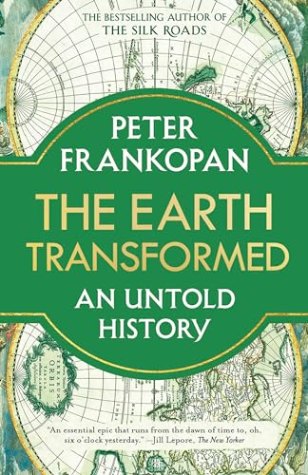
#132
Henry VIII: The Heart and the Crown

Henry VIII: The Heart and the Crown

The Sunday Times top 10 bestseller 'Alison Weir makes Henry VIII's story feel like it has never been told before... This novel will open your eyes and, at times, break your heart. By the end of it, I felt like I had met Henry for the first time' Tracy Borman Six wives. One King. You know their stories. Now it's time to hear his. Prince Harry is born the second son, his brother destined to rule. But Arthur's untimely death sees Harry crowned King Henry of England. As Henry's power and influence extends, so commences a lifelong battle between head and heart, love and duty. The fate of the Tudor dynasty depends on an heir, but his prayers for a son go unanswered. And the crown weighs heavy on a king with all but his one true desire... HENRY VIII. HIS STORY. Alison Weir's most ambitious Tudor novel yet reveals the captivating story of a man who was by turns brilliant, romantic, and ruthless: the king who changed England forever. --- PRAISE FOR ALISON WEIR'S TUDOR FICTION 'This is where the story of the Tudors begins and is historical fiction at its absolute best' Tracy Borman 'History has the best stories and they should all be told like this' Conn Iggulden 'A serious achievement' The Times 'Weir is excellent on the little details that bring a world to life' Guardian

#133
Hi Honey, I’m Homo!: Sitcoms, Specials, and the Queering of American Culture

Hi Honey, I’m Homo!: Sitcoms, Specials, and the Queering of American Culture

"This book is a triumph and everyone should read it." --Dan Savage, journalist and author, on the "Savage Lovecast" "Hi Honey, I'm Homo is a heartbreaking historical document, but ultimately one that will leave the reader feeling proud of how something as maligned and disposable as the network sitcom used comedy to bring about such profound and important social progress." --Vulture "[A] well-curated compendium of prime time broadcasting . . . Baume is a companionable guide." --Shelf Awareness Behind the scenes of the most popular sitcoms of the 20th century, a revolution was brewing. For decades, amidst the bright lights, studio-audience laughs, and absurdly large apartment sets, the real-life story of American LGBTQ+ liberation unfolded in plain sight in front of millions of viewers, most of whom were laughing too hard to mind. From flamboyant relatives on Bewitched to closely-guarded secrets on All in the Family, from network-censor fights over Soap to behind-the-scenes activism on the set of The Golden Girls, from Ellen's culture clash and Will & Grace's mixed reception to Modern Family's primetime power-couple, Hi Honey, I'm Homo! is the story not only of how subversive queer comedy transformed the American sitcom, from its inception through today, but how our favorite sitcoms transformed, and continue to transform, America. Accessible, entertaining, and informative, Hi Honey, I'm Homo! features commentary and interviews from celebrities, behind-the-scenes creators, and more.

#135
Hit Girls: Women of Punk in the USA, 1975-1983

Hit Girls: Women of Punk in the USA, 1975-1983

Think punk was only a boys club? Read about the women who were the punk revolution! Women have been kicking against the pricks of music patriarchy since Sister Rosetta Tharpe first played the guitar riffs that built rock-n-roll. The explosion of punk sent shockwaves of revolution to every girl who dreamed of being on stage. Punk godmothers Suzy Quatro, The Runaways, Patti Smith, Poison Ivy, Tina Weymouth, Debbie Harry, The Go-Gos, and Fanny's Millington sisters provided the template for thousands of girls and women throughout the United States to write and record their songs. Hit Girls is the story of local and regional bands whose legacy would be otherwise lost. Despite the modern narrative labeling women as anomalies in rock music, the truth is: women played important roles in punk and its related genres in every city, in every scene, all over the United States. The women and bands profiled by Jen B. share their experiences of sexism and racism as well as their joy and successes from their days on stage as they changed what it meant to be in a band. These pioneering women were more than novelty acts or pretty faces--they were fully contributing members and leaders of mixed-gender and all-female bands long before the call for "girls to the front." The women of Hit Girls are now rightfully exalted to cult status where their collective achievement is recognized and inspiring to new generations of women rockers. Included are interviews with: Texacala Jones, Stoney Rivera, Mish Bondaj, Alice Bag, Nikki Corvette, Penelope Houston, and many more formidable and infamous women who made their voices heard over the screaming guitars. Hit Girls includes over 100 rare and never-before seen images. Author Jen B. includes a comprehensive playlist of all the artists.

#137
Hitler, Stalin, Mum and Dad

Hitler, Stalin, Mum and Dad

Epic, moving and important' Robert Harris From longstanding political columnist and commentator Daniel Finkelstein, a powerful memoir exploring both his mother and his father's devastating experiences of persecution, resistance and survival during the Second World War. Daniel's mother Mirjam Wiener was the youngest of three daughters born in Germany to Alfred and Margarete Wiener. Alfred, a decorated hero from the Great War, is now widely acknowledged to have been the first person to recognise the existential danger Hitler posed to the Jews and began, in 1933, to catalogue in detail Nazi crimes. After moving his family to Amsterdam, he relocated his library to London and was preparing to bring over his wife and children when Germany invaded Holland. Before long, the family was rounded up, robbed, humiliated, and sent to Bergen-Belsen. Daniel's father Ludwik was born in Lwow, the only child of a prosperous Jewish family. In 1939, after Hitler and Stalin carved up Poland, the family was rounded up by the communists and sent to do hard labour in a Siberian gulag. Working as slave labourers on a collective farm, his father survived the freezing winters in a tiny house they built from cow dung. Hitler, Stalin, Mum and Dad is a deeply moving, personal and at times horrifying memoir about his parents' experiences at the hands of the two genocidal dictators of the 20th century. It is a story of persecution and survival; and the consequences of totalitarianism told with the almost unimaginable bravery of two ordinary families shining through.

#139
How Far to the Promised Land: One Black Family’s Story of Hope and Survival in the American South

How Far to the Promised Land: One Black Family’s Story of Hope and Survival in the American South

From the New York Times contributing opinion writer and award-winning author of Reading While Black, a riveting intergenerational account of his family's search for home and hope "A riveting book that invites you into the personal journey of one of the finest writers alive today."--Beth Moore, New York Times bestselling author of All My Knotted-Up Life A PUBLISHERS WEEKLY BEST BOOK OF THE YEAR For much of his life, Esau McCaulley was taught to see himself as an exception: someone who, through hard work, faith, and determination, overcame childhood poverty, anti-Black racism, and an absent father to earn a job as a university professor and a life in the middle class. But that narrative was called into question one night, when McCaulley answered the phone and learned that his father--whose absence defined his upbringing--died in a car crash. McCaulley was being asked to deliver his father's eulogy, to make sense of his complicated legacy in a country that only accepts Black men on the condition that they are exceptional, hardworking, perfect. The resulting effort sent McCaulley back through his family history, seeking to understand the community that shaped him. In these pages, we meet his great-grandmother Sophia, a tenant farmer born with the gift of prophecy who scraped together a life in Jim Crow Alabama; his mother, Laurie, who raised four kids alone in an era when single Black mothers were demonized as "welfare queens"; and a cast of family, friends, and neighbors who won small victories in a world built to swallow Black lives. With profound honesty and compassion, he raises questions that implicate us all: What does each person's struggle to build a life teach us about what we owe each other? About what it means to be human? How Far to the Promised Land is a thrilling and tender epic about being Black in America. It's a book that questions our too-simple narratives about poverty and upward mobility; a book in which the people normally written out of the American Dream are given voice.

#140
How to be a Renaissance Woman: The Untold History of Beauty and Female Creativity

How to be a Renaissance Woman: The Untold History of Beauty and Female Creativity

An alternative history of the Renaissance--as seen through the emerging literature of beauty tips--focusing on the actresses, authors, and courtesans who rebelled against the misogyny of their era. Beauty, make-up, art, power: How to Be a Renaissance Woman presents an alternative history of this fascinating period as told by the women behind the paintings, providing a window into their often overlooked or silenced lives. Can the pressures women feel to look good be traced back to the sixteenth century? As the Renaissance visual world became populated by female nudes from the likes of Michelangelo and Titian, a vibrant literary scene of beauty tips emerged, fueling debates about cosmetics and adornment. Telling the stories of courtesans, artists, actresses, and writers rebelling against the strictures of their time, when burgeoning colonialism gave rise to increasingly sinister evaluations of bodies and skin color, this book puts beauty culture into the frame. How to Be a Renaissance Woman will take readers from bustling Italian market squares, the places where the poorest women and immigrant communities influenced cosmetic products and practices, to the highest echelons of Renaissance society, where beauty could be a powerful weapon in securing strategic marriages and family alliances. It will investigate how skin-whitening practices shifted in step with the emerging sub-Saharan African slave trade, how fads for fattening and thinning diets came and went, and how hairstyles and fashion could be a tool for dissent and rebellion--then as now. This surprising and illuminating narrative will make you question your ideas about your own body, and ask: Why are women often so critical of their appearance? What do we stand to lose, but also to gain, from beauty culture? What is the relationship between looks and power?

#142
Humanly Possible: Seven Hundred Years of Humanist Freethinking, Inquiry, and Hope

Humanly Possible: Seven Hundred Years of Humanist Freethinking, Inquiry, and Hope

The instant New York Times bestseller! Named a Best Book of 2023 by Publishers Weekly "A book of big and bold ideas, Humanly Possible is humane in approach and, more important, readable and worth reading. . . Bakewell is wide-ranging, witty and compassionate." -Wall Street Journal "Sweeping... linking philosophical reflections with vibrant anecdotes." -- The New York Times The bestselling author of How to Live and At the Existentialist Café explores seven hundred years of writers, thinkers, scientists, and artists, all trying to understand what it means to be truly human Humanism is an expansive tradition of thought that places shared humanity, cultural vibrancy, and moral responsibility at the center of our lives. The humanistic worldview--as clear-eyed and enlightening as it is kaleidoscopic and richly ambiguous--has inspired people for centuries to make their choices by principles of freethinking, intellectual inquiry, fellow feeling, and optimism. In this sweeping new history, Sarah Bakewell, herself a lifelong humanist, illuminates the very personal, individual, and, well, human matter of humanism and takes readers on a grand intellectual adventure. Voyaging from the literary enthusiasts of the fourteenth century to the secular campaigners of our own time, from Erasmus to Esperanto, from anatomists to agnostics, from Christine de Pizan to Bertrand Russell, and from Voltaire to Zora Neale Hurston, Bakewell brings together extraordinary humanists across history. She explores their immense variety: some sought to promote scientific and rationalist ideas, others put more emphasis on moral living, and still others were concerned with the cultural and literary studies known as "the humanities." Humanly Possible asks not only what brings all these aspects of humanism together but why it has such enduring power, despite opposition from fanatics, mystics, and tyrants. A singular examination of this vital tradition as well as a dazzling contribution to its literature, this is an intoxicating, joyful celebration of the human spirit from one of our most beloved writers. And at a moment when we are all too conscious of the world's divisions, Humanly Possible--brimming with ideas, experiments in living, and respect for the deepest ethical values--serves as a recentering, a call to care for one another, and a reminder that we are all, together, only human.

#146
Ice: From Mixed Drinks to Skating Rinks – a Cool History of a Hot Commodity

Ice: From Mixed Drinks to Skating Rinks – a Cool History of a Hot Commodity

The unexpected and unexplored ways that ice has transformed a nation--from the foods Americans eat, to the sports they play, to the way they live today--and what its future might look like on a swiftly warming planet. Ice is everywhere: in gas stations, in restaurants, in hospitals, in our homes. Americans think nothing of dropping a few ice cubes into tall glasses of tea to ward off the heat of a hot summer day. Most refrigerators owned by Americans feature automatic ice machines. Ice on-demand has so revolutionized modern life that it's easy to forget that it wasn't always this way--and to overlook what aspects of society might just melt away as the planet warms. In Ice, journalist and historian Amy Brady shares the strange and storied two-hundred-year-old history of ice in America: from the introduction of mixed drinks "on the rocks," to the nation's first-ever indoor ice rink, to how delicacies like ice creams and iced tea revolutionized our palates, to the ubiquitous ice machine in every motel across the US. But Ice doesn't end in the past. Brady also explores the surprising present-day uses of ice in sports, medicine, and sustainable energy--including cutting-edge cryotherapy breast-cancer treatments and new refrigerator technologies that may prove to be more energy efficient--underscoring how precious this commodity is, especially in an age of climate change.

#151
Into Siberia

Into Siberia

"In Wallance’s bracing narrative, Kennan emerges as a cheerful, deeply decent companion, an uncompromising observer whose greatest strength was his ability to change his mind. He’s a welcome change from the callous imperialists who people most Victorian travelogues, and his humanity allows Into Siberia to delve into horror without succumbing to despair." — The New York Times Book Review In a book that ranks with the greatest adventure stories, Gregory Wallance’s Into Siberia is a thrilling work of history about one man’s harrowing journey and the light it shone on some of history’s most heinous human rights abuses. In the late nineteenth century, close diplomatic relations existed between the United States and Russia. All that changed when George Kennan went to Siberia in 1885 to investigate the exile system and his eyes were opened to the brutality Russia was wielding to suppress dissent. Over ten months Kennan traveled eight thousand miles, mostly in horse-drawn carriages, sleighs or on horseback. He endured suffocating sandstorms in the summer and blizzards in the winter. His interviews with convicts and political exiles revealed how Russia ran on the fuel of inflicted pain and fear. Prisoners in the mines were chained day and night to their wheelbarrows as punishment. Babies in exile parties froze to death in their mothers’ arms. Kennan came to call the exiles’ experience in Siberia a “perfect hell of misery.” After returning to the United States, Kennan set out to generate public outrage over the plight of the exiles, writing the renowned Siberia and the Exile System. He then went on a nine-year lecture tour to describe the suffering of the Siberian exiles, intensifying the newly emerging diplomatic conflicts between the two countries which last to this day.

#153
Invitation to a Banquet: The Story of Chinese Food

Invitation to a Banquet: The Story of Chinese Food

Chinese was the earliest truly global cuisine. When the first Chinese laborers began to settle abroad, restaurants appeared in their wake. Yet Chinese has the curious distinction of being both one of the world's best-loved culinary traditions and one of the least understood. For more than a century, the overwhelming dominance of a simplified form of Cantonese cooking ensured that few foreigners experienced anything of its richness and sophistication--but today that is beginning to change.In Invitation to a Banquet, award-winning cook and writer Fuchsia Dunlop explores the history, philosophy, and techniques of Chinese culinary culture. In each chapter, she examines a classic dish, from mapo tofu to Dongpo pork, knife-scraped noodles to braised pomelo pith, to reveal a distinctive aspect of Chinese gastronomy, whether it's the importance of the soybean, the lure of exotic ingredients, or the history of Buddhist vegetarian cuisine. Meeting food producers, chefs, gourmets, and home cooks as she tastes her way across the country, Fuchsia invites readers to join her on an unforgettable journey into Chinese food as it is cooked, eaten, and considered in its homeland.Weaving together history, mouthwatering descriptions of food, and on-the-ground research conducted over the course of three decades, Invitation to a Banquet is a lively, landmark tribute to the pleasures and mysteries of Chinese cuisine.

#155
Jackie: Public, Private, Secret

Jackie: Public, Private, Secret

THE INSTANT NEW YORK TIMES BESTSELLER! From the New York Times bestselling author of Jackie, Janet & Lee comes a fresh and often startling look at the life of the legendary former first lady, Jacqueline Kennedy Onassis. Based on hundreds of interviews with friends, family, and lovers over a thirty-year period—as well as previously unreleased material from the JFK Library—Kennedy historian J. Randy Taraborrelli paints an unforgettable new portrait of a woman whose flaws and contradictions only serve to make her even more iconic. “I have three lives,” Jackie told a former lover, “public, private and secret.” In this revealing biography, readers will become intimately familiar with all three. New insights from the book include: · Jackie’s cold feet before her wedding to Jack Kennedy and her secret plan to avoid moving into the White House with him. · Jackie's plan to meet with the woman with whom her husband, Aristotle Onassis, was again having an affair, Maria Callas...and why, in the end, she decided against it. · The truth about the nude photos of Jackie which scandalized her in the 1970s...and which family member had betrayed her by selling them. · Her unusual relationship with Maurice Templesman, which was never what outsiders believed it to be. · The never-before-reported, last-ditch efforts to save Jackie’s life with experimental cancer treatments, and the doctor who wouldn’t risk jail time in order to treat her. Decades after her death and over sixty years after the assassination of President Kennedy, Jackie delivers the last word on one of the most famous women in the world.

#156
Journeys of the Mind: A Life in History

Journeys of the Mind: A Life in History

A beautifully written personal account of the discovery of late antiquity by one of the world’s most influential and distinguished historians The end of the ancient world was long regarded by historians as a time of decadence, decline, and fall. In his career-long engagement with this era, the widely acclaimed and pathbreaking historian Peter Brown has shown, however, that the “neglected half-millennium” now known as late antiquity was in fact crucial to the development of modern Europe and the Middle East. In Journeys of the Mind, Brown recounts his life and work, describing his efforts to recapture the spirit of an age. As he and other scholars opened up the history of the classical world in its last centuries to the wider world of Eurasia and northern Africa, they discovered previously overlooked areas of religious and cultural creativity as well as foundational institution-building. A respect for diversity and outreach to the non-European world, relatively recent concerns in other fields, have been a matter of course for decades among the leading scholars of late antiquity. Documenting both his own intellectual development and the emergence of a new and influential field of study, Brown describes his childhood and education in Ireland, his university and academic training in England, and his extensive travels, particularly in the eastern Mediterranean and the Middle East. He discusses fruitful interactions with the work of scholars and colleagues that include the British anthropologist Mary Douglas and the French theorist Michel Foucault, and offers fascinating snapshots of such far-flung places as colonial Sudan, midcentury Oxford, and prerevolutionary Iran. With Journeys of the Mind, Brown offers an essential account of the “grand endeavor” to reimagine a decisive historical moment.

#157
Jovita Wore Pants: The Story of a Mexican Freedom Fighter

Jovita Wore Pants: The Story of a Mexican Freedom Fighter

The remarkable true story of Jovita Valdovinos, a Mexican revolutionary who disguised herself as a man to fight for her rights!* "Graceful . . deft . . . mesmerizing. . . . Bravery and determination prevail in this inspiring tale." -- Kirkus Reviews, starred review* "Gorgeous...hits the perfect balance of lively and lyrical...outstanding." -- School Library Journal, starred review* "Exquisite prose. . . . stunning spreads." -- BookPage, starred reviewJovita dreamed of wearing pants! She hated the big skirts Abuela made her wear. She wanted to scale the tallest mesquite tree on her rancho, ride her horse, and feel the wind curl her face into a smileWhen her father and brothers joined the Cristero War to fight for religious freedom, Jovita wanted to go, too. Forbidden, she defied her father's rules - and society's - and found a clever way to become a trailblazing revolutionary, wearing pants!This remarkable true story about a little-known maverick Mexican heroine is brought vividly to life by her great-niece and Américas Award-winner Aida Salazar, and Eisner Award-honoree Molly Mendoza.

#158
Judgement at Tokyo: World War II on Trial and the Making of Modern Asia

Judgement at Tokyo: World War II on Trial and the Making of Modern Asia

NAMED A BEST BOOK OF THE YEAR BY THE NEW YORKER - A landmark, magisterial history of the trial of Japan's leaders as war criminals--the largely overlooked Asian counterpart to Nuremberg "Nothing less than a masterpiece. With epic research and mesmerizing narrative power, Judgment at Tokyo has the makings of an instant classic." --Evan Osnos, National Book Award-winning author of Age of Ambition: Chasing Fortune, Truth, and Faith in the New China In the weeks after Japan finally surrendered to the Allies to end World War II, the world turned to the question of how to move on from years of carnage and destruction. For Harry Truman, Douglas MacArthur, Chiang Kai-shek, and their fellow victors, the question of justice seemed clear: Japan's militaristic leaders needed to be tried and punished for the surprise attack at Pearl Harbor; shocking atrocities against civilians in China, the Philippines, and elsewhere; and rampant abuses of prisoners of war in notorious incidents such as the Bataan death march. For the Allied powers, the trial was an opportunity to render judgment on their vanquished foes, but also to create a legal framework to prosecute war crimes and prohibit the use of aggressive war, building a more peaceful world under international law and American hegemony. For the Japanese leaders on trial, it was their chance to argue that their war had been waged to liberate Asia from Western imperialism and that the court was victors' justice. For more than two years, lawyers for both sides presented their cases before a panel of clashing judges from China, India, the Philippines, and Australia, as well as the United States and European powers. The testimony ran from horrific accounts of brutality and the secret plans to attack Pearl Harbor to the Japanese military's threats to subvert the government if it sued for peace. Yet rather than clarity and unanimity, the trial brought complexity, dissents, and divisions that provoke international discord between China, Japan, and Korea to this day. Those courtroom tensions and contradictions could also be seen playing out across Asia as the trial unfolded in the crucial early years of the Cold War, from China's descent into civil war to Japan's successful postwar democratic elections to India's independence and partition. From the author of the acclaimed The Blood Telegram, which was a Pulitzer Prize finalist, this magnificent history is the product of a decade of research and writing. Judgment at Tokyo is a riveting story of wartime action, dramatic courtroom battles, and the epic formative years that set the stage for the Asian postwar era.

#159
Killing for Country

Killing for Country

A gripping reckoning with the bloody history of Australia's frontier wars David Marr was shocked to discover forebears who served with the brutal Native Police in the bloodiest years on the frontier. Killing for Country is the result - a soul-searching Australian history. This is a richly detailed saga of politics and power in the colonial world - of land seized, fortunes made and lost, and the violence let loose as squatters and their allies fought for possession of the country - a war still unresolved in today's Australia. "This book is more than a personal reckoning with Marr's forebears and their crimes. It is an account of an Australian war fought here in our own country, with names, dates, crimes, body counts and the ghastly, remorseless views of the 'settlers'. Thank you, David."-Marcia Langton

#161
Lesbian Love Story: A Memoir In Archives

Lesbian Love Story: A Memoir In Archives

When Amelia Possanza moved to Brooklyn to build a life of her own, she found herself surrounded by queer stories: she read them on landmark placards, overheard them on the pool deck when she joined the world’s largest LGBTQ swim team, and even watched them on TV in her cockroach-infested apartment. These stories inspired her to seek out lesbians throughout history who could become her role models, in romance and in life.

#162
Life and Afterlife in Ancient China

Life and Afterlife in Ancient China

The three millennia up to the establishment of the first imperial Qin dynasty in 221 BC cemented many of the distinctive elements of Chinese civilization still in place today: an extraordinarily challenging geography and environment; formidable infrastructure; a society based on the strict hierarchy of the family; a shared written script of characters; a cuisine founded on rice and millet; a material culture of ceramics, bronze, silk, and jade; and a unique concept of the universe, in which ancestors continue to exist alongside the living. Records of these early achievements and their diverse expressions often lie not in written history but in how people marked the end of their lives: their dwellings for the afterlife. Tombs and the treasures within them are almost the only artifacts to survive from Ancient China; their scale and sophistication rivals their equivalents in Ancient Egypt. Jessica Rawson, one of the most eminent Western scholars of China, explores twelve grand tombs—each from a specific historical moment and place—showing how they reveal wider political, dynastic, and cultural developments, culminating in the lavish ambition of the First Emperor's monument, guarded by his army of terracotta warriors. Beautifully illustrated and drawing on the latest archaeological discoveries, Life and Afterlife in Ancient China illuminates a constellation of beliefs about life and death and provides a remarkable new perspective on one of the oldest civilizations in the world.

#164
Limitless: The Federal Reserve Takes on a New Age of Crisis

Limitless: The Federal Reserve Takes on a New Age of Crisis

This fascinating deep dive into one of the most powerful and least understood American institutions--the Federal Reserve--is "a riveting narrative...[and] an invaluable guide to the monetary policy debates of the last few years" (Liaquat Ahamed, Pulitzer Prize-winning author of Lords of Finance). "The best book on the Fed in our time and a model of financial writing." -Kirkus The marble halls of the Federal Reserve have always held secrets; for decades the Fed did the utmost to preserve its room to maneuver, operating behind the scenes as much as possible. Yet over the past two decades, this elite world of bankers and economists speaking a language that only monetary experts could understand has been forced to change its ways. Amid rising inequality, weakening global economic prospects, and a pandemic, the central bank has entered into a new era of transparency and activism that has changed its role in modern society in subtle but remarkable ways. Limitless tells the inside story of this deeply impactful transformation, and what it means for ordinary Americans. Focusing on characters such as the Fed chairman Jerome Powell; the Vice Chair for Supervision Randal Quarles; Vice Chair Lael Brainard; the Minneapolis Fed president Neel Kashkari; and the long-ago Fed Chair Marriner S. Eccles--and driven by the rising tension between Main Street and Wall Street--this is a page-turning account of the modern Fed's inner workings during a crucial inflection point in history.

#165
Loot

Loot

LONGLISTED FOR THE NATIONAL BOOK AWARD IN FICTION - A spellbinding historical novel set in the eighteenth century: a hero's quest, a love story, the story of a young artist coming of age, and an exuberant heist adventure that traces the bloody legacy of colonialism across two continents and fifty years. "Addictively absorbing." --The New York Times Book Review This wildly inventive, irresistible feat of storytelling from a writer at the height of her powers is "an expertly-plotted, deeply affecting novel about war, displacement, emigration, and an elusive mechanical tiger" (Maggie O'Farrell, best-selling author of Hamnet and The Marriage Portrait). Abbas is just seventeen years old when his gifts as a woodcarver come to the attention of Tipu Sultan, and he is drawn into service at the palace in order to build a giant tiger automaton for Tipu's sons, a gift to commemorate their return from British captivity. His fate--and the fate of the wooden tiger he helps create--will mirror the vicissitudes of nations and dynasties ravaged by war across India and Europe. Working alongside the legendary French clockmaker Lucien du Leze, Abbas hones his craft, learns French, and meets Jehanne, the daughter of a French expatriate. When Du Leze is finally permitted to return home to Rouen, he invites Abbas to come along as his apprentice. But by the time Abbas travels to Europe, Tipu's palace has been looted by British forces, and the tiger automaton has disappeared. To prove himself, Abbas must retrieve the tiger from an estate in the English countryside, where it is displayed in a collection of plundered art.

#167
Luck of the Draw

Luck of the Draw

THE INSTANT NEW YORK TIMES BESTSELLER “In the pursuit of authenticity, of accurate history and undeniable courage, no words matter more than, ‘I was there.’ Read Luck of the Draw and the life of Frank Murphy and ponder this: how did those boys do such things?” —Tom Hanks The epic true story of an American hero who flew during WWII, as featured in the Steven Spielberg and Tom Hanks TV Series, Masters of the Air. Beginning on August 17, 1942, American heavy bomber crews of the Eighth Air Force took off for combat in the hostile skies over occupied Europe. The final price was staggering. 4,300 B-17s and B-24s failed to return; nearly 21,000 men were taken prisoner or interned in a neutral country, and a further 17,650 made the ultimate sacrifice. Luck of the Draw is more than a war story. It’s the incredible, inspiring story of Frank Murphy, one of the few survivors from the 100th Bombardment Group, who cheated death for months in a German POW camp after being shot out of his B-17 Flying Fortress. Now with a new foreword written by his granddaughter Chloe Melas, of NBC, and daughter Elizabeth Murphy. “A gripping, inspirational account of incredible bravery, resilience, and sheer will to survive. A truly extraordinary story!” —General David Petraeus, U.S. Army (Ret.)

#168
Mass Supervision: Probation, Parole, and the Illusion of Safety and Freedom

Mass Supervision: Probation, Parole, and the Illusion of Safety and Freedom

With a foreword by Bruce Western The most comprehensive critique of probation and parole--and a provocative and compelling argument for abolishing both--from the former Probation Commissioner of New York City Imagine if probation didn't exist. And I came to you with $80 million and 30,000 people the courts considered troubled and troubling. And you could do anything you wanted with that money to make New York City safer and help people turn their lives around. Would you go out and hire a thousand civil service-protected bureaucrats to supervise people as they piss in a cup once a week, and to tell them to go forth and sin no more? --Vincent Schiraldi's Job Interview with NYC Mayor Mike Bloomberg We've heard a lot in recent years about the nearly 2.1 million people incarcerated in American prisons and jails. But what about the approximately 4 million more who are on probation and parole--monitored by the state at great expense and at risk of being sent to prison at the whim of a probation or parole officer for the least imaginable infraction? Vincent Schiraldi was New York City probation commissioner under Mayor Bloomberg, supervising a system charged with monitoring 30,000 people on a daily basis. In Mass Supervision, he combines firsthand experience with deep research on the inadequately explored practices of probation and parole, to illustrate how these forms of state supervision have strayed from their original goal of providing constructive and rehabilitative alternatives to prison. They have become instead, Schiraldi argues, a "recidivism trap" for people trying to lead productive lives in the wake of a criminal conviction. Schiraldi offers the first full and up-to-date account of these two key aspects of our criminal justice system, showing that these practices increase incarceration, have little impact on crime rates, and needlessly disrupt countless lives. Ultimately, he argues that they should be dramatically downsized or even abolished completely.

#174
My Friend Anne Frank

My Friend Anne Frank

THE INSTANT NEW YORK TIMES BESTSELLER "Both heartbreaking and life-affirming" (Edith Eger, author of The Choice), the long-awaited memoir of Holocaust survivor Hannah Pick-Goslar, who shares an intimate look into her life and friendship with Anne Frank. In 1933, Hannah Pick-Goslar and her family fled Nazi Germany to live in Amsterdam, where she struck up a close friendship with her next-door neighbor, an outspoken and fun-loving young girl named Anne Frank. For several years, the inseparable pair enjoyed a carefree childhood of games, sleepovers, and treats with the other children in their neighborhood of Rivierenbuurt. But in 1942, Hannah and Anne's lives abruptly changed forever. As the Nazi occupation of Amsterdam progressed, Anne and the Frank family seemingly vanished, leaving behind unmade beds and dishes in the sink--but no trace of Anne's precious diary. Torn from her dear friend without warning, Hannah spent the next two years tormented by questions about Anne's fate, wondering if she had, by some miracle, managed to escape danger. In this long-awaited memoir, Hannah shares the story of her childhood during the Holocaust, from the introduction of anti-Jewish laws in Amsterdam to the gradual disappearance of classmates and, eventually, the Frank family, to Hannah and her family's imprisonment in the Bergen-Belsen concentration camp. As Hannah chronicles the experiences of her own life during and after the war, she provides a searing look at what countless children endured at the hands of the Nazi regime, as well as an intimate, never-before-seen portrait of the most recognizable victim of the Holocaust. Culminating in an astonishing fateful reunion, My Friend Anne Frank is the profoundly moving story of childhood and friendship during one of the darkest periods in the world's history.

#175
My Hijacking

My Hijacking

In this moving and thought-provoking memoir, a historian offers a personal look at the fallibilities of memory and the lingering impact of trauma as she goes back fifty years to tell the story of being a passenger on an airliner hijacked in 1970.On September 6, 1970, twelve-year-old Martha Hodes and her thirteen-year-old sister were flying unaccompanied back to New York City from Israel when their plane was hijacked by members of the Popular Front for the Liberation of Palestine and forced to land in the Jordan desert. Too young to understand the sheer gravity of the Israeli-Palestinian conflict, Martha coped by suppressing her fear and anxiety. Nearly a half-century later, her memories of those six days and nights as a hostage are hazy and scattered. Was it the passage of so much time, or that her family couldn't endure the full story, or had trauma made her repress such an intense life-and-death experience? A professional historian, Martha wanted to find out.Drawing on deep archival research, childhood memories, and conversations with relatives, friends, and fellow hostages, Martha Hodes sets out to re-create what happened to her, and what it was like for those at home desperately hoping for her return. Thrown together inside a stifling jetliner, the hostages forged friendships, provoked conflicts, and dreamed up distractions. Learning about the lives and causes of their captors--some of them kind, some frightening--the sisters pondered a deadly divide that continues today. A thrilling tale of fear, denial, and empathy, My Hijacking sheds light on the hostage crisis that shocked the world, as the author comes to a deeper understanding of both what happened in the Jordan desert in 1970 and her own fractured family and childhood sorrows.

#177
Necessary Trouble

Necessary Trouble

AN INSTANT NEW YORK TIMES BESTSELLER A memoir of coming of age in a conservative Southern family in postwar America. To grow up in the 1950s was to enter a world of polarized national alliances, nuclear threat, and destabilized social hierarchies. Two world wars and the depression that connected them had unleashed a torrent of expectations and dissatisfactions--not only in global affairs but in American society and Americans' lives. A privileged white girl in conservative, segregated Virginia was expected to adopt a willful blindness to the inequities of race and the constraints of gender. For Drew Gilpin, the acceptance of both female subordination and racial hierarchy proved intolerable and galvanizing. Urged to become "well adjusted" and to fill the role of a poised young lady that her upbringing imposed, she found resistance was necessary for her survival. During the 1960s, through her love of learning and her active engagement in the civil rights, student, and antiwar movements, Drew forged a path of her own--one that would eventually lead her to become a historian of the very conflicts that were instrumental in shaping the world she grew up in. Culminating in the upheavals of 1968, Necessary Trouble captures a time of rapid change and fierce reaction in one young woman's life, tracing the transformations and aftershocks that we continue to grapple with today. Includes black-and-white images

#181
Old Buildings, New Ideas

Old Buildings, New Ideas

Some architectural transformations are modest, some are revolutionary. Shining a light on the hidden side of the accepted narrative of the history of architecture, this book explores works which transform existing buildings to build a way forward, through adaptations, additions and visual shifts. Examining 30 buildings across Europe, North America and South America, spanning from the early Middle Ages to the end of the 20th century, it demonstrates the creative possibilities of working with existing buildings. The book reveals how formal inventions can shape architecture and our environment over time in a built world constantly in a state of becoming. As we face a climate emergency, it taps into our deep cultural knowledge about the inventive use and re-use of buildings. Generously illustrated with architectural plans and over 300 colour images, it provides an alternative to the dominant view which sees conservation and preservation of historic buildings as a 20th century creation.

#182
On Minimalism: Documenting a Musical Movement

On Minimalism: Documenting a Musical Movement

A revisionist history of minimalism's transformative rise, through the voices of the musicians who created it. When composers like Philip Glass and Steve Reich began creating hypnotically repetitive music in the 1960s, it upended the world of American composition. But minimalism was more than a classical phenomenon--minimalism changed everything. Its static harmonies and groovy pulses swept through the broader avant-garde landscape, informing the work of Yoko Ono and Brian Eno, John and Alice Coltrane, Pauline Oliveros and Julius Eastman, and many others. On Minimalism moves from the style's beginnings in psychedelic counterculture through its present-day influences on ambient jazz, doom metal, and electronic music. The editors look beyond the major figures to highlight crucial and diverse voices--especially women, people of color, and LGBTQ+ musicians--that have shaped the genre. Featuring more than a hundred rare historical sources, On Minimalism curates this history anew, documenting one of the most important musical movements of our time.

#184
Ordinary Notes

Ordinary Notes

A singular achievement, Ordinary Notes explores profound questions about loss and the shapes of Black life that emerge in the wake. In a series of 248 notes that gather meaning as we read them, Christina Sharpe skillfully weaves artifacts from the past―public ones alongside others that are poignantly personal―with present realities and possible futures, intricately constructing an immersive portrait of everyday Black existence. The themes and tones that echo through these pages―sometimes about language, beauty, memory; sometimes about history, art, photography, and literature―always attend, with exquisite care, to the ordinary-extraordinary dimensions of Black life.

#185
Oscar Wilde on Trial

Oscar Wilde on Trial

The most authoritative account of a pivotal event in legal and cultural history: the trials of Oscar Wilde on charges of "gross indecency" Among the most infamous prosecutions of a literary figure in history, the two trials of Oscar Wilde for committing acts of "gross indecency" occurred at the height of his fame. After being found guilty, Wilde spent two years in prison, emerged bankrupt, and died in a cheap hotel room in Paris a few years after his release. The trials prompted a new intolerance toward homosexuality: habits of male bonding that were previously seen as innocent were now viewed as a threat, and an association grew in the public mind between gay men and the arts. Oscar Wilde on Trial assembles accounts from a variety of sources, including official and private letters, newspaper accounts, and previously published (but very incomplete) transcripts, to provide the most accurate and authoritative account to date of events that were pivotal in both legal and cultural history.

#189
Pirate Enlightenment, or the Real Libertalia

Pirate Enlightenment, or the Real Libertalia

The final posthumous work by the coauthor of the major New York Times bestseller The Dawn of Everything. Pirates have long lived in the realm of romance and fantasy, symbolizing risk, lawlessness, and radical visions of freedom. But at the root of this mythology is a rich history of pirate societies—vibrant, imaginative experiments in self-governance and alternative social formations at the edges of the European empire. In graduate school, David Graeber conducted ethnographic field research in Madagascar for his doctoral thesis on the island’s politics and history of slavery and magic. During this time, he encountered the Zana-Malata, an ethnic group of mixed descendants of the many pirates who settled on the island at the beginning of the eighteenth century. Pirate Enlightenment, or the Real Libertalia, Graeber’s final posthumous book, is the outgrowth of this early research and the culmination of ideas that he developed in his classic, bestselling works Debt and The Dawn of Everything (written with the archaeologist David Wengrow). In this lively, incisive exploration, Graeber considers how the protodemocratic, even libertarian practices of the Zana-Malata came to shape the Enlightenment project, which for too long has been defined as distinctly European. He illuminates the non-European origins of what we consider to be “Western” thought and endeavors to recover forgotten forms of social and political order that gesture toward new, hopeful possibilities for the future.

#190
Plants, Politics, and Empire in Ancient Rome

Plants, Politics, and Empire in Ancient Rome

The book investigates the cultural and political dimension of Roman arboriculture and the associated movement of plants from one corner of the empire to the other. It uses the convergent perspectives offered by textual and archaeological sources to sketch a picture of large-scale arboriculture as a phenomenon primarily driven by elite activity and imperialism. Arboriculture had a clear cultural role in the Roman world: it was used to construct the public persona of many elite Romans, with the introduction of new plants from far away regions or the development of new cultivars contributing to the elite competitive display. Exotic plants from conquered regions were also displayed as trophies in military triumphs, making plants an element of the language of imperialism. Annalisa Marzano argues that the Augustan era was a key moment for the development of arboriculture and identifies colonists and soldiers as important agents contributing to plant dispersal and diversity.

#191
Pockets: An Intimate History of How We Keep Things Close

Pockets: An Intimate History of How We Keep Things Close

"Who knew the humble pocket could hold so much history? In this enthralling and always surprising account, Hannah Carlson turns the pocket inside out and out tumble pocket watches, coins, pistols, and a riveting centuries-long social and political history." ―Jill Lepore, author of These Truths: A History of the United States Pockets "showcases the best features of cultural history: a lively combination of visual, literary and documentary evidence. As sumptuously illustrated as it is learned ... this highly inventive and original book demands a pocket sequel." ―Jane Kamensky, Wall Street Journal Who gets pockets, and why? It's a subject that stirs up plenty of passion: Why do men's clothes have so many pockets and women's so few? And why are the pockets on women's clothes often too small to fit phones, if they even open at all? In her captivating book, Hannah Carlson, a lecturer in dress history at the Rhode Island School of Design, reveals the issues of gender politics, security, sexuality, power, and privilege tucked inside our pockets. Throughout the medieval era in Europe, the purse was an almost universal dress feature. But when tailors stitched the first pockets into men's trousers five hundred years ago, it ignited controversy and introduced a range of social issues that we continue to wrestle with today, from concealed pistols to gender inequality. See: #GiveMePocketsOrGiveMeDeath. Filled with incredible images, this microhistory of the humble pocket uncovers what pockets tell us about ourselves: How is it that putting your hands in your pockets can be seen as a sign of laziness, arrogance, confidence, or perversion? Walt Whitman's author photograph, hand in pocket, for Leaves of Grass seemed like an affront to middle-class respectability. When W.E.B. Du Bois posed for a portrait, his pocketed hands signaled defiant coolness. And what else might be hiding in the history of our pockets? (There's a reason that the contents of Abraham Lincoln's pockets are the most popular exhibit at the Library of Congress.) Thinking about the future, Carlson asks whether we will still want pockets when our clothes contain "smart" textiles that incorporate our IDs and credit cards. Pockets is for the legions of people obsessed with pockets and their absence, and for anyone interested in how our clothes influence the way we navigate the world.

#194
Poppy

Poppy

In Poppy, Joseph Minden explores how the totems of remembering are always, also, sites of suppression. The poems in this debut collection take in a research trip to the battlefields of Flanders and the Somme, an ill-fated visit to Penang, rumours of the Opium Wars, fragments of family myth and a fear of familiar vampires – all grimy with the trash of establishment British history. In these pages, Adlestrop meets 'Robin Hood / bewitched by a leg of tandoori chicken' and drunk Brits stumble around the Menin Gate with 'Lest We Forget' stitched into their polo shirts. Sometimes accompanied by the historian, Jason, and perpetually haunted by an old flame, Mina, the protagonist of the poems tries to separate memory from nostalgia and empire from heritage. Longing is enmeshed in old ideas and historical material from which it must be torn away. Minden makes disturbing rhythms out of the detritus he finds around him, using documentary evidence, personal testimony, dream narrative, prose, rhyme and the soft hammer blows of repetition to craft a haunted, memorable music.

#196
Queens of a Fallen World

Queens of a Fallen World

FINALIST: THE CUNDILL HISTORY PRIZE 2023The vibrant and surprising lives of the women in Augustine's Confessions While many know of Saint Augustine and his Confessions, few are aware of how his life and thought were influenced by women. Queens of a Fallen World tells a story of betrayal, love, and ambition in the ancient world as seen through a woman's eyes. Historian Kate Cooper introduces us to four women whose hopes and plans collided in Augustine's early adulthood: his mother, Monnica of Thagaste; his lover; his fiancée; and Justina, the troubled empress of ancient Rome. Drawing upon their depictions in the Confessions, Cooper skilfully reconstructs their lives against the backdrop of their fourth-century society. Though they came from different walks of life, each found her own way of prevailing in a world ruled by men. A refreshingly complex and compelling portrait of Augustine, Queens of a Fallen World is the riveting story of four remarkable women who set him on course to change history.

#198
Romney: A Reckoning

Romney: A Reckoning

NEW YORK TIMES BESTSELLER! A remarkably illuminating biography of one of America's most fascinating political figures--including news-making revelations from Mitt Romney himself about dissension within today's Republican Party--written with his full cooperation by an award-winning writer at The Atlantic. Few figures in American politics have seen more and said less than Mitt Romney. An outspoken dissident in Donald Trump's GOP, he has made headlines in recent years for standing alone against the forces he believes are poisoning the party he once led. Romney was the first senator in history to vote to remove from office a president of his own party. When that president's supporters went on to storm the US Capitol, Romney delivered a thundering speech from the Senate floor accusing his fellow Republicans of stoking insurrection. Despite these moments of public courage, Romney has shared very little about what he's witnessed behind the scenes over his three decades in politics--in GOP cloakrooms and caucus lunches, in his private meetings with Donald Trump and his family, in his dealings with John McCain, George W. Bush, Barack Obama, Joe Biden, Mitch McConnell, Joe Manchin, and Kyrsten Sinema. Now, exclusively for this biography, Romney has provided a window to his most private thoughts. Based on dozens of interviews with Romney, his family, and his inner circle as well as hundreds of pages of his personal journals and private emails, this in-depth portrait by award-winning journalist McKay Coppins shows a public servant authentically wrestling with the choices he has made over his career. In lively, revelatory detail, the book traces Romney's early life and rise through the ranks of a fast-transforming Republican Party and exposes how a trail of seemingly small compromises by political leaders has led to a crisis in democracy. Ultimately, Romney: A Reckoning is a redemptive story about a flawed politician who summoned his moral courage just as fear and divisiveness were overtaking American life.

#199
Rough Sleepers: Dr. Jim O’Connell’s Urgent Mission to Bring Healing to Homeless People

Rough Sleepers: Dr. Jim O’Connell’s Urgent Mission to Bring Healing to Homeless People

NEW YORK TIMES BESTSELLER - The powerful story of an inspiring doctor who made a difference, by helping to create a program to care for Boston's homeless community--by the Pulitzer Prize-winning, New York Times bestselling author of Mountains Beyond Mountains "I couldn't put Rough Sleepers down. I am left in awe of the human spirit and inspired to do better."--Abraham Verghese, author of Cutting for Stone Tracy Kidder has been described by The Baltimore Sun as "a master of the nonfiction narrative." In Rough Sleepers, Kidder tells the story of Dr. Jim O'Connell, a gifted man who invented a community of care for a city's unhoused population, including those who sleep on the streets--the "rough sleepers." After Jim O'Connell graduated from Harvard Medical School and was nearing the end of his residency at Massachusetts General, the hospital's chief of medicine made a proposal: Would he defer a prestigious fellowship and spend a year helping to create an organization to bring health care to homeless citizens? That year turned into O'Connell's life's calling. Tracy Kidder spent five years following Dr. O'Connell and his colleagues as they work with thousands of homeless patients, some of whom we meet in this illuminating book. We travel with O'Connell as he navigates the city streets at night, offering medical care, socks, soup, empathy, humor, and friendship to some of the city's most endangered citizens. He emphasizes a style of medicine in which patients come first, joined with their providers in what he calls "a system of friends." Much as he did with Paul Farmer in Mountains Beyond Mountains, Kidder explores how Jim O'Connell and a dedicated group of people have improved countless lives by facing and addressing one of American society's most difficult problems, instead of looking away.

#203
Saved

Saved

AN INSTANT #1 NEW YORK TIMES BESTSELLER "An affecting, singular story...a bracing tale of life on the edge of death." --Kirkus ReviewsWhen veteran war reporter Benjamin Hall woke up in Kyiv on the morning of March 14, 2022, he had no idea that, within hours, Russian bombs would nearly end his life. As a journalist for Fox News, Hall had worked in dangerous war zones like Syria and Afghanistan, but with three young daughters at home, life on the edge was supposed to be a thing of the past. Yet when Russia viciously attacked Ukraine in February 2022, Hall quickly volunteered to go. A few weeks later, while on assignment, Hall and his crew were blown up in a Russian strike. With Hall himself gravely injured and stuck in Kyiv, it was unclear if he would make it out alive.This is the story of how he survived--a story that continues to this day. For the first time, Hall shares his experience in full--from his ground-level view of the war to his dramatic rescue to his arduous, and ongoing, recovery. Going inside the events that have permanently transformed him, Hall recalls his time at the front lines of our world's conflicts, exploring how his struggle to step away from war reporting led him back one perilous last time. Featuring nail-biting accounts from the many people across multiple countries who banded together to get him to safety, Hall offers a stunning look at complex teamwork and heartfelt perseverance that turned his life into a mission.Through it all, Hall's spirit has remained undaunted, buoyed by that remarkable corps of people from around the world whose collective determination ensured his survival. Evocative, harrowing, and deeply moving, Saved is a powerful memoir of family and friends, of life and healing, and of how to respond when you are tested in ways you never thought possible.Benjamin Hall's memoir includes a 16-page color photo insert.

#210
Sparks

Sparks

Using history to challenge Communist Party rule. Sparks: China's Underground Historians and their Battle for the Future describes how some of China's best-known writers, filmmakers, and artists have overcome crackdowns and censorship to forge a nationwide movement that challenges the Communist Party on its most hallowed ground: its control of history. The past is a battleground in many countries, but in China it is crucial to political power. In traditional China, dynasties rewrote history to justify their rule by proving that their predecessors were unworthy of holding power. Marxism gave this a modern gloss, describing history as an unstoppable force heading toward Communism's triumph. The Chinese Communist Party builds on these ideas to whitewash its misdeeds and glorify its rule. Indeed, one of Xi Jinping's signature policies is the control of history, which he equates with the party's survival. But in recent years, a network of independent writers, artists, and filmmakers have begun challenging this state-led disremembering. Using digital technologies to bypass China's legendary surveillance state, their samizdat journals, guerilla media posts, and underground films document a regular pattern of disasters: from famines and purges of years past to ethnic clashes and virus outbreaks of the present--powerful and inspiring accounts that have underpinned recent protests in China against Xi Jinping's strongman rule. Based on years of first-hand research in Xi Jinping's China, Sparks challenges stereotypes of a China where the state has quashed all free thought, revealing instead a country engaged in one of humanity's great struggles of memory against forgettingDLa battle that will shape the China that emerges in the mid-21st century.

#211
Spies

Spies

The "riveting" (The Economist), secret story of the hundred-year intelligence war between Russia and the West with lessons for our new superpower conflict with China. Spies is the history of the secret war that Russia and the West have been waging for a century. Espionage, sabotage, and subversion were the Kremlin's means to equalize the imbalance of resources between the East and West before, during, and after the Cold War. There was nothing "unprecedented" about Russian meddling in the 2016 US presidential election. It was simply business as usual, new means used for old ends. The Cold War started long before 1945. But the West fought back after World War II, mounting its own shadow war, using disinformation, vast intelligence networks, and new technologies against the Soviet Union. Spies is a "deeply researched and artfully crafted" (Fiona Hill, deputy assistant to the US President) story of the best and worst of mankind: bravery and honor, treachery and betrayal. The narrative shifts across continents and decades, from the freezing streets of St. Petersburg in 1917 to the bloody beaches of Normandy; from coups in faraway lands to present-day Moscow where troll farms, synthetic bots, and weaponized cyber-attacks being launched woefully unprepared West. It is about the rise and fall of Eastern superpowers: Russia's past and present and the global ascendance of China. Mining hitherto secret archives in multiple languages, Calder Walton shows that the Cold War started earlier than commonly assumed, that it continued even after the Soviet Union's collapse in 1991, and that Britain and America's clandestine struggle with the Soviet government provided key lessons for countering China today. This "authoritative, sweeping" (Fredrik Logevall, Pulitzer Prize--winning author of Embers of War) history, combined with practical takeaways for our current great power struggles, make Spies a unique and essential addition to the history of the Cold War and the unrolling conflict between the United States and China that will dominate the 21st century.

#214
The 272: The Families Who Were Enslaved and Sold to Build the American Catholic Church

The 272: The Families Who Were Enslaved and Sold to Build the American Catholic Church

In 1838, a group of America’s most prominent Catholic priests sold 272 enslaved people to save their largest mission project, what is now Georgetown University. In this groundbreaking account, journalist, author, and professor Rachel L. Swarns follows one family through nearly two centuries of indentured servitude and enslavement to uncover the harrowing origin story of the Catholic Church in the United States. Through the saga of the Mahoney family, Swarns illustrates how the Church relied on slave labor and slave sales to sustain its operations and to help finance its expansion.

#215
The Big Myth: How American Business Taught Us to Loathe Government and Love the Free Market

The Big Myth: How American Business Taught Us to Loathe Government and Love the Free Market

"A carefully researched work of intellectual history, and an urgently needed political analysis." --Jane Mayer "[A] scorching indictment of free market fundamentalism ... and how we can change, before it's too late."-Esquire, Best Books of Winter 2023 The bestselling authors of Merchants of Doubt offer a profound, startling history of one of America's most tenacious--and destructive--false ideas: the myth of the "free market." In their bestselling book Merchants of Doubt, Naomi Oreskes and Erik M. Conway revealed the origins of climate change denial. Now, they unfold the truth about another disastrous dogma: the "magic of the marketplace." In the early 20th century, business elites, trade associations, wealthy powerbrokers, and media allies set out to build a new American orthodoxy: down with "big government" and up with unfettered markets. With startling archival evidence, Oreskes and Conway document campaigns to rewrite textbooks, combat unions, and defend child labor. They detail the ploys that turned hardline economists Friedrich von Hayek and Milton Friedman into household names; recount the libertarian roots of the Little House on the Prairie books; and tune into the General Electric-sponsored TV show that beamed free-market doctrine to millions and launched Ronald Reagan's political career. By the 1970s, this propaganda was succeeding. Free market ideology would define the next half-century across Republican and Democratic administrations, giving us a housing crisis, the opioid scourge, climate destruction, and a baleful response to the Covid-19 pandemic. Only by understanding this history can we imagine a future where markets will serve, not stifle, democracy.

#219
The Britannias: An Island Quest

The Britannias: An Island Quest

A dazzlingly brilliant book' Hannah Dawson The Britannias tells the story of Britain's islands and how they are woven into its collective cultural psyche. From Neolithic Orkney to modern-day Thanet, Alice Albinia explores the furthest reaches of Britain's island topography, once known (wrote Pliny) by the collective term, Britanniae. Sailing over borders, between languages and genres, trespassing through the past to understand the present, this book knocks the centre out to foreground neglected epics and subversive voices. The ancient British mythology of islands ruled by women runs like a secret, hidden river through the literature of this land - from Roman colonial-era reports to early Welsh poetry, Renaissance drama to Restoration utopias - transcending and subverting the most male-fixated of ages. The Britannias looks far back into the past for direction and solace, while searching for new meaning about women's status in the body politic. Boldly upturning established truths about Britain, it pays homage to the islands' beauty, independence and their suppressed or forgotten histories.

#221
The Burning of the World

The Burning of the World

LONGLISTED FOR THE ANDREW CARNEGIE MEDAL FOR EXCELLENCE - The "illuminating" (New Yorker) story of the Great Chicago Fire: a raging inferno, a harrowing fight for survival, and the struggle for the soul of a city--told with the "the clarity--and tension--of a well-wrought military narrative" (Wall Street Journal) In the fall of 1871, Chicagoans knew they were due for the "big one"--a massive, uncontrollable fire that would decimate the city. It had been bone-dry for months, and a recent string of blazes had nearly outstripped the fire department's already scant resources. Then, on October 8, a minor fire broke out in the barn of Irishwoman Kate Leary. A series of unfortunate mishaps and misunderstandings along with insufficient preparation and a high south-westerly wind combined to set the stage for an unmitigated catastrophe. The conflagration that spread from the Learys' property quickly overtook the neighborhood, and before long the floating embers had been cast to the far reaches of the city. Nothing to the northeast was safe. Families took to the streets with every possession they could carry. Powerful gusts whipped the flames into a terrifying firestorm. The Chicago River boiled. Over the next forty-eight hours, Chicago fell victim to the largest and most destructive natural disaster the United States had yet endured. The effects of the Great Fire were devastating. But they were also transforming. Out of the ashes, faster than seemed possible, rose new homes, tenements, hotels, and civic buildings, as well as a new political order. The elite seized the reconstruction to crack down on vice, control the disbursement of vast charitable funds, and rebuild the city in their image. But the city's working class recognized only a naked power grab that would challenge their traditions, hurt their chances to keep their hard-earned property, and move power out of the hands of elected officials and into private interests. As soon as the battle against the fire ended, another battle for the future of the city erupted between its entrenched business establishment and its poor and immigrant laborers and shopkeepers. An enrapturing account of the fire's inexorable march and an eye-opening look at its aftermath, The Burning of the World tells the story of one of the most infamous calamities in history and the new Chicago it precipitated--a disaster that still shapes American cities to this day.

#223
The Deadline

The Deadline

Few, if any, historians have brought such insight, wisdom, and empathy to public discourse as Jill Lepore. Arriving at The New Yorker in 2005, Lepore, with her panoptical range and razor-sharp style, brought a transporting freshness and a literary vivacity to everything from profiles of long-dead writers to urgent constitutional analysis to an unsparing scrutiny of the woeful affairs of the nation itself. The astonishing essays collected in The Deadline offer a prismatic portrait of Americans' techno-utopianism, frantic fractiousness, and unprecedented--but armed--aimlessness. From lockdowns and race commissions to Bratz dolls and bicycles, to the losses that haunt Lepore's life, these essays again and again cross what she calls the deadline, the "river of time that divides the quick from the dead." Echoing Gore Vidal's United States in its massive intellectual erudition, The Deadline, with its remarkable juxtaposition of the political and the personal, challenges the very nature of the essay--and of history--itself.

#224
The Declassification Engine

The Declassification Engine

SHORTLISTED FOR THE CUNDHILL HISTORY PRIZE - Every day, thousands of new secrets are created by the United States government. What is all this secrecy really for? And whom does it benefit? "A brilliant, deeply unsettling look at the history and inner workings of 'the dark state'.... At a time when federal agencies are increasingly classifying or destroying documents with historical significance, this book could not be more important." --Eric Schlosser, New York Times best-selling author of Command and Control Before World War II, transparent government was a proud tradition in the United States. In all but the most serious of circumstances, classification, covert operations, and spying were considered deeply un-American. But after the war, the power to decide what could be kept secret proved too tempting to give up. Since then, we have radically departed from that open tradition, allowing intelligence agencies, black sites, and classified laboratories to grow unchecked. Officials insist that only secrecy can keep us safe, but its true costs have gone unacknowledged for too long. Using the latest techniques in data science, historian Matthew Connelly analyzes a vast trove of state secrets to unearth not only what the government really did not want us to know but also why they didn't want us to know it. Culling this research and carefully examining a series of pivotal moments in recent history, from Pearl Harbor to drone warfare, Connelly sheds light on the drivers of state secrecy-- especially incompetence and criminality--and how rampant overclassification makes it impossible to protect truly vital information. What results is an astonishing study of power: of the greed it enables, of the negligence it protects, and of what we lose as citizens when our leaders cannot be held to account. A crucial examination of the self-defeating nature of secrecy and the dire state of our nation's archives, The Declassification Engine is a powerful reminder of the importance of preserving the past so that we may secure our future.

#227
The Evangelical Imagination

The Evangelical Imagination

"Provides plenty of fodder for those wishing to explore what evangelicalism is and reimagine what it might become. It's an eye-opener."--Publishers Weekly "Akin to enjoying a lively conversation over a cheering yet bracing cup of tea."--Christianity Today (5-star review) "A breathtaking reminder of just how powerful the evangelical imagination has been and how much is lost when we forfeit it."--The Gospel Coalition Contemporary American evangelicalism is suffering from an identity crisis--and a lot of bad press. In this book, acclaimed author Karen Swallow Prior examines evangelical history, both good and bad. By analyzing the literature, art, and popular culture that has surrounded evangelicalism, she unpacks some of the movement's most deeply held concepts, ideas, values, and practices to consider what is Christian rather than merely cultural. The result is a clearer path forward for evangelicals amid their current identity crisis--and insight for others who want a deeper understanding of what the term "evangelical" means today. Brought to life with color illustrations, images, and paintings, this book explores ideas including conversion, domesticity, empire, sentimentality, and more. In the end, it goes beyond evangelicalism to show us how we might be influenced by images, stories, and metaphors in ways we cannot always see.

#228
The Exceptions: Nancy Hopkins, Mit, and the Fight for Women in Science

The Exceptions: Nancy Hopkins, Mit, and the Fight for Women in Science

In 1963, a female student was attending a lecture given by Nobel Prize winner James Watson, then tenured at Harvard. At nineteen, she was struggling to define her future. She had given herself just ten years to fulfill her professional ambitions before starting the family she was expected to have. For women at that time, a future on the usual path of academic science was unimaginable—but during that lecture, young Nancy Hopkins fell in love with the promise of genetics. Confidently believing science to be a pure meritocracy, she embarked on a career.

#232
The Frozen River

The Frozen River

From the New York Times bestselling author of I Was Anastasia and Code Name Hélène comes a gripping historical mystery inspired by the life and diary of Martha Ballard, a renowned 18th-century midwife who defied the legal system and wrote herself into American history. Maine, 1789: When the Kennebec River freezes, entombing a man in the ice, Martha Ballard is summoned to examine the body and determine cause of death. As a midwife and healer, she is privy to much of what goes on behind closed doors in Hallowell. Her diary is a record of every birth and death, crime and debacle that unfolds in the close-knit community. Months earlier, Martha documented the details of an alleged rape committed by two of the town's most respected gentlemen--one of whom has now been found dead in the ice. But when a local physician undermines her conclusion, declaring the death to be an accident, Martha is forced to investigate the shocking murder on her own. Over the course of one winter, as the trial nears, and whispers and prejudices mount, Martha doggedly pursues the truth. Her diary soon lands at the center of the scandal, implicating those she loves, and compelling Martha to decide where her own loyalties lie. Clever, layered, and subversive, Ariel Lawhon's newest offering introduces an unsung heroine who refused to accept anything less than justice at a time when women were considered best seen and not heard. The Frozen River is a thrilling, tense, and tender story about a remarkable woman who left an unparalleled legacy yet remains nearly forgotten to this day.

#233
The Ghost at the Feast: America and the Collapse of World Order, 1900-1941

The Ghost at the Feast: America and the Collapse of World Order, 1900-1941

A comprehensive, sweeping history of America's rise to global superpower--from the Spanish-American War to World War II--by the acclaimed author of Dangerous Nation "With extraordinary range and research, Robert Kagan has illuminated America's quest to reconcile its new power with its historical purpose in world order in the early twentieth century." --Dr. Henry Kissinger At the dawn of the twentieth century, the United States was one of the world's richest, most populous, most technologically advanced nations. It was also a nation divided along numerous fault lines, with conflicting aspirations and concerns pulling it in different directions. And it was a nation unsure about the role it wanted to play in the world, if any. Americans were the beneficiaries of a global order they had no responsibility for maintaining. Many preferred to avoid being drawn into what seemed an ever more competitive, conflictual, and militarized international environment. However, many also were eager to see the United States taking a share of international responsibility, working with others to preserve peace and advance civilization. The story of American foreign policy in the first four decades of the twentieth century is about the effort to do both--"to adjust the nation to its new position without sacrificing the principles developed in the past," as one contemporary put it. This would prove a difficult task. The collapse of British naval power, combined with the rise of Germany and Japan, suddenly placed the United States in a pivotal position. American military power helped defeat Germany in the First World War, and the peace that followed was significantly shaped by a U.S. president. But Americans recoiled from their deep involvement in world affairs, and for the next two decades, they sat by as fascism and tyranny spread unchecked, ultimately causing the liberal world order to fall apart. America's resulting intervention in the Second World War marked the beginning of a new era, for the United States and for the world. Brilliant and insightful, The Ghost at the Feast shows both the perils of American withdrawal from the world and the price of international responsibility.

#234
The Global Pantry Cookbook: Transform Your Everyday Cooking with Tahini, Gochujang, Miso, and Other Irresistible Ingredients

The Global Pantry Cookbook: Transform Your Everyday Cooking with Tahini, Gochujang, Miso, and Other Irresistible Ingredients

Two James Beard-Award winners show how to unlock the secrets of the global pantry and elevate all your favorite foodsMake the most succulent pot roast ever with oyster sauce. Transform a broiled salmon filet with miso. Give an irresistible kick to chicken wings with gochujang. Turn out the crunchiest French toast with panko breadcrumbs. Use Mexican chorizo to add depth to a quick skillet chili. Enliven a no-churn ice cream pie with freeze-dried berries. Impart a savory kick to shrimp and grits with sambal oelek. Add coconut milk to banana pudding--it's magical. And even your best ribs will take on a sticky new deliciousness with sweet soy sauce. In more than 120 recipes, here's how--with just a dash here or a tablespoon there--you can elevate your cooking using 65 common pantry items from around the world.

#235
The Great Defiance

The Great Defiance

The story of the British Empire is a familiar one: Britain came, it saw, it conquered, forging a glorious world empire upon which the sun never set. In fact, far from being the tale of a single nation imposing its will upon the world, the British Empire found itself reshaped by the tenacious resistance of the powerful Indigenous and non-European people it encountered. From ill-advised ventures in Ireland to the failure to curtail North African Corsair states all the way to the collapse of commercial operations in East Asia, British attempts to create an imperial enterprise often ended in embarrassment and even disaster. In this book, David Veevers looks beyond the myths of triumph and into the realities of British misadventures in the early days of Empire, meeting the extraordinary people across the world who were the real forces to be reckoned with. From the Emperors who determined the expansion of the English East India Company, to the West African kings who resisted English entreaties and set the terms of the lucrative slave trade, to the Paramount Chiefs in America who fought to expunge European forces from their homelands, The Great Defiance retells the story of early Empire from the perspective of the Indigenous and non-European people who held the fate of the British in their hands.

#236
The Great White Bard: How to Love Shakespeare While Talking About Race

The Great White Bard: How to Love Shakespeare While Talking About Race

Combining piercing analysis of race, gender and otherness in famous plays from Antony and Cleopatra to The Tempest with a radical reappraisal of Elizabethan London, The Great White Bard asks us neither to idealize nor bury Shakespeare but instead to look him in the eye and reckon with the discomforts of his plays, playhouses and society. In inviting new perspectives and interpretations, we may yet prolong and enrich his extraordinary legacy.

#238
The Iliad

The Iliad

When Emily Wilson’s translation of The Odyssey appeared in 2017―rendering the ancient poem in contemporary language that was “fresh, unpretentious and lean” (Madeline Miller, Washington Post)―critics lauded it as “a revelation” (Susan Chira, New York Times) and “a cultural landmark” (Charlotte Higgins, Guardian) that would forever change how Homer is read in English. Now Wilson has returned with an equally revelatory translation of Homer’s other great epic―the most revered war poem of all time.

#244
The Long View: Why We Need to Transform How the World Sees Time

The Long View: Why We Need to Transform How the World Sees Time

A wide-ranging and thought-provoking exploration of the importance of long-term thinking. Humans are unique in our ability to understand time, able to comprehend the past and future like no other species. Yet modern-day technology and capitalism have supercharged our short-termist tendencies and trapped us in the present, at the mercy of reactive politics, quarterly business targets and 24-hour news cycles. It wasn't always so. In medieval times, craftsmen worked on cathedrals that would be unfinished in their lifetime. Indigenous leaders fostered intergenerational reciprocity. And in the early twentieth century, writers dreamed of worlds thousands of years hence. Now, as we face long-term challenges on an unprecedented scale, how do we recapture that far-sighted vision? Richard Fisher takes us from the boardrooms of Japan - home to some of the world's oldest businesses - to European laboratories where scientists work as custodians on centuries-long experiments. He examines the psychological biases that discourage the long view, and talks to the growing number of people from the worlds of philosophy, technology, science and the arts who are exploring smart ways to overcome them. How can we learn to widen our perception of time and honour our obligations to the lives of those not yet born?

#247
The Lumumba Plot: The Secret History of the CIA and a Cold War Assassination

The Lumumba Plot: The Secret History of the CIA and a Cold War Assassination

The New York Times Book Review Editors' Choice - A spellbinding work of history that reads like a Cold War spy thriller--about the U.S.-sanctioned plot to assassinate the democratically elected leader of the newly independent Congo "This is one of the best books I have read in years . . . gripping, full of colorful characters, and strange plot twists." --Fareed Zakaria, CNN host It was supposed to be a moment of great optimism, a cause for jubilation. The Congo was at last being set free from Belgium--one of seventeen countries to gain independence in 1960 from ruling European powers. At the helm as prime minister was charismatic nationalist Patrice Lumumba. Just days after the handover, however, the Congo's new army mutinied, Belgian forces intervened, and Lumumba turned to the United Nations for help in saving his newborn nation from what the press was already calling "the Congo crisis." Dag Hammarskjöld, the tidy Swede serving as UN secretary-general, quickly arranged the organization's biggest peacekeeping mission in history. But chaos was still spreading. Frustrated with the fecklessness of the UN and spurned by the United States, Lumumba then approached the Soviets for help--an appeal that set off alarm bells at the CIA. To forestall the spread of Communism in Africa, the CIA sent word to its station chief in the Congo, Larry Devlin: Lumumba had to go. Within a year, everything would unravel. The CIA plot to murder Lumumba would fizzle out, but he would be deposed in a CIA-backed coup, transferred to enemy territory in a CIA-approved operation, and shot dead by Congolese assassins. Hammarskjöld, too, would die, in a mysterious plane crash en route to negotiate a cease-fire with the Congo's rebellious southeast. And a young, ambitious military officer named Joseph Mobutu, who had once sworn fealty to Lumumba, would seize power with U.S. help and misrule the country for more than three decades. For the Congolese people, the events of 1960-61 represented the opening chapter of a long horror story. For the U.S. government, however, they provided a playbook for future interventions.

#248
The Madman in the White House

The Madman in the White House

"A rich study of the role of personal psychology in the shaping of the new global order after World War I. So long as so much political power is concentrated in one human mind, we are all at the mercy of the next madman in the White House." --Gary J. Bass, author of The Blood Telegram The notorious psychobiography of Woodrow Wilson, rediscovered nearly a century after it was written by Sigmund Freud and US diplomat William C. Bullitt, sheds new light on how the mental health of a controversial American president shaped world events. When the fate of millions rests on the decisions of a mentally compromised leader, what can one person do? Disillusioned by President Woodrow Wilson's destructive and irrational handling of the 1919 Treaty of Versailles, a US diplomat named William C. Bullitt asked this very question. With the help of his friend Sigmund Freud, Bullitt set out to write a psychological analysis of the president. He gathered material from personal archives and interviewed members of Wilson's inner circle. In The Madman in the White House, Patrick Weil resurrects this forgotten portrait of a troubled president. After two years of collaboration, Bullitt and Freud signed off on a manuscript in April 1932. But the book was not published until 1966, nearly thirty years after Freud's death and only months before Bullitt's. The published edition was heavily redacted, and by the time it was released, the mystique of psychoanalysis had waned in popular culture and Wilson's legacy was unassailable. The psychological study was panned by critics, and Freud's descendants denied his involvement in the project. For nearly a century, the mysterious, original Bullitt and Freud manuscript remained hidden from the public. Then in 2014, while browsing the archives of Yale University, Weil happened upon the text. Based on his reading of the 1932 manuscript, Weil examines the significance of Bullitt and Freud's findings and offers a major reassessment of the notorious psychobiography. The result is a powerful warning about the influence a single unbalanced personality can have on the course of history.

#250
The Mona Lisa Vanishes: A Legendary Painter, a Shocking Heist, and the Birth of a Global Celebrity

The Mona Lisa Vanishes: A Legendary Painter, a Shocking Heist, and the Birth of a Global Celebrity

A propulsive work of narrative nonfiction about how the Mona Lisa was stolen from the Louvre, how the robbery made the portrait the most famous artwork in the world--and how the painting by Leonardo da Vinci should never have existed at all. On a hot August day in Paris, just over a century ago, a desperate guard burst into the office of the director of the Louvre and shouted, La Joconde, c'est partie! The Mona Lisa, she's gone! No one knew who was behind the heist. Was it an international gang of thieves? Was it an art-hungry American millionaire? Was it the young Spanish painter Pablo Picasso, who was about to remake the very art of painting? Travel back to an extraordinary period of revolutionary change: turn-of-the-century Paris. Walk its backstreets. Meet the infamous thieves--and detectives--of the era. And then slip back further in time and follow Leonardo da Vinci, painter of the Mona Lisa, through his dazzling, wondrously weird life. Discover the secret at the heart of the Mona Lisa--the most famous painting in the world should never have existed at all. Here is a middle-grade nonfiction, with black-and-white illustrations by Brett Helquist throughout, written at the pace of a thriller, shot through with stories of crime and celebrity, genius and beauty.

#251
The Nazi Conspiracy: The Secret Plot to Kill Roosevelt, Stalin, and Churchill

The Nazi Conspiracy: The Secret Plot to Kill Roosevelt, Stalin, and Churchill

New York Times bestselling authors Brad Meltzer and Josh Mensch adapt their instant bestseller, The Nazi Conspiracy, for young readers to bring them the heart-pounding story of the assassination plot that nearly changed the course of history. It's 1943. Nazi Germany and its Axis power allies are ravaging Europe and the Pacific with a terrible war. At this juncture, President Franklin Roosevelt has one critical goal: a face-to-face meeting with his allies, Joseph Stalin and Winston Churchill. The first ever meeting of the "Big Three" is set to take place in Tehran, Iran, where the leaders of the three great superpowers will discuss and decide on some of the most crucial strategic details of the war. But when the Nazis learn about the meeting, they form their own secret, deadly plan: an assassination plot that would forever change history...if they're successful. This riveting true story, filled with daring rescues and high stakes intrigue, explains how this pivotal meeting in Tehran changed the course of World War II, and how the Nazi conspiracy to assassinate the Allied leaders nearly led to world-shattering disaster. Renowned authors Brad Meltzer and Josh Mensch bring their New York Times bestseller, The Nazi Conspiracy, to young readers for the first time with this action-packed page-turner that offers an informative overview of World War II and details the heart-pounding true story of the Nazi plot to assassinate Roosevelt, Stalin, and Churchill at the height of World War II. Scholastic Focus is the premier home of thoroughly researched, beautifully written, and thoughtfully designed works of narrative nonfiction aimed at middle-grade and young adult readers. These books help readers learn about the world in which they live and develop their critical thinking skills, so that they may become dynamic citizens who are able to analyze and understand our past, participate in essential discussions about our present, and work to grow and build our future.

#254
The Odyssey of Phillis Wheatley

The Odyssey of Phillis Wheatley

"[An] erudite, enlightening new biography . . . [Waldstreicher's] interpretations equal Wheatley's own intentional verse, making it a joy to follow along as he unpacks her words and their arrangement." --Tiya Miles, The Atlantic "Thoroughly researched, beautifully rendered and cogently argued . . . The Odyssey of Phillis Wheatley is [. . .] historical biography at its best." --Kerri Greenidge, The New York Times Book Review (Editors' Choice) A paradigm-shattering biography of Phillis Wheatley, whose extraordinary poetry set African American literature at the heart of the American Revolution. Admired by George Washington, ridiculed by Thomas Jefferson, published in London, and read far and wide, Phillis Wheatley led one of the most extraordinary American lives. Seized in West Africa and forced into slavery as a child, she was sold to a merchant family in Boston, where she became a noted poet at a young age. Mastering the Bible, Greek and Latin translations, and the works of Pope and Milton, she composed elegies for local elites, celebrated political events, praised warriors, and used her verse to variously lampoon, question, and assert the injustice of her enslaved condition. "Can I then but pray / Others may never feel tyrannic sway?" By doing so, she added her voice to a vibrant, multisided conversation about race, slavery, and discontent with British rule; before and after her emancipation, her verses shook up racial etiquette and used familiar forms to create bold new meanings. She demonstrated a complex but crucial fact of the times: that the American Revolution both strengthened and limited Black slavery. In this new biography, the historian David Waldstreicher offers the fullest account to date of Wheatley's life and works, correcting myths, reconstructing intimate friendships, and deepening our understanding of her verse and the revolutionary era. Throughout The Odyssey of Phillis Wheatley, he demonstrates the continued vitality and resonance of a woman who wrote, in a founding gesture of American literature, "Thy Power, O Liberty, makes strong the weak / And (wond'rous instinct) Ethiopians speak."

#256
The Patriarchs

The Patriarchs

For fans of Sapiens and The Dawn of Everything, a groundbreaking exploration of gendered oppression--its origins, its histories, our attempts to understand it, and our efforts to combat it For centuries, societies have treated male domination as natural to the human species. But how would our understanding of gender inequality--our imagined past and contested present-- look if we didn't assume that men have always ruled over women? If we saw inequality as something more fragile that has had to be constantly remade and reasserted? In this bold and radical book, award-winning science journalist Angela Saini explores the roots of what we call patriarchy, uncovering a complex history of how it first became embedded in societies and spread across the globe from prehistory into the present. She travels to the world's earliest known human settlements, analyzes the latest research findings in science and archaeology, and traces cultural and political histories from the Americas to Asia, finding that: From around 7,000 years ago there are signs that a small number of powerful men were having more children than other men From 5,000 years ago, as the earliest states began to expand, gendered codes appeared in parts of Europe, Asia, and the Middle East to serve the interests of powerful elites--but in slow, piecemeal ways, and always resisted In societies where women left their own families to live with their husbands, marriage customs came to be informed by the widespread practice of captive-taking and slavery, eventually shaping laws that alienated women from systems of support and denied them equal rights There was enormous variation in gender and power in many societies for thousands of years, but colonialism and empire dramatically changed ways of life across Asia, Africa, and the Americas, spreading rigidly patriarchal customs and undermining how people organized their families and work. In the 19th century and 20th centuries, philosophers, historians, anthropologists, and feminists began to actively question what patriarchy meant as part of the attempt to understand the origins of inequality. In our own time, despite the pushback against sexism, abuse, and discrimination, even revolutionary efforts to bring about equality have often ended in failure and backlash. But The Patriarchs is a profoundly hopeful book--one that reveals a multiplicity to human arrangements that undercuts the old grand narratives and exposes male supremacy as no more (and no less) than an ever-shifting element in systems of control.

#257
The Picnic

The Picnic

In August 1989, a group of Hungarian activists organized a picnic on the border of Hungary and Austria. But this was not an ordinary picnic--it was located on the dangerous militarized frontier known as the Iron Curtain. Tacit permission from the highest state authorities could be revoked at any moment. On wisps of rumor, thousands of East German "vacationers" packed Hungarian campgrounds, awaiting an opportunity, fearing prison, surveilled by lurking Stasi agents. The Pan-European Picnic set the stage for the greatest border breach in Cold War history: hundreds crossed from the Communist East to the longed-for freedom of the West.Drawing on dozens of original interviews--including Hungarian activists and border guards, East German refugees, Stasi secret police, and the last Communist prime minister of Hungary--Matthew Longo tells a gripping and revelatory tale of the unraveling of the Iron Curtain and the birth of a new world order. Just a few months after the Picnic, the Berlin Wall fell, and the freedom for which the activists and refugees had abandoned their homes, risked imprisonment, sacrificed jobs, family, and friends, was suddenly available to everyone. But were they really free? And why, three decades since the Iron Curtain was torn down, have so many sought once again to build walls?Cinematically told, The Picnic recovers a time when it seemed possible for the world to change. With insight and panache, Longo explores the opportunities taken--and the opportunities we failed to take--in that pivotal moment.

#259
The Red Hotel: The Untold Story of Stalin’s Disinformation War

The Red Hotel: The Untold Story of Stalin’s Disinformation War

The untold history of Moscow's Metropol hotel--a fervent spot of intrigue, secrets, and the center of Stalin's nefarious propaganda during WWII. In 1941, when German armies were marching towards Moscow, Lenin's body was moved from his tomb on Red Square and taken to Siberia. By 1945, a victorious Stalin had turned a poor country into a victorious superpower. Over the course of those four years, Stalin, at Churchill's insistence, accepted an Anglo-American press corps in Moscow to cover the Eastern Front. To turn these reporters into Kremlin mouthpieces, Stalin imposed the most draconian controls - unbending censorship, no visits to the battle front, and a ban on contact with ordinary citizens. The Red Hotel explores this gilded cage of the Metropol Hotel. They enjoyed lavish supplies of caviar and had their choice of young women to employ as translators and share their beds. On the surface, this regime served Stalin well: his plans to control Eastern Europe as a Sovietised 'outer empire' were never reported and the most outrageous Soviet lies went unchallenged. But beneath the surface the Metropol was roiling with intrigue. While some of the translators turned journalists into robotic conveyors of Kremlin propaganda, others were secret dissidents who whispered to reporters the reality of Soviet life and were punished with sentences in the Gulag. Using British archives and Soviet sources, the unique role of the women of the Metropol, both as consummate propagandists and secret dissenters, is told for the first time. At the end of the war when Lenin returned to Red Square, the reporters went home, but the memory of Stalin's ruthless control of the wartime narrative lived on in the Kremlin. From the weaponization of disinformation to the falsification of history, from the moving of borders to the neutralisation of independent states, the story of the Metropol mirrors the struggles of our own modern era.

#260
The Rest is History

The Rest is History

This entertaining companion to the massively popular history podcast tackles everything from Alexander the Great to Agatha Christie, the Wars of the Roses to Watergate--with a unique blend of wit, wisdom, and good old-fashioned banter The Rest Is History podcast brilliantly distills major moments in human history, covering everything from the Trojan War to a historical ranking of the greatest dogs. Now, this official tie-in book brings the chart-topping podcast’s charms to the page, offering readers a fresh, wide-ranging tour of humanity’s essential, and essentially weird, moments, including: - Did the Trojan War actually happen? - What was the most disastrous party in history? - Was Richard Nixon more like Caligula or Claudius? - How did a hair appointment almost blow Churchill’s cover? - Why did the Nazis believe they were descended from Atlantis? Featuring an introduction from podcast hosts Tom Holland and Dominic Sandbrook, this book cleverly demonstrates that the past—from modern to ancient and every time in between—is both closer to us than we might realize and bafflingly strange, all at once. So run your Egyptian milk bath, strap up your best Spartan sandals, and prepare for a journey down the highways and byways of the human past.

#263
The Russo-Ukrainian War

The Russo-Ukrainian War

Despite repeated warnings from the White House, Russia's invasion of Ukraine in February 2022 shocked the world. Why did Putin start the war--and why has it unfolded in previously unimaginable ways? Ukrainians have resisted a superior military; the West has united, while Russia grows increasingly isolated.Serhii Plokhy, a leading historian of Ukraine and the Cold War, offers a definitive account of this conflict, its origins, course, and the already apparent and possible future consequences. Though the current war began eight years before the all-out assault--on February 27, 2014, when Russian armed forces seized the building of the Crimean parliament--the roots of this conflict can be traced back even earlier, to post-Soviet tensions and imperial collapse in the nineteenth and twentieth centuries. Providing a broad historical context and an examination of Ukraine and Russia's ideas and cultures, as well as domestic and international politics, Plokhy reveals that while this new Cold War was not inevitable, it was predictable.Ukraine, Plokhy argues, has remained central to Russia's idea of itself even as Ukrainians have followed a radically different path. In a new international environment defined by the proliferation of nuclear weapons, the disintegration of the post-Cold War international order, and a resurgence of populist nationalism, Ukraine is now more than ever the most volatile fault line between authoritarianism and democratic Europe.

#265
The Second World War: An Illustrated History

The Second World War: An Illustrated History

Discover the story of the Second World War brought to life in full colour by renowned historian James Holland and award-winning artist Keith Burns 'A fully immersive experience. A comprehensive yet fast-paced and gripping insight into the Second World War. Not just accessible, but riveting. An absolute pleasure to read' GET HISTORY 'A ground-breaking collaboration between bestselling historian James Holland and award-winning artist Keith Burns presents the war in full colour, bringing the text vividly to life' HISTORY OF WAR __________ From the great cities of Europe to the jungles of Burma, and from the deserts of North Africa to the remote islands of the South Pacific and the freezing waters of the Arctic, the Second World War touched every continent and ocean on the planet. And from the Blitzkrieg to the atom bomb, the fighting fuelled new technological development on land, at sea and in the air at a ferocious pace. Our future was forged by war. Combining compelling personal stories with a clear and accessible appreciation of the strategic and operational battle for supremacy between the Allies and the Axis powers, bestselling historian James Holland weaves an irresistible narrative, with over 250 illustrations by acclaimed artist Keith Burns, commissioned specially for this project. Together, they bring events in The Second World War: An Illustrated History to life with stunning drama and dynamism. Over five years in the making, their groundbreaking collaboration has produced a unique and unforgettable account of the most extraordinary events the world has ever seen. __________ 'Gripping text, masterful imagery and touching personal stories make this a must-buy for anyone with an interest in World War Two' CLASSIC MILITARY VEHICLES 'A bold attempt to expand the market for military history . . . aimed at a general reader who wants to get an overall grasp of a massive subject . . . this is an impressive achievement' BOOKBRUNCH

#266
The Shadow of Isandlwana

The Shadow of Isandlwana

"Lord Chelmsford is not a bad man. He is industrious and conscientious so far as his lights guide him. But nature has refused to him the qualities of a great captain. He has suffered much and is entitled to certain commiseration." - Thomas Gibson Bowles, Vanity Fair General Lord Chelmsford's military career took him around the world; he served in the Crimean War, the Indian Mutiny and the Abyssinian Expedition, before commanding the British invasion of the Zulu Kingdom in South Africa. In January 1879, disaster struck when Chelmsford divided his forces at Isandlwana in the face of the enemy and the Zulu overwhelmed his camp, killing more than 1,300 of its defenders. Such a defeat was almost unprecedented in a Victorian colonial campaign. Despite Chelmsford's later victories at Gingindlovu and Ulundi, he was humiliatingly relieved of his command. His responsibility for Isandlwana dogged him for the rest of his days, and he would forever be associated with this historic defeat. In this comprehensive new biography, Anglo-Zulu War specialist John Laband, explores the personal character and military career of Lord Chelmsford, providing a well-rounded, well-balanced and well-informed picture of this complex military figure.

#269
The Sullivanians: Sex, Psychotherapy, and the Wild Life of an American Commune

The Sullivanians: Sex, Psychotherapy, and the Wild Life of an American Commune

The devolution of the Sullivan Institute, from psychoanalytic organization to insular, radical cult. In the middle of the Ozzie and Harriet 1950s, the birth control pill was introduced and a maverick psychoanalytic institute, the Sullivan Institute for Research in Psychoanalysis, opened its doors in New York City. Its founders, Saul Newton and Jane Pearce, wanted to start a revolution, one grounded in ideals of creative expression, sexual liberation, and freedom from the expectations of society, and the revolution, they felt, needed to begin at home. Dismantling the nuclear family--and monogamous marriage--would free people from the repressive forces of their parents. In its first two decades, the movement attracted many brilliant, creative people as patients: the painter Jackson Pollock and a swarm of other abstract expressionist artists, the famed art critic Clement Greenberg, the singer Judy Collins, and the dancer Lucinda Childs. In the 1960s, the group evolved into an urban commune of three or four hundred people, with patients living with other patients, leading creative, polyamorous lives. But by the mid-1970s, under the leadership of Saul Newton, the Institute had devolved from a radical communal experiment into an insular cult, with therapists controlling virtually every aspect of their patients' lives, from where they lived and the work they did to how often they saw their sexual partners and their children. Although the group was highly secretive during its lifetime and even after its dissolution in 1991, the noted journalist Alexander Stille has succeeded in reconstructing the inner life of a parallel world hidden in plain sight in the middle of Manhattan. Through countless interviews and personal papers, The Sullivanians reveals the nearly unbelievable story of a fallen utopia.

#271
The Talk

The Talk

A Coretta Scott King Author Honor winner! As a little boy grows into a bigger boy, ready to take on the world, he first must have that very difficult conversation far too familiar to so many Black and Brown Americans in this gentle and ultimately hopeful picture book. Jay's most favorite things are hanging out with his pals, getting kisses from Grandma, riding in his dad's cool car, and getting measured by his mom with pencil marks on the wall. But as those height marks inch upward, Grandpa warns Jay about being in too big a group with his friends, Grandma worries others won't see him as quite so cute now that he's older, and Dad has to tell Jay how to act if the police ever pull them over. And Jay just wants to be a kid. All Black and Brown kids get The Talk--the talk that could mean the difference between life and death in a racist world. Told in an age-appropriate fashion, with a perfect pause for parents to insert their own discussions with their children to accompany prompting illustrations, The Talk is a gently honest and sensitive starting point for this far-too-necessary conversation, for Black children, Brown children, and for ALL children. Because you can't make change without knowing what needs changing.

#272
The Ugly History of Beautiful Things: Essays on Desire and Consumption

The Ugly History of Beautiful Things: Essays on Desire and Consumption

Paris Review contributor Katy Kelleher explores our obsession with gorgeous things, unveiling the fraught histories of makeup, flowers, perfume, silk, and other beautiful objects. April recommended reading by the New York Times Book Review, Vanity Fair, Goodreads, Jezebel, Christian Science Monitor, All Arts, and the Next Big Idea Club One of Curbed's and Globe and Mail's (Toronto) best books of the spring A most anticipated book of 2023 by The Millions Katy Kelleher has spent much of her life chasing beauty. As a child, she uprooted handfuls of purple, fragrant little flowers from the earth, plucked iridescent seashells from the beach, and dug for turquoise stones in her backyard. As a teenager she applied glittery shimmer to her eyelids after religiously dabbing on her signature scent of orange blossoms and jasmine. And as an adult, she coveted gleaming marble countertops and delicate porcelain to beautify her home. This obsession with beauty led her to become a home, garden, and design writer, where she studied how beautiful things are mined, grown, made, and enhanced. In researching these objects, Kelleher concluded that most of us are blind to the true cost of our desires. Because whenever you find something unbearably beautiful, look closer, and you'll inevitably find a shadow of decay lurking underneath. In these dazzling and deeply researched essays, Katy Kelleher blends science, history, and memoir to uncover the dark underbellies of our favorite goods. She reveals the crushed beetle shells in our lipstick, the musk of rodents in our perfume, and the burnt cow bones baked into our dishware. She untangles the secret history of silk and muses on her problematic prom dress. She tells the story of countless workers dying in their efforts to bring us shiny rocks from unsafe mines that shatter and wound the earth, all because a diamond company created a compelling ad. She examines the enduring appeal of the beautiful dead girl and the sad fate of the ugly mollusk. With prose as stunning as the objects she describes, Kelleher invites readers to examine their own relationships with the beautiful objects that adorn their body and grace their homes. And yet, Kelleher argues that while we have a moral imperative to understand our relationship to desire, we are not evil or weak for desiring beauty. The Ugly History of Beautiful Things opens our eyes to beauty that surrounds us, helps us understand how that beauty came to be, what price was paid and by whom, and how we can most ethically partake in the beauty of the world.

#273
The Vice President’s Black Wife

The Vice President’s Black Wife

Award-winning historian Amrita Chakrabarti Myers has recovered the riveting, troubling, and complicated story of Julia Ann Chinn (ca. 1796–1833), the enslaved mixed-race wife of Richard Mentor Johnson, owner of Blue Spring Farm, veteran of the War of 1812, and US vice president under Martin Van Buren. Johnson never freed Chinn, but during his frequent absences from his estate, he delegated to her the management of his property, including Choctaw Academy, a boarding school for Indigenous men and boys. This meant that Chinn had substantial control over economic, social, financial, and personal affairs within the couple’s world, including overseeing Blue Spring’s enslaved labor force. Chinn’s relationship with Johnson was unlikely a consensual one since she was never manumitted.

#275
The War Came To Us

The War Came To Us

Vivid... Shocking... [Miller] brings a seasoned, personal perspective to his account of both the 16-month conflict and its wider roots.' Daily Telegraph 'An eye-opening and deeply touching inside story of the country's long fight for freedom against Russian aggression.' Waterstones A breathtaking exploration of Ukraine's past, present, and future, and a heartbreaking account of the war against Russia, written by the leading journalist of the conflict. When Russian President Vladimir Putin launched his unprovoked, full-scale invasion of Ukraine just before dawn on 24 February 2022, it marked his latest and most overt attempt to brutally conquer the country, and reshaped the world order. Christopher Miller, the Ukraine correspondent for the Financial Times and the foremost journalist covering the country, was there on the ground when the first Russian missiles struck and troops stormed over the border. But the seeds of Russia's war against Ukraine and the West were sown more than a decade earlier. This is the definitive, inside story of its long fight for freedom. Told through Miller's personal experiences, vivid front-line dispatches and illuminating interviews with unforgettable characters, The War Came To Us takes readers on a riveting journey through the key locales and pivotal events of Ukraine's modern history. From the coal-dusted, sunflower-covered steppe of the Donbas in the far east to the heart of the Euromaidan revolution camp in Kyiv; from the Black Sea shores of Crimea, where Russian troops stealthily annexed Ukraine's peninsula, to the bloody battlefields where Cossacks roamed before the Kremlin's warlords ruled with iron fists; and through the horror and destruction wrought by Russian forces in Bucha, Bakhmut, Mariupol, and beyond. With candor, wit and sensitivity, Miller captures Ukraine in all its glory: vast, defiant, resilient, and full of wonder. A breathtaking narrative that is at times both poignant and inspiring, The War Came To Us is the story of an American who fell in love with a foreign place and its people - and witnessed them do extraordinary things to escape the long shadow of their former imperial ruler and preserve their independence.

#279
The Wounded World

The Wounded World

The dramatic story of W. E. B. Du Bois's reckoning with the betrayal of Black soldiers during World War I--and a new understanding of one of the great twentieth-century writers. When W. E. B. Du Bois, believing in the possibility of full citizenship and democratic change, encouraged African Americans to "close ranks" and support the Allied cause in World War I, he made a decision that would haunt him for the rest of his life. Seeking both intellectual clarity and personal atonement, for more than two decades Du Bois attempted to write the definitive history of Black participation in World War I. His book, however, remained unfinished. In The Wounded World, Chad Williams offers the dramatic account of Du Bois's failed efforts to complete what would have been one of his most significant works. The surprising story of this unpublished book offers new insight into Du Bois's struggles to reckon with both the history and the troubling memory of the war, along with the broader meanings of race and democracy for Black people in the twentieth century. Drawing on a broad range of sources, most notably Du Bois's unpublished manuscript and research materials, Williams tells a sweeping story of hope, betrayal, disillusionment, and transformation, setting into motion a fresh understanding of the life and mind of arguably the most significant scholar-activist in African American history. In uncovering what happened to Du Bois's largely forgotten book, Williams offers a captivating reminder of the importance of World War I, why it mattered to Du Bois, and why it continues to matter today.

#281
Time’s Echo: The Second World War, the Holocaust, and the Music of Remembrance

Time’s Echo: The Second World War, the Holocaust, and the Music of Remembrance

Finalist for the Baillie Gifford Prize for Non-Fiction - The New York Times Book Review Editors' Choice - A stirring account of how music bears witness to history and carries forward the memory of the wartime past In 1785, when the great German poet Friedrich Schiller penned his immortal "Ode to Joy," he crystallized the deepest hopes and dreams of the European Enlightenment for a new era of peace and freedom, a time when millions would be embraced as equals. Beethoven's Ninth Symphony then gave wing to Schiller's words, but barely a century later these same words were claimed by Nazi propagandists and twisted by a barbarism so complete that it ruptured, as one philosopher put it, "the deep layer of solidarity among all who wear a human face." When it comes to how societies remember these increasingly distant dreams and catastrophes, we often think of history books, archives, documentaries, or memorials carved from stone. But in Time's Echo, the award-winning critic and cultural historian Jeremy Eichler makes a passionate and revelatory case for the power of music as culture's memory, an art form uniquely capable of carrying forward meaning from the past. With a critic's ear, a scholar's erudition, and a novelist's eye for detail, Eichler shows how four towering composers--Richard Strauss, Arnold Schoenberg, Dmitri Shostakovich, and Benjamin Britten--lived through the era of the Second World War and the Holocaust and later transformed their experiences into deeply moving, transcendent works of music, scores that echo lost time. Summoning the supporting testimony of writers, poets, philosophers, musicians, and everyday citizens, Eichler reveals how the essence of an entire epoch has been inscribed in these sounds and stories. Along the way, he visits key locations central to the music's creation, from the ruins of Coventry Cathedral to the site of the Babi Yar ravine in Kyiv. As the living memory of the Second World War fades, Time's Echo proposes new ways of listening to history, and learning to hear between its notes the resonances of what another era has written, heard, dreamed, hoped, and mourned. A lyrical narrative full of insight and compassion, this book deepens how we think about the legacies of war, the presence of the past, and the renewed promise of art for our lives today.

#284
Trail of the Lost: The Relentless Search to Bring Home the Missing Hikers of the Pacific Crest Trail

Trail of the Lost: The Relentless Search to Bring Home the Missing Hikers of the Pacific Crest Trail

** THE INSTANT NEW YORK TIMES BESTSELLER ** ** AN AMAZON "BEST BOOKS OF THE MONTH" FOR AUGUST 2023 (Biographies & Memoirs) ** From an award-winning former law enforcement park ranger and investigator, this female-driven true crime adventure follows the author's quest to find missing hikers along the Pacific Crest Trail by pairing up with an eclectic group of unlikely allies. As a park ranger with the National Park Service's law enforcement team, Andrea Lankford led search and rescue missions in some of the most beautiful (and dangerous) landscapes across America, from Yosemite to the Grand Canyon. But though she had the support of the agency, Andrea grew frustrated with the service's bureaucratic idiosyncrasies, and left the force after twelve years. Two decades later, however, she stumbles across a mystery that pulls her right back where she left off: three young men have vanished from the Pacific Crest Trail, the 2,650-mile trek made famous by Cheryl Strayed's Wild, and no one has been able to find them. It's bugging the hell out of her. Andrea's concern soon leads her to a wild environment unlike any she's ever encountered: missing person Facebook groups. Andrea launches an investigation, joining forces with an eclectic team of amateurs who are determined to solve the cases by land and by screen: a mother of the missing, a retired pharmacy manager, and a mapmaker who monitors terrorist activity for the government. Together, they track the activities of kidnappers and murderers, investigate a cult, rescue a psychic in peril, cross paths with an unconventional scientist, and reunite an international fugitive with his family. Searching for the missing is a brutal psychological and physical test with the highest stakes, but eventually their hardships begin to bear strange fruits--ones that lead them to places and people they never saw coming. Beautifully written, heartfelt, and at times harrowing, TRAIL OF THE LOST paints a vivid picture of hiker culture and its complicated relationship with the ever-expanding online realm, all while exploring the power and limits of determination, generosity, and hope. It also offers a deep awe of the natural world, even as it unearths just how vast and treacherous it can be. On the TRAIL OF THE LOST, you may not find what you are looking for, but you will certainly find more than you seek.

#285
Travels with Tocqueville Beyond America

Travels with Tocqueville Beyond America

Alexis de Tocqueville famously wrote about democracy in America, but he also lauded Catholic society in Quebec, feared the nationalism he saw in Germany, and controversially defended French colonization of Algeria. Jeremy Jennings traces Tocqueville’s lesser-known travels, recovering the wider insights of one of history’s great political thinkers.

#287
Unlikely Heroes

Unlikely Heroes

"Masterful.” —The Guardian "Propulsive." —The Wall Street Journal "Leebaert has done the near impossible—crafted a fresh and challenging portrait of the man and his inner circle.”— Richard Norton Smith, author of An Uncommon Man, former director of the Hoover, Eisenhower, Reagan, and Ford presidential libraries. “A fascinating and absorbing analysis of FDR’s brilliantly chosen team of four courageous and creative men and women.”—Susan Dunn, author of 1940: FDR, Willkie, Lindbergh, Hitler—the Election Amid the Storm, Massachusetts Professor of Humanities, Williams College. Drawing on new materials, Unlikely Heroes constructs an entirely fresh understanding of FDR and his presidency by spotlighting the powerful, equally wounded figures whom he raised up to confront the Depression, then to beat the Axis. Only four people served at the top echelon of President Franklin Roosevelt's Administration from the frightening early months of spring 1933 until he died in April 1945, on the cusp of wartime victory. These lieutenants composed the tough, constrictive, long-term core of government. They built the great institutions being raised against the Depression, implemented the New Deal, and they were pivotal to winning World War II. Yet, in their different ways, each was as wounded as the polio-stricken titan. Harry Hopkins, Harold Ickes, Frances Perkins, and Henry Wallace were also strange outsiders. Up to 1933, none would ever have been considered for high office. Still, each became a world figure, and it would have been exceedingly difficult for Roosevelt to transform the nation without them. By examining the lives of these four, a very different picture emerges of how Americans saved their democracy and rescued civilization overseas. Many of the dangers that they all overcame are troublingly like those America faces today.

#289
Unruly

Unruly

INSTANT #1 SUNDAY TIMES BESTSELLER • A rollicking history of England’s kings and queens from Arthur to Elizabeth I, a tale of power, glory, and excessive beheadings by award-winning British actor and comedian David Mitchell “Clever, amusing, gloriously bizarre and razor sharp. Mitchell [is] a funny man and a skilled historian.”―The Times Think you know the kings and queens of England? Think again. In Unruly, David Mitchell explores how early England’s monarchs, while acting as feared rulers firmly guiding their subjects’ destinies, were in reality a bunch of lucky bastards who were mostly as silly and weird in real life as they appear today in their portraits. Taking us back to King Arthur (spoiler: he didn’t exist), Mitchell tells the founding story of post-Roman England up to the reign of Elizabeth I (spoiler: she dies). It’s a tale of narcissists, inadequate self-control, middle-management insurrection, uncivil wars, and a few Cnuts, as the English evolved from having their crops stolen by the thug with the largest armed gang to bowing and paying taxes to a divinely anointed king. How this happened, who it happened to, and why the hell it matters are all questions that Mitchell answers with brilliance, wit, and the full erudition of a man who once studied history—and won’t let it off the hook for the mess it’s made. A funny book that takes history seriously, Unruly is for anyone who has ever wondered how the British monarchy came to be—and who is to blame.

#294
Volcanic: Vesuvius in the Age of Revolutions

Volcanic: Vesuvius in the Age of Revolutions

A vibrant, diverse history of Vesuvius and the Bay of Naples in the age of Romanticism Vesuvius is best known for its disastrous eruption of 79CE. But only after 1738, in the age of Enlightenment, did the excavations of Herculaneum and Pompeii reveal its full extent. In an era of groundbreaking scientific endeavour and violent revolution, Vesuvius became a focal point of strong emotions and political aspirations, an object of geological enquiry, and a powerful symbol of the Romantic obsession with nature. John Brewer charts the changing seismic and social dynamics of the mountain, and the meanings attached by travellers to their sublime confrontation with nature. The pyrotechnics of revolution and global warfare made volcanic activity the perfect political metaphor, fuelling revolutionary enthusiasm and conservative trepidation. From Swiss mercenaries to English entrepreneurs, French geologists to local Neapolitan guides, German painters to Scottish doctors, Vesuvius bubbled and seethed not just with lava, but with people whose passions, interests, and aims were as disparate as their origins.

#295
We Could Have Been Friends, My Father and I: A Palestinian Memoir

We Could Have Been Friends, My Father and I: A Palestinian Memoir

NATIONAL BOOK AWARD FINALIST A subtle psychological portrait of the author's relationship with his father during the twentieth-century battle for Palestinian human rights. Aziz Shehadeh was many things: lawyer, activist, and political detainee, he was also the father of bestselling author and activist Raja. In this new and searingly personal memoir, Raja Shehadeh unpicks the snags and complexities of their relationship. A vocal and fearless opponent, Aziz resists under the British mandatory period, then under Jordan, and, finally, under Israel. As a young man, Raja fails to recognize his father's courage and, in turn, his father does not appreciate Raja's own efforts in campaigning for Palestinian human rights. When Aziz is murdered in 1985, it changes Raja irrevocably. This is not only the story of the battle against the various oppressors of the Palestinians, but a moving portrait of a particular father and son relationship.

#297
West: A Translation

West: A Translation

National Book Award, 2023 Longlist * "Elegiac and shot through with righteous anger, this essential collection demands a national reckoning."--Publishers Weekly, STARRED REVIEW* "A must-have for libraries." --Booklist, STARRED REVIEW"A remarkable collection offering history not typically told in textbooks."--Library Journal Punctuated by historical images and told through multiple voices, languages, literary forms and documents, West: A Translation explores what unites and divides America, drawing a powerful, necessary connection between the completion of the transcontinental railroad and the Chinese Exclusion Act.In 2018, Utah Poet Laureate Paisley Rekdal was commissioned to write a poem commemorating the 150th anniversary of the transcontinental railroad. The result is West: A Translation--an unflinching hybrid collection of poems and essays that draws a powerful, necessary connection between the railroad's completion and the Chinese Exclusion Act (1882-1943). Carved into the walls of the Angel Island Immigration Station, where Chinese migrants to the United States were detained during the Chinese Exclusion Act, is a poem elegizing a detainee who committed suicide. As West translates this anonymous Chinese elegy character by character, what's left is a haunting narrative distilled through the history and lens of transcontinental railroad workers, and a sweeping exploration of the railroad's cultural impact on America. Punctuated by historical images and told through multiple voices, languages, literary forms and documents, West explores what unites and divides America, and how our ideas about American history creep forward, even as the nation itself constantly threatens to spiral back.West is accompanied by a website (www.westtrain.org) which features video poems and encourages self-exploration of the transcontinental railroad's history through an interactive, non-linear structure. Pairing this urgent book and innovative website, Rekdal masterfully challenges how histories themselves get written and disseminated. The result is a tour de force of resistance and resilience.

#303
Winnie and Nelson

Winnie and Nelson

One of the most celebrated political leaders of a century, Nelson Mandela has been written about by many biographers and historians. But in one crucial area, his life remains largely untold: his marriage to Winnie Madikizela-Mandela. During his years in prison, Nelson grew ever more in love with an idealized version of his wife, courting her in his letters as if they were young lovers frozen in time. But Winnie, every bit his political equal, found herself increasingly estranged from her jailed husband’s politics. Behind his back, she was trying to orchestrate an armed seizure of power, a path he feared would lead to an endless civil war.

#305
Without Children: The Long History of Not Being a Mother

Without Children: The Long History of Not Being a Mother

A historian explores the complicated relationship between womanhood and motherhood in this "timely, refreshingly open-hearted study of the choices women make and the cards they're dealt" (Ada Calhoun, author of Why We Can't Sleep). In an era of falling births, it's often said that millennials invented the idea of not having kids. But history is full of women without children: some who chose childless lives, others who wanted children but never had them, and still others--the vast majority, then and now--who fell somewhere in between. Modern women considering how and if children fit into their lives are products of their political, ecological, and cultural moment. But history also tells them that they are not alone. Drawing on deep research and her own experience as a woman without children, historian Peggy O'Donnell Heffington shows that many of the reasons women are not having children today are ones they share with women in the past: a lack of support, their jobs or finances, environmental concerns, infertility, and the desire to live different kinds of lives. Understanding this history--how normal it has always been to not have children, and how hard society has worked to make it seem abnormal--is key, she writes, to rebuilding kinship between mothers and non-mothers, and to building a better world for us all.

#306
Woman, Captain, Rebel

Woman, Captain, Rebel

A daring and magnificent historical narrative nonfiction account of Iceland's most famous female sea captain who constantly fought for women's rights and equality--and who also solved one of the country's most notorious robberies.Every day was a fight for survival, equality, and justice for Iceland's most renowned female fishing captain of the 19th century.History would have us believe the sea has always been a male realm, the idea of female captains almost unthinkable. But there is one exception, so notable she defies any expectation.This is her remarkable story.Captain Thurídur, born in Iceland in 1777, lived a life that was both controversial and unconventional. Her first time fishing, on the open unprotected rowboats of her time, was at age 11. Soon after, she audaciously began wearing trousers. She later became an acclaimed fishing captain brilliant at weather-reading and seacraft and consistently brought in the largest catches. In the Arctic seas where drownings occurred with terrifying regularity, she never lost a single crewmember. Renowned for her acute powers of observation, she also solved a notorious crime. In this extremely unequal society, she used the courts to fight for justice for the abused, and in her sixties, embarked on perilous journeys over trackless mountains.Weaving together fastidious research and captivating prose, Margaret Willson reveals Captain Thurídur's fascinating story, her extraordinary courage, intelligence, and personal integrity.Through adventure, oppression, joy, betrayal, and grief, Captain Thurídur speaks a universal voice. Here is a woman so ahead of her times she remains modern and inspirational today. Her story can now finally be told.Praise for Woman, Captain, Rebel: "Meticulously researched and evocatively written, Woman, Captain, Rebel provides not only a captivating insight into 19th-century Iceland, but also introduces readers to the inspirational, real-life fishing captain Thurídur, a tough and fiercely independent woman who deserves to be a role model of determination and perseverance for us all." --Eliza Reid, internationally bestselling author of Secrets of the Sprakkar"A crime has been committed in 19th century Iceland and in steps a mysterious seawoman moonlighting as a detective, dressed in male clothes. Margaret Willson unravels this legendary casework of Captain Thurídur, down to the finest detail, with a brilliant portrait of old Iceland by the sea." --Egill Bjarnason, author of How Iceland Changed the World"Reading about this remarkable woman's journey will challenge your ideas about history and change yours too." --Major General Mari K. Eder, author of The Girls Who Stepped Out of Line"All credit to Margaret Willson for excavating the story of Thurídur Einarsdóttir in a century which can at long last appreciate this feisty and resilient Icelandic seafarer. The meticulous research is worn so lightly that it reads like a saga." --Sally Magnusson, author and broadcaster"A beautiful story of one woman's perseverance against tragedy, hardship, and the open seas." --Katharine Gregorio, author of The Double Life of Katharine Clark"With a clear, compelling narrative voice, Willson illuminates the life of an extraordinary woman and brings rural Iceland to life for her readers." --Shelf Awareness

#308
Women of Myth: From Deer Woman and Mami Wata to Amaterasu and Athena, Your Guide to the Amazing and Diverse Women from World Mythology

Women of Myth: From Deer Woman and Mami Wata to Amaterasu and Athena, Your Guide to the Amazing and Diverse Women from World Mythology

Uncover the fascinating and complex women from mythology and folklore with this collection of stories profiling powerful goddesses, mighty queens, and legendary creatures. Get inspired with 50 fascinating stories of powerful female figures from mythologies around the world. From heroines and deities to leaders and mythical creatures, this collection explores figures of myth who can inspire modern readers with their ability to shape our culture with the stories of their power, wisdom, compassion, and cunning. Featured characters include: -Atalanta: Greek heroine and huntress who killed the Caledonia Boar and joined the Argonauts -Sky-Woman: The first woman in Iroquois myth who fell through a hole in the sky and into our world -Pele: Hawaiian volcano goddess -Clídna: Queen of the Banshees in Irish legend -La Llorona: A ghostly woman in Mexican folklore who wanders the waterfront Celebrate these game-changing, attention-worthy female characters with this collection of engaging tales.

#309
World War II

World War II

The global conflict of WWII, the bloodiest yet in human history, was as much a clash of cultures as it was a clash of arms. Different world visions collided as fiercely as the great armies which encountered each other on the battlefields of Europe, Asia, and Africa. The struggle of ideas was as vicious as the battle on, and below the waves as was the fight in the skies above. Indeed, the culture war and national differences drove the conflict and influenced where, when, why, and even how, the war was fought. Churchill, Stalin, and Roosevelt - as well as their opponents; Hitler, Mussolini, and Hirohito - shaped events. However, these intractable enemies were governed by the hand which history gave them, the political directed the personal, as they wrangled for control of the future. Despite the initial successes of Nazi Germany and Japan, Hitler and his Axis were eventually outgunned and outthought. How much can we consider that German and Japanese capitulation was inevitable? And what drove so few men to command so many - and devastate so much? Economic and cultural factors, as well as military power, determined victory for some and subjected others to defeat and utter ruin. In many regards, Second World War throws up more questions than answers, but World War II: The First Culture War addresses certain controversial and unpalatable issues. The war fighting skills and the ability to manufacture the weapons that were so effectively wielded by the Allies were begotten by the notions of individual freedom, limited government, and property rights. Those concepts emerged in one place only, mediaeval England. The culture that produced Anglo-Saxon exceptionalism, and colonialism, gave Britain and her Allies the advantage over the Nazis. Initiative, imagination, industriousness, innovation, ingenuity, and inventiveness; encouraged by the powerful inducement that is a lust for private profit - though now unpopular in some circles - proved to be the basis for the superior social, economic, political, and military system which confronted the Axis. For some time, Great Britain and its Empire stood alone against the might and menace of the Axis powers. Churchill, embodying a culture of defiance, believed that the English-speaking peoples would ultimately triumph. He was right. World War II: The First Culture War asserts why he was right and how this great victory was fought.

#310
Worm: A Cuban American Odyssey

Worm: A Cuban American Odyssey

From "America's illustrator in chief" (Fast Company), a stunning graphic memoir of a childhood in Cuba, coming to America on the Mariel boatlift, and a defense of democracy, here and there Hailed for his iconic art on the cover of Time and on jumbotrons around the world, Edel Rodriguez is among the most prominent political artists of our age. Now for the first time, he draws his own life, revisiting his childhood in Cuba and his family's passage on the infamous Mariel boatlift. When Edel was nine, Fidel Castro announced his surprising decision to let 125,000 traitors of the revolution, or "worms," leave the country. The faltering economy and Edel's family's vocal discomfort with government surveillance had made their daily lives on a farm outside Havana precarious, and they secretly planned to leave. But before that happened, a dozen soldiers confiscated their home and property and imprisoned them in a detention center near the port of Mariel, where they were held with dissidents and criminals before being marched to a flotilla that miraculously deposited them, overnight, in Florida. Through vivid, stirring art, Worm tells a story of a boyhood in the midst of the Cold War, a family's displacement in exile, and their tenacious longing for those they left behind. It also recounts the coming-of-age of an artist and activist, who, witnessing American's turn from democracy to extremism, struggles to differentiate his adoptive country from the dictatorship he fled. Confronting questions of patriotism and the liminal nature of belonging, Edel Rodriguez ultimately celebrates the immigrants, maligned and overlooked, who guard and invigorate American freedom.

#311
You Have to Be Prepared to Die Before You Can Begin to Live: Ten Weeks in Birmingham That Changed America

You Have to Be Prepared to Die Before You Can Begin to Live: Ten Weeks in Birmingham That Changed America

From journalist Paul Kix, the riveting story, never before fully told, of the 1963 Birmingham Campaign--ten weeks that would shape the course of the Civil Rights Movement and the future of America. It's one of the iconic photographs of American history: A Black teenager, a policeman and his lunging German Shepherd. Birmingham, Alabama, May of 1963. In May of 2020, as reporter Paul Kix stared at a different photo-that of a Minneapolis police officer suffocating George Floyd-he kept returning to the other photo taken half a century earlier, haunted by its echoes. What, Kix wondered, was the full legacy of the Birmingham photo? And of the campaign it stemmed from? In You Have To Be Prepared To Die Before You Can Begin To Live, Paul Kix takes the reader behind the scenes as he tells the story of the Southern Christian Leadership Conference's pivotal 10 week campaign in 1963 to end segregation in Birmingham, Alabama. At the same time, he also provides a window into the minds of the four extraordinary men who led the campaign--Martin Luther King, Jr., Wyatt Walker, Fred Shuttlesworth, and James Bevel. With page-turning prose that read like a thriller, Kix's book is the first to zero in on the ten weeks of Project C, as it was known--its specific history and its echoes sounding throughout our culture now. It's about Where It All Began, for sure, but it's also the key to understanding Where We Are Now and Where We Will Be. As the fight for equality continues on many fronts, Project C is crucial to our understanding of our own time and the impact that strategic activism can have.

#312
Young and Restless: The Girls Who Sparked America’s Revolutions

Young and Restless: The Girls Who Sparked America’s Revolutions

Glamour's "The 15 Best Nonfiction Books of 2023, So Far" Vogue's "Best Books of 2023 (So Far)" Town & Country's "The 41 Must-Read Books of Summer 2023" A "heartening inspiration"(The New York Times), the untold story of the people who have helped spark America's most transformative social movements throughout history: teenage girls Nine months before Rosa Parks kicked off the bus boycotts, Claudette Colvin was arrested for refusing to give up her seat on a segregated bus in Montgomery, Alabama. She was fifteen. In 1912, women's rights activists organized a massive march in support of women's suffrage. Leading them up Fifth Avenue in Manhattan was not one of the mothers of the movement, but a teenage Chinese immigrant named Mabel Ping-Hua Lee. Half a century before the better-known movements for workers' rights began, over 1,500 girls--some as young as ten--walked out of factories in Lowell, Massachusetts, demanding safer working conditions and higher wages in one of the nation's first-ever labor strikes. Young women have been disenfranchised and discounted, but the true retelling of major social movements in America reveals their might: they have ignited almost every single one. Young and Restless recounts one of the most foundational and underappreciated forces in moments of American revolution: teenage girls. From the American Revolution itself to the Civil Rights Movement to nuclear disarmament protests and the women's liberation movement, through Black Lives Matter and school strikes for climate, Mattie Kahn uncovers how girls have leveraged their unique strengths, from fandom to intimate friendships, to organize and lay serious political groundwork for movements that often sidelined them. Their stories illuminate how much we owe to girls throughout the generations, what skills young women use to mobilize and find their voices, and, crucially, what we can all stand to learn from them.