The Best Books of 2023 – Science And Nature (A Year-End List Aggregation)

Science/Nature – 2023

“What are the best Science And Nature books released in 2023?” We looked at 278 of the top Science And Nature books, aggregating and ranking

#1
Fire Weather: A True Story from a Hotter World

Fire Weather: A True Story from a Hotter World

In May 2016, Fort McMurray, the hub of Canada's oil industry and America's biggest foreign supplier, was overrun by wildfire. The multi-billion-dollar disaster melted vehicles, turned entire neighborhoods into firebombs, and drove 88,000 people from their homes in a single afternoon. Through the lens of this apocalyptic conflagration--the wildfire equivalent of Hurricane Katrina--John Vaillant warns that this was not a unique event, but a shocking preview of what we must prepare for in a hotter, more flammable world. Fire has been a partner in our evolution for hundreds of millennia, shaping culture, civilization, and, very likely, our brains. Fire has enabled us to cook our food, defend and heat our homes, and power the machines that drive our titanic economy. Yet this volatile energy source has always threatened to elude our control, and in our new age of intensifying climate change, we are seeing its destructive power unleashed in previously unimaginable ways. With masterly prose and a cinematic eye, Vaillant takes us on a riveting journey through the intertwined histories of North America's oil industry and the birth of climate science, to the unprecedented devastation wrought by modern forest fires, and into lives forever changed by these disasters. John Vaillant's urgent work is a book for--and from--our new century of fire, which has only just begun.

#2
The Underworld Journeys to the Depths of the Ocean

The Underworld Journeys to the Depths of the Ocean

For all of human history, the deep ocean has been a source of wonder and terror, an unknown realm that evoked a singular, compelling question: What’s down there? Unable to answer this for centuries, people believed the deep was a sinister realm of fiendish creatures and deadly peril. But now, cutting-edge technologies allow scientists and explorers to dive miles beneath the surface, and we are beginning to understand this strange and exotic underworld: A place of soaring mountains, smoldering volcanoes, and valleys 7,000 feet deeper than Everest is high, where tectonic plates collide and separate, and extraordinary life forms operate under different rules. Far from a dark void, the deep is a vibrant realm that’s home to pink gelatinous predators and shimmering creatures a hundred feet long and ancient animals with glass skeletons and sharks that live for half a millennium—among countless other marvels.

#3
Crossings: How Road Ecology is Shaping the Future of Our Planet

Crossings: How Road Ecology is Shaping the Future of Our Planet

Yet road ecologists are also seeking to blunt the destruction through innovative solutions. Goldfarb meets with conservationists building bridges for California's mountain lions and tunnels for English toads, engineers deconstructing the labyrinth of logging roads that web national forests, animal rehabbers caring for Tasmania's car-orphaned wallabies, and community organizers working to undo the havoc highways have wreaked upon American cities.

#4
Eve: How the Female Body Drove 200 Million Years of Human Evolution

Eve: How the Female Body Drove 200 Million Years of Human Evolution

A myth-busting, eye-opening landmark account of how humans evolved, offering a paradigm shift in our thinking about what the female body is, how it came to be, and how this evolution still shapes all our lives today "A page-turning whistle-stop tour of mammalian development that begins in the Jurassic Era, Eve recasts the traditional story of evolutionary biology by placing women at its center.... The book is engaging, playful, erudite, discursive and rich with detail." --Sarah Lyall, The New York Times "A smart, funny, scientific deep-dive into the power of a woman's body, Eve surprises, educates, and emboldens." --Bonnie Garmus, #1 New York Times best-selling author of Lessons in Chemistry How did the female body drive 200 million years of human evolution? - Why do women live longer than men? - Why are women more likely to get Alzheimer's? - Why do girls score better at every academic subject than boys until puberty, when suddenly their scores plummet? - Is sexism useful for evolution? - And why, seriously why, do women have to sweat through our sheets every night when we hit menopause? These questions are producing some truly exciting science - and in Eve, with boundless curiosity and sharp wit, Cat Bohannon covers the past 200 million years to explain the specific science behind the development of the female sex: "We need a kind of user's manual for the female mammal. A no-nonsense, hard-hitting, seriously researched (but readable) account of what we are. How female bodies evolved, how they work, what it really means to biologically be a woman. Something that would rewrite the story of womanhood. This book is that story. We have to put the female body in the picture. If we don't, it's not just feminism that's compromised. Modern medicine, neurobiology, paleoanthropology, even evolutionary biology all take a hit when we ignore the fact that half of us have breasts. So it's time we talk about breasts. Breasts, and blood, and fat, and vaginas, and wombs--all of it. How they came to be and how we live with them now, no matter how weird or hilarious the truth is." Eve is not only a sweeping revision of human history, it's an urgent and necessary corrective for a world that has focused primarily on the male body for far too long. Picking up where Sapiens left off, Eve will completely change what you think you know about evolution and why Homo sapiens has become such a successful and dominant species.

#5
Pathogenesis: A History of the World in Eight Plagues

Pathogenesis: A History of the World in Eight Plagues

According to the accepted narrative of progress, humans have thrived thanks to their brains and brawn, collectively bending the arc of history. But in this revelatory book, Professor Jonathan Kennedy argues that the myth of human exceptionalism overstates the role that we play in social and political change. Instead, it is the humble microbe that wins wars and topples empires.

#6
Your Brain on Art: How the Arts Transform Us

Your Brain on Art: How the Arts Transform Us

We’re on the verge of a cultural shift in which the arts can deliver potent, accessible, and proven solutions for the well-being of everyone. Magsamen and Ross offer compelling research that shows how engaging in an art project for as little as 45 minutes reduces the stress hormone cortisol, no matter your skill level, and just one art experience per month can extend your life by ten years. They expand our understanding of how playing music builds cognitive skills and enhances learning; the vibrations of a tuning fork create sound waves to counteract stress; virtual reality can provide cutting-edge therapeutic benefit; and interactive exhibits dissolve the boundaries between art and viewers, engaging all of our senses and strengthening memory. Doctors have even been prescribing museum visits to address loneliness, dementia, and many other physical and mental health concerns.

#7
Awe: The New Science of Everyday Wonder and How It Can Transform Your Life

Awe: The New Science of Everyday Wonder and How It Can Transform Your Life

Awe is mysterious. How do we begin to quantify the goose bumps we feel when we see the Grand Canyon, or the utter amazement when we watch a child walk for the first time? How do you put into words the collective effervescence of standing in a crowd and singing in unison, or the wonder you feel while gazing at centuries-old works of art? Up until fifteen years ago, there was no science of awe, the feeling we experience when we encounter vast mysteries that transcend our understanding of the world. Scientists were studying emotions like fear and disgust, emotions that seemed essential to human survival. Revolutionary thinking, though, has brought into focus how, through the span of evolution, we’ve met our most basic needs socially. We’ve survived thanks to our capacities to cooperate, form communities, and create culture that strengthens our sense of shared identity—actions that are sparked and spurred by awe.

#8
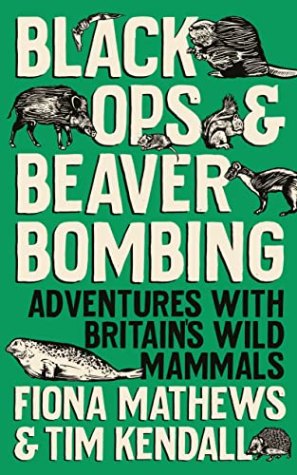
Black Ops and Beaver Bombing: Adventures with Britain’s Wild Mammals

Black Ops and Beaver Bombing: Adventures with Britain’s Wild Mammals

Countryfile's best nature and wildlife books for 2023 Shortlisted for the Wainwright Prize 'Elegiac, informative and funny; some truly magical encounters in the wild' Peter Fiennes Britain is teeming with wildlife, often in the most unexpected places

#9
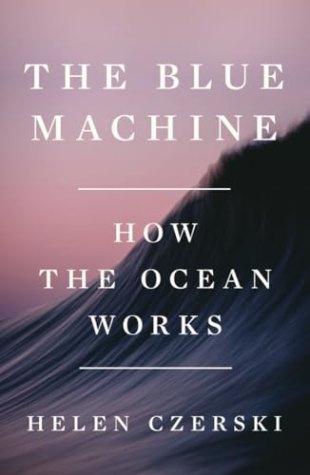
Blue Machine: How the Ocean Shapes Our World

Blue Machine: How the Ocean Shapes Our World

All of Earth’s oceans, from the equator to the poles, are a single engine powered by sunlight, driving huge flows of energy, water, life, and raw materials. In The Blue Machine, physicist and oceanographer Helen Czerski illustrates the mechanisms behind this defining feature of our planet, voyaging from the depths of the ocean floor to tropical coral reefs, estuaries that feed into shallow coastal seas, and Arctic ice floes.

#10
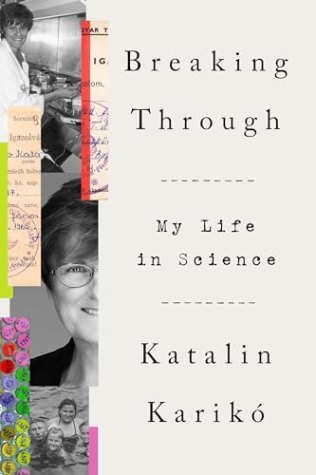
Breaking Through: My Life in Science

Breaking Through: My Life in Science

Katalin Karikó has had an unlikely journey. The daughter of a butcher in postwar communist Hungary, Karikó grew up in an adobe home that lacked running water, and her family grew their own vegetables. She saw the wonders of nature all around her and was determined to become a scientist. That determination eventually brought her to the United States, where she arrived as a postdoctoral fellow in 1985 with $1,200 sewn into her toddler’s teddy bear and a dream to remake medicine.

#11
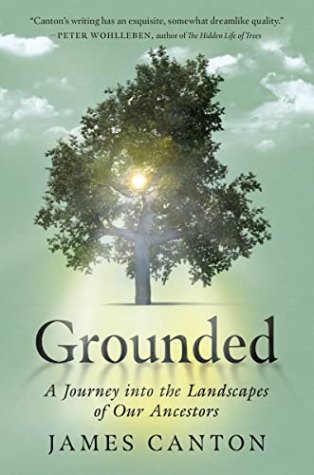
Grounded: a Journey into the Landscapes of Our Ancestors

Grounded: a Journey into the Landscapes of Our Ancestors

When James Canton walked into Suffolk’s Lindsey Chapel, it was the beginning of what would become a new journey in his life—hours away from the bustling city of London and distant from the years in his early twenties when he traveled from Egypt to Argentina. Standing inside the quaint chapel, Canton realized that his past cosmopolitan desires had been replaced by an intense yearning to understand the history of the place he called home, a burning curiosity about the past and the spiritual ways and beliefs of the people who came before us.

#12
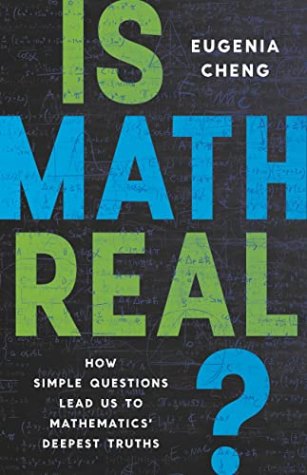
Is Maths Real?: How Simple Questions Lead Us to Mathematics’ Deepest Truths

Is Maths Real?: How Simple Questions Lead Us to Mathematics’ Deepest Truths

Where do we learn math: From rules in a textbook? From logic and deduction? Not really, according to mathematician Eugenia Cheng: we learn it from human curiosity—most importantly, from asking questions. This may come as a surprise to those who think that math is about finding the one right answer, or those who were told that the “dumb” question they asked just proved they were bad at math. But Cheng shows why people who ask questions like “Why does 1 + 1 = 2?” are at the very heart of the search for mathematical truth.

#13
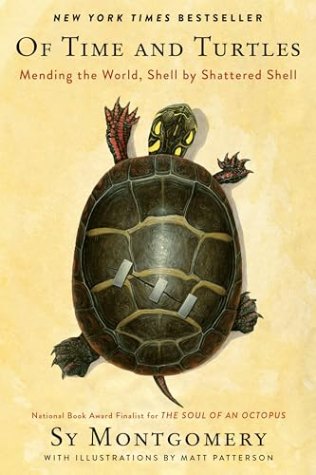
Of Time and Turtles: Mending the World, Shell by Shattered Shell

Of Time and Turtles: Mending the World, Shell by Shattered Shell

When acclaimed naturalist Sy Montgomery and wildlife artist Matt Patterson arrive at Turtle Rescue League, they are greeted by hundreds of turtles recovering from injury and illness. Endangered by cars and highways, pollution and poachers, these turtles—with wounds so severe that even veterinarians would have dismissed them as fatal—are given a second chance at life. The League’s founders, Natasha and Alexxia, live by one motto: Never give up on a turtle.

#14
One Thousand Shades of Green: A Year in Search of Britain’s Wild Plants

One Thousand Shades of Green: A Year in Search of Britain’s Wild Plants

For most of 2020, Mike Dilger's day-job of travelling to the four corners of the British Isles all but disappeared. Having been confined to one place by the Covid pandemic, and with daily dog walks his sole permitted outdoor pursuit, the simple pleasure of getting to know the flowers at his feet reignited a long-buried botanical passion.

#17
The Devil’s Element: Phosphorus and a World Out of Balance

The Devil’s Element: Phosphorus and a World Out of Balance

Phosphorus has played a critical role in some of the most lethal substances on earth: firebombs, rat poison, nerve gas. But it’s also the key component of one of the most vital: fertilizer, which has sustained life for billions of people. In this major work of explanatory science and environmental journalism, Pulitzer Prize finalist Dan Egan investigates the past, present, and future of what has been called “the oil of our time.”

#18
The Exceptions: Nancy Hopkins, Mit, and the Fight for Women in Science

The Exceptions: Nancy Hopkins, Mit, and the Fight for Women in Science

In 1963, a female student was attending a lecture given by Nobel Prize winner James Watson, then tenured at Harvard. At nineteen, she was struggling to define her future. She had given herself just ten years to fulfill her professional ambitions before starting the family she was expected to have. For women at that time, a future on the usual path of academic science was unimaginable—but during that lecture, young Nancy Hopkins fell in love with the promise of genetics. Confidently believing science to be a pure meritocracy, she embarked on a career.

#19
The Experience Machine: How Our Minds Predict and Shape Reality

The Experience Machine: How Our Minds Predict and Shape Reality

Widely acclaimed philosopher and cognitive scientist Andy Clark unpacks this provocative new theory that the brain is a powerful, dynamic prediction engine, mediating our experience of both body and world. From the most mundane experiences to the most sublime, reality as we know it is the complex synthesis of sensory information and expectation. Exploring its fascinating mechanics and remarkable implications for our lives, mental health, and society, Clark nimbly illustrates how the predictive brain sculpts all human experience. Chronic pain and mental illness are shown to involve subtle malfunctions of our unconscious predictions, pointing the way towards more effective, targeted treatments. Under renewed scrutiny, the very boundary between ourselves and the outside world dissolves, showing that we are as entangled with our environments as we are with our onboard memories, thoughts, and feelings. And perception itself is revealed to be something of a controlled hallucination.

#20
The Good Life: Lessons from the World’s Longest Scientific Study of Happiness

The Good Life: Lessons from the World’s Longest Scientific Study of Happiness

What makes a life fulfilling and meaningful? The simple but surprising answer is: relationships. The stronger our relationships, the more likely we are to live happy, satisfying, and healthier lives. In fact, the Harvard Study of Adult Development reveals that the strength of our connections with others can predict the health of both our bodies and our brains as we go through life.

#21
The Power of Trees: How Ancient Forests Can Save Us if We Let Them (From the Author of The Hidden Life of Trees)

The Power of Trees: How Ancient Forests Can Save Us if We Let Them (From the Author of The Hidden Life of Trees)

In his beloved book The Hidden Life of Trees, Peter Wohlleben revealed astonishing discoveries about the social networks of trees and how they communicate. Now, in The Power of Trees, he turns to their future, with a searing critique of forestry management, tree planting, and the exploitation of old growth forests.

#22
Twelve Words for Moss

Twelve Words for Moss

Glowflake, Rocket, Small Skies, Kind Spears, Marilyn . . . Moss is known as the living carpet but if you look really closely, it contains an irrepressible light. In Twelve Words for Moss, Elizabeth-Jane Burnett highlights this often forgotten but vital foundation of the plant world with her unique blend of poetry, nature writing and memoir. Making her way through wetlands from Somerset to Country Tyrone, Burnett discovers the hidden vibrancy of these overlooked spaces, renaming her favourite species of moss as she recovers from grieving her father's death, spurred on by the resilience and tenacity of her plant - and human - friends.

#23
Ultra-Processed People: The Science Behind Food That Isn’t Food

Ultra-Processed People: The Science Behind Food That Isn’t Food

How much of our daily caloric intake comes from ingesting substances that, technically speaking, do not meet traditional definitions of “food”? Chances are, if you’re eating something that came wrapped in plastic and contains a funky ingredient you don’t have in your kitchen, it's most likely—almost definitely—ultra-processed food, or UPF. More than the principal obstacle to “eating right,” UPF has been linked to metabolic disease, depression, inflammation, anxiety, and cancer, while the production, distribution, and disposal of UPF and related products globally is known to cause devastating environmental damage. At the same time, UPF represents the dominant, nigh-unavoidable food culture for millions upon millions of eaters.

#24
Under Alien Skies: A Sightseer’s Guide to the Universe

Under Alien Skies: A Sightseer’s Guide to the Universe

Have you ever wondered what it would be like to travel the universe? How would Saturn’s rings look from a spaceship sailing just above them? If you were falling into a black hole, what’s the last thing you’d see before getting spaghettified? While traveling in person to most of these amazing worlds may not be possible―yet―the would-be space traveler need not despair: you can still take the scenic route through the galaxy with renowned astronomer and science communicator Philip Plait.

#25
What an Owl Knows: The New Science of the World’s Most Enigmatic Birds

What an Owl Knows: The New Science of the World’s Most Enigmatic Birds

For millennia, owls have captivated and intrigued us. Our fascination with these mysterious birds was first documented more than thirty thousand years ago in the Chauvet Cave paintings in southern France. With their forward gaze and quiet flight, owls are often a symbol of wisdom, knowledge, and foresight. But what does an owl really know? And what do we really know about owls? Though our fascination goes back centuries, scientists have only recently begun to understand in deep detail the complex nature of these extraordinary birds. Some two hundred sixty species of owls exist today, and they reside on every continent except Antarctica, but they are far more difficult to find and study than other birds because they are cryptic, camouflaged, and mostly active in the dark of night.

#26
White Holes: Inside the Horizon

White Holes: Inside the Horizon

Let us journey, with beloved physicist Carlo Rovelli, into the heart of a black hole. We slip beyond its horizon and tumble down this crack in the universe. As we plunge, we see geometry fold. Time and space pull and stretch. And finally, at the black hole’s core, space and time dissolve, and a white hole is born.

#27
8 Rules of Love: How to Find It, Keep It, and Let It Go

8 Rules of Love: How to Find It, Keep It, and Let It Go

The author of the #1 New York Times bestseller Think Like a Monk offers a revelatory guide to every stage of romance, drawing on ancient wisdom and new science. Nobody sits us down and teaches us how to love. So we're often thrown into relationships with nothing but romance movies and pop culture to help us muddle through. Until now. Instead of presenting love as an ethereal concept or a collection of cliches, Jay Shetty lays out specific, actionable steps to help you develop the skills to practice and nurture love better than ever before. He shares insights on how to win or lose together, how to define love, and why you don't break in a break-up. Inspired by Vedic wisdom and modern science, he tackles the entire relationship cycle, from first dates to moving in together to breaking up and starting over. And he shows us how to avoid falling for false promises and unfulfilling partners. By living Jay Shetty's eight rules, we can all love ourselves, our partner, and the world better than we ever thought possible.

#28
A Black Fox Running

A Black Fox Running

A beautiful lost classic of nature writing which sits alongside Tarka the Otter, Watership Down, War Horse and The Story of a Red Deer This is the story of Wulfgar, the dark-furred fox of Dartmoor, and of his nemesis, Scoble the trapper, in the seasons leading up to the pitiless winter of 1947. As breathtaking in its descriptions of the natural world as it is perceptive its portrayal of damaged humanity, it is both a portrait of place and a gripping story of survival. Uniquely straddling the worlds of animals and men, Brian Carter's A Black Fox Running is a masterpiece: lyrical, unforgiving and unforgettable.

#29
A Brief Atlas of the Lighthouses at the End of the World

A Brief Atlas of the Lighthouses at the End of the World

Adziogol Lighthouse: Rybalche Kherson Oblast (Ukraine)| Amédée Lighthouse: Amédée Nouméa New Caledonia (France)| Bell Rock Lighthouse: Inchcape Rock Arbroath Scotland (UK)| Buda Lighthouse: Buda Island San Jaime de Enveija Tarragona (Spain)| Eddystone Lighthouse: Eddystone Rocks Rame Head Plymouth (UK)| Evangelistas Lighthouse: Evangelistas Islets Natales Última Esperanza (Chile)| Great Isaac Cay Lighthouse: Great Isaac Cay Bimini Islands (Bahamas)| Grip Lighthouse: Grip Kristiansund Nordmøre Møre og Romsdal (Norway)| Guardafui Lighthouse: Cape Guardafui Bari Puntland (Somalia)| Klein Curaçao Lighthouse: Klein Curaçao Curaçao (Netherlands)| Lime Rock Lighthouse: Lime Rock Newport Rhode Island (USA)| Maatsuyker Lighthouse: Maatsuyker Island Tasmania (Australia)| Robben Island Lighthouse: Robben Island Cape Town (South Africa)| Rocher aux Oiseaux Lighthouse: Rocher aux Oiseaux (Bird Rock) Madeleine Islands Quebec (Canada)| Rubjerg Knude Lighthouse: Rubjerg Hjørring Jutland (Denmark)| San Juan de Salvamento Lighthouse: Isla de los Estados Patagonia (Argentina)| Smalls Lighthouse: Smalls Rocks Marloes Pembrokeshire Wales (UK)| Stephens Island Lighthouse: Takapourewa or Stephens Island Marlborough (New Zealand)| Svyatonossky Lighthouse: Svyatoy Nos Múrmansk Oblast (Russia)| Wenwei Zhou Lighthouse: Wenwei Zhou or Gap Rock Wanshan Archipelago Hong Kong (China)|Readers of quirky history|Fans of nautical tales|Coastal residents and visitors|Armchair travelers|Anyone who has ever dreamed of life as a lighthouse keeper|Gift giving for Father's Day Mother's Day birthday graduation or housewarming

#30
A City on Mars

A City on Mars

"An exceptional new piece of popular science . . . Forceful, engaging and funny . . . an essential reality check for anyone who has ever looked for home in the night sky . . . hilarious. The breezy prose is studded with charming cartoons... This book will make you happy to live on this planet -- a good thing, because you're not leaving anytime soon." --New York Times Book Review From the bestselling authors of Soonish, a brilliant and hilarious off-world investigation into space settlement Earth is not well. The promise of starting life anew somewhere far, far away--no climate change, no war, no Twitter--beckons, and settling the stars finally seems within our grasp. Or is it? Critically acclaimed, bestselling authors Kelly and Zach Weinersmith set out to write the essential guide to a glorious future of space settlements, but after years of research, they aren't so sure it's a good idea. Space technologies and space business are progressing fast, but we lack the knowledge needed to have space kids, build space farms, and create space nations in a way that doesn't spark conflict back home. In a world hurtling toward human expansion into space, A City on Mars investigates whether the dream of new worlds won't create nightmares, both for settlers and the people they leave behind. In the process, the Weinersmiths answer every question about space you've ever wondered about, and many you've never considered: Can you make babies in space? Should corporations govern space settlements? What about space war? Are we headed for a housing crisis on the Moon's Peaks of Eternal Light--and what happens if you're left in the Craters of Eternal Darkness? Why do astronauts love taco sauce? Speaking of meals, what's the legal status of space cannibalism? With deep expertise, a winning sense of humor, and art from the beloved creator of Saturday Morning Breakfast Cereal, the Weinersmiths investigate perhaps the biggest questions humanity will ever ask itself--whether and how to become multiplanetary. Get in, we're going to Mars.

#31
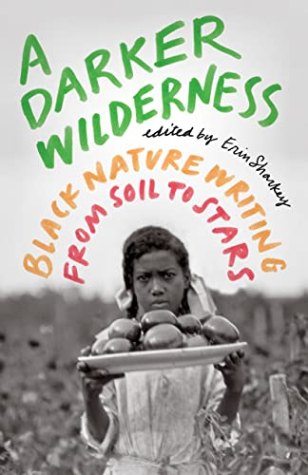
A DARKER WILDERNESS

A DARKER WILDERNESS

A Ms. Magazine Most Anticipated Book of 2023A vibrant collection of personal and lyric essays in conversation with archival objects of Black history and memory.What are the politics of nature? Who owns it, where is it, what role does it play in our lives? Does it need to be tamed? Are we ourselves natural? In A Darker Wilderness, a constellation of luminary writers reflect on the significance of nature in their lived experience and on the role of nature in the lives of Black folks in the United States. Each of these essays engages with a single archival object, whether directly or obliquely, exploring stories spanning hundreds of years and thousands of miles, traveling from roots to space and finding rich Blackness everywhere.Erin Sharkey considers Benjamin Banneker's 1795 almanac, as she follows the passing of seasons in an urban garden in Buffalo. Naima Penniman reflects on a statue of Haitian revolutionary François Makandal, within her own pursuit of environmental justice. Ama Codjoe meditates on rain, hair, protest, and freedom via a photo of a young woman during a civil rights demonstration in Alabama. And so on--with wide-ranging contributions from Carolyn Finney, Ronald Greer II, Alexis Pauline Gumbs, Sean Hill, Michael Kleber-Diggs, Glynn Pogue, Katie Robinson, and Lauret Savoy--unearthing evidence of the ways Black people's relationship to the natural world has persevered through colonialism, slavery, state-sponsored violence, and structurally racist policies like Jim Crow and redlining.A scrapbook, a family chest, a quilt--and an astounding work of historical engagement and literary accomplishment--A Darker Wilderness is a collection brimming with abundance and insight.

#33
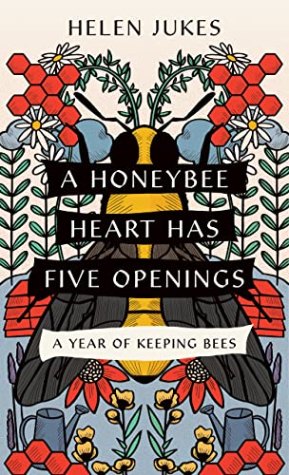
A Honeybee Heart Has Five Openings

A Honeybee Heart Has Five Openings

An inspiring, up-close portrait of tending to a honeybee hive—a year of living dangerously—watching and capturing the wondrous, complex universe of honeybees and learning an altogether different way of being in the world. "As strange, beautiful, and unexpected, as precise and exquisite in its movings as bees in a hive. I loved it."--Helen Macdonald, author of H Is for Hawk A Honeybee Heart Has Five Openings begins as the author is entering her thirties and feeling disconnected in her life. Uneasy about her future and struggling to settle into her new house in Oxford with its own small garden, she is brought back to a time of accompanying a friend in London—a beekeeper—on his hive visits. And as a gesture of good fortune for her new life, she is given a colony of honeybees. According to folklore, a colony, freely given, brings good luck, and Helen Jules embarks on a rewarding, perilous journey of becoming a beekeeper. Jukes writes about what it means to “keep” wild creatures; on how to live alongside beings whose laws and logic are so different from our own . . . She delves into the history of beekeeping and writes about discovering the ancient, haunting, sometimes disturbing relationship between keeper and bee, human and wild thing. A Honeybee Heart Has Five Openings is a book of observation, of the irrepressible wildness of these fascinating creatures, of the ways they seem to evade our categories each time we attempt to define them. Are they wild or domestic? Individual or collective? Is honey an animal product or is it plant-based? As the author’s colony grows, the questions that have, at first compelled her interest to fade away, and the inbetweenness, the unsettledness of honeybees call for a different kind of questioning, of consideration. A subtle yet urgent mediation on uncertainty and hope, on solitude and friendship, on feelings of restlessness and on home; on how we might better know ourselves. A book that shows us how to be alert to the large and small creatures that flit between and among us and that urge us to learn from this vital force so necessary to be continuation of life on planet Earth.

#35
A Renaissance of Our Own: A Memoir & Manifesto on Reimagining

A Renaissance of Our Own: A Memoir & Manifesto on Reimagining

From a highly lauded modern voice in feminism and racial justice comes a deeply personal and insightful testament to the power of reimagining to dismantle the frameworks and systems that no longer serve us while building new ones that do. "Powerful . . . You will leave these pages changed for the better."--Gabrielle Union, New York Times bestselling author of We're Going to Need More Wine There are breaking points in all our lives when we realize that the way things have been done before just don't work for us anymore, be it the way we approach our relationships, our belief systems, our work, our education, even our rest. For activist, philanthropist, and CEO Rachel E. Cargle, reimagining--the act of creating in our minds that which does not exist but that we believe can and should--has been a lifelong process. Reimagining served as the most powerful catalyst for Cargle's personal transformation from a small-town Christian wife to an incisive queer feminist voice of a generation. In A Renaissance of Our Own, we witness the sometimes painful but always inspiring breaking points in Cargle's life that fostered a truer identity. These defining moments offer a blueprint for how we must all use our imagination--the space that sees beyond limits--to live in alignment with our highest values and to craft a world independent of oppressive structures, both personal and societal. Cargle now invites you to acknowledge ways of being that stem from societal expectations instead of your personal truth, and to embark on a renaissance of your own. She provides the very tools and prompts that she used to unearth her own truth, tools that opened her up to being a more authentic feminist and purpose-driven matriarchal leader. A Renaissance of Our Own gives us the courage to look at the world and say "I want something different." It serves as a reminder of the power and possibility of reimagining a life that feels right, all the way down to the marrow of your bones.

#36
Abroad in Japan

Abroad in Japan

THE NUMBER ONE BESTSELLER 'Chris Broad explores Japan in all its quirky glory..Endlessly fascinating!' Will Ferguson, author of Hokkaido Highway Blues 'Carves a unique path across Japan bringing him into contact with far too many cats, heartening renewal in Tohoku, and even pizza with Ken Watanabe.' Iain Maloney, author of The Only Gaijin in the Village 'Fascinating, fact-packed and very funny..An excellent and enjoyable read for the Japan-curious. I loved it and learned a lot.' Sam Baldwin, author of For Fukui's Sake: Two years in rural Japan When Englishman Chris Broad landed in a rural village in northern Japan he wondered if he'd made a huge mistake. With no knowledge of the language and zero teaching experience, was he about to be the most quickly fired English teacher in Japan's history? Abroad in Japan charts a decade of living in a foreign land and the chaos and culture clash that came with it. Packed with hilarious and fascinating stories, this book seeks out to unravel one the world's most complex cultures. Spanning ten years and all forty-seven prefectures, Chris takes us from the lush rice fields of the countryside to the frenetic neon-lit streets of Tokyo. With blockbuster moments such as a terrifying North Korean missile incident, a mortifying experience at a love hotel and a week spent with Japan's biggest movie star, Abroad in Japan is an extraordinary and informative journey through the Land of the Rising Sun. Number one Sunday Times bestseller, August 2023. Cover may vary.

#39
Agave Spirits

Agave Spirits

All tequilas are mezcals; all mezcals are made from agaves; and every bottle of mezcal is the remarkable result of collaborations among agave entrepreneurs, botanists, distillers, beverage distributors, bartenders, and more. How these groups come together in this "spirits world" is the subject of this fascinating new book by the acclaimed ethnobotanist Gary Paul Nabhan and the pioneering restauranteur David Suro Pinera. Join them as they delight in the diversity of the distillate agave spirits, as they endeavor to track down the more distant kin in the family of agaves, and as, along the way, they reveal the stunning innovations that have been transforming the industry around tequilas and mezcals in recent decades.The result of the authors' fieldwork and on-the-ground interviews with mezcaleros in eight Mexican states, Agave Spirits shows how traditional methods of mezcal production are inspiring a new generation of individuals, including women, both in and beyond the industry. And as they reach back into a rich, centuries-long history, Nabhan and Suro Pinera make clear that understanding the story behind a bottle of mezcal, more than any other drink, will not only reveal what lies ahead for the tradition--including its ability to adapt in the face of the climate crisis--but will also enrich the drinking experience for readers.Essential reading for mezcal connoisseurs and amateurs interested in unlocking the past of a delightful distillate, Agave Spirits tells the tale of the most flavorful and memorable spirits humankind has ever sipped and savored. Featuring twelve illustrations by René Alejandro Hernández Tapia and indices that list common and scientific names for agave species, as well as the names of plants, animals, and domesticated agaves used in the production of distillates.

#47
Be a Birder

Be a Birder

He is delight and joy personified' - Marian Keyes 'Set to become BBC's next David Attenborough' - Daily Mail 'Brings a little bit of joy to us all' - Guardian Discover the wonderful world of birdwatching with wildlife cameraman Hamza Yassin - winner of BBC One's Strictly Come Dancing 2022 and presenter of BBC documentary Hamza: Strictly Birds of Prey 'Birds have been with me my entire life - from the colourful weaver birds on the banks of the Nile in Sudan to the magpies of Newcastle, from the roosting peregrine falcons near my parents' house in Northampton to the white-tailed eagles on the west coast of Scotland. I love them. If you take the time to stop and listen, you'll see the world through different eyes. It's all out there, waiting for you to find it. And it might just bring you as much joy as it's brought me.' Journey along with Hamza in Be a Birder as he recounts stories of his birding adventures, and shares tips and tricks to help you get started in birdwatching. In this beautifully illustrated guide featuring fifty of Hamza's favourite birds, you will learn how to start identifying birds, understand their behaviour and movements, and find even more exciting birds, wherever you are. Starting with the goldfinch in your garden, to tawny owls in woodlands, to the elusive kingfisher near rivers and marshes, you will build your birdwatching confidence and push yourself further afield to find new feathered wonders. Encouraging us all to stop, step outside and listen, Be a Birder is both a practical guide and a joyous celebration of these incredible creatures. Once you start looking for them, and with Hamza as your guide, your world will be forever changed.

#51
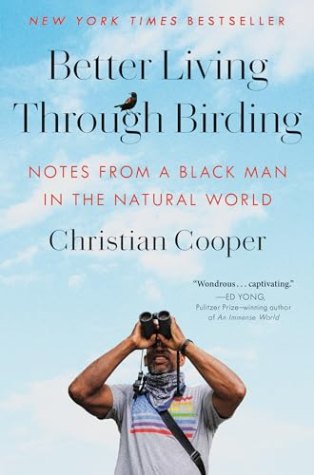
Better Living Through Birding: Notes from a Black Man in the Natural World

Better Living Through Birding: Notes from a Black Man in the Natural World

NEW YORK TIMES BESTSELLER - Central Park birder Christian Cooper takes us beyond the viral video that shocked a nation and into a world of avian adventures, global excursions, and the unexpected lessons you can learn from a life spent looking up. "Wondrous . . . captivating."--Ed Yong, Pulitzer Prize-winning author of An Immense World Longlisted for the Andrew Carnegie Medal Christian Cooper is a self-described "Blerd" (Black nerd), an avid comics fan and expert birder who devotes every spring to gazing upon the migratory birds that stop to rest in Central Park, just a subway ride away from where he lives in New York City. While in the park one morning in May 2020, Cooper was engaged in the birdwatching ritual that had been a part of his life since he was ten years old when what might have been a routine encounter with a dog walker exploded age-old racial tensions. Cooper's viral video of the incident would send shock waves through the nation. In Better Living Through Birding, Cooper tells the story of his extraordinary life leading up to the now-infamous incident in Central Park and shows how a life spent looking up at the birds prepared him, in the most uncanny of ways, to be a gay, Black man in America today. From sharpened senses that work just as well at a protest as in a park to what a bird like the Common Grackle can teach us about self-acceptance, Better Living Through Birding exults in the pleasures of a life lived in pursuit of the natural world and invites you to discover them yourself. Equal parts memoir, travelogue, and primer on the art of birding, this is Cooper's story of learning to claim and defend space for himself and others like him, from his days at Marvel Comics introducing the first gay storylines to vivid and life-changing birding expeditions through Africa, Australia, the Americas, and the Himalayas. Better Living Through Birding recounts Cooper's journey through the wonderful world of birds and what they can teach us about life, if only we would look and listen.

#54
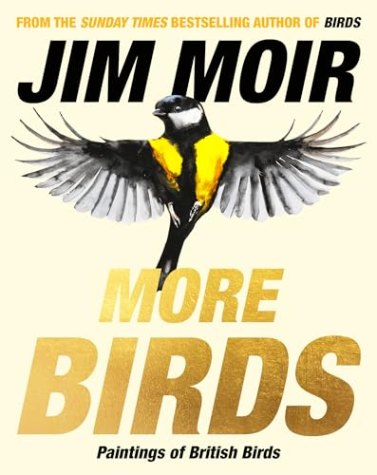
Birds

Birds

A beautiful collection of bird paintings from Sunday Times-bestselling author Jim Moir, the artist formerly known as Vic Reeves. Jim loves birds. His popularity as a painter has soared in recent years and the simplicity and sincerity of his bird paintings have given them cult status among his fans. Small enough to fit inside the pocket of a cagoule, More Birds is bursting with new paintings each accompanied by a fact. Do you know why the Chough has earned a reputation as a firestarter? Or how many pairs of Peregrine Falcons are nesting on St Paul’s Cathedral? Following Jim’s bestselling Birds and his Sky Arts series Painting Birds with Jim and Nancy, this exquisite volume of paintings will delight everyone who enjoys looking at and learning about our beaked and feathered fellow travellers. 'Jim doesn't just see birds, he looks at them, so intensely that he understands them. Not just anatomically or behaviourally - he knows how they feel' Chris Packham

#55
Blight

Blight

Fungi are everywhere. Most are harmless; some are helpful. A few are killers. Collectively, infectious fungi are the most devastating agents of disease on earth, and a fungus that can persist in the environment without its host is here to stay. In Blight, Emily Monosson documents how trade, travel, and a changing climate are making us all more vulnerable to invasion. Populations of bats, frogs, and salamanders face extinction. In the Northwest, America's beloved national parks are covered with the spindly corpses of whitebark pines. Food crops are under siege, threatening our coffee, bananas, and wheat--and, more broadly, our global food security. Candida auris, drug-resistant and resilient, infects hospital patients and those with weakened immune systems. Coccidioides, which lives in drier dusty regions, may cause infection in apparently healthy people. The horrors go on.Yet prevention is not impossible. Tracing the history of fungal spread and the most recent discoveries in the field, Monosson meets scientists who are working tirelessly to protect species under threat, and whose innovative approaches to fungal invasion have the potential to save human lives. Delving into case studies at once fascinating, sobering, and hopeful, Blight serves as a wake-up call, a reminder of the delicate interconnectedness of the natural world, and a lesson in seeing life on our planet with renewed humility and awe.

#65
Country Life

Country Life

The Nutty Idyll Former townies Giles and Mary swapped city life for rural Wiltshire over thirty years ago, and they've each embraced it in their own very different ways. Mary has happily traded sophisticated London salons for monthly lectures at the Farmers' Club, competitive school quizzes, church interactions and local Auction House sales. While Giles has immersed himself in the catastrophic consequences of conventional farming, his organic no-dig veg-patch, the increasingly disproportionate response by local landlords to harmless trespassers and the strange death of the village house martins. For recent city escapees and indigenous country folk alike, Giles and Mary sift through the unhelpful dreamy myths and offer a practical reality, with robust back and forth on every aspect of life in rural outposts, including but not limited to planning wars, class wars, dog thefts, tree-felling fights, misunderstandings between incomers and natives and the role of the Heron Appreciation Society. The much-loved Wiltshire couple share their combined, hard-earned lessons, so we can learn the secret skills of grumbling and bumbling our way towards a new contented country life.

#69
Diddly Squat: Pigs Might Fly

Diddly Squat: Pigs Might Fly

Get tucked in to a third bestselling helping of Clarkson's Farm from our favourite wellie-wearing wannabe farmer, Jeremy Clarkson 'Brilliant . . . laugh-out-loud' Daily Telegraph 'Outrageously funny . . . will have you in stitches' Time Out --- After three years, Jeremy Clarkson has discovered the golden rule of farming: whatever you hope will happen, won't. Enthusiastic schemes to diversify face defeat at the hands of the Council Planning department, or derision from Kaleb. Jeremy's plans for a business empire founded on rewilding and nettle soup are doubted by Lisa. And the stifling thickets of red tape keep only one person smiling – Cheerful Charlie, who charges by the hour. But the animals couldn’t be happier. A rented bull called Break-Heart Maestro is delighting the cows. The pigs are bringing home the bacon. And the goats are . . . most probably psychopaths. Yet on the good days it hard not to be optimistic. Where else do you get to harvest blackberries with a vacuum cleaner? Maybe it’s not just Break-heart Maestro who gets a happy ending? ---- Readers are loving Diddly Squat: Pigs Might Fly ‘Another funny book from Jeremy. This one made me chuckle but, my only complaint it's too short. I wanted more. Hopefully Another book is being written as we speak’ ***** Reader Review ‘I love the show and I love the books. Both make me chuckle but have also given me an insight into farming and how hard farming is’ **** Reader Review ‘I’ve read the previous books and loved those as well. Witty and funny with depth and a bit of seriousness’ **** Reader Review ‘Loved it, quickest book I've ever read. Can't wait for the next Clarkson instalment’ **** Reader Review

#70
Drama Free: A Guide To Managing Unhealthy Family Relationships

Drama Free: A Guide To Managing Unhealthy Family Relationships

Instant New York Times Bestseller From the bestselling author of Set Boundaries, Find Peace, a road map for understanding and moving past family struggles--and living your life, your way. Every family has a story. For some of us, our family of origin is a solid foundation that feeds our confidence and helps us navigate life's challenges. For others, it's a source of pain, hurt, and conflict that can feel like a lifelong burden. In this empowering guide, licensed therapist and bestselling relationship expert Nedra Glover Tawwab offers clear advice for identifying dysfunctional family patterns and choosing the best path to breaking the cycle and moving forward. Covering topics ranging from the trauma of emotional neglect, to the legacy of addicted or absent parents, to mental health struggles in siblings and other relatives, and more, this clear and compassionate guide will help you take control of your own life--and honor the person you truly are.

#71
Egg: A Dozen Ovatures

Egg: A Dozen Ovatures

The egg is a paradox--both alive and not alive--and a symbol as old as culture itself. In this wide-ranging and delightful journey through its natural and cultural history, Lizzie Stark explores the egg's deep meanings, innumerable uses, and metabolic importance through a dozen dazzling specimens.From Mali to Finland, mythologies around the globe have invested the egg with powers of regeneration and fecundity, often ascribing the origin of the world to a cosmic egg. An oracle to Romans, fought over by Gold Rush gangs, used as the foundation of the Clown Egg Registry, and blasted into space, the egg has taken on larger proportions than, say, the ovum of an ostrich.It has starred in global dishes from the Korean comfort food ttukbaegi gyeranjjim to the less regaled yet iconic soft-boiled egg. Stark writes a biography of French-born chef Jacques Pépin through his egg creations, and weaves in her personal experiences, like attempting to make the perfect omelet or trying her hand at pysanky--the Ukrainian art of egg decoration. She also explores her fraught relationship to the eggs in her body due to a familial link to cancer, and shares her delight in becoming a mother.Filled with colorful characters and fascinating morsels, Egg is playful, informative, and guarantees that you'll never take this delicate ovoid for granted again.

#72
Eight Bears

Eight Bears

Bears have always held a central place in our collective memory, from Indigenous folklore and Greek mythology to nineteenth-century fairytales and the modern toy shop. But as humans and bears come into ever-closer contact, our relationship nears a tipping point. Today, most of the eight remaining bear species are threatened with extinction. Some, such as the panda bear and the polar bear, are icons of the natural world; others, such as the spectacled bear and the sloth bear, are far less known.In Eight Bears, journalist Gloria Dickie embarks on a globe-trotting journey to explore each bear's story, whisking readers from the cloud forests of the Andes to the ice floes of the Arctic; from the jungles of India to the backwoods of the Rocky Mountain West. She meets with key figures on the frontlines of modern conservation efforts--the head of a rescue center for sun and moon bears freed from bile farms, a biologist known as Papa Panda, who has led China's panda-breeding efforts for almost four decades, a conservationist retraining a military radar system to detect and track polar bears near towns--to reveal the unparalleled challenges bears face as they contend with a rapidly changing climate and encroaching human populations.Weaving together ecology, history, mythology, and a captivating account of her travels and observations, Dickie offers a closer look at our volatile relationship with these magnificent mammals. Engrossing and deeply reported, Eight Bears delivers a clear warning for what we risk losing if we don't learn to live alongside the animals that have shaped our cultures, geographies, and stories.

#75
Elon Musk

Elon Musk

#1 New York Times bestseller From the author of Steve Jobs and other bestselling biographies, this is the astonishingly intimate story of the most fascinating and controversial innovator of our era--a rule-breaking visionary who helped to lead the world into the era of electric vehicles, private space exploration, and artificial intelligence. Oh, and took over Twitter. When Elon Musk was a kid in South Africa, he was regularly beaten by bullies. One day a group pushed him down some concrete steps and kicked him until his face was a swollen ball of flesh. He was in the hospital for a week. But the physical scars were minor compared to the emotional ones inflicted by his father, an engineer, rogue, and charismatic fantasist. His father's impact on his psyche would linger. He developed into a tough yet vulnerable man-child, prone to abrupt Jekyll-and-Hyde mood swings, with an exceedingly high tolerance for risk, a craving for drama, an epic sense of mission, and a maniacal intensity that was callous and at times destructive. At the beginning of 2022--after a year marked by SpaceX launching thirty-one rockets into orbit, Tesla selling a million cars, and him becoming the richest man on earth--Musk spoke ruefully about his compulsion to stir up dramas. "I need to shift my mindset away from being in crisis mode, which it has been for about fourteen years now, or arguably most of my life," he said. It was a wistful comment, not a New Year's resolution. Even as he said it, he was secretly buying up shares of Twitter, the world's ultimate playground. Over the years, whenever he was in a dark place, his mind went back to being bullied on the playground. Now he had the chance to own the playground. For two years, Isaacson shadowed Musk, attended his meetings, walked his factories with him, and spent hours interviewing him, his family, friends, coworkers, and adversaries. The result is the revealing inside story, filled with amazing tales of triumphs and turmoil, that addresses the question: are the demons that drive Musk also what it takes to drive innovation and progress?

#76
Enchantment: Reawakening Wonder in an Exhausted Age

Enchantment: Reawakening Wonder in an Exhausted Age

#1 NATIONAL BESTSELLER "When I tell you that I dogeared almost every page in this book, I'm telling God's honest truth. I didn't know how much I needed someone else to validate what I was going through. The sense that I had lost my curiosity, my imagination, my ability to make meaning." - NPR Morning Edition host Rachel Martin "Such a teacher for every single person who is trying to live closer to who they were born to be and not who the world tamed them to be." - New York Times bestselling author Glennon Doyle on We Can Do Hard Things "I love Katherine May's new book, Enchantment....It's a beautiful offering of light, truth and charm in these strange, dark times." - New York Times bestselling author Anne Lamott "Katherine May gave so many of us language and vision for the long communal 'wintering' of the last years. Welcome this beautiful meditation for the time we've now entered. I cannot imagine a more gracious companion. This book is a gift." - New York Times bestselling author Krista Tippett "Gentle inspiration for those who feel exhausted or helpless... May shows how paying deliberate attention to what's around us can surprise us with insights and reveal new connections that deepen our appreciation for the world." - Washington Post From the New York Times-bestselling author of Wintering, an invitation to rediscover the feelings of awe and wonder available to us all Many of us feel trapped in a grind of constant change: rolling news cycles, the chatter of social media, our families split along partisan lines. We feel fearful and tired, on edge in our bodies, not quite knowing what has us perpetually depleted. For Katherine May, this low hum of fatigue and anxiety made her wonder what she was missing. Could there be a different way to relate to the world, one that would allow her to feel more rested and at ease, even as seismic changes unfold on the planet? Might there be a way for all of us to move through life with curiosity and tenderness, sensitized to the subtle magic all around? In Enchantment, May invites the reader to come with her on a journey to reawaken our innate sense of wonder and awe. With humor, candor, and warmth, she shares stories of her own struggles with work, family, and the aftereffects of pandemic, particularly feelings of overwhelm as the world rushes to reopen. Craving a different way to live, May begins to explore the restorative properties of the natural world, moving through the elements of earth, water, fire, and air and identifying the quiet traces of magic that can be found only when we look for them. Through deliberate attention and ritual, she unearths the potency and nourishment that come from quiet reconnection with our immediate environment. Blending lyricism and storytelling, sensitivity and empathy, Enchantment invites each of us to open the door to human experience in all its sensual complexity, and to find the beauty waiting for us there.

#77
Entangled Life: The Illustrated Edition: How Fungi Make Our Worlds

Entangled Life: The Illustrated Edition: How Fungi Make Our Worlds

Merlin Sheldrake's New York Times bestseller, Entangled Life, is now a lavish visual journey into the hidden lives of fungi. When we think of fungi, we likely think of mushrooms. But mushrooms are only fruiting bodies, analogous to apples on a tree. Most fungi live out of sight yet make up a massively diverse kingdom of organisms that supports and sustains nearly all living systems. Fungi provide a key to understanding the planet on which we live, and the ways we think, feel, and behave. In the first edition of the mind-bending, "gorgeous" (Margaret Atwood), "brilliant [and] entrancing" (The Guardian) Entangled Life, Sheldrake introduced us to this mysterious but massively diverse kingdom of life. This new edition, abridged from the original, features over 100 full-color images that bring the spectacular variety, strangeness and beauty of fungi to life as never before. Fungi throw our concepts of individuality and even intelligence into question. They are metabolic masters, earth makers, and key players in most of life's processes. They can change our minds, heal our bodies, and even help us remediate environmental disaster. In vivid, surprising images, Sheldrake reveals how these extraordinary organisms--and our relationships with them--are changing our understanding of how life works.

#80
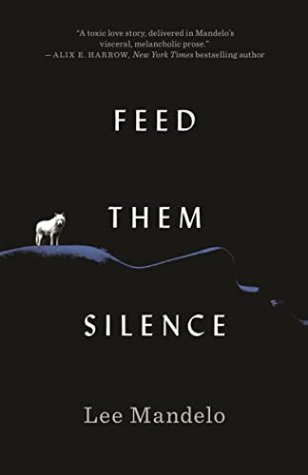
Feed Them Silence

Feed Them Silence

Lee Mandelo dives into the minds of wolves in Feed Them Silence, a novella of the near future. What does it mean to "be-in-kind" with a nonhuman animal? Or in Dr. Sean Kell-Luddon's case, to be in-kind with one of the last remaining wild wolves? Using a neurological interface to translate her animal subject's perception through her own mind, Sean intends to chase both her scientific curiosity and her secret, lifelong desire to experience the intimacy and freedom of wolfishness. To see the world through animal eyes; smell the forest, thick with olfactory messages; even taste the blood and viscera of a fresh kill. And, above all, to feel the belonging of the pack. Sean's tireless research gives her a chance to fulfill that dream, but pursuing it has a terrible cost. Her obsession with work endangers her fraying relationship with her wife. Her research methods threaten her mind and body. And the attention of her VC funders could destroy her subject, the beautiful wild wolf whose mental world she's invading. Also Available by Lee Mandelo: Summer Sons

#89
Four Ways of Thinking: Statistical, Interactive, Chaotic and Complex

Four Ways of Thinking: Statistical, Interactive, Chaotic and Complex

Acclaimed mathematician David Sumpter shares practical and insightful solutions for navigating the chaos and complexity of our lives What is the best way to think about the world? How often do we consider how our own thinking might impact the way we approach our daily decisions? Could it help or hinder our relationships, our careers, or even our health? As acclaimed mathematician David Sumpter shows, thinking about thinking is something we rarely do, yet it is something science questions all the time. He has spent decades studying what we could all learn from the mindsets of scientists, and Four Ways of Thinking is the result. Here he reveals the four easily applied approaches to our problems: statistical, interactive, chaotic, and complex. Combining engaging personal experience with practical advice and inspiring tales of groundbreaking scientific pioneers (with a tiny bit of number crunching along the way), Sumpter shows how these tried and tested methods can help us with every conundrum, from how to bicker less with our partners to pitching to a tough crowd--and in doing so, change our lives.

#91
George: A Magpie Memoir

George: A Magpie Memoir

"Poignant and funny...a passionate book about unconditional love and commitment." --The Washington Post * "Captivating." --Associated Press * "Rich with imagery...It's impossible not to be smitten." --Star Tribune (Minneapolis) From poet and painter Frieda Hughes, an intimate, charming, and humorous memoir recounting her experience rescuing and raising an abandoned baby magpie in the Welsh countryside. When Frieda Hughes moved to a ramshackle estate in the wilds of Wales, she was expecting to take on a few projects: planting a garden, painting, writing her poetry column for The Times (London), and possibly even breathing new life into her ailing marriage. But instead, she found herself rescuing a baby magpie, the sole survivor of a nest destroyed in a storm--and embarking on an obsession that would change the course of her life. As the magpie, George, grows from a shrieking scrap of feathers and bones into an intelligent, unruly companion, Frieda finds herself captivated--and apprehensive of what will happen when the time comes to finally set him free. With irresistible humor and heart, Frieda invites us along on her unlikely journey toward joy and connection in the wake of sadness and loss; a journey that began with saving a tiny wild creature and ended with her being saved in return.

#94
Glitter Everywhere! Where It Came From, Where It’s Found & Where It’s Going

Glitter Everywhere! Where It Came From, Where It’s Found & Where It’s Going

Fans of How It's Made will love this fresh, irreverent look at the science and story behind glitter. If you love glitter, this book is for you. If you hate glitter, this book is also for you. Everyone seems to have an opinion about glitter. But how much do you know about the tiny, shiny confetti? What makes glitter glitter? Why does it stick to everything? Who invented it? How is it made? Is glitter bad for the environment? Chris Barton's informative wit and Chaaya Prabhat's vibrant art make Glitter Everywhere sparkle as it covers the good, the bad, and shiny of all things glitter.

#95
Good Girls: A Story and Study of Anorexia

Good Girls: A Story and Study of Anorexia

From Hadley Freeman, bestselling author of House of Glass, comes a "riveting" (The New York Times) memoir about her experience as an anorexic and her journey to recovery. In 1995, Hadley Freeman wrote in her diary: "I just spent three years of my life in mental hospitals. So why am I crazier than I was before " From the ages of fourteen to seventeen, Freeman lived in psychiatric wards after developing anorexia nervosa. Her doctors informed her that her body was cannibalizing her muscles and heart for nutrition, but they could tell her little else: why she had it, what it felt like, what recovery looked like. For the next twenty years, Freeman lived as a "functioning anorexic," grappling with new forms of self-destructive behavior as the anorexia mutated and persisted. Anorexia is one of the most widely discussed but least understood mental illnesses. Through "sharp storytelling, solid research and gentle humor" (The Wall Street Journal), Freeman delivers an incisive and bracing work that details her experiences with anorexia--the shame, fear, loneliness, and rage--and how she overcame it. She interviews doctors to learn how treatment for the illness has changed since she was hospitalized and what new discoveries have been made about the illness, including its connection to autism, OCD, and metabolic rate. She learns why the illness always begins during adolescence and how this reveals the difficulties for girls to come of age. Freeman tracks down the women with whom she was hospitalized and reports on how their recovery has progressed over decades. Good Girls is an honest and hopeful story of resilience that offers a message to the nearly 30 million Americans who suffer from eating disorders: Life can be enjoyed, rather than merely endured.

#98
Greenwild: The World Behind The Door

Greenwild: The World Behind The Door

*An Instant New York Times Bestseller* The Secret Garden meets A Wrinkle in Time in Greenwild: The World Behind the Door, the first book in the most extraordinary new fantasy series -- the perfect gift for the holiday season! Open the door to a spellbinding world where the wilderness is alive and a deep magic rises from the earth itself . . . Eleven-year-old Daisy Thistledown is on the run. Her mother has been keeping big, glittering secrets, and now she has vanished. Daisy knows it's up to her to find Ma--but someone is hunting her across London. Someone determined to stop her from discovering the truth. So when Daisy flees to safety through a mysterious hidden doorway, she can barely believe her eyes--she has stepped out of the city and into another world. This is the Greenwild. Bursting with magic and full of amazing natural wonders, it seems too astonishing to be true. But not only is this land of green magic real, it holds the key to finding Daisy's mother. And someone wants to destroy it. Daisy must band together with a botanical genius, a boy who can talk with animals, and a spunky cat to uncover the truth about who she really is. Only then can she channel the power that will change her whole world . . . and save the Greenwild itself.

#101
How Far the Light Reaches: A Life in Ten Sea Creatures

How Far the Light Reaches: A Life in Ten Sea Creatures

A fascinating tour of creatures from the surface to the deepest ocean floor: this "miraculous, transcendental book" invites us to envision wilder, grander, and more abundant possibilities for the way we live (Ed Yong, author of An Immense World). A queer, mixed race writer working in a largely white, male field, science and conservation journalist Sabrina Imbler has always been drawn to the mystery of life in the sea, and particularly to creatures living in hostile or remote environments. Each essay in their debut collection profiles one such creature, including: -the mother octopus who starves herself while watching over her eggs, -the Chinese sturgeon whose migration route has been decimated by pollution and dams, -the bizarre, predatory Bobbitt worm (named after Lorena), -the common goldfish that flourishes in the wild, -and more. Imbler discovers that some of the most radical models of family, community, and care can be found in the sea, from gelatinous chains that are both individual organisms and colonies of clones to deep-sea crabs that have no need for the sun, nourished instead by the chemicals and heat throbbing from the core of the Earth. Exploring themes of adaptation, survival, sexuality, and care, and weaving the wonders of marine biology with stories of their own family, relationships, and coming of age, How Far the Light Reaches is a shimmering, otherworldly debut that attunes us to new visions of our world and its miracles. WINNER OF THE LOS ANGELES TIMES BOOK PRIZE in SCIENCE & TECHNOLOGY Finalist for the Lambda Literary Award One of TIME's 10 Best Nonfiction Books of the Year - A PEOPLE Best New Book - A Barnes & Noble and SHELF AWARENESS Best Book of 2022 - An Indie Next Pick - One of Winter's Most Eagerly Anticipated Books: VANITY FAIR, VULTURE, BOOKRIOT

#104
How to Read a Tree

How to Read a Tree

"Reams of appealing facts make one itch to get outside and right up close to trees' rough surfaces and shady cover."--The Atlantic New York Times-bestselling author Tristan Gooley opens our eyes to the secret language of trees--and the natural wonders they reveal all around us Trees are keen to tell us so much. They'll tell us about the land, the water, the people, the animals, the weather, and time. And they will tell us about their lives, the good bits and bad. Trees tell a story, but only to those who know how to read it. In How to Read a Tree, Gooley uncovers the clues hiding in plain sight: in a tree's branches and leaves; its bark, buds, and flowers; even its stump. Leaves with a pale, central streak mean that water is nearby. Young, low-growing branches show that a tree is struggling. And reddish or purple bark signals new growth. Like snowflakes, no two trees are exactly the same. Every difference reveals the epic story this tree has lived--if we stop to look closely.

#106
I Am an Island

I Am an Island

THE SUNDAY TIMES BESTSELLER 'Memoir of the year' - Vogue 'A wondrous, sensuous memoir of salt-stung survival . . . clear-eyed and poetic prose' Sunday Times 'A fascinating memoir' - Daily Mail When Tamsin Calidas first arrives on a remote island in the Scottish Hebrides, it feels like coming home. Disenchanted by London, she and her husband left the city and high-flying careers to move the 500 miles north, despite having absolutely no experience of crofting, or of island life. It was idyllic, for a while. But as the months wear on, the children she'd longed for fail to materialise, and her marriage breaks down, Tamsin finds herself in ever-increasing isolation. Injured, ill, without money or friend she is pared right back, stripped to becoming simply a raw element of the often harsh landscape. But with that immersion in her surroundings comes the possibility of rebirth and renewal. Tamsin begins the slow journey back from the brink. Startling, raw and extremely moving, I Am An Island is a story about the incredible ability of the natural world to provide when everything else has fallen away - a stunning book about solitude, friendship, resilience and self-discovery.

#107
I Can Hear the Cuckoo: Life in the Wilds of Wales

I Can Hear the Cuckoo: Life in the Wilds of Wales

A beautiful and poetic meditation on loss, nature, and what matters in life.' - Nigel Warburton From the BAFTA award-winning writer of The New Yorker short film, Heart Valley Kiran Sidhu never thought she could leave London, but when her mother passes away, she knows she has to walk out of her old life and leave her toxic family behind. She chooses fresh air, an auditorium of silence and the purity of the natural world - and soon arrives in Cellan, a small, remote village nestled in the Welsh valleys. At first, the barrenness and isolation is strange. But as the months wear on, Kiran starts to connect with the close-knit community she finds there; her neighbour Sarah, who shows her how to sledge when the winter snow arrives; Jane, a 70-year-old woman who lives at the top of a mountain with three dogs and four alpacas; and Wilf, the farmer who eats the same supper every day, and teaches Kiran that the cuckoo arrives in April and leaves in July. Tender, philosophical and moving, I Can Hear the Cuckoo is a story about redefining family, about rebirth and renewal, and respecting the rhythm and timing of the earth. It's a book about moving through grief and the people we find in the midst of our sadness - and what this small community in the Welsh countryside can teach us about life.

#108
I Feel Love: MDMA and the Quest for Connection in a Fractured World

I Feel Love: MDMA and the Quest for Connection in a Fractured World

"Riveting."--Bessel van der Kolk, MD, author of The Body Keeps the Score The unlikely story of how the psychedelic drug MDMA emerged from the shadows to the forefront of a medical revolution--and the potential it may hold to help us thrive. Few drugs in history have generated as much controversy as MDMA--or held as much promise. Once vilified as a Schedule I substance that would supposedly eat holes in users' brains, MDMA (also known as Molly or Ecstasy) is now being hailed as a therapeutic agent that could transform the field of mental health and outpace psilocybin and ketamine as the first psychedelic approved for widespread clinical use. In I Feel Love, science journalist Rachel Nuwer separates fact from fantasy, hope from hype, in the drug's contested history and still-evolving future. Evidence from scientific trials suggests MDMA, properly administered, can be startlingly effective at relieving the effects of trauma. Results from other studies point to its usefulness for individual and couples therapy; for treating depression, alcohol addiction, and eating disorders; and for cultivating personal growth. Yet scientists are still racing to discover how MDMA achieves these outcomes, a mystery that is taking them into the inner recesses of the brain and the deep history of evolution. With its power to dismantle psychological defenses and induce feelings of empathy, self-compassion, and love, MDMA may answer profound questions about how we became human, and how to heal our broken social bonds. From cutting-edge labs to pulsing club floors to the intimacy of the therapist's couch, Nuwer guides readers through a cultural and scientific upheaval that is rewriting our understanding of our brains, our selves, and the space between.

#109
I’ve Been Thinking

I’ve Been Thinking

Daniel C. Dennett, preeminent philosopher and cognitive scientist, has spent his career considering the thorniest, most fundamental mysteries of the mind. Do we have free will? What is consciousness and how did it come about? What distinguishes human minds from the minds of animals? Dennett's answers have profoundly shaped our age of philosophical thought. In I've Been Thinking, he reflects on his amazing career and lifelong scientific fascinations.Dennett's relentless curiosity has taken him from a childhood in Beirut and the classrooms of Harvard, Oxford, and Tufts, to "Cognitive Cruises" on sailboats and the fields and orchards of Maine, and to laboratories and think tanks around the world. Along the way, I've Been Thinking provides a master class in the dominant themes of twentieth-century philosophy and cognitive science--including language, evolution, logic, religion, and AI--and reveals both the mistakes and breakthroughs that shaped Dennett's theories.Key to this journey are Dennett's interlocutors--Douglas Hofstadter, Marvin Minsky, Willard Van Orman Quine, Gilbert Ryle, Richard Rorty, Thomas Nagel, John Searle, Gerald Edelman, Stephen Jay Gould, Jerry Fodor, Rodney Brooks, and more--whose ideas, even when he disagreed with them, helped to form his convictions about the mind and consciousness. Studded with photographs and told with characteristic warmth, I've Been Thinking also instills the value of life beyond the university, one enriched by sculpture, music, farming, and deep connection to family.Dennett compels us to consider: What do I really think? And what if I'm wrong? This memoir by one of the greatest minds of our time will speak to anyone who seeks to balance a life of the mind with adventure and creativity.

#112
In a Flight of Starlings: The Wonder of Complex Systems

In a Flight of Starlings: The Wonder of Complex Systems

From the 2021 Nobel Prize winner in Physics, a remarkable journey into the practice of groundbreaking science 'Giorgio Parisi is renowned for his scientific creativity, originality, and power. In this exhilarating little book, he shows his human side, too. By its end, readers will feel they've made a charming, witty new friend' Frank Wilczek The world is shaped by complexity. In this enlightening book, Nobel Prize winner Giorgio Parisi guides us through his unorthodox yet exhilarating work to show us how. It all starts with investigating the principles of physics by observing the sophisticated flight patterns of starlings. Studying the movements of these birds, he has realized, proves an illuminating way into understanding complex systems of all kinds - collections of everything from atoms to planets to other animals like ourselves. Along the way, Parisi reflects on the lessons he's taken from a life in pursuit of scientific truth: the importance of serendipity to the discovery of new ideas, the surprising kinship between physics and other fields of study and the value of science to a thriving society. In so doing, he removes the practice of science from the confines of the laboratory and into the real world. Complexity is all around us - from climate to finance to biology, it offers a unique way of finding order in chaos. Part elegant scientific treatise, part thrilling intellectual journey, In a Flight of Starlings is an invitation to find wonder in the world around us.

#114
In the Night Garden

In the Night Garden

A gentle, collage-illustrated bedtime read about the often mysterious and always beautiful experiences to be found in nighttime spaces. In the night garden fireflies look like fallen stars. Moonflowers unfurl and release their intoxicating perfume. In the night garden you can lie on the cool grass and look up to the millions and trillions of stars... In the night garden, nothing is as it seems and everything is made new. Blinking stars and pale moonlight might reveal a lone cat tiptoeing across a roof, luminous flowers unfurling in the cool air, a mama fox escorting her sleepy cubs home. Listen closely and you might hear the wind blowing through the trees, the murmur of a slow stream, or the gentle song of crickets and bullfrogs, lulling you to sleep. Carin Berger is the award-winning author of The Little Yellow Leaf, a New York Times Best Illustrated Book. With soothing words and spectacularly detailed, hand-cut collage artwork, she has fashioned a bedtime book like no other. Curious readers will be rewarded when they look for the mysterious cat that appears on every page! A Junior Library Guild Gold Standard Selection

#117
Justice for Animals: Our Collective Responsibility

Justice for Animals: Our Collective Responsibility

A revolutionary new theory and call to action on animal rights, ethics, and law from the renowned philosopher Martha C. Nussbaum. Animals are in trouble all over the world. Whether through the cruelties of the factory meat industry, poaching and game hunting, habitat destruction, or neglect of the companion animals that people purport to love, animals suffer injustice and horrors at our hands every day. The world needs an ethical awakening, a consciousness-raising movement of international proportions. In Justice for Animals, one of the world's most influential philosophers and humanists Martha C. Nussbaum provides a revolutionary approach to animal rights, ethics, and law. From dolphins to crows, elephants to octopuses, Nussbaum examines the entire animal kingdom, showcasing the lives of animals with wonder, awe, and compassion to understand how we can create a world in which human beings are truly friends of animals, not exploiters or users. All animals should have a shot at flourishing in their own way. Humans have a collective duty to face and solve animal harm. An urgent call to action and a manual for change, Nussbaum's groundbreaking theory directs politics and law to help us meet our ethical responsibilities as no book has done before.

#122
Lessons Learned

Lessons Learned

Women physicians now comprise 50 percent or more of most U.S. medical school classes. Yet relatively few fill the most senior management positions within the healthcare system. At a time when most agree that the U.S. healthcare delivery system needs fundamental change, this book makes the case for talented women physician executives, articulate in the language of healthcare policy and business, to be among those leading the way. In Lessons Learned: Stories from Women Physician Leaders, editor and author Deborah M. Shlian, MD, MBA, profiles 33 exceptional women physicians who have defied the odds. They share their personal and compelling stories - including obstacles and challenges faced in balancing work, family, and personal life - as their career paths take them from clinical medicine to leadership within government, academia, hospitals, provider groups, managed care, pharma, consulting, and entrepreneurial venture. The lessons they learned are relevant not only to women and are not applicable just to healthcare-they are universal. The stories (which are actually "case studies") illustrate the trailblazing and creativity of a group of professional women who understand how to use processes and procedures to manage the complexities of large organizations and how to exercise leadership to motivate and lead others through change and uncertainty. The women profiled are intentionally a diverse group. A couple are nearer to the beginning of their management careers, others are midway, several have reached senior-level positions, and a few are close to or have already retired. Some are married, some are not, some have children, and some have none. Some are surgeons by training, others are primary care doctors. While they work as physician managers in virtually every type of healthcare organization in the U.S., their stories share many common themes. Lessons Learned is a distinctive resource, addressing such topics as: Career options after medical training. Leadership opportunities beyond a traditional clinical setting. Challenges for women in the workplace, discrimination, salary discrepancies, and different expectations. Role models, mentorships, and sponsorships at the leadership level. Work-life balance. Bonus #1: Many chapters include a vignette about leadership and how to navigate the complex environment of an often male-dominated upper-echelon work environment. It provides assurance there is a support system in a physician's career journey. Bonus #2: Virtually all the women in this book are willing to mentor and share advice. They can provide a valuable resource for young physicians looking for support. Contacts are available through the editor Dr. Deborah Shlian. From the Foreword by Theresa Rohr-Kirchgraber, MD, FACP, FAMWA, president of the American Medical Women's Association (AMWA), "From these women, we can all learn that that if there is not a path, we can create one. If the path is not well trodden, we must walk it and make it passable for the next generation. If the path is narrow, we must walk with others as we widen it. None of us is on this journey alone. We stand on the shoulders of those who have gone before us, beside those who are with us, and for those who come after us."

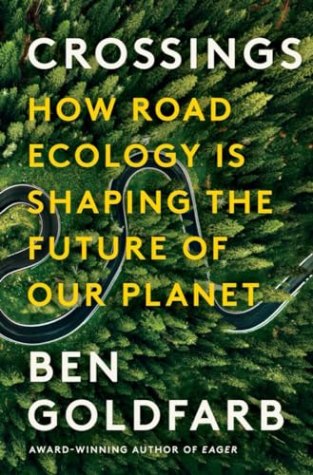
#124
Lost Lanes West

Lost Lanes West

Jack Thurston, best-selling author of Lost Lanes series and presenter of the internationally acclaimed Bike Show, takes you on a freewheeling tour of the lost lanes and forgotten byways of Cornwall, Devon, Dorset, Somerset and Wiltshire. Enjoy 36 of the best rural rides in the region: Ride on traffic free lanes from the seashore into the heart of the west country. Stunning photography, downloadable GPX, handmade maps. Discover car-free routes through the grand estates of Longleat, Stourhead, Lanhydrock and Ashton Court. Escape to ancient trackways of Wessex's chalk downs, passing the prehistoric remains of Avebury, Silbury Hill and Stonehenge. Ride traffic free paths along the River Dart, River Camel and River Exe stopping for river swims and picnics in sun-dappled woodlands. Climb to the windswept heights of Dartmoor and Exmoor and descend beneath the towering crags of Cheddar Gorge.

#127
Many Things Under a Rock: The Mysteries of Octopuses

Many Things Under a Rock: The Mysteries of Octopuses

“Mind-blowing and soul-expanding.” —Sy Montgomery, author of The Soul of an Octopus A behavioral ecologist’s riveting account of his decades-long obsession with octopuses: his discoveries, adventures, and new scientific understanding of their behaviors. Of all the creatures of the deep blue, none is as captivating as the octopus. In Many Things Under a Rock, marine biologist David Scheel investigates four major mysteries about these elusive beings. How can we study an animal with perfect camouflage and secretive habitats? How does a soft and boneless creature defeat sharks and eels, while thriving as a predator of the most heavily armored animals in the sea? How do octopus bodies work? And how does a solitary animal form friendships, entice mates, and outwit rivals? Over the course of his twenty-five years studying octopuses, Scheel has witnessed a sea change in what we know and are able to discover about octopus physiology and behavior—even an octopus’s inner life. Here he explores amazing new scientific developments, weaving accounts of his own research, and surprising encounters, with stories and legends of Indigenous peoples that illuminate our relationship with these creatures across centuries. In doing so, he reveals a deep affinity between humans and even the most unusual and unique undersea dwellers. Octopuses are complex, emotional, and cognitive beings; even as Scheel unearths explanations for the key mysteries that have driven his work, he turns up many more things of wonder that lurk underneath. This is the story of what we have learned and what we are still learning about the natural history and wondrous lives of these animals with whom we share our blue planet.

#133
Moving on Doesn’t Mean Letting Go: A Modern Guide to Navigating Loss

Moving on Doesn’t Mean Letting Go: A Modern Guide to Navigating Loss

Winner: Silver Nautilus Book Award, Death & Dying/Grief & Loss Licensed grief and trauma therapist Gina Moffa illuminates a non-linear path through grief, with tools and practices to grieve at your own pace and use loss as a catalyst for a more connected, meaningful life moving forward—perfect for readers of Grief Day by Day and It's OK That You're Not OK. After nearly two decades of clinical experience and her own journey after losing her mother to cancer, Gina Moffa, LCSW offers knows all too well how disorienting, painful, and lonely grief can be. In Moving on Doesn’t Mean Letting Go, she offers a heartfelt, practical map through loss—one that can shift the pain of your grief even when things feel unpredictable and overwhelming. With her help you’ll learn to: Navigate the initial shock of the “griefall” Recognize your unique grief rhythm Get in touch with your needs, feelings, and boundaries Mange social media and interactions with the outside world Connect mind and body through somatic exercises and self-reflections Gina gives readers permission to grieve authentically—with none of the toxic positivity that bypasses the possibility of true healing and transformation—because you don’t have to choose between falling apart or staying strong. You can learn to be empowered by the very thing you imagined would swallow you whole. “A must read. Help your mind feel less heavy and open the door to deep personal growth" —Yung Pueblo, #1 New York Times bestselling author of Lighter and Clarity & Connection.

#136
Night Vision: Seeing Ourselves through Dark Moods

Night Vision: Seeing Ourselves through Dark Moods

A philosopher's personal meditation on how painful emotions can reveal truths about what it means to be truly human Under the light of ancient Western philosophies, our darker moods like grief, anguish, and depression can seem irrational. When viewed through the lens of modern psychology, they can even look like mental disorders. The self-help industry, determined to sell us the promise of a brighter future, can sometimes leave us feeling ashamed that we are not more grateful, happy, or optimistic. Night Vision invites us to consider a different approach to life, one in which we stop feeling bad about feeling bad. In this powerful and disarmingly intimate book, Existentialist philosopher Mariana Alessandri draws on the stories of a diverse group of nineteenth- and twentieth-century philosophers and writers to help us see that our suffering is a sign not that we are broken but that we are tender, perceptive, and intelligent. Thinkers such as Audre Lorde, María Lugones, Miguel de Unamuno, C. S. Lewis, Gloria Anzaldúa, and Søren Kierkegaard sat in their anger, sadness, and anxiety until their eyes adjusted to the dark. Alessandri explains how readers can cultivate "night vision" and discover new sides to their painful moods, such as wit and humor, closeness and warmth, and connection and clarity. Night Vision shows how, when we learn to embrace the dark, we begin to see these moods--and ourselves--as honorable, dignified, and unmistakably human.

#138
OCME

OCME

"Gripping . . . a brilliant insider's view." -- Kirkus Reviews (starred review) Go behind the scenes inside the nation's preeminent Office of the Chief Medical Examiner, where good people fight the good fight amid the tragedies and absurdities of our age Perfect for fans of Michael Lewis and David Simon (Homicide, The Corner, The Wire, We Own This City) Real life is different from what gets depicted on procedural crime dramas. Equipped with a journalist's eye, a paramedic's experience and a sardonic wit, Bruce Goldfarb spent ten years with Maryland's Office of the Chief Medical Examiner, where every sudden or unattended death in the state is scrutinized. Touching on numerous scandals, including Derek Chauvin's trial for the murder of George Floyd and the tragic killing in police custody of Freddie Gray, Goldfarb pulls back the curtain on a pioneer institution in crisis. Medical examiners and the investigators and technicians who support them play vital roles in the justice and public health systems of every American community. During Goldfarb's time with the Maryland OCME, opioid-related deaths contributed to a significant increase in their workload. Faced with a chronic shortage of qualified experts and inadequate funding, their important and fascinating work has become more challenging than most people could ever imagine. The public gets a skewed view of the relationship between police and medical examiners from procedural crime dramas, Bruce Goldfarb writes of his work inside one of America's most storied forensic centers. We aren't on the same team . . . We aren't on any team. The medical examiner's sole duty is to the deceased person. We speak for the dead. -- Praise for Bruce Goldfarb's 18 Tiny Deaths "An engrossing and accessible chronicle of . . . the early years of scientific detection." -- The Wall Street Journal "Devotees of TV's CSI will have their minds blown." -- Publishers Weekly (starred review)

#139
Off-Earth

Off-Earth

Can we do better in space than we’ve done here on Earth? We’ve pinpointed the destination, refined the technology, designed the habitat, outfitted our space residents. Are we forgetting something? A timely reminder that it’s not just rocket science, this thought-provoking book explores the all-too-human issues raised by the prospect of settling in outer space. It’s worth remembering, Erika Nesvold suggests, that in making new worlds, we don’t necessarily leave our earthly problems behind. Accordingly, her work highlights the complex ethical challenges that accompany any other-worldly venture—questions about the environment, labor rights, and medical ethics, among others. Any such venture, Nesvold contends, must be made on behalf of all humanity, with global input and collaboration. Off-Earth thus includes historical and contemporary examples from outside the dominant Western/US, abled, and privileged narrative of the space industry. Nesvold calls on experts in ethics, sociology, history, social justice, and law to launch a hopeful conversation about the potential ethical pitfalls of becoming a multi-planet species—and, ideally, to shed light on similar problems we presently face here on Earth. Space settlement is rapidly becoming ever more likely. Will it look like the utopian vision of Star Trek? Or the dark future of Star Wars? Nesvold challenges us to decide.

#141
Orchid Summer

Orchid Summer

A heady celebration of the beauty and history of the wild orchid species of the British Isles, embraced in one glorious and kaleidoscopic summer-long hunt by naturalist Jon Dunn From the chalk downs of the south coast of England to the heathery moorland of the Shetland Isles, and from the holy island of Lindisfarne in the east to the Atlantic frontier of western Ireland, Orchid Summer is a journey into Britain and Ireland's most beautiful corners. The flowers that are the focus of this treasure hunt are exquisite and diverse. Some resemble insects and develop scents that mimic the smell of a virgin female wasp in order to lure male wasps to sample their unsatisfying charms. Some tower above the surrounding vegetation; others are vanishingly small and discrete. Some are sweetly scented; others smell of ripe billy goats. Some can be readily found but some will prove more elusive – none more so than the last to flower, the rarest of them all, the ghost orchid... Capturing the intoxicating beauty of these rare and charismatic flowers, Orchid Summer is also an exploration of their history, their champions, their place in our landscape and the threats they face. Combining infectious enthusiasm and a painterly eye with a deep knowledge that comes from a lifetime's passionate devotion to their study, Dunn sweeps us up on his adventure, one from which it is impossible not to emerge enchanted and enriched.

#145
Period

Period

A bold and revolutionary perspective on the science and cultural history of menstruation Menstruation is something half the world does for a week at a time, for months and years on end, yet it remains largely misunderstood. Scientists once thought of an individual's period as useless, and some doctors still believe it's unsafe for a menstruating person to swim in the ocean wearing a tampon. Period counters the false theories that have long defined the study of the uterus, exposing the eugenic history of gynecology while providing an intersectional feminist perspective on menstruation science. Blending interviews and personal experience with engaging stories from her own pioneering research, Kate Clancy challenges a host of myths and false assumptions. There is no such a thing as a "normal" menstrual cycle. In fact, menstrual cycles are incredibly variable and highly responsive to environmental and psychological stressors. Clancy takes up a host of timely issues surrounding menstruation, from bodily autonomy, menstrual hygiene, and the COVID-19 vaccine to the ways racism, sexism, and medical betrayal warp public perceptions of menstruation and erase it from public life. Offering a revelatory new perspective on one of the most captivating biological processes in the human body, Period will change the way you think about the past, present, and future of periods.

#146
Plague-Busters! Medicine’s Battles with History’s Deadliest Diseases

Plague-Busters! Medicine’s Battles with History’s Deadliest Diseases

Smallpox! Rabies! Black Death! Throughout history humankind has been plagued by . . . well, by plagues. The symptoms of these diseases were gruesome-but the remedies were even worse. Get to know the ickiest illnesses that have infected humans and affected civilizations through the ages. Each chapter explores the story of a disease, including the scary symptoms, kooky cures, and brilliant breakthroughs that it spawned. Medical historian and bestselling author Lindsey Fitzharris lays out the facts with her trademark wit, and Adrian Teal adds humor with cartoons and caricatures drawn in pitch black and blood red. Diseases covered in this book include bubonic plague, smallpox, rabies, tuberculosis, cholera, and scurvy. Thanks to centuries of sickness and a host of history's most determined plague-busters, this riveting book features everything you've ever wanted to know about the world's deadliest diseases.

#149
Planting a Paradise

Planting a Paradise

Every garden, large or small, in a town or in the country, even one formed completely by pots, can be a living dance of lavish colours, glorious scents and pollen-rich flowers alive to the sound of bird song and the buzz of bees. In Planting a Paradise, Arthur Parkinson, bestselling author of The Flower Yard, focuses on what to grow through the seasons with an array of planting ideas and recommended varieties to inspire the experienced and novice gardener alike. From his newly found love of muscari, narcissi and seeding grasses, to circuses of dahlias, luscious herbs, figs and crab apples, the result is not only a stunning living harvest but also an oasis for wildlife at a time when we need this style of gardening more than ever. Praise for The Flower Yard: 'Simply gorgeous' - Nigel Slater 'The Kew-trained king of the small-space garden' - Guardian

#153
RADICAL BY NATURE

RADICAL BY NATURE

A major biography of the brilliant naturalist, traveler, humanitarian, and codiscoverer of natural selection Alfred Russel Wallace (1823–1913) was perhaps the most famed naturalist of the Victorian age. His expeditions to remote Amazonia and southeast Asia were the stuff of legend. A collector of thousands of species new to science, he shared in the discovery of natural selection and founded the discipline of evolutionary biogeography. Radical by Nature tells the story of Wallace’s epic life and achievements, from his stellar rise from humble origins to his complicated friendship with Charles Darwin and other leading scientific lights of Britain to his devotion to social causes and movements that threatened to alienate him from scientific society. James Costa draws on letters, notebooks, and journals to provide a multifaceted account of a revolutionary life in science as well as Wallace’s family life. He shows how the self-taught Wallace doggedly pursued bold, even radical ideas that caused a seismic shift in the natural sciences, and how he also courted controversy with nonscientific pursuits such as spiritualism and socialism. Costa describes Wallace’s courageous social advocacy of women’s rights, labor reform, and other important issues. He also sheds light on Wallace’s complex relationship with Darwin, describing how Wallace graciously applauded his friend and rival, becoming one of his most ardent defenders. Weaving a revelatory narrative with the latest scholarship, Radical by Nature paints a mesmerizing portrait of a multifaceted thinker driven by a singular passion for science, a commitment to social justice, and a lifelong sense of wonder.

#157
Regenesis

Regenesis

Winner of the 2022 Orwell Prize for Journalism | A Sunday Times (London) Bestseller | Shortlisted for the Wainwright Prize for Writing on Conservation “George Monbiot is one of the most fearless and important voices in the global climate movement today.” —Greta Thunberg For the first time in millennia, we have the opportunity to transform not only our food system but our entire relationship to the living world. Farming is the world's greatest cause of environmental destruction—and the one we are least prepared to talk about. We criticize urban sprawl, but farming sprawls across thirty times as much land. We have plowed, fenced, and grazed great tracts of the planet, felling forests, killing wildlife, and poisoning rivers and oceans to feed ourselves. Yet millions still go hungry and the price of food is rising faster than ever. Now the food system itself is beginning to falter. But, as George Monbiot shows us in this brilliant, bracingly original new book, we can resolve the biggest of our dilemmas and feed the world without devouring the planet. Regenesis is a breathtaking vision of a new future for food and for humanity. Drawing on astonishing advances in soil ecology, Monbiot reveals how our changing understanding of the world beneath our feet could allow us to grow more food with less farming. He meets the people who are unlocking these methods, from the fruit and vegetable grower revolutionizing our understanding of fertility; through breeders of perennial grains, liberating the land from plows and poisons; to the scientists pioneering new ways to grow protein and fat. Together, they show how the tiniest life forms could help us make peace with the planet, restore its living systems, and replace the age of extinction with an age of regenesis.

#159
Rough Sleepers: Dr. Jim O’Connell’s Urgent Mission to Bring Healing to Homeless People

Rough Sleepers: Dr. Jim O’Connell’s Urgent Mission to Bring Healing to Homeless People

NEW YORK TIMES BESTSELLER - The powerful story of an inspiring doctor who made a difference, by helping to create a program to care for Boston's homeless community--by the Pulitzer Prize-winning, New York Times bestselling author of Mountains Beyond Mountains "I couldn't put Rough Sleepers down. I am left in awe of the human spirit and inspired to do better."--Abraham Verghese, author of Cutting for Stone Tracy Kidder has been described by The Baltimore Sun as "a master of the nonfiction narrative." In Rough Sleepers, Kidder tells the story of Dr. Jim O'Connell, a gifted man who invented a community of care for a city's unhoused population, including those who sleep on the streets--the "rough sleepers." After Jim O'Connell graduated from Harvard Medical School and was nearing the end of his residency at Massachusetts General, the hospital's chief of medicine made a proposal: Would he defer a prestigious fellowship and spend a year helping to create an organization to bring health care to homeless citizens? That year turned into O'Connell's life's calling. Tracy Kidder spent five years following Dr. O'Connell and his colleagues as they work with thousands of homeless patients, some of whom we meet in this illuminating book. We travel with O'Connell as he navigates the city streets at night, offering medical care, socks, soup, empathy, humor, and friendship to some of the city's most endangered citizens. He emphasizes a style of medicine in which patients come first, joined with their providers in what he calls "a system of friends." Much as he did with Paul Farmer in Mountains Beyond Mountains, Kidder explores how Jim O'Connell and a dedicated group of people have improved countless lives by facing and addressing one of American society's most difficult problems, instead of looking away.

#163
Seek: How Curiosity Can Transform Your Life and Change the World

Seek: How Curiosity Can Transform Your Life and Change the World

Did you know that curiosity is your superpower? Maximize your capacity for connection, healing, and personal growth with this "timely bridge for our divided world." (Adam Grant, #1 New York Times bestselling author of Hidden Potential) "We've been hiding from each other for far too long. Seek offers us an empathic, practical, and heartfelt road map forward." ―Seth Godin, author of The Song of Significance and Tribes Political blow-ups, vaccine controversy, religious freedom, climate change, gender rights--division, loneliness, and polarization have ripped us apart. Our friendships are strained, teams at work can't find common ground, families are divided, and healing feels out of reach... but it doesn't have to. Internationally-recognized curiosity expert Scott Shigeoka knows that the radical practice of Deep Curiosity, rooted in a desire to understand ourselves and others beneath the surface, holds our only path to connection and transformation. Richly researched and written with electric vulnerability, Seek teaches readers more than a dozen concrete strategies to bring Deep Curiosity into their lives through Shigeoka's signature DIVE model: Detach -- Let go of their ABCs (assumptions, biases, certainty), Intend -- Prepare their mindset and setting, Value -- See the dignity of every person, including themselves, Embrace -- Welcome the hard times in their life Whether you want to save a relationship, improve employee relations, or just find peace at the next family reunion, Seek is a revolutionary toolkit for our most urgent challenges.

#167
Soil: The Story of a Black Mother’s Garden

Soil: The Story of a Black Mother’s Garden

A seminal work that expands how we talk about the natural world and the environment as National Book Critics Circle Criticism finalist Camille T. Dungy diversifies her garden to reflect her heritage. In Soil: The Story of a Black Mother's Garden, poet and scholar Camille T. Dungy recounts the seven-year odyssey to diversify her garden in the predominately white community of Fort Collins, Colorado. When she moved there in 2013, with her husband and daughter, the community held strict restrictions about what residents could and could not plant in their gardens. In resistance to the homogenous policies that limited the possibility and wonder that grows from the earth, Dungy employs the various plants, herbs, vegetables, and flowers she grows in her garden as metaphor and treatise for how homogeneity threatens the future of our planet, and why cultivating diverse and intersectional language in our national discourse about the environment is the best means of protecting it. Definitive and singular, Soil functions at the nexus of nature writing, environmental justice, and prose to encourage you to recognize the relationship between the peoples of the African diaspora and the land on which they live, and to understand that wherever soil rests beneath their feet is home.

#172
Starborn: How the Stars Made Us (and Who We Would Be Without Them)

Starborn: How the Stars Made Us (and Who We Would Be Without Them)

A sweeping inquiry into how the night sky has shaped human history For as long as humans have lived, we have lived beneath the stars. But under the glow of today's artificial lighting, we have lost the intimacy our ancestors once shared with the cosmos. In Starborn, cosmologist Roberto Trotta reveals how stargazing has shaped the course of human civilization. The stars have served as our timekeepers, our navigators, our muses--they were once even our gods. How radically different would we be, Trotta also asks, if our ancestors had looked up to the night sky and seen... nothing? He pairs the history of our starstruck species with a dramatic alternate version, a world without stars where our understanding of science, art, and ourselves would have been radically altered. Revealing the hidden connections between astronomy and civilization, Starborn summons us to the marvelous sight that awaits us on a dark, clear night--to lose ourselves in the immeasurable vastness above.

#175
Swell

Swell

SHORTLISTED FOR THE WILLIAM HILL SPORTS BOOK OF THE YEAR 2017 Part social history, part memoir, Swell shines a light on the 'swimming suffragettes'. These days, swimming may seem like an egalitarian pastime, open to anyone with a swimsuit – but this wasn't always the case. In the 19th century, swimming was almost exclusively the domain of men. Women were (barely) allowed to swim in the sea, but even into the 20th century they could be arrested if they dared dive into a lake. It wasn't until the 1930s that women were reluctantly granted equal access. This is the story of the swimming suffragettes who made that possible; women who took on the status quo, and won. Swell celebrates some amazing achievements, some ridiculous outfits and some fantastic swimmers who challenge the stereotypes of what women are capable of. It's also the story of how Jenny eventually came to be a keen swimmer herself. This book is a joyful hymn to the sport and an exploration of why swimming attracts so many women. It is dedicated to our brilliant swimming foremothers who collectively made it possible for any woman to plunge in however and wherever we choose.

#182
The Bathysphere Book: Effects of the Luminous Ocean Depths

The Bathysphere Book: Effects of the Luminous Ocean Depths

"...one of the most fascinating and unusual new books I've read in some time." --Benjamin Shull, The Wall Street Journal "Hypnotic . . . Beautifully written and beautifully made." --W. M. Akers, The New York Times Book Review "...a weird and often beautiful fusion of science writing, history and poetry that explores our own relationship with the unknown..." --Edward Posnett, The Guardian "Mesmerizing . . . Original and often profound, [The Bathysphere Book] is a moving testament to the wonders of exploration." --Publishers Weekly, Starred Review "Imbued with the adventurous spirit of science and exploration . . . [The Bathysphere Book is] an enchanting cabinet of curiosities." --Kirkus Reviews A wide ranging, philosophical, and sensual account of early deep sea exploration and its afterlives, The Bathysphere Book begins with the first ever voyage to the deep ocean in 1930 and expands to explore the adventures and entanglements of its all-too-human participants at a time when the world still felt entirely new. In the summer of 1930, aboard a ship floating near the Atlantic island of Nonsuch, marine biologist Gloria Hollister sat on a crate, writing furiously in a notebook with a telephone receiver pressed to her ear. The phone line was attached to a steel cable that plunged 3,000 feet into the sea. There, suspended by the cable, dangled a four-and-a-half-foot steel ball called the bathysphere. Crumpled inside, gazing through three-inch quartz windows at the undersea world, was Hollister's colleague William Beebe. He called up to her, describing previously unseen creatures, explosions of bioluminescence, and strange effects of light and color. From this momentous first encounter with the unknown depths, The Bathysphere Book widens its scope to explore a transforming and deeply paradoxical America, as the first great skyscrapers rose above New York City and the Great Plains baked to dust. In prose that is magical, atmospheric, and entirely engrossing, Brad Fox dramatizes new visions of our planetary home, delighting in tales of the colorful characters who surrounded, supported, and participated in the dives--from groundbreaking scientists and gallivanting adventurers to eugenicist billionaires. The Bathysphere Book is a hypnotic assemblage of brief chapters along with over fifty full-color images, records from the original bathysphere logbooks, and the moving story of surreptitious romance between Beebe and Hollister that anchors their exploration. Brad Fox blurs the line between poetry and research, unearthing and rendering a visionary meeting with the unknown.

#183
The Battle for Your Brain

The Battle for Your Brain

A new dawn of brain tracking and hacking is coming. Will you be prepared for what comes next? Imagine a world where your brain can be interrogated to learn your political beliefs, your thoughts can be used as evidence of a crime, and your own feelings can be held against you. A world where people who suffer from epilepsy receive alerts moments before a seizure, and the average person can peer into their own mind to eliminate painful memories or cure addictions. Neuroscience has already made all of this possible today, and neurotechnology will soon become the "universal controller" for all of our interactions with technology. This can benefit humanity immensely, but without safeguards, it can seriously threaten our fundamental human rights to privacy, freedom of thought, and self-determination. From one of the world's foremost experts on the ethics of neuroscience, The Battle for Your Brain offers a path forward to navigate the complex legal and ethical dilemmas that will fundamentally impact our freedom to understand, shape, and define ourselves.

#187
The Comfort of Crows: A Backyard Year

The Comfort of Crows: A Backyard Year

THE PERFECT GIFT FOR NATURE LOVERS, BIRDERS, AND GARDENERS, WITH ORIGINAL COLOR ART THROUGHOUT * USA TODAY BESTSELLER * NATIONAL BESTSELLER * AMAZON EDITOR'S PICK * INDIE NEXT PICKFrom the beloved New York Times opinion writer and bestselling author of Late Migrations comes a "howling love letter to the world" (Ann Patchett): a luminous book that traces the passing of seasons, personal and natural.In The Comfort of Crows, Margaret Renkl presents a literary devotional: fifty-two chapters that follow the creatures and plants in her backyard over the course of a year. As we move through the seasons--from a crow spied on New Year's Day, its resourcefulness and sense of community setting a theme for the year, to the lingering bluebirds of December, revisiting the nest box they used in spring--what develops is a portrait of joy and grief: joy in the ongoing pleasures of the natural world, and grief over winters that end too soon and songbirds that grow fewer and fewer.Along the way, we also glimpse the changing rhythms of a human life. Grown children, unexpectedly home during the pandemic, prepare to depart once more. Birdsong and night-blooming flowers evoke generations past. The city and the country where Renkl raised her family transform a little more with each passing day. And the natural world, now in visible flux, requires every ounce of hope and commitment from the author--and from us. For, as Renkl writes, "radiant things are bursting forth in the darkest places, in the smallest nooks and deepest cracks of the hidden world."With fifty-two original color artworks by the author's brother, Billy Renkl, The Comfort of Crows is a lovely and deeply moving book from a cherished observer of the natural world.

#188
The Coming Wave: Technology, Power, and the Twenty-First Century’s Greatest Dilemma

The Coming Wave: Technology, Power, and the Twenty-First Century’s Greatest Dilemma

NEW YORK TIMES BESTSELLER - An urgent warning of the unprecedented risks that AI and other fast-developing technologies pose to global order, and how we might contain them while we have the chance--from a co-founder of the pioneering artificial intelligence company DeepMind "A fascinating, well-written, and important book."--Yuval Noah Harari "Essential reading."--Daniel Kahneman "An excellent guide for navigating unprecedented times."--Bill Gates Named One of the Best Books of the Year by the Inc. Non-Obvious Book Awards - Finalist for the Financial Times and Schroders Business Book of the Year Award We are approaching a critical threshold in the history of our species. Everything is about to change. Soon you will live surrounded by AIs. They will organise your life, operate your business, and run core government services. You will live in a world of DNA printers and quantum computers, engineered pathogens and autonomous weapons, robot assistants and abundant energy. None of us are prepared. As co-founder of the pioneering AI company DeepMind, part of Google, Mustafa Suleyman has been at the centre of this revolution. The coming decade, he argues, will be defined by this wave of powerful, fast-proliferating new technologies. In The Coming Wave, Suleyman shows how these forces will create immense prosperity but also threaten the nation-state, the foundation of global order. As our fragile governments sleepwalk into disaster, we face an existential dilemma: unprecedented harms on one side, the threat of overbearing surveillance on the other. Can we forge a narrow path between catastrophe and dystopia? This groundbreaking book from the ultimate AI insider establishes "the containment problem"--the task of maintaining control over powerful technologies--as the essential challenge of our age.

#189
The Country of the Blind: A Memoir at the End of Sight

The Country of the Blind: A Memoir at the End of Sight

Named one of the Top 10 Best Books of 2023 by Publishers Weekly A witty, winning, and revelatory personal narrative of the author's transition from sightedness to blindness and his quest to learn about blindness as a rich culture all its own "The Country of the Blind is about seeing--but also about marriage and family and the moral and emotional challenge of accommodating the parts of ourselves that scare us. A warm, profound, and unforgettable meditation on how we adjust to new ways of being in the world." --Rachel Aviv, author of Strangers to Ourselves We meet Andrew Leland as he's suspended in the liminal state of the soon-to-be blind: he's midway through his life with retinitis pigmentosa, a condition that ushers those who live with it from sightedness to blindness over years, even decades. He grew up with full vision, but starting in his teenage years, his sight began to degrade from the outside in, such that he now sees the world as if through a narrow tube. Soon--but without knowing exactly when--he will likely have no vision left. Full of apprehension but also dogged curiosity, Leland embarks on a sweeping exploration of the state of being that awaits him: not only the physical experience of blindness but also its language, politics, and customs. He negotiates his changing relationships with his wife and son, and with his own sense of self, as he moves from his mainstream, "typical" life to one with a disability. Part memoir, part historical and cultural investigation, The Country of the Blind represents Leland's determination not to merely survive this transition but to grow from it--to seek out and revel in that which makes blindness enlightening. Thought-provoking and brimming with warmth and humor, The Country of the Blind is a deeply personal and intellectually exhilarating tour of a way of being that most of us have never paused to consider--and from which we have much to learn.

#190
The Dawn of a Mindful Universe

The Dawn of a Mindful Universe

An award-winning astronomer and physicist's spellbinding and urgent call for a new Enlightenment and the recognition of the preciousness of life using reason and curiosity--the foundations of science--to study, nurture, and ultimately preserve humanity as we face the existential crisis of climate change. Since Copernicus, humanity has increasingly seen itself as adrift, an insignificant speck within a large, cold universe. Brazilian physicist, astronomer, and winner of the 2019 Templeton Prize Marcelo Gleiser argues that it is because we have lost the spark of the Enlightenment that has guided human development over the past several centuries. While some scientific efforts have been made to overcome this increasingly bleak perspective--the ongoing search for life on other planets, the recent idea of the multiverse--they have not been enough to overcome the core problem: we've lost our moral mission and compassionate focus in our scientific endeavors.Gleiser argues that we're using the wrong paradigm to relate to the universe and our position in it. In this deeply researched and beautifully rendered book, he calls for us to embrace a new life-centric perspective, one which recognizes just how rare and precious life is and why it should be our mission to preserve and nurture it. The Dawn of a Mindful Universe addresses the current environmental and scientific impasses and how the scientific community can find solutions to them.Gleiser's paradigm rethinks the ideals of the Enlightenment, and proposes a new direction for humanity, one driven by human reason and curiosity whose purpose is to save civilization itself. Within this model, we can once again see ourselves as the center of the universe--the place where life becomes conscious--and regain a clear moral compass which can be used to guide both science and the politics around it.

#192
The Earth Transformed: An Untold History

The Earth Transformed: An Untold History

A MOST ANTICIPATED BOOK OF THE YEAR: A revolutionary new history that reveals how climate change has dramatically shaped the development--and demise--of civilizations across time *Detailing many years of extensive research, endnotes for this edition run to more than 200 pages. They are available online via a link contained in the book.* Global warming is one of the greatest dangers mankind faces today. Even as temperatures increase, sea levels rise, and natural disasters escalate, our current environmental crisis feels difficult to predict and understand. But climate change and its effects on us are not new. In a bold narrative that spans centuries and continents, Peter Frankopan argues that nature has always played a fundamental role in the writing of history. From the fall of the Moche civilization in South America that came about because of the cyclical pressures of El Niño to volcanic eruptions in Iceland that affected Egypt and helped bring the Ottoman empire to its knees, climate change and its influences have always been with us. Frankopan explains how the Vikings emerged thanks to catastrophic crop failure, why the roots of regime change in eleventh-century Baghdad lay in the collapse of cotton prices resulting from unusual climate patterns, and why the western expansion of the frontiers in North America was directly affected by solar flare activity in the eighteenth century. Again and again, Frankopan shows that when past empires have failed to act sustainably, they have been met with catastrophe. Blending brilliant historical writing and cutting-edge scientific research, The Earth Transformed will radically reframe the way we look at the world and our future.

#193
The Farmer’s Wife

The Farmer’s Wife

An honest portrait of rural life and an authentic exploration of both the hard work and reward of keeping a home and raising a family.Helen Rebanks's beautifully written memoir takes place across a single day on her working farm in the Lake District of England. Weaving past and present, through a journey of self-discovery, the book takes us from the farmhouse table of her Grandmother, and into the home she now shares with her husband, four kids and an abundance of animals.Helen shares, with rare truthfulness, her life in days, sometimes a wonder and a joy but others a grind to be survived. It's a story about food and love; the need we all have for simple, honest, nourishing dishes and relationships. A heartfelt, unvarnished meditation on the power of domestic life, the book includes recipes, lists and gentle wisdom to help us get through our days, whatever they throw at us.Along with her husband, farmer/author James Rebanks (The Shepherd's Life), Helen and her family work as a tight-knit team. Their farm has become globally important through their nature-friendly farming practices. They host events regularly at the farm to share their expertise and encourage others to farm sustainably.This is Helen Rebanks's debut.

#201
The Great Displacement: Climate Change and the Next American Migration

The Great Displacement: Climate Change and the Next American Migration

"The Great Displacement is closely observed, compassionate, and far-sighted." --Elizabeth Kolbert, Pulitzer Prize-winning author of Under a White Sky The untold story of climate migration in the United States--the personal stories of those experiencing displacement, the portraits of communities being torn apart by disaster, and the implications for all of us as we confront a changing future. Even as climate change dominates the headlines, many of us still think about it in the future tense--we imagine that as global warming gets worse over the coming decades, millions of people will scatter around the world fleeing famine and rising seas. What we often don't realize is that the consequences of climate change are already visible, right here in the United States. In communities across the country, climate disasters are pushing thousands of people away from their homes. A human-centered narrative with national scope, The Great Displacement is "a vivid tour of the new human geography just coming into view" (David Wallace-Wells, New York Times bestselling author of The Uninhabitable Earth). From half-drowned Louisiana to fire-scorched California, from the dried-up cotton fields of Arizona to the soaked watersheds of inland North Carolina, people are moving. In the last few decades, the federal government has moved tens of thousands of families away from flood zones, and tens of thousands more have moved of their own accord in the aftermath of natural disasters. Insurance and mortgage markets are already shifting to reflect mounting climate risk, pricing people out of risky areas. Over the next fifty years, millions of Americans will be caught up in this churn of displacement, forced inland and northward in what will be the largest migration in our country's history. The Great Displacement compassionately tells the stories of those who are already experiencing life on the move, while detailing just how radically climate change will transform our lives--erasing historic towns and villages, pushing people toward new areas, and reshaping the geography of the United States.

#202
The Heat Will Kill You First: Life and Death on a Scorched Planet

The Heat Will Kill You First: Life and Death on a Scorched Planet

INSTANT NEW YORK TIMES BESTSELLER! NATIONAL BESTSELLER Most Anticipated Book by The New York Times, The Washington Post, The Los Angeles Times - A Next Big Idea Book Club Selection - The New York Times Book Review Editor's Choice Jeff Goodell's "masterful, bracing" (David Wallace-Wells) investigation exposes "through stellar reporting, artful storytelling and fascinating scientific explanations" (Naomi Klein) an explosive new understanding of heat and the impact that rising temperatures will have on our lives and on our planet. "Entertaining and thoroughly researched," (Al Gore), it will completely change the way you see the world, and despite its urgent themes, is injected with "eternal optimism" (Michael Mann) on how to combat one of the most important issues of our time. "When heat comes, it's invisible. It doesn't bend tree branches or blow hair across your face to let you know it's arrived.... The sun feels like the barrel of a gun pointed at you." The world is waking up to a new reality: wildfires are now seasonal in California, the Northeast is getting less and less snow each winter, and the ice sheets in the Arctic and Antarctica are melting fast. Heat is the first order threat that drives all other impacts of the climate crisis. And as the temperature rises, it is revealing fault lines in our governments, our politics, our economy, and our values. The basic science is not complicated: Stop burning fossil fuels tomorrow, and the global temperature will stop rising tomorrow. Stop burning fossil fuels in 50 years, and the temperature will keep rising for 50 years, making parts of our planet virtually uninhabitable. It's up to us. The hotter it gets, the deeper and wider our fault lines will open. The Heat Will Kill You First is about the extreme ways in which our planet is already changing. It is about why spring is coming a few weeks earlier and fall is coming a few weeks later and the impact that will have on everything from our food supply to disease outbreaks. It is about what will happen to our lives and our communities when typical summer days in Chicago or Boston go from 90 F to 110 F. A heatwave, Goodell explains, is a predatory event-- one that culls out the most vulnerable people. But that is changing. As heatwaves become more intense and more common, they will become more democratic. As an award-winning journalist who has been at the forefront of environmental journalism for decades, Goodell's new book may be his most provocative yet, explaining how extreme heat will dramatically change the world as we know it. Masterfully reported, mixing the latest scientific insight with on-the-ground storytelling, Jeff Goodell tackles the big questions and uncovers how extreme heat is a force beyond anything we have reckoned with before.

#205
The Killer Whale Journals: Our Love and Fear of Orcas

The Killer Whale Journals: Our Love and Fear of Orcas

Experience the hauntingly beautiful world of orcas, and discover the stories that unfold when humans enter oceans alongside them. Winner of the National Outdoor Book Award by the NOBA Foundation, Honorable mention for the Sigurd Olson Nature Writing Awards by the Northland College When intrepid biology student Hanne Strager volunteered to be the cook on a small research vessel in Norway's Lofoten Islands, the trip inspired a decades-long journey into the lives of killer whales—and an exploration of people's complex relationships with the biggest predators on earth. The Killer Whale Journals chronicles the now internationally renowned science writer's fascinating adventures around the world, documenting Strager's personal experiences with orcas in the wild. Killer whales' incredible intelligence, long life spans, and strong family bonds lead many people to see them as kindred spirits in the sea. But not everyone feels this way—like wolves, orcas have been both beloved and vilified throughout human history. In this absorbing odyssey, Strager traces the complicated relationship between humans and killer whales, while delving into their behavior, biology, and ecology. She brings us along in her travels to the most remote corners of the world, battling the stormy Arctic seas of northern Norway with fellow biologists intent on decoding whale-song, interviewing First Nations conservationists in Vancouver, observing Inuit hunters in Greenland, and witnessing the dismantling of black market "whale jails" in the Russian wilderness of Kamchatka. Through these captivating stories, Strager introduces us to a diverse cast of characters from Inuit elders to Australian Aboriginal whalers and guides us through the world's wild waters, from fjords above the Arctic circle in Norway to the poaching-infested waters off Kamchatka. Featuring astonishing photographs from famed nature photographer and conservationist Paul Nicklen, The Killer Whale Journals reveals rare and intimate moments of connection with these fierce, brilliant predators.

#209
The Last Animal

The Last Animal

"Whip-smart and compulsively readable. . . both a wildly entertaining adventure story and a meditation on what it means to love your children--fiercely and imperfectly."--Oprah Daily "Springs alive to explore questions that stump scientists and families, problems of the head and the heart."--Ron Charles, The Washington Post "A full-hearted portrait of sisterhood, family and the ways we process grief. Charming, wry, and original." --People A playful, witty, and resonant novel in which a single mother and her two teen daughters engage in a wild scientific experiment and discover themselves in the process, from the award-winning writer of Sons and Daughters of Ease and Plenty Teenage sisters Eve and Vera never imagined their summer vacation would be spent in the Arctic, tagging along on their mother's scientific expedition. But there's a lot about their lives lately that hasn't been going as planned, and truth be told, their single mother might not be so happy either. Now in Siberia with a bunch of serious biologists, Eve and Vera are just bored enough to cause trouble. Fooling around in the permafrost, they accidentally discover a perfectly preserved, four-thousand-year-old baby mammoth, and things finally start to get interesting. The discovery sets off a surprising chain of events, leading mother and daughters to go rogue, pinging from the slopes of Siberia to the shores of Iceland to an exotic animal farm in Italy, and resulting in the birth of a creature that could change the world--or at least this family. The Last Animal takes readers on a wild, entertaining, and refreshingly different kind of journey, one that explores the possibilities and perils of the human imagination on a changing planet, what it's like to be a woman in a field dominated by men, and how a wondrous discovery can best be enjoyed with family. Even teenagers.

#211
The Last Wilderness

The Last Wilderness

Neil Ansell's THE LAST WILDERNESS is a mesmerising book on nature and solitude by a writer who has spent his lifetime taking solitary ventures into the wild. For any readers of the author's previous book, DEEP COUNTRY, Robert Macfarlane's THE OLD WAYS or William Atkins THE MOOR. Shortlisted for the 2018 Wainwright Golden Beer Book Prize Shortlisted for the 2018 Highland Book Prize 'Ansell has the rare skill of combining vividly the intimacy of detail and the astonishing grandeur of this North West coastline of Scotland. Through his keen eyes we look again at the familiar with a sense of wondrous revelation' Madeleine Bunting 'Beautiful...a testimony to reticent courage' Daily Mail The experience of being in nature alone is here set within the context of a series of walks that Neil Ansell takes into the most remote parts of Britain, the rough bounds in the Scottish Highlands. He illustrates the impact of being alone as part of nature, rather than outside it. As a counterpoint, Neil Ansell also writes of the changes in the landscape, and how his hearing loss affects his relationship with nature as the calls of the birds he knows so well become silent to him.

#214
The Long View: Why We Need to Transform How the World Sees Time

The Long View: Why We Need to Transform How the World Sees Time

A wide-ranging and thought-provoking exploration of the importance of long-term thinking. Humans are unique in our ability to understand time, able to comprehend the past and future like no other species. Yet modern-day technology and capitalism have supercharged our short-termist tendencies and trapped us in the present, at the mercy of reactive politics, quarterly business targets and 24-hour news cycles. It wasn't always so. In medieval times, craftsmen worked on cathedrals that would be unfinished in their lifetime. Indigenous leaders fostered intergenerational reciprocity. And in the early twentieth century, writers dreamed of worlds thousands of years hence. Now, as we face long-term challenges on an unprecedented scale, how do we recapture that far-sighted vision? Richard Fisher takes us from the boardrooms of Japan - home to some of the world's oldest businesses - to European laboratories where scientists work as custodians on centuries-long experiments. He examines the psychological biases that discourage the long view, and talks to the growing number of people from the worlds of philosophy, technology, science and the arts who are exploring smart ways to overcome them. How can we learn to widen our perception of time and honour our obligations to the lives of those not yet born?

#218
The Orchid Outlaw

The Orchid Outlaw

LONGLISTED FOR THE WAINWRIGHT PRIZE & SHORTLISTED FOR THE RICHARD JEFFERIES AWARD 'One man's fascinating mission to save the great British orchid' Mail on Sunday 'Noble work in a time of great change' New Statesman Ben Jacob is the Orchid Outlaw. In the dead of night, armed with a torch and a trowel, he risks everything, climbing into building sites to rescue Britain's rarest flowers from extinction. At once a memoir, a natural history and an inspiring manifesto for a better future, The Orchid Outlaw shows how we can all save our disappearing natural world, one plant at a time. 'A vivid love letter to Britain's orchids . . . Ben Jacob breaks all the rules with enormous success' FRANCIS PRYOR 'Unorthodox and precious' Financial Times 'Enchanting' Country Life 'A fearless battle and a lifelong passion . . . find out why Ben Jacob has risked heavy fines and even prison to save our endangered orchids' Observer

#219
The Parrot and the Igloo: Climate and the Science of Denial

The Parrot and the Igloo: Climate and the Science of Denial

In 1956, the New York Times prophesied that once global warming really kicked in, we could see parrots in the Antarctic. In 2010, when science deniers had control of the climate story, Senator James Inhofe and his family built an igloo on the Washington Mall and plunked a sign on top: AL GORE'S NEW HOME: HONK IF YOU LOVE CLIMATE CHANGE. In The Parrot and the Igloo, best-selling author David Lipsky tells the astonishing story of how we moved from one extreme (the correct one) to the other.With narrative sweep and a superb eye for character, Lipsky unfolds the dramatic narrative of the long, strange march of climate science. The story begins with a tale of three inventors--Thomas Edison, George Westinghouse, and Nikola Tesla--who made our technological world, not knowing what they had set into motion. Then there are the scientists who sounded the alarm once they identified carbon dioxide as the culprit of our warming planet. And we meet the hucksters, zealots, and crackpots who lied about that science and misled the public in ever more outrageous ways. Lipsky masterfully traces the evolution of climate denial, exposing how it grew out of early efforts to build a network of untruth about products like aspirin and cigarettes.Featuring an indelible cast of heroes and villains, mavericks and swindlers, The Parrot and the Igloo delivers a real-life tragicomedy--one that captures the extraordinary dance of science, money, and the American character.

#226
The Probability of Everything

The Probability of Everything

A heart-wrenching middle grade debut about Kemi, an aspiring scientist who loves statistics and facts, as she navigates grief and loss at a moment when life as she knows it changes forever.Eleven-year-old Kemi Carter loves scientific facts, specifically probability. It's how she understands the world and her place in it. Kemi knows her odds of being born were 1 in 5.5 trillion, and that the odds of her having the best family ever were even lower. Yet somehow, Kemi lucked out.But everything Kemi thought she knew changes when she sees an asteroid hover in the sky, casting a purple haze over her world. Amplus-68 has an 84.7% chance of colliding with earth in four days, and with that collision, Kemi's life as she knows it will end.But over the course of the four days, even facts don't feel true to Kemi anymore. The new town she moved to that was supposed to be "better for her family" isn't very welcoming. And Amplus-68 is taking over her life, but others are still going to school and eating at their favorite diner like nothing has changed. Is Kemi the only one who feels like the world is ending?With the days numbered, Kemi decides to put together a time capsule that will capture her family's truth: how creative her mother is, how inquisitive her little sister can be, and how much Kemi's whole world revolves around her father. But no time capsule can change the truth behind all of it, that Kemi must face the most inevitable and hardest part of life: saying goodbye.

#227
The Quickening: Creation and Community at the Ends of the Earth

The Quickening: Creation and Community at the Ends of the Earth

An August 2023 Indie Next Pick, selected by booksellers A Vogue Most Anticipated Book of 2023 A WBUR Summer Reading Recommendation A Next Big Idea Club's August 2023 Must-Read BookAn astonishing, vital book about Antarctica, climate change, and motherhood from the author of Rising, finalist for the Pulitzer Prize in General Nonfiction. In 2019, fifty-seven scientists and crew set out onboard the Nathaniel B. Palmer. Their destination: Thwaites Glacier. Their goal: to learn as much as possible about this mysterious place, never before visited by humans, and believed to be both rapidly deteriorating and capable of making a catastrophic impact on global sea-level rise.In The Quickening, Elizabeth Rush documents their voyage, offering the sublime--seeing an iceberg for the first time; the staggering waves of the Drake Passage; the torqued, unfamiliar contours of Thwaites--alongside the workaday moments of this groundbreaking expedition. A ping-pong tournament at sea. Long hours in the lab. All the effort that goes into caring for and protecting human life in a place that is inhospitable to it. Along the way, she takes readers on a personal journey around a more intimate question: What does it mean to bring a child into the world at this time of radical change?What emerges is a new kind of Antarctica story, one preoccupied not with flag planting but with the collective and challenging work of imagining a better future. With understanding the language of a continent where humans have only been present for two centuries. With the contributions and concerns of women, who were largely excluded from voyages until the last few decades, and of crew members of color, whose labor has often gone unrecognized. The Quickening teems with their voices--with the colorful stories and personalities of Rush's shipmates--in a thrilling chorus.Urgent and brave, absorbing and vulnerable, The Quickening is another essential book from Elizabeth Rush.

#228
The Right Call: What Sports Teach Us About Work and Life

The Right Call: What Sports Teach Us About Work and Life

The Washington Post sportswriter and New York Times bestselling author of the "fascinating" (The Wall Street Journal) The Real All Americans presents a love letter to the extraordinary coaches and athletes she has covered over the years and the actionable principles of excellence they embody. Sportswriter Sally Jenkins has spent her entire adult life observing and writing about great coaches and athletes. With her engaging and expert prose, she has helped shape the way we view these talented sports icons. But somewhere along the line, she realized, they had begun to shape her. Now, she presents the astonishing inner qualities in these same people that pushed them to overcome pressure, elevate their performances, and discover champion identities. Based on years of observing, interviewing, and analyzing elite coaches and playmakers, such as Bill Belichick, Peyton Manning, Michael Phelps, and more, Jenkins reveals the seven principles behind success: -Conditioning -Practice -Discipline -Candor -Culture -Resilience -Intention Discover how you can apply these same principles to your life and become your own champion. Colorful, inspirational, and accessible, The Right Call is the one stop shop for anyone wanting to learn how to effectively elevate themselves to greatness.

#229
The Secret Life of the Cairngorms

The Secret Life of the Cairngorms

Winner of the Favourite Scottish Nature Photography Book, 2020 Cairngorm National Park is a massive area of mountains and passes, rivers and forests, settlements and wild land, located in the heart of Scotland. A unique environment, it is home to many species of animals and birds. Its scenery is glorious. Andy Howard has enjoyed an intimate relationship with the area since childhood, exploring its most hidden places and developing a close understanding of its wildlife. His photography displays the deep empathy that makes him a unique and sensitive guide.

#232
The Six: The Untold Story of America’s First Women Astronauts

The Six: The Untold Story of America’s First Women Astronauts

In the bestselling tradition of Hidden Figures and Code Girls, the remarkable true story of America's first women astronauts--six extraordinary women, each making history going to orbit aboard NASA's Space Shuttle. When NASA sent astronauts to the moon in the 1960s and 1970s the agency excluded women from the corps, arguing that only military test pilots--a group then made up exclusively of men--had the right stuff. It was an era in which women were steered away from jobs in science and deemed unqualified for space flight. Eventually, though, NASA recognized its blunder and opened the application process to a wider array of hopefuls, regardless of race or gender. From a candidate pool of 8,000 six elite women were selected in 1978--Sally Ride, Judy Resnik, Anna Fisher, Kathy Sullivan, Shannon Lucid, and Rhea Seddon. In The Six, acclaimed journalist Loren Grush shows these brilliant and courageous women enduring claustrophobic--and sometimes deeply sexist--media attention, undergoing rigorous survival training, and preparing for years to take multi-million-dollar payloads into orbit. Together, the Six helped build the tools that made the space program run. One of the group, Judy Resnik, sacrificed her life when the Space Shuttle Challenger exploded at 46,000 feet. Everyone knows of Sally Ride's history-making first space ride, but each of the Six would make their mark.

#237
The Unexpected Gift of Trauma: The Path to Posttraumatic Growth

The Unexpected Gift of Trauma: The Path to Posttraumatic Growth

A groundbreaking approach to healing from trauma and experiencing posttraumatic growth from a leading psychologist, featuring a powerful, five-stage framework to help readers not just recover, but thrive and transform. Trauma has always been part of the human experience, and traumatic events—both physical and emotional—can shake our very foundation and leave us forever changed. While we know more about the lasting neurological and physical effects of trauma than we did a decade ago, few people realize that experiencing trauma doesn’t have to sentence you to a lifetime of suffering and grief. In this first book of its kind, renowned clinical psychologist Dr. Edith Shiro shares a powerful, five-stage framework for posttraumatic growth, a transformational process that helps you not just heal, but achieve growth and expand consciousness in the face of trauma. Inspired by her grandparents, who were refugees and Holocaust survivors, Dr. Shiro has dedicated her life to individuals, families, and communities facing trauma and its aftereffects. Developed over more than twenty-five years of research and practice, Dr. Shiro’s stages—Awareness, Awakening, Becoming, Being, and Transforming— provide a universal language and outline how trauma can be a catalyst for transformative growth. Grounded in science and psychology, and filled with practical tools and takeaways, The Unexpected Gift of Trauma offers a bold a new definition of trauma, touching on individual as well as collective and intergenerational trauma. Dr. Shiro brings the power of posttraumatic growth to the forefront and reveals a groundbreaking new way to think about and heal from traumatic experiences.

#238
The Universe in a Box: A New Cosmic History

The Universe in a Box: A New Cosmic History

How do scientists study the entire universe? How can we make sense of its vast, intricate workings? We are part of an incredible chain of events stretching 13.8 billion years into the past and even further into the future. But what does that future hold? And will we ever truly understand our cosmic home? The Universe in a Box is Andrew Pontzen's tribute to simulations - the remarkable computer codes that, over the last century, have allowed us to understand the distant past and far future of the universe. It reframes what we think we know about galaxies, black holes and matter itself. And it reveals the stories of the pioneering scientists who unlocked the mysteries of space, from redshift to improbable dark materials that pass, ghostlike, through solid rock. Illuminating, provocative and bold, this is the story of the technologies that allow us to look up, to learn and to discover our place in the cosmos.

#244
THE WISE HOURS

THE WISE HOURS

Owls have existed for over sixty million years, and in the relatively short time we have shared the planet with these majestic birds they have ignited the human imagination. But even as owls continue to captivate our collective consciousness, celebrated British nature writer Miriam Darlington finds herself struck by all she doesn't know about the true nature of these enigmatic creatures. Darlington begins her fieldwork in the British Isles with her teenage son, Benji. As her avian fascination grows, she travels to France, Serbia, Spain, Finland, and the frosted Lapland borders of the Arctic for rare encounters with the Barn Owl, Tawny Owl, Long-eared Owl, Pygmy Owl, Snowy Owl, and more. But when her son develops a mysterious illness, her quest to understand the elusive nature of owls becomes entangled with her search for finding a cure. In The Wise Hours, Darlington watches and listens to the natural world and to the rhythms of her home and family, inviting readers to discover the wonders of owls alongside her while rewilding our imagination with the mystery, fragility, and magnificence of all creatures.

#245
The World’s Best Class Plant

The World’s Best Class Plant

An irresistible picture book about a boy and his classmates who long for a class pet, but discover the joys and rewards of nurturing a class plant. Room 107 has a cockatiel. Room 108 has a chinchilla. Even the Art Room has a bearded dragon. But in Room 109, Arlo's classroom, there is a plant. A mostly green, hardly growing, never moving plant. Even though it doesn't squeak, whistle, or whimper, Arlo's teacher says the plant is "more than enough excitement for us." But what could possibly be exciting about a plant? One day, Arlo decides to name the plant Jerry. Something about naming the plant makes it more exciting. As the class learns to take care of Jerry, he starts to grow . . . greener and longer and twistier. And before long it's clear that something amazing has taken root in Arlo's classroom.
#250
Two for Joy

Two for Joy

In Two for Joy, Adam Henson - much-loved and long-standing presenter of Countryfile and Lambing Live - goes on a journey through the seasons to show you what you can find, spot, observe and do in the countryside, to help you find joy in nature all year round. No matter whether you've always loved the countryside or are recent converts to nature (perhaps owing to lockdown and the pandemic), farmer Adam Henson is here to gift you all the knowledge needed to keep that joy and wonder of the British and Irish countryside alive the whole year through. Divided into the four seasons, Two for Joy will help you understand what's happening on farms and in hedgerows throughout the year; show us the animals we might see around us and what they're busy doing; bring to life the stories behind countryside superstitions and folklore; revisit old traditions and show us how we can include them today; and encourage us to look up at the trees, sky and stars. Whether you read this book in the depths of winter in an armchair by the fire, or on a picnic rug in a field on a sunny day, it promises to open your eyes to the awe-inspiring powers of our uniquely British countryside in ways you've never noticed before.

#254
Vesper Flights

Vesper Flights

The New York Times–bestselling author of H is for Hawk explores the human relationship to the natural world in this “dazzling” essay collection (Wall Street Journal). In Vesper Flights, Helen Macdonald brings together a collection of her best loved essays, along with new pieces on topics ranging from nostalgia for a vanishing countryside to the tribulations of farming ostriches to her own private vespers while trying to fall asleep. Meditating on notions of captivity and freedom, immigration and flight, Helen invites us into her most intimate experiences: observing the massive migration of songbirds from the top of the Empire State Building, watching tens of thousands of cranes in Hungary, seeking the last golden orioles in Suffolk’s poplar forests. She writes with heart-tugging clarity about wild boar, swifts, mushroom hunting, migraines, the strangeness of birds’ nests, and the unexpected guidance and comfort we find when watching wildlife.

#259
WEATHERING

WEATHERING

Fusing science and social justice, renowned public health researcher Dr. Arline T. Geronimus offers an urgent, "monumental" book (Ibram X. Kendi, author of Stamped from the Beginning) exploring the ways in which systemic injustice erodes the health of marginalized people. America has woken up to what many of its citizens have known for centuries and to what public health statistics have evidenced for decades: systemic injustice takes a physical, too often deadly, toll on Black, brown, working class and poor communities, and any group who experiences systemic cultural oppression or economic exploitation. Marginalized Americans are disproportionately more likely to suffer from chronic diseases and to die at much younger ages than their middle- and upper-class white counterparts. Black mothers die during childbirth at a rate three times higher than white mothers. White kids in high-poverty Appalachian regions have a healthy life expectancy of 50 years old, while the vast majority of US youth can expect to both survive and be able-bodied at 50, with decades of healthy life expectancy ahead of them. In the face of such clear inequity, we must ask ourselves why this is, and what we can we do. Dr. Arline T. Geronimus coined the term "weathering" to describe the effects of systemic oppression--including racism and classism--on the body. In Weathering, based on more than 30 years of research, she argues that health and aging have more to do with how society treats us than how well we take care of ourselves. She explains what happens to human bodies as they attempt to withstand and overcome the challenges and insults that society leverages at them, and details how this process ravages their health. And she proposes solutions. Until now, there has been little discussion about the insidious effects of social injustice on the body. Weathering shifts the paradigm, shining a light on the topic and offering a roadmap for hope.
#260
Welcome to the Wonder House

Welcome to the Wonder House

This collection of poems, creatively presented in the format of an allegorical house, will engage anyone who has ever wondered "why?" as it shows young readers that wonder is everywhere--in yourself and in the world around you. Welcome to the Wonder House, a place to explore the cornerstone of every great thinker--a sense of wonder. This Wonder House has many rooms--one for nature, one for quiet, and one for mystery, among others. Each room is filled with poems and objects covering a wide variety of STEAM topics, including geology, paleontology, physics, astronomy, creative writing, and drawing, that will inspire curiosity in young readers. This enchanting book written by award-winning poets Rebecca Kai Dotlich and Georgia Heard both sparks wonder and shows readers how to kindle it in themselves.

#261
Whalefall

Whalefall

A USA TODAY BESTSELLER The Martian meets 127 Hours in this "powerfully humane" (Owen King, New York Times bestselling author) and scientifically accurate thriller about a scuba diver who's been swallowed by an eighty-foot, sixty-ton sperm whale and has only one hour to escape before his oxygen runs out. Jay Gardiner has given himself a fool's errand--to find the remains of his deceased father in the Pacific Ocean off the coast of Monastery Beach. He knows it's a long shot, but Jay feels it's the only way for him to lift the weight of guilt he has carried since his dad's death by suicide the previous year. The dive begins well enough, but the sudden appearance of a giant squid puts Jay in very real jeopardy, made infinitely worse by the arrival of a sperm whale looking to feed. Suddenly, Jay is caught in the squid's tentacles and drawn into the whale's mouth where he is pulled into the first of its four stomachs. He quickly realizes he has only one hour before his oxygen tanks run out--one hour to defeat his demons and escape the belly of a whale. Suspenseful and cinematic, Whalefall is an "astoundingly great" (Gillian Flynn, New York Times bestselling author) thriller about a young man who has given up on life...only to find a reason to live in the most dangerous and unlikely of places.

#265
When The Heavens Went On Sale

When The Heavens Went On Sale

An Instant New York Times Bestseller The inspiration for the HBO Original documentary Wild Wild Space, now streaming on Max A momentous look at the private companies building a revolutionary new economy in space, from the New York Times bestselling author of Elon Musk In When the Heavens Went on Sale, Ashlee Vance illuminates our future and unveils the next big technology story of our time: welcome to the Wild West of aerospace engineering and its unprecedented impact on our lives. With the launch of SpaceX’s Falcon 1 rocket in 2008, Silicon Valley began to realize that the universe itself was open for business. Now, Vance tells the remarkable, unfolding story of this frenzied intergalactic land grab by following four pioneering companies—Astra, Firefly, Planet Labs, and Rocket Lab—as they build new space systems and attempt to launch rockets and satellites into orbit by the thousands. With the public fixated on the space tourism being driven by the likes of Elon Musk, Jeff Bezos, and Richard Branson, these new, scrappy companies arrived with a different set of goals: to make rocket and satellite launches fast and cheap, thereby opening Earth’s lower orbit for business. Vance has had a front-row seat and singular access to this peculiar and unprecedented moment in history, and he chronicles it all in full color: the top-secret launch locations, communes, gun-toting bodyguards, drugs, espionage investigations, and multimillionaires guzzling booze to dull the pain as their fortunes disappear. Through immersive and intimate reporting, When the Heavens Went on Sale reveals the spectacular chaos of the new business of space, and what happens when the idealistic, ambitious minds of Silicon Valley turn their unbridled vision toward the limitless expanse of the stars. This is the tale of technology’s most pressing and controversial revolution, as told through fascinating characters chasing unimaginable stakes in the race to space.

#272
Wildlife Photographer of the Year: Portfolio 33

Wildlife Photographer of the Year: Portfolio 33

This is the most memorable and surprising collection of wildlife imagery of the year-- a gallery of work by more than 70 photographers from 30 countries-- all 100 pictures awarded in the Wildlife Photographer of the Year competition. You will find beauty and drama, and will discover the stories behind the pictures-- how they were created and what they reveal about the behaviour of the subjects and the nature of the unforgettable scenes.