The Best Books of 2023 – Nonfiction (A Year-End List Aggregation)

Nonfiction – 2023

“What are the best Nonfiction books released in 2023?” We looked at 428 of the top Nonfiction books, aggregating and ranking them so we could

#1
Monsters: A Fan’s Dilemma

Monsters: A Fan’s Dilemma

NATIONAL BESTSELLER - A NEW YORK TIMES MOST ANTICIPATED BOOK - A timely, passionate, provocative, blisteringly smart interrogation of how we make and experience art in the age of cancel culture, and of the link between genius and monstrosity. Can we love the work of controversial classic and contemporary artists but dislike the artist? "A lively, personal exploration of how one might think about the art of those who do bad things" --Vanity Fair "Monsters leaves us with Dederer's passionate commitment to the artists whose work most matters to her, and a framework to address these questions about the artists who matter most to us." --The Washington Post "[Dederer] breaks new ground, making a complex cultural conversation feel brand new." --Ada Calhoun, author of Also a Poet From the author of the New York Times best seller Poser and the acclaimed memoir Love and Trouble, Monsters is "part memoir, part treatise, and all treat" (The New York Times). This unflinching, deeply personal book expands on Claire Dederer's instantly viral Paris Review essay, "What Do We Do with the Art of Monstrous Men?" Can we love the work of artists such as Hemingway, Sylvia Plath, Miles Davis, Polanski, or Picasso? Should we? Dederer explores the audience's relationship with artists from Michael Jackson to Virginia Woolf, asking: How do we balance our undeniable sense of moral outrage with our equally undeniable love of the work? Is male monstrosity the same as female monstrosity? And if an artist is also a mother, does one identity inexorably, and fatally, interrupt the other? In a more troubling vein, she wonders if an artist needs to be a monster in order to create something great. Does genius deserve special dispensation? Does art have a mandate to depict the darker elements of the psyche? And what happens if the artist stares too long into the abyss? Highly topical, morally wise, honest to the core, Monsters is certain to incite a conversation about whether and how we can separate artists from their art.

#2
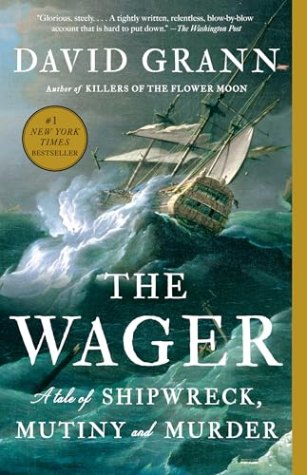
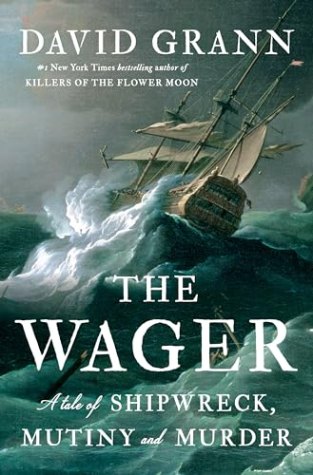
The Wager: A Tale of Shipwreck, Mutiny and Murder

The Wager: A Tale of Shipwreck, Mutiny and Murder

From the author of Killers of the Flower Moon, a page-turning story of shipwreck, survival, and savagery, culminating in a court martial that reveals a shocking truth. The powerful narrative reveals the deeper meaning of the events on The Wager, showing that it was not only the captain and crew who ended up on trial, but the very idea of empire. A Best Book of the Year: The New York Times, The Wall Street Journal, The New Yorker, TIME, Smithsonian, NPR, Vulture, Kirkus Reviews "Riveting...Reads like a thriller, tackling a multilayered history--and imperialism--with gusto." --Time "A tour de force of narrative nonfiction." --The Wall Street Journal On January 28, 1742, a ramshackle vessel of patched-together wood and cloth washed up on the coast of Brazil. Inside were thirty emaciated men, barely alive, and they had an extraordinary tale to tell. They were survivors of His Majesty's Ship the Wager, a British vessel that had left England in 1740 on a secret mission during an imperial war with Spain. While the Wager had been chasing a Spanish treasure-filled galleon known as "the prize of all the oceans," it had wrecked on a desolate island off the coast of Patagonia. The men, after being marooned for months and facing starvation, built the flimsy craft and sailed for more than a hundred days, traversing nearly 3,000 miles of storm-wracked seas. They were greeted as heroes. But then ... six months later, another, even more decrepit craft landed on the coast of Chile. This boat contained just three castaways, and they told a very different story. The thirty sailors who landed in Brazil were not heroes - they were mutineers. The first group responded with countercharges of their own, of a tyrannical and murderous senior officer and his henchmen. It became clear that while stranded on the island the crew had fallen into anarchy, with warring factions fighting for dominion over the barren wilderness. As accusations of treachery and murder flew, the Admiralty convened a court martial to determine who was telling the truth. The stakes were life-and-death--for whomever the court found guilty could hang. The Wager is a grand tale of human behavior at the extremes told by one of our greatest nonfiction writers. Grann's recreation of the hidden world on a British warship rivals the work of Patrick O'Brian, his portrayal of the castaways' desperate straits stands up to the classics of survival writing such as The Endurance, and his account of the court martial has the savvy of a Scott Turow thriller. As always with Grann's work, the incredible twists of the narrative hold the reader spellbound.

#3
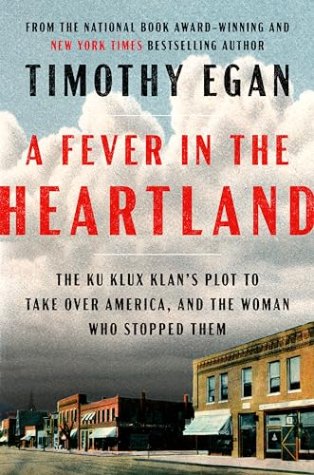
A Fever in the Heartland: The Ku Klux Klan’s Plot to Take Over America, and the Woman Who Stopped Them

A Fever in the Heartland: The Ku Klux Klan’s Plot to Take Over America, and the Woman Who Stopped Them

A historical thriller by the Pulitzer and National Book Award-winning author that tells the riveting story of the Klan's rise to power in the 1920s, the cunning con man who drove that rise, and the woman who stopped them. The Roaring Twenties--the Jazz Age--has been characterized as a time of Gatsby frivolity. But it was also the height of the uniquely American hate group, the Ku Klux Klan. Their domain was not the old Confederacy, but the Heartland and the West. They hated Blacks, Jews, Catholics and immigrants in equal measure, and took radical steps to keep these people from the American promise. And the man who set in motion their takeover of great swaths of America was a charismatic charlatan named D.C. Stephenson. Stephenson was a magnetic presence whose life story changed with every telling. Within two years of his arrival in Indiana, he'd become the Grand Dragon of the state and the architect of the strategy that brought the group out of the shadows - their message endorsed from the pulpits of local churches, spread at family picnics and town celebrations. Judges, prosecutors, ministers, governors and senators across the country all proudly proclaimed their membership. But at the peak of his influence, it was a seemingly powerless woman - Madge Oberholtzer - who would reveal his secret cruelties, and whose deathbed testimony finally brought the Klan to their knees. A FEVER IN THE HEARTLAND marries a propulsive drama to a powerful and page-turning reckoning with one of the darkest threads in American history.

#4
POVERTY, BY AMERICA

POVERTY, BY AMERICA

The United States, the richest country on earth, has more poverty than any other advanced democracy. Why? Why does this land of plenty allow one in every eight of its children to go without basic necessities, permit scores of its citizens to live and die on the streets, and authorize its corporations to pay poverty wages? In this landmark book, acclaimed sociologist Matthew Desmond draws on history, research, and original reporting to show how affluent Americans knowingly and unknowingly keep poor people poor. Those of us who are financially secure exploit the poor, driving down their wages while forcing them to overpay for housing and access to cash and credit. We prioritize the subsidization of our wealth over the alleviation of poverty, designing a welfare state that gives the most to those who need the least. And we stockpile opportunity in exclusive communities, creating zones of concentrated riches alongside those of concentrated despair. Some lives are made small so that others may grow. Elegantly written and fiercely argued, this compassionate book gives us new ways of thinking about a morally urgent problem. It also helps us imagine solutions. Desmond builds a startlingly original and ambitious case for ending poverty. He calls on us all to become poverty abolitionists, engaged in a politics of collective belonging to usher in a new age of shared prosperity and, at last, true freedom.

#5
Doppelganger: A Trip into the Mirror World

Doppelganger: A Trip into the Mirror World

What if you woke up one morning and found you'd acquired another self--a double who was almost you and yet not you at all? What if that double shared many of your preoccupations but, in a twisted, upside-down way, furthered the very causes you'd devoted your life to fighting against? Not long ago, the celebrated activist and public intellectual Naomi Klein had just such an experience--she was confronted with a doppelganger whose views she found abhorrent but whose name and public persona were sufficiently similar to her own that many people got confused about who was who. Destabilized, she lost her bearings, until she began to understand the experience as one manifestation of a strangeness many of us have come to know but struggle to define: AI-generated text is blurring the line between genuine and spurious communication; New Age wellness entrepreneurs turned anti-vaxxers are scrambling familiar political allegiances of left and right; and liberal democracies are teetering on the edge of absurdist authoritarianism, even as the oceans rise. Under such conditions, reality itself seems to have become unmoored. Is there a cure for our moment of collective vertigo? Naomi Klein is one of our most trenchant and influential social critics, an essential analyst of what branding, austerity, and climate profiteering have done to our societies and souls. Here she turns her gaze inward to our psychic landscapes, and outward to the possibilities for building hope amid intersecting economic, medical, and political crises. With the assistance of Sigmund Freud, Jordan Peele, Alfred Hitchcock, and bell hooks, among other accomplices, Klein uses wry humor and a keen sense of the ridiculous to face the strange doubles that haunt us--and that have come to feel as intimate and proximate as a warped reflection in the mirror. Combining comic memoir with chilling reportage and cobweb-clearing analysis, Klein seeks to smash that mirror and chart a path beyond despair. Doppelganger asks: What do we neglect as we polish and perfect our digital reflections? Is it possible to dispose of our doubles and overcome the pathologies of a culture of multiplication? Can we create a politics of collective care and undertake a true reckoning with historical crimes? The result is a revelatory treatment of the way many of us think and feel now--and an intellectual adventure story for our times.

#6
King: A Life

King: A Life

King mixes revelatory new research with accessible storytelling to offer an MLK for our times. Vividly written and exhaustively researched, Jonathan Eig's King: A Life is the first major biography in decades of the civil rights icon Martin Luther King Jr.--and the first to include recently declassified FBI files. In this revelatory new portrait of the preacher and activist who shook the world, the bestselling biographer gives us an intimate view of the courageous and often emotionally troubled human being who demanded peaceful protest for his movement but was rarely at peace with himself. He casts fresh light on the King family's origins as well as MLK's complex relationships with his wife, father, and fellow activists. King reveals a minister wrestling with his own human frailties and dark moods, a citizen hunted by his own government, and a man determined to fight for justice even if it proved to be a fight to the death. As he follows MLK from the classroom to the pulpit to the streets of Birmingham, Selma, and Memphis, Eig dramatically re-creates the journey of a man who recast American race relations and became our only modern-day founding father--as well as the nation's most mourned martyr. In this landmark biography, Eig gives us an MLK for our times: a deep thinker, a brilliant strategist, and a committed radical who led one of history's greatest movements, and whose demands for racial and economic justice remain as urgent today as they were in his lifetime. Includes 8 pages of black-and-white photographs

#7
Our Migrant Souls: A Meditation on Race and the Meanings and Myths of “Latino”

Our Migrant Souls: A Meditation on Race and the Meanings and Myths of “Latino”

Investigating topics that include the US-Mexico border "wall," Frida Kahlo, urban segregation, gangs, queer Latino utopias, and the emergence of the cartel genre in TV and film, Tobar journeys across the country to expose something truer about the meaning of "Latino" in the twenty-first century.

#8
Pageboy: A Memoir

Pageboy: A Memoir

With Juno’s massive success, Elliot became one of the world’s most beloved actors. His dreams were coming true, but the pressure to perform suffocated him. He was forced to play the part of the glossy young starlet, a role that made his skin crawl, on and off set. The career that had been an escape out of his reality and into a world of imagination was suddenly a nightmare.

#9
Fire Weather: A True Story from a Hotter World

Fire Weather: A True Story from a Hotter World

In May 2016, Fort McMurray, the hub of Canada's oil industry and America's biggest foreign supplier, was overrun by wildfire. The multi-billion-dollar disaster melted vehicles, turned entire neighborhoods into firebombs, and drove 88,000 people from their homes in a single afternoon. Through the lens of this apocalyptic conflagration--the wildfire equivalent of Hurricane Katrina--John Vaillant warns that this was not a unique event, but a shocking preview of what we must prepare for in a hotter, more flammable world. Fire has been a partner in our evolution for hundreds of millennia, shaping culture, civilization, and, very likely, our brains. Fire has enabled us to cook our food, defend and heat our homes, and power the machines that drive our titanic economy. Yet this volatile energy source has always threatened to elude our control, and in our new age of intensifying climate change, we are seeing its destructive power unleashed in previously unimaginable ways. With masterly prose and a cinematic eye, Vaillant takes us on a riveting journey through the intertwined histories of North America's oil industry and the birth of climate science, to the unprecedented devastation wrought by modern forest fires, and into lives forever changed by these disasters. John Vaillant's urgent work is a book for--and from--our new century of fire, which has only just begun.

#10
HOW TO SAY BABYLON

HOW TO SAY BABYLON

Throughout her childhood, Safiya Sinclair's father, a volatile reggae musician and militant adherent to a strict sect of Rastafari, became obsessed with her purity, in particular, with the threat of what Rastas call Babylon, the immoral and corrupting influences of the Western world outside their home. He worried that womanhood would make Safiya and her sisters morally weak and impure, and believed a woman's highest virtue was her obedience. In an effort to keep Babylon outside the gate, he forbade almost everything. In place of pants, the women in her family were made to wear long skirts and dresses to cover their arms and legs, head wraps to cover their hair, no make-up, no jewelry, no opinions, no friends. Safiya's mother, while loyal to her father, nonetheless gave Safiya and her siblings the gift of books, including poetry, to which Safiya latched on for dear life. And as Safiya watched her mother struggle voicelessly for years under housework and the rigidity of her father's beliefs, she increasingly used her education as a sharp tool with which to find her voice and break free. Inevitably, with her rebellion comes clashes with her father, whose rage and paranoia explodes in increasing violence. As Safiya's voice grows, lyrically and poetically, a collision course is set between them. How to Say Babylon is Sinclair's reckoning with the culture that initially nourished but ultimately sought to silence her; it is her reckoning with patriarchy and tradition, and the legacy of colonialism in Jamaica. Rich in lyricism and language only a poet could evoke, How to Say Babylon is both a universal story of a woman finding her own power and a unique glimpse into a rarefied world we may know how to name, Rastafari, but one we know little about.

#11
When Crack Was King: A People’s History of a Misunderstood Era

When Crack Was King: A People’s History of a Misunderstood Era

A poignant and compelling re-examination of a tragic era in America history . . . insightful . . . and deeply moving."--Bryan Stevenson, author of the #1 New York Times bestseller Just Mercy A PUBLISHERS WEEKLY BEST BOOK OF THE YEAR The crack epidemic of the 1980s and 1990s is arguably the least examined crisis in American history. Beginning with the myths inspired by Reagan's war on drugs, journalist Donovan X. Ramsey's exacting analysis traces the path from the last triumphs of the Civil Rights Movement to the devastating realities we live with today: a racist criminal justice system, continued mass incarceration and gentrification, and increased police brutality. When Crack Was King follows four individuals to give us a startling portrait of crack's destruction and devastating legacy: Elgin Swift, an archetype of American industry and ambition and the son of a crack-addicted father who turned their home into a "crack house"; Lennie Woodley, a former crack addict and sex worker; Kurt Schmoke, the longtime mayor of Baltimore and an early advocate of decriminalization; and Shawn McCray, community activist, basketball prodigy, and a founding member of the Zoo Crew, Newark's most legendary group of drug traffickers. Weaving together riveting research with the voices of survivors, When Crack Was King is a crucial reevaluation of the era and a powerful argument for providing historically violated communities with the resources they deserve.

#12
Quietly Hostile: Essays

Quietly Hostile: Essays

NEW YORK TIMES BESTSELLER - A GLAMOUR BEST BOOK OF THE YEAR - A hilarious new essay collection from Samantha Irby "engages readers with her characteristic combination of laugh-out-loud moments, heartfelt passages and plenty of awkward experiences.... Quietly Hostile will delight established fans and newcomers alike (Parade). "Brilliant and one of the funniest people I've ever read." --Roxane Gay - "The king of sparkling misanthropy and tender, loving dread." --Jia Tolentino "Absolutely hilarious.... If you are feeling down, or you feel like you haven't read anything you've loved in a long time, all you need is Samantha Irby.... She will make you laugh on every page." --Emma Straub, bestselling author of This Time Tomorrow, on The Today Show Samantha Irby's career has taken her to new heights. She dodges calls from Hollywood and flop sweats on the red carpet at premieres (well, one premiere). But nothing is ever as it seems online, where she can crop out all the ugly parts. Irby got a lot of weird emails about Carrie Bradshaw, and not only is there diarrhea to avoid, but now--anaphylactic shock. She is turned away from restaurants for being inappropriately dressed and looks for the best ways to cope, i.e., reveling in the offerings of QVC and adopting a deranged pandemic dog. Quietly Hostile makes light as Irby takes us on another outrageously funny tour of all the gory details that make up the true portrait of a life behind the screenshotted depression memes. Relatable, poignant, and uproarious, once again, Irby is the tonic we all need to get by. A BEST BOOK from Vogue, Esquire, PopSugar, Glamour, The Skimm, and more

#13
The Art Thief: A True Story of Love, Crime, and a Dangerous Obsession

The Art Thief: A True Story of Love, Crime, and a Dangerous Obsession

In this spellbinding portrait of obsession and flawed genius, the best-selling author of The Stranger in the Woods brings us into Breitwieser’s strange world—unlike most thieves, he never stole for money, keeping all his treasures in a single room where he could admire them.

#14
The Creative Act: A Way Of Being

The Creative Act: A Way Of Being

Many famed music producers are known for a particular sound that has its day. Rick Rubin is known for something else: creating a space where artists of all different genres and traditions can home in on who they really are and what they really offer. He has made a practice of helping people transcend their self-imposed expectations in order to reconnect with a state of innocence from which the surprising becomes inevitable. Over the years, as he has thought deeply about where creativity comes from and where it doesn’t, he has learned that being an artist isn’t about your specific output, it’s about your relationship to the world. Creativity has a place in everyone’s life, and everyone can make that place larger. In fact, there are few more important responsibilities.

#15
The Rediscovery of America: Native Peoples and the Unmaking of U.S. History

The Rediscovery of America: Native Peoples and the Unmaking of U.S. History

The most enduring feature of U.S. history is the presence of Native Americans, yet most histories focus on Europeans and their descendants. This long practice of ignoring Indigenous history is changing, however, as a new generation of scholars insists that any full American history address the struggle, survival, and resurgence of American Indian nations. Indigenous history is essential to understanding the evolution of modern America.

#16
To Free the Captives: A Plea for the American Soul

To Free the Captives: A Plea for the American Soul

In 2020, heartsick from constant assaults on Black life, Tracy K. Smith found herself soul-searching and digging into the historical archive for help navigating the “din of human division and strife.” With lyricism and urgency, Smith draws on several avenues of thinking—personal, documentary, and spiritual—to understand who we are as a nation and what we might hope to mean to one another.

#17
You Could Make This Place Beautiful

You Could Make This Place Beautiful

INSTANT NEW YORK TIMES BESTSELLER "A bittersweet study in both grief and joy." ---Time "A sparklingly beautiful memoir-in-vignettes" (Isaac Fitzgerald, New York Times bestselling author) that explores coming of age in your middle age--from the bestselling poet and author of Keep Moving. "Life, like a poem, is a series of choices." In her memoir You Could Make This Place Beautiful, poet Maggie Smith explores the disintegration of her marriage and her renewed commitment to herself. The book begins with one woman's personal heartbreak, but its circles widen into a reckoning with contemporary womanhood, traditional gender roles, and the power dynamics that persist even in many progressive homes. With the spirit of self-inquiry and empathy she's known for, Smith interweaves snapshots of a life with meditations on secrets, anger, forgiveness, and narrative itself. The power of these pieces is cumulative: page after page, they build into a larger interrogation of family, work, and patriarchy. You Could Make This Place Beautiful, like the work of Deborah Levy, Rachel Cusk, and Gina Frangello, is an unflinching look at what it means to live and write our own lives. It is a story about a mother's fierce and constant love for her children, and a woman's love and regard for herself. Above all, this memoir is "extraordinary" (Ann Patchett) in the way that it reveals how, in the aftermath of loss, we can discover our power and make something new and beautiful.

#18
All the Beauty in the World: The Metropolitan Museum of Art and Me

All the Beauty in the World: The Metropolitan Museum of Art and Me

Millions of people climb the grand marble staircase to visit the Metropolitan Museum of Art every year. But only a select few have unrestricted access to every nook and cranny. They’re the guards who roam unobtrusively in dark blue suits, keeping a watchful eye on the two million square foot treasure house. Caught up in his glamorous fledgling career at The New Yorker, Patrick Bringley never thought he’d be one of them. Then his older brother was diagnosed with fatal cancer and he found himself needing to escape the mundane clamor of daily life. So he quit The New Yorker and sought solace in the most beautiful place he knew.

#19
Liliana’s Invincible Summer: A Sister’s Search for Justice

Liliana’s Invincible Summer: A Sister’s Search for Justice

October 18, 2019. Cristina Rivera Garza travels from her home in Texas to Mexico City, in search of an old, unresolved criminal file. “My name is Cristina Rivera Garza,” she writes in her request to the attorney general, “and I am writing to you as a relative of Liliana Rivera Garza, who was murdered on July 16, 1990.” It’s been twenty-nine years. Twenty-nine years, three months, and two days since Liliana was murdered by an abusive ex-boyfriend. Inspired by feminist movements across the world and enraged by the global epidemic of femicide and intimate partner violence, Cristina embarks on a path toward justice. Liliana’s Invincible Summer is the account—and the outcome—of that quest.

#20
Master Slave Husband Wife: An Epic Journey from Slavery to Freedom

Master Slave Husband Wife: An Epic Journey from Slavery to Freedom

In 1848, a year of international democratic revolt, a young, enslaved couple, Ellen and William Craft, achieved one of the boldest feats of self-emancipation in American history. Posing as master and slave, while sustained by their love as husband and wife, they made their escape together across more than 1,000 miles, riding out in the open on steamboats, carriages, and trains that took them from bondage in Georgia to the free states of the North.

#21
Ordinary Notes

Ordinary Notes

A singular achievement, Ordinary Notes explores profound questions about loss and the shapes of Black life that emerge in the wake. In a series of 248 notes that gather meaning as we read them, Christina Sharpe skillfully weaves artifacts from the past―public ones alongside others that are poignantly personal―with present realities and possible futures, intricately constructing an immersive portrait of everyday Black existence. The themes and tones that echo through these pages―sometimes about language, beauty, memory; sometimes about history, art, photography, and literature―always attend, with exquisite care, to the ordinary-extraordinary dimensions of Black life.

#22
Palo Alto: A History of California, Capitalism, and the World

Palo Alto: A History of California, Capitalism, and the World

Palo Alto’s weather is temperate, its people are educated and enterprising, its corporations are spiritually and materially ambitious and demonstrably world-changing. Palo Alto is also a haunted toxic waste dump built on stolen Indian burial grounds, and an integral part of the capitalist world system.

#23
The Underworld Journeys to the Depths of the Ocean

The Underworld Journeys to the Depths of the Ocean

For all of human history, the deep ocean has been a source of wonder and terror, an unknown realm that evoked a singular, compelling question: What’s down there? Unable to answer this for centuries, people believed the deep was a sinister realm of fiendish creatures and deadly peril. But now, cutting-edge technologies allow scientists and explorers to dive miles beneath the surface, and we are beginning to understand this strange and exotic underworld: A place of soaring mountains, smoldering volcanoes, and valleys 7,000 feet deeper than Everest is high, where tectonic plates collide and separate, and extraordinary life forms operate under different rules. Far from a dark void, the deep is a vibrant realm that’s home to pink gelatinous predators and shimmering creatures a hundred feet long and ancient animals with glass skeletons and sharks that live for half a millennium—among countless other marvels.

#24
We Were Once a Family: A Story of Love, Death, and Child Removal in America

We Were Once a Family: A Story of Love, Death, and Child Removal in America

On March 26, 2018, rescue workers discovered a crumpled SUV and the bodies of two women and several children at the bottom of a cliff beside the Pacific Coast Highway. Investigators soon concluded that the crash was a murder-suicide, but there was more to the story: Jennifer and Sarah Hart, it turned out, were a white married couple who had adopted the six Black children from two different Texas families in 2006 and 2008. Behind the family's loving facade, however, was a pattern of abuse and neglect that went ignored as the couple withdrew the children from school and moved across the country. It soon became apparent that the State of Texas knew very little about the two individuals to whom it had given custody of six children—with fateful consequences.

#26
A Man of Two Faces: A Memoir, A History, A Memorial

A Man of Two Faces: A Memoir, A History, A Memorial

With insight, humor, formal invention, and lyricism, in A Man of Two Faces Viet Thanh Nguyen rewinds the film of his own life. He expands the genre of personal memoir by acknowledging larger stories of refugeehood, colonization, and ideas about Vietnam and America, writing with his trademark sardonic wit and incisive analysis, as well as a deep emotional openness about his life as a father and a son.

#27
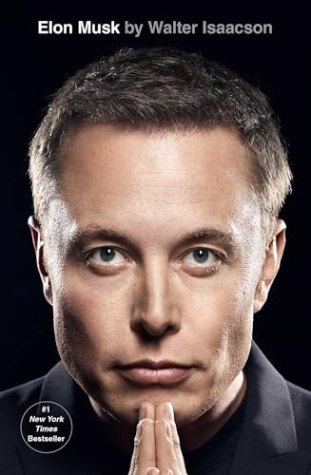
Elon Musk

Elon Musk

#1 New York Times bestseller From the author of Steve Jobs and other bestselling biographies, this is the astonishingly intimate story of the most fascinating and controversial innovator of our era--a rule-breaking visionary who helped to lead the world into the era of electric vehicles, private space exploration, and artificial intelligence. Oh, and took over Twitter. When Elon Musk was a kid in South Africa, he was regularly beaten by bullies. One day a group pushed him down some concrete steps and kicked him until his face was a swollen ball of flesh. He was in the hospital for a week. But the physical scars were minor compared to the emotional ones inflicted by his father, an engineer, rogue, and charismatic fantasist. His father's impact on his psyche would linger. He developed into a tough yet vulnerable man-child, prone to abrupt Jekyll-and-Hyde mood swings, with an exceedingly high tolerance for risk, a craving for drama, an epic sense of mission, and a maniacal intensity that was callous and at times destructive. At the beginning of 2022--after a year marked by SpaceX launching thirty-one rockets into orbit, Tesla selling a million cars, and him becoming the richest man on earth--Musk spoke ruefully about his compulsion to stir up dramas. "I need to shift my mindset away from being in crisis mode, which it has been for about fourteen years now, or arguably most of my life," he said. It was a wistful comment, not a New Year's resolution. Even as he said it, he was secretly buying up shares of Twitter, the world's ultimate playground. Over the years, whenever he was in a dark place, his mind went back to being bullied on the playground. Now he had the chance to own the playground. For two years, Isaacson shadowed Musk, attended his meetings, walked his factories with him, and spent hours interviewing him, his family, friends, coworkers, and adversaries. The result is the revealing inside story, filled with amazing tales of triumphs and turmoil, that addresses the question: are the demons that drive Musk also what it takes to drive innovation and progress?

#28
Eve: How the Female Body Drove 200 Million Years of Human Evolution

Eve: How the Female Body Drove 200 Million Years of Human Evolution

A myth-busting, eye-opening landmark account of how humans evolved, offering a paradigm shift in our thinking about what the female body is, how it came to be, and how this evolution still shapes all our lives today "A page-turning whistle-stop tour of mammalian development that begins in the Jurassic Era, Eve recasts the traditional story of evolutionary biology by placing women at its center.... The book is engaging, playful, erudite, discursive and rich with detail." --Sarah Lyall, The New York Times "A smart, funny, scientific deep-dive into the power of a woman's body, Eve surprises, educates, and emboldens." --Bonnie Garmus, #1 New York Times best-selling author of Lessons in Chemistry How did the female body drive 200 million years of human evolution? - Why do women live longer than men? - Why are women more likely to get Alzheimer's? - Why do girls score better at every academic subject than boys until puberty, when suddenly their scores plummet? - Is sexism useful for evolution? - And why, seriously why, do women have to sweat through our sheets every night when we hit menopause? These questions are producing some truly exciting science - and in Eve, with boundless curiosity and sharp wit, Cat Bohannon covers the past 200 million years to explain the specific science behind the development of the female sex: "We need a kind of user's manual for the female mammal. A no-nonsense, hard-hitting, seriously researched (but readable) account of what we are. How female bodies evolved, how they work, what it really means to biologically be a woman. Something that would rewrite the story of womanhood. This book is that story. We have to put the female body in the picture. If we don't, it's not just feminism that's compromised. Modern medicine, neurobiology, paleoanthropology, even evolutionary biology all take a hit when we ignore the fact that half of us have breasts. So it's time we talk about breasts. Breasts, and blood, and fat, and vaginas, and wombs--all of it. How they came to be and how we live with them now, no matter how weird or hilarious the truth is." Eve is not only a sweeping revision of human history, it's an urgent and necessary corrective for a world that has focused primarily on the male body for far too long. Picking up where Sapiens left off, Eve will completely change what you think you know about evolution and why Homo sapiens has become such a successful and dominant species.

#29
Everything/Nothing/Someone

Everything/Nothing/Someone

Alice Carrière tells the story of her unconventional upbringing in Greenwich Village as the daughter of a remote mother, the renowned artist Jennifer Bartlett, and a charismatic father, European actor Mathieu Carrière. From an early age, Alice is forced to navigate her mother’s recovered memories of ritualized sexual abuse, which she turns into art, and her father’s confusing attentions. Her days are a mixture of privilege, neglect, loneliness, and danger—a child living in an adult’s world, with little-to-no enforcement of boundaries or supervision.

#30
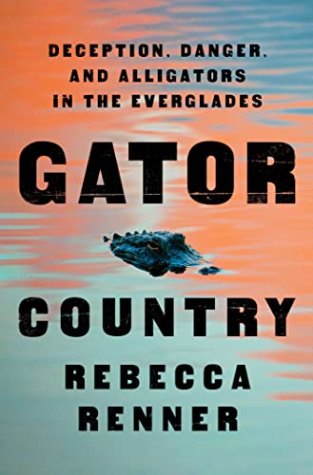
Gator Country: Deception, Danger, and Alligators in the Everglades

Gator Country: Deception, Danger, and Alligators in the Everglades

To catch a Florida Man, you have to become one, and that’s what Officer Jeff Babauta did. As his ponytailed, whiskey-soaked alter ego, he established Sunshine Alligator Farm. His goal? Infiltrate the shady world of illegal poachers in the Florida Everglades in order to protect the natural world.

#31
Hijab Butch Blues: A Memoir

Hijab Butch Blues: A Memoir

When fourteen-year-old Lamya H realizes she has a crush on her teacher—her female teacher—she covers up her attraction, an attraction she can’t yet name, by playing up her roles as overachiever and class clown. Born in South Asia, she moved to the Middle East at a young age and has spent years feeling out of place, like her own desires and dreams don’t matter, and it’s easier to hide in plain sight. To disappear. But one day in Quran class, she reads a passage about Maryam that changes everything: When Maryam learned that she was pregnant, she insisted no man had touched her. Could Maryam, uninterested in men, be . . . like Lamya?

#32
Leg: The Story of a Limb and the Boy Who Grew From It

Leg: The Story of a Limb and the Boy Who Grew From It

Greg Marshall’s early years were pretty bizarre. Rewind the VHS tapes (this is the ’90s) and you’ll see a lopsided teenager limping across a high school stage, or in a wheelchair after leg surgeries, pondering why he’s crushing on half of the Utah Jazz. Add to this home-video footage a mom clacking away at her newspaper column between chemos, a dad with ALS, and a cast of foulmouthed siblings. Fast forward the tape and you’ll find Marshall happily settled into his life as a gay man only to discover he’s been living in another closet his whole life: he has cerebral palsy. Here, in the hot mess of it all, lies Greg Marshall’s wellspring of wit and wisdom.

#33
Lesbian Love Story: A Memoir In Archives

Lesbian Love Story: A Memoir In Archives

When Amelia Possanza moved to Brooklyn to build a life of her own, she found herself surrounded by queer stories: she read them on landmark placards, overheard them on the pool deck when she joined the world’s largest LGBTQ swim team, and even watched them on TV in her cockroach-infested apartment. These stories inspired her to seek out lesbians throughout history who could become her role models, in romance and in life.

#34
Lou Reed: The King of New York

Lou Reed: The King of New York

Since his death ten years ago, Lou Reed’s living presence has only grown. The great rock-poet presided over the marriage of Brill Building pop and the European avant-garde, and left American culture transfigured. In Lou Reed: The King of New York, Will Hermes offers the definitive narrative of Reed’s life and legacy, dramatizing his long, brilliant, and contentious dialogue with fans, critics, fellow artists, and assorted habitués of the demimonde. We witness Reed’s complex partnerships with David Bowie, Andy Warhol, John Cale, and Laurie Anderson; track the deadpan wit, street-smart edge, and poetic flights that defined his craft as a singer and songwriter with the Velvet Underground and beyond; and explore the artistic ambition and gift for self-sabotage he took from his mentor Delmore Schwartz.

#35
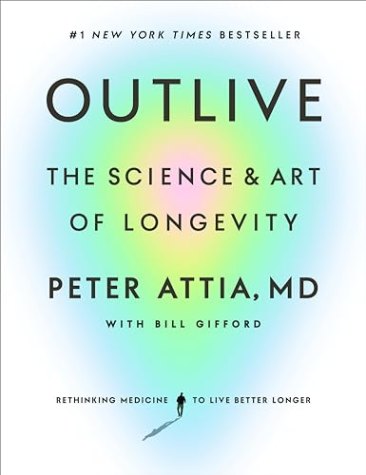
Outlive: The Science and Art of Longevity

Outlive: The Science and Art of Longevity

Wouldn’t you like to live longer? And better? In this operating manual for longevity, Dr. Peter Attia draws on the latest science to deliver innovative nutritional interventions, techniques for optimizing exercise and sleep, and tools for addressing emotional and mental health.

#36
Rough Sleepers: Dr. Jim O’Connell’s Urgent Mission to Bring Healing to Homeless People

Rough Sleepers: Dr. Jim O’Connell’s Urgent Mission to Bring Healing to Homeless People

NEW YORK TIMES BESTSELLER - The powerful story of an inspiring doctor who made a difference, by helping to create a program to care for Boston's homeless community--by the Pulitzer Prize-winning, New York Times bestselling author of Mountains Beyond Mountains "I couldn't put Rough Sleepers down. I am left in awe of the human spirit and inspired to do better."--Abraham Verghese, author of Cutting for Stone Tracy Kidder has been described by The Baltimore Sun as "a master of the nonfiction narrative." In Rough Sleepers, Kidder tells the story of Dr. Jim O'Connell, a gifted man who invented a community of care for a city's unhoused population, including those who sleep on the streets--the "rough sleepers." After Jim O'Connell graduated from Harvard Medical School and was nearing the end of his residency at Massachusetts General, the hospital's chief of medicine made a proposal: Would he defer a prestigious fellowship and spend a year helping to create an organization to bring health care to homeless citizens? That year turned into O'Connell's life's calling. Tracy Kidder spent five years following Dr. O'Connell and his colleagues as they work with thousands of homeless patients, some of whom we meet in this illuminating book. We travel with O'Connell as he navigates the city streets at night, offering medical care, socks, soup, empathy, humor, and friendship to some of the city's most endangered citizens. He emphasizes a style of medicine in which patients come first, joined with their providers in what he calls "a system of friends." Much as he did with Paul Farmer in Mountains Beyond Mountains, Kidder explores how Jim O'Connell and a dedicated group of people have improved countless lives by facing and addressing one of American society's most difficult problems, instead of looking away.

#37
Saving Time: Discovering a Life Beyond the Clock

Saving Time: Discovering a Life Beyond the Clock

In her first book, How to Do Nothing, Jenny Odell wrote about the importance of disconnecting from the “attention economy” to spend time in quiet contemplation. But what if you don’t have time to spend?

#38
Spare

Spare

It was one of the most searing images of the twentieth century: two young boys, two princes, walking behind their mother’s coffin as the world watched in sorrow—and horror. As Princess Diana was laid to rest, billions wondered what Prince William and Prince Harry must be thinking and feeling—and how their lives would play out from that point on.

#39
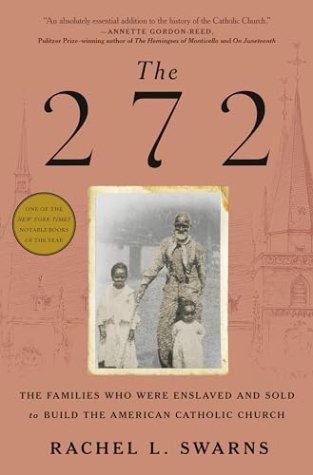
The 272: The Families Who Were Enslaved and Sold to Build the American Catholic Church

The 272: The Families Who Were Enslaved and Sold to Build the American Catholic Church

In 1838, a group of America’s most prominent Catholic priests sold 272 enslaved people to save their largest mission project, what is now Georgetown University. In this groundbreaking account, journalist, author, and professor Rachel L. Swarns follows one family through nearly two centuries of indentured servitude and enslavement to uncover the harrowing origin story of the Catholic Church in the United States. Through the saga of the Mahoney family, Swarns illustrates how the Church relied on slave labor and slave sales to sustain its operations and to help finance its expansion.

#40
The Exceptions: Nancy Hopkins, Mit, and the Fight for Women in Science

The Exceptions: Nancy Hopkins, Mit, and the Fight for Women in Science

In 1963, a female student was attending a lecture given by Nobel Prize winner James Watson, then tenured at Harvard. At nineteen, she was struggling to define her future. She had given herself just ten years to fulfill her professional ambitions before starting the family she was expected to have. For women at that time, a future on the usual path of academic science was unimaginable—but during that lecture, young Nancy Hopkins fell in love with the promise of genetics. Confidently believing science to be a pure meritocracy, she embarked on a career.

#41
The Great Displacement: Climate Change and the Next American Migration

The Great Displacement: Climate Change and the Next American Migration

"The Great Displacement is closely observed, compassionate, and far-sighted." --Elizabeth Kolbert, Pulitzer Prize-winning author of Under a White Sky The untold story of climate migration in the United States--the personal stories of those experiencing displacement, the portraits of communities being torn apart by disaster, and the implications for all of us as we confront a changing future. Even as climate change dominates the headlines, many of us still think about it in the future tense--we imagine that as global warming gets worse over the coming decades, millions of people will scatter around the world fleeing famine and rising seas. What we often don't realize is that the consequences of climate change are already visible, right here in the United States. In communities across the country, climate disasters are pushing thousands of people away from their homes. A human-centered narrative with national scope, The Great Displacement is "a vivid tour of the new human geography just coming into view" (David Wallace-Wells, New York Times bestselling author of The Uninhabitable Earth). From half-drowned Louisiana to fire-scorched California, from the dried-up cotton fields of Arizona to the soaked watersheds of inland North Carolina, people are moving. In the last few decades, the federal government has moved tens of thousands of families away from flood zones, and tens of thousands more have moved of their own accord in the aftermath of natural disasters. Insurance and mortgage markets are already shifting to reflect mounting climate risk, pricing people out of risky areas. Over the next fifty years, millions of Americans will be caught up in this churn of displacement, forced inland and northward in what will be the largest migration in our country's history. The Great Displacement compassionately tells the stories of those who are already experiencing life on the move, while detailing just how radically climate change will transform our lives--erasing historic towns and villages, pushing people toward new areas, and reshaping the geography of the United States.

#42
The Great White Bard: How to Love Shakespeare While Talking About Race

The Great White Bard: How to Love Shakespeare While Talking About Race

Combining piercing analysis of race, gender and otherness in famous plays from Antony and Cleopatra to The Tempest with a radical reappraisal of Elizabethan London, The Great White Bard asks us neither to idealize nor bury Shakespeare but instead to look him in the eye and reckon with the discomforts of his plays, playhouses and society. In inviting new perspectives and interpretations, we may yet prolong and enrich his extraordinary legacy.

#43
The People’s Hospital: Hope and Peril in American Medicine

The People’s Hospital: Hope and Peril in American Medicine

Here, we follow the lives of five uninsured Houstonians as their struggle for survival leads them to a hospital that prioritizes people over profit. First, we meet Stephen, the restaurant franchise manager who signed up for his company’s lowest priced plan, only to find himself facing insurmountable costs after a cancer diagnosis. Then Christian—a young college student and retail worker who can’t seem to get an accurate diagnosis, let alone treatment, for his debilitating knee pain. Geronimo, thirty-six years old, has liver failure, but his meager disability check disqualifies him for Medicaid—and puts a life-saving transplant just out of reach. Roxana, who’s lived in the community without a visa for more than two decades, suffers from complications related to her cancer treatment. And finally, there’s Ebonie, a young mother whose high-risk pregnancy endangers her life. Whether due to immigration status, income, or the vagaries of state Medicaid law, all five are denied access to care. For all five, this exclusion could prove life-threatening.

#44
The Quickening: Creation and Community at the Ends of the Earth

The Quickening: Creation and Community at the Ends of the Earth

An August 2023 Indie Next Pick, selected by booksellers A Vogue Most Anticipated Book of 2023 A WBUR Summer Reading Recommendation A Next Big Idea Club's August 2023 Must-Read BookAn astonishing, vital book about Antarctica, climate change, and motherhood from the author of Rising, finalist for the Pulitzer Prize in General Nonfiction. In 2019, fifty-seven scientists and crew set out onboard the Nathaniel B. Palmer. Their destination: Thwaites Glacier. Their goal: to learn as much as possible about this mysterious place, never before visited by humans, and believed to be both rapidly deteriorating and capable of making a catastrophic impact on global sea-level rise.In The Quickening, Elizabeth Rush documents their voyage, offering the sublime--seeing an iceberg for the first time; the staggering waves of the Drake Passage; the torqued, unfamiliar contours of Thwaites--alongside the workaday moments of this groundbreaking expedition. A ping-pong tournament at sea. Long hours in the lab. All the effort that goes into caring for and protecting human life in a place that is inhospitable to it. Along the way, she takes readers on a personal journey around a more intimate question: What does it mean to bring a child into the world at this time of radical change?What emerges is a new kind of Antarctica story, one preoccupied not with flag planting but with the collective and challenging work of imagining a better future. With understanding the language of a continent where humans have only been present for two centuries. With the contributions and concerns of women, who were largely excluded from voyages until the last few decades, and of crew members of color, whose labor has often gone unrecognized. The Quickening teems with their voices--with the colorful stories and personalities of Rush's shipmates--in a thrilling chorus.Urgent and brave, absorbing and vulnerable, The Quickening is another essential book from Elizabeth Rush.

#46
The Talk

The Talk

A Coretta Scott King Author Honor winner! As a little boy grows into a bigger boy, ready to take on the world, he first must have that very difficult conversation far too familiar to so many Black and Brown Americans in this gentle and ultimately hopeful picture book. Jay's most favorite things are hanging out with his pals, getting kisses from Grandma, riding in his dad's cool car, and getting measured by his mom with pencil marks on the wall. But as those height marks inch upward, Grandpa warns Jay about being in too big a group with his friends, Grandma worries others won't see him as quite so cute now that he's older, and Dad has to tell Jay how to act if the police ever pull them over. And Jay just wants to be a kid. All Black and Brown kids get The Talk--the talk that could mean the difference between life and death in a racist world. Told in an age-appropriate fashion, with a perfect pause for parents to insert their own discussions with their children to accompany prompting illustrations, The Talk is a gently honest and sensitive starting point for this far-too-necessary conversation, for Black children, Brown children, and for ALL children. Because you can't make change without knowing what needs changing.

#47
Thin Skin: Essays

Thin Skin: Essays

Recognizing how deeply vulnerable we all are to our surroundings, she becomes aware of the impacts our tiniest choices have on people, places, and species far away. She can't stop seeing the ways we are enmeshed and entangled with everyone else on the planet. Despite our attempts to cordon ourselves off from risk, our boundaries are permeable.

#48
Waiting to Be Arrested at Night

Waiting to Be Arrested at Night

One by one, Tahir Hamut Izgil's friends disappeared. The Chinese government's brutal persecution of the Uyghur people had continued for years, but in 2017 it assumed a terrifying new scale. The Uyghurs, a predominantly Muslim minority group in western China, were experiencing an echo of the worst horrors of the twentieth century, amplified by China's establishment of an all-seeing high-tech surveillance state. Over a million people have vanished into China’s internment camps for Muslim minorities.

#50
Winnie and Nelson

Winnie and Nelson

One of the most celebrated political leaders of a century, Nelson Mandela has been written about by many biographers and historians. But in one crucial area, his life remains largely untold: his marriage to Winnie Madikizela-Mandela. During his years in prison, Nelson grew ever more in love with an idealized version of his wife, courting her in his letters as if they were young lovers frozen in time. But Winnie, every bit his political equal, found herself increasingly estranged from her jailed husband’s politics. Behind his back, she was trying to orchestrate an armed seizure of power, a path he feared would lead to an endless civil war.

#51
A Day in the Life of Abed Salama

A Day in the Life of Abed Salama

Immersive and gripping, an intimate story of a deadly accident outside Jerusalem that unravels a tangle of lives, loves, enmities, and histories over the course of one revealing, heartbreaking day. Five-year-old Milad Salama is excited for a school trip to a theme park on the outskirts of Jerusalem. On the way, his bus collides with a semitrailer. His father, Abed, gets word of the crash and rushes to the site. The scene is chaos--the children have been taken to different hospitals in Jerusalem and the West Bank; some are missing, others cannot be identified. Abed sets off on an odyssey to learn Milad's fate. It is every parent's worst nightmare, but for Abed it is compounded by the maze of physical, emotional, and bureaucratic obstacles he must navigate because he is Palestinian. He is on the wrong side of the separation wall, holds the wrong ID to pass the military checkpoints, and has the wrong papers to enter the city of Jerusalem. Abed's quest to find Milad is interwoven with the stories of a cast of Jewish and Palestinian characters whose lives and histories unexpectedly converge. In A Day in the Life of Abed Salama, Nathan Thrall--hailed for his "severe allergy to conventional wisdom" (Time)--offers an indelibly human portrait of the struggle over Israel/Palestine and a new understanding of the tragic history and reality of one of the most contested places on earth.

#52
Alexa Hagerty

Alexa Hagerty

New York Times Book Review Editors’ Choice • An anthropologist working with forensic teams and victims’ families to investigate crimes against humanity in Latin America explores what science can tell us about the lives of the dead in this haunting account of grief, the power of ritual, and a quest for justice. “Absorbing . . . multifaceted and elegiac . . . Still Life with Bones captures the ethos that drives the search—often tireless and against the odds—for truth.”—The New York Times WINNER OF THE JUAN E. MÉNDEZ BOOK AWARD • A NEW YORKER AND BOOKPAGE BEST BOOK OF THE YEAR “Exhumation can divide brothers and restore fathers, open old wounds and open the possibility of regeneration—of building something new with the ‘pile of broken mirrors’ that is memory, loss, and mourning.” Throughout Guatemala’s thirty-six-year armed conflict, state forces killed more than two hundred thousand people. Argentina’s military dictatorship disappeared up to thirty thousand people. In the wake of genocidal violence, families of the missing searched for the truth. Young scientists joined their fight against impunity. Gathering evidence in the face of intimidation and death threats, they pioneered the field of forensic exhumation for human rights. In Still Life with Bones, anthropologist Alexa Hagerty learns to see the dead body with a forensic eye. She examines bones for marks of torture and fatal wounds—hands bound by rope, machete cuts—and also for signs of identity: how life shapes us down to the bone. A weaver is recognized from the tiny bones of the toes, molded by kneeling before a loom; a girl is identified alongside her pet dog. In the tenderness of understanding these bones, forensics not only offers proof of mass atrocity but also tells the story of each life lost. Working with forensic teams at mass grave sites and in labs, Hagerty discovers how bones bear witness to crimes against humanity and how exhumation can bring families meaning after unimaginable loss. She also comes to see how cutting-edge science can act as ritual—a way of caring for the dead with symbolic force that can repair societies torn apart by violence. Weaving together powerful stories about investigative breakthroughs, histories of violence and resistance, and her own forensic coming-of-age, Hagerty crafts a moving portrait of the living and the dead.

#53
Althea

Althea

SHORLISTED FOR THE WILLIAM HILL SPORTS BOOK OF THE YEAR "A captivating book that brilliantly reveals an American sports legend long overlooked. Sally Jacobs tells the riveting story of Althea Gibson, my personal shero, who overcame daunting odds - on the tennis court and off - to stand at the world pinnacle of her sport and became an inspiration to many." -- Billie Jean King In 1950, three years after Jackie Robinson first walked onto the diamond at Ebbets Field, the all-white, upper-crust US Lawn Tennis Association opened its door just a crack to receive a powerhouse player who would integrate "the game of royalty." The player was a street-savvy young Black woman from Harlem named Althea Gibson who was about as out-of-place in that rarefied and intolerant world as any aspiring tennis champion could be. Her tattered jeans and short-cropped hair drew stares from everyone who watched her play, but her astonishing performance on the court soon eclipsed the negative feelings being cast her way as she eventually became one of the greatest American tennis champions. Gibson had a stunning career. Raised in New York and trained by a pair of tennis-playing doctors in the South, Gibson's immense talent on the court opened the door for her to compete around the world. She won top prizes at Wimbledon and Forest Hills time and time again. The young woman underestimated by so many wound up shaking hands with Queen Elizabeth II, being driven up Broadway in a snowstorm of ticker tape, and ultimately became the first Black woman to appear on the cover of Sports Illustrated and the second to appear on the cover of Time. In a crowning achievement, Althea Gibson became the No. One ranked female tennis player in the world for both 1957 and 1958. Seven years later she broke the color barrier again where she became the first Black woman to join the Ladies Professional Golf Association (LPGA). In Althea, prize-winning former Boston Globe reporter Sally H. Jacobs tells the heart-rending story of this pioneer, a remarkable woman who was a trailblazer, a champion, and one of the most remarkable Americans of the twentieth century.

#55
American Gun

American Gun

"A magisterial work of narrative history and original reportage . . . You can feel the tension building one cold, catastrophic fact at a time . . . A virtually unprecedented achievement." --Mike Spies, The New York Times Book Review (Editors' Choice) One of The New York Times's 33 Nonfiction Books to Read This Fall One of Esquire's best books of fall Named a most anticipated book of the fall by The Washington Post, Los Angeles Times, and Bloomberg American Gun: The True Story of the AR-15 presents the epic history of America's most controversial weapon. In the 1950s, an obsessive firearms designer named Eugene Stoner invented the AR-15 rifle in a California garage. High-minded and patriotic, Stoner sought to devise a lightweight, easy-to-use weapon that could replace the M1s touted by soldiers in World War II. What he did create was a lethal handheld icon of the American century. In American Gun, the veteran Wall Street Journal reporters Cameron McWhirter and Zusha Elinson track the AR-15 from inception to ubiquity. How did the same gun represent the essence of freedom to millions of Americans and the essence of evil to millions more? To answer this question, McWhirter and Elinson follow Stoner--the American Kalashnikov--as he struggled mightily to win support for his invention, which under the name M16 would become standard equipment in Vietnam. Shunned by gun owners at first, the rifle's popularity would take off thanks to a renegade band of small-time gun makers. And in the 2000s, it would become the weapon of choice for mass shooters, prompting widespread calls for proscription even as the gun industry embraced it as a financial savior. Writing with fairness and compassion, McWhirter and Elinson explore America's gun culture, revealing the deep appeal of the AR-15, the awful havoc it wreaks, and the politics of reducing its toll. The result is a moral history of contemporary America's love affair with technology, freedom, and weaponry. Includes 8 pages of black-and-white images.

#58
An Inconvenient Cop: My Fight to Change Policing in America

An Inconvenient Cop: My Fight to Change Policing in America

A PUBLISHERS WEEKLY BEST BOOK OF 2023 "With illuminating, vivid, and meticulous prose, Edwin Raymond delivers an extraordinary exposé on policing in America . . . An essential, exceptional work." --Toluse Olorunnipa, Pulitzer Prize-winning author of His Name Is George Floyd From the highest-ranking whistleblower in NYPD history, a gripping insider look at the complexities of modern policing and the urgent need for reform Over his decade and a half with the New York Police Department, Edwin Raymond consistently exposed the dark underbelly of modern policing, becoming the highest-ranking whistleblower in the history of the force and one of the country's leading voices against police injustice. Offering a rare, often shocking view of American policing, An Inconvenient Cop pulls back the curtain on the many flaws woven into the NYPD's training, data, and practices, which have since been repackaged and repurposed by police departments across the country. Gravitating toward law enforcement in the hope of being a positive influence in his community, Raymond quickly learned that the problem with policing is a lot deeper than merely "a few bad apples"--the entire mechanism is set up to ensure that racial profiling is rewarded, and there are weighty consequences for cops who don't play along. Struggling with the moral dilemma of policing impartially while witnessing his fellow officers go with the flow, Raymond's journey takes him to the precipice of personal and professional ruin. Yet, through it all, he remains steadfast in his commitment to justice and his belief in the potential for change. At once revelatory and galvanizing, An Inconvenient Cop courageously bears witness to and exposes institutional violence. It presents a vision of radical hope and makes the case for a world in which the police's responsibility is not to arrest numbers but to the people.

#59
Anansi’s Gold: The Man Who Looted the West, Outfoxed Washington, and Swindled the World

Anansi’s Gold: The Man Who Looted the West, Outfoxed Washington, and Swindled the World

New Yorker Best Book of the Year "A fascinating story brilliantly told."--The Boston Globe * "A non-fiction masterpiece."--Philadelphia Inquirer The astounding, never-before-told story of how an audacious Ghanaian con artist pulled off one of the 20th century's longest-running and most spectacular frauds. When Ghana won its independence from Britain in 1957, it instantly became a target for home-grown opportunists and rapacious Western interests determined to snatch any assets that colonialism hadn't already stripped. A CIA-funded military junta ousted the new nation's inspiring president, Kwame Nkrumah, then falsely accused him of hiding the country's gold overseas. Into this big lie stepped one of history's most charismatic scammers, a con man to rival the trickster god Anansi. Born into poverty in Ghana and trained in the United States, John Ackah Blay-Miezah declared himself custodian of an alleged Nkrumah trust fund worth billions. You, too, could claim a piece--if only you would "invest" in Blay-Miezah's fictitious efforts to release the equally fictitious fund. Over the 1970s and '80s, he and his accomplices--including Ghanaian state officials and Nixon's former attorney general--scammed hundreds of millions of dollars out of thousands of believers. Blay-Miezah lived in luxury, deceiving Philadelphia lawyers, London financiers, and Seoul businessmen alike, all while eluding his FBI pursuers. American prosecutors called his scam "one of the most fascinating--and lucrative--in modern history." In Anansi's Gold, Yepoka Yeebo chases Blay-Miezah's ever-wilder trail and discovers, at long last, what really happened to Ghana's missing wealth. She unfolds a riveting account of Cold War entanglements, international finance, and postcolonial betrayal, revealing how what we call "history" writes itself into being, one lie at a time.

#60
Artificial: A Love Story

Artificial: A Love Story

Winner of the Living Now Book Award Finalist for the American Book Fest Best Book Awards A visionary story of three generations of artists whose search for meaning and connection transcends the limits of life How do we relate to—and hold—our family’s past? Is it through technology? Through spirit? Art, poetry, music? Or is it through the resonances we look for in ourselves? In Artificial, we meet the Kurzweils, a family of creators who are preserving their history through unusual means. At the center is renowned inventor and futurist Ray Kurzweil, who has long been saving the documents of his deceased father, Fredric, an accomplished conductor and pianist from Vienna who fled the Nazis in 1938. Once, Fred’s life was saved by his art: an American benefactor, impressed by Fred’s musical genius, sponsored his emigration to the United States. He escaped just one month before Kristallnacht. Now, Fred has returned. Through AI and salvaged writing, Ray is building a chatbot that writes in Fred’s voice, and he enlists his daughter, cartoonist Amy Kurzweil, to help him ensure the immortality of their family’s fraught inheritance. Amy’s deepening understanding of her family’s traumatic uprooting resonates with the creative life she fights to claim in the present, as Amy and her partner, Jacob, chase jobs, and each other, across the country. Kurzweil evokes an understanding of accomplishment that centers conversation and connection, knowing and being known by others. With Kurzweil’s signature humanity and humor, in boundary-pushing, gorgeous handmade drawings, Artificial guides us through nuanced questions about art, memory, and technology, demonstrating that love, a process of focused attention, is what grounds a meaningful life.

#61
August Wilson: A Life

August Wilson: A Life

The first authoritative biography of August Wilson, the most important and successful American playwright of the late 20th century, by a theater critic who knew him. August Wilson wrote a series of ten plays celebrating African American life in the 20th century, one play for each decade. No other American playwright has completed such an ambitious oeuvre. Two of the plays became successful films, Fences, starring Denzel Washington and Viola Davis; and Ma Rainey's Black Bottom, starring Viola Davis and Chadwick Boseman. Fences and The Piano Lesson won the Pulitzer Prize for Drama; Fences won the Tony Award for Best Play, and years after Wilson's death in 2005, Jitney earned a Tony Award for Best Revival of a Play. Through his brilliant use of vernacular speech, Wilson developed unforgettable characters who epitomized the trials and triumphs of the African American experience. He said that he didn't research his plays but wrote from "the blood's memory," a sense of racial history that he believed African Americans shared. Author and theater critic Patti Hartigan traced his ancestry back to slavery, and his plays echo with uncanny similarities to the history of his ancestors. She interviewed Wilson many times before his death and traces his life from his childhood in Pittsburgh (where nine of the plays take place) to Broadway. She also interviewed scores of friends, theater colleagues and family members, and conducted extensive research to tell the story of a writer who left an indelible imprint on American theater and opened the door for future playwrights of color.

#62
Becoming Ella Fitzgerald: The Jazz Singer Who Transformed American Song

Becoming Ella Fitzgerald: The Jazz Singer Who Transformed American Song

Ella Fitzgerald (1917-1996) possessed one of the twentieth century's most astonishing voices. In this first major biography since Fitzgerald's death, historian Judith Tick offers a sublime portrait of this ambitious risk-taker whose exceptional musical spontaneity made her a transformational artist. Becoming Ella Fitzgerald clears up long-enduring mysteries. Archival research and in-depth family interviews shed new light on the singer's difficult childhood in Yonkers, New York, the tragic death of her mother, and the year she spent in a girls' reformatory school--where she sang in its renowned choir and dreamed of being a dancer. Rarely seen profiles from the Black press offer precious glimpses of Fitzgerald's tense experiences of racial discrimination and her struggles with constricting models of Black and white femininity at midcentury.Tick's compelling narrative depicts Fitzgerald's complicated career in fresh and original detail, upending the traditional view that segregates vocal jazz from the genre's mainstream. As she navigated the shifting tides between jazz and pop, she used her originality to pioneer modernist vocal jazz. Interpreting long-lost setlists, reviews from both white and Black newspapers, and newly released footage and recordings, the book explores how Ella's transcendence as an improvisor produced onstage performances every bit as significant as her historic recorded oeuvre.From the singer's first performance at the Apollo Theatre's famous "Amateur Night" to the Savoy Ballroom, where Fitzgerald broke through with Chick Webb's big band in the 1930s, Tick evokes the jazz world in riveting detail. She describes how Ella helped shape the bebop movement in the 1940s, as she joined Dizzy Gillespie and her then-husband, Ray Brown, in the world-touring Jazz at the Philharmonic, one of the first moments of high-culture acceptance for the disreputable art form.Breaking ground as a female bandleader, Fitzgerald refuted expectations of musical Blackness, deftly balancing artistic ambition and market expectations. Her legendary exploration of the Great American Songbook in the 1950s fused a Black vocal aesthetic and jazz improvisation to revolutionize the popular repertoire. This hybridity often confounded critics, yet throughout the 1970s and 1980s, Ella reached audiences around the world, electrifying concert halls, and sold millions of records.A masterful biography, Becoming Ella Fitzgerald describes a powerful woman who set a standard for American excellence nearly unmatched in the twentieth century.

#63
Biting the Hand: Growing Up Asian in Black and White America

Biting the Hand: Growing Up Asian in Black and White America

Julia Lee is angry. And she has questions. What does it mean to be Asian in America? What does it look like to be an ally or an accomplice? How can we shatter the structures of white supremacy that fuel racial stratification? When Julia was fifteen, her hometown went up in smoke during the 1992 Los Angeles riots. The daughter of Korean immigrant store owners in a predominantly Black neighborhood, Julia was taught to be grateful for the privilege afforded to her. However, the acquittal of four white police officers in the beating of Rodney King, following the murder of Latasha Harlins by a Korean shopkeeper, forced Julia to question her racial identity and complicity. She was neither Black nor white. So who was she? This question would follow Julia for years to come, resurfacing as she traded in her tumultuous childhood for the white upper echelon of elite academia. It was only when she began a PhD in English that she found answers--not through studying Victorian literature, as Julia had planned, but rather in the brilliant prose of writers like James Baldwin and Toni Morrison. Their works gave Julia the vocabulary and, more important, the permission to critically examine her own tortured position as an Asian American, setting off a powerful journey of racial reckoning, atonement, and self-discovery. With prose by turns scathing and heart-wrenching, Julia lays bare the complex disorientation and shame that stem from this country's imposed racial hierarchy. And she argues that Asian Americans must work toward lasting social change alongside Black and brown communities in order to combat the scarcity culture of white supremacy through abundance and joy. In this passionate, no-holds-barred memoir, Julia interrogates her own experiences of marginality and resistance, and ultimately asks what may be the biggest question of all--what can we do?

#64
Black AF History: The Un-Whitewashed Story of America

Black AF History: The Un-Whitewashed Story of America

NEW YORK TIMES BESTSELLER From acclaimed columnist and political commentator Michael Harriot, a searingly smart and bitingly hilarious retelling of American history that corrects the record and showcases the perspectives and experiences of Black Americans.America's backstory is a whitewashed mythology implanted in our collective memory. It is the story of the pilgrims on the Mayflower building a new nation. It is George Washington's cherry tree and Abraham Lincoln's log cabin. It is the fantastic tale of slaves that spontaneously teleported themselves here with nothing but strong backs and negro spirituals. It is a sugarcoated legend based on an almost true story.It should come as no surprise that the dominant narrative of American history is blighted with errors and oversights--after all, history books were written by white men with their perspectives at the forefront. It could even be said that the devaluation and erasure of the Black experience is as American as apple pie.In Black AF History, Michael Harriot presents a more accurate version of American history. Combining unapologetically provocative storytelling with meticulous research based on primary sources as well as the work of pioneering Black historians, scholars, and journalists, Harriot removes the white sugarcoating from the American story, placing Black people squarely at the center. With incisive wit, Harriot speaks hilarious truth to oppressive power, subverting conventional historical narratives with little-known stories about the experiences of Black Americans. From the African Americans who arrived before 1619 to the unenslavable bandit who inspired America's first police force, this long overdue corrective provides a revealing look into our past that is as urgent as it is necessary. For too long, we have refused to acknowledge that American history is white history. Not this one. This history is Black AF.

#65
Collision of Power: Trump, Bezos, and THE WASHINGTON POST

Collision of Power: Trump, Bezos, and THE WASHINGTON POST

"A closely observed, gripping chronicle of politics and journalism during a decade of turmoil." --The New York Times Book Review Politics. Money. Media. Tech. ...It's all here in Collision of Power. "All the President's Men for a new generation." --Town & Country Marty Baron took charge of The Washington Postnewsroom in 2013, after nearly a dozen years leading The Boston Globe. Just seven months into his new job, Baron received explosive news: Jeff Bezos, the founder of Amazon, would buy the Post, marking a sudden end to control by the venerated family that had presided over the paper for 80 years. Just over two years later, Donald Trump won the presidency. Now, the capital's newspaper, owned by one of the world's richest men, was tasked with reporting on a president who had campaigned against the press as the "lowest form of humanity." Pressures on Baron and his colleagues were immense and unrelenting, having to meet the demands of their new owner while contending with a president who waged a war of unprecedented vitriol and vengeance against the media. In the face of Trump's unceasing attacks, Baron steadfastly managed the Post's newsroom. Their groundbreaking and award-winning coverage included stories about Trump's purported charitable giving, misconduct by the Secret Service, and Roy Moore's troubling sexual history. At the same time, Baron managed a restive staff during a period of rapidly changing societal dynamics around gender and race. In Collision of Power, Baron recounts this with the tenacity of a reporter and the sure hand of an experienced editor. The result is elegant and revelatory―an urgent exploration of the nature of power in the 21st century.

#66
Democracy Awakening: Notes on the State of America

Democracy Awakening: Notes on the State of America

New York Times Bestseller "Engaging and highly accessible."--Boston Globe "A vibrant, and essential history of America's unending, enraging and utterly compelling struggle since its founding to live up to its own best ideals... It's both a cause for hope, and a call to arms."--Jane Mayer, author Dark Money From historian and author of the popular daily newsletter LETTERS FROM AN AMERICAN, a vital narrative that explains how America, once a beacon of democracy, now teeters on the brink of autocracy -- and how we can turn back. In the midst of the impeachment crisis of 2019, Heather Cox Richardson launched a daily Facebook essay providing the historical background of the daily torrent of news. It soon turned into a newsletter and its readership ballooned to more than 2 million dedicated readers who rely on her plainspoken and informed take on the present and past in America. In Democracy Awakening, Richardson crafts a compelling and original narrative, explaining how, over the decades, a small group of wealthy people have made war on American ideals. By weaponizing language and promoting false history they have led us into authoritarianism -- creating a disaffected population and then promising to recreate an imagined past where those people could feel important again. She argues that taking our country back starts by remembering the elements of the nation's true history that marginalized Americans have always upheld. Their dedication to the principles on which this nation was founded has enabled us to renew and expand our commitment to democracy in the past. Richardson sees this history as a roadmap for the nation's future. Richardson's talent is to wrangle our giant, meandering, and confusing news feed into a coherent story that singles out what we should pay attention to, what the precedents are, and what possible paths lie ahead. In her trademark calm prose, she is realistic and optimistic about the future of democracy. Her command of history allows her to pivot effortlessly from the Founders to the abolitionists to Reconstruction to Goldwater to Mitch McConnell, highlighting the political legacies of the New Deal, the lingering fears of socialism, the death of the liberal consensus and birth of "movement conservatism." Many books tell us what has happened over the last five years. Democracy Awakening explains how we got to this perilous point, what our history really tells us about ourselves, and what the future of democracy can be.

#67
Fatherland: A Memoir of War, Conscience and Family Secrets

Fatherland: A Memoir of War, Conscience and Family Secrets

A New Yorker staff writer investigates his grandfather, a Nazi Party Chief, in "a finely etched memoir with the powerful sweep of history" (David Grann, #1 bestselling author of Killers of the Flower Moon) "Fatherland maintains the momentum of the best mysteries and a commendable balance."--The New York Times "Unflinching and illuminating . . . Bilger's haunting memoir reminds us, the past is prologue to who we are, as well as who we choose to be."--The Wall Street Journal A NEW YORKER BEST BOOK OF THE YEAR One spring day in northeastern France, Burkhard Bilger's mother went to the town of Bartenheim, where her father was posted during the Second World War. As a historian, she had spent years studying the German occupation of France, yet she had never dared to investigate her own family's role in it. She knew only that her father was a schoolteacher who was sent to Bartenheim in 1940 and ordered to reeducate its children--to turn them into proper Germans, as Hitler demanded. Two years later, he became the town's Nazi Party chief. There was little left from her father's era by the time she visited. But on her way back to her car, she noticed an old man walking nearby. He looked about the same age her father would have been if he was still alive. She hurried over to introduce herself and told him her father's name, Karl Gönner. "Do you happen to remember him?" she said. The man stared at her, dumbstruck. "Well, of course!" he said. "I saved his life, didn't I?" Fatherland is the story behind that story--the riveting account of Bilger's nearly ten-year quest to uncover the truth about his grandfather. Was he guilty or innocent, a war criminal or a man who risked his life to shield the villagers? Long admired for his profiles in The New Yorker, Bilger brings the same open-hearted curiosity to his family history and the questions it raises: What do we owe the past? How can we make peace with it without perpetuating its wrongs?

#68
Fear Is Just a Word: A Missing Daughter, a Violent Cartel, and a Mother’s Quest for Vengeance

Fear Is Just a Word: A Missing Daughter, a Violent Cartel, and a Mother’s Quest for Vengeance

A riveting true story of a mother who fought back against the drug cartels in Mexico, pursuing her own brand of justice to avenge the kidnapping and murder of her daughter--from a global investigative correspondent for The New York Times "Azam Ahmed has written a page-turning mystery but also a stunning, color-saturated portrait of the collapse of formal justice in one Mexican town."--Steve Coll, Pulitzer Prize-winning author of Directorate S Fear Is Just a Word begins on an international bridge between Mexico and the United States, as fifty-six-year-old Miriam Rodríguez stalks one of the men she believes was involved in the murder of her daughter Karen. He is her target number eleven, a member of the drug cartel that has terrorized and controlled what was once Miriam's quiet hometown of San Fernando, Mexico, almost one hundred miles from the U.S. border. Having dyed her hair red as a disguise, Miriam watches, waits, and then orchestrates the arrest of this man, exacting her own version of justice. Woven into this deeply researched, moving account is the story of how cartels built their power in Mexico, escalated the use of violence, and kidnapped and murdered tens of thousands. Karen was just one of the many people who disappeared, and Miriam, a brilliant, strategic, and fearless woman, begged for help from the authorities and paid ransom money she could not afford in hopes of saving her daughter. When that failed, she decided that "fear is just a word," and began a crusade to track down Karen's killers and to help other victimized families in their search for justice. What do people do when their country and the peaceful town where they have grown up become unrecognizable, suddenly places of violence and fear? Azam Ahmed takes us into the grieving of a country and a family to tell the mesmerizing story of a brave and brilliant woman determined to find out what happened to her daughter, and to see that the criminals who murdered her were punished. Fear Is Just a Word is an unforgettable and moving portrait of a woman, a town, and a country, and of what can happen when violent forces leave people to seek justice on their own.

#69
Flee North: A Forgotten Hero and the Fight for Freedom in Slavery’s Borderland

Flee North: A Forgotten Hero and the Fight for Freedom in Slavery’s Borderland

A Publishers Weekly Top 10 Book of the Year A riveting account of the extraordinary abolitionist, liberator, and writer Thomas Smallwood, who bought his own freedom, led hundreds out of slavery, and named the underground railroad, from Pulitzer Prize-winning author and journalist, Scott Shane. Flee North tells the story for the first time of an American hero all but lost to history. Born into slavery, by the 1840s Thomas Smallwood was free, self-educated, and working as a shoemaker a short walk from the U.S. Capitol. He recruited a young white activist, Charles Torrey, and together they began to organize mass escapes from Washington, Baltimore, and surrounding counties to freedom in the north. They were racing against an implacable enemy: men like Hope Slatter, the region's leading slave trader, part of a lucrative industry that would tear one million enslaved people from their families and sell them to the brutal cotton and sugar plantations of the deep south. Men, women, and children in imminent danger of being sold south turned to Smallwood, who risked his own freedom to battle what he called "the most inhuman system that ever blackened the pages of history." And he documented the escapes in satirical newspaper columns, mocking the slaveholders, the slave traders and the police who worked for them. At a time when Americans are rediscovering a tragic and cruel history and struggling anew with the legacy of white supremacy, this Flee North -- the first to tell the extraordinary story of Smallwood -- offers complicated heroes, genuine villains, and a powerful narrative set in cities still plagued by shocking racial inequity today.

#70
Hidden Potential: The Science of Achieving Greater Things

Hidden Potential: The Science of Achieving Greater Things

#1 New York Times Bestseller "This brilliant book will shatter your assumptions about what it takes to improve and succeed. I wish I could go back in time and gift it to my younger self. It would've helped me find a more joyful path to progress." --Serena Williams, 23-time Grand Slam singles tennis champion The #1 New York Times bestselling author of Think Again illuminates how we can elevate ourselves and others to unexpected heights. We live in a world that's obsessed with talent. We celebrate gifted students in school, natural athletes in sports, and child prodigies in music. But admiring people who start out with innate advantages leads us to overlook the distance we ourselves can travel. We underestimate the range of skills that we can learn and how good we can become. We can all improve at improving. And when opportunity doesn't knock, there are ways to build a door. Hidden Potential offers a new framework for raising aspirations and exceeding expectations. Adam Grant weaves together groundbreaking evidence, surprising insights, and vivid storytelling that takes us from the classroom to the boardroom, the playground to the Olympics, and underground to outer space. He shows that progress depends less on how hard you work than how well you learn. Growth is not about the genius you possess--it's about the character you develop. Grant explores how to build the character skills and motivational structures to realize our own potential, and how to design systems that create opportunities for those who have been underrated and overlooked. Many writers have chronicled the habits of superstars who accomplish great things. This book reveals how anyone can rise to achieve greater things. The true measure of your potential is not the height of the peak you've reached, but how far you've climbed to get there.

#71
How Far to the Promised Land: One Black Family’s Story of Hope and Survival in the American South

How Far to the Promised Land: One Black Family’s Story of Hope and Survival in the American South

From the New York Times contributing opinion writer and award-winning author of Reading While Black, a riveting intergenerational account of his family's search for home and hope "A riveting book that invites you into the personal journey of one of the finest writers alive today."--Beth Moore, New York Times bestselling author of All My Knotted-Up Life A PUBLISHERS WEEKLY BEST BOOK OF THE YEAR For much of his life, Esau McCaulley was taught to see himself as an exception: someone who, through hard work, faith, and determination, overcame childhood poverty, anti-Black racism, and an absent father to earn a job as a university professor and a life in the middle class. But that narrative was called into question one night, when McCaulley answered the phone and learned that his father--whose absence defined his upbringing--died in a car crash. McCaulley was being asked to deliver his father's eulogy, to make sense of his complicated legacy in a country that only accepts Black men on the condition that they are exceptional, hardworking, perfect. The resulting effort sent McCaulley back through his family history, seeking to understand the community that shaped him. In these pages, we meet his great-grandmother Sophia, a tenant farmer born with the gift of prophecy who scraped together a life in Jim Crow Alabama; his mother, Laurie, who raised four kids alone in an era when single Black mothers were demonized as "welfare queens"; and a cast of family, friends, and neighbors who won small victories in a world built to swallow Black lives. With profound honesty and compassion, he raises questions that implicate us all: What does each person's struggle to build a life teach us about what we owe each other? About what it means to be human? How Far to the Promised Land is a thrilling and tender epic about being Black in America. It's a book that questions our too-simple narratives about poverty and upward mobility; a book in which the people normally written out of the American Dream are given voice.

#72
Impossible People: A Completely Average Recovery Story

Impossible People: A Completely Average Recovery Story

In her keenly observed graphic memoir, Impossible People, celebrated cartoonist Julia Wertz chronicles her haphazard attempts at sobriety and the relentlessly challenging, surprisingly funny, and occasionally absurd cycle of addiction and recovery. Opening at the culmination of a disastrous trip to Puerto Rico, the first page of Impossible People finds Julia standing stupefied in the middle of the jungle beside a rental Jeep she's just crashed. From this moment, the story flashes back to the beginning of her five-year journey towards sobriety that includes group therapy sessions, relapses, an ill-fated relationship, terrible dates, and an unceremonious eviction from her New York City apartment. Far from the typical addiction narrative that follows an upward trajectory from rock bottom to rehab to recovery, Impossible People portrays the lesser told but more common story: That the road to recover is not always linear. With unflinching honesty, Wertz details the arduous, frustrating, and hilarious story of trying and failing and trying again.

#73
Invitation to a Banquet: The Story of Chinese Food

Invitation to a Banquet: The Story of Chinese Food

Chinese was the earliest truly global cuisine. When the first Chinese laborers began to settle abroad, restaurants appeared in their wake. Yet Chinese has the curious distinction of being both one of the world's best-loved culinary traditions and one of the least understood. For more than a century, the overwhelming dominance of a simplified form of Cantonese cooking ensured that few foreigners experienced anything of its richness and sophistication--but today that is beginning to change.In Invitation to a Banquet, award-winning cook and writer Fuchsia Dunlop explores the history, philosophy, and techniques of Chinese culinary culture. In each chapter, she examines a classic dish, from mapo tofu to Dongpo pork, knife-scraped noodles to braised pomelo pith, to reveal a distinctive aspect of Chinese gastronomy, whether it's the importance of the soybean, the lure of exotic ingredients, or the history of Buddhist vegetarian cuisine. Meeting food producers, chefs, gourmets, and home cooks as she tastes her way across the country, Fuchsia invites readers to join her on an unforgettable journey into Chinese food as it is cooked, eaten, and considered in its homeland.Weaving together history, mouthwatering descriptions of food, and on-the-ground research conducted over the course of three decades, Invitation to a Banquet is a lively, landmark tribute to the pleasures and mysteries of Chinese cuisine.

#74
Judgement at Tokyo: World War II on Trial and the Making of Modern Asia

Judgement at Tokyo: World War II on Trial and the Making of Modern Asia

NAMED A BEST BOOK OF THE YEAR BY THE NEW YORKER - A landmark, magisterial history of the trial of Japan's leaders as war criminals--the largely overlooked Asian counterpart to Nuremberg "Nothing less than a masterpiece. With epic research and mesmerizing narrative power, Judgment at Tokyo has the makings of an instant classic." --Evan Osnos, National Book Award-winning author of Age of Ambition: Chasing Fortune, Truth, and Faith in the New China In the weeks after Japan finally surrendered to the Allies to end World War II, the world turned to the question of how to move on from years of carnage and destruction. For Harry Truman, Douglas MacArthur, Chiang Kai-shek, and their fellow victors, the question of justice seemed clear: Japan's militaristic leaders needed to be tried and punished for the surprise attack at Pearl Harbor; shocking atrocities against civilians in China, the Philippines, and elsewhere; and rampant abuses of prisoners of war in notorious incidents such as the Bataan death march. For the Allied powers, the trial was an opportunity to render judgment on their vanquished foes, but also to create a legal framework to prosecute war crimes and prohibit the use of aggressive war, building a more peaceful world under international law and American hegemony. For the Japanese leaders on trial, it was their chance to argue that their war had been waged to liberate Asia from Western imperialism and that the court was victors' justice. For more than two years, lawyers for both sides presented their cases before a panel of clashing judges from China, India, the Philippines, and Australia, as well as the United States and European powers. The testimony ran from horrific accounts of brutality and the secret plans to attack Pearl Harbor to the Japanese military's threats to subvert the government if it sued for peace. Yet rather than clarity and unanimity, the trial brought complexity, dissents, and divisions that provoke international discord between China, Japan, and Korea to this day. Those courtroom tensions and contradictions could also be seen playing out across Asia as the trial unfolded in the crucial early years of the Cold War, from China's descent into civil war to Japan's successful postwar democratic elections to India's independence and partition. From the author of the acclaimed The Blood Telegram, which was a Pulitzer Prize finalist, this magnificent history is the product of a decade of research and writing. Judgment at Tokyo is a riveting story of wartime action, dramatic courtroom battles, and the epic formative years that set the stage for the Asian postwar era.

#75
Of Time and Turtles: Mending the World, Shell by Shattered Shell

Of Time and Turtles: Mending the World, Shell by Shattered Shell

When acclaimed naturalist Sy Montgomery and wildlife artist Matt Patterson arrive at Turtle Rescue League, they are greeted by hundreds of turtles recovering from injury and illness. Endangered by cars and highways, pollution and poachers, these turtles—with wounds so severe that even veterinarians would have dismissed them as fatal—are given a second chance at life. The League’s founders, Natasha and Alexxia, live by one motto: Never give up on a turtle.

#76
On Our Best Behavior: The Seven Deadly Sins and the Price Women Pay to Be Good

On Our Best Behavior: The Seven Deadly Sins and the Price Women Pay to Be Good

NEW YORK TIMES BESTSELLER - A groundbreaking exploration of the ancient rules women unwittingly follow in order to be considered "good," revealing how the Seven Deadly Sins still control and distort our lives and illuminating a path toward a more balanced, spiritually complete way to live Why do women equate self-denial with being good? We congratulate ourselves when we resist the donut in the office breakroom. We celebrate our restraint when we hold back from sending an email in anger. We feel virtuous when we wake up at dawn to get a jump on the day. We put others' needs ahead of our own and believe this makes us exemplary. In On Our Best Behavior, journalist Elise Loehnen explains that these impulses--often lauded as unselfish, distinctly feminine instincts--are actually ingrained in us by a culture that reaps the benefits, via an extraordinarily effective collection of mores known as the Seven Deadly Sins. Since being codified by the Christian church in the fourth century, the Seven Deadly Sins--pride, greed, lust, envy, gluttony, wrath, and sloth--have exerted insidious power. Even today, in our largely secular, patriarchal society, they continue to circumscribe women's behavior. For example, seeing sloth as sinful leads women to deny themselves rest; a fear of gluttony drives them to ignore their appetites; and an aversion to greed prevents them from negotiating for themselves and contributes to the 55 percent gender wealth gap. In On Our Best Behavior, Loehnen reveals how we've been programmed to obey the rules represented by these sins and how doing so qualifies us as "good." This probing analysis of contemporary culture and thoroughly researched history explains how women have internalized the patriarchy, and how they unwittingly reinforce it. By sharing her own story and the spiritual wisdom of other traditions, Loehnen shows how we can break free and discover the integrity and wholeness we seek.

#77
Opinions: A Decade of Arguments, Criticism, and Minding Other People’s Business

Opinions: A Decade of Arguments, Criticism, and Minding Other People’s Business

From beloved and bestselling author Roxane Gay, "a strikingly fresh cultural critic" (Washington Post) comes an exhilarating collection of her essays on culture, politics, and everything in between. Since the publication of the groundbreaking Bad Feminist and Hunger, Roxane Gay has continued to tackle big issues embroiling society--state-sponsored violence and mass shootings, women's rights post-Dobbs, online disinformation, and the limits of empathy--alongside more individually personalized matters: can I tell my co-worker her perfume makes me sneeze? Is it acceptable to schedule a daily 8 am meeting? In her role as a New York Times opinion section contributor and the publication's "Work Friend" columnist, she reaches millions of readers with her wise voice and sharp insights.Opinions is a collection of Roxane Gay's best nonfiction pieces from the past ten years. Covering a wide range of topics--politics, feminism, the culture wars, civil rights, and much more--with an all-new introduction in which she reflects on the past decade in America, this sharp, thought-provoking anthology will delight Roxane Gay's devotees and draw new readers to this inimitable talent.

#78
Owner of a Lonely Heart

Owner of a Lonely Heart

"This book...is what memoir writing in the hands of a caring, curious wunderkind can be." --Keise Laymon, author of Heavy From the award-winning author of Stealing Buddha's Dinner, a powerful memoir of a mother-daughter relationship fractured by war and resettlement. At the end of the Vietnam War, when Beth Nguyen was eight months old, she and her family fled Saigon for America. Only Beth's mother stayed--or was left--behind, and they did not meet again until Beth was nineteen. Over the course of her adult life, she and her mother have spent less than twenty-four hours together. Owner of a Lonely Heart is "a portrait of things left unsaid" (The New York Times), a memoir about parenthood, absence, and the condition of being a refugee: the story of Beth's relationship with her mother. Framed by a handful of visits over the course of many years--sometimes brief, sometimes interrupted, some alone with her mother and others with the company of her sister--Beth tells an "unforgettable" (People) coming-of-age story that spans her childhood in the Midwest, her first meeting with her mother, and her own experience of parenthood.

#79
Punished for Dreaming: How School Reform Harms Black Children and How We Heal

Punished for Dreaming: How School Reform Harms Black Children and How We Heal

NOW A NEW YORK TIMES AND A USA TODAY BESTSELLER "I am an eighties baby who grew to hate school. I never fully understood why. Until now. Until Bettina Love unapologetically and painstakingly chronicled the last forty years of education 'reform' in this landmark book. I hated school because it warred on me. I hated school because I loved to dream." --Ibram X. Kendi, New York Times bestselling author of How to be an Antiracist In the tradition of Michelle Alexander, an unflinching reckoning with the impact of 40 years of racist public school policy on generations of Black lives In Punished for Dreaming Dr. Bettina Love argues forcefully that Reagan's presidency ushered in a War on Black Children, pathologizing and penalizing them in concert with the War on Drugs. New policies punished schools with policing, closure, and loss of funding in the name of reform, as white savior, egalitarian efforts increasingly allowed private interests to infiltrate the system. These changes implicated children of color, and Black children in particular, as low performing, making it all too easy to turn a blind eye to their disproportionate conviction and incarceration. Today, there is little national conversation about a structural overhaul of American schools; cosmetic changes, rooted in anti-Blackness, are now passed off as justice. It is time to put a price tag on the miseducation of Black children. In this prequel to The New Jim Crow, Dr. Love serves up a blistering account of four decades of educational reform through the lens of the people who lived it. Punished for Dreaming lays bare the devastating effect on 25 Black Americans caught in the intersection of economic gain and racist ideology. Then, with input from leading U.S. economists, Dr. Love offers a road map for repair, arguing for reparations with transformation for all children at its core.

#80
Raw Dog: The Naked Truth About Hot Dogs

Raw Dog: The Naked Truth About Hot Dogs

A NEW YORK TIMES AND INDIE BESTSELLER! Part travelogue, part culinary history, all capitalist critique--comedian Jamie Loftus's debut, Raw Dog, will take you on a cross-country road trip in the summer of 2021, and reveal what the creation, culture, and class influence of hot dogs says about America now. Featured in: NPR Weekend Edition - Bon Appétit - Oprah Daily - Glamour - NY Mag - Splendid Table - The Wall Street Journal - Eater - Betches - USA Today - Boston Globe - Eater - Slate - The Next Big Idea Club - Buzzfeed and more "Wise and funny" --ANDY RICHTER - "Revealing, funny, sad, horny, and insatiably curious" --SARAH MARSHALL - "A wild ride" --ROBERT EVANS - "Deeply incisive and hilariously honest" --JACK O'BRIEN - "Gonzo yet vulnerable" --GABE DUNN - "Hot dog Moby-Dick" --BRANSON REESE - "One of the freshest and most insightful new comedic voices of this decade." --LINDSAY ELLIS Hot dogs. Poor people created them. Rich people found a way to charge fifteen dollars for them. They're high culture, they're low culture, they're sports food, they're kids' food, they're hangover food, and they're deeply American, despite having no basis whatsoever in America's Indigenous traditions. You can love them, you can hate them, but you can't avoid the great American hot dog. Raw Dog: The Naked Truth About Hot Dogs is part investigation into the cultural and culinary significance of hot dogs and part travelog documenting a cross-country road trip researching them as they're served today. From avocado and spice in the West to ass-shattering chili in the East to an entire salad on a slice of meat in Chicago, Loftus, her pets, and her ex eat their way across the country during the strange summer of 2021. It's a brief window into the year between waves of a plague that the American government has the resources to temper, but not the interest. So grab a dog, lay out your picnic blanket, and dig into the delicious and inevitable product of centuries of violence, poverty, and ambition, now rolling around at your local 7-Eleven. The hardcover edition of Raw Dog: The Naked Truth About Hot Dogs includes gorgeous endpapers, an illustrated case, as well as illustrations by the author throughout. "Raw Dog will leave you nourished." --BuzzFeed "You will certainly never read a funnier book about taking a hot dog-themed road trip across America." --Glamour

#81
Red Memory: Living, Remembering and Forgetting China’s Cultural Revolution

Red Memory: Living, Remembering and Forgetting China’s Cultural Revolution

"It is impossible to understand China today without understanding the Cultural Revolution," Tania Branigan writes. During this decade of Maoist fanaticism between 1966 and 1976, children turned on parents, students condemned teachers, and as many as two million people died for their supposed political sins, while tens of millions were hounded, ostracized, and imprisoned. Yet in China this brutal and turbulent period exists, for the most part, as an absence; official suppression and personal trauma have conspired in national amnesia. Red Memory uncovers forty years of silence through the stories of individuals who lived through the madness. Deftly exploring how this era defined a generation and continues to impact China today, Branigan asks: What happens to a society when you can no longer trust those closest to you? What happens to the present when the past is buried, exploited, or redrawn? And how do you live with yourself when the worst is over?

#82
Rikers

Rikers

NEW YORK TIMES EDITORS' CHOICE - A shocking, groundbreaking oral history of the infamous Rikers jail complex and an unflinching portrait of injustice and resilience told by the people whose lives have been forever altered by it "This mesmerizing and gut-wrenching book shows the brutal realities that tens of thousands of people have been forced to navigate, and survive, in America's most notorious jail."--Piper Kerman, New York Times bestselling author of Orange is the New Black What happens when you pack almost a dozen jails, bulging at the seams with society's cast-offs, onto a spit of landfill purposefully hidden from public view? Prize-winning journalists Graham Rayman and Reuven Blau have spent two years interviewing more than 130 people comprising a broad cross section of lives touched by New York City's Rikers Island prison complex--from incarcerated people and their relatives, to officers, lawyers, and commissioners, with stories spanning the 1970s to the present day. The portrait that emerges calls into question the very nature of justice in America. Offering a 360-degree view inside the country's largest detention complex, the deeply personal accounts--featured here for the first time--take readers on a harrowing journey into every corner of Rikers, a failed society unto itself that reflects society's failings as a whole. Dr. Homer Venters was shocked by the screams on his first day working at Rikers: "They're in solitary, just yelling . . . the yelling literally never stops." After a few months, though, Dr. Venters notes, one's ears adjust to the sounds. Nestor Eversley recalls how detainees made weapons from bones. Barry Campbell recalls hiding a razor blade in his mouth--"just in case". These are visceral stories of despair, brutality, resilience, humor, and hope, told by the people who were marooned on the island over the course of decades. As calls to shutter jails and reduce the number of incarcerated people grow louder across the country, with the movement to close the island complex itself at the forefront, Rikers is a resounding lesson about the human consequences of the incarceration industry.

#83
Rivermouth

Rivermouth

A 2023 Indie Next List Pick A Summer/Fall 2023 Adult Indies Introduce Pick A 2023 Roxanne Gay Audacious Book Club Pick Winner of the 2022 Whiting Creative Nonfiction Grant In this powerful and deeply felt memoir of translation, storytelling, and borders, Alejandra Oliva, a Mexican American translator and immigrant justice activist, offers a powerful chronical of her experience interpreting at the US-Mexico border. In Rivermouth, Oliva focuses on the physical spaces that make up different phases of immigration, looking at how language and opportunity move through each of them: from the river as the waterway that separates the US and Mexico, to the table as the place over which Oliva prepares asylum seekers for their Credible Fear Interviews, and finally, to the wall as the behemoth imposition that runs along America’s southernmost border. With lush prose and perceptive insight, Oliva encourages readers to approach the painful questions that this crisis poses with equal parts critique and compassion. By which metrics are we measuring who “deserves” American citizenship? What is the point of humanitarian systems that distribute aid conditionally? What do we owe to our most disenfranchised? As investigative and analytical as she is meditative and introspective, sharp as she is lyrical, and incisive as she is compassionate, seasoned interpreter Alejandra Oliva argues for a better world while guiding us through the suffering that makes the fight necessary and the joy that makes it worth fighting for.

#84
Safe and Sound: A Renter-Friendly Guide to Home Repair

Safe and Sound: A Renter-Friendly Guide to Home Repair

#1 New York Times Bestseller Don't panic--Mercury Stardust, AKA The Trans Handy Ma'am is here to help! For too many people, the simple act of contacting a plumber or repair person can feel like a game of chance. As a transwoman and a professional maintenance technician, Mercury Stardust has discovered (the hard way) that we live in a world with much to fear. If you've ever felt panicked about opening your home to strangers in order to fix a maintenance issue, this book is for you. Renting a home can be a complex process--from finding a safe and affordable space, to hiring help for moving in and out, and of course, managing any repairs that come up during your stay. You deserve to feel empowered to take matters into your own hands--and it's not as hard as you might think. In this book, Mercury will show you how to tackle the projects that need improvement in your home--from how to properly fix a clog in your bathroom sink and safely hang things on your walls to patching small and medium drywall holes. Safe and Sound includes: Guidance for over 50 simple home maintenance projects, such as replacing your showerhead and troubleshooting a faulty garbage disposal. Chapters covering basic and handy repairs for your plumbing, electrical, carpentry, and safety needs. Advice tailored to renters to minimize permanent changes. Helpful illustrations and QR code links to videos to help you on your journey. Remember--a little bit of knowledge can go a long way toward making you feel more safe and in control of your own life.

#85
Sink

Sink

"A brilliant and brilliantly different" (Kiese Laymon), wrenching and redemptive coming-of-age memoir about the difficulty of growing up in a hazardous home and the glory of finding salvation in geek culture. Stranded within an ever-shifting family's desperate but volatile attempts to love, saddled with a mercurial mother mired in crack addiction, and demeaned daily for his perceived weakness, Joseph Earl Thomas grew up feeling he was under constant threat. Roaches fell from the ceiling, colonizing bowls of noodles and cereal boxes. Fists and palms pounded down at school and at home, leaving welts that ached long after they disappeared. An inescapable hunger gnawed at his frequently empty stomach, and requests for food were often met with indifference if not open hostility. Deemed too unlike the other boys to ever gain the acceptance he so desperately desired, he began to escape into fantasy and virtual worlds, wells of happiness in a childhood assailed on all sides. In a series of exacting and fierce vignettes, Thomas guides readers through the unceasing cruelty that defined his circumstances, laying bare the depths of his loneliness and illuminating the vital reprieve geek culture offered him. With remarkable tenderness and devastating clarity, he explores how lessons of toxic masculinity were drilled into his body and the way the cycle of violence permeated the very fabric of his environment. Even in the depths of isolation, there were unexpected moments of joy carved out, from summers where he was freed from the injurious structures of his surroundings to the first glimpses of kinship he caught on his journey to becoming a Pokémon master. SINK follows Thomas's coming-of-age towards an understanding of what it means to lose the desire to fit in--with his immediate peers, turbulent family, or the world--and how good it feels to build community, love, and salvation on your own terms.

#87
Some People Need Killing

Some People Need Killing

A "journalistic masterpiece" (The New Yorker) about a nation careening into violent autocracy--told through harrowing stories of the Philippines' state-sanctioned killings of its citizens--from a reporter of international renown "Tragic, elegant, vital . . . Evangelista risked her life to tell this story."--Tara Westover, #1 New York Times bestselling author of Educated A NEW YORKER BEST BOOK OF THE YEAR "My job is to go to places where people die. I pack my bags, talk to the survivors, write my stories, then go home to wait for the next catastrophe. I don't wait very long." Journalist Patricia Evangelista came of age in the aftermath of a street revolution that forged a new future for the Philippines. Three decades later, in the face of mounting inequality, the nation discovered the fragility of its democratic institutions under the regime of strongman Rodrigo Duterte. Some People Need Killing is Evangelista's meticulously reported and deeply human chronicle of the Philippines' drug war. For six years, Evangelista chronicled the killings carried out by police and vigilantes in the name of Duterte's war on drugs--a war that has led to the slaughter of thousands--immersing herself in the world of killers and survivors and capturing the atmosphere of fear created when an elected president decides that some lives are worth less than others. The book takes its title from a vigilante whose words seemed to reflect the psychological accommodation that most of the country had made: "I'm really not a bad guy," he said. "I'm not all bad. Some people need killing." A profound act of witness and a tour de force of literary journalism, Some People Need Killing is also a brilliant dissection of the grammar of violence and an important investigation of the human impulses to dominate and resist.

#88
Spies

Spies

The "riveting" (The Economist), secret story of the hundred-year intelligence war between Russia and the West with lessons for our new superpower conflict with China. Spies is the history of the secret war that Russia and the West have been waging for a century. Espionage, sabotage, and subversion were the Kremlin's means to equalize the imbalance of resources between the East and West before, during, and after the Cold War. There was nothing "unprecedented" about Russian meddling in the 2016 US presidential election. It was simply business as usual, new means used for old ends. The Cold War started long before 1945. But the West fought back after World War II, mounting its own shadow war, using disinformation, vast intelligence networks, and new technologies against the Soviet Union. Spies is a "deeply researched and artfully crafted" (Fiona Hill, deputy assistant to the US President) story of the best and worst of mankind: bravery and honor, treachery and betrayal. The narrative shifts across continents and decades, from the freezing streets of St. Petersburg in 1917 to the bloody beaches of Normandy; from coups in faraway lands to present-day Moscow where troll farms, synthetic bots, and weaponized cyber-attacks being launched woefully unprepared West. It is about the rise and fall of Eastern superpowers: Russia's past and present and the global ascendance of China. Mining hitherto secret archives in multiple languages, Calder Walton shows that the Cold War started earlier than commonly assumed, that it continued even after the Soviet Union's collapse in 1991, and that Britain and America's clandestine struggle with the Soviet government provided key lessons for countering China today. This "authoritative, sweeping" (Fredrik Logevall, Pulitzer Prize--winning author of Embers of War) history, combined with practical takeaways for our current great power struggles, make Spies a unique and essential addition to the history of the Cold War and the unrolling conflict between the United States and China that will dominate the 21st century.

#90
The Burning of the World

The Burning of the World

LONGLISTED FOR THE ANDREW CARNEGIE MEDAL FOR EXCELLENCE - The "illuminating" (New Yorker) story of the Great Chicago Fire: a raging inferno, a harrowing fight for survival, and the struggle for the soul of a city--told with the "the clarity--and tension--of a well-wrought military narrative" (Wall Street Journal) In the fall of 1871, Chicagoans knew they were due for the "big one"--a massive, uncontrollable fire that would decimate the city. It had been bone-dry for months, and a recent string of blazes had nearly outstripped the fire department's already scant resources. Then, on October 8, a minor fire broke out in the barn of Irishwoman Kate Leary. A series of unfortunate mishaps and misunderstandings along with insufficient preparation and a high south-westerly wind combined to set the stage for an unmitigated catastrophe. The conflagration that spread from the Learys' property quickly overtook the neighborhood, and before long the floating embers had been cast to the far reaches of the city. Nothing to the northeast was safe. Families took to the streets with every possession they could carry. Powerful gusts whipped the flames into a terrifying firestorm. The Chicago River boiled. Over the next forty-eight hours, Chicago fell victim to the largest and most destructive natural disaster the United States had yet endured. The effects of the Great Fire were devastating. But they were also transforming. Out of the ashes, faster than seemed possible, rose new homes, tenements, hotels, and civic buildings, as well as a new political order. The elite seized the reconstruction to crack down on vice, control the disbursement of vast charitable funds, and rebuild the city in their image. But the city's working class recognized only a naked power grab that would challenge their traditions, hurt their chances to keep their hard-earned property, and move power out of the hands of elected officials and into private interests. As soon as the battle against the fire ended, another battle for the future of the city erupted between its entrenched business establishment and its poor and immigrant laborers and shopkeepers. An enrapturing account of the fire's inexorable march and an eye-opening look at its aftermath, The Burning of the World tells the story of one of the most infamous calamities in history and the new Chicago it precipitated--a disaster that still shapes American cities to this day.

#91
The Country of the Blind: A Memoir at the End of Sight

The Country of the Blind: A Memoir at the End of Sight

Named one of the Top 10 Best Books of 2023 by Publishers Weekly A witty, winning, and revelatory personal narrative of the author's transition from sightedness to blindness and his quest to learn about blindness as a rich culture all its own "The Country of the Blind is about seeing--but also about marriage and family and the moral and emotional challenge of accommodating the parts of ourselves that scare us. A warm, profound, and unforgettable meditation on how we adjust to new ways of being in the world." --Rachel Aviv, author of Strangers to Ourselves We meet Andrew Leland as he's suspended in the liminal state of the soon-to-be blind: he's midway through his life with retinitis pigmentosa, a condition that ushers those who live with it from sightedness to blindness over years, even decades. He grew up with full vision, but starting in his teenage years, his sight began to degrade from the outside in, such that he now sees the world as if through a narrow tube. Soon--but without knowing exactly when--he will likely have no vision left. Full of apprehension but also dogged curiosity, Leland embarks on a sweeping exploration of the state of being that awaits him: not only the physical experience of blindness but also its language, politics, and customs. He negotiates his changing relationships with his wife and son, and with his own sense of self, as he moves from his mainstream, "typical" life to one with a disability. Part memoir, part historical and cultural investigation, The Country of the Blind represents Leland's determination not to merely survive this transition but to grow from it--to seek out and revel in that which makes blindness enlightening. Thought-provoking and brimming with warmth and humor, The Country of the Blind is a deeply personal and intellectually exhilarating tour of a way of being that most of us have never paused to consider--and from which we have much to learn.

#92
The Declassification Engine

The Declassification Engine

SHORTLISTED FOR THE CUNDHILL HISTORY PRIZE - Every day, thousands of new secrets are created by the United States government. What is all this secrecy really for? And whom does it benefit? "A brilliant, deeply unsettling look at the history and inner workings of 'the dark state'.... At a time when federal agencies are increasingly classifying or destroying documents with historical significance, this book could not be more important." --Eric Schlosser, New York Times best-selling author of Command and Control Before World War II, transparent government was a proud tradition in the United States. In all but the most serious of circumstances, classification, covert operations, and spying were considered deeply un-American. But after the war, the power to decide what could be kept secret proved too tempting to give up. Since then, we have radically departed from that open tradition, allowing intelligence agencies, black sites, and classified laboratories to grow unchecked. Officials insist that only secrecy can keep us safe, but its true costs have gone unacknowledged for too long. Using the latest techniques in data science, historian Matthew Connelly analyzes a vast trove of state secrets to unearth not only what the government really did not want us to know but also why they didn't want us to know it. Culling this research and carefully examining a series of pivotal moments in recent history, from Pearl Harbor to drone warfare, Connelly sheds light on the drivers of state secrecy-- especially incompetence and criminality--and how rampant overclassification makes it impossible to protect truly vital information. What results is an astonishing study of power: of the greed it enables, of the negligence it protects, and of what we lose as citizens when our leaders cannot be held to account. A crucial examination of the self-defeating nature of secrecy and the dire state of our nation's archives, The Declassification Engine is a powerful reminder of the importance of preserving the past so that we may secure our future.

#93
The Dictionary People: The unsung heroes who created the Oxford English Dictionary

The Dictionary People: The unsung heroes who created the Oxford English Dictionary

The New York Times Book Review Editors' Choice - A history and celebration of the many far-flung volunteers who helped define the English language, word by word. "Enthralling and exuberant, Sarah Ogilvie tells the surprising story of the making of the OED. Philologists, fantasists, crackpots, criminals, career spinsters, suffragists, and Australians: here is a wonder book for word lovers." --Jeanette Winterson, author of Oranges Are Not the Only Fruit The Oxford English Dictionary is one of mankind's greatest achievements, and yet, curiously, its creators are almost never considered. Who were the people behind this unprecedented book? As Sarah Ogilvie reveals, they include three murderers, a collector of pornography, the daughter of Karl Marx, a president of Yale, a radical suffragette, a vicar who was later found dead in the cupboard of his chapel, an inventor of the first American subway, a female anti-slavery activist in Philadelphia . . . and thousands of others. Of deep transgenerational and broad appeal, a thrilling literary detective story that, for the first time, unravels the mystery of the endlessly fascinating contributors the world over who, for over seventy years, helped to codify the way we read and write and speak. It was the greatest crowdsourcing endeavor in human history, the Wikipedia of its time. The Dictionary People is a celebration of words, language, and people, whose eccentricities and obsessions, triumphs, and failures enriched the English language.

#94
The Great Escape: A True Story of Forced Labor and Immigrant Dreams in America

The Great Escape: A True Story of Forced Labor and Immigrant Dreams in America

The astonishing story of immigrants lured to the United States from India and trapped in forced labor--an "eye-opening" "must-read" told by the visionary labor leader who engineered their escape and set them on a path to citizenship (The New York Times Book Review). In late 2006, Saket Soni, a twenty-eight-year-old Indian-born community organizer, received an anonymous phone call from an Indian migrant worker in Mississippi. He was one of five hundred men trapped in squalid Gulf Coast "man camps," surrounded by barbed wire, watched by guards, crammed into cold trailers with putrid toilets, forced to eat moldy bread and frozen rice. Recruiters had promised them good jobs and green cards. The men had scraped up $20,000 each for this "opportunity" to rebuild hurricane-wrecked oil rigs, leaving their families in impossible debt. During a series of clandestine meetings, Soni and the workers devised a bold plan. In The Great Escape, Soni traces the workers' extraordinary escape, their march on foot to Washington, DC, and their twenty-three-day hunger strike to bring attention to their cause. Along the way, ICE agents try to deport the men, company officials work to discredit them, and politicians avert their eyes. But none of this shakes the workers' determination to win their dignity and keep their promises to their families. Weaving a deeply personal journey with a riveting tale of twenty-first-century forced labor, Soni takes us into the lives of the immigrant workers the United States increasingly relies on to rebuild after climate disasters. The Great Escape is the gripping story of one of the largest human trafficking cases in modern American history--and the workers' heroic journey for justice.

#95
The Half Known Life: In Search of Paradise

The Half Known Life: In Search of Paradise

INSTANT NATIONAL BESTSELLER "Masterful...A book of inner journeys told through extraordinary exteriors...One of his very best." --Washington Post "Dazzling." --Time Magazine, Best Books of 2023 From "one of the most soulful and perceptive writers of our time" (Brain Pickings): a journey through competing ideas of paradise to see how we can live more peacefully in an ever more divided and distracted world. Paradise: that elusive place where the anxieties, struggles, and burdens of life fall away. Most of us dream of it, but each of us has very different ideas about where it is to be found. For some it can be enjoyed only after death; for others, it's in our midst--or just across the ocean--if only we can find eyes to see it. Traveling from Iran to North Korea, from the Dalai Lama's Himalayas to the ghostly temples of Japan, Pico Iyer brings together a lifetime of explorations to upend our ideas of utopia and ask how we might find peace in the midst of difficulty and suffering. Does religion lead us back to Eden or only into constant contention? Why do so many seeming paradises turn into warzones? And does paradise exist only in the afterworld - or can it be found in the here and now? For almost fifty years Iyer has been roaming the world, mixing a global soul's delight in observing cultures with a pilgrim's readiness to be transformed. In this culminating work, he brings together the outer world and the inner to offer us a surprising, original, often beautiful exploration of how we might come upon paradise in the midst of our very real lives.

#96
The In-Betweens: A Lyrical Memoir

The In-Betweens: A Lyrical Memoir

"Utterly captivating and resonant." --Chicago Review of Books "Gorgeously told." --Philadelphia Inquirer "Resonant. . . . Engagingly delivered, candid reflections on heritage and identity." --Kirkus Reviews The In-Betweens tells the story of a biracial boy becoming a man, all the while trying to find himself, trying to come to terms with his white family, and trying to find his place in American society. A rich narrative in the tradition of Justin Torres's We the Animals and Bryan Washington's Memorial, Davon Loeb's memoir is relevant to the country's current climate and is part of the necessary rewrite of the nation's narrative and identity. The son of a Black mother with deep family roots in Alabama and a white Jewish man from Long Island, Loeb grows up in a Black family in the Pine Barrens of New Jersey as one of the few nonwhite children in their suburban neighborhood. Despite his many and ongoing efforts to fit in, Loeb acutely feels his difference--he is singled out in class during Black History Month; his hair doesn't conform to the latest fad; coaches and peers assume he is a talented athlete and dancer; and on the field trip to the Holocaust Museum, he is the Black Jew. But all is not struggle. In lyrical vignettes, Loeb vibrantly depicts the freedom, joys, and wonder of childhood; the awkwardness of teen years, first jobs, first passions. Loeb tells an individual story universally, and readers, regardless of subjectivity and relation, will see themselves throughout The In-Betweens.

#97
The Loneliness Files

The Loneliness Files

What does it mean to be a body behind a screen, lost in the hustle of an online world? In our age of digital hyper-connection, Athena Dixon invites us to consider this question with depth, heart, and ferocity, investigating the gaps that technology cannot fill and confronting a lifetime of loneliness. Living alone as a middle-aged woman without children or pets and working forty hours a week from home, more than three hundred fifty miles from her family and friends, Dixon begins watching mystery videos on YouTube, listening to true crime podcasts, and playing video game walk-throughs just to hear another human voice. She discovers the story of Joyce Carol Vincent, a woman who died alone, her body remaining in front of a glowing television set for three years before the world finally noticed. Searching for connection, Dixon plumbs the depths of communal loneliness, asking essential questions of herself and all of us: How have her past decisions left her so alone? Are we, as humans, linked by a shared loneliness? How do we see the world and our place in it? And finally, how do we find our way back to each other? Searing and searching, The Loneliness Files is a groundbreaking memoir in essays that ultimately brings us together in its piercing, revelatory examination of how and why it is that we break apart.

#98
The Parrot and the Igloo: Climate and the Science of Denial

The Parrot and the Igloo: Climate and the Science of Denial

In 1956, the New York Times prophesied that once global warming really kicked in, we could see parrots in the Antarctic. In 2010, when science deniers had control of the climate story, Senator James Inhofe and his family built an igloo on the Washington Mall and plunked a sign on top: AL GORE'S NEW HOME: HONK IF YOU LOVE CLIMATE CHANGE. In The Parrot and the Igloo, best-selling author David Lipsky tells the astonishing story of how we moved from one extreme (the correct one) to the other.With narrative sweep and a superb eye for character, Lipsky unfolds the dramatic narrative of the long, strange march of climate science. The story begins with a tale of three inventors--Thomas Edison, George Westinghouse, and Nikola Tesla--who made our technological world, not knowing what they had set into motion. Then there are the scientists who sounded the alarm once they identified carbon dioxide as the culprit of our warming planet. And we meet the hucksters, zealots, and crackpots who lied about that science and misled the public in ever more outrageous ways. Lipsky masterfully traces the evolution of climate denial, exposing how it grew out of early efforts to build a network of untruth about products like aspirin and cigarettes.Featuring an indelible cast of heroes and villains, mavericks and swindlers, The Parrot and the Igloo delivers a real-life tragicomedy--one that captures the extraordinary dance of science, money, and the American character.

#99
The Upside-Down World: Meetings with the Dutch Masters

The Upside-Down World: Meetings with the Dutch Masters

Arriving as a young writer in an ancient Dutch town, Benjamin Moser found himself visiting--casually at first, and then more and more obsessively--the country's great museums. Inside these old buildings, he discovered the remains of the Dutch Golden Age and began to unearth the strange, inspiring, and terrifying stories of the artists who gave shape to one of the most luminous moments in the history of human creativity. Beyond the sainted Rembrandt--who harbored a startling darkness--and the mysterious Vermeer, whose true subject, it turned out, was lurking in plain sight, Moser got to know a whole galaxy of geniuses: the doomed virtuoso Carel Fabritius, the anguished wunderkind Jan Lievens, the deaf prodigy Hendrik Avercamp. And through their artwork, he got to know their country, too: from the translucent churches of Pieter Saenredam to Paulus Potter's muddy barnyards, and from Pieter de Hooch's cozy hearths to Jacob van Ruisdael's tragic trees.Year after year, as he tried to make a life for himself in the Netherlands, Moser found friends among these centuries-dead artists. And he found that they, too, were struggling with the same questions that he was. Why do we make art? What even is art, anyway--and what is an artist? What does it mean to succeed as an artist, and what does it mean to fail? Is art a consolation--or a mortal danger? The Upside-Down World is an invitation to ask these questions, and to turn them on their heads: to look, and then to look again. This is Holland and its great artists as we've never seen them before. And it's a sumptuously illustrated, highly personal coming-of-age-story, twenty years in the making: a revealing self-portrait by one of the most acclaimed writers of his generation.

#100
The Wounded World

The Wounded World

The dramatic story of W. E. B. Du Bois's reckoning with the betrayal of Black soldiers during World War I--and a new understanding of one of the great twentieth-century writers. When W. E. B. Du Bois, believing in the possibility of full citizenship and democratic change, encouraged African Americans to "close ranks" and support the Allied cause in World War I, he made a decision that would haunt him for the rest of his life. Seeking both intellectual clarity and personal atonement, for more than two decades Du Bois attempted to write the definitive history of Black participation in World War I. His book, however, remained unfinished. In The Wounded World, Chad Williams offers the dramatic account of Du Bois's failed efforts to complete what would have been one of his most significant works. The surprising story of this unpublished book offers new insight into Du Bois's struggles to reckon with both the history and the troubling memory of the war, along with the broader meanings of race and democracy for Black people in the twentieth century. Drawing on a broad range of sources, most notably Du Bois's unpublished manuscript and research materials, Williams tells a sweeping story of hope, betrayal, disillusionment, and transformation, setting into motion a fresh understanding of the life and mind of arguably the most significant scholar-activist in African American history. In uncovering what happened to Du Bois's largely forgotten book, Williams offers a captivating reminder of the importance of World War I, why it mattered to Du Bois, and why it continues to matter today.

#101
Ultra-Processed People: The Science Behind Food That Isn’t Food

Ultra-Processed People: The Science Behind Food That Isn’t Food

How much of our daily caloric intake comes from ingesting substances that, technically speaking, do not meet traditional definitions of “food”? Chances are, if you’re eating something that came wrapped in plastic and contains a funky ingredient you don’t have in your kitchen, it's most likely—almost definitely—ultra-processed food, or UPF. More than the principal obstacle to “eating right,” UPF has been linked to metabolic disease, depression, inflammation, anxiety, and cancer, while the production, distribution, and disposal of UPF and related products globally is known to cause devastating environmental damage. At the same time, UPF represents the dominant, nigh-unavoidable food culture for millions upon millions of eaters.

#102
What an Owl Knows: The New Science of the World’s Most Enigmatic Birds

What an Owl Knows: The New Science of the World’s Most Enigmatic Birds

For millennia, owls have captivated and intrigued us. Our fascination with these mysterious birds was first documented more than thirty thousand years ago in the Chauvet Cave paintings in southern France. With their forward gaze and quiet flight, owls are often a symbol of wisdom, knowledge, and foresight. But what does an owl really know? And what do we really know about owls? Though our fascination goes back centuries, scientists have only recently begun to understand in deep detail the complex nature of these extraordinary birds. Some two hundred sixty species of owls exist today, and they reside on every continent except Antarctica, but they are far more difficult to find and study than other birds because they are cryptic, camouflaged, and mostly active in the dark of night.

#103
Wild Girls: How the Outdoors Shaped the Women Who Challenged a Nation

Wild Girls: How the Outdoors Shaped the Women Who Challenged a Nation

Harriet Tubman, forced to labor outdoors on a Maryland plantation, learned from the land a terrain for escape. Louisa May Alcott ran wild, eluding gendered expectations in New England. The Indigenous women's basketball team from Fort Shaw, Montana, recaptured a sense of pride in physical prowess as they trounced the white teams of the 1904 World's Fair. Celebrating women like these who acted on their confidence outdoors, Wild Girls brings new context to misunderstood icons like Sacagawea and Pocahontas, and to underappreciated figures like Native American activist writer Zitkála-Sá, also known as Gertrude Bonnin, farmworkers' champion Dolores Huerta, and labor and Civil Rights organizer Grace Lee Boggs.This beautiful, meditative work of history puts girls of all races--and the landscapes they loved--at center stage and reveals the impact of the outdoors on women's independence, resourcefulness, and vision. For these trailblazing women of the nineteenth and early twentieth centuries, navigating the woods, following the stars, playing sports, and taking to the streets in peaceful protest were not only joyful pursuits, but also techniques to resist assimilation, racism, and sexism. Lyrically written and full of archival discoveries, Wild Girls evokes landscapes as richly as the girls who roamed in them--and argues for equal access to outdoor spaces for young women of every race and class today.

#104
Without Children: The Long History of Not Being a Mother

Without Children: The Long History of Not Being a Mother

A historian explores the complicated relationship between womanhood and motherhood in this "timely, refreshingly open-hearted study of the choices women make and the cards they're dealt" (Ada Calhoun, author of Why We Can't Sleep). In an era of falling births, it's often said that millennials invented the idea of not having kids. But history is full of women without children: some who chose childless lives, others who wanted children but never had them, and still others--the vast majority, then and now--who fell somewhere in between. Modern women considering how and if children fit into their lives are products of their political, ecological, and cultural moment. But history also tells them that they are not alone. Drawing on deep research and her own experience as a woman without children, historian Peggy O'Donnell Heffington shows that many of the reasons women are not having children today are ones they share with women in the past: a lack of support, their jobs or finances, environmental concerns, infertility, and the desire to live different kinds of lives. Understanding this history--how normal it has always been to not have children, and how hard society has worked to make it seem abnormal--is key, she writes, to rebuilding kinship between mothers and non-mothers, and to building a better world for us all.

#105
Worm: A Cuban American Odyssey

Worm: A Cuban American Odyssey

From "America's illustrator in chief" (Fast Company), a stunning graphic memoir of a childhood in Cuba, coming to America on the Mariel boatlift, and a defense of democracy, here and there Hailed for his iconic art on the cover of Time and on jumbotrons around the world, Edel Rodriguez is among the most prominent political artists of our age. Now for the first time, he draws his own life, revisiting his childhood in Cuba and his family's passage on the infamous Mariel boatlift. When Edel was nine, Fidel Castro announced his surprising decision to let 125,000 traitors of the revolution, or "worms," leave the country. The faltering economy and Edel's family's vocal discomfort with government surveillance had made their daily lives on a farm outside Havana precarious, and they secretly planned to leave. But before that happened, a dozen soldiers confiscated their home and property and imprisoned them in a detention center near the port of Mariel, where they were held with dissidents and criminals before being marched to a flotilla that miraculously deposited them, overnight, in Florida. Through vivid, stirring art, Worm tells a story of a boyhood in the midst of the Cold War, a family's displacement in exile, and their tenacious longing for those they left behind. It also recounts the coming-of-age of an artist and activist, who, witnessing American's turn from democracy to extremism, struggles to differentiate his adoptive country from the dictatorship he fled. Confronting questions of patriotism and the liminal nature of belonging, Edel Rodriguez ultimately celebrates the immigrants, maligned and overlooked, who guard and invigorate American freedom.

#106
You Have to Be Prepared to Die Before You Can Begin to Live: Ten Weeks in Birmingham That Changed America

You Have to Be Prepared to Die Before You Can Begin to Live: Ten Weeks in Birmingham That Changed America

From journalist Paul Kix, the riveting story, never before fully told, of the 1963 Birmingham Campaign--ten weeks that would shape the course of the Civil Rights Movement and the future of America. It's one of the iconic photographs of American history: A Black teenager, a policeman and his lunging German Shepherd. Birmingham, Alabama, May of 1963. In May of 2020, as reporter Paul Kix stared at a different photo-that of a Minneapolis police officer suffocating George Floyd-he kept returning to the other photo taken half a century earlier, haunted by its echoes. What, Kix wondered, was the full legacy of the Birmingham photo? And of the campaign it stemmed from? In You Have To Be Prepared To Die Before You Can Begin To Live, Paul Kix takes the reader behind the scenes as he tells the story of the Southern Christian Leadership Conference's pivotal 10 week campaign in 1963 to end segregation in Birmingham, Alabama. At the same time, he also provides a window into the minds of the four extraordinary men who led the campaign--Martin Luther King, Jr., Wyatt Walker, Fred Shuttlesworth, and James Bevel. With page-turning prose that read like a thriller, Kix's book is the first to zero in on the ten weeks of Project C, as it was known--its specific history and its echoes sounding throughout our culture now. It's about Where It All Began, for sure, but it's also the key to understanding Where We Are Now and Where We Will Be. As the fight for equality continues on many fronts, Project C is crucial to our understanding of our own time and the impact that strategic activism can have.

#107
8 Rules of Love: How to Find It, Keep It, and Let It Go

8 Rules of Love: How to Find It, Keep It, and Let It Go

The author of the #1 New York Times bestseller Think Like a Monk offers a revelatory guide to every stage of romance, drawing on ancient wisdom and new science. Nobody sits us down and teaches us how to love. So we're often thrown into relationships with nothing but romance movies and pop culture to help us muddle through. Until now. Instead of presenting love as an ethereal concept or a collection of cliches, Jay Shetty lays out specific, actionable steps to help you develop the skills to practice and nurture love better than ever before. He shares insights on how to win or lose together, how to define love, and why you don't break in a break-up. Inspired by Vedic wisdom and modern science, he tackles the entire relationship cycle, from first dates to moving in together to breaking up and starting over. And he shows us how to avoid falling for false promises and unfulfilling partners. By living Jay Shetty's eight rules, we can all love ourselves, our partner, and the world better than we ever thought possible.

#108
A Brutal Reckoning

A Brutal Reckoning

The story of the pivotal struggle between the Creek Indians and an insatiable, young United States for control over the Deep South--from the acclaimed historian and prize-winning author of The Earth is Weeping The Creek War is one of the most tragic episodes in American history, leading to the greatest loss of Native American life on what is now U.S. soil. What began as a vicious internal conflict among the Creek Indians metastasized like a cancer. The ensuing Creek War of 1813-1814 shattered Native American control of the Deep South and led to the infamous Trail of Tears, in which the government forcibly removed the southeastern Indians from their homeland. The war also gave Andrew Jackson his first combat leadership role, and his newfound popularity after defeating the Creeks would set him on the path to the White House. In A Brutal Reckoning, Peter Cozzens vividly captures the young Jackson, describing a brilliant but harsh military commander with unbridled ambition, a taste for cruelty, and a fraught sense of honor and duty. Jackson would not have won the war without the help of Native American allies, yet he denied their role and even insisted on their displacement, together with all the Indians of the American South in the Trail of Tears. A conflict involving not only white Americans and Native Americans, but also the British and the Spanish, the Creek War opened the Deep South to the Cotton Kingdom, setting the stage for the American Civil War yet to come. No other single Indian conflict had such significant impact on the fate of America--and A Brutal Reckoning is the definitive book on this forgotten chapter in our history.

#109
A Burning House

A Burning House

Despite the civil rights progress he fought for and saw on the horizon in the 1950s and '60s, Martin Luther King Jr.--increasingly concerned by America's moral vision, admitted--"I've come to believe that we are integrating into a burning house."In A Burning House, Brandon Washington contends that American Evangelicalism is a house ablaze: burning in the destructive fires of discrimination and injustice. The stain of segregation remains prevalent, not only in our national institutions, but also in our churches, and this has long tarnished the witness of Christianity and hampered our progress toward a Christ-like vision of Shalom--peace, justice, and wholeness--in the world. Common doctrine may unite black and white evangelicals, but rifts such as social ethics and cultural influences still separate us.Throughout this challenging but reconciliatory book, Washington gives a historical and theological appraisal of American evangelicalism to understand how we came to be where we are and what our response should be. Instead of calling the movement to become something new, he challenges it to live into what it has always been in Christ and strive for deliberate and sacrificial integration--the unity of believers of all ethnicities.A Burning House is a rallying call to a waning movement whose most public leaders have often turned a blind eye to, or even justified, the sin of racism--a movement whose theology is sometimes compromised by a secular anthropology. This is a call to both white and black evangelicals to better understand our past so that we can better embrace the unifying and comprehensive message of the gospel we preach.

#110
A DARKER WILDERNESS

A DARKER WILDERNESS

A Ms. Magazine Most Anticipated Book of 2023A vibrant collection of personal and lyric essays in conversation with archival objects of Black history and memory.What are the politics of nature? Who owns it, where is it, what role does it play in our lives? Does it need to be tamed? Are we ourselves natural? In A Darker Wilderness, a constellation of luminary writers reflect on the significance of nature in their lived experience and on the role of nature in the lives of Black folks in the United States. Each of these essays engages with a single archival object, whether directly or obliquely, exploring stories spanning hundreds of years and thousands of miles, traveling from roots to space and finding rich Blackness everywhere.Erin Sharkey considers Benjamin Banneker's 1795 almanac, as she follows the passing of seasons in an urban garden in Buffalo. Naima Penniman reflects on a statue of Haitian revolutionary François Makandal, within her own pursuit of environmental justice. Ama Codjoe meditates on rain, hair, protest, and freedom via a photo of a young woman during a civil rights demonstration in Alabama. And so on--with wide-ranging contributions from Carolyn Finney, Ronald Greer II, Alexis Pauline Gumbs, Sean Hill, Michael Kleber-Diggs, Glynn Pogue, Katie Robinson, and Lauret Savoy--unearthing evidence of the ways Black people's relationship to the natural world has persevered through colonialism, slavery, state-sponsored violence, and structurally racist policies like Jim Crow and redlining.A scrapbook, a family chest, a quilt--and an astounding work of historical engagement and literary accomplishment--A Darker Wilderness is a collection brimming with abundance and insight.

#114
A Pocketful of Happiness

A Pocketful of Happiness

Academy Award-nominated actor Richard E. Grant's "genuine and compelling" (The New York Times), "moving and entertaining" (Publishers Weekly, starred review) memoir about finding happiness in even the darkest of days. Richard E. Grant emigrated from Swaziland to London in 1982, with dreams of making it as an actor. Unexpectedly, he met and fell in love with a renowned dialect coach Joan Washington. Their relationship and marriage, navigating the highs and lows of Hollywood, parenthood, and loss, lasted almost forty years. When Joan died in 2021, her final challenge to him was to find a "pocketful of happiness in every day." This honest and frequently hilarious memoir is written in honor of that challenge--Richard has faithfully kept a diary since childhood, and in these entries, he shares raw details of everything he has experienced: both the pain of losing his beloved wife and the excitement of their life together, from the role that transformed his life overnight in Withnail and I to his thrilling Oscar Award nomination thirty years later for Can You Ever Forgive Me?. In "one of the bravest, strongest, funniest memoirs I've ever read" (Bonnie Garmus, New York Times bestselling author of Lessons in Chemistry), A Pocketful of Happiness is a powerful, funny, and moving celebration of life's unexpected joys.

#116
A Slow, Calculated Lynching: The Story of Clyde Kennard

A Slow, Calculated Lynching: The Story of Clyde Kennard

In the years following Brown v. Board of Education, countless Black citizens endured violent resistance and even death while fighting for their constitutional rights. One of those citizens, Clyde Kennard (1927-1963), a Korean War veteran and civil rights leader from Hattiesburg, Mississippi, attempted repeatedly to enroll at the all-white Mississippi Southern College--now the University of Southern Mississippi--in the late 1950s. In A Slow, Calculated Lynching: The Story of Clyde Kennard, Devery S. Anderson tells the story of a man who paid the ultimate price for trying to attend a white college during Jim Crow. Rather than facing conventional vigilantes, he stood opposed to the governor, the Mississippi State Sovereignty Commission, and other high-ranking entities willing to stop at nothing to deny his dreams. In this comprehensive and extensively researched biography, Anderson examines the relentless subterfuge against Kennard, including the cruelly successful attempts to frame him--once for a misdemeanor and then for a felony. This second conviction resulted in a sentence of seven years hard labor at Mississippi State Penitentiary, forever disqualifying him from attending a state-sponsored school. While imprisoned, he developed cancer, was denied care, then sadly died six months after the governor commuted his sentence. In this prolonged lynching, Clyde Kennard was robbed of his ambitions and ultimately his life, but his final days and legacy reject the notion that he was powerless. Anderson highlights the resolve of friends and fellow activists to posthumously restore his name. Those who fought against him, and later for him, link a story of betrayal and redemption, chronicling the worst and best in southern race relations. The redemption was not only a symbolic one for Kennard but proved healing for the entire state. He was gone, but countless others still benefit from Kennard's legacy and the biracial, bipartisan effort he inspired.

#121
Affinities: On Art and Fascination

Affinities: On Art and Fascination

A meditation on the power and pleasures of the image, from paintings to photographs to migraine auras, by one of Britain's finest literary minds. In Affinities, Brian Dillon, who Joyce Carol Oates has said writes "fascinating prose . . . on virtually any subject," explores images and artists he is drawn to and analyzes the attraction. What does it mean to claim affinity with a picture? What do feelings of affinity imply about the experience of art and of the world? Affinities is a critical and personal study of a sensation that is not exactly taste, desire, or solidarity, but has aspects of all three. Approaching this subject via discrete examples, Dillon examines works by artists such as Dora Maar and Andy Warhol, Rinko Kawauchi and Susan Hiller, as well as scientific or vernacular images of sea creatures and migraine auras. Written as a series of linked essays, Affinities completes a trilogy, with Essayism and Suppose a Sentence, about the intimate and abstract pleasures of reading and looking.

#124
Alone: The Journeys of Three Young Refugees

Alone: The Journeys of Three Young Refugees

Finalist, Governor General's Literary Award in the Translation Category Each year, more than 400 minors arrive alone in Canada requesting refugee status. They arrive without their parents, accompanied by no adult at all. Alone relates the journey of three of them: Afshin, Alain and Patricia. Their story opens a window onto the many heartbreaks, difficult sacrifices and countless hardships that punctuate their obstacle-filled path. But Alone most especially tells of the courage and resilience that these young people demonstrated before being able to finally obtain a life where threats and danger are no longer a part of their everyday existence. Key Text Features: author's note captions chapters character drawings comic map dialogue flags further information illustrations introduction maps writing inspiration Correlates to the Common Core State Standards in English Language Arts: CCSS.ELA-LITERACY.RI.6.3 Analyze in detail how a key individual, event, or idea is introduced, illustrated, and elaborated in a text (e.g., through examples or anecdotes). CCSS.ELA-LITERACY.RI.6.7 Integrate information presented in different media or formats (e.g., visually, quantitatively) as well as in words to develop a coherent understanding of a topic or issue.

#125
American Grunt

American Grunt

Working dead-end blue-collar jobs your whole life can take a dramatic physical and emotional toll-unless you learn to embrace the absurdity.Kevin Cramer has almost died at work three separate times, surviving each incident only through a minor miracle. It got him asking the question-why? Why do so many of us get up and trudge to a place we dislike every day? American Grunt: Ridiculous Stories of a Life Lived at $8.00 an Hour is Cramer's quest to find meaning in a career spanning nearly a hundred forgettable jobs from paper boy to construction laborer, including all the warehouses, bars, parking lots, schools, and delivery trucks in between. American Grunt is a book for all of us whose dreams never quite materialized and who found ourselves both laughing and weeping at the insanity of where we got stuck. This story provides hope that despite all the frustration, it's possible to live a modern blue-collar life without the oft-attached bitterness.

#126
AMERICAN INHERITANCE

AMERICAN INHERITANCE

A New York Times Book Review Editors' Choice A Kirkus Reviews Best Nonfiction Book of 2023 "A welcome addition to a public conversation…that has largely produced more heat than light." —Jon Meacham, New York Times Book Review From a Pulitzer Prize winner, a powerful history that reveals how the twin strands of liberty and slavery were joined in the nation’s founding. New attention from historians and journalists is raising pointed questions about the founding period: was the American revolution waged to preserve slavery, and was the Constitution a pact with slavery or a landmark in the antislavery movement? Leaders of the founding who called for American liberty are scrutinized for enslaving Black people themselves: George Washington consistently refused to recognize the freedom of those who escaped his Mount Vernon plantation. And we have long needed a history of the founding that fully includes Black Americans in the Revolutionary protests, the war, and the debates over slavery and freedom that followed. We now have that history in Edward J. Larson’s insightful synthesis of the founding. With slavery thriving in Britain’s Caribbean empire and practiced in all of the American colonies, the independence movement’s calls for liberty proved narrow, though some Black observers and others made their full implications clear. In the war, both sides employed strategies to draw needed support from free and enslaved Blacks, whose responses varied by local conditions. By the time of the Constitutional Convention, a widening sectional divide shaped the fateful compromises over slavery that would prove disastrous in the coming decades. Larson’s narrative delivers poignant moments that deepen our understanding: we witness New York’s tumultuous welcome of Washington as liberator through the eyes of Daniel Payne, a Black man who had escaped enslavement at Mount Vernon two years before. Indeed, throughout Larson’s brilliant history it is the voices of Black Americans that prove the most convincing of all on the urgency of liberty.

#132
An American Story

An American Story

From the fireside tales in an African village, through the unspeakable passage across the Atlantic, to the backbreaking work in the fields of the South, this is a story of a people's struggle and strength, horror and hope. This is the story of American slavery, a story that needs to be told and understood by all of us. A testament to the resilience of the African American community, this book honors what has been and envisions what is to be.

#133
An Army Afire: How the US Army Confronted Its Racial Crisis in the Vietnam Era

An Army Afire: How the US Army Confronted Its Racial Crisis in the Vietnam Era

By the late 1960s, what had been widely heralded as the best qualified, best-trained army in US history was descending into crisis as the Vietnam War raged without end. Morale was tanking. AWOL rates were rising. And in August 1968, a group of Black soldiers seized control of the infamous Long Binh Jail, burned buildings, and beat a white inmate to death with a shovel. The days of "same mud, same blood" were over, and a new generation of Black GIs had decisively rejected the slights and institutional racism their forefathers had endured. As Black and white soldiers fought in barracks and bars, with violence spilling into surrounding towns within the US and in West Germany, Vietnam, South Korea, and Japan, army leaders grew convinced that the growing racial crisis undermined the army's ability to defend the nation. Acclaimed military historian Beth Bailey shows how the US Army tried to solve that racial crisis (in army terms, "the problem of race"). Army leaders were surprisingly creative in confronting demands for racial justice, even willing to challenge fundamental army principles of discipline, order, hierarchy, and authority. Bailey traces a frustrating yet fascinating story, as a massive, conservative institution came to terms with demands for change.

#134
AND FINALLY

AND FINALLY

From the bestselling neurosurgeon and author of Do No Harm, comes Henry Marsh's And Finally, an unflinching and deeply personal exploration of death, life and neuroscience. As a retired brain surgeon, Henry Marsh thought he understood illness, but he was unprepared for the impact of his diagnosis of advanced cancer. And Finally explores what happens when someone who has spent a lifetime on the frontline of life and death finds himself contemplating what might be his own death sentence. As he navigates the bewildering transition from doctor to patient, he is haunted by past failures and projects yet to be completed, and frustrated by the inconveniences of illness and old age. But he is also more entranced than ever by the mysteries of science and the brain, the beauty of the natural world and his love for his family. Elegiac, candid, luminous and poignant, And Finally is ultimately not so much a book about death, but a book about life and what matters in the end.

#138
Arrested Adolescence

Arrested Adolescence

Nathan Leopold seemed to live a charmed life: a published, polyglot college graduate by the time he was 19 and from a prominent, wealthy Chicago family. So, it was a shock to everyone when he and his lover, Richard Loeb, confessed to killing their 14-year-old neighbor Bobby Franks "for a thrill."During the summer of 1924 the world watched in fascinated horror as the pair were defended by the famous Clarence Darrow in what many labeled "the trial of the century." There was a massive public outcry when the murderers were spared the death penalty, and once they were behind bars, most hoped they would never be heard from again.33 years after the murder, it seemed that Nathan Leopold was a changed man. In prison he ran a high school and library, worked as a nurse, and helped find a cure for malaria. He was deemed rehabilitated and paroled to a tiny town in the mountains of Puerto Rico. There he got a degree in social work, raised funds to build a hospital, and advocated for the abolishment of prisons and capital punishment. When he died in 1971 there was an outpouring of support for the "gentle" "reformed" killer. Yet his life was not what it seemed.100 years after the murder, this groundbreaking new biography uses previously unseen archival collections to look at the full life of Nathan Leopold and reveal the motivations behind Bobby's death and the secrets kept hidden from history.

#139
Art Monsters: Unruly Bodies in Feminist Art

Art Monsters: Unruly Bodies in Feminist Art

A Must-Read: Vogue, Chicago Review of Books, Literary Hub "Destined to become a new classic . . . Elkin shatters the truisms that have evolved around feminist thought." --Chris Kraus, author of I Love Dick and After Kathy Acker: A Literary Biography What kind of art does a monster make? And what if monster is a verb? Noun or a verb, the idea is a dare: to overwhelm limits, to invent our own definitions of beauty. In this dazzlingly original reassessment of women's stories, bodies, and art, Lauren Elkin--the celebrated author of Flâneuse--explores the ways in which feminist artists have taken up the challenge of their work and how they not only react against the patriarchy but redefine their own aesthetic aims. How do we tell the truth about our experiences as bodies? What is the language, what are the materials, that we need to transcribe them? And what are the unique questions facing those engaged with female bodies, queer bodies, sick bodies, racialized bodies? Encompassing with a rich genealogy of work across the literary and artistic landscape, Elkin makes daring links between disparate points of reference-- among them Julia Margaret Cameron's photography, Kara Walker's silhouettes, Vanessa Bell's portraits, Eva Hesse's rope sculptures, Carolee Schneemann's body art, Theresa Hak Kyung Cha's trilingual masterpiece DICTEE--and steps into the tradition of cultural criticism established by Susan Sontag, Hélène Cixous, and Maggie Nelson. An erudite, potent examination of beauty and excess, sentiment and touch, the personal and the political, the ambiguous and the opaque, Art Monsters is a radical intervention that forces us to consider how the idea of the art monster might transform the way we imagine--and enact--our lives.

#140
Asian Americans in an Anti-Black World

Asian Americans in an Anti-Black World

Where do Asian Americans fit into the U.S. racial order? Are they subordinated comparably to Black people or permitted adjacency to whiteness? The racial reckoning prompted by the police murder of George Floyd and the surge in anti-Asian hate during the COVID-19 pandemic raise these questions with new urgency. Asian Americans in an Anti-Black World is a groundbreaking study that will shake up scholarly and popular thinking on these matters. Theoretically innovative and based on rigorous historical research, this provocative book tells us we must consider both anti-Blackness and white supremacy--and the articulation of the two forces--in order to understand U.S. racial dynamics. The construction of Asian Americans as not-white but above all not-Black has determined their positionality for nearly two centuries. How Asian Americans choose to respond to this status will help to define racial politics in the U.S. in the twenty-first century.

#141
Astor: The Rise and Fall of an American Fortune

Astor: The Rise and Fall of an American Fortune

The number one New York Times bestselling authors of Vanderbilt return with another riveting history of a legendary American family, the Astors, and how they built and lavished their fortune. The story of the Astors is a quintessentially American story--of ambition, invention, destruction, and reinvention.From 1783, when German immigrant John Jacob Astor first arrived in the United States, until 2009, when Brooke Astor's son, Anthony Marshall, was convicted of defrauding his elderly mother, the Astor name occupied a unique place in American society.The family fortune, first made by a beaver trapping business that grew into an empire, was then amplified by holdings in Manhattan real estate. Over the ensuing generations, Astors ruled Gilded Age New York society and inserted themselves into political and cultural life, but also suffered the most famous loss on the Titanic, one of many shocking and unexpected twists in the family's story.In this unconventional, page-turning historical biography, featuring black-and-white and color photographs, #1 New York Times bestselling authors Anderson Cooper and Katherine Howe chronicle the lives of the Astors and explore what the Astor name has come to mean in America--offering a window onto the making of America itself.

#142
Atlas of Classical History

Atlas of Classical History

Featuring over 130 colour maps of ancient physical and human landscapes spanning Britain to India and deep into the Sahara, this atlas is a compact kaleidoscope of peoples, migrations, empires, strife, cultures, cities and travels from Greece's Bronze Age to Rome's fall in the West.This revised edition of the Atlas of Classical History equips readers with a clear visual grasp of the spatial dimension, a vital aspect for understanding history. Users gain insight into the formative roles of physical landscape - seas, rivers, mountains, deserts - in Mediterranean peoples' development. The maps in all their variety of scope, scale and colour offer an absorbing means to track the growth of states on the ground, especially their relationships, conflicts, urbanization, communications and cultures. Each map is enriched by readily identifiable symbols and concise accompanying texts, as well as recommendations for further reading. With its vast geographical sweep in a compact format, this book is a comprehensive reference work primarily aimed at non-specialists.With updated text and thoroughly revised maps now presented in colour, the Atlas of Classical History remains an essential reference volume for all those interested in the civilizations of ancient Europe, North Africa and Western Asia, as well as for students and scholars of ancient Greek and Roman history.

#143
Baking Yesteryear: The Best Recipes from the 1900s to the 1980s

Baking Yesteryear: The Best Recipes from the 1900s to the 1980s

The #1 New York Times Bestseller A decade-by-decade cookbook that highlights the best (and a few of the worst) baking recipes from the 20th century Friends of baking, are you sick and tired of making the same recipes again and again? Then look no further than this baking blast from the past, as B. Dylan Hollis highlights the most unique tasty treats of yesteryear. Travel back in time on a delicious decade-by-decade jaunt as Dylan shows you how to bake vintage forgotten greats. With a big pinch of fun and a full cup of humor, you'll be baking everything from Chocolate Potato Cake from the 1910s to Avocado Pie from the 1960s. Dylan has baked hundreds of recipes from countless antique cookbooks and selected only the best for this bakebook, sharing the shining stars from each decade. And because some of the recipes Dylan shares on his wildly popular social media channels are spectacular failures, he's thrown in a few of the most disastrously strange recipes for you to try if you dare. A few of Dylan's favorites that are going to have you licking your lips and begging for more include: ● 1900s Cornflake Macaroons ● 1910s ANZAC Biscuits ● 1930s Peanut Butter Bread ● 1940s Chocolate Sauerkraut Cake ● 1950s Tomato Soup Cake ● 1970s Potato Chip Cookies Baking Yesteryear contains 101 expertly curated recipes that will take you on a delicious journey through the past. With a larger-than-life personality and comedic puns galore, baking with Dylan never gets old. We'll leave that to the recipes.

#144
Becoming a Matriarch

Becoming a Matriarch

#1 NATIONAL BESTSELLER Co-winner of the 2024 George Ryga Award for Social Awareness in Literature • Winner of the Jim Deva Prize for Writing That Provokes (part of the BC and Yukon Book Prizes) • Shortlisted for the 2024 Hubert Evans Non-Fiction Prize • Finalist for the 2024 Governor General's Literary Award for Nonfiction • Shortlisted for the 2025 OLA Evergreen Award • Longlisted for Canada Reads 2025 When matriarchs begin to disappear, there is a choice to either step into the places they left behind, or to craft a new space. Helen Knott’s debut memoir, In My Own Moccasins, wowed reviewers, award juries, and readers alike with its profoundly honest and moving account of addiction, intergenerational trauma, resilience, and survival. Now, in her highly anticipated second book, Knott returns with a chronicle of grief, love, and legacy. Having lost both her mom and grandmother in just over six months, forced to navigate the fine lines between matriarchy, martyrdom, and codependency, Knott realizes she must let go, not just of the women who raised her, but of the woman she thought she was. Woven into the pages are themes of mourning, sobriety through loss, and generational dreaming. Becoming a Matriarch is charted with poetic insights, sass, humour, and heart, taking the reader over the rivers and mountains of Dane Zaa territory in Northeastern British Columbia, along the cobbled streets of Antigua, Guatemala, and straight to the heart of what matriarchy truly means. This is a journey through pain, on the way to becoming.

#146
bell hooks: The Last Interview: And Other Conversations

bell hooks: The Last Interview: And Other Conversations

"Wide-ranging and insightful, this makes for a solid primer on hooks's ideas." --Publishers Weekly "I will not have my life narrowed down. I will not bow down to somebody else's whim or to someone else's ignorance." --bell hooks bell hooks was a prolific, trailblazing author, feminist, social activist, cultural critic, and professor. Born Gloria Jean Watkins, bell used her pen name to center attention on her ideas and to honor her courageous great-grandmother, Bell Blair Hooks. hooks's unflinching dedication to her work carved deep grooves for the feminist and anti-racist movements. In this collection of 7 interviews, stretching from early in her career until her last interview, she discusses feminism, the complexity of rap music and masculinity, her relationship to Buddhism, the "politic of domination," sexuality, and love and the importance of communication across cultural borders. Whether she was sparking controversy on campuses or facing criticism from contemporaries, hooks relentlessly challenged herself and those around her, inserted herself into the tensions of the cultural moment, and anchored herself with love.

#147
Better Living Through Birding: Notes from a Black Man in the Natural World

Better Living Through Birding: Notes from a Black Man in the Natural World

NEW YORK TIMES BESTSELLER - Central Park birder Christian Cooper takes us beyond the viral video that shocked a nation and into a world of avian adventures, global excursions, and the unexpected lessons you can learn from a life spent looking up. "Wondrous . . . captivating."--Ed Yong, Pulitzer Prize-winning author of An Immense World Longlisted for the Andrew Carnegie Medal Christian Cooper is a self-described "Blerd" (Black nerd), an avid comics fan and expert birder who devotes every spring to gazing upon the migratory birds that stop to rest in Central Park, just a subway ride away from where he lives in New York City. While in the park one morning in May 2020, Cooper was engaged in the birdwatching ritual that had been a part of his life since he was ten years old when what might have been a routine encounter with a dog walker exploded age-old racial tensions. Cooper's viral video of the incident would send shock waves through the nation. In Better Living Through Birding, Cooper tells the story of his extraordinary life leading up to the now-infamous incident in Central Park and shows how a life spent looking up at the birds prepared him, in the most uncanny of ways, to be a gay, Black man in America today. From sharpened senses that work just as well at a protest as in a park to what a bird like the Common Grackle can teach us about self-acceptance, Better Living Through Birding exults in the pleasures of a life lived in pursuit of the natural world and invites you to discover them yourself. Equal parts memoir, travelogue, and primer on the art of birding, this is Cooper's story of learning to claim and defend space for himself and others like him, from his days at Marvel Comics introducing the first gay storylines to vivid and life-changing birding expeditions through Africa, Australia, the Americas, and the Himalayas. Better Living Through Birding recounts Cooper's journey through the wonderful world of birds and what they can teach us about life, if only we would look and listen.

#148
BFF

BFF

* "A love story about the miracle of friendship." --Maggie Smith * "Fearless and unflinching." --Pittsburgh Post-Gazette * From the author of Group, a New York Times bestseller and Reese's Book Club Pick, a poignant, funny, and emotionally satisfying memoir about Christie Tate's lifelong struggle to sustain female friendship, and the extraordinary friend who changed everything. After more than a decade of dead-end dates and dysfunctional relationships, Christie Tate has reclaimed her voice and settled down. Her days of agonizing in group therapy over guys who won't commit are over, the grueling emotional work required to attach to another person tucked neatly into the past. Or so she thought. Weeks after giddily sharing stories of her new boyfriend at Saturday morning recovery meetings, Christie receives a gift from a friend. Meredith, twenty years older and always impeccably accessorized, gives Christie a box of holiday-themed scarves as well as a gentle suggestion: maybe now is the perfect time to examine why friendships give her trouble. "The work never ends, right?" she says with a wink. Christie isn't so sure, but she soon realizes that the feeling of "apartness" that has plagued her since childhood isn't magically going away now that she's in a healthy romantic relationship. With Meredith by her side, she embarks on a brutally honest exploration of her friendships past and present, sorting through the ways that debilitating shame and jealousy have kept the lasting bonds she craves out of reach--and how she can overcome a history of letting go too soon. "An outstanding portrait of self-excavation" (Publishers Weekly, starred review), BFF explores what happens when we finally break the habits that impair our ability to connect with others, and the ways that one life--however messy and imperfect--can change another.

#150
Bipolar General

Bipolar General

Maj. Gen. Gregg Martin cut a striking figure in the Army: athletic, quick witted, devout, and studious, he was a natural leader. Thanks to his engineering and leadership knowhow, Martin was chosen to lead the thousands of combat engineers who paved the way for 100,000 Army troops to battle their way to Baghdad in 2003. Martin was astonishing to watch as he led this effort, his mind laser focused and body vibrating with energy. He made quick decisions, often anticipating and solving problems before orders came down. Only years later would he learn how the pressure of organizing dozens of simultaneous life-or-death missions each day altered the biochemistry of his brain. Since adolescence he'd had what psychiatrists call a 'hyperthymic personality' - an exceptionally positive, energetic, and can-do disposition. But the Iraq War triggered what military and Veterans Administration psychiatrists ultimately diagnosed as late-onset bipolar disorder, a chemical imbalance that sends sufferers whipsawing between grandiose imaginings and suicidal depressions. His increasing erratic behavior led to his forced resignation as president of the National Defense University and ended his military career. Bipolar General offers a candid account of Martin's personal journey with undiagnosed mental illness as he rose through the ranks of the U.S. Army. The author provides a first-hand look at the various treatments available for bipolar disorder ranging from powerful medications to electroconvulsive therapy. He discusses why his condition went undiagnosed for so long and explores what can be done both within and outside the armed forces to diagnose and treat mental illness. Bipolar General should be of value to those with mental illness and to the communities of family, friends, and caregivers surrounding them.

#154
Black Ball: Kareem Abdul-Jabbar, Spencer Haywood, and the Generation That Saved the Soul of the NBA

Black Ball: Kareem Abdul-Jabbar, Spencer Haywood, and the Generation That Saved the Soul of the NBA

A vital narrative history of 1970s pro basketball, and the Black players who shaped the NBA Against a backdrop of ongoing resistance to racial desegregation and strident calls for Black Power, the NBA in the 1970s embodied the nation's imagined descent into disorder. A new generation of Black players entered the league then, among them Kareem Abdul-Jabbar and Spencer Haywood, and the press and public were quick to blame this cohort for the supposed decline of pro basketball, citing drugs, violence, and greed. Basketball became a symbol for post-civil rights America: the rules had changed, allowing more Black people onto the playing field, and now they were ruining everything. Enter Black Ball, a gripping history and corrective in which scholar Theresa Runstedtler expertly rewrites basketball's "Dark Ages." Weaving together a deep knowledge of the game with incisive social analysis, Runstedtler argues that this much-maligned period was pivotal to the rise of the modern-day NBA. Black players introduced an improvisational style derived from the playground courts of their neighborhoods. They also challenged the team owners' autocratic power, garnering higher salaries and increased agency. Their skills, style, and savvy laid the foundation for the global popularity and profitability of the league we know today.

#155
Black On Madison Avenue

Black On Madison Avenue

"Black on Madison Avenue" tells the shocking truth about one of the most un-diverse white-collar professions in America. "Black on Madison Avenue" tells the explosive stories that Madison Avenue doesn't want you to read. "Black on Madison Avenue" reveals the incredible experiences of a Black man who has spent 40+ years on Madison Avenue at some of the advertising industry's most prestigious agencies and gives readers a rare glimpse of what it's like to be one of the very, very few Black professionals in the advertising agency business. Advertising decides what America wants. And yet, for an industry that professes to be the vanguard of creativity, popular culture and forward thinking, advertising is one of the most un-diverse white-collar professions in America. Surprisingly, despite all of its public gestures of "wokeness", Madison Avenue would like to keep it that way. "Black on Madison Avenue" explains how - and why - the author landed on Madison Avenue, and shares some of his incredible adventures over the past 40+ years. Yes, adventures. Have you ever gotten into a shouting match with a Venezuelan Army general in the middle of a military coup? He has. He kidnapped advertising legend Jim Jordan, insulted high-ranking Chinese government officials at a formal dinner and launched the first multicultural marketing holding company. Mark Robinson was the co-founder of Spike/DDB, along with filmmaker Spike Lee and has stories no one else could tell. Robinson's stories include Bill Cosby, Mike Tyson, Vanessa Williams, Usher, Oprah, Zsa Zsa Gabor, James Brown and Notorious B.I.G. "I have given my entire adult professional life to this business. Advertising is not just what I do. It is a part of who I am. I am Black on Madison Avenue."

#157
Blood Memory: The Tragic Decline and Improbable Resurrection of the American Buffalo

Blood Memory: The Tragic Decline and Improbable Resurrection of the American Buffalo

The epic story of the buffalo in America, from prehistoric times to today--a moving and beautifully illustrated work of natural history inspired by the PBS series "American Buffalo" The American buffalo--our nation's official mammal--is an improbable, shaggy beast that has found itself at the center of many of our most mythic and sometimes heartbreaking tales. The largest land animals in the Western Hemisphere, they are survivors of a mass extinction that erased ancient species that were even larger. For nearly 10,000 years, they evolved alongside Native people who weaved them into every aspect of daily life; relied on them for food, clothing, and shelter; and revered them as equals. Newcomers to the continent found the buffalo fascinating at first, but in time they came to consider them a hindrance to a young nation's expansion. And in the space of only a decade, they were slaughtered by the millions for their hides, with their carcasses left to rot on the prairies. Then, teetering on the brink of disappearing from the face of the earth, they would be rescued by a motley collection of Americans, each of them driven by different--and sometimes competing--impulses. This is the rich and complicated story of a young republic's heedless rush to conquer a continent, but also of the dawn of the conservation era--a story of America at its very best and worst.

#158
BOOTSTRAPPED

BOOTSTRAPPED

An unsparing, incisive, yet ultimately hopeful look at how we can shed the American obsession with self-reliance that has made us less healthy, less secure, and less fulfilled The promise that you can “pull yourself up by your bootstraps” is central to the story of the American Dream. It’s the belief that if you work hard and rely on your own resources, you will eventually succeed. However, time and again we have seen how this foundational myth, with its emphasis on individual determination, brittle self-sufficiency, and personal accomplishment, does not help us. Instead, as income inequality rises around us, we are left with shame and self-blame for our condition. Acclaimed journalist Alissa Quart argues that at the heart of our suffering is a do-it-yourself ethos, the misplaced belief in our own independence and the conviction that we must rely on ourselves alone. Looking at a range of delusions and half solutions—from “grit” to the false Horatio Alger story to the rise of GoFundMe—Quart reveals how we have been steered away from robust social programs that would address the root causes of our problems. Meanwhile, the responsibility for survival has been shifted onto the backs of ordinary people, burdening generations with debt instead of providing the social safety net we so desperately need. Insightful, sharply argued, and characterized by Quart’s lively writing and deep reporting, and for fans of Evicted and Nickel and Dimed, Bootstrapped is a powerful examination of what ails us at a societal level and a plan for how we can free ourselves from these self-defeating narratives.

#159
Brave the Wild River

Brave the Wild River

In the summer of 1938, botanists Elzada Clover and Lois Jotter set off to run the Colorado River, accompanied by an ambitious and entrepreneurial expedition leader, a zoologist, and two amateur boatmen. With its churning waters and treacherous boulders, the Colorado was famed as the most dangerous river in the world. Journalists and veteran river runners boldly proclaimed that the motley crew would never make it out alive. But for Clover and Jotter, the expedition held a tantalizing appeal: no one had yet surveyed the plant life of the Grand Canyon, and they were determined to be the first.Through the vibrant letters and diaries of the two women, science journalist Melissa L. Sevigny traces their daring forty-three-day journey down the river, during which they meticulously cataloged the thorny plants that thrived in the Grand Canyon's secret nooks and crannies. Along the way, they chased a runaway boat, ran the river's most fearsome rapids, and turned the harshest critic of female river runners into an ally. Clover and Jotter's plant list, including four new cactus species, would one day become vital for efforts to protect and restore the river ecosystem. Brave the Wild River is a spellbinding adventure of two women who risked their lives to make an unprecedented botanical survey of a defining landscape in the American West, at a time when human influences had begun to change it forever.

#160
Breaking Through: My Life in Science

Breaking Through: My Life in Science

Katalin Karikó has had an unlikely journey. The daughter of a butcher in postwar communist Hungary, Karikó grew up in an adobe home that lacked running water, and her family grew their own vegetables. She saw the wonders of nature all around her and was determined to become a scientist. That determination eventually brought her to the United States, where she arrived as a postdoctoral fellow in 1985 with $1,200 sewn into her toddler’s teddy bear and a dream to remake medicine.

#161
Broadway Bodies: A Critical History of Conformity

Broadway Bodies: A Critical History of Conformity

Broadway has body issues. What is a Broadway Body? Broadway has long preserved the ideology of the "Broadway Body" the hyper-fit, exceptionally able, triple-threat performer who represents how Broadway musicals favor certain kinds of bodies. Casting is always a political act, situated within a power structure that gives preference to the Broadway Body. In Broadway Bodies, author Ryan Donovan explores how ability, sexuality, and size intersect with gender, race, and ethnicity in casting and performance. To understand these intersectional relationships, he poses a series of questions: Why did A Chorus Line, a show that sought to individuate dancers, inevitably make dancers indistinguishable? How does the use of fat suits in musicals like Dreamgirls and Hairspray stigmatize fatness? What were the political implications of casting two straight actors as the gay couple in La Cage aux Folles in 1983? How did deaf actors change the sound of musicals in Deaf West's Broadway revivals? Whose bodies does Broadway cast and whose does it cast aside? In answering these questions, Broadway Bodies tells a history of Broadway's inclusion of various forms of embodied difference while revealing its simultaneous ambivalence toward non-conforming bodies.

#164
Built From the Fire

Built From the Fire

A multigenerational saga of a family and a community in Tulsa's Greenwood district, known as "Black Wall Street," that in one century survived the 1921 Tulsa Race Massacre, urban renewal, and gentrification "Ambitious . . . absorbing . . . By the end of Luckerson's outstanding book, the idea of building something new from the ashes of what has been destroyed becomes comprehensible, even hopeful."--Marcia Chatelain, The New York Times (Editors' Choice) When Ed Goodwin moved with his parents to Greenwood, Tulsa, in 1914, his family joined a growing community on the cusp of becoming a national center of black life. But, just seven years later, on May 31, 1921, the teenaged Ed hid in a bathtub as a white mob descended on his neighborhood, laying waste to thirty-five blocks and murdering as many as three hundred people. The Tulsa Race Massacre was one of the most brutal acts of racist violence in U.S. history, a ruthless attempt to smother a spark of black independence. But that was never the whole story of Greenwood. The Goodwins and their neighbors soon rebuilt it into "a Mecca," in Ed's words, where nightlife thrived, small businesses flourished, and an underworld economy lived comfortably alongside public storefronts. Prosperity and poverty intermixed, and icons from W.E.B. Du Bois to Muhammad Ali ambled down Greenwood Avenue, alongside maids, doctors, and every occupation in between. Ed grew into a prominent businessman and bought a newspaper called the Oklahoma Eagle to chronicle Greenwood's resurgence and battles against white bigotry. He and his wife, Jeanne, raised an ambitious family, and their son Jim, an attorney, embodied their hopes for the Civil Rights Movement in his work. But by the 1970s, urban renewal policies had nearly emptied the neighborhood, even as Jim and his neighbors tried to hold on to it. Today, while new high-rises and encroaching gentrification risk wiping out Greenwood's legacy for good, the family newspaper remains, and Ed's granddaughter Regina represents the neighborhood in the Oklahoma state legislature, working alongside a new generation of local activists. In Built from the Fire, journalist Victor Luckerson moves beyond the mythology of Black Wall Street to tell the story of an aspirant black neighborhood that, like so many others, has long been buffeted by racist government policies. Through the eyes of dozens of race massacre survivors and their descendants, Luckerson delivers an honest, moving portrait of this potent national symbol of success and solidarity--and weaves an epic tale about a neighborhood that refused, more than once, to be erased.

#167
But Will You Love Me Tomorrow: An Oral History of the ’60s Girl Groups

But Will You Love Me Tomorrow: An Oral History of the ’60s Girl Groups

Featuring over 300 hours of new interviews with 100+ subjects, an oral history of the girl groups (such as The Ronettes, The Shirelles, The Supremes, and The Vandellas) that redefined the early 1960s The girl group sound, made famous and unforgettable by acts like The Ronettes, The Shirelles, The Supremes, and The Vandellas, took over the airwaves by capturing the mixture of innocence and rebellion emblematic of America in the 1960s. As songs like "Will You Love Me Tomorrow," "Then He Kissed Me," and "Be My Baby" rose to the top of the charts, girl groups cornered the burgeoning post-war market of teenage rock and roll fans, indelibly shaping the trajectory of pop music in the process. While the songs are essential to the American canon, many of the artists remain all but anonymous to most listeners. With more than 100 subjects that made the music, from the singers to the songwriters, to their agents, managers, and sound engineers--and even to the present-day celebrities inspired by their lasting influence-But Will You Love Me Tomorrow: An Oral History of 60s Girl Groups tells a national coming-of-age story that gives particular insight into the experiences of the female singers and songwriters who created the movement.

#169
Camera Girl

Camera Girl

"One of the most detailed, nuanced portraits of Jackie to date." --The Washington Post An illuminating and "wholly refreshing" (David Maraniss, New York Times bestselling author) biography of the young Jackie Bouvier Kennedy that covers her formative adventures abroad in Paris; her life as a writer and photographer in Washington, DC; and her romance with a dashing, charismatic Massachusetts congressman who shared her intellectual passion. Camera Girl "shines with wit and intelligence" (Library Journal, starred review) as it brings to life Jackie's years as a young, single woman trying to figure out who she wanted to become. Chafing at the expectations of her family and the societal limitations placed on women in that era, Jackie pursued her dream career as a writer. Set primarily during the years of 1949 to 1953, when Jackie was in her early twenties, the book recounts in heretofore unrevealed detail the story of her late college years and her early adulthood as a working woman. Before she met John F. Kennedy, Jacqueline Bouvier was the Washington Times-Herald's "Inquiring Camera Girl," posing compelling questions to members of the public on the streets of DC and snapping their photos with her unwieldy Graflex camera. She then fashioned the results into a daily column, of which six hundred were published. Carl Sferrazza Anthony, a historian and leading expert on First Ladies, draws on these columns and previously unseen archives of Jackie's writings from this time, along with insights gleaned from interviews he conducted with her friends, colleagues, and family members. Camera Girl offers a fresh perspective on the woman later known as Jacqueline Kennedy and Jackie O, introducing us to the headstrong, self-assured young woman who went on to be one of the world's most famous people. "For anyone of any age, the Jackie in Camera Girl offers an example of intentional living" (Hillary Rodham Clinton).

#171
CHINESE PRODIGAL

CHINESE PRODIGAL

From an exciting and sharp-voiced new observer of American culture, a forthright and probing debut exploring Asian American identity in a racially codified countryAfter his father's passing in 2019, David Shih sought to unravel the underlying tensions that defined the complex relationship between him and his parents. Ultimately, this forced a reckoning with the expectations he encountered as the only son of Chinese immigrants, and with the realities of what it means to be Asian in a de facto segregated country. At a moment when anti-Asian racism is increasingly overt, Chinese Prodigal is a work of rare subtlety, offering a new vocabulary for understanding a racial hierarchy too often conceived as binary.In public life and in Shih's own, "Asian Americanness" has changed shape constantly, directed by the needs of the country's racial imaginary. A sliding scale, visibility for Asians in America has always been relative to the meanings of white and Black. A memoir in essays, Chinese Prodigal examines the emergence of "Asian American" identity in a post-Civil Rights America in the wake of Vincent Chin's death. Shih guides us through the roles offered to Asian Americans to play, whether a model minority, a collaborator in the carceral state, or a plaintiff in the right-wing effort to dismantle affirmative action, illuminating what these issues have to teach us about American values and about the vexed place Asians and Asian Americans inhabit today. And mining his own experiences--from his failures of filiality to his negotiations within an interracial marriage--Shih masterfully captures the intimate costs of becoming an American.Chinese Prodigal knits together the personal, the historical, and the present, offering an incisive examination of a society and the people it has never made space for. It is a moving testimony of a son, father, and citizen stepping outside the identities imposed on him.

#172
Choosing Family: A Memoir of Queer Motherhood and Black Resistance

Choosing Family: A Memoir of Queer Motherhood and Black Resistance

Choosing Family: A Memoir of Queer Motherhood and Black Resistance is a brilliant literary memoir of chosen family and chosen heritage, told against the backdrop of Chicago's North and South Sides. As a multiracial household in Chicago's North Side community of Rogers Park, race is at the core of Francesca T. Royster and her family's world, influencing everyday acts of parenting and the conception of what family truly means. Like Maggie Nelson's The Argonauts, this lyrical and affecting memoir focuses on a unit of three: the author; her wife, Annie, who's white; and Cecilia, the Black daughter they adopt as a couple in their 40s and 50s. Choosing Family chronicles this journey to motherhood while examining the messiness and complexity of adoption and parenthood from a Black, queer, and feminist perspective. Royster also explores her memories of the matriarchs of her childhood and the homes these women created in Chicago's South Side--itself a dynamic character in the memoir--where "family" was fluid, inclusive, and not necessarily defined by marriage or other socially recognized contracts. Calling upon the work of some of her favorite queer thinkers, including José Esteban Muñoz and Audre Lorde, Royster interweaves her experiences and memories with queer and gender theory to argue that many Black families, certainly her own, have historically had a "queer" attitude toward family: configurations that sit outside the white normative experience and are the richer for their flexibility and generosity of spirit. A powerful, genre-bending memoir of family, identity, and acceptance, Choosing Family, ultimately, is about joy--about claiming the joy that society did not intend to assign to you, or to those like you.

#173
Cobalt Red: How the Blood of the Congo Powers Our Lives

Cobalt Red: How the Blood of the Congo Powers Our Lives

The revelatory New York Times and Publishers Weekly bestseller, shortlisted for the Financial Times Best Business Book of the Year Award. An unflinching investigation reveals the human rights abuses behind the Congo's cobalt mining operation--and the moral implications that affect us all. Cobalt Red is the searing, first-ever exposé of the immense toll taken on the people and environment of the Democratic Republic of the Congo by cobalt mining, as told through the testimonies of the Congolese people themselves. Activist and researcher Siddharth Kara has traveled deep into cobalt territory to document the testimonies of the people living, working, and dying for cobalt. To uncover the truth about brutal mining practices, Kara investigated militia-controlled mining areas, traced the supply chain of child-mined cobalt from toxic pit to consumer-facing tech giants, and gathered shocking testimonies of people who endure immense suffering and even die mining cobalt. Cobalt is an essential component to every lithium-ion rechargeable battery made today, the batteries that power our smartphones, tablets, laptops, and electric vehicles. Roughly 75 percent of the world's supply of cobalt is mined in the Congo, often by peasants and children in sub-human conditions. Billions of people in the world cannot conduct their daily lives without participating in a human rights and environmental catastrophe in the Congo. In this stark and crucial book, Kara argues that we must all care about what is happening in the Congo--because we are all implicated.

#174
Comedy Book: How Comedy Conquered Culture – and the Magic That Makes It Work

Comedy Book: How Comedy Conquered Culture – and the Magic That Makes It Work

One of NPR's Best Books of 2023. Named a Most Anticipated Book by Vulture, Elle, Chicago Tribune, The Millions, and Lit Hub. "Comedy Book changes the way we talk about an art form that is more diverse and exciting than ever before." --Seth Meyers "A sharp, loving, well written exploration and analysis of the art form that makes us smile, helps us relate, and is perpetually mysterious." --Jenny Slate From a beloved comedy critic, a wisecracking, heartfelt, and overdue chronicle of comedy's boom--and its magic. Comedy is king. From multimillion-dollar TV specials to sold-out stand-up shows and TikTok stardom, comedy has never been more popular, democratized, or influential. Comedians have become organizing forces across culture--as trusted as politicians and as fawned-over as celebrities--yet comedy as an art form has gone under-considered throughout its history, even as it has ascended as a cultural force. In Comedy Book, Jesse David Fox--the country's most definitive voice in comedy criticism and someone who, in his own words, "enjoys comedy maybe more than anyone on this planet"--tackles everything you need to know about comedy. Weaving together history and analysis, Fox unravels the genre's political legacy through an ode to Jon Stewart, interrogates the divide between highbrow and lowbrow via Adam Sandler, and unpacks how marginalized comics create spaces for their communities. Along the way, Fox covers everything from comedy in the age of political correctness and Will Smith's slap to the right wing's relationship with comedy and, for Fox, comedy's ability to heal personal tragedy. With memorable cameos from Jerry Seinfeld, Dave Chappelle, John Mulaney, Ali Wong, Kate Berlant, and countless others, Comedy Book is an eye-opening education in how to engage with our most omnipresent art form, a riotous history of American pop culture, and a love letter to laughter.

#175
Congratulations, The Best Is Over!: Essays

Congratulations, The Best Is Over!: Essays

NATIONAL BESTSELLER - The beloved author of Here for It returns with an all-new collection of heartening, deeply relatable, and laugh-out-loud essays about what happens after happily ever after. "Funny, insightful, and hopeful . . . a profound meditation on what it means to come home, and on finding your way again after the chaos of life takes you off your path."--John Paul Brammer, author of Hola Papi! After going viral "reading" the chaotic political news, having one-too-many awkward social encounters, and coming to terms with his intersecting identities, R. Eric Thomas finally knew who he was and where he was going. He was living his best life. But then everything changed. In this collection of insightful and hilarious essays, Thomas moves back to his perpetually misunderstood hometown of Baltimore (a place he never wanted to return, even to be buried) and behaving completely out of character. They say you can't go home again, but what if you and home have changed beyond recognition? From attending his twenty-year high school reunion and discovering another person's face on his name badge, to splattering an urgent care room with blood à la The Shining, to being terrorized by a plague of gay frogs who've overtaken his backyard, Thomas provides the nitty, and sometimes the gritty, details of wrestling with the life he thought he'd left behind while trying to establish a new one. With wit, heart, and hope for the future, Congratulations, The Best Is Over! is the not-so-gentle reminder we all need that even when life doesn't go according to plan, we can still find our way back home.

#176
Correction

Correction

NYT EDITOR'S CHOICE • Peabody Award finalist • National Headliner Award winner • WASHINGTON POST BEST NONFICTION OF 2023 • Shortlisted for the 2024 Chicago Review of Books Award • FROM THE CRITICALLY ACCLAIMED AUTHOR OF HIGH-RISERS comes a groundbreaking and honest investigation into the crisis of the American criminal justice system–through the lens of parole. Perfect for fans of Michelle Alexander’s The New Jim Crow and Bryan Stevenson’s Just Mercy “Correction ranks among the very best books on life inside and outside of prison I have ever read." ―Matthew Desmond, Pulitzer Prize-winning author of Evicted “Correction provides a revelatory lens for examining mass incarceration." –The Washington Post A Most Anticipated Book of 2023: Chicago Review of Books, The Chicago Tribune, The Next Big Idea Club The United States, alone, locks up a quarter of the world’s incarcerated people. And yet apart from clichés—paying a debt to society; you do the crime, you do the time—there is little sense collectively in America what constitutes retribution or atonement. We don’t actually know why we punish. Ben Austen’s powerful exploration offers a behind-the-scenes look at the process of parole. Told through the portraits of two men imprisoned for murder, and the parole board that holds their freedom in the balance, Austen’s unflinching storytelling forces us to reckon with some of the most profound questions underlying the country’s values around crime and punishment. What must someone who commits a terrible act do to get a second chance? What does incarceration seek to accomplish? An illuminating work of narrative nonfiction, Correction challenges us to consider for ourselves why and who we punish–and how we might find a way out of an era of mass imprisonment.

#178
Crossings: How Road Ecology is Shaping the Future of Our Planet

Crossings: How Road Ecology is Shaping the Future of Our Planet

Yet road ecologists are also seeking to blunt the destruction through innovative solutions. Goldfarb meets with conservationists building bridges for California's mountain lions and tunnels for English toads, engineers deconstructing the labyrinth of logging roads that web national forests, animal rehabbers caring for Tasmania's car-orphaned wallabies, and community organizers working to undo the havoc highways have wreaked upon American cities.

#180
Deadly Quiet City

Deadly Quiet City

From one of China's most celebrated--and silenced--literary authors, riveting portraits of eight Wuhan residents at the dawn of the pandemic When a strange new virus appeared in the largest city in central China late in 2019, the 11 million people living there were oblivious to what was about to hit them. But rumors of a new disease soon began to spread, mostly from doctors. In no time, lines of sick people were forming at the hospitals. At first the authorities downplayed medical concerns. Then they locked down the entire city and confined people to their homes. From Beijing, Murong Xuecun--one of China's most popular writers, silenced by the regime in 2013 for his outspoken books and New York Times articles--followed the state media fearing the worst. Then, on April 6, 2020, he made his way quietly to Wuhan, determined to look behind the heroic images of sacrifice and victory propagated by the regime to expose the fear, confusion, and suffering of the real people living through the world's first and harshest COVID-19 lockdown. In the tradition of Dan Baum's bestselling Nine Lives, Deadly Quiet City focuses on the remarkable stories of eight people in Wuhan. They include a doctor at the frontline, a small businessman separated from his family, a volunteer who threw himself into assisting the sick and dying, and a party loyalist who found a reason for everything. Although the Chinese Communist Party has devoted enormous efforts to rewriting the history of the pandemic's outbreak in Wuhan, through these poignant and beautifully written firsthand accounts Murong tells us what really happened in Wuhan, giving us a book unlike any other on the earliest days of the pandemic.

#181
Deliver Me From Nowhere: The Making of Bruce Springsteen’s Nebraska

Deliver Me From Nowhere: The Making of Bruce Springsteen’s Nebraska

The fascinating story behind the making of Bruce Springsteen's most surprising album, Nebraska, revealing its pivotal role in Springsteen's career "Brilliant reading . . . For fans of American music, Deliver Me from Nowhere makes a great ghost story."--The Boston Globe Without Nebraska, Bruce Springsteen might not be who he is today. The natural follow-up to Springsteen's hugely successful album The River should have been the hit-packed Born in the U.S.A. But instead, in 1982, he came out with an album consisting of a series of dark songs he had recorded by himself, for himself. But more than forty years later, Nebraska is arguably Springsteen's most important record--the lasting clue to understanding not just his career as an artist and the vision behind it, but also the man himself. Nebraska is rough and unfinished, recorded on cassette tape with a simple four-track recorder by Springsteen, alone in his bedroom, just as the digital future was announcing itself. And yet Springsteen now considers it his best album. Nebraska expressed a turmoil that was reflective of the mood of the country, but it was also a symptom of trouble in the artist's life, the beginnings of a mental breakdown that Springsteen would only talk about openly decades after the album's release. Warren Zanes spoke to many people involved with making Nebraska, including Bruce Springsteen himself. He also interviewed more than a dozen celebrated artists and musical insiders, from Rosanne Cash to Steven Van Zandt, about their reactions to the album. Zanes interweaves these conversations with inquiries into the myriad cultural touchpoints, including Terrence Malick's Badlands and the short stories of Flannery O'Conner, that influenced Springsteen as he was writing the album's haunting songs. The result is a textured and revelatory account of not only a crucial moment in the career of an icon but also a record that upended all expectations and predicted a home-recording revolution.

#186
Don’t Tell Anybody the Secrets I Told You

Don’t Tell Anybody the Secrets I Told You

NEW YORK TIMES BESTSELLER - The iconic singer-songwriter and three-time Grammy winner opens up about her traumatic childhood in the Deep South, her years of being overlooked in the music industry, and the stories that inspired her enduring songs in this "bracingly candid chronicle" (The Wall Street Journal). "[Williams's] memoir transmutes the wisdom, pain, and hard-won joy of her life into stories that stick with you."--Vogue Lucinda Williams's rise to fame was anything but easy. Raised in a working-class family in the Deep South, she moved from town to town each time her father--a poet, a textbook salesman, a professor, a lover of parties--got a new job, totaling twelve different places by the time she was eighteen. Her mother suffered from severe mental illness and was in and out of hospitals. And when Williams was about a year old, she had to have an emergency tracheotomy--an inauspicious start for a singing career. But she was also born a fighter, and she would develop a voice that has captivated millions. In Don't Tell Anybody the Secrets I Told You, Williams takes readers through the events that shaped her music--from performing for family friends in her living room to singing at local high schools and colleges in Mexico City, to recording her first album with Folkway Records and headlining a sold-out show at Radio City Music Hall. She reveals the inspirations for her unforgettable lyrics, including the doomed love affairs with "poets on motorcycles" and the gothic southern landscapes of the many different towns of her youth, including Macon, Lake Charles, Baton Rouge, and New Orleans. Williams spent years working at health food stores and record stores during the day so she could play her music at night, and faced record companies who told her that her music was not "finished," that it was "too country for rock and too rock for country." But her fighting spirit persevered, leading to a hard-won success that spans seventeen Grammy nominations and a legacy as one of the greatest and most influential songwriters of our time. Raw, intimate, and honest, Don't Tell Anybody the Secrets I Told You is an evocative reflection on an extraordinary woman's life journey.

#187
Dyscalculia: A Love Story of Epic Miscalculation

Dyscalculia: A Love Story of Epic Miscalculation

"Powerful . . . a poetic meditation on how love or attempts at loving can drive us to madness."--The Boston Globe "We learn about the cracks in Felix's upbringing, the hurt from the breakup itself, and a pain that spans a lifetime, all through a sharp millennial voice."--Time, "Best Books of 2023 (So Far)" When Camonghne Felix goes through a monumental breakup, culminating in a hospital stay, everything--from her early childhood trauma and mental health to her relationship with mathematics--shows up in the tapestry of her healing. In this exquisite and raw reflection, Felix repossesses herself through the exploration of history she'd left behind, using her childhood "dyscalculia"--a disorder that makes it difficult to learn math--as a metaphor for the consequences of her miscalculations in love. Through reckoning with this breakup and other adult gambles in intimacy, Felix asks the question: Who gets to assert their right to pain? Dyscalculia negotiates the misalignments of perception and reality, love and harm, and the politics of heartbreak, both romantic and familial.

#188
Easily Slip into Another World: A Life in Music

Easily Slip into Another World: A Life in Music

An autobiography of one of the towering figures of contemporary American music and a powerful meditation on history, race, capitalism, and art. Henry Threadgill has had a singular life in music. At 79, the saxophonist, flautist, and celebrated composer is one of three jazz artists (along with Ornette Coleman and Wynton Marsalis) to have won a Pulitzer Prize. In Easily Slip into Another World, Threadgill recalls his childhood and upbringing in Chicago, his family life and education, and his brilliant career in music. Here are riveting recollections of the music scene in Chicago in the early 1960s, when Threadgill developed his craft among friends and schoolmates who would go on to form the core of the highly influential Association for the Advancement of Creative Musicians (AACM); the year and a half he spent touring with an evangelical preacher in the mid-1960s; his military service in Vietnam--a riveting tale in itself, but also representative of an under-recognized aspect of jazz history, given the number of musicians in Threadgill's generation who served in the armed forces. We appreciate his genius as he travels to the Netherlands, Venezuela, Trinidad, Sicily, and Goa enriching his art; immerses himself in the volatile downtown scene in New York City in the 1970s and 1980s; collaborates with choreographers, writers, and theater directors as well as an astonishing range of musicians, from AACM stalwarts (Muhal Richard Abrams, Roscoe Mitchell, Wadada Leo Smith, and Leroy Jenkins), to Chicago bluesmen, downtown luminaries, and world music innovators; shares his impressions of the recording industry his perspectives on music education and the history of Black music in the United States; and, of course, accounts for his work with the various ensembles he has directed over the past five decades.

#189
Egg: A Dozen Ovatures

Egg: A Dozen Ovatures

The egg is a paradox--both alive and not alive--and a symbol as old as culture itself. In this wide-ranging and delightful journey through its natural and cultural history, Lizzie Stark explores the egg's deep meanings, innumerable uses, and metabolic importance through a dozen dazzling specimens.From Mali to Finland, mythologies around the globe have invested the egg with powers of regeneration and fecundity, often ascribing the origin of the world to a cosmic egg. An oracle to Romans, fought over by Gold Rush gangs, used as the foundation of the Clown Egg Registry, and blasted into space, the egg has taken on larger proportions than, say, the ovum of an ostrich.It has starred in global dishes from the Korean comfort food ttukbaegi gyeranjjim to the less regaled yet iconic soft-boiled egg. Stark writes a biography of French-born chef Jacques Pépin through his egg creations, and weaves in her personal experiences, like attempting to make the perfect omelet or trying her hand at pysanky--the Ukrainian art of egg decoration. She also explores her fraught relationship to the eggs in her body due to a familial link to cancer, and shares her delight in becoming a mother.Filled with colorful characters and fascinating morsels, Egg is playful, informative, and guarantees that you'll never take this delicate ovoid for granted again.

#192
Encounterism

Encounterism

A playful, analytical, informed, and poetic exploration of the delight and transformative power of real-life encounters. The light touch of a hairdresser’s hands on one’s scalp, the euphoric energy of a nightclub, huddling with strangers under a shelter in the rain, a spontaneous snowball fight in the street, a daily interaction with a homeless man—such mundane connections, when we closely inhabit the same space, and touch or are touched by others, were nearly lost to “social distancing.” Will we ever again shake hands without a thought? In this deeply rewarding book, Andy Field brings together history, science, psychology, queer theory, and pop culture with his love of urban life and his own experiences—both as a city-dweller and as a performance artist—to forge creative connections: walking hand-in-hand with strangers, knocking on doors, staging encounters in parked cars. In considering twelve different kinds of encounters, from car rides to video calls to dog-walker chats in the park, Field argues “that in the spontaneity and joy of our meetings with each other, we might find the faint outline of a better future.”

#193
End Times

End Times

"Peter Turchin brings science to history. Some like it and some prefer their history plain. But everyone needs to pay attention to the well-informed, convincing and terrifying analysis in this book." --Angus Deaton, winner of the Nobel Prize in Economics From the pioneering co-founder of cliodynamics, the groundbreaking new interdisciplinary science of history, a big-picture explanation for America's civil strife and its possible endgames Peter Turchin, one of the most interesting social scientists of our age, has infused the study of history with approaches and insights from other fields for more than a quarter century. End Times is the culmination of his work to understand what causes political communities to cohere and what causes them to fall apart, as applied to the current turmoil within the United States. Back in 2010, when Nature magazine asked leading scientists to provide a ten-year forecast, Turchin used his models to predict that America was in a spiral of social disintegration that would lead to a breakdown in the political order circa 2020. The years since have proved his prediction more and more accurate, and End Times reveals why. The lessons of world history are clear, Turchin argues: When the equilibrium between ruling elites and the majority tips too far in favor of elites, political instability is all but inevitable. As income inequality surges and prosperity flows disproportionately into the hands of the elites, the common people suffer, and society-wide efforts to become an elite grow ever more frenzied. He calls this process the wealth pump; it's a world of the damned and the saved. And since the number of such positions remains relatively fixed, the overproduction of elites inevitably leads to frustrated elite aspirants, who harness popular resentment to turn against the established order. Turchin's models show that when this state has been reached, societies become locked in a death spiral it's very hard to exit. In America, the wealth pump has been operating full blast for two generations. As cliodynamics shows us, our current cycle of elite overproduction and popular immiseration is far along the path to violent political rupture. That is only one possible end time, and the choice is up to us, but the hour grows late.

#195
Enlightened Transsexual Comix

Enlightened Transsexual Comix

"Perfectly balanced and ridiculously funny, Enlightened Transsexual Comix is an out-of-this-world parade of earthly delights, for fans of Lynda Barry and Adult Swim." - Shelf Awareness, starred review The definitive collection of Sam Szabo's "ETC" comics series, serving up a psychedelic stew of social satire and gonzo gender theory! The year is 2023. The astral plane has entered a tailspin. Fortunately, an ancient cosmological entity is on a mission to spread her fluidity across the galaxy. Our raw, uncut heroine roams the wasteland in defense of trans rights and trans wrongs. Will the Enlightened Transsexual convince humanity to chill out at last? Or will the planet choke on her filthy gags?

#196
EVERYTHING I LEARNED, I LEARNED IN A CHINESE RESTAURANT

EVERYTHING I LEARNED, I LEARNED IN A CHINESE RESTAURANT

An American Library Association Stonewall Honor Book—Israel Fishman Nonfiction Award A 2024 Michigan Notable Book Best Nonfiction Books of the Year—Kirkus Reviews Best Books of the Year—Apple Books TIME’s Most Anticipated Books of Fall 2023 • San Francisco Chronicle’s Highly Anticipated Books to Put on Your Radar This Fall 2023 • Washington Post’s Books to Read This Fall 2023 • Eater’s Best Food Books to Read 2023 • Lambda Literary Review’s October’s Most Anticipated LGBTQIA+ Literature This “vivid, moving, funny, and heartfelt” memoir tells the story of Curtis Chin’s time growing up as a gay Chinese American kid in 1980’s Detroit (Lisa Ko, author of The Leavers). Nineteen eighties Detroit was a volatile place to live, but above the fray stood a safe haven: Chung’s Cantonese Cuisine, where anyone—from the city’s first Black mayor to the local drag queens, from a big-time Hollywood star to elderly Jewish couples—could sit down for a warm, home-cooked meal. Here was where, beneath a bright-red awning and surrounded by his multigenerational family, filmmaker and activist Curtis Chin came of age; where he learned to embrace his identity as a gay ABC, or American-born Chinese; where he navigated the divided city’s spiraling misfortunes; and where—between helpings of almond boneless chicken, sweet-and-sour pork, and some of his own, less-savory culinary concoctions—he realized just how much he had to offer to the world, to his beloved family, and to himself. Served up by the cofounder of the Asian American Writers’ Workshop and structured around the very menu that graced the tables of Chung’s, Everything I Learned, I Learned in a Chinese Restaurant is both a memoir and an invitation: to step inside one boy’s childhood oasis, scoot into a vinyl booth, and grow up with him—and perhaps even share something off the secret menu.

#198
Extremely Online

Extremely Online

NATIONAL BESTSELLER Acclaimed Washington Post reporter Taylor Lorenz presents a groundbreaking social history of the internet, revealing how online influence and the creators who amass it have reshaped our world, online and off--"terrific," as the New York Times calls it, "Lorenz...is a knowledgeable, opinionated guide to the ways internet fame has become fame, full stop." For over a decade, Taylor Lorenz has been the authority on internet culture, documenting its far-reaching effects on all corners of our lives. Her reporting is serious yet entertaining and illuminates deep truths about ourselves and the lives we create online. In her debut book, Extremely Online, she reveals how online influence came to upend the world, demolishing traditional barriers and creating whole new sectors of the economy. Lorenz shows this phenomenon to be one of the most disruptive changes in modern capitalism. By tracing how the internet has changed what we want and how we go about getting it, Lorenz unearths how social platforms' power users radically altered our expectations of content, connection, purchasing, and power. In this "deeply reported, behind-the-scenes chronicle of how everyday people built careers and empires from their sheer talent and algorithmic luck" (Sarah Frier, author of No Filter), Lorenz documents how moms who started blogging were among the first to monetize their personal brands online, how bored teens who began posting selfie videos reinvented fame as we know it, and how young creators on TikTok are leveraging opportunities to opt out of the traditional career pipeline. It's the real social history of the internet. Emerging seemingly out of nowhere, these shifts in how we use the internet seem easy to dismiss as fads. However, these social and economic transformations have resulted in a digital dynamic so unappreciated and insurgent that it ultimately created new approaches to work, entertainment, fame, and ambition in the 21st century. "Extremely Online aims to tell a sociological story, not a psychological one, and in its breadth it demonstrates a new cultural logic emerging out of 21st-century media chaos" (The New York Times). Lorenz reveals the inside, untold story of what we have done to the internet, and what it has done to us.

#199
Eyeliner: A Cultural History

Eyeliner: A Cultural History

"Cosmetic, tool of rebellion, status signifier: Eyeliner has been all these and more. Moving through millenniums and across civilizations, Hankir gives the makeup its eye-opening due." --The New York Times Book Review "I loved Eyeliner. Hankir approaches her subject with dedicated curiosity, humility, and humor, blending anthropology, travel writing, memoir and history. A treat." --Kassia St. Clair, author of The Secret Lives of Color From the acclaimed editor of Our Women on the Ground comes a dazzling exploration of the intersections of beauty and power around the globe, told through the lens of an iconic cosmetic From the distant past to the present, with fingers and felt-tipped pens, metallic powders and gel pots, humans have been drawn to lining their eyes. The aesthetic trademark of figures ranging from Nefertiti to Amy Winehouse, eyeliner is one of our most enduring cosmetic tools; ancient royals and Gen Z beauty influencers alike would attest to its uniquely transformative power. It is undeniably fun--yet it is also far from frivolous. Seen through Zahra Hankir's (kohl-lined) eyes, this ubiquitous but seldom-examined product becomes a portal to history, proof both of the stunning variety among cultures across time and space and of our shared humanity. Through intimate reporting and conversations--with nomads in Chad, geishas in Japan, dancers in India, drag queens in New York, and more--Eyeliner embraces the rich history and significance of its namesake, especially among communities of color. What emerges is an unexpectedly moving portrait of a tool that, in various corners of the globe, can signal religious devotion, attract potential partners, ward off evil forces, shield eyes from the sun, transform faces into fantasies, and communicate volumes without saying a word. Delightful, surprising, and utterly absorbing, Eyeliner is a fascinating tour through streets, stages, and bedrooms around the world, and a thought-provoking reclamation of a key piece of our collective history.

#200
Family Style: Memories of an American From Vietnam

Family Style: Memories of an American From Vietnam

A moving young adult graphic memoir about a Vietnamese immigrant boy's search for belonging in America, perfect for fans of American Born Chinese and The Best We Could Do! Thien's first memory isn't a sight or a sound. It's the sweetness of watermelon and the saltiness of fish. It's the taste of the foods he ate while adrift at sea as his family fled Vietnam. After the Pham family arrives at a refugee camp in Thailand, they struggle to survive. Things don't get much easier once they resettle in California. And through each chapter of their lives, food takes on a new meaning. Strawberries come to signify struggle as Thien's mom and dad look for work. Potato chips are an indulgence that bring Thien so much joy that they become a necessity. Behind every cut of steak and inside every croissant lies a story. And for Thien Pham, that story is about a search-- for belonging, for happiness, for the American dream.

#202
FASHION KILLA

FASHION KILLA

A cinematic narrative of glamour, grit, luxury, and luck, Fashion Killa draws on exclusive interviews with the leaders of the fashion world to tell the story of the hip-hop artists, designers, stylists, and unsung heroes who fought the power and reinvented style around the world over the last fifty years. Set in the sartorial scenes of New York, Paris, and beyond, music journalist Sowmya Krishnamurthy's reporting on the intersecting histories of hip-hop and contemporary fashion focuses on the risk takers and rebels--the artists, designers, stylists, models, and tastemakers--who challenged a systemic power structure and historically reinvented the worlds of prêt-à-porter and haute couture. Fashion Killa is a classic tale of a modern renaissance; of an exclusionary industry gate-crashed by innovators; of impresarios--Sean "Diddy" Combs, Dapper Dan, Virgil Abloh--hoisting hip-hop from the streets to the stratosphere; of supernovas--Lil' Kim, Cardi B, and Kimora Lee Simmons--allying with kingmakers--Anna Wintour, Donatella Versace, Tommy Hilfiger, and Ralph Lauren; of traditionalist fashion houses--Louis Vuitton, Fendi, and Saint Laurent--transformed into temples of rap gods. Krishnamurthy explores the connections between the DIY hip-hop scene and the exclusive upper-echelons of high fashion. She discusses the sociopolitical forces that defined fashion and tracks the influence of music and streetwear on the most exclusive (and exclusionary) luxury brands. At the intersection of cultural commentary and oral history, Fashion Killa commemorates the contributions of hip-hop to music, fashion, and our culture at large.

#203
Fat Talk: Parenting in the Age of Diet Culture

Fat Talk: Parenting in the Age of Diet Culture

NEW YORK TIMES BESTSELLER By the time they reach kindergarten, most kids believe that "fat" is bad. By middle school, more than a quarter of them have gone on a diet. What are parents supposed to do? Kids learn, as we've all learned, that thinness is a survival strategy in a world that equates body size and value. Parents worry if their kids care too much about being thin, but even more about the consequences if they aren't. And multibillion-dollar industries thrive on this fear of fatness. We've fought the "war on obesity" for over forty years and Americans aren't thinner or happier with their bodies. But it's not our kids--or their weight--who need fixing. In this illuminating narrative, journalist Virginia Sole-Smith exposes the daily onslaught of fatphobia and body shaming that kids face from school, sports, doctors, diet culture, and parents themselves--and offers strategies for how families can change the conversation around weight, health, and self-worth. Fat Talk is a stirring, deeply researched, and groundbreaking book that will help parents learn to reckon with their own body biases, identify diet culture, and empower their kids to navigate this challenging landscape. Sole-Smith draws on her extensive reporting and interviews with dozens of parents and kids to offer a provocative new approach for thinking about food and bodies, and a way for us all to work toward a more weight-inclusive world.

#204
Feel-Good Productivity

Feel-Good Productivity

The secret to productivity isn’t discipline. It’s joy. We think that productivity is all about hard work. That the road to success is lined with endless frustration and toil. But what if there’s another way? Dr Ali Abdaal – the world's most-followed productivity expert – has uncovered an easier and happier path to success. Drawing on decades of psychological research, he has found that the secret to productivity and success isn't grind – it's feeling good. If you can make your work feel good, then productivity takes care of itself. In this revolutionary book, Ali reveals how the science of feel-good productivity can transform your life. He introduces the three hidden 'energisers' that underpin enjoyable productivity, the three 'blockers' we must overcome to beat procrastination, and the three 'sustainers' that prevent burnout and help us achieve lasting fulfillment. He recounts the inspiring stories of founders, Olympians, and Nobel-winning scientists who embody the principles of Feel-Good Productivity. And he introduces the simple, actionable changes that you can use to achieve more and live better, starting today. Armed with Ali’s insights, you won’t just accomplish more. You’ll feel happier and more fulfilled along the way.

#206
Fortune’s Bazaar

Fortune’s Bazaar

A timely, well-researched, and "illuminating" (The New York Times Book Review) new history of Hong Kong that reveals the untold stories of the diverse peoples who have made it a multicultural world metropolis--and whose freedoms are endangered today. Hong Kong has always been many cities to many people: a seaport, a gateway to an empire, a place where fortunes can be dramatically made or lost, a place to disappear and reinvent oneself, and a melting pot of diverse populations from around the globe. A British Crown Colony for 155 years, Hong Kong is now ruled by the Chinese Communist Party. Here, renowned journalist Vaudine England delves into Hong Kong's complex history and its people--diverse, multi-cultural, cosmopolitan--who have made this one-time fishing village into the world port city it is today. Rather than a traditional history describing a town led by British Governors or a mere offshoot of a collapsing Chinese empire, Fortune's Bazaar is "a winning portrait of Hong Kong's vibrant mosaic" (Publishers Weekly). While British traders and Asian merchants had long been busy in the Indian and South East Asian seas, many people from different cultures and ethnic backgrounds arrived in Hong Kong, met, and married--despite all taboos--and created a distinct community. Many of Hong Kong's most influential figures during its first century as a city were neither British nor Chinese--they were Malay or Indian, Jewish or Armenian, Parsi or Portuguese, Eurasian or Chindian--or simply, Hong Kongers. England describes those overlooked in history, including the opium traders who built synagogues and churches; ship owners carrying gold-rush migrants; the half-Dutch, half-Chinese gentleman with two wives who was knighted by Queen Victoria; and the gardeners who settled Kowloon, the mainland peninsula facing the island of Hong Kong, and became millionaires. A story of empire, race, and sex, Fortune's Bazaar presents a "fresh...essential" (Ian Buruma), "formidable and important" (The Correspondent) history of a special place--a unique city made by diverse people of the world, whose part in its creation has never been properly told until now.

#207
FOUNDING PARTISANS

FOUNDING PARTISANS

From bestselling historian and Pulitzer Prize finalist H.W. Brands, a revelatory history of the shocking emergence of vicious political division at the birth of the United States. To the framers of the Constitution, political parties were a fatal threat to republican virtues. They had suffered the consequences of partisan politics in Britain before the American Revolution, and they wanted nothing similar for America. Yet parties emerged even before the Constitution was ratified, and they took firmer root in the following decade. In Founding Partisans, master historian H. W. Brands has crafted a fresh and lively narrative of the early years of the republic as the Founding Fathers fought one another with competing visions of what our nation would be. The first party, the Federalists, formed around Alexander Hamilton, James Madison and their efforts to overthrow the Articles of Confederation and make the federal government more robust. Their opponents organized as the Antifederalists, who feared the corruption and encroachments on liberty that a strong central government would surely bring. The Antifederalists lost but regrouped under the new Constitution as the Republicans, led by Thomas Jefferson, whose bruising contest against Federalist John Adams marked the climax of this turbulent chapter of American political history. The country’s first years unfolded in a contentious spiral of ugly elections and blatant violations of the Constitution. Still, peaceful transfers of power continued, and the nascent country made its way towards global dominance, against all odds. Founding Partisans is a powerful reminder that fierce partisanship is a problem as old as the republic.

#209
Fraiche Food, Fuller Hearts: Wholesome Everyday Recipes Made With Love

Fraiche Food, Fuller Hearts: Wholesome Everyday Recipes Made With Love

AN INSTANT GLOBE AND MAIL AND TORONTO STAR BESTSELLER From beloved celebrity influencers and #1 bestselling authors, Jillian Harris and Tori Wesszer, over 135 all-day joyful recipes to help you whip up feel-good meals. Inspired by cozy memories of those sweet, simple days enjoying wholesome meals together with their large close-knit family, bestselling authors and cousins Jillian Harris and Tori Wesszer share an all-new collection of favourite recipes straight from the heart of their bustling kitchens. Featuring over 135 everyday recipes along with some beloved classics that have a modern, healthyish, often plant-forward twist, inspired by the smart hacks their moms and granny used to whip up memorable, easy-to-make meals. Fraiche Food, Fuller Hearts is filled with simple, feel-good recipes that focus on fresh, whole foods for you and your loved ones to enjoy any day of the week. The book is plant-forward with ways to adapt recipes for vegan versions wherever possible like Baked Crispy Cauliflower Sandwiches, Vegan Mac and Cheeze, and Tropical Tofu Bowls. All the recipes are family-friendly and perfect for weekday or casual weekend meals including Sheet-Pan Breakfast Pizza, Fish Tacos, and Butternut Squash Gyros. And sure to please everyone, you'll find plenty of heart-warming recipes including cozy soups, one pot/pan meals, easy-to-make breads from Granny's Cinnamon Buns to No-Knead Bread, and flavourful, rustic desserts from Lazy Daisy Cake to Baked Apples with Oat Crumble.

#210
France on Trial

France on Trial

For three weeks in July 1945 all eyes were fixed on a humid Paris, where France's disgraced former head of state was on trial, accused of masterminding a plot to overthrow democracy. Would Philippe Pétain, hero of Verdun, be condemned as the traitor of Vichy? In the terrible month of October 1940, few things were more shocking than the sight of Marshal Philippe Pétain--supremely decorated hero of the First World War, now head of the French government--shaking hands with Hitler. Pausing to look at the cameras, Pétain announced that France would henceforth collaborate with Germany. "This is my policy," he intoned. "My ministers are responsible to me. It is I alone who will be judged by History." Five years later, in July 1945, after a wave of violent reprisals following the liberation of Paris, Pétain was put on trial for his conduct during the war. He stood accused of treason, charged with heading a conspiracy to destroy France's democratic government and collaborating with Nazi Germany. The defense claimed he had sacrificed his personal honor to save France and insisted he had shielded the French people from the full scope of Nazi repression. Former resisters called for the death penalty, but many identified with this conservative military hero who had promised peace with dignity. The award-winning author of a landmark biography of Charles de Gaulle, Julian Jackson uses Pétain's three-week trial as a lens through which to examine one of history's great moral dilemmas. Was the policy of collaboration "four years to erase from our history," as the prosecution claimed? Or was it, as conservative politicians insist to this day, a sacrifice that placed pragmatism above moral purity? As head of the Vichy regime, Pétain became the lightning rod for collective guilt and retribution. But he has also been an icon of the nationalist right ever since. In France on Trial, Jackson blends courtroom drama, political intrigue, and brilliant narrative history to highlight the hard choices and moral compromises leaders make in times of war.

#212
Generations: The Real Differences Between Gen Z, Millennials, Gen X, Boomers, and Silents―and What They Mean for America’s Future

Generations: The Real Differences Between Gen Z, Millennials, Gen X, Boomers, and Silents―and What They Mean for America’s Future

A groundbreaking, revelatory portrait of the six generations that currently live in the United States and how they connect, conflict, and compete with one another--from the acclaimed author of Generation Me and iGen. The United States is currently home to six generations of people: -the Silents, born 1925-1945 -Baby Boomers, born 1946-1964 -Gen X, born 1965-1979 -Millennials, born 1980-1994 -Gen Z, born 1995-2012 -and the still-to-be-named cohorts born after 2012. They have had vastly different life experiences and thus, one assumes, they must have vastly diverging beliefs and behaviors. But what are those differences, what causes them, and how deep do they actually run? Professor of psychology and "reigning expert on generational change" (Lisa Wade, PhD, author of American Hookup), Jean Twenge does a deep dive into a treasure trove of long-running, government-funded surveys and databases to answer these questions. Are we truly defined by major historical events, such as the Great Depression for the Silents and September 11 for Millennials? Or, as Twenge argues, is it the rapid evolution of technology that differentiates the generations? With her clear-eyed and insightful voice, Twenge explores what the Silents and Boomers want out of the rest of their lives; how Gen X-ers are facing middle age; the ideals of Millennials as parents and in the workplace; and how Gen Z has been changed by COVID, among other fascinating topics. Surprising, engaging, and informative, Generations will forever change the way you view your parents, peers, coworkers, and children, no matter which generation you call your own.

#213
George: A Magpie Memoir

George: A Magpie Memoir

"Poignant and funny...a passionate book about unconditional love and commitment." --The Washington Post * "Captivating." --Associated Press * "Rich with imagery...It's impossible not to be smitten." --Star Tribune (Minneapolis) From poet and painter Frieda Hughes, an intimate, charming, and humorous memoir recounting her experience rescuing and raising an abandoned baby magpie in the Welsh countryside. When Frieda Hughes moved to a ramshackle estate in the wilds of Wales, she was expecting to take on a few projects: planting a garden, painting, writing her poetry column for The Times (London), and possibly even breathing new life into her ailing marriage. But instead, she found herself rescuing a baby magpie, the sole survivor of a nest destroyed in a storm--and embarking on an obsession that would change the course of her life. As the magpie, George, grows from a shrieking scrap of feathers and bones into an intelligent, unruly companion, Frieda finds herself captivated--and apprehensive of what will happen when the time comes to finally set him free. With irresistible humor and heart, Frieda invites us along on her unlikely journey toward joy and connection in the wake of sadness and loss; a journey that began with saving a tiny wild creature and ended with her being saved in return.

#214
Girls and Their Monsters

Girls and Their Monsters

For readers of Hidden Valley Road and Patient H.M., an "intimate and compassionate portrait" (Grace M. Cho) of the Genain quadruplets, the harrowing violence they experienced, and its psychological and political consequences, from the author of The Unfit Heiress. In 1954, researchers at the newly formed National Institute of Mental Health set out to study the genetics of schizophrenia. When they got word that four 24-year-old identical quadruplets in Lansing, Michigan, had all been diagnosed with the mental illness, they could hardly believe their ears. Here was incontrovertible proof of hereditary transmission and, thus, a chance to bring international fame to their fledgling institution. The case of the pseudonymous Genain quadruplets, they soon found, was hardly so straightforward. Contrary to fawning media portrayals of a picture-perfect Christian family, the sisters had endured the stuff of nightmares. Behind closed doors, their parents had taken shocking measures to preserve their innocence while sowing fears of sex and the outside world. In public, the quadruplets were treated as communal property, as townsfolk and members of the press had long ago projected their own paranoid fantasies about the rapidly diversifying American landscape onto the fair-skinned, ribbon-wearing quartet who danced and sang about Christopher Columbus. Even as the sisters' erratic behaviors became impossible to ignore and the NIMH whisked the women off for study, their sterling image did not falter. Girls and Their Monsters chronicles the extraordinary lives of the quadruplets and the lead psychologist who studied them, asking questions that speak directly to our times: How do delusions come to take root, both in individuals and in nations? Why does society profess to be "saving the children" when it readily exploits them? What are the authoritarian ends of innocence myths? And how do people, particularly those with serious mental illness, go on after enduring the unspeakable? Can the unbreakable bonds of sisterhood help the deeply wounded heal?

#215
Glitter Everywhere! Where It Came From, Where It’s Found & Where It’s Going

Glitter Everywhere! Where It Came From, Where It’s Found & Where It’s Going

Fans of How It's Made will love this fresh, irreverent look at the science and story behind glitter. If you love glitter, this book is for you. If you hate glitter, this book is also for you. Everyone seems to have an opinion about glitter. But how much do you know about the tiny, shiny confetti? What makes glitter glitter? Why does it stick to everything? Who invented it? How is it made? Is glitter bad for the environment? Chris Barton's informative wit and Chaaya Prabhat's vibrant art make Glitter Everywhere sparkle as it covers the good, the bad, and shiny of all things glitter.

#216
God Is An Octopus

God Is An Octopus

Intensely readable, poetic, truthful, wise and wonderful.' STEPHEN FRY 'An extraordinary book.' SUNDAY TIMES Struggling to comprehend the shocking death of his teenage daughter, Ben Goldsmith finds solace in nature by immersing himself in plans to rewild his farm. In July 2019, Ben Goldsmith lost his fifteen-year-old daughter, Iris, in an accident on their family farm in Somerset. Iris's death left her family reeling. Grasping for answers, Ben threw himself into searching for some ongoing trace of his beloved child, exploring ideas that until then had seemed too abstract to mean much to him. Missing his daughter terribly and struggling to imagine how he would face the rest of his life in the shadow of this loss, Ben found solace in nature, the object of a lifelong fascination. As Ben set about rewilding his farm, nature became a vital source of meaning and hope. This book is the story of a year of soul-searching that followed a terrible loss. In an instant, Ben's world had turned dark. Yet, unbelievably to him, the seasons kept on turning, and as he immersed himself in the dramatic restoration of nature in the place where it happened, he found healing. In God is an Octopus, Ben tells a powerful, immersive and inspiring story of finding comfort and strength in nature after suffering loss and despair.

#217
Good Girls: A Story and Study of Anorexia

Good Girls: A Story and Study of Anorexia

From Hadley Freeman, bestselling author of House of Glass, comes a "riveting" (The New York Times) memoir about her experience as an anorexic and her journey to recovery. In 1995, Hadley Freeman wrote in her diary: "I just spent three years of my life in mental hospitals. So why am I crazier than I was before " From the ages of fourteen to seventeen, Freeman lived in psychiatric wards after developing anorexia nervosa. Her doctors informed her that her body was cannibalizing her muscles and heart for nutrition, but they could tell her little else: why she had it, what it felt like, what recovery looked like. For the next twenty years, Freeman lived as a "functioning anorexic," grappling with new forms of self-destructive behavior as the anorexia mutated and persisted. Anorexia is one of the most widely discussed but least understood mental illnesses. Through "sharp storytelling, solid research and gentle humor" (The Wall Street Journal), Freeman delivers an incisive and bracing work that details her experiences with anorexia--the shame, fear, loneliness, and rage--and how she overcame it. She interviews doctors to learn how treatment for the illness has changed since she was hospitalized and what new discoveries have been made about the illness, including its connection to autism, OCD, and metabolic rate. She learns why the illness always begins during adolescence and how this reveals the difficulties for girls to come of age. Freeman tracks down the women with whom she was hospitalized and reports on how their recovery has progressed over decades. Good Girls is an honest and hopeful story of resilience that offers a message to the nearly 30 million Americans who suffer from eating disorders: Life can be enjoyed, rather than merely endured.

#218
Goodbye, Eastern Europe

Goodbye, Eastern Europe

In light of Russia's aggressive 2022 invasion of Ukraine, Goodbye, Eastern Europe is a crucial, elucidative read, a sweeping epic chronicling a thousand years of strife, war, and bloodshed, from pre-Christianity to the fall of Communism—illuminating the remarkable cultural significance and richness of a place perpetually lost to the margins of history. "Eastern Europe" has gone out of fashion since the fall of the Soviet Union. Ask someone today, and they might tell you that Estonia is in the Baltics or Scandinavia, that Slovakia is in Central Europe, and that Croatia is in the eastern Adriatic or the Balkans. In fact, Eastern Europe is a place that barely exists at all, except in cultural memory. Yet it remains a powerful marker of identity for many, with a fragmented and wide-ranging history defined by texts, myths, and memories of centuries of hardship and suffering. Goodbye, Eastern Europe is a masterful narrative about a place that has survived being forgotten. Beginning with long-lost accounts of early pagan life, Mikanowski offers a kaleidoscopic tour of the various peoples who made Eastern Europe their home over the centuries, including the Roma, Jews, and Muslims; the great kingdoms of the medieval period; the rise and fall of the Ottoman, Habsburg, and Russian empires; the dawn of the modern era; the ravages of fascism and Communism; the birth of the modern nation-state and beyond. A student of literature, history, and the ghosts of his own family’s past, Mikanowski paints a magisterial portrait of a place united by diversity and eclecticism, and of people with the shared story of being the dominated rather than the dominating. The result is a loving and ebullient celebration of the distinctive and vibrant cultures that stubbornly persisted at the margins of Western Europe and Russia, and a powerful corrective that re-centers not only our understanding of how the modern Western world took shape but also the ways in which Eastern Europe has evolved throughout history to become what it is today.

#220
Gun Country

Gun Country

Just as World War II transformed the United States into a global military and economic superpower, so too did it forge the gun country America is today. After 1945, war-ravaged European nations possessed large surpluses of mass-produced weapons, and American entrepreneurs seized the opportunity to buy used munitions for pennies on the dollar and resell them stateside. A booming consumer market made cheap guns accessible to millions of Americans, and rates of gun ownership and violence began to climb. Andrew C. McKevitt tells the history of this gun boom through the dynamics of consumer capitalism and Cold War ideology, the combination of which resulted in a vast number of Americans arming themselves to the teeth and centering their political identity on their guns. When gun control legislation emerged in the 1960s, many Americans, accustomed to the unregulated postwar bounty of cheap guns and fearful of Soviet invasion, domestic subversion, and urban uprisings, fiercely challenged it. Meanwhile, gun control groups were diverted from their abolitionist roots toward a conciliatory, fundraising-focused strategy that struggled to limit the stockpiling of firearms. Gun Country recasts the story of guns in postwar America as one of Cold War and racial anxieties, unfettered capitalism, and exceptional violence that continues to haunt us to this day.

#221
He/she/they

He/she/they

From a trans rights activist and athlete, an urgent guide that changes the conversation about gender identity. Anti-transgender legislation is being introduced in state governments around the United States in record-breaking numbers. Trans people are under attack in sports, healthcare, school curriculum, bathrooms, bars, and nearly every walk of life. He/She/They compassionately addresses fundamental topics, from why being transgender is not a choice and why pronouns are important, to more complex issues including how gender-affirming healthcare can be lifesaving. With a relatable narrative rooted in science, and history, Schuyler helps restore common sense and humanity to a discussion that continues to be divisively coopted and deceptively politicized. He/She/They is more than a book on allyship; it also speaks to trans folks directly, celebrating radical trans joy. National Bestseller Winner, 2023 Porchlight Business Book Awards Longlisted, 2024 Carnegie Medals for Excellence in Nonfiction Forbes 30 Under 30

#222
Hey, Hun: Sales, Sisterhood, Supremacy, and the Other Lies Behind Multilevel Marketing

Hey, Hun: Sales, Sisterhood, Supremacy, and the Other Lies Behind Multilevel Marketing

She signed up for the sisterhood, free cars, and the promise of a successful business of her own. Instead, she ended up with an addiction, broken friendships, and the rubble of a toppled pyramid . . . scheme. Hey, Hun: Sales, Sisterhood, Supremacy, and the Other Lies Behind Multilevel Marketing is the eye-opening, funny, and dangerous personal story of author Emily Lynn Paulson rising to the top of the pyramid in the multilevel marketing (MLM) world, only to recognize that its culture and business practices went beyond a trendy marketing scheme and into the heart of white supremacy in America. A significant polemic on how MLMs operate, Hey, Hun expertly lays out their role in the cultural epidemic of isolation and the cult-like ideologies that course through their trainings, marketing, and one-on-one interactions. Equally entertaining and smart, Paulson's first-person accounts, acerbic wit, and biting commentary will leave you with a new perspective on those "Hey Hun" messages flooding your inbox. THE EXPERTS ARE RAVING: "This book is a must-read for all women, especially those struggling with the deep ache to belong, be successful, or feel their self-worth. HEY, HUN is at once a cautionary tale, an educational service, and a vulnerable memoir. It's essential reading for anyone considering joining, trying to escape, or healing from the toxic, culty structure that is MLM." -- Sarah Edmondson, actress, host of A Little Bit Culty podcast, author of Scarred: The True Story of How I Escaped NXIVM, the Cult That Bound My Life "Emily's experience is so raw, honest, and relatable that HEY, HUN should be required reading for anyone involved with MLM--past, present, or future." -- Roberta Blevins, anti-MLM adovcate, host of the Life After MLM podcast, and star of the LulaRich documentary "I expected Emily's account of her time in an MLM to be eye-opening. I didn't expect it to shine a light on so many dark aspects of American culture. HEY, HUN blew me away. An incredibly smart, vulnerable, and jaw-dropping expose. As entertaining as it is important." -- Laura McKowen, author of We Are The Luckiest and founder of The Luckiest Club "As a former boss babe myself, I thought I knew everything I needed to know about multilevel marketing. I was so wrong. HEY, HUN delves into the underbelly of how women are targeted to feed a deeply patriarchal system under the guise of empowerment. You will laugh, you will cry, but most importantly, you will see the truth. And it's more nefarious than you ever imagined." -- Celeste Yvonne, author of It's Not About The Wine "If sunlight is the best disinfectant, HEY, HUN throws open the curtains! Emily Lynn Paulson's insider take on 'girl boss' culture brings transparency to an opaque world and offers real-life insight into the difficult choices women face when realigning our work with our values. A riveting read." -- Becky Vollmer, empowerment expert and author of You Are Not Stuck

#223
Hi Honey, I’m Homo!: Sitcoms, Specials, and the Queering of American Culture

Hi Honey, I’m Homo!: Sitcoms, Specials, and the Queering of American Culture

"This book is a triumph and everyone should read it." --Dan Savage, journalist and author, on the "Savage Lovecast" "Hi Honey, I'm Homo is a heartbreaking historical document, but ultimately one that will leave the reader feeling proud of how something as maligned and disposable as the network sitcom used comedy to bring about such profound and important social progress." --Vulture "[A] well-curated compendium of prime time broadcasting . . . Baume is a companionable guide." --Shelf Awareness Behind the scenes of the most popular sitcoms of the 20th century, a revolution was brewing. For decades, amidst the bright lights, studio-audience laughs, and absurdly large apartment sets, the real-life story of American LGBTQ+ liberation unfolded in plain sight in front of millions of viewers, most of whom were laughing too hard to mind. From flamboyant relatives on Bewitched to closely-guarded secrets on All in the Family, from network-censor fights over Soap to behind-the-scenes activism on the set of The Golden Girls, from Ellen's culture clash and Will & Grace's mixed reception to Modern Family's primetime power-couple, Hi Honey, I'm Homo! is the story not only of how subversive queer comedy transformed the American sitcom, from its inception through today, but how our favorite sitcoms transformed, and continue to transform, America. Accessible, entertaining, and informative, Hi Honey, I'm Homo! features commentary and interviews from celebrities, behind-the-scenes creators, and more.

#224
Hit Girls: Women of Punk in the USA, 1975-1983

Hit Girls: Women of Punk in the USA, 1975-1983

Think punk was only a boys club? Read about the women who were the punk revolution! Women have been kicking against the pricks of music patriarchy since Sister Rosetta Tharpe first played the guitar riffs that built rock-n-roll. The explosion of punk sent shockwaves of revolution to every girl who dreamed of being on stage. Punk godmothers Suzy Quatro, The Runaways, Patti Smith, Poison Ivy, Tina Weymouth, Debbie Harry, The Go-Gos, and Fanny's Millington sisters provided the template for thousands of girls and women throughout the United States to write and record their songs. Hit Girls is the story of local and regional bands whose legacy would be otherwise lost. Despite the modern narrative labeling women as anomalies in rock music, the truth is: women played important roles in punk and its related genres in every city, in every scene, all over the United States. The women and bands profiled by Jen B. share their experiences of sexism and racism as well as their joy and successes from their days on stage as they changed what it meant to be in a band. These pioneering women were more than novelty acts or pretty faces--they were fully contributing members and leaders of mixed-gender and all-female bands long before the call for "girls to the front." The women of Hit Girls are now rightfully exalted to cult status where their collective achievement is recognized and inspiring to new generations of women rockers. Included are interviews with: Texacala Jones, Stoney Rivera, Mish Bondaj, Alice Bag, Nikki Corvette, Penelope Houston, and many more formidable and infamous women who made their voices heard over the screaming guitars. Hit Girls includes over 100 rare and never-before seen images. Author Jen B. includes a comprehensive playlist of all the artists.

#225
Horse Barbie

Horse Barbie

"A moving chronicle of trans resilience and joy" (Vogue) from Geena Rocero, one of Glamour's Women of the Year and one of Out100's Most Impactful and Influential LGBTQ+ Storytellers "Rocero forged a path for herself where one hadn't previously existed and in Horse Barbie gives us such a warm and relatable story of strength and spirit."--Elle, Best Memoirs of 2023 (So Far) As a young femme in 1990s Manila, Geena Rocero heard, "Bakla, bakla!," a taunt aimed at her feminine sway, whenever she left the tiny universe of her eskinita. Eventually, she found her place in trans pageants, the Philippines' informal national sport. When her competitors mocked her as a "horse Barbie" due to her statuesque physique, tumbling hair, long neck, and dark skin, she leaned into the epithet. By seventeen, she was the Philippines' highest-earning trans pageant queen. A year later, Geena moved to the United States where she could change her name and gender marker on her documents. But legal recognition didn't mean safety. In order to survive, Geena went stealth and hid her trans identity, gaining one type of freedom at the expense of another. For a while, it worked. She became an in-demand model. But as her star rose, her sense of self eroded. She craved acceptance as her authentic self yet had to remain vigilant in order to protect her dream career. The high-stakes double life finally forced Geena to decide herself if she wanted to reclaim the power of Horse Barbie once and for all: radiant, head held high, and unabashedly herself. A dazzling testimony from an icon who sits at the center of transgender history and activism, Horse Barbie is a celebratory and universal story of survival, love, and pure joy.

#226
How Canada Works: The People Who Make Our Nation Thrive

How Canada Works: The People Who Make Our Nation Thrive

From #1 bestselling authors Peter Mansbridge and Mark Bulgutch comes a new book of first-person stories about the unique people and professions that make Canada work. In this latest collection of personal stories, Peter Mansbridge and former CBC producer Mark Bulgutch shine a light on the everyday jobs that keep our nation running and the inspiring people who perform them with empathy and kindness. Meet the 911 operator in British Columbia who sends help to callers in crisis and stays on the line, steadying them as they wait. Hear from the chief of the Neskantaga First Nation in northern Ontario, who sacrifices his personal time to fight for better resources for his community, which has had a boil water advisory since the mid-1990s. From the air traffic controller who ensures people get to where they need to go, to the midwife in Saskatchewan who guides families through pregnancy and the birthing process, these are the jobs that connect Canadians on both a logistical and personal level. Though Canada is still very much a work in progress, this enlightening book celebrates how we are greater than the sum of our parts by championing the people that make our country great.

#227
How Far the Light Reaches: A Life in Ten Sea Creatures

How Far the Light Reaches: A Life in Ten Sea Creatures

A fascinating tour of creatures from the surface to the deepest ocean floor: this "miraculous, transcendental book" invites us to envision wilder, grander, and more abundant possibilities for the way we live (Ed Yong, author of An Immense World). A queer, mixed race writer working in a largely white, male field, science and conservation journalist Sabrina Imbler has always been drawn to the mystery of life in the sea, and particularly to creatures living in hostile or remote environments. Each essay in their debut collection profiles one such creature, including: -the mother octopus who starves herself while watching over her eggs, -the Chinese sturgeon whose migration route has been decimated by pollution and dams, -the bizarre, predatory Bobbitt worm (named after Lorena), -the common goldfish that flourishes in the wild, -and more. Imbler discovers that some of the most radical models of family, community, and care can be found in the sea, from gelatinous chains that are both individual organisms and colonies of clones to deep-sea crabs that have no need for the sun, nourished instead by the chemicals and heat throbbing from the core of the Earth. Exploring themes of adaptation, survival, sexuality, and care, and weaving the wonders of marine biology with stories of their own family, relationships, and coming of age, How Far the Light Reaches is a shimmering, otherworldly debut that attunes us to new visions of our world and its miracles. WINNER OF THE LOS ANGELES TIMES BOOK PRIZE in SCIENCE & TECHNOLOGY Finalist for the Lambda Literary Award One of TIME's 10 Best Nonfiction Books of the Year - A PEOPLE Best New Book - A Barnes & Noble and SHELF AWARENESS Best Book of 2022 - An Indie Next Pick - One of Winter's Most Eagerly Anticipated Books: VANITY FAIR, VULTURE, BOOKRIOT

#228
How Infrastructure Works: Inside the Systems That Shape Our World

How Infrastructure Works: Inside the Systems That Shape Our World

NAMED A BEST BOOK OF 2023 BY PUBLISHERS WEEKLY A new way of seeing the essential systems hidden inside our walls, under our streets, and all around us Infrastructure is a marvel, meeting our basic needs and enabling lives of astounding ease and productivity that would have been unimaginable just a century ago. It is the physical manifestation of our social contract--of our ability to work collectively for the public good--and it consists of the most complex and vast technological systems ever created by humans. A soaring bridge is an obvious infrastructural feat, but so are the mostly hidden reservoirs, transformers, sewers, cables, and pipes that deliver water, energy, and information to wherever we need it. When these systems work well, they hide in plain sight. Engineer and materials scientist Deb Chachra takes readers on a fascinating tour of these essential utilities, revealing how they work, what it takes to keep them running, just how much we rely on them--but also whom they work well for, and who pays the costs. Across the U.S. and elsewhere, these systems are suffering from systemic neglect and the effects of climate change, becoming unavoidably visible when they break down. Communities that are already marginalized often bear the brunt of these failures. But Chachra maps out a path for transforming and rebuilding our shared infrastructure to be not just functional but also equitable, resilient, and sustainable. The cost of not being able to rely on these systems is unthinkably high. We need to learn how to see them--and fix them, together--before it's too late.

#230
How Not to Kill Yourself

How Not to Kill Yourself

FINALIST FOR THE KIRKUS PRIZE FOR NONFICTION - A MOST ANTICIPATED BOOK - An intimate, insightful, at times even humorous blend of memoir and philosophy that examines why the thought of death is so compulsive for some while demonstrating that there's always another solution--from the acclaimed writer and philosophy professor, based on his viral essay, "I'm Still Here." "A deep meditation that searches through Martin's past looking for answers about why he is the way he is, while also examining the role suicide has played in our culture for centuries, how it has evolved, and how philosophers have examined it." --Esquire "A rock for people who've been troubled by suicidal ideation, or have someone in their lives who is." --The New York Times "If you're going to write a book about suicide, you have to be willing to say the true things, the scary things, the humiliating things. Because everybody who is being honest with themselves knows at least a little bit about the subject. If you lie or if you fudge, the reader will know." The last time Clancy Martin tried to kill himself was in his basement with a dog leash. It was one of over ten attempts throughout the course of his life. But he didn't die, and like many who consider taking their own lives, he hid the attempt from his wife, family, coworkers, and students, slipping back into his daily life with a hoarse voice, a raw neck, and series of vague explanations. In How Not to Kill Yourself, Martin chronicles his multiple suicide attempts in an intimate depiction of the mindset of someone obsessed with self-destruction. He argues that, for the vast majority of suicides, an attempt does not just come out of the blue, nor is it merely a violent reaction to a particular crisis or failure, but is the culmination of a host of long-standing issues. He also looks at the thinking of a number of great writers who have attempted suicide and detailed their experiences (such as David Foster Wallace, Yiyun Li, Akutagawa, Nelly Arcan, and others), at what the history of philosophy has to say both for and against suicide, and at the experiences of those who have reached out to him across the years to share their own struggles. The result combines memoir with critical inquiry to powerfully give voice to what for many has long been incomprehensible, while showing those presently grappling with suicidal thoughts that they are not alone, and that the desire to kill oneself--like other self-destructive desires--is almost always temporary and avoidable.

#231
HOW TO BE

HOW TO BE

Nicolson crafts a geography of the ancient world and a brilliant exploration of our connections to the past. What is the nature of things? What is justice? How can I be myself? How should we treat each other? Before the Greeks, the idea of the world was dominated by god-kings and their priests. Twenty-five hundred years ago, in a succession of small eastern Mediterranean harbor cities, a few heroic men and women decided to cast off mental subservience and apply their own thinking minds to the conundrums of life. These great innovators shaped the beginnings of western philosophy. Through the questioning voyager Odysseus, Homer explored how we might navigate our way through the world. Heraclitus, in Ephesus, was the first to consider the interrelatedness of things. Xenophanes of Colophon was the first champion of civility. On the Aegean island of Lesbos, the early lyric poets Sappho and Alcaeus asked themselves, “How can I be true to myself?” On Samos, Pythagoras imagined an everlasting soul and took his ideas to Italy, where they flowered again in surprising and radical forms. The award-winning writer Adam Nicolson travels with us through this transforming world and asks what light these ancient thinkers can throw on our deepest preconceptions. Enhanced with maps, photographs, and artwork, How to Be is an expedition into early ideas. Nicolson takes us to the dawn of investigative thought and makes the fundamental questions of the ancient philosophers new again. What are the principles of the physical world? How can we be good in it? And why do we continue to ask these questions? It is an enthralling, exhilarating journey.

#233
How to Say Goodbye

How to Say Goodbye

A USA TODAY Bestseller "A poem to mortality and the beauty of how we can cope with it."--Atul Gawande, author of Being Mortal New York Times-bestselling artist Wendy MacNaughton shares wisdom from hospice caregivers: how to be, when to help, what to say--with full-color drawings throughout. As artist-in-residence at the Zen Hospice Project Guest House in San Francisco, Wendy MacNaughton witnessed firsthand how difficult it is to know what to do when we're sharing final moments with a loved one. In this tenderly illustrated guide to saying goodbye, MacNaughton shows how to make sure those moments are meaningful. Using a framework of "the five things" taught to her by a professional caregiver, How to Say Goodbye provides a model for having conversations of love, respect, and closure: with the words "I forgive you," "Please forgive me," "Thank you," "I love you," and "Goodbye," each oriented toward finding mutual peace and understanding when it matters most. With a foreword by renowned physician and author BJ Miller, and practical resources, How to Say Goodbye features MacNaughton's drawn-from-life artwork from both the Zen Hospice Project Guest House and her own aunt's bedside as she died, paired with gentle advice from hospice caregivers on creating a positive sensory experience, acknowledging what you can't control, and sharing memories and gratitude. A poignant guide to embracing the present and deepening relationships during great vulnerability, How to Say Goodbye shows that just as there is no one right way to live a good life, there is no one right way to say goodbye. Whether we're confused, scared, or uncertain, this book is a starting point.

#235
Humanly Possible: Seven Hundred Years of Humanist Freethinking, Inquiry, and Hope

Humanly Possible: Seven Hundred Years of Humanist Freethinking, Inquiry, and Hope

The instant New York Times bestseller! Named a Best Book of 2023 by Publishers Weekly "A book of big and bold ideas, Humanly Possible is humane in approach and, more important, readable and worth reading. . . Bakewell is wide-ranging, witty and compassionate." -Wall Street Journal "Sweeping... linking philosophical reflections with vibrant anecdotes." -- The New York Times The bestselling author of How to Live and At the Existentialist Café explores seven hundred years of writers, thinkers, scientists, and artists, all trying to understand what it means to be truly human Humanism is an expansive tradition of thought that places shared humanity, cultural vibrancy, and moral responsibility at the center of our lives. The humanistic worldview--as clear-eyed and enlightening as it is kaleidoscopic and richly ambiguous--has inspired people for centuries to make their choices by principles of freethinking, intellectual inquiry, fellow feeling, and optimism. In this sweeping new history, Sarah Bakewell, herself a lifelong humanist, illuminates the very personal, individual, and, well, human matter of humanism and takes readers on a grand intellectual adventure. Voyaging from the literary enthusiasts of the fourteenth century to the secular campaigners of our own time, from Erasmus to Esperanto, from anatomists to agnostics, from Christine de Pizan to Bertrand Russell, and from Voltaire to Zora Neale Hurston, Bakewell brings together extraordinary humanists across history. She explores their immense variety: some sought to promote scientific and rationalist ideas, others put more emphasis on moral living, and still others were concerned with the cultural and literary studies known as "the humanities." Humanly Possible asks not only what brings all these aspects of humanism together but why it has such enduring power, despite opposition from fanatics, mystics, and tyrants. A singular examination of this vital tradition as well as a dazzling contribution to its literature, this is an intoxicating, joyful celebration of the human spirit from one of our most beloved writers. And at a moment when we are all too conscious of the world's divisions, Humanly Possible--brimming with ideas, experiments in living, and respect for the deepest ethical values--serves as a recentering, a call to care for one another, and a reminder that we are all, together, only human.

#236
I Must Be Dreaming

I Must Be Dreaming

#1 New York Times bestselling, award-winning New Yorker cartoonist Roz Chast's new graphic narrative, exploring the surreal nighttime world inside her mind-and untangling one of our most enduring human mysteries: dreams. Ancient Greeks, modern seers, Freud, Jung, neurologists, poets, artists, shamans-humanity has never ceased trying to decipher one of the strangest unexplained phenomena we all experience: dreaming. Now, in her new book, Roz Chast illustrates her own dream world, a place that is sometimes creepy but always hilarious, accompanied by an illustrated tour through "Dream-Theory Land" guided by insights from poets, philosophers, and psychoanalysts alike. Illuminating, surprising, funny, and often profound, I Must Be Dreaming explores Roz Chast's newest subject of fascination-and promises to make it yours, too.

#237
I Saw Death Coming: A History of Terror and Survival in the War Against Reconstruction

I Saw Death Coming: A History of Terror and Survival in the War Against Reconstruction

Longlisted for the National Book Award in Nonfiction "Powerful and deeply moving."--Los Angeles Times * Shortlisted for the Museum of African American History's Stone Book Award From a groundbreaking scholar, a heart-wrenching reexamination of the struggle for survival in the Reconstruction-era South, and what it cost. The story of Reconstruction is often told from the perspective of the politicians, generals, and journalists whose accounts claim an outsized place in collective memory. But this pivotal era looked very different to African Americans in the South transitioning from bondage to freedom after 1865. They were besieged by a campaign of white supremacist violence that persisted through the 1880s and beyond. For too long, their lived experiences have been sidelined, impoverishing our understanding of the obstacles post-Civil War Black families faced, their inspiring determination to survive, and the physical and emotional scars they bore because of it. In I Saw Death Coming, Kidada E. Williams offers a breakthrough account of the much-debated Reconstruction period, transporting readers into the daily existence of formerly enslaved people building hope-filled new lives. Drawing on overlooked sources and bold new readings of the archives, Williams offers a revelatory and, in some cases, minute-by-minute record of nighttime raids and Ku Klux Klan strikes. And she deploys cutting-edge scholarship on trauma to consider how the effects of these attacks would linger for decades--indeed, generations--to come. For readers of Carol Anderson, Tiya Miles, and Clint Smith, I Saw Death Coming is an indelible and essential book that speaks to some of the most pressing questions of our times.

#239
I’ve Been Thinking

I’ve Been Thinking

Daniel C. Dennett, preeminent philosopher and cognitive scientist, has spent his career considering the thorniest, most fundamental mysteries of the mind. Do we have free will? What is consciousness and how did it come about? What distinguishes human minds from the minds of animals? Dennett's answers have profoundly shaped our age of philosophical thought. In I've Been Thinking, he reflects on his amazing career and lifelong scientific fascinations.Dennett's relentless curiosity has taken him from a childhood in Beirut and the classrooms of Harvard, Oxford, and Tufts, to "Cognitive Cruises" on sailboats and the fields and orchards of Maine, and to laboratories and think tanks around the world. Along the way, I've Been Thinking provides a master class in the dominant themes of twentieth-century philosophy and cognitive science--including language, evolution, logic, religion, and AI--and reveals both the mistakes and breakthroughs that shaped Dennett's theories.Key to this journey are Dennett's interlocutors--Douglas Hofstadter, Marvin Minsky, Willard Van Orman Quine, Gilbert Ryle, Richard Rorty, Thomas Nagel, John Searle, Gerald Edelman, Stephen Jay Gould, Jerry Fodor, Rodney Brooks, and more--whose ideas, even when he disagreed with them, helped to form his convictions about the mind and consciousness. Studded with photographs and told with characteristic warmth, I've Been Thinking also instills the value of life beyond the university, one enriched by sculpture, music, farming, and deep connection to family.Dennett compels us to consider: What do I really think? And what if I'm wrong? This memoir by one of the greatest minds of our time will speak to anyone who seeks to balance a life of the mind with adventure and creativity.

#240
Ice: From Mixed Drinks to Skating Rinks – a Cool History of a Hot Commodity

Ice: From Mixed Drinks to Skating Rinks – a Cool History of a Hot Commodity

The unexpected and unexplored ways that ice has transformed a nation--from the foods Americans eat, to the sports they play, to the way they live today--and what its future might look like on a swiftly warming planet. Ice is everywhere: in gas stations, in restaurants, in hospitals, in our homes. Americans think nothing of dropping a few ice cubes into tall glasses of tea to ward off the heat of a hot summer day. Most refrigerators owned by Americans feature automatic ice machines. Ice on-demand has so revolutionized modern life that it's easy to forget that it wasn't always this way--and to overlook what aspects of society might just melt away as the planet warms. In Ice, journalist and historian Amy Brady shares the strange and storied two-hundred-year-old history of ice in America: from the introduction of mixed drinks "on the rocks," to the nation's first-ever indoor ice rink, to how delicacies like ice creams and iced tea revolutionized our palates, to the ubiquitous ice machine in every motel across the US. But Ice doesn't end in the past. Brady also explores the surprising present-day uses of ice in sports, medicine, and sustainable energy--including cutting-edge cryotherapy breast-cancer treatments and new refrigerator technologies that may prove to be more energy efficient--underscoring how precious this commodity is, especially in an age of climate change.

#243
It. Goes. So. Fast.

It. Goes. So. Fast.

An Instant New York Times Bestseller "This voice-driven, relatable, heartfelt and emotional story will make any parent tear up." --Good Morning America, "15 Delightful Books Perfect for Spring Reading" Operating Instructions meets Glennon Doyle in this new book by famed NPR reporter Mary Louise Kelly that is destined to become a classic--about the year before her son goes to college--and the joys, losses and surprises that happen along the way. The time for do-overs is over. Ever since she became a parent, Mary Louise Kelly has said "next year." Next year will be the year she makes it to her son James's soccer games (which are on weekdays at 4 p.m., right when she is on the air on NPR's All Things Considered, talking to millions of listeners). Drive carpool for her son Alexander? Not if she wants to do that story about Ukraine and interview the secretary of state. Like millions of parents who wrestle with raising children while pursuing a career, she has never been cavalier about these decisions. The bargain she has always made with herself is this: this time I'll get on the plane, and next year I'll find a way to be there for the mom stuff. Well, James and Alexander are now seventeen and fifteen, and a realization has overtaken Mary Louise: her older son will be leaving soon for college. There used to be years to make good on her promises; now, there are months, weeks, minutes. And with the devastating death of her beloved father, Mary Louise is facing act three of her life head-on. Mary Louise is coming to grips with the reality every parent faces. Childhood has a definite expiration date. You have only so many years with your kids before they leave your house to build their own lives. It's what every parent is supposed to want, what they raise their children to do. But it is bittersweet. Mary Louise is also dealing with the realities of having aging parents. This pivotal time brings with it the enormous questions of what you did right and what you did wrong. This chronicle of her eldest child's final year at home, of losing her father, as well as other curve balls thrown at her, is not a definitive answer―not for herself and certainly not for any other parent. But her questions, her issues, will resonate with every parent. And, yes, especially with mothers, who are judged more harshly by society and, more important, judge themselves more harshly. What would she do if she had to decide all over again? Mary Louise's thoughts as she faces the coming year will speak to anyone who has ever cared about a child or a parent. It. Goes. So. Fast. is honest, funny, poignant, revelatory, and immensely relatable.

#244
Jovita Wore Pants: The Story of a Mexican Freedom Fighter

Jovita Wore Pants: The Story of a Mexican Freedom Fighter

The remarkable true story of Jovita Valdovinos, a Mexican revolutionary who disguised herself as a man to fight for her rights!* "Graceful . . deft . . . mesmerizing. . . . Bravery and determination prevail in this inspiring tale." -- Kirkus Reviews, starred review* "Gorgeous...hits the perfect balance of lively and lyrical...outstanding." -- School Library Journal, starred review* "Exquisite prose. . . . stunning spreads." -- BookPage, starred reviewJovita dreamed of wearing pants! She hated the big skirts Abuela made her wear. She wanted to scale the tallest mesquite tree on her rancho, ride her horse, and feel the wind curl her face into a smileWhen her father and brothers joined the Cristero War to fight for religious freedom, Jovita wanted to go, too. Forbidden, she defied her father's rules - and society's - and found a clever way to become a trailblazing revolutionary, wearing pants!This remarkable true story about a little-known maverick Mexican heroine is brought vividly to life by her great-niece and Américas Award-winner Aida Salazar, and Eisner Award-honoree Molly Mendoza.

#245
Killing for Country

Killing for Country

A gripping reckoning with the bloody history of Australia's frontier wars David Marr was shocked to discover forebears who served with the brutal Native Police in the bloodiest years on the frontier. Killing for Country is the result - a soul-searching Australian history. This is a richly detailed saga of politics and power in the colonial world - of land seized, fortunes made and lost, and the violence let loose as squatters and their allies fought for possession of the country - a war still unresolved in today's Australia. "This book is more than a personal reckoning with Marr's forebears and their crimes. It is an account of an Australian war fought here in our own country, with names, dates, crimes, body counts and the ghastly, remorseless views of the 'settlers'. Thank you, David."-Marcia Langton

#246
Knife Drop

Knife Drop

New York Times Bestseller Forget the rules. Just cook! Home-cooked food doesn't have to be over-the-top, fussy, or time-intensive to be absolutely amazing. In his debut cookbook, Nick DiGiovanni gives you the tools to become fearless in the kitchen and to create delicious meals. Building on a foundation of staple recipes such as basic pasta dough and homemade butter, Nick shares a mouthwatering selection of his favorite recipes. Feast on New England favorites like Browned Butter Lobster Rolls and Garlic Butter Steak Tips, enjoy decadent pasta dishes like Smoky Mezcal Rigatoni and Sungold Spaghetti, and recreate fan favorites like his Viral Pasta Chips and Dino Nuggets. And of course, Nick had to include some "collab" recipes from his famous friends like Andrew Zimmern, Robert Irvine, Joanne Chang, Lynja, and more. Knife Drop also includes Nick's expert advice on equipment, ingredients, and techniques, so home cooks of any ability level can pick up some new skills. Explore a library of QR codes linking to video tutorials showcasing key cooking techniques, from holding a chef's knife and making a piping bag to pronouncing "gnocchi" the correct way.

#248
Larry McMurtry: A Life

Larry McMurtry: A Life

A biography of the late Pulitzer Prize-winning American novelist and screenwriter Larry McMurtry from New York Times bestselling author Tracy Daugherty. In over forty books, in a career that spanned over sixty years, Larry McMurtry staked his claim as a superior chronicler of the American West, and as the Great Plains' keenest witness since Willa Cather and Wallace Stegner. Larry McMurtry: A Life traces his origins as one of the last American writers who had direct contact with this country's pioneer traditions. It follows his astonishing career as bestselling novelist, Pulitzer-Prize winner, author of the beloved Lonesome Dove, Academy-Award winning screenwriter, public intellectual, and passionate bookseller. A sweeping and insightful look at a versatile, one-of-a-kind American writer, this book is a must-read for every Larry McMurtry fan.

#249
Last on His Feet: Jack Johnson and the Battle of the Century

Last on His Feet: Jack Johnson and the Battle of the Century

On the morning of July 4, 1910, thousands of boxing fans stormed a newly built stadium in Reno, Nevada, to witness an epic showdown. Jack Johnson, the world's first Black heavyweight champion--and most infamous athlete in the world because of his race--was paired against Jim Jeffries, a former heavyweight champion then heralded as the "great white hope." It was the height of the Jim Crow era, and spectators were eager for Jeffries to restore the racial hierarchy that Johnson had pummeled with his quick fists.Transporting readers directly into the ring, artist Youssef Daoudi and poet Adrian Matejka intersperse dramatic boxing action with vivid flashbacks to reveal how Johnson, the self-educated son of formerly enslaved parents, reached the pinnacle of sport--all while facing down a racist justice system. Through a combination of breathtaking illustrations and striking verse, Last on His Feet honors a contentious civil rights figure who has for more than a century been denied his proper due.

#251
Lessons Learned

Lessons Learned

Women physicians now comprise 50 percent or more of most U.S. medical school classes. Yet relatively few fill the most senior management positions within the healthcare system. At a time when most agree that the U.S. healthcare delivery system needs fundamental change, this book makes the case for talented women physician executives, articulate in the language of healthcare policy and business, to be among those leading the way. In Lessons Learned: Stories from Women Physician Leaders, editor and author Deborah M. Shlian, MD, MBA, profiles 33 exceptional women physicians who have defied the odds. They share their personal and compelling stories - including obstacles and challenges faced in balancing work, family, and personal life - as their career paths take them from clinical medicine to leadership within government, academia, hospitals, provider groups, managed care, pharma, consulting, and entrepreneurial venture. The lessons they learned are relevant not only to women and are not applicable just to healthcare-they are universal. The stories (which are actually "case studies") illustrate the trailblazing and creativity of a group of professional women who understand how to use processes and procedures to manage the complexities of large organizations and how to exercise leadership to motivate and lead others through change and uncertainty. The women profiled are intentionally a diverse group. A couple are nearer to the beginning of their management careers, others are midway, several have reached senior-level positions, and a few are close to or have already retired. Some are married, some are not, some have children, and some have none. Some are surgeons by training, others are primary care doctors. While they work as physician managers in virtually every type of healthcare organization in the U.S., their stories share many common themes. Lessons Learned is a distinctive resource, addressing such topics as: Career options after medical training. Leadership opportunities beyond a traditional clinical setting. Challenges for women in the workplace, discrimination, salary discrepancies, and different expectations. Role models, mentorships, and sponsorships at the leadership level. Work-life balance. Bonus #1: Many chapters include a vignette about leadership and how to navigate the complex environment of an often male-dominated upper-echelon work environment. It provides assurance there is a support system in a physician's career journey. Bonus #2: Virtually all the women in this book are willing to mentor and share advice. They can provide a valuable resource for young physicians looking for support. Contacts are available through the editor Dr. Deborah Shlian. From the Foreword by Theresa Rohr-Kirchgraber, MD, FACP, FAMWA, president of the American Medical Women's Association (AMWA), "From these women, we can all learn that that if there is not a path, we can create one. If the path is not well trodden, we must walk it and make it passable for the next generation. If the path is narrow, we must walk with others as we widen it. None of us is on this journey alone. We stand on the shoulders of those who have gone before us, beside those who are with us, and for those who come after us."

#252
Life in Two Worlds: A Coach’s Journey from the Reserve to the NHL and Back

Life in Two Worlds: A Coach’s Journey from the Reserve to the NHL and Back

#1 BESTSELLER In 1997 Ted Nolan won the Jack Adams Award for best coach in the NHL. But he wouldn't work in pro hockey again for almost a decade. What happened? Growing up on a First Nation reserve, young Ted Nolan built his own backyard hockey rink and wore skates many sizes too big. But poverty wasn't his biggest challenge. Playing the game meant spending his life in two worlds: one in which he was loved and accepted and one where he was often told he didn't belong. Ted proved he had what it took, joining the Detroit Red Wings in 1978. But when his on-ice career ended, he discovered his true passion wasn't playing; it was coaching. First with the Soo Greyhounds and then with the Buffalo Sabres, Ted produced astonishing results. After his initial year as head coach with the Sabres, the club was being called the "hardest working team in professional sports." By his second, they had won their first Northeast Division title in sixteen years. Yet, the Sabres failed to re-sign their much-loved, award-winning coach. Life in Two Worlds chronicles those controversial years in Buffalo--and recounts how being shut out from the NHL left Ted frustrated, angry, and so vulnerable he almost destroyed his own life. It also tells of Ted's inspiring recovery and his eventual return to a job he loved. But Life in Two Worlds is more than a story of succeeding against the odds. It's an exploration of how a beloved sport can harbour subtle but devastating racism, of how a person can find purpose when opportunity and choice are stripped away, and of how focusing on what really matters can bring two worlds together.

#253
Limitless: The Federal Reserve Takes on a New Age of Crisis

Limitless: The Federal Reserve Takes on a New Age of Crisis

This fascinating deep dive into one of the most powerful and least understood American institutions--the Federal Reserve--is "a riveting narrative...[and] an invaluable guide to the monetary policy debates of the last few years" (Liaquat Ahamed, Pulitzer Prize-winning author of Lords of Finance). "The best book on the Fed in our time and a model of financial writing." -Kirkus The marble halls of the Federal Reserve have always held secrets; for decades the Fed did the utmost to preserve its room to maneuver, operating behind the scenes as much as possible. Yet over the past two decades, this elite world of bankers and economists speaking a language that only monetary experts could understand has been forced to change its ways. Amid rising inequality, weakening global economic prospects, and a pandemic, the central bank has entered into a new era of transparency and activism that has changed its role in modern society in subtle but remarkable ways. Limitless tells the inside story of this deeply impactful transformation, and what it means for ordinary Americans. Focusing on characters such as the Fed chairman Jerome Powell; the Vice Chair for Supervision Randal Quarles; Vice Chair Lael Brainard; the Minneapolis Fed president Neel Kashkari; and the long-ago Fed Chair Marriner S. Eccles--and driven by the rising tension between Main Street and Wall Street--this is a page-turning account of the modern Fed's inner workings during a crucial inflection point in history.

#256
Losing Our Religion: An Altar Call for Evangelical America

Losing Our Religion: An Altar Call for Evangelical America

Former Southern Baptist pastor and Christianity Today editor-in-chief Russell Moore calls for repentance and renewal in American evangelicalism American evangelical Christianity has lost its way. While the witness of the church before a watching world is diminished beyond recognition, congregations are torn apart over Donald Trump, Christian nationalism, racial injustice, sexual predation, disgraced leaders, and covered-up scandals. Left behind are millions of believers who counted on the church to be a place of belonging and hope. As greater and greater numbers of younger Americans bleed out from the church, even the most rooted evangelicals are wondering, "Can American Christianity survive?" In Losing Our Religion, Russell Moore calls his fellow evangelical Christians to conversion over culture wars, to truth over tribalism, to the gospel over politics, to integrity over influence, and to renewal over nostalgia. With both prophetic honesty and pastoral love, Moore offers a word of counsel for how a new generation of disillusioned and exhausted believers can find a path forward after the crisis and confusion of the last several years. Believing the gospel is too important to leave it to hucksters and grifters, he shows how a Christian can avoid both cynicism and complicity in order to imagine a different, hopeful vision for the church. The altar call of the old evangelical revivals was both a call to repentance and the offer of a new start. In the same way, this book invites unmoored and discouraged Christians to step out into an uncertain future, first by letting go of the kind of cultural, politicized, status quo Christianity that led us to this moment of reckoning. Only when we see how lost we are, we can find our way again. Only when we bury what's dead can we experience life again. Only when we lose our religion can we be amazed by grace again.

#257
Madame Restell

Madame Restell

"Madame Restell is a sharp, witty Gilded Age medical history which introduces us to an iconic, yet tragically overlooked, feminist heroine: a glamorous women's healthcare provider in Manhattan, known to the world as Madame Restell. A celebrity in her day with a flair for high fashion and public, petty beefs, Restell was a self-made woman and single mother who used her wit, her compassion, and her knowledge of family medicine to become one of the most in-demand medical workers in New York. Not only that, she used her vast resources to care for the most vulnerable women of the city: unmarried women in need of abortions, birth control, and other medical assistance. In defiance of increasing persecution from powerful men, Restell saved the lives of thousands of young women; in fact, in historian Jennifer Wright's own words, "despite having no formal training and a near-constant steam of women knocking at her door, she never lost a patient." Restell was a revolutionary who opened the door to the future of reproductive choice for women, and Wright brings Restell and her circle to life in this dazzling, sometimes dark, and thoroughly entertaining tale. In addition to uncovering the forgotten history of Restell herself, the book also doubles as an eye-opening look into the "greatest American scam you've never heard about": the campaign to curtail women's power by restricting their access to healthcare. Before the 19th century, abortion and birth control were not only legal in the United States, but fairly common, and public healthcare needs (for women and men alike) were largely handled by midwives and female healers. However, after the Birth of the Clinic, newly-minted male MDs wanted to push women out of their space-by forcing women back into the home and turning medicine into a standardized, male-only practice. At the same time, a group of powerful, secular men-threatened by women's burgeoning independence in other fields-persuaded the Christian leadership to declare abortion a sin, rewriting the meaning of "Christian morality" to protect their own interests. As Wright explains, "their campaign to do so was so insidious-and successful-that it remains largely unrecognized to this day, a century and a half later." By unraveling the misogynistic and misleading lies that put women's health in jeopardy, Wright simultaneously restores Restell to her rightful place in history and obliterates the faulty, fractured reasoning underlying the very foundation of what has since been dubbed the "pro-life" movement. Thought-provoking, character-driven, funny, and feminist as hell, Madame Restell is required reading for anyone and everyone who believes that when it comes to women's rights, women's bodies, and women's history, women should have the last word"--

#258
Madonna: A Rebel Life

Madonna: A Rebel Life

In this "lushly evocative" biography, award-winning author Mary Gabriel chronicles the meteoric rise and enduring influence of the greatest female pop icon of the modern era: Madonna (Booklist, starred review). With her arrival on the music scene in the early 1980s, Madonna generated nothing short of an explosion--as great as that of Elvis or the Beatles--taking the nation by storm with her liberated politics and breathtaking talent. Within two years of her 1983 debut album, a flagship Macy's store in Manhattan held a Madonna lookalike contest featuring Andy Warhol as a judge, and opened a department called "Madonna-land." But Madonna was more than just a pop star. Everywhere, fans gravitated to her as an emblem of a new age, one in which feminism could shed the buttoned-down demeanor of the 1970s and feel relevant to a new generation. Amid the scourge of AIDS, she brought queer identities into the mainstream, fiercely defending a person's right to love whomever--and be whoever--they wanted. Despite fierce criticism, she never separated her music from her political activism. And, as an artist, she never stopped experimenting. Madonna existed to push past boundaries by creating provocative, visionary music, videos, films, and live performances that changed culture globally. Deftly tracing Madonna's story from her Michigan roots to her rise to super-stardom, master biographer Mary Gabriel captures the dramatic life and achievements of one of the greatest artists of our time.

#261
Mass Supervision: Probation, Parole, and the Illusion of Safety and Freedom

Mass Supervision: Probation, Parole, and the Illusion of Safety and Freedom

With a foreword by Bruce Western The most comprehensive critique of probation and parole--and a provocative and compelling argument for abolishing both--from the former Probation Commissioner of New York City Imagine if probation didn't exist. And I came to you with $80 million and 30,000 people the courts considered troubled and troubling. And you could do anything you wanted with that money to make New York City safer and help people turn their lives around. Would you go out and hire a thousand civil service-protected bureaucrats to supervise people as they piss in a cup once a week, and to tell them to go forth and sin no more? --Vincent Schiraldi's Job Interview with NYC Mayor Mike Bloomberg We've heard a lot in recent years about the nearly 2.1 million people incarcerated in American prisons and jails. But what about the approximately 4 million more who are on probation and parole--monitored by the state at great expense and at risk of being sent to prison at the whim of a probation or parole officer for the least imaginable infraction? Vincent Schiraldi was New York City probation commissioner under Mayor Bloomberg, supervising a system charged with monitoring 30,000 people on a daily basis. In Mass Supervision, he combines firsthand experience with deep research on the inadequately explored practices of probation and parole, to illustrate how these forms of state supervision have strayed from their original goal of providing constructive and rehabilitative alternatives to prison. They have become instead, Schiraldi argues, a "recidivism trap" for people trying to lead productive lives in the wake of a criminal conviction. Schiraldi offers the first full and up-to-date account of these two key aspects of our criminal justice system, showing that these practices increase incarceration, have little impact on crime rates, and needlessly disrupt countless lives. Ultimately, he argues that they should be dramatically downsized or even abolished completely.

#262
Meet Me Tonight in Atlantic City

Meet Me Tonight in Atlantic City

2024 PNBA Award Winner “[Wong] paints her story with flourish.”―The New York Times “A love letter to Atlantic City and the Asian American working class.”―The Los Angeles Times “Blazing, lyrical.”―The Boston Globe “Joyful. . . . Wong’s memoir invites those who have been overlooked in America to hold up their verses, accolades and solidarity in a collective rejoinder to their detractors.”―The Washington Post An incandescent, exquisitely written memoir about family, food, girlhood, resistance, and growing up in a Chinese American restaurant on the Jersey shore. In the late 1980s on the Jersey shore, Jane Wong watches her mother shake ants from an MSG bin behind the family’s Chinese restaurant. She is a hungry daughter frying crab rangoon for lunch, a child sneaking naps on bags of rice, a playful sister scheming to trap her brother in the freezer before he traps her first. Jane is part of a family staking their claim to the American dream, even as this dream crumbles. Beneath Atlantic City’s promise lies her father’s gambling addiction, an addiction that causes him to disappear for days and ultimately leads to the loss of the restaurant. In her debut memoir, Jane Wong tells a new story about Atlantic City, one that resists a single identity, a single story as she writes about making do with what you have—and what you don’t. What does it mean, she asks, to be both tender and angry? What is strength without vulnerability—and humor? Filled with beauty found in unexpected places, Meet Me Tonight in Atlantic City is a resounding love song of the Asian American working class, a portrait of how we become who we are, and a story of lyric wisdom to hold and to share.

#263
Mexikid

Mexikid

An unforgettable graphic memoir about a Mexican American boy's family and their adventure-filled road trip to bring their abuelito back from Mexico to live with them that National Book Award Finalist Victoria Jamieson calls "one of those books that kids will pass to their friends as soon as they have finished it." Pedro Martín has grown up hearing stories about his abuelito--his legendary crime-fighting, grandfather who was once a part of the Mexican Revolution! But that doesn't mean Pedro is excited at the news that Abuelito is coming to live with their family. After all, Pedro has 8 brothers and sisters and the house is crowded enough! Still, Pedro piles into the Winnebago with his family for a road trip to Mexico to bring Abuelito home, and what follows is the trip of a lifetime, one filled with laughs and heartache. Along the way, Pedro finally connects with his abuelito and learns what it means to grow up and find his grito.

#264
MoneyZen: The Secret to Finding Your ‘Enough’

MoneyZen: The Secret to Finding Your ‘Enough’

A leading financial expert breaks down the personal, cultural, and societal forces that have led us to falsely believe we can never have, do, or be enough, and shows us a fresh new path toward "MoneyZen"--her joy-based approach to living a life rich in financial health and emotional wealth. For anyone who has ever felt that they can never measure up, MoneyZen is your cure.No matter your age, income, or profession, it's all too easy to fall prey to the false belief that the amount of money you earn, or accomplishments you achieve, or praise you receive is just Never Enough. In MoneyZen, financial industry veteran Manisha Thakor candidly shares how she overcame toxic behaviors around work, money, and prestige that had threatened her relationships, her health, and her career, told alongside the inspiring stories of individuals from all walks of life who reveal their own struggles with "Never Enough." Through Thakor's interviews with a wide range of interdisciplinary experts, you'll learn how personal traumas, cultural influences, societal pressures, and even our own biology have conspired to make us believe that "more" is the answer to all our problems. And you'll discover a unique way to reclaim your life using a formula that's ultimately rooted in less: Financial Health + Emotional Wealth = MoneyZen.The result is a powerful, research-based framework for getting off the hamster wheel of 24/7 striving so you can start to live a life fueled by authentic joy, connection, and meaning.

#265
Mott Street: A Chinese American Family’s Story of Exclusion and Homecoming.

Mott Street: A Chinese American Family’s Story of Exclusion and Homecoming.

A sweeping narrative history of the Chinese Exclusion Act through an intimate portrayal of one family's epic journey to lay down roots in America *One of Elle's Best Memoirs of 2023 (So Far)* As the only child of a single mother in Queens, Ava Chin found her family's origins to be shrouded in mystery. She had never met her father, and her grandparents' stories didn't match the history she read at school. Mott Street traces Chin's quest to understand her Chinese American family's story. Over decades of painstaking research, she finds not only her father but also the building that provided a refuge for them all. Breaking the silence surrounding her family's past meant confronting the Chinese Exclusion Act of 1882--the first federal law to restrict immigration by race and nationality, barring Chinese immigrants from citizenship for six decades. Chin traces the story of the pioneering family members who emigrated from the Pearl River Delta, crossing an ocean to make their way in the American West of the mid-nineteenth century. She tells of their backbreaking work on the transcontinental railroad and of the brutal racism of frontier towns, then follows their paths to New York City. In New York's Chinatown she discovers a single building on Mott Street where so many of her ancestors would live, begin families, and craft new identities. She follows the men and women who became merchants, "paper son" refugees, activists, and heads of the Chinese tong, piecing together how they bore and resisted the weight of the Exclusion laws. She soon realizes that exclusion is not simply a political condition but also a personal one. Gorgeously written, deeply researched, and tremendously resonant, Mott Street uncovers a legacy of exclusion and resilience that speaks to the American experience, past and present.

#266
My Friend Anne Frank

My Friend Anne Frank

THE INSTANT NEW YORK TIMES BESTSELLER "Both heartbreaking and life-affirming" (Edith Eger, author of The Choice), the long-awaited memoir of Holocaust survivor Hannah Pick-Goslar, who shares an intimate look into her life and friendship with Anne Frank. In 1933, Hannah Pick-Goslar and her family fled Nazi Germany to live in Amsterdam, where she struck up a close friendship with her next-door neighbor, an outspoken and fun-loving young girl named Anne Frank. For several years, the inseparable pair enjoyed a carefree childhood of games, sleepovers, and treats with the other children in their neighborhood of Rivierenbuurt. But in 1942, Hannah and Anne's lives abruptly changed forever. As the Nazi occupation of Amsterdam progressed, Anne and the Frank family seemingly vanished, leaving behind unmade beds and dishes in the sink--but no trace of Anne's precious diary. Torn from her dear friend without warning, Hannah spent the next two years tormented by questions about Anne's fate, wondering if she had, by some miracle, managed to escape danger. In this long-awaited memoir, Hannah shares the story of her childhood during the Holocaust, from the introduction of anti-Jewish laws in Amsterdam to the gradual disappearance of classmates and, eventually, the Frank family, to Hannah and her family's imprisonment in the Bergen-Belsen concentration camp. As Hannah chronicles the experiences of her own life during and after the war, she provides a searing look at what countless children endured at the hands of the Nazi regime, as well as an intimate, never-before-seen portrait of the most recognizable victim of the Holocaust. Culminating in an astonishing fateful reunion, My Friend Anne Frank is the profoundly moving story of childhood and friendship during one of the darkest periods in the world's history.
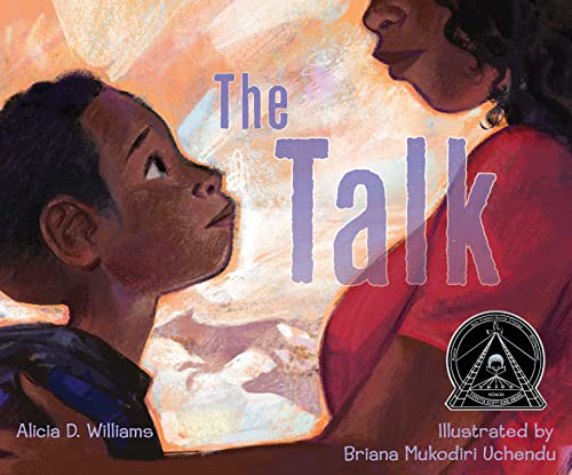
#267
My Hijacking

My Hijacking

In this moving and thought-provoking memoir, a historian offers a personal look at the fallibilities of memory and the lingering impact of trauma as she goes back fifty years to tell the story of being a passenger on an airliner hijacked in 1970.On September 6, 1970, twelve-year-old Martha Hodes and her thirteen-year-old sister were flying unaccompanied back to New York City from Israel when their plane was hijacked by members of the Popular Front for the Liberation of Palestine and forced to land in the Jordan desert. Too young to understand the sheer gravity of the Israeli-Palestinian conflict, Martha coped by suppressing her fear and anxiety. Nearly a half-century later, her memories of those six days and nights as a hostage are hazy and scattered. Was it the passage of so much time, or that her family couldn't endure the full story, or had trauma made her repress such an intense life-and-death experience? A professional historian, Martha wanted to find out.Drawing on deep archival research, childhood memories, and conversations with relatives, friends, and fellow hostages, Martha Hodes sets out to re-create what happened to her, and what it was like for those at home desperately hoping for her return. Thrown together inside a stifling jetliner, the hostages forged friendships, provoked conflicts, and dreamed up distractions. Learning about the lives and causes of their captors--some of them kind, some frightening--the sisters pondered a deadly divide that continues today. A thrilling tale of fear, denial, and empathy, My Hijacking sheds light on the hostage crisis that shocked the world, as the author comes to a deeper understanding of both what happened in the Jordan desert in 1970 and her own fractured family and childhood sorrows.

#268
My Name Is Barbra

My Name Is Barbra

The long-awaited memoir by the superstar of stage, screen, recordings, and television Barbra Streisand is by any account a living legend, a woman who in a career spanning six decades has excelled in every area of entertainment. She is among the handful of EGOT winners (Emmy, Grammy, Oscar, and Tony) and has one of the greatest and most recognizable voices in the history of popular music. She has been nominated for a Grammy 46 times, and with Yentl she became the first woman to write, produce, direct, and star in a major motion picture. In My Name Is Barbra, she tells her own story about her life and extraordinary career, from growing up in Brooklyn to her first star-making appearances in New York nightclubs to her breakout performance in Funny Girl on stage and winning the Oscar for that performance on film. Then came a long string of successes in every medium in the years that followed. The book is, like Barbra herself, frank, funny, opinionated, and charming. She recounts her early struggles to become an actress, eventually turning to singing to earn a living; the recording of some of her acclaimed albums; the years of effort involved in making Yentl; her direction of The Prince of Tides; her friendships with figures ranging from Marlon Brando to Madeleine Albright; her political advocacy; and the fulfillment she's found in her marriage to James Brolin. No entertainer's memoir has been more anticipated than Barbra Streisand's, and this engrossing and delightful book will be eagerly welcomed by her millions of fans.

#269
My Picture Diary

My Picture Diary

The wife of Japan's most lauded manga-ka documents a year in their lives with her own artistry. In 1981, Fujiwara Maki began a picture diary about daily life with her son and husband, the legendary manga author Tsuge Yoshiharu. Publishing was not her original intention. "I wanted to record our family's daily life while our son, Shosuke, was small. But as 8mm cameras were too expensive and we were poor, I decided on the picture diary format instead. I figured Shosuke would enjoy reading it when he got older." Drawn in a simple, personable style, and covering the same years fictionalized in Tsuge's final masterpiece The Man Without Talent, Fujiwara's journal focuses on the joys of daily life amidst the stresses of childrearing, housekeeping, and managing a depressed husband. A touching and inspiring testimony of one Japanese woman's resilience, My Picture Diary is also an important glimpse of the enigma that is Tsuge. Fujiwara's diary is unsparing. It provides a stark picture of the gender divide in their household: Tsuge sleeps until noon and does practically nothing. He never compliments her cooking, and dictates how money is spent. Not once is he shown drawing. And yet Fujiwara remains surprisingly empathetic toward her mercurial husband. Translated by Ryan Holmberg, this edition sheds light on Fujiwara's life, her own career in art, writing, and underground theater, and her extensive influence upon her husband's celebrated manga.

#270
National Dish

National Dish

In this engrossing and timely journey to the crossroads of food and identity, award-winning writer Anya von Bremzen explores six of the world's most fascinating and iconic culinary cultures--France, Italy, Japan, Spain, Mexico, and Turkey--brilliantly weaving cuisine, history, and politics into a work of scintillating connoisseurship and charm We all have an idea in our heads about what French food is--or Italian, or Japanese, or Mexican, or . . . But where did those ideas come from? Who decides what makes a national food canon? Recipient of three James Beard awards, Anya von Bremzen has written definitive cookbooks on Russian, Spanish, and Latin American cuisines, as well as her internationally acclaimed memoir Mastering the Art of Soviet Cooking. Now in National Dish, she sets out to investigate the truth behind the eternal cliché--"we are what we eat"--traveling to six storied food capitals, going high and low, from world-famous chefs to scholars to strangers in bars, in search of how cuisine became connected to place and identity. Paris is where the whole idea of food as national heritage was first invented, and so it is where Anya must begin. With an inquisitive eye and unmistakable wit, she ponders the codification of French food and the current tension between locavorism and globalization. From France, she's off to Naples, to probe the myth and reality of pizza, pasta, and Italian-ness. Next up, Tokyo, where Anya and her partner Barry explore ramen, rice, and the distance between Japan's future and its past. From there they move to Seville, to search for the community-based essence of Spain's tapas traditions, and then Oaxaca, where debates over postcolonial cultural integration find expression in maize and mole. In Istanbul, a traditional Ottoman potluck becomes a lens on how a former multicultural empire defines its food heritage. Finally, they land back in their beloved home in Queens, for a dinner centered on Ukrainian borsch, a meal that has never felt more loaded, or more precious and poignant. A unique and magical cook's tour of the world, National Dish brings us to a deep appreciation of how the country makes the food, and the food the country.

#273
Night Vision: Seeing Ourselves through Dark Moods

Night Vision: Seeing Ourselves through Dark Moods

A philosopher's personal meditation on how painful emotions can reveal truths about what it means to be truly human Under the light of ancient Western philosophies, our darker moods like grief, anguish, and depression can seem irrational. When viewed through the lens of modern psychology, they can even look like mental disorders. The self-help industry, determined to sell us the promise of a brighter future, can sometimes leave us feeling ashamed that we are not more grateful, happy, or optimistic. Night Vision invites us to consider a different approach to life, one in which we stop feeling bad about feeling bad. In this powerful and disarmingly intimate book, Existentialist philosopher Mariana Alessandri draws on the stories of a diverse group of nineteenth- and twentieth-century philosophers and writers to help us see that our suffering is a sign not that we are broken but that we are tender, perceptive, and intelligent. Thinkers such as Audre Lorde, María Lugones, Miguel de Unamuno, C. S. Lewis, Gloria Anzaldúa, and Søren Kierkegaard sat in their anger, sadness, and anxiety until their eyes adjusted to the dark. Alessandri explains how readers can cultivate "night vision" and discover new sides to their painful moods, such as wit and humor, closeness and warmth, and connection and clarity. Night Vision shows how, when we learn to embrace the dark, we begin to see these moods--and ourselves--as honorable, dignified, and unmistakably human.

#274
Number Go Up

Number Go Up

"Everybody's talking about the wrong Sam Bankman-Fried book."--Wired Compared to Going Infinite by Michael Lewis, reviewers say Number Go Up is "more nuanced" (The Washington Post), "more entertaining" (Los Angeles Times), and "far superior" (Wired), not to mention "rollicking" (The Economist), "laugh-out-loud funny" (Fortune), and "shrewdly skeptical" (The New York Times). In 2021 cryptocurrency went mainstream. Giant investment funds were buying it, celebrities like Tom Brady endorsed it, and TV ads hailed it as the future of money. Hardly anyone knew how it worked--but why bother with the particulars when everyone was making a fortune from Dogecoin, Shiba Inu, or some other bizarrely named "digital asset"? As he observed this frenzy, investigative reporter Zeke Faux had a nagging question: Was it all just a confidence game of epic proportions? What started as curiosity--with a dash of FOMO--would morph into a two-year, globe-spanning quest to understand the wizards behind the world's new financial machinery. Faux's investigation would lead him to a schlubby, frizzy-haired twenty-nine-year-old named Sam Bankman-Fried (SBF for short) and a host of other crypto scammers, utopians, and overnight billionaires. Faux follows the trail to a luxury resort in the Bahamas, where SBF boldly declares that he will use his crypto fortune to save the world. Faux talks his way onto the yacht of a former child actor turned crypto impresario and gains access to "ApeFest," an elite party headlined by Snoop Dogg, by purchasing a $20,000 image of a cartoon monkey. In El Salvador, Faux learns what happens when a country wagers its treasury on Bitcoin, and in the Philippines, he stumbles upon a Pokémon knockoff mobile game touted by boosters as a cure for poverty. And in an astonishing development, a spam text leads Faux to Cambodia, where he uncovers a crypto-powered human-trafficking ring. When the bubble suddenly bursts in 2022, Faux brings readers inside SBF's penthouse as the fallen crypto king faces his imminent arrest. Fueled by the absurd details and authoritative reporting that earned Zeke Faux the accolade "our great poet of crime" (Money Stuff columnist Matt Levine), Number Go Up is the essential chronicle, by turns harrowing and uproarious, of a $3 trillion financial delusion.

#275
OCME

OCME

"Gripping . . . a brilliant insider's view." -- Kirkus Reviews (starred review) Go behind the scenes inside the nation's preeminent Office of the Chief Medical Examiner, where good people fight the good fight amid the tragedies and absurdities of our age Perfect for fans of Michael Lewis and David Simon (Homicide, The Corner, The Wire, We Own This City) Real life is different from what gets depicted on procedural crime dramas. Equipped with a journalist's eye, a paramedic's experience and a sardonic wit, Bruce Goldfarb spent ten years with Maryland's Office of the Chief Medical Examiner, where every sudden or unattended death in the state is scrutinized. Touching on numerous scandals, including Derek Chauvin's trial for the murder of George Floyd and the tragic killing in police custody of Freddie Gray, Goldfarb pulls back the curtain on a pioneer institution in crisis. Medical examiners and the investigators and technicians who support them play vital roles in the justice and public health systems of every American community. During Goldfarb's time with the Maryland OCME, opioid-related deaths contributed to a significant increase in their workload. Faced with a chronic shortage of qualified experts and inadequate funding, their important and fascinating work has become more challenging than most people could ever imagine. The public gets a skewed view of the relationship between police and medical examiners from procedural crime dramas, Bruce Goldfarb writes of his work inside one of America's most storied forensic centers. We aren't on the same team . . . We aren't on any team. The medical examiner's sole duty is to the deceased person. We speak for the dead. -- Praise for Bruce Goldfarb's 18 Tiny Deaths "An engrossing and accessible chronicle of . . . the early years of scientific detection." -- The Wall Street Journal "Devotees of TV's CSI will have their minds blown." -- Publishers Weekly (starred review)

#276
Old Buildings, New Ideas

Old Buildings, New Ideas

Some architectural transformations are modest, some are revolutionary. Shining a light on the hidden side of the accepted narrative of the history of architecture, this book explores works which transform existing buildings to build a way forward, through adaptations, additions and visual shifts. Examining 30 buildings across Europe, North America and South America, spanning from the early Middle Ages to the end of the 20th century, it demonstrates the creative possibilities of working with existing buildings. The book reveals how formal inventions can shape architecture and our environment over time in a built world constantly in a state of becoming. As we face a climate emergency, it taps into our deep cultural knowledge about the inventive use and re-use of buildings. Generously illustrated with architectural plans and over 300 colour images, it provides an alternative to the dominant view which sees conservation and preservation of historic buildings as a 20th century creation.

#278
ON MARRIAGE

ON MARRIAGE

A compulsively readable, startling, and philosophically rich book about marriage, from an acclaimed critic and filmmaker A New Yorker Best of the Week Pick * A Kirkus Reviews Best Nonfiction Book of the Year * A Seminary Coop Notable Book of 2023 "Baum is an erudite and entertaining guide through the landscape of marriage. . . . A fascinating exploration."--Stephanie Merritt, The Guardian "As far back as our history books go, we have no record of a time preceding marriage. Isn't that an extraordinary fact?" So writes Devorah Baum in this searching and revelatory book. Marriage, for better or for worse, is how humans have organized their world and told their story. Straight, queer, coupled, single: none live outside the remit of marriage. One might as well try to live beyond language. But when confronted with the question "What do intellectuals think of marriage?" Baum concludes that most philosophers have preferred to avoid the subject. Is marriage then an intellectual blind spot? To fill in the gaps, she draws on a wide range of cultural material, from the classical to the contemporary, while interweaving reflections on her own experiences of matrimony to both critique and celebrate marriage's many contradictions and its profound effects on us all. In doing so, she reveals how marriage has worked as a cover story for power and its abuses on the one hand, and for subversive and even utopian relational practices on the other. Entertaining, illuminating, consoling, and candid, On Marriage is an unprecedented investigation of what we are really talking about when we talk about marriage.

#279
On Minimalism: Documenting a Musical Movement

On Minimalism: Documenting a Musical Movement

A revisionist history of minimalism's transformative rise, through the voices of the musicians who created it. When composers like Philip Glass and Steve Reich began creating hypnotically repetitive music in the 1960s, it upended the world of American composition. But minimalism was more than a classical phenomenon--minimalism changed everything. Its static harmonies and groovy pulses swept through the broader avant-garde landscape, informing the work of Yoko Ono and Brian Eno, John and Alice Coltrane, Pauline Oliveros and Julius Eastman, and many others. On Minimalism moves from the style's beginnings in psychedelic counterculture through its present-day influences on ambient jazz, doom metal, and electronic music. The editors look beyond the major figures to highlight crucial and diverse voices--especially women, people of color, and LGBTQ+ musicians--that have shaped the genre. Featuring more than a hundred rare historical sources, On Minimalism curates this history anew, documenting one of the most important musical movements of our time.

#280
Opposable Thumbs: How Siskel & Ebert Changed Movies Forever

Opposable Thumbs: How Siskel & Ebert Changed Movies Forever

Once upon a time, if you wanted to know if a movie was worth seeing, you didn't check out Rotten Tomatoes or IMDB. You asked whether Siskel & Ebert had given it "two thumbs up." On a cold Saturday afternoon in 1975, two men (who had known each other for eight years before they'd ever exchanged a word) met for lunch in a Chicago pub. Gene Siskel was the film critic for the Chicago Tribune. Roger Ebert had recently won the Pulitzer Prize--the first ever awarded to a film critic--for his work at the Chicago Sun-Times. To say they despised each other was an understatement. When they reluctantly agreed to collaborate on a new movie review show with PBS, there was at least as much sparring off-camera as on. No decision--from which films to cover to who would read the lead review to how to pronounce foreign titles--was made without conflict, but their often-antagonistic partnership (which later transformed into genuine friendship) made for great television. In the years that followed, their signature "Two thumbs up!" would become the most trusted critical brand in Hollywood. In Opposable Thumbs, award-winning editor and film critic Matt Singer eavesdrops on their iconic balcony set, detailing their rise from making a few hundred dollars a week on local Chicago PBS to securing multimillion-dollar contracts for a syndicated series (a move that convinced a young local host named Oprah Winfrey to do the same). Their partnership was cut short when Gene Siskel passed away in February of 1999 after a battle with brain cancer that he'd kept secret from everyone outside his immediate family--including Roger Ebert, who never got to say goodbye to his longtime partner. But their influence on in the way we talk about (and think about) movies continues to this day.

#282
ORPHAN BACHELORS

ORPHAN BACHELORS

From the bestselling and award-winning author of novels Bone and Steer Toward Rock, Fae Myenne Ng's Orphan Bachelors is an extraordinary memoir of her beloved San Francisco's Chinatown and of a family building a life in a country bent on their exclusionIn pre-Communist China, Fae Myenne Ng's father memorized a book of lies and gained entry to the United States as a stranger's son, evading the Exclusion Act, an immigration law which he believed was meant to extinguish the Chinese American family. During the McCarthy era, he entered the Confession Program in a failed attempt to salvage his marriage only to have his citizenship revoked to resident alien. Exclusion and Confession, America's two slamming doors. As Ng's father said, "America didn't have to kill any Chinese, the Exclusion Act ensured none would be born."Ng was her parents' precocious first born, the translator, the bossy eldest sister. A child raised by a seafaring father and a seamstress mother, by San Francisco's Chinatown and its legendary Orphan Bachelors -- men without wives or children, Exclusion's living legacy. She and her siblings were their stand-in descendants, Ng's family grocery store their haven.Each Orphan Bachelor bequeathed the children their true American inheritance. Ng absorbed their suspicious, lonely, barren nature; she found storytelling and chosen children in the form of her students. Exclusion's legacy followed her from the back alleys of Chinatown in the 60s, to Manhattan in the 80s, to the high desert of California in the 90s, until her return home in the 2000s when the untimely deaths of her youngest brother and her father devastated the family. As a child, Ng believed her father's lies; as an adult, she returned to her childhood home to write his truth. Orphan Bachelors weaves together the history of one family, lucky to exist and nevertheless doomed; an elegy for brothers estranged and for elders lost; and insights into writing between languages and teaching between generations. It also features Cantonese profanity, snakes that cure fear and opium that conquers sorrow, and a seemingly immortal creep of tortoises. In this powerful remembrance, Fae Myenne Ng gives voice to her valiant ancestors, her bold and ruthless Orphan Bachelors, and her own inner self, howling in Cantonese, impossible to translate but determined to be heard.

#286
Outrageous: A History of Showbiz and the Culture Wars

Outrageous: A History of Showbiz and the Culture Wars

From the preeminent historian of modern comedy comes an expansive history of showbiz and the culture wars There is a common belief that we live in unprecedented times, that people are too sensitive today, that nobody objected to the actions of actors, comedians, and filmmakers in the past. Modern pundits would have us believe that Americans of a previous generation had tougher skin and seldom complained. But does this argument hold up to scrutiny? In Outrageous, celebrated cultural historian Kliph Nesteroff demonstrates that Americans have been objecting to entertainment for nearly two hundred years, sometimes rationally, often irrationally. Likewise, powerful political interests have sought to circumvent the arts using censorship, legal harassment, and outright propaganda. From Mae West through Johnny Carson, Amos 'n' Andy through Beavis and Butt-Head, Outrageous chronicles the controversies of American show business and the ongoing attempts to change what we watch, read, and hear.

#287
Pathogenesis: A History of the World in Eight Plagues

Pathogenesis: A History of the World in Eight Plagues

According to the accepted narrative of progress, humans have thrived thanks to their brains and brawn, collectively bending the arc of history. But in this revelatory book, Professor Jonathan Kennedy argues that the myth of human exceptionalism overstates the role that we play in social and political change. Instead, it is the humble microbe that wins wars and topples empires.

#288
Pax: War and Peace in Rome’s Golden Age

Pax: War and Peace in Rome’s Golden Age

From a "remarkably gifted historian" (New York Times), the definitive account of the golden age of Rome -- an ultimate superpower at the pinnacle of its greatness The Pax Romana has long been shorthand for the empire's golden age. Stretching from Caledonia to Arabia, Rome ruled over a quarter of the world's population. It was the wealthiest and most formidable state in the history of humankind. Pax is a captivating narrative history of Rome at the height of its power. From the gilded capital to realms beyond the frontier, historian Tom Holland shows ancient Rome in all its glory: Nero's downfall, the destruction of Jerusalem and Pompeii, the building of the Colosseum and Hadrian's Wall, the conquests of Trajan. Vividly sketching the lives of Romans both ordinary and spectacular, from slaves to emperors, Holland shows that Roman peace was the fruit of unprecedented military violence. A stunning portrait of Rome's glory days, this is the epic history of the Pax Romana.

#289
Perplexing Plots

Perplexing Plots

Narrative innovation is typically seen as the domain of the avant-garde. However, techniques such as nonlinear timelines, multiple points of view, and unreliable narration have long been part of American popular culture. How did forms and styles once regarded as "difficult" become familiar to audiences? In Perplexing Plots, David Bordwell reveals how crime fiction, plays, and films made unconventional narrative mainstream. He shows that since the nineteenth century, detective stories and suspense thrillers have allowed ambitious storytellers to experiment with narrative. Tales of crime and mystery became a training ground where audiences learned to appreciate artifice. These genres demand a sophisticated awareness of storytelling conventions: they play games with narrative form and toy with audience expectations. Bordwell examines how writers and directors have pushed, pulled, and collaborated with their audiences to change popular storytelling. He explores the plot engineering of figures such as Raymond Chandler, Agatha Christie, Dashiell Hammett, Patricia Highsmith, Alfred Hitchcock, Dorothy Sayers, and Quentin Tarantino, and traces how mainstream storytellers and modernist experimenters influenced one another's work. A sweeping, kaleidoscopic account written in a lively, conversational style, Perplexing Plots offers an ambitious new understanding of how movies, literature, theater, and popular culture have evolved over the past century.

#290
Pockets: An Intimate History of How We Keep Things Close

Pockets: An Intimate History of How We Keep Things Close

"Who knew the humble pocket could hold so much history? In this enthralling and always surprising account, Hannah Carlson turns the pocket inside out and out tumble pocket watches, coins, pistols, and a riveting centuries-long social and political history." ―Jill Lepore, author of These Truths: A History of the United States Pockets "showcases the best features of cultural history: a lively combination of visual, literary and documentary evidence. As sumptuously illustrated as it is learned ... this highly inventive and original book demands a pocket sequel." ―Jane Kamensky, Wall Street Journal Who gets pockets, and why? It's a subject that stirs up plenty of passion: Why do men's clothes have so many pockets and women's so few? And why are the pockets on women's clothes often too small to fit phones, if they even open at all? In her captivating book, Hannah Carlson, a lecturer in dress history at the Rhode Island School of Design, reveals the issues of gender politics, security, sexuality, power, and privilege tucked inside our pockets. Throughout the medieval era in Europe, the purse was an almost universal dress feature. But when tailors stitched the first pockets into men's trousers five hundred years ago, it ignited controversy and introduced a range of social issues that we continue to wrestle with today, from concealed pistols to gender inequality. See: #GiveMePocketsOrGiveMeDeath. Filled with incredible images, this microhistory of the humble pocket uncovers what pockets tell us about ourselves: How is it that putting your hands in your pockets can be seen as a sign of laziness, arrogance, confidence, or perversion? Walt Whitman's author photograph, hand in pocket, for Leaves of Grass seemed like an affront to middle-class respectability. When W.E.B. Du Bois posed for a portrait, his pocketed hands signaled defiant coolness. And what else might be hiding in the history of our pockets? (There's a reason that the contents of Abraham Lincoln's pockets are the most popular exhibit at the Library of Congress.) Thinking about the future, Carlson asks whether we will still want pockets when our clothes contain "smart" textiles that incorporate our IDs and credit cards. Pockets is for the legions of people obsessed with pockets and their absence, and for anyone interested in how our clothes influence the way we navigate the world.

#292
Portico: Cooking and Feasting in Rome’s Jewish Kitchen

Portico: Cooking and Feasting in Rome’s Jewish Kitchen

A leading authority on Jewish food, Leah Koenig celebrates la cucina Ebraica Romana within the pages of her new cookbook. Portico: Cooking and Feasting in Rome's Jewish Kitchen features over 100 deeply flavorful recipes and beautiful photographs of Rome's Jewish community, the oldest in Europe. The city's Jewish residents have endured many hardships, including 300 years of persecution inside the Roman Jewish Ghetto. Out of this strife grew resilience, a deeply knit community, and a uniquely beguiling cuisine. Today, the community thrives on Via del Portico d'Ottavia (the main road in Rome's Ghetto neighborhood)--and beyond.Leah Koenig's recipes showcase the cuisine's elegantly understated vegetables, saucy braised meats and stews, rustic pastas, resplendent olive oil-fried foods, and never-too-sweet desserts. Home cooks can explore classics of the Roman Jewish repertoire with Stracotto di Manzo (a wine-braised beef stew), Pizza Ebraica (fruit-and-nut-studded bar cookies), and, of course, Carciofi alla Giudia, the quintessential Jewish-style fried artichokes. A standout chapter on fritters--showcasing the unique gift Roman Jews have for delicate frying--includes sweet honey-soaked matzo fritters, fried salt cod, and savory potato pastries (burik) introduced by the thousands of Libyan Jews who immigrated to Rome in the 1960s and '70s. Every recipe is masterfully tailored to the home cook, while maintaining the flavor and integrity of tradition. Suggested menus for holiday planning round out the usability and flexibility of these dishes.A cookbook for anyone who wants to dive more deeply into Jewish foodways, or gain new insight into Rome, Portico features the makers and creators who are keeping Roman Jewish food alive today, transporting us to the bustling streets of the Eternal City while also making us feel--as we cook and eat--very much at home.

#293
Practicing New Worlds

Practicing New Worlds

An exploration of how emergent strategies can help us meet this moment, survive what is to come, and shape safer and more just futures. Practicing New Worlds explores how principles of emergence, adaptation, iteration, resilience, transformation, interdependence, decentralization and fractalization can shape organizing toward a world without the violence of surveillance, police, prisons, jails, or cages of any kind, in which we collectively have everything we need to survive and thrive. Drawing on decades of experience as an abolitionist organizer, policy advocate, and litigator in movements for racial, gender, economic, and environmental justice and the principles articulated by adrienne maree brown in Emergent Strategy: Shaping Change, Changing Worlds, Ritchie invites us to think beyond traditional legislative and policy change to create more possibilities for survival and resistance in the midst of the ongoing catastrophes of racial capitalism—and the cataclysms to come. Rooted in analysis of current abolitionist practices and interviews with on-the-ground organizers resisting state violence, building networks to support people in need of abortion care, and nurturing organizations and convergences that can grow transformative cities and movements, Practicing New Worlds takes readers on a journey of learning, unlearning, experimentation, and imagination to dream the worlds we long for into being.

#295
Quartet

Quartet

The lives, loves, adventures and trailblazing musical careers of four extraordinary women from a stunning debut biographer. 'Fabulous.' Sunday Times 'A rare gift.' Financial Times 'Passionate ... Vivid ... Timely.' Telegraph 'Readable and inspiring.' Guardian 'Compelling ... Ambitious ... Poignant.' Spectator 'Magnificent.' Kate Mosse 'Riveting.' Antonia Fraser 'A breath of fresh air.' Kate Molleson 'Fascinating.' Alexandra Harris 'Wonderful.' Claire Tomalin 'Splendid.' Miranda Seymour 'Remarkable.' Fiona Maddocks 'Pioneering.' Andrew Motion 'Brilliant' Helen Pankhurst Ethel Smyth (b.1858): Famed for her operas, this trailblazing queer Victorian composer was a larger-than-life socialite, intrepid traveller and committed Suffragette. Rebecca Clarke (b.1886): This talented violist and Pre-Raphaelite beauty was one of the first women ever hired by a professional orchestra, later celebrated for her modernist experimentation. Dorothy Howell (b.1898): A prodigy who shot to fame at the 1919 Proms, her reputation as the 'English Strauss' never dented her modesty; on retirement, she tended Elgar's grave alone. Doreen Carwithen (b.1922): One of Britain's first woman film composers who scored Elizabeth II's coronation film, her success hid a 20-year affair with her married composition tutor. In their time, these women were celebrities. They composed some of the century's most popular music and pioneered creative careers; but today, they are ghostly presences, surviving only as muses and footnotes to male contemporaries like Elgar, Vaughan Williams and Britten - until now. Leah Broad's magnificent group biography resurrects these forgotten voices, recounting lives of rebellion, heartbreak and ambition, and celebrating their musical masterpieces. Lighting up a panoramic sweep of British history over two World Wars, Quartet revolutionises the canon forever.

#297
RADICAL BY NATURE

RADICAL BY NATURE

A major biography of the brilliant naturalist, traveler, humanitarian, and codiscoverer of natural selection Alfred Russel Wallace (1823–1913) was perhaps the most famed naturalist of the Victorian age. His expeditions to remote Amazonia and southeast Asia were the stuff of legend. A collector of thousands of species new to science, he shared in the discovery of natural selection and founded the discipline of evolutionary biogeography. Radical by Nature tells the story of Wallace’s epic life and achievements, from his stellar rise from humble origins to his complicated friendship with Charles Darwin and other leading scientific lights of Britain to his devotion to social causes and movements that threatened to alienate him from scientific society. James Costa draws on letters, notebooks, and journals to provide a multifaceted account of a revolutionary life in science as well as Wallace’s family life. He shows how the self-taught Wallace doggedly pursued bold, even radical ideas that caused a seismic shift in the natural sciences, and how he also courted controversy with nonscientific pursuits such as spiritualism and socialism. Costa describes Wallace’s courageous social advocacy of women’s rights, labor reform, and other important issues. He also sheds light on Wallace’s complex relationship with Darwin, describing how Wallace graciously applauded his friend and rival, becoming one of his most ardent defenders. Weaving a revelatory narrative with the latest scholarship, Radical by Nature paints a mesmerizing portrait of a multifaceted thinker driven by a singular passion for science, a commitment to social justice, and a lifelong sense of wonder.

#298
Real Self-Care: A Transformative Program for Redefining Wellness (Crystals, Cleanses, and Bubble Baths Not Included)

Real Self-Care: A Transformative Program for Redefining Wellness (Crystals, Cleanses, and Bubble Baths Not Included)

National Bestseller featured by Good Morning America, NPR's Code Switch, The New York Times, and The Guardian NPR's "Books We Love for 2023" "Realistic and trustworthy" -- InStyle "This isn't just another self-help book. It gives us a clear-eyed look at the way social systems drain our energy, and a concrete set of principles to rely on as we declare independence from these systems." --Martha Beck, New York Times bestselling author of The Way of Integrity "This book is for anyone who's ever removed a 'relaxing' sheet mask only to realize it hasn't transformed you so much as your trash can." --Jessica DeFino, The Unpublishable From women's mental health specialist and New York Times contributor Pooja Lakshmin, MD, comes a long-overdue reckoning with the contradictions of the wellness industry and a paradigm-shifting program for practicing real self-care that will empower, uplift, and maybe even start a revolution. You may have noticed that it's nearly impossible to go even a couple days without coming across the term self-care. A word that encompasses any number of lifestyle choices and products--from juice cleanses to yoga workshops to luxury bamboo sheets--self-care has exploded in our collective consciousness as a panacea for practically all of women's problems. Board-certified psychiatrist Dr. Pooja Lakshmin finds this cultural embrace of self-care incomplete at best and manipulative at worst. Fixing your troubles isn't simple as buying a new day planner or signing up for a meditation class. These faux self-care practices keep us looking outward--comparing ourselves with others or striving for a certain type of perfection. Even worse, they exonerate an oppressive social system that has betrayed women and minorities. Real self-care, in contrast, is an internal, self-reflective process that involves making difficult decisions in line with our values, and when we practice it, we shift our relationships, our workplaces, and even our broken systems. In Real Self-Care, Lakshmin helps readers understand what a real practice of caring for yourself could--and does--look like. Using case studies from her practice, clinical research, and the down-to-earth style that she's become known for, Lakshmin provides a step-by-step program for real and sustainable change and solace. Packed with actionable strategies to deal with common problems, Real Self-Care is a complete roadmap for women to set boundaries and move past guilt, treat themselves with compassion, get closer to themselves, and assert their power. The result--having ownership over one's own life-- is nothing less than a personal and social revolution.

#299
Recoding America: Why Government Is Failing in the Digital Age and How We Can Do Better

Recoding America: Why Government Is Failing in the Digital Age and How We Can Do Better

Learn more about Jennifer Pahlka's work at recodingamerica.us. "The book I wish every policymaker would read." --Ezra Klein, The New York Times A bold call to reexamine how our government operates--and sometimes fails to--from President Obama's former deputy chief technology officer and the founder of Code for America Just when we most need our government to work--to decarbonize our infrastructure and economy, to help the vulnerable through a pandemic, to defend ourselves against global threats--it is faltering. Government at all levels has limped into the digital age, offering online services that can feel even more cumbersome than the paperwork that preceded them and widening the gap between the policy outcomes we intend and what we get. But it's not more money or more tech we need. Government is hamstrung by a rigid, industrial-era culture, in which elites dictate policy from on high, disconnected from and too often disdainful of the details of implementation. Lofty goals morph unrecognizably as they cascade through a complex hierarchy. But there is an approach taking hold that keeps pace with today's world and reclaims government for the people it is supposed to serve. Jennifer Pahlka shows why we must stop trying to move the government we have today onto new technology and instead consider what it would mean to truly recode American government.

#300
Rest Easy: Discover Calm and Abundance through the Radical Power of Rest

Rest Easy: Discover Calm and Abundance through the Radical Power of Rest

Brimming with encouraging wisdom, easy-to-follow guidance, and illuminating illustrations, Rest Easy is an antidote to burnout culture and an invitation to find joy, balance, and energy through the transformative power of rest. "This thought-provoking book is highly recommended for anyone needing better rest habits." ―Library Journal, starred review Rest Easy invites you to experience the life-changing power of resting your mind, body, and spirit. In these pages, rest expert Ximena Vengoechea explores the power of rest and guides you through dozens of proven methods for relaxation and renewal, including movement, sound, visualizations, journaling, time in nature, meditative activities, and so much more. Discover: A short quiz that reveals the ideal rest techniques for your personality and lifestyle. How to set healthy boundaries and overcome obstacles preventing meaningful rest. Bite-size practices to incorporate into everyday life for physical, mental, and spiritual rest. PROVEN TECHNIQUES: The techniques and practices presented in these pages are proven to improve rest, reduce stress, and boost joy. The author distills her research to make a range of rest techniques accessible to everyone, allowing readers to experiment with a wide variety of practices and find what best fits their lifestyle and needs. FRESH APPROACH TO HEALTH AND WELLNESS: Through a charming combination of beautiful artwork, compelling storytelling, engaging sidebars, and easy-to-follow takeaways, this book offers a distinctive approach to wellness and well-being. Warm and inviting, Rest Easy is a simple and authentic way to connect and be present for someone in need of gentle encouragement and uplifting support. POSITIVE & TIMELY: This book presents contemporary methods for well-being in a simple, easy-to-engage format. Readers will discover information on practices for mindfulness, breathwork, yoga, and more. MEANINGFUL SELF-CARE GIFT: The beautifully designed hardcover package is an infinitely giftable book that can be given to friends, wellness enthusiasts, and people experiencing burnout. The content is general enough to speak to a range of experiences, and the colorful art and empathetic tone make it a wonderful option for those looking for thoughtful, personal gifts for someone who needs a pick-me-up. Perfect for: Mindfulness and wellness enthusiasts People experiencing burnout or seeking stress relief Parents, students, or anyone whose job or personal circumstances are causing suffering and burnout Wellness gift for women and men of any age Fans of Am I Overthinking This? and Vibrate Higher Daily Readers of How to Do Nothing, How to Not Always Be Working, and Rest Is Resistance

#302
Ringmaster: Vince McMahon and the Unmaking of America

Ringmaster: Vince McMahon and the Unmaking of America

INSTANT NEW YORK TIMES BESTSELLER "Riveting, essential reading." --Rick Perlstein, author of Reaganland The definitive biography of Vince McMahon, former WWE chairman and CEO, charts his rise from rural poverty to the throne of one of the world's most influential media empires--and features never-before-seen research and exclusive interviews with more than 150 people who witnessed, aided, and suffered from his ascent. Even if you've never watched a minute of professional wrestling, you are living in Vince McMahon's world. In his four decades as the defining figure of American pro wrestling, McMahon was the man behind Dwayne "The Rock" Johnson, "Stone Cold" Steve Austin, John Cena, Dave Bautista, Bret "The Hitman" Hart, and Hulk Hogan, to name just a few of the mega-stars who owe him their careers. For more than twenty-five years, he has also been a performer in his own show, acting as the diabolical "Mr. McMahon"--a figure who may have more in common with the real Vince than he would care to admit. Just as importantly, McMahon is one of Donald Trump's closest friends--and Trump's experiences as a performer in McMahon's programming were, in many ways, a dress rehearsal for the 45th President's campaigns and presidency. McMahon and his wife, Linda, are major Republican donors. Linda was in Trump's cabinet. McMahon makes deals with the Saudi government worth hundreds of millions of dollars. And for generations of people who have watched wrestling, he has been a defining cultural force. Accessible to anyone, regardless of wrestling knowledge, Ringmaster is an unauthorized, independent, investigative chronicle of Vince McMahon's origins and rise to supreme power. It is built on exclusive interviews with more than 150 people, from McMahon's childhood friends to those who accuse him of destroying their lives. Far more than just an athletics or entertainment biography, Ringmaster uses Vince's story as a new lens for understanding the contemporary American apocalypse.

#303
Road to Surrender: Three Men and the Countdown to the End of World War II

Road to Surrender: Three Men and the Countdown to the End of World War II

A riveting, immersive account of the agonizing decision to use nuclear weapons against Japan--a crucial turning point in World War II and geopolitical history--with you-are-there immediacy by the New York Times bestselling author of Ike's Bluff and Sea of Thunder. "As Christopher Nolan's movie Oppenheimer shows, the shockwaves reverberate still. The veteran biographer Evan Thomas now enters the debate."--The Wall Street Journal At 9:20 a.m. on the morning of May 30, General Groves receives a message to report to the office of the secretary of war "at once." Stimson is waiting for him. He wants to know: has Groves selected the targets yet? So begins this suspenseful, impeccably researched history that draws on new access to diaries to tell the story of three men who were intimately involved with America's decision to drop the atomic bomb--and Japan's decision to surrender. They are Henry Stimson, the American Secretary of War, who oversaw J. Robert Oppenheimer under the Manhattan Project; Gen. Carl "Tooey" Spaatz, head of strategic bombing in the Pacific, who supervised the planes that dropped the bombs; and Japanese Foreign Minister Shigenori Togo, the only one in Emperor Hirohito's Supreme War Council who believed even before the bombs were dropped that Japan should surrender. Henry Stimson had served in the administrations of five presidents, but as Oppenheimer's work progressed, he found himself tasked with the unimaginable decision of determining whether to deploy the bomb. The new president, Harry S. Truman, thus far a peripheral figure in the momentous decision, accepted Stimson's recommendation to drop the bomb. Army Air Force Commander Gen. Spaatz ordered the planes to take off. Like Stimson, Spaatz agonized over the command even as he recognized it would end the war. After the bombs were dropped, Foreign Minister Togo was finally able to convince the emperor to surrender. To bring these critical events to vivid life, bestselling author Evan Thomas draws on the diaries of Stimson, Togo and Spaatz, contemplating the immense weight of their historic decision. In Road to Surrender, an immersive, surprising, moving account, Thomas lays out the behind-the-scenes thoughts, feelings, motivations, and decision-making of three people who changed history.

#304
Romney: A Reckoning

Romney: A Reckoning

NEW YORK TIMES BESTSELLER! A remarkably illuminating biography of one of America's most fascinating political figures--including news-making revelations from Mitt Romney himself about dissension within today's Republican Party--written with his full cooperation by an award-winning writer at The Atlantic. Few figures in American politics have seen more and said less than Mitt Romney. An outspoken dissident in Donald Trump's GOP, he has made headlines in recent years for standing alone against the forces he believes are poisoning the party he once led. Romney was the first senator in history to vote to remove from office a president of his own party. When that president's supporters went on to storm the US Capitol, Romney delivered a thundering speech from the Senate floor accusing his fellow Republicans of stoking insurrection. Despite these moments of public courage, Romney has shared very little about what he's witnessed behind the scenes over his three decades in politics--in GOP cloakrooms and caucus lunches, in his private meetings with Donald Trump and his family, in his dealings with John McCain, George W. Bush, Barack Obama, Joe Biden, Mitch McConnell, Joe Manchin, and Kyrsten Sinema. Now, exclusively for this biography, Romney has provided a window to his most private thoughts. Based on dozens of interviews with Romney, his family, and his inner circle as well as hundreds of pages of his personal journals and private emails, this in-depth portrait by award-winning journalist McKay Coppins shows a public servant authentically wrestling with the choices he has made over his career. In lively, revelatory detail, the book traces Romney's early life and rise through the ranks of a fast-transforming Republican Party and exposes how a trail of seemingly small compromises by political leaders has led to a crisis in democracy. Ultimately, Romney: A Reckoning is a redemptive story about a flawed politician who summoned his moral courage just as fear and divisiveness were overtaking American life.

#305
Saved

Saved

AN INSTANT #1 NEW YORK TIMES BESTSELLER "An affecting, singular story...a bracing tale of life on the edge of death." --Kirkus ReviewsWhen veteran war reporter Benjamin Hall woke up in Kyiv on the morning of March 14, 2022, he had no idea that, within hours, Russian bombs would nearly end his life. As a journalist for Fox News, Hall had worked in dangerous war zones like Syria and Afghanistan, but with three young daughters at home, life on the edge was supposed to be a thing of the past. Yet when Russia viciously attacked Ukraine in February 2022, Hall quickly volunteered to go. A few weeks later, while on assignment, Hall and his crew were blown up in a Russian strike. With Hall himself gravely injured and stuck in Kyiv, it was unclear if he would make it out alive.This is the story of how he survived--a story that continues to this day. For the first time, Hall shares his experience in full--from his ground-level view of the war to his dramatic rescue to his arduous, and ongoing, recovery. Going inside the events that have permanently transformed him, Hall recalls his time at the front lines of our world's conflicts, exploring how his struggle to step away from war reporting led him back one perilous last time. Featuring nail-biting accounts from the many people across multiple countries who banded together to get him to safety, Hall offers a stunning look at complex teamwork and heartfelt perseverance that turned his life into a mission.Through it all, Hall's spirit has remained undaunted, buoyed by that remarkable corps of people from around the world whose collective determination ensured his survival. Evocative, harrowing, and deeply moving, Saved is a powerful memoir of family and friends, of life and healing, and of how to respond when you are tested in ways you never thought possible.Benjamin Hall's memoir includes a 16-page color photo insert.

#311
Small Fires

Small Fires

"An intense, thought-provoking enquiry into the very nature of cooking." -- Nigella Lawson "One of the most original food books I've ever read, at once intelligent and sensuous, witty, provoking and truly delicious." -- Olivia Laing A bracingly original, revelatory debut that explores cooking and the kitchen as sources of pleasure, constraint and revolution, by a rising star in food writing This joyful, revelatory work of memory and meditation both complicates and electrifies life in the kitchen. Why do we cook? Is it just to feed ourselves and others? Or is there something more revolutionary going on? In Small Fires, Rebecca May Johnson reinvents cooking -- that simple act of rolling up our sleeves, wielding a knife, spattering red hot sauce on our books -- as a way of experiencing ourselves and the world. Cooking is thinking: about the liberating constraint of tying apron strings; the transformative dynamics of shared meals; the meaning of appetite and bodily pleasure; the wild subversiveness of the recipe, beyond words or control. Small Fires shows us the radical potential of the thing we do every day: the power of small fires burning everywhere.

#312
Soil: The Story of a Black Mother’s Garden

Soil: The Story of a Black Mother’s Garden

A seminal work that expands how we talk about the natural world and the environment as National Book Critics Circle Criticism finalist Camille T. Dungy diversifies her garden to reflect her heritage. In Soil: The Story of a Black Mother's Garden, poet and scholar Camille T. Dungy recounts the seven-year odyssey to diversify her garden in the predominately white community of Fort Collins, Colorado. When she moved there in 2013, with her husband and daughter, the community held strict restrictions about what residents could and could not plant in their gardens. In resistance to the homogenous policies that limited the possibility and wonder that grows from the earth, Dungy employs the various plants, herbs, vegetables, and flowers she grows in her garden as metaphor and treatise for how homogeneity threatens the future of our planet, and why cultivating diverse and intersectional language in our national discourse about the environment is the best means of protecting it. Definitive and singular, Soil functions at the nexus of nature writing, environmental justice, and prose to encourage you to recognize the relationship between the peoples of the African diaspora and the land on which they live, and to understand that wherever soil rests beneath their feet is home.

#313
SONIC LIFE

SONIC LIFE

From the founding member of Sonic Youth, a passionate memoir tracing the author's life and art--from his teen years as a music obsessive in small-town Connecticut, to the formation of his legendary rock group, to thirty years of creation, experimentation, and wonder "Downtown scientists rejoice! For Thurston Moore has unearthed the missing links, the sacred texts, the forgotten stories, and the secret maps of the lost golden age. This is history--scuffed, slightly bent, plenty noisy, and indispensable." --Colson Whitehead, Pulitzer Prize-winning author of The Underground Railroad and Harlem Shuffle Thurston Moore moved to Manhattan's East Village in 1978 with a yearning for music. He wanted to be immersed in downtown New York's sights and sounds--the feral energy of its nightclubs, the angular roar of its bands, the magnetic personalities within its orbit. But more than anything, he wanted to make music--to create indelible sounds that would move, provoke, and inspire. His dream came to life in 1981 with the formation of Sonic Youth, a band Moore cofounded with Kim Gordon and Lee Ranaldo. Sonic Youth became a fixture in New York's burgeoning No Wave scene--an avant-garde collision of art and sound, poetry and punk. The band would evolve from critical darlings to commercial heavyweights, headlining festivals around the globe while helping introduce listeners to such artists as Nirvana, Hole, and Pavement, and playing alongside such icons as Neil Young and Iggy Pop. Through it all, Moore maintained an unwavering love of music: the new, the unheralded, the challenging, the irresistible. In the spirit of Just Kids, Sonic Life offers a window into the trajectory of a celebrated artist and a tribute to an era of explosive creativity. It presents a firsthand account of New York in a defining cultural moment, a history of alternative rock as it was birthed and came to dominate airwaves, and a love letter to music, whatever the form. This is a story for anyone who has ever felt touched by sound--who knows the way the right song at the right moment can change the course of a life.

#315
Starkweather

Starkweather

The definitive story of Charles Starkweather, often considered to be the first mass killer in the modern age of America On January 21, 1958, nineteen-year-old Charles Starkweather changed the course of crime in the United States when he murdered the parents and sister of his fourteen-year-old girlfriend (and possible accomplice), Caril Ann Fugate, in a house on the edge of Lincoln, Nebraska. They then drove to the nearby town of Bennet, where a farmer was robbed and killed. When Starkweather’s car broke down, the teenagers who stopped to help were murdered and jammed into a storm cellar. By the time the dust settled, ten innocent people were dead and the city of Lincoln was in a state of terror. Schools closed. Men with rifles perched on the roofs of their houses. The National Guard patrolled the street. If there is a cultural version of PTSD, the town suffered from it. Starkweather and Fugate’s capture and arrest, and the resulting trials about the killing spree, received worldwide coverage. The event would serve as the inspiration for the movie Natural Born Killers and Springsteen’s iconic album Nebraska. Today, the story has dropped far from the national consciousness. With new material, new reporting, and new conclusions about the possible guilt or innocence of Fugate, the tale is ripe for an updated and definitive retelling. In Starkweather, bestselling author Harry N. MacLean tells the story of this shocking event and its lasting impact, a crime spree that struck deep into the heart of the heartland.

#316
Start Here: Instructions for Becoming a Better Cook

Start Here: Instructions for Becoming a Better Cook

NEW YORK TIMES BESTSELLER - Change the way you think about cooking! In this epic guide to better eating, the chef, recipe developer, and video producer Sohla El-Waylly reimagines what a cookbook can be, teaching home cooks of all skill levels how cooking really works. "The book I wish someone had handed me when I began my own journey as a cook."--from the Foreword by Samin Nosrat, New York Times bestselling author of Salt, Fat, Acid, Heat "A book to return to again and again and again." --Yotam Ottolenghi, New York Times bestselling author of Plenty and Ottolenghi Simple A practical, information-packed, and transformative guide to becoming a better cook and conquering the kitchen, Start Here is a must-have master class in leveling up your cooking. Across a dozen technique-themed chapters--from "Temperature Management 101" and "Break it Down & Get Saucy" to "Go to Brown Town," "All About Butter," and "Getting to Know Dough"--Sohla El-Waylly explains the hows and whys of cooking, introducing the fundamental skills that you need to become a more intuitive, inventive cook. A one-stop resource, regardless of what you're hungry for, Start Here gives equal weight to savory and sweet dishes, with more than two hundred mouthwatering recipes, including: Crispy-Skinned Salmon with Radishes & Nuoc Cham Charred Lemon Risotto Chilled Green Tahini Soba Lemon, Pecorino & Potato Pizza Fruity-Doodle Cookies Masa & Buttermilk Tres Leches Packed with practical advice and scientific background, and an almost endless assortment of recipe variations, along with tips, guidance, and how-tos, Start Here is culinary school--without the student loans.

#317
STEWDIO

STEWDIO

Chuck D (Public Enemy, Prophets of Rage, etc.) brings his personal insights and social critiques to the page in fierce, passionate, and evocative visual art and prose in this limited edition box set Legendary hip-hop artist and social activist Chuck D has used every opportunity in his groundbreaking career to stand up for civil rights. His rap group Public Enemy is widely regarded as a revolutionary act both in terms of its impact on hip-hop and its use of music to impart a message of race and class equality. The band emerged from the late 1970s/early '80s coalescence of rap, punk, and street art into hip-hop music culture on the East Coast. At the time, Chuck D had completed his BFA in graphic design, and while his music career exploded, his passion for visual art never left his heart. In February 2020, he turned his gaze once again to the page, and began to fill three 5 x 8 journals with his written and drawn reflections of a world beginning to unravel. STEWdio: The Naphic Grovel ARTrilogy of Chuck D recreates format of his original art, combining three full-color paperback bound books into a beautiful box set. The box set is the inaugural offering from Enemy Books, the new Akashic Books imprinted curated by Chuck D.Spanning the onset of COVID-19 through the first year of the Joe "Bye-Don" administration, Chuck D lends his powerful artistic voice to one of the most tumultuous periods in American history, and puts it in a capsule. Like the neo-expressionist graffiti art of Jean-Michel Basquiat, Chuck D's energetic "Naphic Grovels" marry text with drawings, commenting on contemporary events with the same activist instinct that propelled Public Enemy's "music-with-a-message" reputation. His inventive, Amiri Baraka-esque language and accompanying art is also occasionally used as a tool for introspection, providing unparalleled insight into one of the most important cultural figures of our time.Each journal follows a distinct period in Chuck D's (and America's) life; There's a Poison Goin On chronicles the onset of the COVID-19 pandemic, from February-April 2020; 45 Daze of REaD Octobot follow the days leading up to and the aftermath of the historic 2020 election; and Datamber Mindpaper, which focuses on the early days of the Biden administration. No song may be more reflective of 1980s America than Public Enemy's "Fight the Power;" no document may come to capture our COVID era like Chuck D's STEWdio.

#318
Still Pictures: On Photography and Memory

Still Pictures: On Photography and Memory

"Superb . . . [The] final, splendid, most personal work of [Janet Malcolm's] long career." --Charles Finch, The New York Times Book Review For decades, Janet Malcolm's books and dispatches for The New Yorker and The New York Review of Books poked and prodded at reportorial and biographical convention, gesturing toward the artifice that underpins both public and private selves. In Still Pictures, she turns her gimlet eye on her own life--a task demanding a writer just as peerlessly skillful as she was widely known to be. Still Pictures, then, is not the story of a life but an event on its own terms, an encounter with identity and family photographs as poignant and original as anything since Roland Barthes's Camera Lucida. Malcolm looks beyond the content of the image and the easy seductions of self-recognition, constructing a memoir from memories that pose questions of their own. Still Pictures begins with the image of a morose young girl on a train, leaving Prague for New York at the age of five in 1939. From her fitful early loves, to evenings at the old Metropolitan Opera House, to her fascination with what it might mean to be a "bad girl," Malcolm assembles a composite portrait of a New York childhood, one that never escapes the tug of Europe and the mysteries of fate and family. Later, Still Pictures delves into her marriage to Gardner Botsford, the world of William Shawn's New Yorker, and the libel trial that led Malcolm to become a character in her own drama. Displaying the sharp wit and astute commentary that are Malcolmian trademarks, this brief volume develops into a memoir like few others in our literature.

#319
Stone Soup

Stone Soup

More than twenty years ago, Anita Lobel published her childhood memoir, NO PRETTY PICTURES, to much acclaim. A child's tale of surviving Hitler's Poland, a rescue by the Swedish Red Cross in 1945, and ending with school years in Stockholm, that book was written in a young girl's voice. NO PRETTY PICTURES was nominated for the National Book Award, received gratifying reviews, and sold extremely well. Now, these many years later, she has decided to tell the rest of her story. STONE SOUP is an adult memento which begins in the early 1950s with an unwanted transplantation to New York City, then grows into a new rescue with acceptance to art school, the discovery of new friends and the proper marriage to one of those friends who happens to be a creator of children's books. That is followed by the birth of children, income from satisfying work as a designer and illustrator, and a growing sense of having arrived at a point on the path to shedding the dual stigmas of poverty and exile. The trust in the good marriage turns out to last, until it doesn't. Its gradual dissolution begins with the impulsive acquisition of a status house on a status street in Park Slope, Brooklyn. In a series of segments, the delight and playfulness connected with the ownership of this house lead to fear and trembling, suspicions and magical thinking that evil dwells and breathes in the old walls of that too, too solid house, and reflects back on the life lived within them.The "ideal" husband's secrets and betrayals can no longer be ignored, and the door to the couple's charmed, elegant life is broken down for good. Eventually, the husband contracts the plague of the eighties, and their relationship reshapes itself. In separate apartments very near each other in lower Manhattan, the husband and wife become a sad and changed couple. But as the husband descends into the inevitable, a fairy tale ending presents itself to the wife, and her road to recovery begins. STONE SOUP is a raw, yet engaging work of autofiction that will appeal to readers of literary fiction and memoirs, to all those fascinated by power couples of the publishing world, and to readers of NO PRETTY PICTURES who will, surely, want to know how it all arrives at this moment.

#320
Sunshine: A Graphic Novel

Sunshine: A Graphic Novel

The extraordinary -- and extraordinarily powerful -- follow-up to Hey, Kiddo.When Jarrett J. Krosoczka was in high school, he was part of a program that sent students to be counselors at a camp for seriously ill kids and their families. Going into it, Jarrett was worried: Wouldn't it be depressing, to be around kids facing such a serious struggle? Wouldn't it be grim?But instead of the shadow of death, Jarrett found something else at Camp Sunshine: the hope and determination that gets people through the most troubled of times. Not only was he subject to some of the usual rituals that come with being a camp counselor (wilderness challenges, spooky campfire stories, an extremely stinky mascot costume), but he also got a chance to meet some extraordinary kids facing extraordinary circumstances. He learned about the captivity of illness, for sure but he also learned about the freedom a safe space can bring.Now, in his follow-up to the National Book Award finalist Hey, Kiddo, Jarrett brings readers back to Camp Sunshine so we can meet the campers and fellow counselors who changed the course of his life.

#321
Sure, I’ll Join Your Cult: A Memoir of Mental Illness and the Quest to Belong Anywhere

Sure, I’ll Join Your Cult: A Memoir of Mental Illness and the Quest to Belong Anywhere

INSTANT NEW YORK TIMES BESTSELLER From "weird, scary, ingenious" (The New York Times) stand-up comedian Maria Bamford, a brutally honest and hilariously frenetic memoir about show business, mental health, and the comfort of rigid belief systems--from Dale Carnegie's How to Win Friends and Influence People, to Suzuki violin training, to Richard Simmons, to 12-step programs. Maria Bamford is a comedian's comedian (an outsider among outsiders) and has forever fought to find a place to belong. From struggling with an eating disorder as a child of the 1980s, to navigating a career in the arts (and medical debt and psychiatric institutionalization), she has tried just about every method possible to not only be a part of the world, but to want to be a part of it. In Bamford's signature voice, Sure, I'll Join Your Cult, brings us on a quest to participate in something. With sincerity and transparency, she recounts every anonymous fellowship she has joined (including but not limited to: Debtors Anonymous, Sex and Love Addicts Anonymous, and Overeaters Anonymous), every hypomanic episode (from worrying about selling out under capitalism to enforcing union rules on her Netflix TV show set to protect her health), and every easy 1-to-3-step recipe for fudge in between. Singular and inimitable, Bamford's memoir explores what it means to keep going, and to be a member of society (or any group she's invited to) despite not being very good at it. In turn, she hopes to transform isolating experiences into comedy that will make you feel less alone (without turning into a cult following).

#322
TABULA RASA

TABULA RASA

A literary legend's engaging review of his career, stressing the work he never completed, and why. Over seven decades, John McPhee has set a standard for literary nonfiction. Assaying mountain ranges, bark canoes, experimental aircraft, the Swiss Army, geophysical hot spots, ocean shipping, shad fishing, dissident art in the Soviet Union, and an even wider variety of other subjects, he has consistently written narrative pieces of immaculate design. In Tabula Rasa, Volume 1, McPhee looks back at his career from the vantage point of his desk drawer, reflecting wryly upon projects he once planned to do but never got around to--people to profile, regions he meant to portray. There are so many examples that he plans to go on writing these vignettes, an ideal project for an old man, he says, and a "reminiscent montage" from a writing life. This first volume includes, among other things, glimpses of a frosty encounter with Thornton Wilder, interrogative dinners with Henry Luce, the allure of western Spain, criteria in writing about science, fireworks over the East River as seen from Malcolm Forbes's yacht, the evolving inclinations of the Tower of Pisa, the islands among the river deltas of central California, teaching in a pandemic, and persuading The New Yorker to publish an entire book on oranges. The result is a fresh survey of McPhee's singular planet.

#324
The Bathysphere Book: Effects of the Luminous Ocean Depths

The Bathysphere Book: Effects of the Luminous Ocean Depths

"...one of the most fascinating and unusual new books I've read in some time." --Benjamin Shull, The Wall Street Journal "Hypnotic . . . Beautifully written and beautifully made." --W. M. Akers, The New York Times Book Review "...a weird and often beautiful fusion of science writing, history and poetry that explores our own relationship with the unknown..." --Edward Posnett, The Guardian "Mesmerizing . . . Original and often profound, [The Bathysphere Book] is a moving testament to the wonders of exploration." --Publishers Weekly, Starred Review "Imbued with the adventurous spirit of science and exploration . . . [The Bathysphere Book is] an enchanting cabinet of curiosities." --Kirkus Reviews A wide ranging, philosophical, and sensual account of early deep sea exploration and its afterlives, The Bathysphere Book begins with the first ever voyage to the deep ocean in 1930 and expands to explore the adventures and entanglements of its all-too-human participants at a time when the world still felt entirely new. In the summer of 1930, aboard a ship floating near the Atlantic island of Nonsuch, marine biologist Gloria Hollister sat on a crate, writing furiously in a notebook with a telephone receiver pressed to her ear. The phone line was attached to a steel cable that plunged 3,000 feet into the sea. There, suspended by the cable, dangled a four-and-a-half-foot steel ball called the bathysphere. Crumpled inside, gazing through three-inch quartz windows at the undersea world, was Hollister's colleague William Beebe. He called up to her, describing previously unseen creatures, explosions of bioluminescence, and strange effects of light and color. From this momentous first encounter with the unknown depths, The Bathysphere Book widens its scope to explore a transforming and deeply paradoxical America, as the first great skyscrapers rose above New York City and the Great Plains baked to dust. In prose that is magical, atmospheric, and entirely engrossing, Brad Fox dramatizes new visions of our planetary home, delighting in tales of the colorful characters who surrounded, supported, and participated in the dives--from groundbreaking scientists and gallivanting adventurers to eugenicist billionaires. The Bathysphere Book is a hypnotic assemblage of brief chapters along with over fifty full-color images, records from the original bathysphere logbooks, and the moving story of surreptitious romance between Beebe and Hollister that anchors their exploration. Brad Fox blurs the line between poetry and research, unearthing and rendering a visionary meeting with the unknown.

#325
The Battle for Your Brain

The Battle for Your Brain

A new dawn of brain tracking and hacking is coming. Will you be prepared for what comes next? Imagine a world where your brain can be interrogated to learn your political beliefs, your thoughts can be used as evidence of a crime, and your own feelings can be held against you. A world where people who suffer from epilepsy receive alerts moments before a seizure, and the average person can peer into their own mind to eliminate painful memories or cure addictions. Neuroscience has already made all of this possible today, and neurotechnology will soon become the "universal controller" for all of our interactions with technology. This can benefit humanity immensely, but without safeguards, it can seriously threaten our fundamental human rights to privacy, freedom of thought, and self-determination. From one of the world's foremost experts on the ethics of neuroscience, The Battle for Your Brain offers a path forward to navigate the complex legal and ethical dilemmas that will fundamentally impact our freedom to understand, shape, and define ourselves.

#326
The Big Break

The Big Break

"No one gets today's Washington like Ben Terris…THE BIG BREAK is the definitive accounting of ‘how it works’ in this ongoing post-Trump (pre-Trump?) maelstrom. I just imbibed this book." ―Mark Leibovich, author of This Town In this fascinating investigation into the real life inner workings of a post-Trump American government, uncover the odd and eccentric personalities grappling for their own bit of power in D.C. The Big Break investigates how Washington works, and how different kinds of people try to make it work for them. Ben Terris presents an inside history of this crucial moment in Washington, reporting from exclusive parties, poker nights, fundraisers, secluded farms outside town and the halls of Congress; among the oddballs and opportunists and true believers. This book is about the people who see this moment as an opportunity to bet big—on their country or maybe just on themselves. It will take a close look at Washington’s bold-faced names as they try to get their bearings on the post-Trump (and possibly pre-Trump) landscape. And it will introduce readers to the behind-the-scenes players — MAGA pilgrims and Resistance flamekeepers and shapeshifting veterans — who believe they know what Washington, and America, must do if they’re going to survive, or even thrive. Trump’s arrival in Washington represented a big break in how the city operated. He surrounded himself with outsiders; power structures reorganized around those who knew him or his family and those who could flatter and influence his base. He changed the way the game was played, only it wasn’t actually a game at all. When pro-Trump elements both inside and outside of government plotted to overturn his loss in the 2020 presidential election, the Capitol became a combat zone, then a military fortress. It was, to put it lightly, a destabilizing time. But how much did the Trump years really change Washington? Has Joe Biden’s presidency heralded a return to normal, as many had hoped? What did ‘normal’ mean before Trump, and what do people think it means now? The Big Break will follow a cast of D.C. characters in search of answers to these questions. They are a diverse crew—a pollster with a gambling habit, an oil heiress with a big heart, a cowboy lobbyist, a Republican kingmaker who decided to love Trump and his right-hand man who decided he couldn’t any longer. They all share at least one thing in common: They had seen their country go through a Big Break, and they’d come to get theirs.

#328
The Boy From Kyiv: Alexei Ratmansky’s Life in Ballet

The Boy From Kyiv: Alexei Ratmansky’s Life in Ballet

The Boy from Kyiv is the life story of Alexei Ratmansky, the most celebrated ballet choreographer of our time. "[A] spirited, engaging biography . . . Ms. Harss analyzes each of Mr. Ratmansky's ballets, skillfully describing them in such vivid detail that you can almost see them . . . A deeply researched portrait." --Moira Hodgson, The Wall Street Journal Alexei Ratmansky is transforming ballet for the twenty-first century. An artist of daring imagination, the choreographer has created breathtakingly original works for the world's most revered companies. He has fashioned a singular approach to balletic storytelling that bridges the space between narrative and abstraction and heightens ambiguity and surprise on the stage. He has boldly restored great centuries-old ballets to their former glory, combining archival research with his own choreographic genius to retrieve detail and color once lost to the ages. And above all, he is renowned for fusing the Western and Eastern ballet traditions, and for drawing on the visual arts, literature, music, film, and beyond with inspired vim, to forge a style that is vibrant, eclectic, and utterly new: one that promises to leave an indelible mark on this venerable art form. But before Ratmansky was the artistic director of the Bolshoi Ballet, the resident choreographer at American Ballet Theatre, the artist in residence at New York City Ballet, and generally, as The New Yorker has it, "the most sought-after man in ballet," he was just a boy from Kyiv, sneaking into the ballet at night, concocting his own juvenile adaptations of novels and stories, and dreaming up new possibilities for bodies in motion. In The Boy from Kyiv, the first biography of this groundbreaking artist, the celebrated dance writer Marina Harss takes us behind the curtain to reveal Ratmansky's fascinating life, from his Soviet boyhood through his globe-spanning career. Over a decade in the making, this biography arrives at a pivotal moment in Ratmansky's journey, one that has seen him painfully and publicly break ties with Russia, the country in which he made his name, in solidarity with his native Ukraine, and take on a new challenge at the storied New York City Ballet. Told with the lyricism, drama, and verve that befit its subject, The Boy from Kyiv is a riveting account of this major artist's ascent to the peaks of his field, a mesmerizing study of creativity in action, and a triumphant testament to ballet's enduring vitality.

#330
The Comfort of Crows: A Backyard Year

The Comfort of Crows: A Backyard Year

THE PERFECT GIFT FOR NATURE LOVERS, BIRDERS, AND GARDENERS, WITH ORIGINAL COLOR ART THROUGHOUT * USA TODAY BESTSELLER * NATIONAL BESTSELLER * AMAZON EDITOR'S PICK * INDIE NEXT PICKFrom the beloved New York Times opinion writer and bestselling author of Late Migrations comes a "howling love letter to the world" (Ann Patchett): a luminous book that traces the passing of seasons, personal and natural.In The Comfort of Crows, Margaret Renkl presents a literary devotional: fifty-two chapters that follow the creatures and plants in her backyard over the course of a year. As we move through the seasons--from a crow spied on New Year's Day, its resourcefulness and sense of community setting a theme for the year, to the lingering bluebirds of December, revisiting the nest box they used in spring--what develops is a portrait of joy and grief: joy in the ongoing pleasures of the natural world, and grief over winters that end too soon and songbirds that grow fewer and fewer.Along the way, we also glimpse the changing rhythms of a human life. Grown children, unexpectedly home during the pandemic, prepare to depart once more. Birdsong and night-blooming flowers evoke generations past. The city and the country where Renkl raised her family transform a little more with each passing day. And the natural world, now in visible flux, requires every ounce of hope and commitment from the author--and from us. For, as Renkl writes, "radiant things are bursting forth in the darkest places, in the smallest nooks and deepest cracks of the hidden world."With fifty-two original color artworks by the author's brother, Billy Renkl, The Comfort of Crows is a lovely and deeply moving book from a cherished observer of the natural world.

#333
The Dawn of a Mindful Universe

The Dawn of a Mindful Universe

An award-winning astronomer and physicist's spellbinding and urgent call for a new Enlightenment and the recognition of the preciousness of life using reason and curiosity--the foundations of science--to study, nurture, and ultimately preserve humanity as we face the existential crisis of climate change. Since Copernicus, humanity has increasingly seen itself as adrift, an insignificant speck within a large, cold universe. Brazilian physicist, astronomer, and winner of the 2019 Templeton Prize Marcelo Gleiser argues that it is because we have lost the spark of the Enlightenment that has guided human development over the past several centuries. While some scientific efforts have been made to overcome this increasingly bleak perspective--the ongoing search for life on other planets, the recent idea of the multiverse--they have not been enough to overcome the core problem: we've lost our moral mission and compassionate focus in our scientific endeavors.Gleiser argues that we're using the wrong paradigm to relate to the universe and our position in it. In this deeply researched and beautifully rendered book, he calls for us to embrace a new life-centric perspective, one which recognizes just how rare and precious life is and why it should be our mission to preserve and nurture it. The Dawn of a Mindful Universe addresses the current environmental and scientific impasses and how the scientific community can find solutions to them.Gleiser's paradigm rethinks the ideals of the Enlightenment, and proposes a new direction for humanity, one driven by human reason and curiosity whose purpose is to save civilization itself. Within this model, we can once again see ourselves as the center of the universe--the place where life becomes conscious--and regain a clear moral compass which can be used to guide both science and the politics around it.

#334
THE DEAD ARE GODS

THE DEAD ARE GODS

An Oprah Daily Spring 2023 Reading List Pick "...striking a deeply resonant chord for anyone who has experienced the obsessive self-searching that often accompanies a sudden loss." -- Oprah Daily "A gorgeous, grief-stricken remembrance... a wise reminder that we all must "weather the storm" of loss." --People Magazine "Carson captures the pervasive nature of grief with a poetic voice that beautifully resonates." -- Shondaland "This is raw, heartfelt, beautiful, soul-opening and real." -- Zibby Owens for Good Morning America From an exciting new literary voice: a memoir that explores grief, Blackness, and recovery after the death of a dear friend. After an unexpected phone call on an early morning in 2018, writer and model Eirinie Carson learned of her best friend Larissa's death. In the wake of her shock, Eirinie attempts to make sense of the events leading up to Larissa's death and uncovers startling secrets about her life in the process. THE DEAD ARE GODS is Eirinie's striking, intimate, and profoundly moving depiction of life after a sudden loss. Amid navigating moments of intense grief, Eirinie is overwhelmed by her love for Larissa. She finds power in pulling moments of joy from the depths of her emotion. Eirinie's portrayal of what love feels like after death bursts from the page alongside a timely, honest, and personal exploration of Black love and Black life. Perhaps, Eirinie proposes, "The only way out is through."

#335
The Evangelical Imagination

The Evangelical Imagination

"Provides plenty of fodder for those wishing to explore what evangelicalism is and reimagine what it might become. It's an eye-opener."--Publishers Weekly "Akin to enjoying a lively conversation over a cheering yet bracing cup of tea."--Christianity Today (5-star review) "A breathtaking reminder of just how powerful the evangelical imagination has been and how much is lost when we forfeit it."--The Gospel Coalition Contemporary American evangelicalism is suffering from an identity crisis--and a lot of bad press. In this book, acclaimed author Karen Swallow Prior examines evangelical history, both good and bad. By analyzing the literature, art, and popular culture that has surrounded evangelicalism, she unpacks some of the movement's most deeply held concepts, ideas, values, and practices to consider what is Christian rather than merely cultural. The result is a clearer path forward for evangelicals amid their current identity crisis--and insight for others who want a deeper understanding of what the term "evangelical" means today. Brought to life with color illustrations, images, and paintings, this book explores ideas including conversion, domesticity, empire, sentimentality, and more. In the end, it goes beyond evangelicalism to show us how we might be influenced by images, stories, and metaphors in ways we cannot always see.

#336
The Ghost at the Feast: America and the Collapse of World Order, 1900-1941

The Ghost at the Feast: America and the Collapse of World Order, 1900-1941

A comprehensive, sweeping history of America's rise to global superpower--from the Spanish-American War to World War II--by the acclaimed author of Dangerous Nation "With extraordinary range and research, Robert Kagan has illuminated America's quest to reconcile its new power with its historical purpose in world order in the early twentieth century." --Dr. Henry Kissinger At the dawn of the twentieth century, the United States was one of the world's richest, most populous, most technologically advanced nations. It was also a nation divided along numerous fault lines, with conflicting aspirations and concerns pulling it in different directions. And it was a nation unsure about the role it wanted to play in the world, if any. Americans were the beneficiaries of a global order they had no responsibility for maintaining. Many preferred to avoid being drawn into what seemed an ever more competitive, conflictual, and militarized international environment. However, many also were eager to see the United States taking a share of international responsibility, working with others to preserve peace and advance civilization. The story of American foreign policy in the first four decades of the twentieth century is about the effort to do both--"to adjust the nation to its new position without sacrificing the principles developed in the past," as one contemporary put it. This would prove a difficult task. The collapse of British naval power, combined with the rise of Germany and Japan, suddenly placed the United States in a pivotal position. American military power helped defeat Germany in the First World War, and the peace that followed was significantly shaped by a U.S. president. But Americans recoiled from their deep involvement in world affairs, and for the next two decades, they sat by as fascism and tyranny spread unchecked, ultimately causing the liberal world order to fall apart. America's resulting intervention in the Second World War marked the beginning of a new era, for the United States and for the world. Brilliant and insightful, The Ghost at the Feast shows both the perils of American withdrawal from the world and the price of international responsibility.

#337
The Girl Before Her

The Girl Before Her

A coming-of-age tale of dislocation and inherited trauma from the acclaimed young French Vietnamese novelistFrench Vietnamese writer Line Papin's stunning English-language debut, The Girl Before Her offers a window onto the existential anguish of displacement as experienced by a child on the cusp of becoming a woman. Uprooted without explanation from the sunshine and chaos of Hà Nội at the age of ten, the narrator finds herself adrift in the unfamiliar, gray world of France and grappling with a deep sense of uncertainty about who she is and where she belongs. Lacking the words to express her growing sense of alienation, she stops talking, then eating. She is hospitalized and almost dies from anorexia. Part meditation, part family history, part message in a bottle to her younger selves, Papin's lyrical work of autofiction explores what it takes to embrace one's multiracial, transnational self by making peace with the generations of women who've come before. The Girl Before Her is the first book to be published by Ink & Blood, a new joint imprint from Kaya Press and the Diasporic Vietnamese Artist Network (DVAN), which aims to bring Vietnamese literary voices from across the globe to English readers.

#338
The Golden Ticket

The Golden Ticket

What do we, as parents, really mean when we say we want the best for our children? Irena Smith tackles this question from a unique vantage point: as a former Stanford admissions officer, a private Palo Alto college counselor, and a mother of three children who struggle to find their place in the long shadow of Stanford University. Written as a series of responses to actual college essay prompts, this witty, raw memoir takes the reader from the smoke-filled lobby of the Hebrew Aid Society in Rome, where Irena and her parents await asylum with other Soviet refugees in 1977, to the overpriced house she and her husband buy in Palo Alto in 1999, to the hushed inner sanctum of the Stanford admissions office. Irena grows a successful college counseling practice but struggles to reconcile the lofty aspirations of tightly wound, competitive high school seniors (and their anxious parents) with her own attempts to keep her family from unraveling as, one by one, her children are diagnosed with autism, learning differences, depression, and anxiety. And although she doesn't initially understand her children--or how to help them--she will not stop stumbling and learning until she figures it out. The Golden Ticket opens a much-needed conversation about extreme parenting, the weight of generational expectations, and what happens when Gen-X dreams meet unexpected realities. It's a sharp-eyed depiction of hard-won triumphs and of the messy, challenging parts of parenting you won't see on Facebook or Instagram. Above all, it's an invitation to embrace a broader, more generous definition of success.

#339
The Good Life: Lessons from the World’s Longest Scientific Study of Happiness

The Good Life: Lessons from the World’s Longest Scientific Study of Happiness

What makes a life fulfilling and meaningful? The simple but surprising answer is: relationships. The stronger our relationships, the more likely we are to live happy, satisfying, and healthier lives. In fact, the Harvard Study of Adult Development reveals that the strength of our connections with others can predict the health of both our bodies and our brains as we go through life.

#341
The Heat Will Kill You First: Life and Death on a Scorched Planet

The Heat Will Kill You First: Life and Death on a Scorched Planet

INSTANT NEW YORK TIMES BESTSELLER! NATIONAL BESTSELLER Most Anticipated Book by The New York Times, The Washington Post, The Los Angeles Times - A Next Big Idea Book Club Selection - The New York Times Book Review Editor's Choice Jeff Goodell's "masterful, bracing" (David Wallace-Wells) investigation exposes "through stellar reporting, artful storytelling and fascinating scientific explanations" (Naomi Klein) an explosive new understanding of heat and the impact that rising temperatures will have on our lives and on our planet. "Entertaining and thoroughly researched," (Al Gore), it will completely change the way you see the world, and despite its urgent themes, is injected with "eternal optimism" (Michael Mann) on how to combat one of the most important issues of our time. "When heat comes, it's invisible. It doesn't bend tree branches or blow hair across your face to let you know it's arrived.... The sun feels like the barrel of a gun pointed at you." The world is waking up to a new reality: wildfires are now seasonal in California, the Northeast is getting less and less snow each winter, and the ice sheets in the Arctic and Antarctica are melting fast. Heat is the first order threat that drives all other impacts of the climate crisis. And as the temperature rises, it is revealing fault lines in our governments, our politics, our economy, and our values. The basic science is not complicated: Stop burning fossil fuels tomorrow, and the global temperature will stop rising tomorrow. Stop burning fossil fuels in 50 years, and the temperature will keep rising for 50 years, making parts of our planet virtually uninhabitable. It's up to us. The hotter it gets, the deeper and wider our fault lines will open. The Heat Will Kill You First is about the extreme ways in which our planet is already changing. It is about why spring is coming a few weeks earlier and fall is coming a few weeks later and the impact that will have on everything from our food supply to disease outbreaks. It is about what will happen to our lives and our communities when typical summer days in Chicago or Boston go from 90 F to 110 F. A heatwave, Goodell explains, is a predatory event-- one that culls out the most vulnerable people. But that is changing. As heatwaves become more intense and more common, they will become more democratic. As an award-winning journalist who has been at the forefront of environmental journalism for decades, Goodell's new book may be his most provocative yet, explaining how extreme heat will dramatically change the world as we know it. Masterfully reported, mixing the latest scientific insight with on-the-ground storytelling, Jeff Goodell tackles the big questions and uncovers how extreme heat is a force beyond anything we have reckoned with before.

#347
THE LAST ISLAND

THE LAST ISLAND

A journey to the coast of North Sentinel Island, home to a tribe believed to be the most isolated human community on earth. The Sentinelese people want to be left alone and will shoot deadly arrows at anyone who tries to come ashore. As the web of modernity draws ever closer, the island represents the last chapter in the Age of Discovery--the final holdout in a completely connected world In November 2018, a zealous American missionary was killed while attempting to visit an island he called "Satan's last stronghold," a small patch of land known as North Sentinel in the Andaman Islands, a remote archipelago in the Indian Ocean. News of the tragedy fascinated people around the world. Most were unaware such a place still existed in our time: an island unmolested by the advances of modern technology, where the natives go naked and hunt with bows and arrows Twenty years before the American missionary's ill-fated visit, a young American historian and journalist named Adam Goodheart also traveled to the waters off North Sentinel. During his time in the Andaman Islands he witnessed another isolated tribe emerge into modernity for the first time Now, Goodheart--a bestselling historian--has returned to the Andamans. The Last Island is a work of history as well as travel, a journey in time as well as place. It tells the stories of others drawn to North Sentinel's mystery through the centuries, from imperial adventurers to an eccentric Victorian photographer to modern-day anthropologists. It narrates the tragic stories of other Andaman tribes' encounters with the outside world. And it shows how the web of modernity is drawing ever closer to the island's shores The Last Island is a beautifully written meditation on the end of the Age of Discovery at the start of a new millennium. It is a book that will fascinate any reader interested in the limits--and dangers--of our modern, global society and its emphasis on ceaseless, unbroken connection

#349
THE LONG RECKONING

THE LONG RECKONING

The moving story of how a small group of people—including two Vietnam veterans—forced the U.S. government to take responsibility for the ongoing horrors—agent orange and unexploded munitions—inflicted on the Vietnamese. "Fifty years after the last U.S. service member left Vietnam, the scars of that war remain...This [is the] remarkable story of a group of individuals determined to heal those enduring wounds.”—Elliot Ackerman, author of The Fifth Act and 2034 The American war in Vietnam has left many long-lasting scars that have not yet been sufficiently examined. The worst of them were inflicted in a tiny area bounded by the demilitarized zone between North and South Vietnam and the Ho Chi Minh Trail in neighboring Laos. That small region saw the most intense aerial bombing campaign in history, the massive use of toxic chemicals, and the heaviest casualties on both sides. In The Long Reckoning, George Black recounts the inspirational story of the small cast of characters—veterans, scientists, and Quaker-inspired pacifists, and their Vietnamese partners—who used their moral authority, scientific and political ingenuity, and sheer persistence to attempt to heal the horrors that were left in the wake of the military engagement in Southeast Asia. Their intersecting story is one of reconciliation and personal redemption, embedded in a vivid portrait of Vietnam today, with all its startling collisions between past and present, in which one-time mortal enemies, in the endless shape-shifting of geopolitics, have been transformed into close allies and partners. The Long Reckoning is being published on the fiftieth anniversary of the day the last American combat soldier left Vietnam.

#350
The Long View: Why We Need to Transform How the World Sees Time

The Long View: Why We Need to Transform How the World Sees Time

A wide-ranging and thought-provoking exploration of the importance of long-term thinking. Humans are unique in our ability to understand time, able to comprehend the past and future like no other species. Yet modern-day technology and capitalism have supercharged our short-termist tendencies and trapped us in the present, at the mercy of reactive politics, quarterly business targets and 24-hour news cycles. It wasn't always so. In medieval times, craftsmen worked on cathedrals that would be unfinished in their lifetime. Indigenous leaders fostered intergenerational reciprocity. And in the early twentieth century, writers dreamed of worlds thousands of years hence. Now, as we face long-term challenges on an unprecedented scale, how do we recapture that far-sighted vision? Richard Fisher takes us from the boardrooms of Japan - home to some of the world's oldest businesses - to European laboratories where scientists work as custodians on centuries-long experiments. He examines the psychological biases that discourage the long view, and talks to the growing number of people from the worlds of philosophy, technology, science and the arts who are exploring smart ways to overcome them. How can we learn to widen our perception of time and honour our obligations to the lives of those not yet born?

#351
The Madman in the White House

The Madman in the White House

"A rich study of the role of personal psychology in the shaping of the new global order after World War I. So long as so much political power is concentrated in one human mind, we are all at the mercy of the next madman in the White House." --Gary J. Bass, author of The Blood Telegram The notorious psychobiography of Woodrow Wilson, rediscovered nearly a century after it was written by Sigmund Freud and US diplomat William C. Bullitt, sheds new light on how the mental health of a controversial American president shaped world events. When the fate of millions rests on the decisions of a mentally compromised leader, what can one person do? Disillusioned by President Woodrow Wilson's destructive and irrational handling of the 1919 Treaty of Versailles, a US diplomat named William C. Bullitt asked this very question. With the help of his friend Sigmund Freud, Bullitt set out to write a psychological analysis of the president. He gathered material from personal archives and interviewed members of Wilson's inner circle. In The Madman in the White House, Patrick Weil resurrects this forgotten portrait of a troubled president. After two years of collaboration, Bullitt and Freud signed off on a manuscript in April 1932. But the book was not published until 1966, nearly thirty years after Freud's death and only months before Bullitt's. The published edition was heavily redacted, and by the time it was released, the mystique of psychoanalysis had waned in popular culture and Wilson's legacy was unassailable. The psychological study was panned by critics, and Freud's descendants denied his involvement in the project. For nearly a century, the mysterious, original Bullitt and Freud manuscript remained hidden from the public. Then in 2014, while browsing the archives of Yale University, Weil happened upon the text. Based on his reading of the 1932 manuscript, Weil examines the significance of Bullitt and Freud's findings and offers a major reassessment of the notorious psychobiography. The result is a powerful warning about the influence a single unbalanced personality can have on the course of history.

#352
The Male Gazed: On Hunks, Heartthrobs, and What Pop Culture Taught Me About (Desiring) Men

The Male Gazed: On Hunks, Heartthrobs, and What Pop Culture Taught Me About (Desiring) Men

Featuring deep dives into thirst traps, drag queens, Antonio Banderas, and telenovelas--all in the service of helping us reframe how we talk about (desiring) men--this insightful memoir-in-essays is as much a coming of age as a coming out book Manuel Betancourt has long lustfully coveted masculinity--in part because he so lacked it. As a child in Bogotá, Colombia, he grew up with the social pressure to appear strong, manly, and, ultimately, straight. And yet in the films and television he avidly watched, Betancourt saw glimmers of different possibilities. From the stars of telenovelas and the princes of Disney films to pop sensation Ricky Martin and teen heartthrobs in shows like Saved By the Bell, he continually found himself asking: Do I want him or do I want to be him? The Male Gazed grapples with the thrall of masculinity, examining its frailty and its attendant anxieties even as it focuses on its erotic potential. Masculinity, Betancourt suggests, isn't suddenly ripe for deconstruction--or even outright destruction--amid so much talk about its inherent toxicity. Looking back over decades' worth of pop culture's attempts to codify and reframe what men can be, wear, do, and desire, this book establishes that to gaze at men is still a subversive act. Written in the spirit of Hanif Abdurraqib and Olivia Laing, The Male Gazed mingles personal anecdotes with cultural criticism to offer an exploration of intimacy, homoeroticism, and the danger of internalizing too many toxic ideas about masculinity as a gay man.

#353
The Marriage Question: George Eliot’s Double Life

The Marriage Question: George Eliot’s Double Life

A startling new portrait of George Eliot, the beloved novelist and a rare philosophical mind who explored the complexities of marriage. In her mid-thirties, Marian Evans transformed herself into George Eliot--an author celebrated for her genius as soon as she published her debut novel. During those years she also found her life partner, George Lewes--writer, philosopher, and married father of three. After "eloping" to Berlin in 1854, they lived together for twenty-four years: Eliot asked people to call her "Mrs Lewes" and dedicated each novel to her "Husband." Though they could not legally marry, she felt herself initiated into the "great experience" of marriage--"this double life, which helps me to feel and think with double strength." The relationship scandalized her contemporaries yet she grew immeasurably within it. Living at once inside and outside marriage, Eliot could experience this form of life--so familiar yet also so perplexing--from both sides. In The Marriage Question, Clare Carlisle reveals Eliot to be not only a great artist but also a brilliant philosopher who probes the tensions and complexities of a shared life. Through the immense ambition and dark marriage plots of her novels, we see Eliot wrestling--in art and in life--with themes of desire and sacrifice, motherhood and creativity, trust and disillusion, destiny and chance. Carlisle's searching new biography explores how marriage questions grow and change, and joins Eliot in her struggle to marry thought and feeling. Includes black-and-white images

#354
The Memoirs of Miss Chief Eagle Testickle

The Memoirs of Miss Chief Eagle Testickle

From global art superstar Kent Monkman and his long-time collaborator Gisèle Gordon, a transformational work of true stories and imagined history that will remake readers' understanding of the land called North America. For decades, the singular and provocative paintings by Cree artist Kent Monkman have featured a recurring character--an alter ego of sorts, a shape-shifting, time-travelling elemental being named Miss Chief Eagle Testickle. Though we have glimpsed her across the years in films and on countless canvases, it is finally time to hear her story, in her own words. And, in doing so, to hear the whole history of Turtle Island anew. The Memoirs of Miss Chief Eagle Testickle: A True and Exact Accounting of the History of Turtle Island is a genre-demolishing work of genius, the imagined history of a legendary figure through which profound truths emerge--a deeply Cree and gloriously queer understanding of our shared world, its past, its present, and its possibilities. Volume One, which covers the period from the creation of the universe to the confederation of Canada, follows Miss Chief as she moves through time, from a complex lived experience of Cree cosmology to the arrival of European settlers, many of whom will be familiar to students of history. An open-hearted being, she tries to live among those settlers, and guide them to a deeper understanding of the interconnectedness of all beings and the world itself. As their numbers grow, though, so does conflict, and Miss Chief begins to understand that the challenges posed by the hordes of newly arrived Europeans will mean ever greater danger for her, her people, and, by extension, all of the world she cherishes. Blending history, fiction, and memoir in bold new ways, The Memoirs of Miss Chief Eagle Testickle are unlike anything published before. And in their power to reshape our shared understanding, they promise to change the way we see everything that lies ahead.

#355
The Migrant Chef: The Life and Times of Lalo García

The Migrant Chef: The Life and Times of Lalo García

Born in rural Mexico, Eduardo "Lalo" García Guzmán and his family left for the United States when he was a child, picking fruits and vegetables on the migrant route from Florida to Michigan. He worked in Atlanta restaurants as a teenager before being convicted of a robbery, incarcerated, and eventually deported. Lalo landed in Mexico City as a new generation of chefs was questioning the hierarchies that had historically privileged European cuisine in elite spaces. At his acclaimed restaurant, Máximo Bistrot, he began to craft food that narrated his memories and hopes.Mexico City-based journalist Laura Tillman spent five years immersively reporting on Lalo's story: from Máximo's kitchen to the onion fields of Vidalia, Georgia, to Dubai's first high-end Mexican restaurant, to Lalo's hometown of San José de las Pilas. What emerges is a moving portrait of Lalo's struggle to find authenticity in an industry built on the very inequalities that drove his family to leave their home, and of the artistic process as Lalo calls on the experiences of his life to create transcendent cuisine. The Migrant Chef offers an unforgettable window into a family's border-eclipsing dreams, Mexico's culinary heritage, and the making of a chef.

#356
The Mona Lisa Vanishes: A Legendary Painter, a Shocking Heist, and the Birth of a Global Celebrity

The Mona Lisa Vanishes: A Legendary Painter, a Shocking Heist, and the Birth of a Global Celebrity

A propulsive work of narrative nonfiction about how the Mona Lisa was stolen from the Louvre, how the robbery made the portrait the most famous artwork in the world--and how the painting by Leonardo da Vinci should never have existed at all. On a hot August day in Paris, just over a century ago, a desperate guard burst into the office of the director of the Louvre and shouted, La Joconde, c'est partie! The Mona Lisa, she's gone! No one knew who was behind the heist. Was it an international gang of thieves? Was it an art-hungry American millionaire? Was it the young Spanish painter Pablo Picasso, who was about to remake the very art of painting? Travel back to an extraordinary period of revolutionary change: turn-of-the-century Paris. Walk its backstreets. Meet the infamous thieves--and detectives--of the era. And then slip back further in time and follow Leonardo da Vinci, painter of the Mona Lisa, through his dazzling, wondrously weird life. Discover the secret at the heart of the Mona Lisa--the most famous painting in the world should never have existed at all. Here is a middle-grade nonfiction, with black-and-white illustrations by Brett Helquist throughout, written at the pace of a thriller, shot through with stories of crime and celebrity, genius and beauty.

#357
The Mysterious Case of Rudolf Diesel: Genius, Power, and Deception on the Eve of World War I

The Mysterious Case of Rudolf Diesel: Genius, Power, and Deception on the Eve of World War I

INSTANT NEW YORK TIMES BESTSELLER The hidden history of one of the world's greatest inventors, a man who disrupted the status quo and then disappeared into thin air on the eve of World War I--this book answers the hundred-year-old mystery of what really became of Rudolf Diesel. September 29, 1913: the steamship Dresden is halfway between Belgium and England. On board is one of the most famous men in the world, Rudolf Diesel, whose new internal combustion engine is on the verge of revolutionizing global industry forever. But Diesel never arrives at his destination. He vanishes during the night and headlines around the world wonder if it was an accident, suicide, or murder. After rising from an impoverished European childhood, Diesel had become a multi-millionaire with his powerful engine that does not require expensive petroleum-based fuel. In doing so, he became not only an international celebrity but also the enemy of two extremely powerful men: Kaiser Wilhelm II of Germany and John D. Rockefeller, the founder of Standard Oil and the richest man in the world. The Kaiser wanted the engine to power a fleet of submarines that would finally allow him to challenge Great Britain's Royal Navy. But Diesel had intended for his engine to be used for the betterment of mankind and refused to keep the technology out of the hands of the British or any other nation. For John D. Rockefeller, the engine was nothing less than an existential threat to his vast and lucrative oil empire. As electric lighting began to replace kerosene lamps, Rockefeller's bottom line depended on the world's growing thirst for gasoline to power its automobiles and industries. At the outset of this new age of electricity and oil, Europe stood on the precipice of war. Rudolf Diesel grew increasingly concerned about Germany's rising nationalism and military spending. The inventor was on his way to London to establish a new company that would help Britain improve its failing submarine program when he disappeared. Now, New York Times bestselling author Douglas Brunt reopens the case and provides an astonishing new conclusion about Diesel's fate. "Equal parts Walter Isaacson and Sherlock Holmes, The Mysterious Case of Rudolf Diesel yanks back the curtain on the greatest caper of the 20th century in this riveting history" (Jay Winik, New York Times bestselling author).

#358
The Palace: From the Tudors to the Windsors, 500 Years of History at Hampton Court

The Palace: From the Tudors to the Windsors, 500 Years of History at Hampton Court

The popular and "scrupulous historian" (Daily Mail, London) Gareth Russell presents five hundred years of British history--from King Henry VIII to Queen Elizabeth II--as seen through the doorways of the exquisite Hampton Court Palace. Architecturally breathtaking and rich in splendid art and décor, Hampton Court Palace has been the stage of some of the most important events in British history, such as the commissioning of King James's version of the Bible, the staging of many of Shakespeare's plays, and Queen Elizabeth II's coronation ball. Accessible, engaging, and unputdownable, The Palace takes us into every room in the castle, revealing the ups and downs of royal history and illustrating what was at play politically, socially, and economically at the time. An engaging and charming history book that is perfect for fans of Alison Weir, Philippa Gregory, and Andrew Lownie, The Palace makes you feel as if you were in the room as history was made.

#359
The Picnic

The Picnic

In August 1989, a group of Hungarian activists organized a picnic on the border of Hungary and Austria. But this was not an ordinary picnic--it was located on the dangerous militarized frontier known as the Iron Curtain. Tacit permission from the highest state authorities could be revoked at any moment. On wisps of rumor, thousands of East German "vacationers" packed Hungarian campgrounds, awaiting an opportunity, fearing prison, surveilled by lurking Stasi agents. The Pan-European Picnic set the stage for the greatest border breach in Cold War history: hundreds crossed from the Communist East to the longed-for freedom of the West.Drawing on dozens of original interviews--including Hungarian activists and border guards, East German refugees, Stasi secret police, and the last Communist prime minister of Hungary--Matthew Longo tells a gripping and revelatory tale of the unraveling of the Iron Curtain and the birth of a new world order. Just a few months after the Picnic, the Berlin Wall fell, and the freedom for which the activists and refugees had abandoned their homes, risked imprisonment, sacrificed jobs, family, and friends, was suddenly available to everyone. But were they really free? And why, three decades since the Iron Curtain was torn down, have so many sought once again to build walls?Cinematically told, The Picnic recovers a time when it seemed possible for the world to change. With insight and panache, Longo explores the opportunities taken--and the opportunities we failed to take--in that pivotal moment.

#361
The Possibility of Life

The Possibility of Life

*An NPR Science Friday Book Club Pick* *A "Next Big Idea Book Club" Must Read?* *A Gizmodo New Release Pick for April* *A BookRiot Science Book to Add to Your TBR* *A Wired Book to Read for Spring* *A TODAY Show Summer Book* *A Washington Post Book to Read This Summer* *One of the Chicago Tribune's 52 Books for Summer 2023* "A dazzling feat of imagination and synthesis."--Ed Yong, Pulitzer Prize winner and author of An Immense World A spellbinding exploration of alien life and the cosmos, examining how the possibility of life on other planets shapes our understanding of humanity One of the most powerful questions humans ask about the cosmos is: Are we alone? While the science behind this inquiry is fascinating, it doesn't exist in a vacuum. It is a reflection of our values, our fears, and most importantly, our enduring sense of hope. In The Possibility of Life, acclaimed science journalist Jaime Green traces the history of our understanding, from the days of Galileo and Copernicus to our contemporary quest for exoplanets. Along the way, she interweaves insights from science fiction writers who construct worlds that in turn inspire scientists. Incorporating expert interviews, cutting-edge astronomy research, philosophical inquiry, and pop culture touchstones ranging from A Wrinkle in Time to Star Trek to Arrival, The Possibility of Life explores our evolving conception of the cosmos to ask an even deeper question: What does it mean to be human?

#362
The Queer Film Guide: 100 great movies that tell LGBTQIA+ stories

The Queer Film Guide: 100 great movies that tell LGBTQIA+ stories

Enjoy your night in with these movies that tell queer stories. Have you noticed something about every "100 Greatest Movies Ever Made" list? The people in those movies . . . they're almost all straight, white men. With so much incredible cinema to choose from, those lists only begin to peer into the cinematic and wider world. It's time to push past the gatekeepers of what makes a movie "great" or "culturally significant" and get a broader view of what's out there. Kyle Turner has selected 100 of cinema's greatest queer films that are often overlooked but foundational to the art form and the wider culture. Starting in early cinema with trailblazers like Making a Man of Her and Different from Others, the list progresses through the eras, from Hitchcock's Rope to cult classic The Rocky Horror Picture Show to today's fast-growing list of queer films, including Carol, The Duke of Burgundy, and Moonlight. From lesser-known names to Academy Award winners, The Queer Film Guide offers a fresh take on what defines great cinema, lending a voice to the diverse creators and characters who've shaped the art form.

#363
The Real Work

The Real Work

"[W]ise, companionable, and often extremely funny.” —Oliver Burkeman, The Atlantic Best-selling author and New Yorker writer Adam Gopnik investigates a foundational human question: How do we learn—and master—a new skill? For decades now, Adam Gopnik has been one of our most beloved writers, a brilliantly perceptive critic of art, food, France, and more. But recently, he became obsessed by a more fundamental matter, one he had often meditated on in The New Yorker: How do masters learn their miraculous skill, whether it was drawing a museum-ready nude or baking a perfect sourdough loaf? How could anyone become so good at anything? There seemed to be a fundamental mystery to mastery. Was it possible to unravel it? In The Real Work—the term magicians use for the accumulated craft that makes for a great trick—Gopnik becomes a dedicated student of several masters of their craft: a classical painter, a boxer, a dancing instructor, a driving instructor, and others. Rejecting self-help bromides and bullet points, he nevertheless shows that the top people in any field share a set of common qualities and methods. For one, their mastery is always a process of breaking down and building up—of identifying and perfecting the small constituent parts of a skill and the combining them for an overall effect greater than the sum of those parts. For another, mastery almost always involves intentional imperfection—as in music, where vibrato, a way of not quite landing on the right note, carries maximum expressiveness. Gopnik’s simplest and most invigorating lesson, however, is that we are surrounded by mastery. Far from rare, mastery is commonplace, if we only know where to look: from the parent who can whip up a professional strudel to the social worker who—in one of the most personally revealing passages Gopnik has ever written—helps him master his own demons. Spirited and profound, The Real Work will help you understand how mastery can happen in your own life—and, significantly, why each of us relentlessly seeks to better ourselves in the first place.

#364
The Red Hotel: The Untold Story of Stalin’s Disinformation War

The Red Hotel: The Untold Story of Stalin’s Disinformation War

The untold history of Moscow's Metropol hotel--a fervent spot of intrigue, secrets, and the center of Stalin's nefarious propaganda during WWII. In 1941, when German armies were marching towards Moscow, Lenin's body was moved from his tomb on Red Square and taken to Siberia. By 1945, a victorious Stalin had turned a poor country into a victorious superpower. Over the course of those four years, Stalin, at Churchill's insistence, accepted an Anglo-American press corps in Moscow to cover the Eastern Front. To turn these reporters into Kremlin mouthpieces, Stalin imposed the most draconian controls - unbending censorship, no visits to the battle front, and a ban on contact with ordinary citizens. The Red Hotel explores this gilded cage of the Metropol Hotel. They enjoyed lavish supplies of caviar and had their choice of young women to employ as translators and share their beds. On the surface, this regime served Stalin well: his plans to control Eastern Europe as a Sovietised 'outer empire' were never reported and the most outrageous Soviet lies went unchallenged. But beneath the surface the Metropol was roiling with intrigue. While some of the translators turned journalists into robotic conveyors of Kremlin propaganda, others were secret dissidents who whispered to reporters the reality of Soviet life and were punished with sentences in the Gulag. Using British archives and Soviet sources, the unique role of the women of the Metropol, both as consummate propagandists and secret dissenters, is told for the first time. At the end of the war when Lenin returned to Red Square, the reporters went home, but the memory of Stalin's ruthless control of the wartime narrative lived on in the Kremlin. From the weaponization of disinformation to the falsification of history, from the moving of borders to the neutralisation of independent states, the story of the Metropol mirrors the struggles of our own modern era.

#365
The Right Call: What Sports Teach Us About Work and Life

The Right Call: What Sports Teach Us About Work and Life

The Washington Post sportswriter and New York Times bestselling author of the "fascinating" (The Wall Street Journal) The Real All Americans presents a love letter to the extraordinary coaches and athletes she has covered over the years and the actionable principles of excellence they embody. Sportswriter Sally Jenkins has spent her entire adult life observing and writing about great coaches and athletes. With her engaging and expert prose, she has helped shape the way we view these talented sports icons. But somewhere along the line, she realized, they had begun to shape her. Now, she presents the astonishing inner qualities in these same people that pushed them to overcome pressure, elevate their performances, and discover champion identities. Based on years of observing, interviewing, and analyzing elite coaches and playmakers, such as Bill Belichick, Peyton Manning, Michael Phelps, and more, Jenkins reveals the seven principles behind success: -Conditioning -Practice -Discipline -Candor -Culture -Resilience -Intention Discover how you can apply these same principles to your life and become your own champion. Colorful, inspirational, and accessible, The Right Call is the one stop shop for anyone wanting to learn how to effectively elevate themselves to greatness.

#366
The Road Years: A Memoir, Continued . . .

The Road Years: A Memoir, Continued . . .

Rick Mercer is back--again!--with the eagerly awaited sequel to his bestselling memoir At the end of his memoir Talking to Canadians, Rick Mercer was poised to make the biggest leap yet in his extraordinary career. Having overcome a serious lack of promise as a schoolboy and risen through the showbiz ranks--as an aspiring actor, star of a surprisingly successful one-man show about the Meech Lake Accord, co-founder of This Hour Has 22 Minutes, creator and star of the dark-comedy sitcom Made in Canada--he was about to tackle his biggest opportunity yet. The Road Years picks up the story at that exciting point, with the greenlighting of what would become Rick Mercer Report. Plans for the show, of course, included political satire and Rick's patented rants. But Rick and his partner, Gerald Lunz, were also determined to do something that comedy tends to avoid as too challenging: they would emphasize the positive. Rick would travel from coast to coast to coast in search of everything that's best about Canada, especially its people. He found a lot to celebrate, naturally, and was rewarded with a huge audience and a run of 15 seasons. The Road Years tells the inside story of that stupendous success. A time when Rick was heading to another town--or military base, sports centre, national park--to try dogsledding, chainsaw carving, and bear tagging; hang from a harness (a lot); ride the "Train of Death;" plus countless other joyous and/or reckless assignments. Added to the mix were encounters with the country's great. Every living prime minister. Rock and roll royalty from Rush to Randy Bachman. Olympians and Paralympians. A skinny-dipping Bob Rae. And Jann Arden, of course, who gets a chapter to herself. Along the way he even found the time to visit several countries in Africa and co-found and champion the charity Spread the Net, which has gone on to protect the lives of millions. Join the celebration, and revive a wealth of happy memories, with what is Rick Mercer's funniest, most fascinating book yet.

#367
The Rooster House: A Ukrainian Family Memoir

The Rooster House: A Ukrainian Family Memoir

A timely and deeply moving memoir of journalist Victoria Belim's Ukrainian family history, interwoven with the country's turbulent story In 2014, the landmarks of Victoria Belim's personal geography were plunged into tumult at the hands of Russia. Her hometown, Kyiv, was gripped by protests and violence. Crimea, where she'd once been sent to school to avoid radiation from the nuclear disaster at Chernobyl, was invaded. Kharkiv, where her grandmother Valentina studied economics and fell in love; Donetsk, where her father once worked; and Mariupol, where she and her mother bought a cherry tree for Valentina's garden, all became battlegrounds. Victoria, by then a naturalized American citizen then living in Brussels, felt she had to go back. She had to spend time with her aging grandmother and her cousin Dmytro. She had to unravel a family mystery spanning several generations. And she needed to understand how her country's tragic history of communist revolution, civil war, famine, world war, totalitarianism, and fraught independence had changed the course of their lives. The Rooster House is a beautifully written memoir of a family, a country's past, and its dangerous present. It is about parents and children, true believers and victims, gardens and art, secrets and tragedy. Compulsively readable, deeply moving, and at times laugh-out-loud funny, it is a stunning debut book by an experienced, expressive, and gifted writer.

#368
The Russo-Ukrainian War

The Russo-Ukrainian War

Despite repeated warnings from the White House, Russia's invasion of Ukraine in February 2022 shocked the world. Why did Putin start the war--and why has it unfolded in previously unimaginable ways? Ukrainians have resisted a superior military; the West has united, while Russia grows increasingly isolated.Serhii Plokhy, a leading historian of Ukraine and the Cold War, offers a definitive account of this conflict, its origins, course, and the already apparent and possible future consequences. Though the current war began eight years before the all-out assault--on February 27, 2014, when Russian armed forces seized the building of the Crimean parliament--the roots of this conflict can be traced back even earlier, to post-Soviet tensions and imperial collapse in the nineteenth and twentieth centuries. Providing a broad historical context and an examination of Ukraine and Russia's ideas and cultures, as well as domestic and international politics, Plokhy reveals that while this new Cold War was not inevitable, it was predictable.Ukraine, Plokhy argues, has remained central to Russia's idea of itself even as Ukrainians have followed a radically different path. In a new international environment defined by the proliferation of nuclear weapons, the disintegration of the post-Cold War international order, and a resurgence of populist nationalism, Ukraine is now more than ever the most volatile fault line between authoritarianism and democratic Europe.

#370
The Slip

The Slip

Longlisted for the National Book AwardThe never-before-told story of an obscure little street at the lower tip of Manhattan and the remarkable artists who got their start there. For just over a decade, from 1956 to 1967, a collection of dilapidated former sail-making warehouses clustered at the lower tip of Manhattan became the quiet epicenter of the art world. Coenties Slip, a dead-end street near the water, was home to a circle of wildly talented and varied artists that included Robert Indiana, Ellsworth Kelly, Agnes Martin, James Rosenquist, Delphine Seyrig, Lenore Tawney, and Jack Youngerman. As friends and inspirations to one another, they created a unique community for unbridled creative expression and experimentation, and the works they made at the Slip would go on to change the course of American art.Now, for the first time, Prudence Peiffer pays homage to these artists and the unsung impact their work had on the direction of late twentieth-century art and film. This remarkable biography, as transformative as the artists it illuminates, questions the very concept of a "group" or "movement," as it spotlights the Slip's eclectic mix of gender and sexual orientation, abstraction and Pop, experimental film, painting, and sculpture, assemblage and textile works. Brought together not by the tenets of composition or technique, nor by philosophy or politics, the artists cultivated a scene at the Slip defined by a singular spirit of community and place. They drew lasting inspiration from one another, but perhaps even more from where they called home, and the need to preserve the solitude its geography fostered. Despite Coenties Slip's obscurity, the entire history of Manhattan was inscribed into its cobblestones--one of the first streets and central markets of the new colony, built by enslaved people, with revolutionary meetings at the tavern just down Pearl Street; named by Herman Melville in Moby Dick and site of the boom and bust of the city's maritime industry; and, in the artists's own time, a development battleground for Jane Jacobs and Robert Moses. The Slip's history is entwined with that of the artists and their art--eclectic and varied work that was made from the wreckage of the city's many former lives.An ambitious and singular account of a time, a place, and a group of extraordinary people, The Slip investigates the importance of community, and makes an argument for how we are shaped by it, and how it in turns shapes our work.

#372
The Sullivanians: Sex, Psychotherapy, and the Wild Life of an American Commune

The Sullivanians: Sex, Psychotherapy, and the Wild Life of an American Commune

The devolution of the Sullivan Institute, from psychoanalytic organization to insular, radical cult. In the middle of the Ozzie and Harriet 1950s, the birth control pill was introduced and a maverick psychoanalytic institute, the Sullivan Institute for Research in Psychoanalysis, opened its doors in New York City. Its founders, Saul Newton and Jane Pearce, wanted to start a revolution, one grounded in ideals of creative expression, sexual liberation, and freedom from the expectations of society, and the revolution, they felt, needed to begin at home. Dismantling the nuclear family--and monogamous marriage--would free people from the repressive forces of their parents. In its first two decades, the movement attracted many brilliant, creative people as patients: the painter Jackson Pollock and a swarm of other abstract expressionist artists, the famed art critic Clement Greenberg, the singer Judy Collins, and the dancer Lucinda Childs. In the 1960s, the group evolved into an urban commune of three or four hundred people, with patients living with other patients, leading creative, polyamorous lives. But by the mid-1970s, under the leadership of Saul Newton, the Institute had devolved from a radical communal experiment into an insular cult, with therapists controlling virtually every aspect of their patients' lives, from where they lived and the work they did to how often they saw their sexual partners and their children. Although the group was highly secretive during its lifetime and even after its dissolution in 1991, the noted journalist Alexander Stille has succeeded in reconstructing the inner life of a parallel world hidden in plain sight in the middle of Manhattan. Through countless interviews and personal papers, The Sullivanians reveals the nearly unbelievable story of a fallen utopia.

#374
THE TEACHERS

THE TEACHERS

***A National Bestseller*** A riveting, must-read, year-in-the-life account of three teachers, combined with reporting that reveals what’s really going on behind school doors, by New York Times bestselling author and education expert Alexandra Robbins. Alexandra Robbins goes behind the scenes to tell the true, sometimes shocking, always inspirational stories of three teachers as they navigate a year in the classroom. She follows Penny, a southern middle school math teacher who grappled with a toxic staff clique at the big school in a small town; Miguel, a special ed teacher in the western United States who fought for his students both as an educator and as an activist; and Rebecca, an East Coast elementary school teacher who struggled to schedule and define a life outside of school. Robbins also interviewed hundreds of other teachers nationwide who share their secrets, dramas, and joys. Interspersed among the teachers’ stories—a seeming scandal, a fourth-grade whodunit, and teacher confessions—are hard-hitting essays featuring cutting-edge reporting on the biggest issues facing teachers today, such as school violence; outrageous parent behavior; inadequate support, staffing, and resources coupled with unrealistic mounting demands; the “myth” of teacher burnout; the COVID-19 pandemic; and ways all of us can help the professionals who are central both to the lives of our children and the heart of our communities.

#375
The Times

The Times

A sweeping behind-the-scenes look at the last four turbulent decades of "the paper of record," The New York Times, as it confronted world-changing events, internal scandals, and faced the existential threat of the internet "An often enthralling chronicle [that] delivers the gossipy goods . . . Like Robert Caro's biographies, [The Times] should appeal to anyone interested in power."--Los Angeles Times For over a century, The New York Times has been an iconic institution in American journalism, one whose history is intertwined with the events that it chronicles--a newspaper read by millions of people every day to stay informed about events that have taken place across the globe. In The Times, Adam Nagourney, who's worked at The New York Times since 1996, examines four decades of the newspaper's history, from the final years of Arthur "Punch" Sulzberger's reign as publisher to the election of Donald Trump in November 2016. Nagourney recounts the paper's triumphs--the coverage of September 11, the explosion of the U.S. Challenger, the scandal of a New York governor snared in a prostitution case--as well as failures that threatened the paper's standing and reputation, including the discredited coverage of the war in Iraq, the resignation of Judith Miller, the plagiarism scandal of Jayson Blair, and the high-profile ouster of two of its executive editors. Drawing on hundreds of interviews and thousands of documents and letters contained in the newspaper's archives and the private papers of editors and reporters, The Times is an inside look at the essential years that shaped the newspaper. Nagourney paints a vivid picture of a divided newsroom, fraught with tension as it struggled to move into the digital age, while confronting its scandals, shortcomings, and swelling criticism from conservatives and many of its own readers alike. Along the way we meet the memorable personalities--including Abe Rosenthal, Max Frankel, Howell Raines, Joe Lelyveld, Bill Keller, Jill Abramson, Dean Baquet, Punch Sulzberger and Arthur Sulzberger Jr.--who shaped the paper as we know it today. We see the battles between the newsroom and the business operations side, the fight between old and new media, the tension between journalists who tried to hold on to the traditional model of a print newspaper and a new generation of reporters who are eager to embrace the new digital world. Immersive, meticulously researched, and filled with powerful stories of the rise and fall of the men and women who ran the most important newspaper in the nation, The Times is a definitive account of the most pivotal years in New York Times history.

#376
The Ugly History of Beautiful Things: Essays on Desire and Consumption

The Ugly History of Beautiful Things: Essays on Desire and Consumption

Paris Review contributor Katy Kelleher explores our obsession with gorgeous things, unveiling the fraught histories of makeup, flowers, perfume, silk, and other beautiful objects. April recommended reading by the New York Times Book Review, Vanity Fair, Goodreads, Jezebel, Christian Science Monitor, All Arts, and the Next Big Idea Club One of Curbed's and Globe and Mail's (Toronto) best books of the spring A most anticipated book of 2023 by The Millions Katy Kelleher has spent much of her life chasing beauty. As a child, she uprooted handfuls of purple, fragrant little flowers from the earth, plucked iridescent seashells from the beach, and dug for turquoise stones in her backyard. As a teenager she applied glittery shimmer to her eyelids after religiously dabbing on her signature scent of orange blossoms and jasmine. And as an adult, she coveted gleaming marble countertops and delicate porcelain to beautify her home. This obsession with beauty led her to become a home, garden, and design writer, where she studied how beautiful things are mined, grown, made, and enhanced. In researching these objects, Kelleher concluded that most of us are blind to the true cost of our desires. Because whenever you find something unbearably beautiful, look closer, and you'll inevitably find a shadow of decay lurking underneath. In these dazzling and deeply researched essays, Katy Kelleher blends science, history, and memoir to uncover the dark underbellies of our favorite goods. She reveals the crushed beetle shells in our lipstick, the musk of rodents in our perfume, and the burnt cow bones baked into our dishware. She untangles the secret history of silk and muses on her problematic prom dress. She tells the story of countless workers dying in their efforts to bring us shiny rocks from unsafe mines that shatter and wound the earth, all because a diamond company created a compelling ad. She examines the enduring appeal of the beautiful dead girl and the sad fate of the ugly mollusk. With prose as stunning as the objects she describes, Kelleher invites readers to examine their own relationships with the beautiful objects that adorn their body and grace their homes. And yet, Kelleher argues that while we have a moral imperative to understand our relationship to desire, we are not evil or weak for desiring beauty. The Ugly History of Beautiful Things opens our eyes to beauty that surrounds us, helps us understand how that beauty came to be, what price was paid and by whom, and how we can most ethically partake in the beauty of the world.

#377
The Ugly Truth

The Ugly Truth

In The Ugly Truth, book 5 of the Diary of a Wimpy Kid series from #1 international bestselling author Jeff Kinney, Greg Heffley suddenly finds himself dealing with the pressures of boy-girl parties, increased responsibilities, and even the awkward changes that come with getting older--all without his best friend, Rowley, at his side. Greg has always been in a hurry to grow up. But is getting older really all it's cracked up to be? Can he make it through on his own? Or will Greg have to face the "ugly truth"?

#378
The Upstairs Delicatessen: On Eating, Reading, Reading About Eating, and Eating While Reading

The Upstairs Delicatessen: On Eating, Reading, Reading About Eating, and Eating While Reading

Garner gathers a literary chorus to capture the joys of reading and eating in this comic, personal classic. Reading and eating, like Krazy and Ignatz, Sturm und Drang, prosciutto and melon, Simon and Schuster, and radishes and butter, have always, for me, simply gone together. The book you're holding is a product of these combined gluttonies. Dwight Garner, the beloved New York Times critic and the author of Garner's Quotations, serves up the intertwined pleasures of books and food. The product of a lifetime of obsessively reading, eating, and every combination therein, The Upstairs Delicatessen: On Eating, Reading, Reading About Eating, and Eating While Reading is a charming, emotional memoir, one that only Garner could write. In it, he records the voices of great writers and the stories from his life that fill his mind as he moves through the sections of the day and of this book: breakfast, lunch, shopping, the occasional nap, drinking, and dinner. Through his lifelong infatuation with these twin joys, we meet the man behind the pages and the plates, and a portrait of Garner, eager and insatiable, emerges. He writes with tenderness and humor about his mayonnaise-laden childhood in West Virginia and Naples, Florida (and about his father's famous peanut butter and pickle sandwich), his mind-opening marriage to a chef from a foodie family ("Cree grew up taking leftover frog legs to school in her lunch box"), and the words and dishes closest to his heart. This is a book to be savored, though it may just whet your appetite for more.

#379
The War Came To Us

The War Came To Us

Vivid... Shocking... [Miller] brings a seasoned, personal perspective to his account of both the 16-month conflict and its wider roots.' Daily Telegraph 'An eye-opening and deeply touching inside story of the country's long fight for freedom against Russian aggression.' Waterstones A breathtaking exploration of Ukraine's past, present, and future, and a heartbreaking account of the war against Russia, written by the leading journalist of the conflict. When Russian President Vladimir Putin launched his unprovoked, full-scale invasion of Ukraine just before dawn on 24 February 2022, it marked his latest and most overt attempt to brutally conquer the country, and reshaped the world order. Christopher Miller, the Ukraine correspondent for the Financial Times and the foremost journalist covering the country, was there on the ground when the first Russian missiles struck and troops stormed over the border. But the seeds of Russia's war against Ukraine and the West were sown more than a decade earlier. This is the definitive, inside story of its long fight for freedom. Told through Miller's personal experiences, vivid front-line dispatches and illuminating interviews with unforgettable characters, The War Came To Us takes readers on a riveting journey through the key locales and pivotal events of Ukraine's modern history. From the coal-dusted, sunflower-covered steppe of the Donbas in the far east to the heart of the Euromaidan revolution camp in Kyiv; from the Black Sea shores of Crimea, where Russian troops stealthily annexed Ukraine's peninsula, to the bloody battlefields where Cossacks roamed before the Kremlin's warlords ruled with iron fists; and through the horror and destruction wrought by Russian forces in Bucha, Bakhmut, Mariupol, and beyond. With candor, wit and sensitivity, Miller captures Ukraine in all its glory: vast, defiant, resilient, and full of wonder. A breathtaking narrative that is at times both poignant and inspiring, The War Came To Us is the story of an American who fell in love with a foreign place and its people - and witnessed them do extraordinary things to escape the long shadow of their former imperial ruler and preserve their independence.

#381
THE WISE HOURS

THE WISE HOURS

Owls have existed for over sixty million years, and in the relatively short time we have shared the planet with these majestic birds they have ignited the human imagination. But even as owls continue to captivate our collective consciousness, celebrated British nature writer Miriam Darlington finds herself struck by all she doesn't know about the true nature of these enigmatic creatures. Darlington begins her fieldwork in the British Isles with her teenage son, Benji. As her avian fascination grows, she travels to France, Serbia, Spain, Finland, and the frosted Lapland borders of the Arctic for rare encounters with the Barn Owl, Tawny Owl, Long-eared Owl, Pygmy Owl, Snowy Owl, and more. But when her son develops a mysterious illness, her quest to understand the elusive nature of owls becomes entangled with her search for finding a cure. In The Wise Hours, Darlington watches and listens to the natural world and to the rhythms of her home and family, inviting readers to discover the wonders of owls alongside her while rewilding our imagination with the mystery, fragility, and magnificence of all creatures.

#382
The Woman in Me

The Woman in Me

"In Britney Spears's memoir, she's stronger than ever." --The New York Times The Woman in Me is a brave and astonishingly moving story about freedom, fame, motherhood, survival, faith, and hope. In June 2021, the whole world was listening as Britney Spears spoke in open court. The impact of sharing her voice--her truth--was undeniable, and it changed the course of her life and the lives of countless others. The Woman in Me reveals for the first time her incredible journey--and the strength at the core of one of the greatest performers in pop music history. Written with remarkable candor and humor, Spears's groundbreaking book illuminates the enduring power of music and love--and the importance of a woman telling her own story, on her own terms, at last.

#383
The World Central Kitchen Cookbook: Feeding Humanity, Feeding Hope

The World Central Kitchen Cookbook: Feeding Humanity, Feeding Hope

NEW YORK TIMES BESTSELLER - A captivating collection of stories and recipes from renowned chefs, local cooks, and celebrity friends of José Andrés's beloved nonprofit World Central Kitchen (WCK), which feeds communities impacted by natural disasters and humanitarian crises; with a foreword from Stephen Colbert. In their first cookbook, WCK shares recipes inspired by the many places they've cooked following disasters as well as inspiring narratives from the chefs and volunteers on the front lines. Photographs captured throughout the world highlight community and hope while stunning food photography showcases the mouthwatering recipes. Each chapter reflects a value of the organization. "Urgency" focuses on food that can be eaten on the go, including the Lahmajoun Flatbread served after a devastating explosion rocked Beirut in 2020. In "Hope," readers will find soups, stews, and comforting meals such as Ukrainian Borsch served to families living through an unthinkable invasion and Chicken Chili Verde prepared for California firefighters. Famous WCK supporters have shared recipes too, like Breakfast Tacos from Michelle Obama and a Lemon Olive Oil Cake from Meghan, The Duchess of Sussex. Other contributors include Marcus Samuelsson, Ayesha Curry, Reem Assil, Brooke Williamson, Emeril Lagasse, Tyler Florence, Guy Fieri, Sanjeev Kapoor, and Eric Adjepong. The World Central Kitchen Cookbook: Feeding Humanity, Feeding Hope is a celebration of dignity and perseverance--and about building longer tables, not higher walls. All author proceeds from The World Central Kitchen Cookbook will be used to support World Central Kitchen's emergency response efforts.

#384
The World: A Family History of Humanity

The World: A Family History of Humanity

NEW YORK TIMES BESTSELLER - A magisterial world history unlike any other that tells the story of humanity through the one thing we all have in common: families - From the author of The Romanovs "Succession meets Game of Thrones." --The Spectator - "The author brings his cast of dynastic titans, rogues and psychopaths to life...An epic that both entertains and informs." --The Economist, Best Books of the Year Around 950,000 years ago, a family of five walked along the beach and left behind the oldest family footprints ever discovered. For award-winning historian Simon Sebag Montefiore, these poignant, familiar fossils serve as an inspiration for a new kind of world history, one that is genuinely global, spans all eras and all continents, and focuses on the family ties that connect every one of us. In this epic, ever-surprising book, Montefiore chronicles the world's great dynasties across human history through palace intrigues, love affairs, and family lives, linking grand themes of war, migration, plague, religion, and technology to the people at the heart of the human drama. It features a cast of extraordinary diversity: in addition to rulers and conquerors, there are priests, charlatans, artists, scientists, tycoons, gangsters, lovers, husbands, wives, and children. There is Hongwu, the beggar who founded the Ming dynasty; Ewuare, the Leopard-King of Benin; Henry Christophe, King of Haiti; Kamehameha, the conqueror of Hawaii; Zenobia, the Arab empress who defied Rome; Lady Murasaki, the first female novelist; Sayyida al-Hurra, the Moroccan pirate-queen. Here too are moderns such as Indira Gandhi, Margaret Thatcher, Barack Obama, Vladimir Putin, and Volodymyr Zelensky. Here are the Caesars, Medicis and Incas, Ottomans and Mughals, Bonapartes, Habsburgs and Zulus, Rothschilds, Rockefellers and Krupps, Churchills, Kennedys, Castros, Nehrus, Pahlavis and Kenyattas, Saudis, Kims and Assads. These powerful families represent the breadth of human endeavor, with bloody succession battles, treacherous conspiracies, and shocking megalomania alongside flourishing culture, moving romances, and enlightened benevolence. A dazzling achievement as spellbinding as fiction, The World captures the whole human story in a single, masterful narrative.

#385
The Wreck: A Daughter’s Memoir of Becoming a Mother

The Wreck: A Daughter’s Memoir of Becoming a Mother

Equal parts investigative and deeply introspective, The Wreck is a profound memoir about recognizing the echoes of history within ourselves, and the alchemy of turning inherited grief into renewal. There is a secret that young Cassandra Jackson doesn't know, and it's evident in the way her father cries her name out in his sleep. Through awkward encounters with family, she comes to realize that she is named after her father's niece, and looks eerily like the child's mother, both of whom were killed in a car wreck along with her father's beloved mother, and--as she soon discovers--his first wife. Cassandra learns to keep silent about the wreck, but soon learns there is no way to outpace the claw-like grip of her family's past trauma. In this luminous memoir, Jackson attempts to unearth her lost family, while also creating a new one--only to discover little progress separates the past from the present. As she moves back and forth between her girlhood and her journey to motherhood, Jackson reveals the chilling parallels between the harrowing inhumanity of Jim Crow medical care and the toxic discrimination that undergirds healthcare in the United States today. But as she traces the cascading effects of loss punctuated by racism, she also discovers a powerful legacy of fearless love and furious perseverance that she hopes to extend to a new generation. Lyrical, urgent, and wise, this is an unforgettable story of reclaiming the past to reclaim ourselves.

#387
There Will Be Fire: Margaret Thatcher, the IRA, and Two Minutes That Changed History

There Will Be Fire: Margaret Thatcher, the IRA, and Two Minutes That Changed History

A race-against-the-clock narrative that finally illuminates a history-changing event: the IRA's attempt to assassinate Margaret Thatcher and the epic manhunt that followed. A bomb planted by the Irish Republican Army exploded at 2:54 a.m. on October 12, 1984. It was the last day of the Conservative Party Conference at the Grand Hotel in the coastal town of Brighton, England. Rooms were obliterated, dozens of people wounded, five killed. Prime Minister Margaret Thatcher was in her suite when the explosion occurred; had she been just a few feet in another direction, flying tiles and masonry would have sliced her to ribbons. As it was, she survived--and history changed. There Will Be Fire is the gripping story of how the IRA came astonishingly close to killing Thatcher, in the most spectacular attack ever linked to the Northern Ireland Troubles. Journalist Rory Carroll reveals the long road to Brighton, the hide-and-seek between the IRA and British security services, the planting of the bomb itself, and the painstaking search for clues and suspects afterward. In There Will Be Fire, Carroll draws on his own interviews and original reporting, reveals new information, and weaves together previously unconnected threads. There Will Be Fire is journalistic nonfiction that reads like a thriller, propelled by a countdown to detonation.

#388
Thicker than Water: A Memoir

Thicker than Water: A Memoir

INSTANT NEW YORK TIMES BESTSELLER Award-winning actor, director, producer, and activist Kerry Washington shares the "exquisitely moving" journey of her life so far (Isabel Wilkerson), and the bravely intimate story of discovering her truth. While on a drive in Los Angeles, on a seemingly average afternoon, Kerry Washington received a text message that would send her on a life-changing journey of self-discovery. In an instant, her very identity was torn apart, with everything she thought she knew about herself thrown into question. In Thicker than Water, Washington gives readers an intimate view into both her public and private worlds--as a mother, daughter, wife, artist, advocate, and trailblazer. Chronicling her upbringing and life's journey thus far, she reveals how she faced a series of challenges and setbacks, effectively hid childhood traumas, met extraordinary mentors, managed to grow her career, and crossed the threshold into stardom and political advocacy, ultimately discovering her truest self and, with it, a deeper sense of belonging. Throughout this profoundly moving and beautifully written memoir, Washington attempts to answer the questions so many have struggled with: Who am I? What is my truest and most authentic self? How do I find a deeper sense of connection and belonging? With grace and honesty, she inspires readers to search for--and find--themselves.

#389
This Country: Searching for Home in (Very) Rural America

This Country: Searching for Home in (Very) Rural America

"In Mahdavian's hands, comics feel like poetry. Perfect ink drawings bring land, beast, and humans, with all their delicacy and yearning, viscerally to life. This Country ... made me want to grant my own surroundings the grace, humor, and dignity of Mahdavian's observant study." --Amy Kurzweil, cartoonist and author of Flying Couch: A Graphic Memoir A gorgeously illustrated and written debut graphic memoir about belonging, identity, and making a home in the remote American West, by New Yorker cartoonist Navied Mahdavian. Before Navied Mahdavian moved with his wife and dog in November of 2016 from San Francisco to an off-the-grid cabin in rural Idaho, he had never fished, gardened, hiked, hunted, or lived in a snowy place. But there, he could own land, realize his dream of being an artist, and start a family--the Millennial dream. Over the next three years, Mahdavian leaned into the wonders of the natural Idaho landscape and found himself adjusting to and enjoying a slower pace of living. But beyond the boundaries of his six acres, he was confronted with the realities of America's political shifts and forced to confront the question: Do I belong here? Mahdavian's beautifully written and unflinchingly honest graphic memoir charts his growth and struggles as an artist, citizen, and new father. It celebrates his love of place and honors the relationships he makes in rural America, touching on dynamics like culture, environment, and identity in America, and even articulating difficult moments of racism and brutality he found there as a Middle Eastern American. With wit, compassion, and a sense of humor, Mahdavian's insider perspective offers a unique portrait of one of the most remote and wild areas of the American West.

#390
This Is Not Miami

This Is Not Miami

A searing collection of true stories from “one of Mexico’s most exciting new voices” (The Guardian) LONGLISTED FOR THE 2024 NATIONAL TRANSLATION AWARD IN PROSE Set in and around the Mexican city of Veracruz, This Is Not Miami delivers a series of devastating stories—spiraling from real events—that bleed together reportage and the author’s rich and rigorous imagination. These narrative nonfiction pieces probe deeply into the motivations of murderers and misfits, into their desires and circumstances, forcing us to understand them—and even empathize—despite our wish to simply label them monsters. As in her hugely acclaimed novels Hurricane Season and Paradais, Fernanda Melchor’s masterful stories show how the violent and shocking aberrations that make the headlines are only the surface ruptures of a society on the brink of chaos.

#391
Thunderclap: A Memoir of Art and Life & Sudden Death

Thunderclap: A Memoir of Art and Life & Sudden Death

Named a Best Book of 2023 So Far by The New Yorker and the Financial Times New York Times bestselling author Laura Cumming "combines first-rate art history with deeply felt memoir" (The Washington Post) in this fascinating, little-known story of the massive explosion in Holland that killed Carel Fabritius, renowned painter of The Goldfinch and A View of Delft and nearly killed Johannes Vermeer--two of the greatest artists of the 17th century. "Exquisite." --Simon Schama, The Guardian As a brilliant art critic and historian, Laura Cumming has explored the importance of art in life and can give us a perspective on the time and place in which the artist worked. Now, through the lens of one dramatic event in 17th-century Holland, Cumming "has fashioned a book that combines memoir, art criticism, and history to illuminating effect" (The New York Times Book Review). In 1654, the Thunderclap--an enormous explosion at a gunpowder store--devasted the city of Delft, killing hundreds of people, including the extraordinary painter Carel Fabritius, and injuring thousands more. Framing the story around the life of Fabritius, Cumming illuminates this extraordinary moment in art history while also writing about her own father, a painter. Like Dutch art, the story gradually links country, city, town, street, house, interior--all the way to the bird on its perch, the blue and white tile, the smallest seed in a loaf of bread. The impact of a painting and how it can enter our thoughts, influence our view and understanding of the world is the heart of this book. Cumming has brought her unique eye to her most compelling subject yet. Featuring beautiful full-color images of Dutch paintings throughout, this is "a glorious tribute to the two men who showed her the truth of the notion that paintings offer 'a land in themselves, a society, a place to be'" (The Economist).

#392
Time to Think: The Inside Story of the Collapse of the Tavistock’s Gender Service for Children

Time to Think: The Inside Story of the Collapse of the Tavistock’s Gender Service for Children

Daniel Nie: Often I hear people say that their life was not going the way they wanted it to. I was not exceptional in this regard either. I remember at one particular point of my life, nothing was going my way at all. I was laid off, my newly started business was failing, my marriage was hanging on a thin string, my newborn daughter was very sick, and I was completely broke. However, I realized I was blessed with an inner power "creativity." With this ability I put myself together, and I started to build a new life, a successful life. We are so accustomed to looking at things (such as problems, stresses, and anxieties) in one way only. When we do this, we only see fragments of the whole picture and base our responses, actions, and decisions from our limited judgments. This faulty way of thinking and reasoning is often a main reason why our lives often do not go the way we plan, and our problems become more and more difficult to solve. But what if we can train our minds to change the way we think?

#393
Time’s Echo: The Second World War, the Holocaust, and the Music of Remembrance

Time’s Echo: The Second World War, the Holocaust, and the Music of Remembrance

Finalist for the Baillie Gifford Prize for Non-Fiction - The New York Times Book Review Editors' Choice - A stirring account of how music bears witness to history and carries forward the memory of the wartime past In 1785, when the great German poet Friedrich Schiller penned his immortal "Ode to Joy," he crystallized the deepest hopes and dreams of the European Enlightenment for a new era of peace and freedom, a time when millions would be embraced as equals. Beethoven's Ninth Symphony then gave wing to Schiller's words, but barely a century later these same words were claimed by Nazi propagandists and twisted by a barbarism so complete that it ruptured, as one philosopher put it, "the deep layer of solidarity among all who wear a human face." When it comes to how societies remember these increasingly distant dreams and catastrophes, we often think of history books, archives, documentaries, or memorials carved from stone. But in Time's Echo, the award-winning critic and cultural historian Jeremy Eichler makes a passionate and revelatory case for the power of music as culture's memory, an art form uniquely capable of carrying forward meaning from the past. With a critic's ear, a scholar's erudition, and a novelist's eye for detail, Eichler shows how four towering composers--Richard Strauss, Arnold Schoenberg, Dmitri Shostakovich, and Benjamin Britten--lived through the era of the Second World War and the Holocaust and later transformed their experiences into deeply moving, transcendent works of music, scores that echo lost time. Summoning the supporting testimony of writers, poets, philosophers, musicians, and everyday citizens, Eichler reveals how the essence of an entire epoch has been inscribed in these sounds and stories. Along the way, he visits key locations central to the music's creation, from the ruins of Coventry Cathedral to the site of the Babi Yar ravine in Kyiv. As the living memory of the Second World War fades, Time's Echo proposes new ways of listening to history, and learning to hear between its notes the resonances of what another era has written, heard, dreamed, hoped, and mourned. A lyrical narrative full of insight and compassion, this book deepens how we think about the legacies of war, the presence of the past, and the renewed promise of art for our lives today.

#394
To Name the Bigger Lie: A Memoir in Two Stories

To Name the Bigger Lie: A Memoir in Two Stories

Part coming-of-age story, part psychological thriller, part philosophical investigation, this unforgettable memoir traces the ramifications of a series of lies that threaten to derail the author's life--exploring the line between truth and deception, fact and fiction, and reality and conspiracy. Sarah's story begins as she's researching what she believes will be a book about her high school philosophy teacher, a charismatic instructor who taught her and her classmates to question everything--in the end, even the reality of historical atrocities. As she digs into the effects of his teachings, her life takes a turn into the fantastical when her wife, Marta, is notified that she's been investigated for sexual misconduct at the university where they both teach. Based in part on a viral New York Times essay, To Name the Bigger Lie follows the investigation as it upends Sarah's understanding of truth. She knows the claims made against Marta must be lies, and as she uncovers the identity of the person behind them and then tries, with increasing desperation, to prove their innocence, she's drawn back into the questions that her teacher inspired all those years ago: about the nature of truth, the value of skepticism, and the stakes we all have in getting the story right. A compelling, incisive journey into honesty and betrayal, this memoir explores the powerful pull of dangerous conspiracy theories and the pliability of personal narratives in a world dominated by hoaxes and fakes. To Name the Bigger Lie reads like the best of psychological thrillers--made all the more riveting because it's true.

#396
Traffic: Genius, Rivalry, and Delusion in the Billion-Dollar Race to Go Viral

Traffic: Genius, Rivalry, and Delusion in the Billion-Dollar Race to Go Viral

"Engrossing and suspenseful." --The New York Times "Expertly pulls readers in." --The Guardian "Smith sharply chronicles the revolutionary moment." -- Financial Times The origin story of the Age of Disinformation: the candid inside tale of two online media rivals, Jonah Peretti of HuffPost and BuzzFeed and Nick Denton of Gawker Media, whose delirious pursuit of attention at scale helped release the dark forces that would overtake the internet and American society. If attention is the new oil, Ben Smith's Traffic is the story of the time between the first gusher and the impact of climate change. The curtain opens in Soho in the early 2000s, after the first dotcom crash but before Google, Apple, and Facebook exploded, when it seemed that New York City rather than Silicon Valley might become tech's center of gravity. There, within a few square blocks, Nick Denton's merry band of nihilists at his growing Gawker empire and Jonah Peretti's sunnier crew at HuffPost and BuzzFeed were building the foundations of viral internet media. It was tech's age of innocence: the old establishment might have been discredited by the Iraq War, but digital news would facilitate the spread of truth. After all, didn't progressive activists online get Barack Obama elected? Ben Smith, who would go on to earn a controversial reputation as BuzzFeed's editor-in-chief, was there to see it, and he chronicles it all with marvelous lucidity scored with dark wit, sparing no one--and certainly not himself. Smith tells a nuanced story: yes, Denton's ideology of radical transparency was problematic, but at least he had an ideology. Jonah Peretti survived long after Denton's Gawker perished because his focus on clicks was relentlessly content-agnostic. But unintended consequences began to snowball. Traffic explores one of the great ironies of our time: the internet, which was going to help the left remake the world in its image, has become the motive force of right populism. People like Steve Bannon and Andrew Breitbart and Gavin McInnes and Chris Poole, the creator of 4chan, all seemed like minor characters in the narrative in which Nick and Jonah and crew were the stars. By 2020, any reasonable observer might wonder if the opposite wasn't the case. To understand how we got here, Traffic is essential and enthralling reading.

#397
Trail of the Lost: The Relentless Search to Bring Home the Missing Hikers of the Pacific Crest Trail

Trail of the Lost: The Relentless Search to Bring Home the Missing Hikers of the Pacific Crest Trail

** THE INSTANT NEW YORK TIMES BESTSELLER ** ** AN AMAZON "BEST BOOKS OF THE MONTH" FOR AUGUST 2023 (Biographies & Memoirs) ** From an award-winning former law enforcement park ranger and investigator, this female-driven true crime adventure follows the author's quest to find missing hikers along the Pacific Crest Trail by pairing up with an eclectic group of unlikely allies. As a park ranger with the National Park Service's law enforcement team, Andrea Lankford led search and rescue missions in some of the most beautiful (and dangerous) landscapes across America, from Yosemite to the Grand Canyon. But though she had the support of the agency, Andrea grew frustrated with the service's bureaucratic idiosyncrasies, and left the force after twelve years. Two decades later, however, she stumbles across a mystery that pulls her right back where she left off: three young men have vanished from the Pacific Crest Trail, the 2,650-mile trek made famous by Cheryl Strayed's Wild, and no one has been able to find them. It's bugging the hell out of her. Andrea's concern soon leads her to a wild environment unlike any she's ever encountered: missing person Facebook groups. Andrea launches an investigation, joining forces with an eclectic team of amateurs who are determined to solve the cases by land and by screen: a mother of the missing, a retired pharmacy manager, and a mapmaker who monitors terrorist activity for the government. Together, they track the activities of kidnappers and murderers, investigate a cult, rescue a psychic in peril, cross paths with an unconventional scientist, and reunite an international fugitive with his family. Searching for the missing is a brutal psychological and physical test with the highest stakes, but eventually their hardships begin to bear strange fruits--ones that lead them to places and people they never saw coming. Beautifully written, heartfelt, and at times harrowing, TRAIL OF THE LOST paints a vivid picture of hiker culture and its complicated relationship with the ever-expanding online realm, all while exploring the power and limits of determination, generosity, and hope. It also offers a deep awe of the natural world, even as it unearths just how vast and treacherous it can be. On the TRAIL OF THE LOST, you may not find what you are looking for, but you will certainly find more than you seek.

#399
Transplant: A Memoir

Transplant: A Memoir

Transplant: A Memoir, is a page-turning, personal journey into one Black woman's battle with kidney disease and the American medical system. Bernardine Watson's book is at once a truth-telling and an affirmation of the life force propelling us all toward love and hope. A vibrant, powerful portrait of what it means to be Black, female, and confronting a deadly disease in today's America. Winner of the first annual Washington Writers' Publishing House Creative Nonfiction Award, 2023. Named one of the '5 over 50' debuts in 2023 by Poets & Writers magazine.

#400
True West

True West

NEW YORK TIMES EDITORS' CHOICE - A revelatory biography of the world-famous playwright and actor Sam Shepard, whose work was matched by his equally dramatic life, including collaborations with the Rolling Stones and Bob Dylan as well as tumultuous relationships with Patti Smith, Joni Mitchell, and Jessica Lange "What [True West] achieves in its finest pages is placing the artist in his time. . . . I was filled with excitement, envy and reverence for the New York City that embraced the young Shepard in the 1960s and early '70s."--Ethan Hawke, The Washington Post True West: Sam Shepard's Life, Work, and Times is the story of an American icon, a lasting portrait of Sam Shepard as he really was, revealed by those who knew him best. This sweeping biography charts Shepard's long and complicated journey from a small town in Southern California to become an internationally known playwright and movie star. The only son of an alcoholic father, Shepard crafted a public persona as an authentic American archetype: the loner, the cowboy, the drifter, the stranger in a strange land. Despite his great critical and financial success, he seemed, like so many of his characters, to remain perpetually dispossessed. Much like Robert Greenfield's biographies of Jerry Garcia and Timothy Leary, this book delves deeply into Shepard's life as well as the ways in which his work illuminates it. True West takes readers through the world of downtown theater in Lower Manhattan in the early sixties; the jazz scene at New York's Village Gate; fringe theater in London in the seventies; Bob Dylan's legendary Rolling Thunder tour; the making of classic films like Zabriskie Point, Days of Heaven, and The Right Stuff; and Broadway productions of Buried Child, True West, and Fool for Love. For this definitive biography, Greenfield interviewed dozens of people who knew Shepard well, many of whom had never before spoken on the record about him. While exploring his relationships with Patti Smith, Bob Dylan, Joni Mitchell, and Jessica Lange across the long arc of his brilliant career, Greenfield makes the case for Shepard as not just a great American writer but a unique figure who first brought the sensibility of rock 'n' roll to theater.

#401
TWIST

TWIST

"The mystery is how I managed to survive, and whether or not Maddie Twist remains alive and well and living like Brel in Paris, or beyond." Adele Bertei's memoir Twist threads together the tapestry of her troubled childhood in the 60s and 70s, through the eyes of her alter ego Maddie Twist. Her beautiful mother suffers delusions of grandeur brought on by schizophrenia, bringing wonders and horrors to the Bertei home. Soon, Bertei and her two younger brothers become wards of the state of Ohio and by the time she is of middle school age, Maddie Twist has moved through--or run away from--two Cleveland foster homes and a detention home for teenagers. At the Marycrest School for Wayward Girls, she finally finds some stability, but after she is caught kissing another girl, she's on the run again, this time landing herself in a maximum security reformatory school for girls, all before her fifteenth birthday. With each new posting, Maddie discovers sanctuary and solidarity amongst her peers--the outcasts, while adapting to fit her surroundings, and steadily gaining trust in her own voice. As Maddie Twist ages out of the system and finds herself with a surprising new community, her only constant is a ribbon of music that weaves itself around her heart, as a beacon towards another life. She can sing, and she is certain that will be the thing to save her: "If there really is a God, well then, that God must be music." In frank prose without an ounce of self-pity, Twist is an episodic survival of the fittest, navigating the crooked rivers of poverty, race, sexuality, and gender. It is a world of little girl gangsters, drag queen solidarity, wild roller-skating, and magical thinking. As the creator of the band the Bloods, the first out, queer, all-women-rock band, Bertei has made a career as a singer, songwriter, writer, and director. With Twist, Bertei gives us a story of violence and madness, of heartbreak and perseverance, and, ultimately, redemption.

#402
Two Lights

Two Lights

We spend most of our waking lives staring at bright lights, ignoring the half-lit and shadowed spaces surrounding us. We pay little attention to dawn and dusk, that band of half light that constantly moves across the surface of the earth, in some places lasting only a few minutes, in others weeks. This time of transformation has been the source of countless human rituals, providing roots for our sense of mystery and spirituality ...' Two Lights is extraordinary debut from new nature writer, interweaving landscape, wildlife and travel writing as well as science and memoir.

#404
Under the Eye of Power

Under the Eye of Power

From beloved cultural historian and acclaimed author of Ghostland comes a history of America's obsession with secret societies and the conspiracies of hidden power The United States was born in paranoia. From the American Revolution (thought by some to be a conspiracy organized by the French) to the Salem witch trials to the Satanic Panic, the Illuminati, and QAnon, one of the most enduring narratives that defines the United States is simply this: secret groups are conspiring to pervert the will of the people and the rule of law. We’d like to assume these panics exist only at the fringes of society, or are unique features of the internet age. But history tells us, in fact, that they are woven into the fabric of American democracy. Cultural historian Colin Dickey has built a career studying how our most irrational beliefs reach the mainstream, why, and what they tell us about ourselves. In Under the Eye of Power, Dickey charts the history of America through its paranoias and fears of secret societies, while seeking to explain why so many people—including some of the most powerful people in the country—continue to subscribe to these conspiracy theories. Paradoxically, he finds, belief in the fantastical and conspiratorial can be more soothing than what we fear the most: the chaos and randomness of history, the rising and falling of fortunes in America, and the messiness of democracy. Only in seeing the cycle of this history, Dickey says, can we break it.

#405
Underground Lovers

Underground Lovers

In the gloom of the forest floor, fallen branches are sheathed with fungal stripes of yellow and purple. But beneath the colourful surface, the fallen litter is alive with the clandestine workings of fungi.' What can we learn from the lives of fungi? Underground Lovers brings us to our knees, magnifier in hand, to find out. Fungi offer a way to imagine life differently. In Underground Lovers Alison Pouliot reaches down to earth, and deeper, to dwell with fungal allies and aliens, discover how fungi hold forests together, and why humans are deeply entwined with these unruly renegades of the subterrain. Told through first-hand stories - from the Australian desert to Iceland's glaciers to America's Cascade Mountains - Alison Pouliot shares encounters with glowing ghost fungi and unearths the enigma of the lobster mushroom. Melding science and personal reflection, she explores the fungi that appear after fire, how fungi and climate change interact, the role of fungi in our ecosystems, and much more. 'Underground Lovers is a joy to read.' - Sophie Cunningham, author of City of Trees 'Sensual and scientific. Dazzling and boundary breaking. Underground Lovers will make you see the world anew.' - Long Litt Woon, author of The Way Through the Woods 'The world of fungi is our world even if we don't know it and can't see most of it - strange, dazzling, spooky, unpredictable, friendly, deadly, sly. And Alison is the perfect guide. She surprises and informs, delights and warns; makes you wish you could walk with her and her passionate companions. That's OK. In this book you do.' - Paul Kelly, songwriter 'An evocative, accessible and important book about one of the most vital, yet hugely ignored, kingdoms on our planet - fungi. After reading this you cannot help but see the world in a different light - and should approach mushrooms and truffles with new relish.' - Charles Massy, author of Call of the Reed Warbler 'Anyone who has joined Alison in a forest, anywhere in the world, will know her incredible ability to magnify those microscopic organisms that hold our natural world together, to connect every element of human life - physical, emotional or social - to the function of our natural landscapes. Underground Lovers is like a walk in the forest, pungent and complex, filled with curiosity and wonder, and leaving you with a sense that there is so much more to uncover.' - Millie Ross, horticulturist and presenter, ABCTV Gardening Australia 'This subterranean journey introduces the quirks of behaviour that allow fungi to spread through soils, support living plants, and recycle the debris of nature. Alison is an accomplished storyteller.' - Nicholas P. Money, mycologist and science writer 'The underground teaches us a different language - and Alison Pouliot is the perfect translator.' - Toby Kiers, Professor, VU Amsterdam 'Underground Lovers takes storytelling about fungi to a captivating new level. A well-researched page turner.' - Anders Dahlberg, Professor, Swedish University of Agricultural Sciences 'Underground Lovers is a global travel guide to the magnificent realm of fungi. It is beautifully written, with eyes wide open to the intricate wonder of it all - what a story!' - Bob Brown

#407
Unreliable Narrator: Me, Myself, and Impostor Syndrome

Unreliable Narrator: Me, Myself, and Impostor Syndrome

"A deeply honest and funny look at how exhausting it can be to live a human life, Unreliable Narrator is a book for anyone who wants to laugh and feel less alone."--Amy Poehler A hilarious and insightful collection of essays exploring impostor syndrome, from the inside and out, by the most successful fraud in comedy Aparna Nancherla is a superstar comedian on the rise--a darling of Netflix and Comedy Central's comedy special lineups, a headliner at comedy shows and music festivals, a frequenter of late night television and the subject of numerous profiles. She's also a successful actor who has written a barrage of thoughtful essays published by the likes of the New York Times. If you ask her, though, she's a total fraud. She'd hate to admit it, but no one does impostor syndrome quite like Aparna Nancherla. UNRELIABLE NARRATOR is a collection of essays that uses Aparna's signature humor to illuminate an interior life, one constantly bossed around by her depression (whom she calls Brenda), laced with anxiety like a horror movie full of jump-scares, and plagued by an unrepenting love-hate relationship with her career as a painfully shy standup comedian. But luckily, crippling self-doubt comes with the gift of keen self-examination. These essays deliver hilarious and incredibly insightful meditations on body image, productivity culture, the ultra-meme-ability of mental health language, and who, exactly, gets to make art "about nothing." Despite her own arguments to the contrary, UNRELIABLE NARRATOR is undeniable proof that Aparna is a force--as a comedian and author alike--to be reckoned with.

#408
Wasteland: The Secret World of Waste and the Urgent Search for a Cleaner Future

Wasteland: The Secret World of Waste and the Urgent Search for a Cleaner Future

An award-winning investigative journalist takes a deep dive into the global waste crisis, exposing the hidden world that enables our modern economy--and finds out the dirty truth behind a simple question: what really happens to what we throw away? In Wasteland, journalist Oliver Franklin-Wallis takes us on a shocking journey inside the waste industry--the secretive multi-billion dollar world that underpins the modern economy, quietly profiting from what we leave behind. In India, he meets the waste-pickers on the front line of the plastic crisis. In the UK, he journeys down sewers to confront our oldest--and newest--waste crisis, and comes face-to-face with nuclear waste. In Ghana, he follows the after-life of our technology and explores the global export network that results in goodwill donations clogging African landfills. From an incinerator to an Oklahoma ghost-town, Franklin-Wallis travels in search of the people and companies that really handle waste--and on the way, meets the innovators and campaigners pushing for a cleaner and less wasteful future. With this mesmerizing, thought-provoking, and occasionally terrifying investigation, Oliver Franklin-Wallis tells a new story of humanity based on what we leave behind, and along the way, he shares a blueprint for building a healthier, more sustainable world--before we're all buried in trash.

#409
We Could Have Been Friends, My Father and I: A Palestinian Memoir

We Could Have Been Friends, My Father and I: A Palestinian Memoir

NATIONAL BOOK AWARD FINALIST A subtle psychological portrait of the author's relationship with his father during the twentieth-century battle for Palestinian human rights. Aziz Shehadeh was many things: lawyer, activist, and political detainee, he was also the father of bestselling author and activist Raja. In this new and searingly personal memoir, Raja Shehadeh unpicks the snags and complexities of their relationship. A vocal and fearless opponent, Aziz resists under the British mandatory period, then under Jordan, and, finally, under Israel. As a young man, Raja fails to recognize his father's courage and, in turn, his father does not appreciate Raja's own efforts in campaigning for Palestinian human rights. When Aziz is murdered in 1985, it changes Raja irrevocably. This is not only the story of the battle against the various oppressors of the Palestinians, but a moving portrait of a particular father and son relationship.

#412
WEATHERING

WEATHERING

Fusing science and social justice, renowned public health researcher Dr. Arline T. Geronimus offers an urgent, "monumental" book (Ibram X. Kendi, author of Stamped from the Beginning) exploring the ways in which systemic injustice erodes the health of marginalized people. America has woken up to what many of its citizens have known for centuries and to what public health statistics have evidenced for decades: systemic injustice takes a physical, too often deadly, toll on Black, brown, working class and poor communities, and any group who experiences systemic cultural oppression or economic exploitation. Marginalized Americans are disproportionately more likely to suffer from chronic diseases and to die at much younger ages than their middle- and upper-class white counterparts. Black mothers die during childbirth at a rate three times higher than white mothers. White kids in high-poverty Appalachian regions have a healthy life expectancy of 50 years old, while the vast majority of US youth can expect to both survive and be able-bodied at 50, with decades of healthy life expectancy ahead of them. In the face of such clear inequity, we must ask ourselves why this is, and what we can we do. Dr. Arline T. Geronimus coined the term "weathering" to describe the effects of systemic oppression--including racism and classism--on the body. In Weathering, based on more than 30 years of research, she argues that health and aging have more to do with how society treats us than how well we take care of ourselves. She explains what happens to human bodies as they attempt to withstand and overcome the challenges and insults that society leverages at them, and details how this process ravages their health. And she proposes solutions. Until now, there has been little discussion about the insidious effects of social injustice on the body. Weathering shifts the paradigm, shining a light on the topic and offering a roadmap for hope.

#413
What the Dead Know: Learning About Life as a New York City Death Investigator

What the Dead Know: Learning About Life as a New York City Death Investigator

A "remarkably candid and sensitive" (The Wall Street Journal) memoir of more than twenty years of death-scene investigations by New York City death investigator Barbara Butcher. Barbara Butcher was early in her recovery from alcoholism when she found an unexpected lifeline: a job at the Medical Examiner's Office in New York City. The second woman ever hired for the role of Death Investigator in Manhattan, she was the first to last more than three months. The work was gritty, demanding, morbid, and sometimes dangerous--and she loved it. Butcher (yes, that's her real name, and she has heard all the jokes) spent day in and day out investigating double homicides, gruesome suicides, and most heartbreaking of all, underage rape victims who had also been murdered. In What the Dead Know, she writes with the kind of New York attitude and bravado you might expect from decades in the field, investigating more than 5,500 death scenes, 680 of which were homicides. In the opening chapter, she describes how just from sheer luck of having her arm in a cast, she avoided a boobytrapped suicide. Later in her career, she describes working the nation's largest mass murder, the attack on 9/11, where she and her colleagues initially relied on family members' descriptions to help distinguish among the 21,900 body parts of the victims. This is the "breathtakingly honest, compassionate, and raw" (Patricia Cornwell), "completely unputdownable" (Adriana Trigiani, New York Times bestselling author of The Good Left Undone) real-life story of a woman who, in dealing with death every day, learned surprising lessons about life--and how some of those lessons saved her from becoming a statistic herself. Fans of Kathy Reichs, Patricia Cornwell, and true crime won't be able to put this down.

#416
What’s The Worst That Can Happen?

What’s The Worst That Can Happen?

In 2006, I was told by a spirit guide that I would write a book. Yes, I see spirits. "That sounds good but what story had I to tell? Tell the story of how you came from the slums of Glasgow, pushed away your gifts of 'sixth sense' and rediscovered them as an adult." Okay, from the slums of Glasgow to discovering that you're a psychic in your late forties sounds good but the part in between might sound uninteresting. "Think about it," I was told, "You will soon be given the opportunity to write." My life was to follow two paths; communicating with spirit and learning to replace fear with love. My guidance came from two sources; spirit and dreams.

#418
While You Were Out: An Intimate Family Portrait of Mental Illness in an Era of Silence

While You Were Out: An Intimate Family Portrait of Mental Illness in an Era of Silence

From award-winning journalist Meg Kissinger, a searing memoir of a family besieged by mental illness, as well as an incisive exploration of the systems that failed them and a testament to the love that sustained them. Growing up in the 1960s in the suburbs of Chicago, Meg Kissinger's family seemed to live a charmed life. With eight kids and two loving parents, the Kissingers radiated a warm, boisterous energy. Whether they were spending summer days on the shores of Lake Michigan, barreling down the ski slopes, or navigating the trials of their Catholic school, the Kissingers always knew how to live large and play hard. But behind closed doors, a harsher reality was unfolding--a heavily medicated mother hospitalized for anxiety and depression, a manic father prone to violence, and children in the throes of bipolar disorder and depression, two of whom would take their own lives. Through it all, the Kissingers faced the world with their signature dark humor and the unspoken family rule: never talk about it. While You Were Out begins as the personal story of one family's struggles then opens outward, as Kissinger details how childhood tragedy catalyzed a journalism career focused on exposing our country's flawed mental health care. Combining the intimacy of memoir with the rigor of investigative reporting, the book explores the consequences of shame, the havoc of botched public policy, and the hope offered by new treatment strategies. Powerful, candid and filled with surprising humor, this is the story of one family's love and resilience in face of great loss.

#420
Wolfish: Wolf, Self, and the Stories We Tell About Fear

Wolfish: Wolf, Self, and the Stories We Tell About Fear

For fans of Helen MacDonald's H is for Hawk and Mary Roach, Erica Berry's WOLFISH blends science, history, and cultural criticism in a years-long journey to understand our myths about wolves, and track one legendary wolf, OR-7, from the Wallowa Mountains of Oregon A Most Anticipated Book of 2023: TIME, Los Angeles Times, Vulture, Salon, Bustle, Los Angeles Times, The Rumpus, Financial Times, Reader's Digest, LitHub, Book Riot, Debutiful, and more! "Wolfish starts with a single wolf and spirals through nuanced investigations of fear, gender, violence, and story. A GORGEOUS achievement." --Blair Braverman, author of Welcome to the Goddamn Ice Cube "This is one of those stories that begins with a female body. Hers was crumpled, roadside, in the ash-colored slush between asphalt and snowbank." So begins Erica Berry's kaleidoscopic exploration of wolves, both real and symbolic. At the center of this lyrical inquiry is the legendary OR-7, who roams away from his familial pack in northeastern Oregon. While charting OR-7's record-breaking journey out of the Wallowa Mountains, Erica simultaneously details her own coming-of-age as she moves away from home and wrestles with inherited beliefs about fear, danger, femininity, and the body. As Erica chronicles her own migration--from crying wolf as a child on her grandfather's sheep farm to accidentally eating mandrake in Sicily--she searches for new expressions for how to be a brave woman, human, and animal in our warming world. What do stories so long told about wolves tell us about our relationship to fear? How can our society peel back the layers of what scares us? By strategically unspooling the strands of our cultural constructions of predator and prey, and what it means to navigate a world in which we can be both, Erica bridges the gap between human fear and grief through the lens of a wrongfully misunderstood species. Wolfish is for anybody trying to navigate a world that is often scary. A powerful, timeless, and necessary book for our current and future generations.

#423
World War II

World War II

The global conflict of WWII, the bloodiest yet in human history, was as much a clash of cultures as it was a clash of arms. Different world visions collided as fiercely as the great armies which encountered each other on the battlefields of Europe, Asia, and Africa. The struggle of ideas was as vicious as the battle on, and below the waves as was the fight in the skies above. Indeed, the culture war and national differences drove the conflict and influenced where, when, why, and even how, the war was fought. Churchill, Stalin, and Roosevelt - as well as their opponents; Hitler, Mussolini, and Hirohito - shaped events. However, these intractable enemies were governed by the hand which history gave them, the political directed the personal, as they wrangled for control of the future. Despite the initial successes of Nazi Germany and Japan, Hitler and his Axis were eventually outgunned and outthought. How much can we consider that German and Japanese capitulation was inevitable? And what drove so few men to command so many - and devastate so much? Economic and cultural factors, as well as military power, determined victory for some and subjected others to defeat and utter ruin. In many regards, Second World War throws up more questions than answers, but World War II: The First Culture War addresses certain controversial and unpalatable issues. The war fighting skills and the ability to manufacture the weapons that were so effectively wielded by the Allies were begotten by the notions of individual freedom, limited government, and property rights. Those concepts emerged in one place only, mediaeval England. The culture that produced Anglo-Saxon exceptionalism, and colonialism, gave Britain and her Allies the advantage over the Nazis. Initiative, imagination, industriousness, innovation, ingenuity, and inventiveness; encouraged by the powerful inducement that is a lust for private profit - though now unpopular in some circles - proved to be the basis for the superior social, economic, political, and military system which confronted the Axis. For some time, Great Britain and its Empire stood alone against the might and menace of the Axis powers. Churchill, embodying a culture of defiance, believed that the English-speaking peoples would ultimately triumph. He was right. World War II: The First Culture War asserts why he was right and how this great victory was fought.

#424
Young and Restless: The Girls Who Sparked America’s Revolutions

Young and Restless: The Girls Who Sparked America’s Revolutions

Glamour's "The 15 Best Nonfiction Books of 2023, So Far" Vogue's "Best Books of 2023 (So Far)" Town & Country's "The 41 Must-Read Books of Summer 2023" A "heartening inspiration"(The New York Times), the untold story of the people who have helped spark America's most transformative social movements throughout history: teenage girls Nine months before Rosa Parks kicked off the bus boycotts, Claudette Colvin was arrested for refusing to give up her seat on a segregated bus in Montgomery, Alabama. She was fifteen. In 1912, women's rights activists organized a massive march in support of women's suffrage. Leading them up Fifth Avenue in Manhattan was not one of the mothers of the movement, but a teenage Chinese immigrant named Mabel Ping-Hua Lee. Half a century before the better-known movements for workers' rights began, over 1,500 girls--some as young as ten--walked out of factories in Lowell, Massachusetts, demanding safer working conditions and higher wages in one of the nation's first-ever labor strikes. Young women have been disenfranchised and discounted, but the true retelling of major social movements in America reveals their might: they have ignited almost every single one. Young and Restless recounts one of the most foundational and underappreciated forces in moments of American revolution: teenage girls. From the American Revolution itself to the Civil Rights Movement to nuclear disarmament protests and the women's liberation movement, through Black Lives Matter and school strikes for climate, Mattie Kahn uncovers how girls have leveraged their unique strengths, from fandom to intimate friendships, to organize and lay serious political groundwork for movements that often sidelined them. Their stories illuminate how much we owe to girls throughout the generations, what skills young women use to mobilize and find their voices, and, crucially, what we can all stand to learn from them.

#425
Your Brain on Art: How the Arts Transform Us

Your Brain on Art: How the Arts Transform Us

We’re on the verge of a cultural shift in which the arts can deliver potent, accessible, and proven solutions for the well-being of everyone. Magsamen and Ross offer compelling research that shows how engaging in an art project for as little as 45 minutes reduces the stress hormone cortisol, no matter your skill level, and just one art experience per month can extend your life by ten years. They expand our understanding of how playing music builds cognitive skills and enhances learning; the vibrations of a tuning fork create sound waves to counteract stress; virtual reality can provide cutting-edge therapeutic benefit; and interactive exhibits dissolve the boundaries between art and viewers, engaging all of our senses and strengthening memory. Doctors have even been prescribing museum visits to address loneliness, dementia, and many other physical and mental health concerns.

#426
Zero at the Bone

Zero at the Bone

Christian Wiman braids poetry, memoir, and criticism to create an inspired, career-defining work. Few contemporary writers ask the questions about faith, morality, and God that Christian Wiman does, and even fewer--perhaps none--do so with his urgency and eloquence. Wiman, an award-winning poet and the author of My Bright Abyss, lays the motion of his mind on the page in this genre-defying work, an indivisible blend of poetry, criticism, theology, and searing memoir. As Marilynne Robinson wrote, "[Wiman's] poetry and his scholarship have a purifying urgency that is rare in this world . . . It enables him to say new things in timeless language, so that the reader's surprise and assent are one and the same." Zero at the Bone begins with Wiman's preoccupation with despair, and through fifty brief pieces, he unravels its seductive appeal. The book is studded with the poetry and prose of writers who inhabit Wiman's thoughts, and the voices of Wallace Stevens, Lucille Clifton, Emily Dickinson, and others join his own. At its heart and Wiman's, however, are his family--his young children (who ask their own invaluable questions, like "Why are you a poet? I mean why?"), his wife, and those he grew up with in West Texas. Wiman is the rare thinker who takes up the mantle of our greatest mystics and does so with an honest, profound, and contemporary sensibility. Zero at the Bone is a revelation.